America is home to some of the most jaw-dropping buildings on the planet, from towering skyscrapers to peaceful retreats built over waterfalls. These structures are not just impressive to look at, they tell stories about history, creativity, and human ambition.
Whether designed by legendary architects or built to represent national pride, each one has left a permanent mark on the world. Get ready to explore 15 American buildings that truly stand out on a global stage.
Empire State Building – New York City
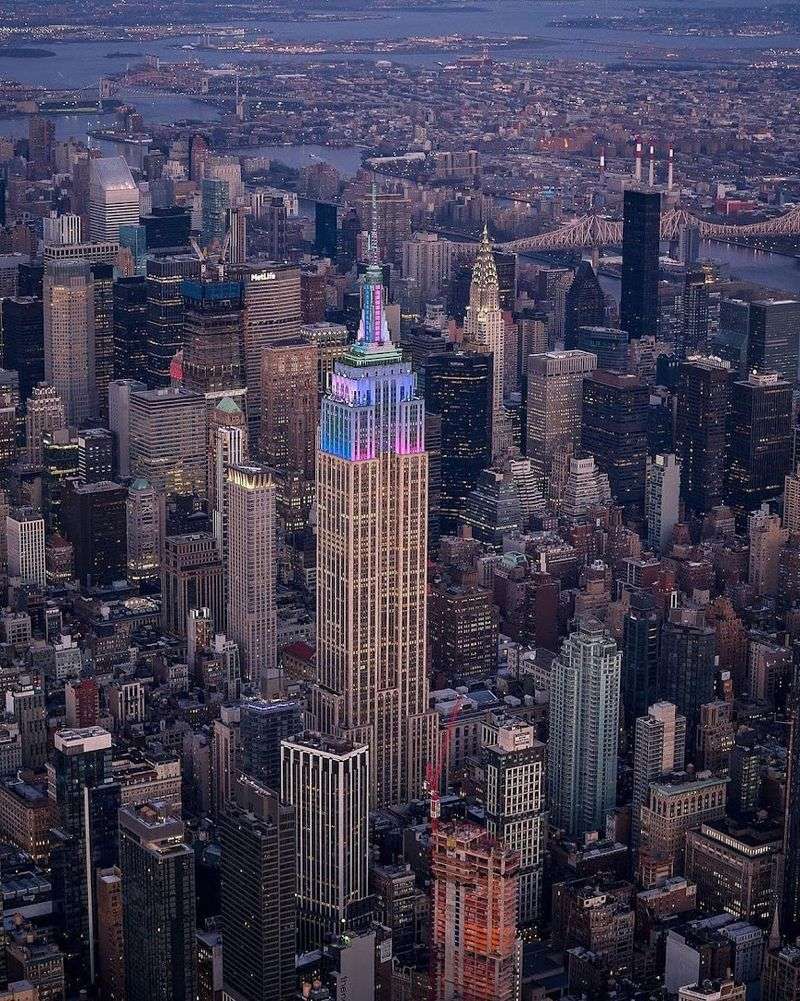
Completed in just 410 days, the Empire State Building was a race against time, gravity, and common sense. When it opened in 1931, it instantly became the tallest building in the world, a title it held for over 40 years.
Workers assembled the steel frame at a pace of about four and a half floors per week, which sounds impossible until you realize how badly everyone wanted to prove it could be done.
Its Art Deco style is the reason it still turns heads today. The zigzag patterns, bold lines, and gleaming stainless steel details give it a timeless look that modern glass towers simply cannot match.
Standing at 1,454 feet including its antenna, it towers over midtown Manhattan like a proud grandfather watching the city grow around it.
The observation deck on the 86th floor draws nearly four million visitors every year. On a clear day, you can see five states from up there.
The building also changes its LED light colors to celebrate holidays and global events, which means it has basically become New York’s most photogenic mood ring.
Fallingwater – Pennsylvania
Frank Lloyd Wright reportedly designed Fallingwater in just two hours after his client called to check on progress. Whether or not that story is completely true, the result was nothing short of revolutionary.
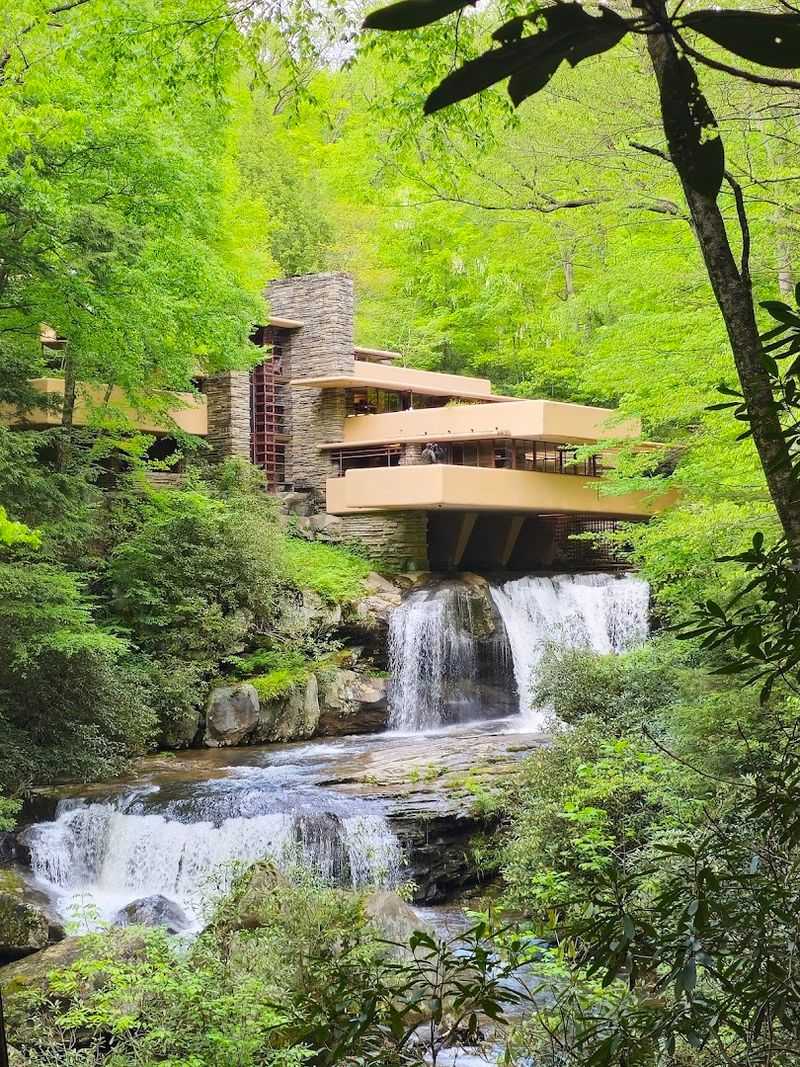
Built in 1935 over a natural waterfall in rural Pennsylvania, the house looks like it grew directly from the forest floor rather than being placed on top of it.
The cantilevered terraces extend dramatically over the rushing water below, creating a visual effect that still makes architects nervous and tourists speechless. Wright believed buildings should belong to their natural setting rather than compete with it, and Fallingwater is the ultimate proof that he was right.
The sound of water moving beneath the floors was intentional, meant to make the experience of living inside feel deeply connected to the outdoors.
Today it is a National Historic Landmark visited by over 170,000 people each year. The American Institute of Architects named it the best work of American architecture in the twentieth century.
Considering how many incredible buildings were built during that time, that is a genuinely remarkable honor for a private home sitting quietly in the Pennsylvania woods.
The White House – Washington, D.C.

Every sitting U.S. president since John Adams has called the White House home, which means this building has seen more history unfold within its walls than almost any other structure in the world. Completed in 1800, it was actually set on fire by British forces in 1814 and had to be rebuilt.
The white paint that gives the building its name was originally used to cover the scorch marks left behind.
The neoclassical design, inspired by ancient Greek and Roman architecture, was meant to signal strength, order, and democratic values. Its columns, symmetrical layout, and iconic porticos make it one of the most photographed buildings on Earth.
Six stories tall with 132 rooms, 35 bathrooms, and a bowling alley, it functions as both a family home and a fully operational government office.
The White House also has a surprisingly active garden. The South Lawn hosts the annual Easter Egg Roll, a tradition that dates back to 1878.
Beyond its political role, the building represents continuity and stability, a constant landmark in a city that never stops changing. Millions of tourists visit the surrounding grounds each year, hoping to catch a glimpse of the world’s most famous address.
Guggenheim Museum – New York City
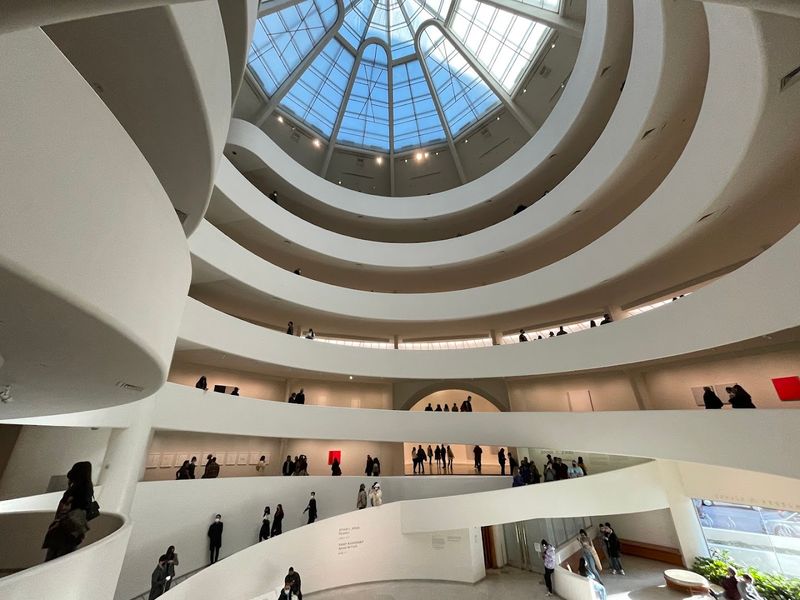
Frank Lloyd Wright spent 16 years designing the Guggenheim Museum, and some people hated it when it finally opened in 1959. Critics called it too bold, too unusual, and completely wrong for Fifth Avenue.
Today, of course, it is considered one of the greatest buildings ever constructed and draws over one million visitors every single year.
The building’s most famous feature is its continuous spiral ramp, which winds upward from the ground floor to a glass-domed ceiling at the top. Instead of walking through separate rooms, visitors follow the ramp in a single unbroken path, experiencing art in a way no traditional museum allows.
Wright wanted the building itself to be part of the artistic experience, and he absolutely succeeded.
The interior feels surprisingly open and calm despite being located in the middle of one of the busiest cities in the world. Natural light pours in from the central dome, filling the space with a soft glow that changes throughout the day.
The Guggenheim is a reminder that a building can be just as thought-provoking as the artwork displayed inside it. It proved that architecture and art are not separate things but two expressions of the same creative impulse.
Walt Disney Concert Hall – Los Angeles
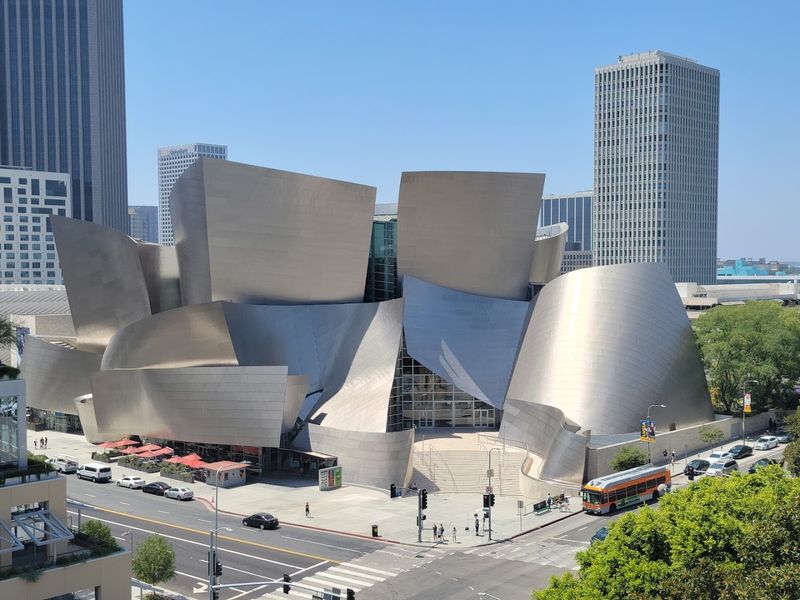
Stainless steel has never looked so alive. When Frank Gehry unveiled the Walt Disney Concert Hall in 2003, people in downtown Los Angeles stopped walking just to stare at it.
The building’s billowing curves and shimmering panels look different depending on where you stand, almost like the structure is slowly moving even when it is perfectly still.
Gehry spent years on the design, and the acoustics inside match the drama of the exterior. The Los Angeles Philharmonic, one of the world’s most respected orchestras, calls this hall home, and musicians frequently say it is one of the finest performance spaces they have ever played in.
The wooden interior panels were carefully shaped to direct sound with incredible precision.
The building actually caused a minor problem after it opened. The curved steel panels reflected sunlight so intensely onto nearby sidewalks and buildings that temperatures in some spots rose significantly.
The panels had to be sanded down to reduce the glare. Even its unintended side effects were dramatic.
Today the concert hall stands as proof that a building can be thrilling, functional, and genuinely surprising all at once, which is a rare combination in any city anywhere in the world.
Chrysler Building – New York City
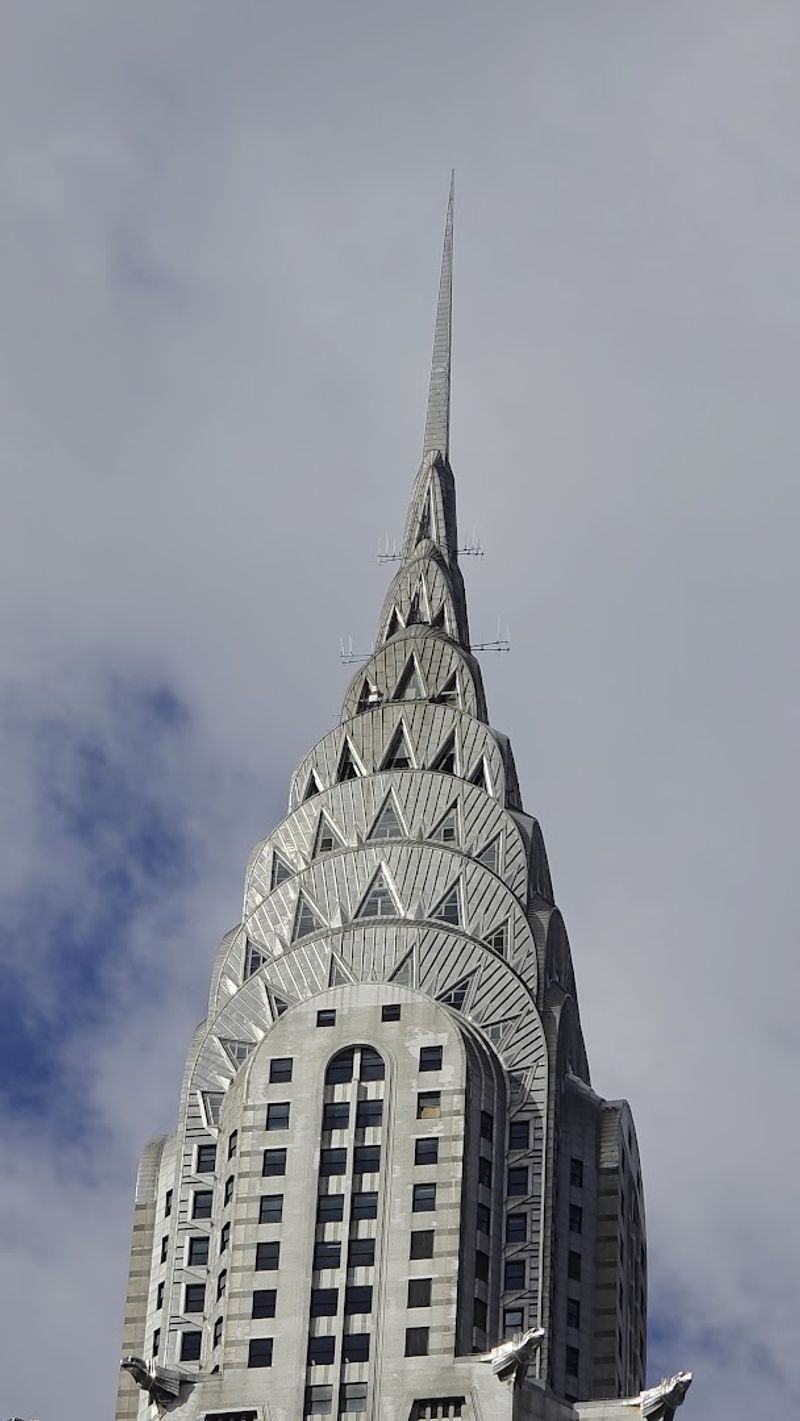
For exactly 11 months in 1930, the Chrysler Building was the tallest building in the world. Then the Empire State Building stole the title.
But here is the thing: nobody remembers the Empire State Building’s crown the way they remember the Chrysler Building’s spire. That gleaming, sunburst top is arguably the most beautiful piece of architecture in all of New York City.
Built for automobile tycoon Walter Chrysler, the building is packed with car-themed details. The gargoyles perched near the top are modeled after the hood ornaments used on 1929 Chrysler vehicles.
Eagle-head decorations jut out from the corners of upper floors, staring down at the streets below with an expression that can only be described as deeply unbothered.
The lobby alone is worth a visit. It features red African marble floors, amber-lit ceiling murals, and elevator doors inlaid with rare wood veneers in geometric patterns.
The whole building is a love letter to the Art Deco era, when architects believed that glamour and function belonged together. At 1,046 feet tall, the Chrysler Building remains one of the most admired skyscrapers on Earth, proof that being second place does not mean being second best.
U.S. Capitol – Washington, D.C.

The U.S. Capitol dome weighs nearly nine million pounds and is made of cast iron, not stone, even though it looks like stone from the outside.
When construction continued on the dome during the Civil War, President Lincoln insisted the work go on as a symbol that the Union would hold together. That decision turned a building project into a powerful political statement.
Completed in its current form in 1868, the Capitol sits at the very center of Washington, D.C.’s street grid. All four quadrants of the city radiate outward from this building, making it literally the point from which the entire capital is measured.
The Statue of Freedom on top of the dome stands nearly 20 feet tall and faces east toward the rising sun.
Inside, the Capitol is filled with paintings, sculptures, and architectural details that trace the full arc of American history. The National Statuary Hall alone contains bronze and marble figures representing every state in the country.
Millions of people visit each year, not just to see the building but to stand in the halls where some of the most consequential decisions in world history have been made. Few buildings carry that kind of weight so gracefully.
Transamerica Pyramid – San Francisco
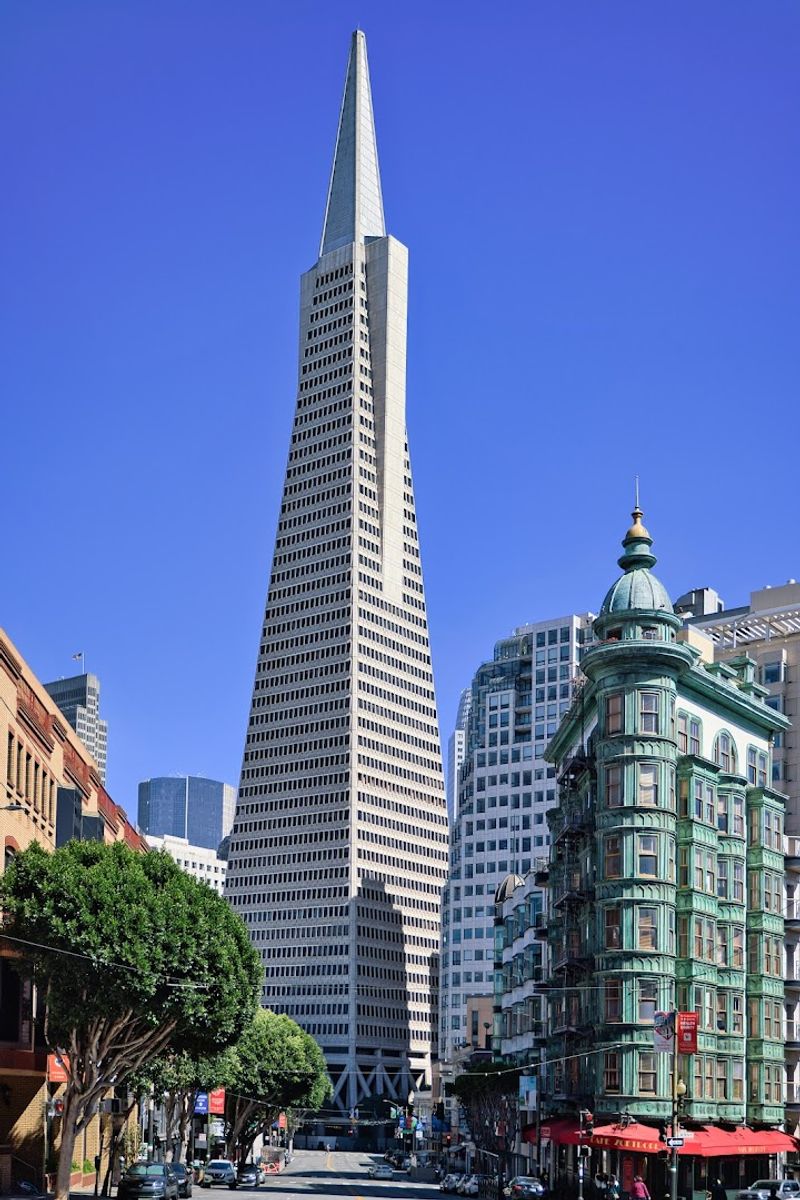
When the Transamerica Pyramid opened in 1972, San Franciscans were not exactly thrilled about it. Critics called it bizarre, out of place, and even ugly.
Fast forward 50 years and that same pointy tower is now one of the most beloved and recognizable buildings in the entire United States, which says a lot about how long great architecture takes to win people over.
The pyramid shape was not just a stylistic choice. The tapered design allows more sunlight to reach the streets below compared to a traditional rectangular tower of the same height.
At ground level, the surrounding area stays brighter and more pleasant because of this thoughtful decision. Good architecture solves problems while looking spectacular, and this building does exactly that.
Standing 853 feet tall, it held the title of San Francisco’s tallest building for decades. The top 212 feet of the spire is hollow, which means nobody actually works up there.
A small earthquake early in its life tested the building’s flexible structure, and it performed remarkably well. Today the Transamerica Pyramid is a protected San Francisco landmark, meaning no one can ever tear it down.
The same people who once hated it are probably relieved about that rule.
Seattle Central Library – Seattle
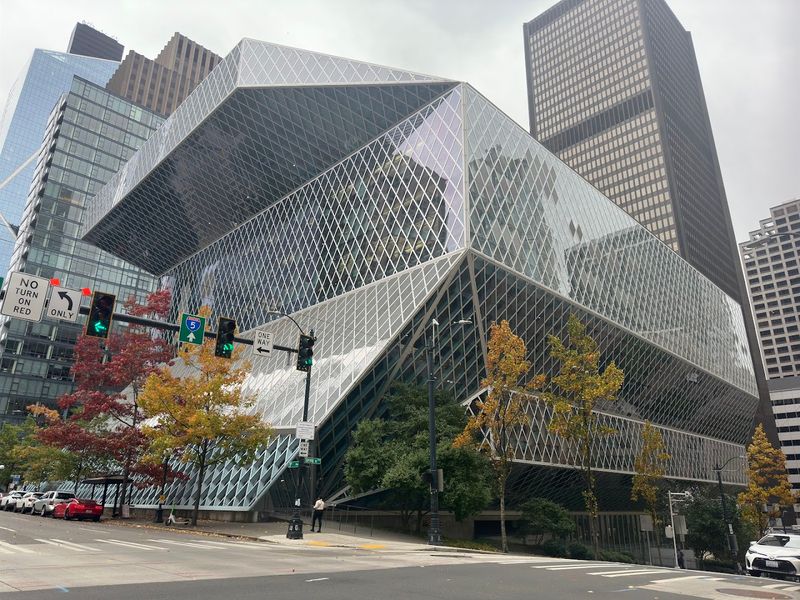
Most libraries try to blend quietly into their surroundings. The Seattle Central Library, designed by Rem Koolhaas and opened in 2004, had absolutely no interest in doing that.
Its jagged, angular glass-and-steel exterior looks like something from a science fiction film, and that bold choice paid off in ways the city never expected.
The building stacks its floors in a series of offset platforms, creating unexpected overhangs and dramatic interior spaces. Inside, a bright red escalator tunnel connects different levels and has become one of the most photographed spots in all of Seattle.
The entire fourth floor is dedicated to books arranged in a continuous spiral, making it easy to browse the entire collection without ever hitting a dead end.
More than two million people visit the library every year, which is extraordinary for a public building in a city of Seattle’s size. The design sparked a global conversation about what public spaces can and should look like in the modern era.
Libraries are no longer just quiet rooms full of shelves. They can be bold, welcoming, and visually exciting while still serving their core purpose perfectly.
Seattle’s library proved that loud design and serious learning are not mutually exclusive goals.
The Pentagon – Arlington, Virginia

Built in just 16 months during World War II, the Pentagon is one of the fastest large-scale construction projects in American history. Work crews operated around the clock, seven days a week, pouring concrete at a rate that still impresses engineers today.
The finished building covers 29 acres and contains 17.5 miles of corridors, yet the five-sided layout is so efficient that it takes no longer than seven minutes to walk between any two points inside.
The five-sided design was partly chosen because the original site had five roads approaching it from different directions. When the site changed, the shape stayed because engineers realized how well it worked for organizing a massive workforce.
Roughly 26,000 military and civilian employees report to work there every day, making it one of the largest office buildings on the planet by headcount.
The central courtyard, sometimes called Ground Zero by insiders, contains a small cafe and open space where workers gather during breaks. After the September 11 attacks damaged one section of the building, repairs were completed in just one year, a timeline that matched the speed of the original construction.
The Pentagon is not flashy or decorative, but its sheer scale and organizational brilliance make it one of the most impressive American buildings ever created.
One World Trade Center – New York City
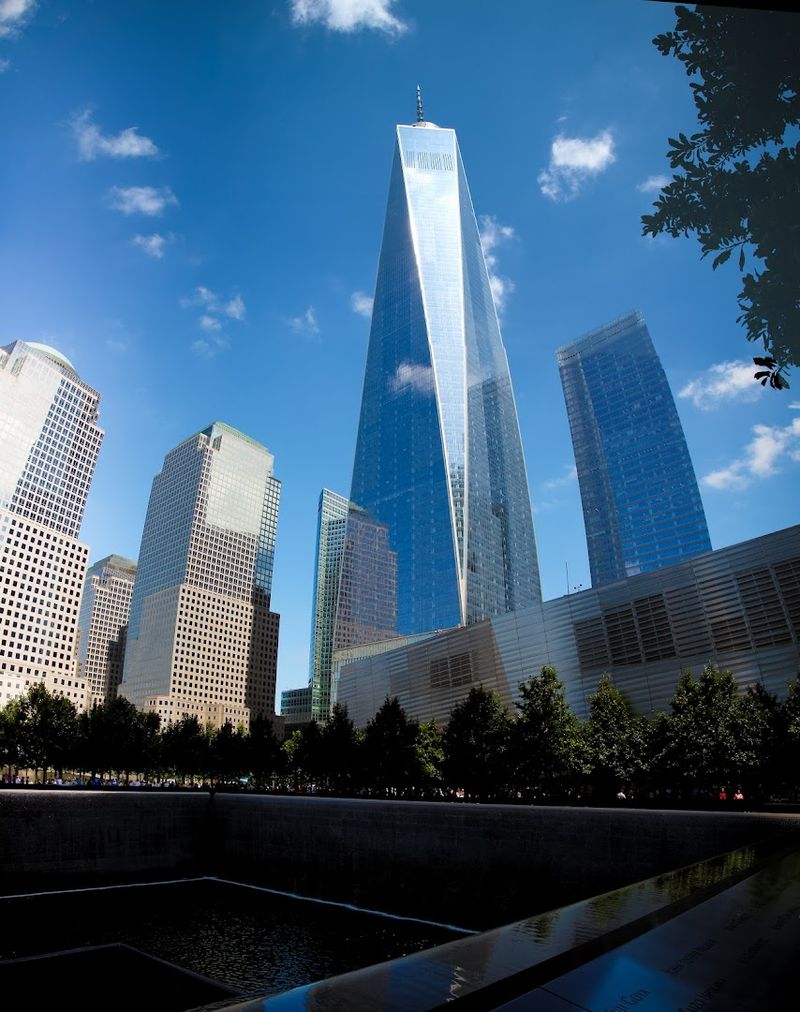
At exactly 1,776 feet tall, One World Trade Center was designed to say something specific. That number matches the year the United States declared independence, and the choice was deliberate.
Every detail of this building carries meaning, from its height to its square footprint at the base, which mirrors the original Twin Towers that stood on the same site before September 11, 2001.
Construction began in 2006 and the tower opened in 2014, making it the tallest building in the Western Hemisphere. The exterior is covered in nearly 10,000 glass panels that reflect the sky, the city, and the surrounding harbor.
Depending on the weather and time of day, the building can look silver, blue, gold, or nearly transparent, never quite the same twice.
The One World Observatory on floors 100 to 102 offers some of the most breathtaking views available anywhere in New York. Visitors can see clearly on a good day for up to 50 miles in every direction.
The building also meets high environmental standards, using systems that reduce energy consumption significantly compared to older towers. One World Trade Center is not just tall.
It is a carefully considered act of remembrance, resilience, and forward-thinking design all wrapped into one extraordinary structure.
The Biltmore Estate – Asheville, North Carolina
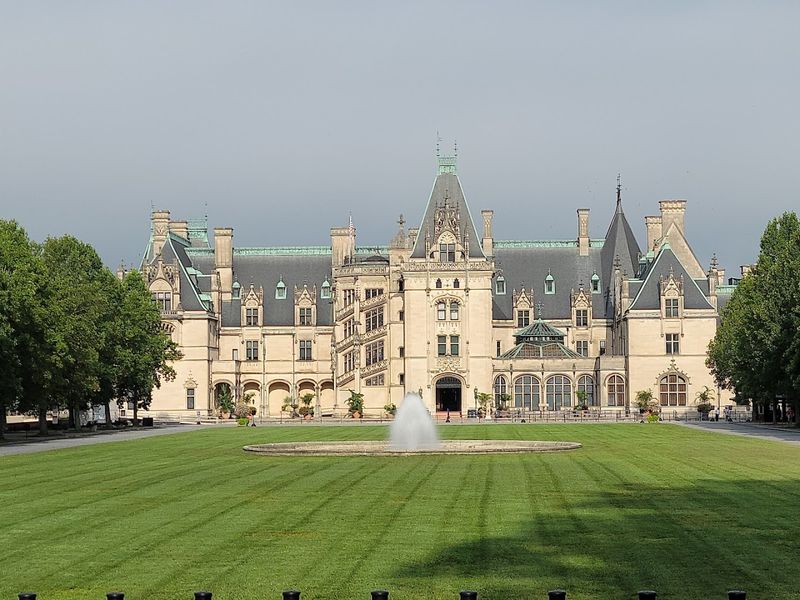
George Vanderbilt II built the Biltmore Estate in the 1890s because he wanted a summer home. A summer home with 35 bedrooms, 43 bathrooms, 65 fireplaces, and an indoor swimming pool.
At 178,926 square feet, it remains the largest privately owned house in the United States, and nothing else has come particularly close to challenging that record in over a century.
The French Renaissance chateau style was inspired by the grand chateaux Vanderbilt admired during his travels through Europe. Architect Richard Morris Hunt spent years on the design, and landscape architect Frederick Law Olmsted, the same man who designed Central Park, laid out the surrounding gardens and grounds.
The result is a property that feels more like a small European estate than anything typically associated with the American South.
Today the Biltmore Estate is open to the public and attracts over one million visitors each year. It operates as a working winery, event venue, and hotel, meaning guests can actually stay overnight on the property.
Walking through the rooms, with their original furniture, art collections, and intricate woodwork, gives a vivid sense of what extraordinary wealth looked like during the Gilded Age. The estate is a remarkable time capsule wrapped in one of the most impressive buildings ever constructed in America.
Space Needle – Seattle
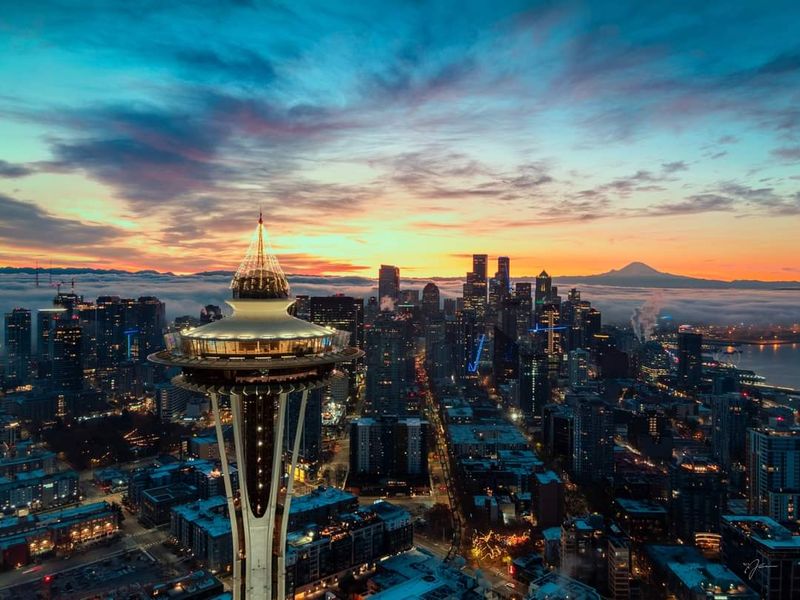
Somebody once described the Space Needle as looking like a flying saucer that crash-landed on top of a very tall pole, and the designers probably took that as a compliment. Built for the 1962 World’s Fair in just 13 months, the Space Needle was meant to represent humanity’s excitement about the future.
It succeeded so completely that it still feels futuristic more than 60 years later.
The structure stands 605 feet tall and was designed to withstand winds of up to 200 miles per hour and earthquakes measuring 9.1 on the Richter scale. The top house features a rotating glass floor observation deck added during a major renovation completed in 2018.
Visitors can now stand on transparent glass panels and look straight down to the ground far below, which is either thrilling or absolutely terrifying depending on your feelings about heights.
The rotating restaurant at the top completes one full revolution every 47 minutes, meaning a long lunch offers a complete panoramic view of Seattle, Puget Sound, and Mount Rainier on clear days. Around 1.3 million people visit the Space Needle annually.
It has appeared in countless films, television shows, and photographs, yet somehow it never looks ordinary. Some buildings age into respectability.
The Space Needle was born iconic and has never let go of that status.
Flatiron Building – New York City
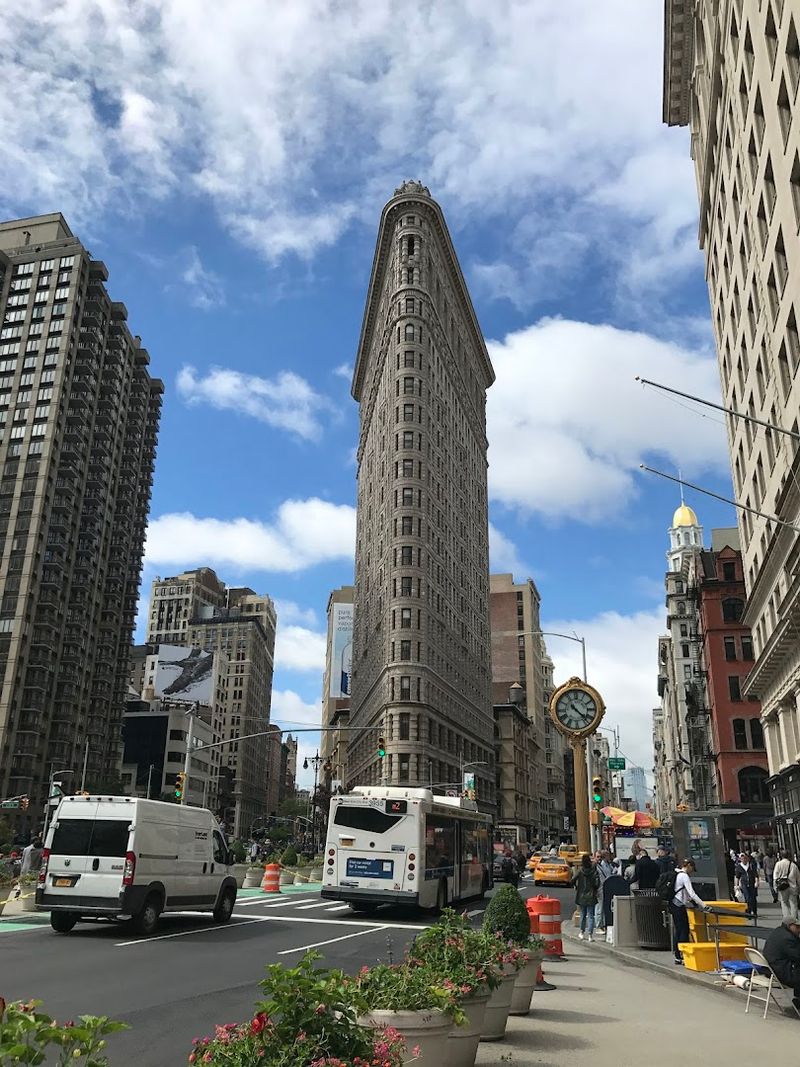
Picture a building so narrow at one end that it looks like it should fall over, and you have a pretty good mental image of the Flatiron Building. Completed in 1902, it wedges into the sharp triangular block where Broadway crosses Fifth Avenue at 23rd Street.
The thinnest point of the building measures only six feet wide, which is barely enough room to stand sideways and stretch your arms out.
When it was built, many New Yorkers assumed the 22-story structure would collapse in a strong wind. Engineers knew better, having designed a steel frame strong enough to handle the unusual shape.
The building also created its own weather problem. Strong gusts funneled around its triangular form, occasionally lifting skirts on the sidewalk below.
Police officers reportedly had to shoo away young men who gathered to watch, which is where the slang phrase “23 skidoo” may have originated.
Today the Flatiron Building is one of the most photographed structures in New York City, appearing on postcards, movie posters, and countless social media feeds. It was designated a New York City landmark in 1966 and is listed on the National Register of Historic Places.
The building recently underwent a conversion to residential apartments, giving this legendary address a fresh new chapter in its already extraordinary story.
Salk Institute – La Jolla, California
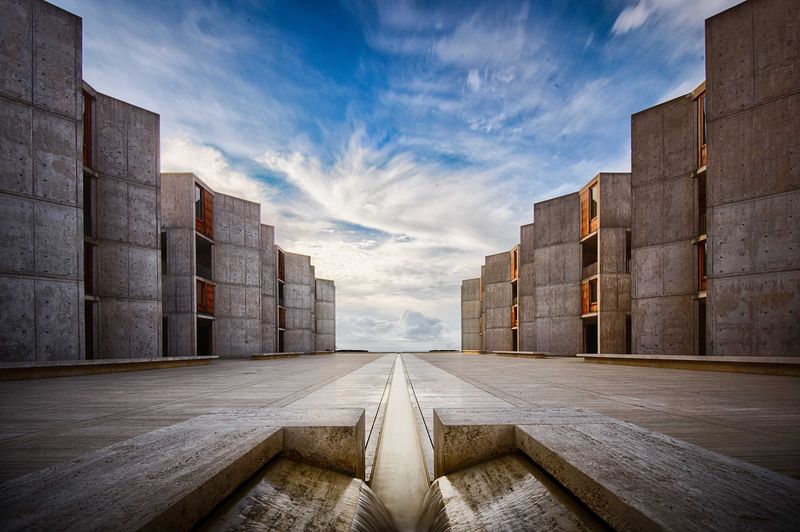
Jonas Salk, the scientist who developed the polio vaccine, wanted a research facility where great minds could think without distraction. He hired architect Louis Kahn to design it, and what emerged on the cliffs above the Pacific Ocean in 1965 was something that left even hardened architects speechless.
The Salk Institute is widely considered one of the most perfect buildings ever made.
Two mirror-image laboratory buildings face each other across a travertine marble courtyard. A thin channel of water runs down the center of the courtyard, leading the eye directly toward the ocean horizon.
There are no trees, no flowers, and no decorative clutter. Just stone, sky, water, and silence.
The effect is deeply calming in a way that is hard to explain until you actually stand there and feel it.
Kahn used a material called teak wood for the study towers, which age beautifully over time and soften the otherwise austere geometry. Every shadow, every angle, and every sight line was carefully calculated.
The building changes dramatically with the light, looking completely different at sunrise compared to midday or sunset. Scientists who work there say the environment genuinely helps them think more clearly.
If a building can actually make you smarter just by being beautiful, the Salk Institute might be the best evidence we have that architecture truly matters.
Share this story