Spain is famous for the Sagrada Familia, the Alhambra, and flamenco dancing in Seville. But tucked away across its mountains, coastlines, and ancient plains are UNESCO World Heritage Sites that most travelers walk right past.
These hidden gems range from prehistoric caves to Roman ruins, and they each tell a fascinating story about the people who shaped this country. If you think you know Spain, these 15 sites might just change your mind.
Risco Caído – Gran Canaria
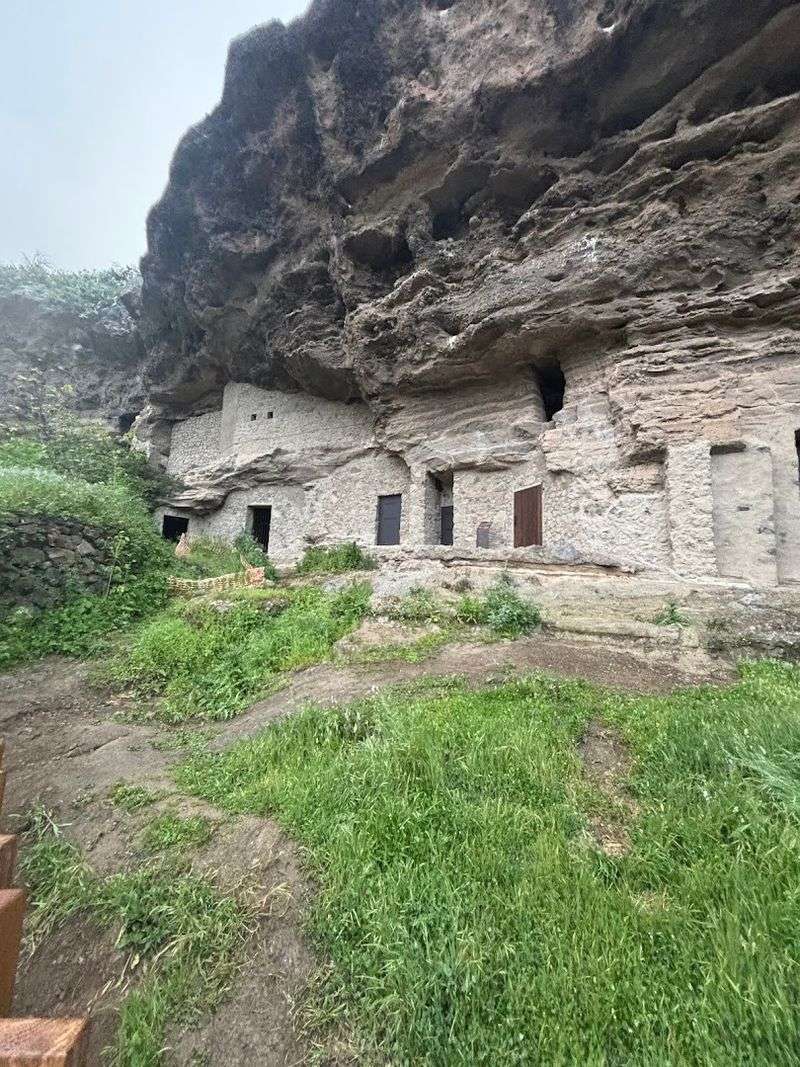
Carved directly into volcanic rock thousands of years ago, Risco Caído feels like stepping into a world that time completely forgot. These cave dwellings were home to the Canarii, the indigenous people of Gran Canaria, long before Spanish explorers ever arrived.
The site sits deep within a dramatic landscape of jagged cliffs and winding valleys that makes it feel genuinely remote.
What makes Risco Caído truly jaw-dropping is its connection to astronomy. Certain caves were designed so that sunlight enters through a small opening and projects a beam onto carved spiral symbols during specific times of year.
That means ancient people were tracking the sun with architectural precision, no telescope required.
Getting there requires a guided tour, and visitor numbers are limited to protect the site. That restriction actually works in your favor, since you won’t be bumping elbows with tour groups every five minutes.
Spain only received UNESCO status for this site in 2019, making it one of the newest additions on this list. If archaeology mixed with breathtaking Canary Island scenery sounds appealing, Risco Caído absolutely belongs on your bucket list.
Archaeological Site of Atapuerca – Castile and León
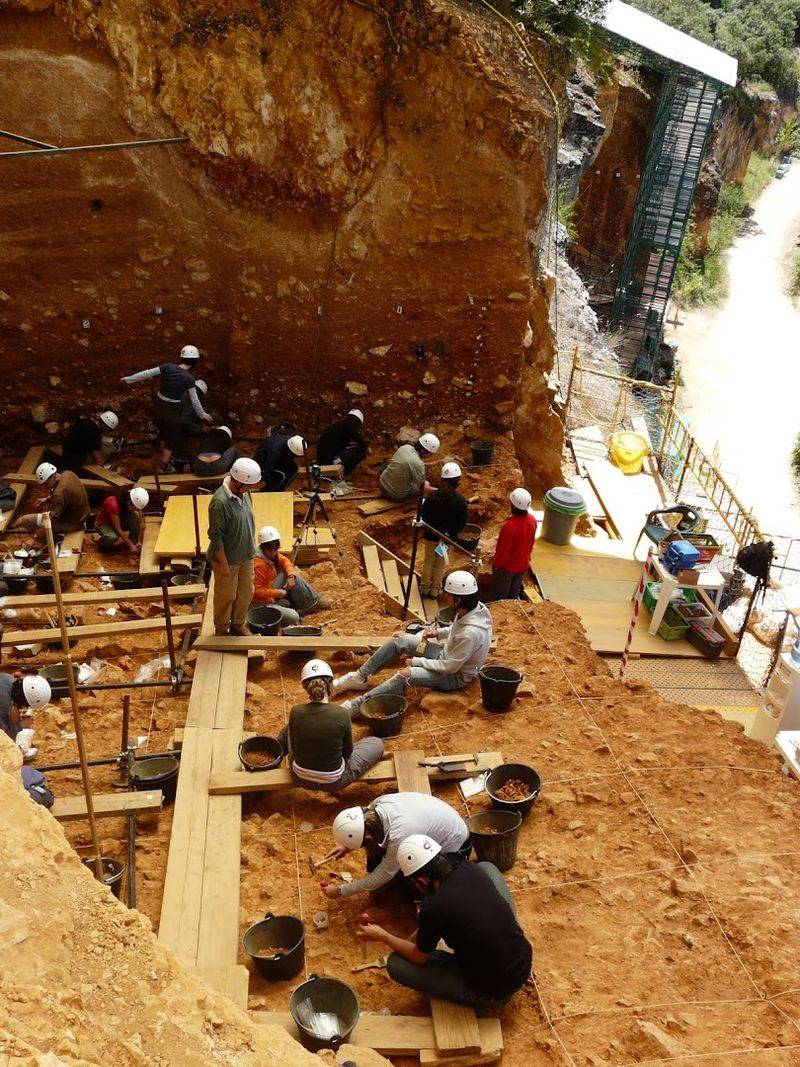
Over 800,000 years ago, some of Europe’s earliest humans were living, eating, and dying in a cluster of caves in northern Spain. Atapuerca is where their bones were found, and those discoveries rewrote the textbooks on human evolution.
Scientists have uncovered fossils here belonging to a species called Homo antecessor, which predates Neanderthals and is considered a possible ancestor of modern humans.
The sheer scale of what has been found here is staggering. Thousands of fossils representing dozens of individuals have been pulled from these caves, making Atapuerca one of the richest fossil sites ever discovered anywhere on Earth.
Researchers are still actively excavating, which means new finds continue to emerge every season.
For visitors, the site offers guided tours that walk you through the excavation zones and explain what each layer of rock tells us about the past. A nearby museum in Burgos displays many of the actual fossils and reconstructions of early human life.
Most tourists heading to Castile and León focus on Burgos Cathedral or the city’s famous black pudding. Atapuerca sits quietly nearby, waiting for curious travelers who want something a little more mind-bending on their itinerary.
San Millán de la Cogolla Monasteries – La Rioja
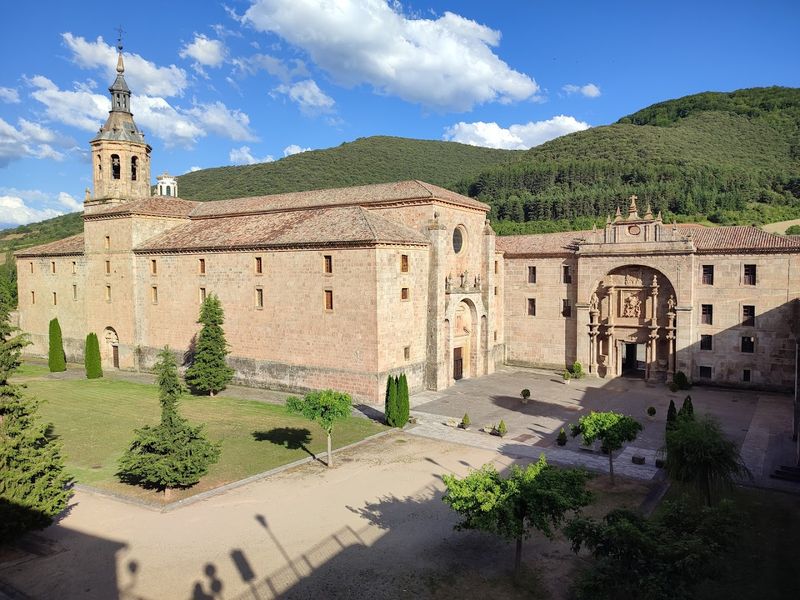
Somewhere in the green hills of La Rioja, a monk picked up a quill around the year 1000 and wrote something remarkable in the margins of a Latin text. Those handwritten notes are considered the earliest known words written in Spanish, and the monastery where they were created still stands today.
San Millán de la Cogolla is, quite literally, where the Spanish language was born.
There are actually two monasteries here built centuries apart. The older one, Suso, is carved into the hillside and dates back to the 6th century.
The younger one, Yuso, was constructed below it in the 11th century and became a major center of learning and manuscript production during the Middle Ages.
La Rioja is most famous for its wine, and most visitors to the region spend their time touring vineyards rather than ancient monasteries. That means San Millán stays wonderfully peaceful, with small groups of visitors wandering through stone corridors and dimly lit chapels.
The monks who once lived here left behind a cultural legacy that spread across an entire continent. Visiting feels less like sightseeing and more like paying respect to the roots of a language spoken by over 500 million people today.
Antequera Dolmens – Andalusia
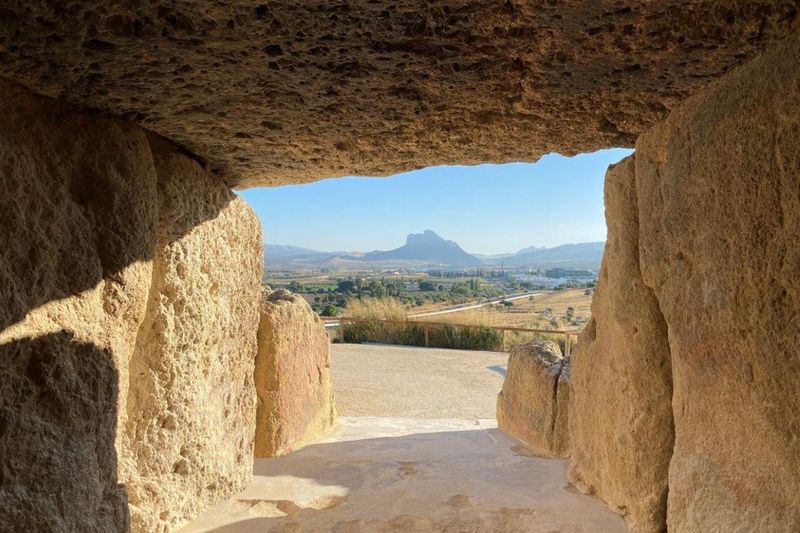
Picture enormous flat slabs of rock, some weighing hundreds of tons, carefully balanced on top of upright stones to create chambers where the dead were laid to rest. The Antequera Dolmens in Andalusia are among the largest and best-preserved megalithic monuments in all of Europe, yet most visitors to southern Spain drive straight past them on the way to the beach.
The three main structures, Menga, Viera, and El Romeral, were built between 3800 and 3000 BCE. Menga alone uses stones weighing up to 180 tons, and no one is entirely sure how prehistoric people moved them without modern machinery.
Archaeologists believe the site served both as a burial ground and as a place of ritual and ceremony for the surrounding community.
Unlike Stonehenge, which now sits behind a fence with timed entry tickets and a gift shop, the Antequera Dolmens allow visitors to walk directly inside the chambers. Standing inside Menga, surrounded by ancient stone walls with sunlight filtering through the entrance, is a genuinely eerie and unforgettable experience.
The town of Antequera itself is charming and underrated, with good tapas bars and a hilltop castle that adds a pleasant bonus to any visit.
Doñana National Park – Andalusia
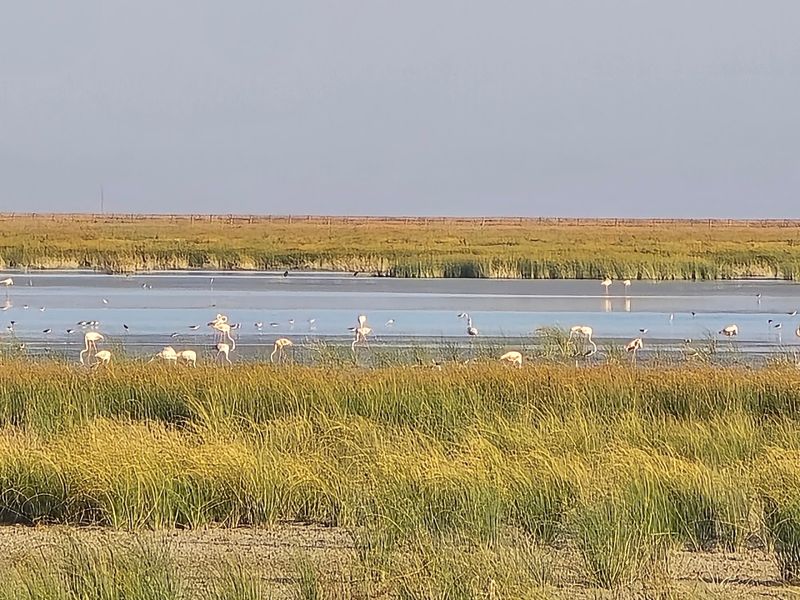
At the mouth of the Guadalquivir River, where the land dissolves into marshes, dunes, and dense forest, one of Europe’s most extraordinary ecosystems quietly goes about its business. Doñana National Park covers over 540 square miles of protected land and serves as a critical stopover for millions of migratory birds traveling between Africa and Europe every year.
The numbers here are almost absurd in the best possible way.
Flamingos, imperial eagles, lynx, and wild horses all share this landscape, which shifts dramatically depending on the season. Winter flooding transforms the marshes into shallow lakes teeming with waterfowl.
Summer bakes the same ground into cracked earth and dusty scrubland. The park essentially reinvents itself every few months.
Access is carefully controlled, and most visits happen via guided jeep tours that take small groups through restricted zones. That means you won’t see crowds, but you will see wildlife behaving naturally without the anxiety of a hundred camera-clicking tourists nearby.
Doñana sits near the popular Costa de la Luz coastline, yet the vast majority of beachgoers never venture inside. Spending a morning watching a Spanish imperial eagle soar over the marshes while everyone else is applying sunscreen feels like a very good life decision.
Úbeda and Baeza – Renaissance Towns of Andalusia
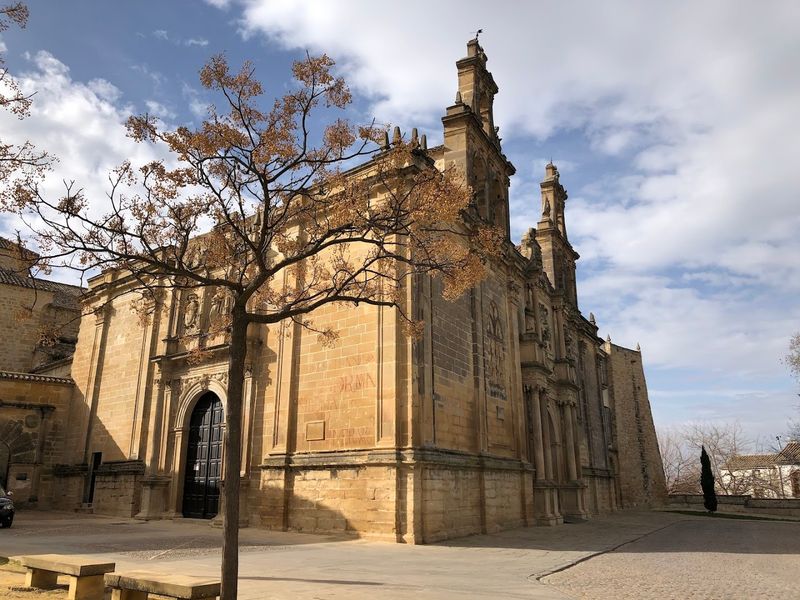
Two small Andalusian towns sitting about nine miles apart somehow ended up becoming UNESCO World Heritage Sites together, and once you see them, you understand why. Úbeda and Baeza are packed with Renaissance palaces, churches, and public squares that rival anything in Florence or Rome, yet they attract a fraction of the visitors those Italian cities see each year. That imbalance feels almost criminal.
Úbeda’s old town is especially striking. The Plaza Vázquez de Molina is lined with honey-colored stone buildings that glow warm orange in the late afternoon sun.
The Sacra Capilla del Salvador, a 16th-century funerary chapel, is considered one of the finest examples of Spanish Renaissance architecture anywhere in the country.
Baeza is slightly smaller and even quieter, with a charming university building and a cathedral square that feels like a film set. The towns became wealthy during the 16th century thanks to the olive oil trade, and their affluent residents invested that money into spectacular architecture.
Today, both towns are surrounded by endless olive groves that still produce some of Spain’s best oil. Bring a good camera, comfortable shoes, and a willingness to get genuinely lost in streets that feel like they belong to another century entirely.
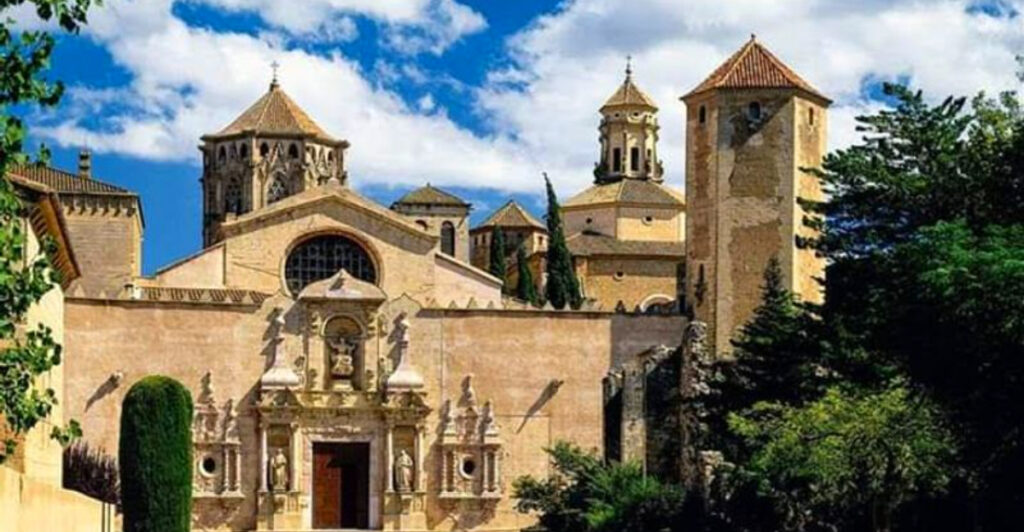
Monasterio de Poblet – Catalonia
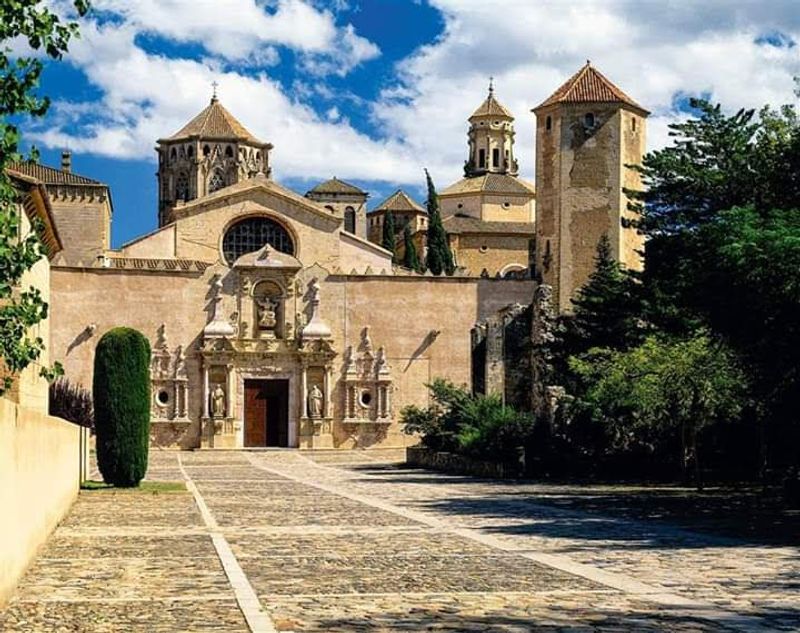
Behind thick stone walls in the Catalan countryside, a community of Cistercian monks has been living, praying, and working for almost nine centuries without much interruption. Poblet Monastery is not a museum.
It is a functioning religious community that happens to be one of the largest and best-preserved medieval monasteries in all of Europe, and visitors are genuinely welcome to come and look around.
Founded in 1150, the monastery served as the royal pantheon for the Crown of Aragon, meaning several medieval kings of Spain are buried here in elaborately carved stone tombs. Walking through the royal chapel and seeing those tombs lined up along the walls is a surprisingly moving experience, even for people who are not particularly into history.
The monastery sits within a walled complex that includes a church, dormitories, a library, a wine cellar, and gardens. Monks still produce wine and olive oil on the grounds, and you can buy both in the monastery shop.
Tours are guided and respectful of the community’s daily schedule, so there are times when parts of the complex are off-limits during prayer. That structure somehow makes the visit feel more authentic rather than less.
Poblet is about an hour from Barcelona and wildly undervisited for what it offers.
Tarraco Archaeological Ensemble – Tarragona
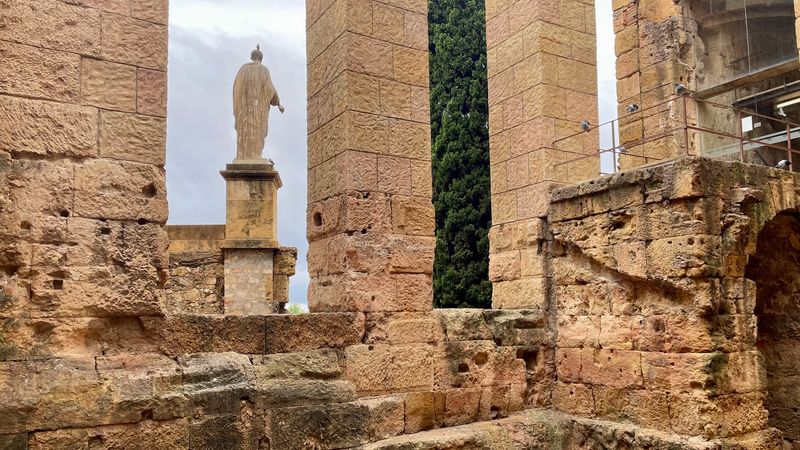
Tarragona holds a secret that most visitors to the Costa Daurada completely miss. Beneath the modern city and scattered through its streets lies one of the most complete Roman archaeological ensembles in the western Mediterranean.
Two thousand years ago, this place was called Tarraco, and it was the capital of the most powerful Roman province in Hispania.
The amphitheater alone is worth the trip. Built right on the edge of the sea, it once hosted gladiatorial combat and public executions, and today its stone tiers offer one of the most dramatic views in Spain.
The city walls, the circus where chariot races were held, and the forum ruins are all accessible and remarkably well preserved.
What sets Tarragona apart from better-known Roman sites is the way the ruins are woven into everyday city life. A Roman wall runs alongside a busy road.
A section of the ancient circus sits beneath apartment buildings. You can walk from a Roman ruin to a tapas bar in about three minutes, which is a very enjoyable way to spend an afternoon.
The city gets busy in summer thanks to its beaches, but the archaeological sites stay manageable. History fans who skipped Tarragona in favor of Rome are missing something genuinely special.
Lugo Roman Walls – Galicia
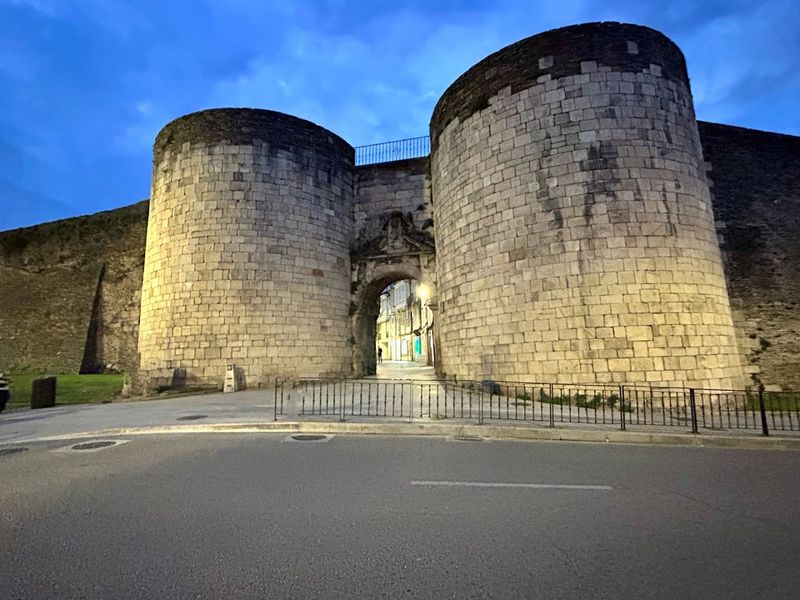
Most ancient walls in Europe are fragments, scattered ruins, or reconstructed replicas. Lugo’s Roman walls are none of those things.
Built between the 2nd and 3rd centuries AD, the walls completely encircle the old city in an unbroken ring that stretches for nearly 1.5 miles, and you can walk the entire length along the top. That combination of completeness and accessibility makes Lugo genuinely one-of-a-kind.
The walls stand between 30 and 50 feet tall and were originally built to protect the Roman city of Lucus Augusti. They feature 71 towers and 10 gateways, several of which are still used as the main entry points into the old town.
Locals use the wall walk as a daily jogging route, which gives the whole experience a wonderfully ordinary, lived-in feeling.
Lugo sits in the green interior of Galicia, a region most famous for the pilgrimage route to Santiago de Compostela. Many pilgrims pass through Lugo on the Camino Primitivo route, though plenty of them don’t stop long enough to appreciate the walls properly.
The old town inside is lovely, with a cathedral, a covered market, and some of the best tapas bars in Galicia. Lugo rewards slow travel and curious visitors who are willing to wander without a strict plan.
Las Médulas – Castile and León
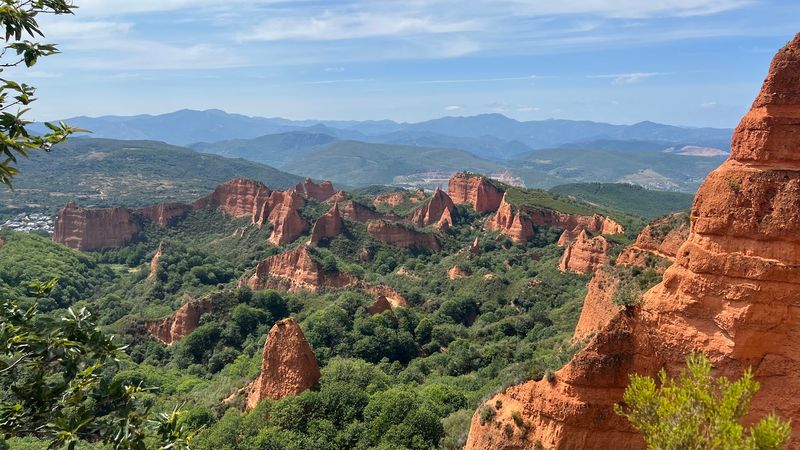
Reddish spires of rock jutting out of a green valley floor look like something from a science fiction film, but Las Médulas is entirely real and entirely the result of ancient human ambition. Roman engineers created this alien landscape over nearly two centuries by using a technique called ruina montium, which involved pumping enormous quantities of water into the mountainside to collapse it and wash out the gold inside.
The result is one of the most dramatic landscapes in Europe.
Between the 1st and 2nd centuries AD, Las Médulas produced enough gold to fund a significant portion of the Roman Empire’s budget. Thousands of enslaved workers were forced to carry out the dangerous and exhausting labor.
The scale of what they achieved, and what they suffered, is difficult to fully absorb when you are standing in front of it.
Today the site is peaceful and beautiful, surrounded by chestnut forests that light up gold and orange in autumn. Several hiking trails wind through the formations, and a viewpoint at Orellán offers the most dramatic panoramic perspective.
The nearby village of Las Médulas has a small but informative visitor center. This corner of León is quiet, rural, and largely off the standard tourist trail, which makes the experience of stumbling upon this surreal landscape feel like a genuine discovery.
Almadén Mining Park – Castile-La Mancha
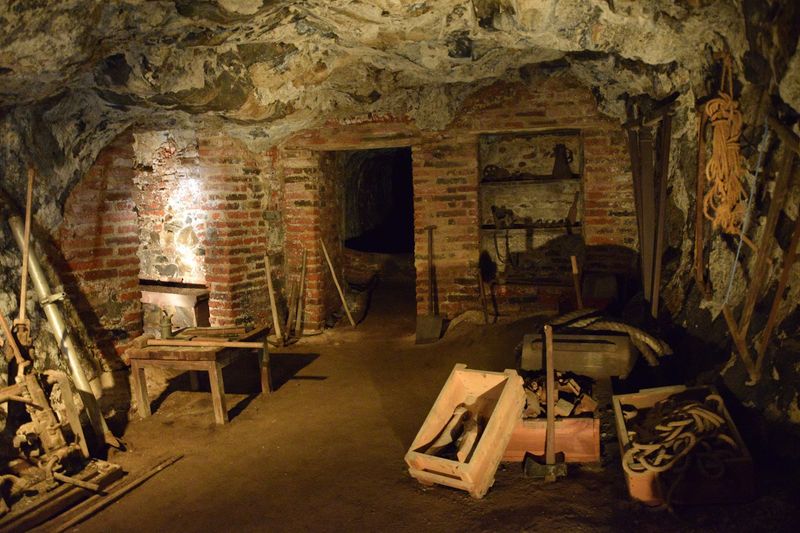
For over two thousand years, a small town in the middle of Spain produced something the world desperately wanted: mercury. Almadén was once the largest mercury mine on Earth, and the liquid metal extracted from its depths was used to process silver from the Americas, manufacture medicines, and fuel industrial production across multiple continents.
The town’s history is as heavy and fascinating as the element it produced.
The UNESCO designation covers the entire mining complex, including underground tunnels that visitors can actually enter. Wearing a hard hat and descending into the old mine shafts is a surreal experience, equal parts claustrophobic and awe-inspiring.
The tunnels reveal layer upon layer of mining history, from Roman-era excavations to 20th-century industrial operations.
Mercury mining was extraordinarily dangerous work. Prolonged exposure caused tremors, personality changes, and early death, yet miners continued working here for generations because the town’s entire economy depended on it.
A fascinating museum within the complex tells those human stories alongside the industrial ones. Almadén sits in a flat, sun-baked landscape that does not scream tourist destination, which is exactly why it stays so quiet.
Travelers who make the effort to visit come away with a completely different perspective on how global trade and industry were built on the backs of ordinary people working in genuinely terrible conditions.
Pyrénées – Mont Perdu – Spain and France
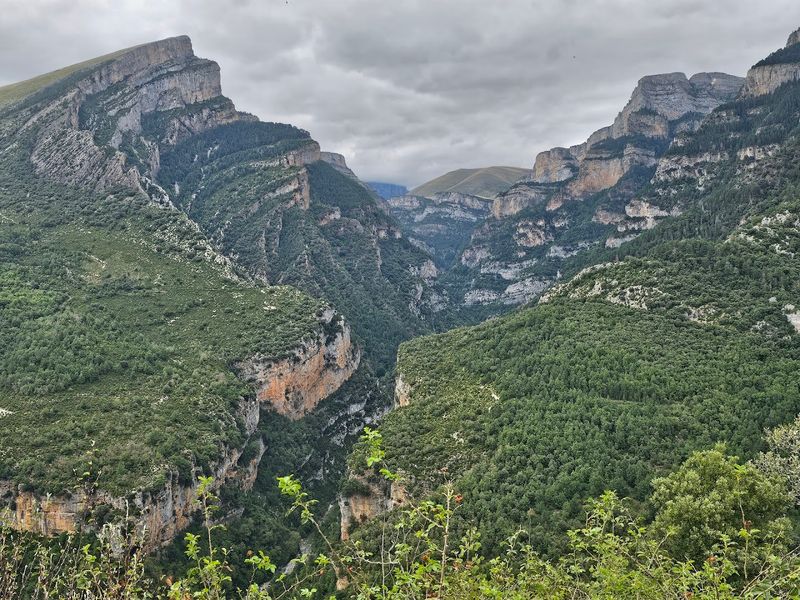
Straddling the border between Spain and France, this UNESCO site is so large and so varied that it almost defies easy description. The Pyrénées-Mont Perdu area combines one of Europe’s deepest canyons, the Ordesa gorge on the Spanish side, with alpine meadows, glacial lakes, and traditional mountain villages that have barely changed in centuries.
It is also one of only a handful of UNESCO sites recognized for both its natural and cultural significance simultaneously.
Mont Perdu itself rises to over 11,000 feet and is the highest limestone massif in Europe. The surrounding landscape was shaped by glaciers over millions of years, creating a terrain that shifts from lush green valleys to stark, windswept rock within a short hike.
Wildlife here includes chamois, griffon vultures, and the occasional brown bear.
The human side of the site is equally compelling. Traditional transhumance farming, where shepherds move their flocks between lowland winter pastures and highland summer grazing areas, is still practiced in some villages on both sides of the border.
That continuity between ancient agricultural traditions and a protected natural landscape is what earned the site its dual UNESCO status. The Spanish side, centered on Ordesa y Monte Perdido National Park, is stunning in every season and far less crowded than the French Pyrenees resorts nearby.
Segobriga Archaeological Park – Castile-La Mancha
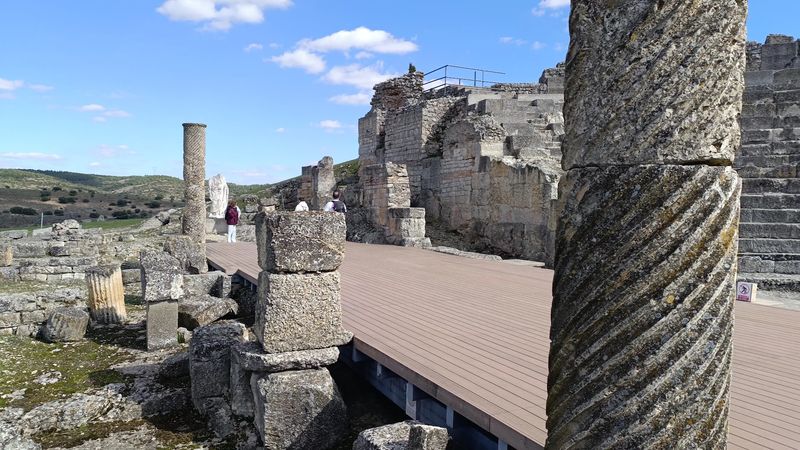
Somewhere in the flat, scrubby landscape of Castile-La Mancha, a complete Roman city is sitting in the open air waiting for people to notice it. Segobriga was a prosperous Roman town during the 1st and 2nd centuries AD, known for producing a mineral called lapis specularis, a type of selenite crystal used as window glass throughout the Roman Empire.
The town grew wealthy, built impressive public buildings, and then slowly faded into obscurity after the Empire collapsed.
What remains today is genuinely impressive. The theater, amphitheater, forum, baths, and several temples are all visible and accessible within the archaeological park.
Unlike many Roman sites that present roped-off ruins from a distance, Segobriga allows visitors to walk through the spaces and stand on the actual ancient ground.
The site sits on a hilltop surrounded by open countryside, giving it a quiet, windswept atmosphere that feels nothing like a conventional museum visit. An on-site museum displays artifacts recovered during excavations, including coins, pottery, and examples of the famous lapis specularis crystal.
Entrance fees are modest, crowds are minimal, and the whole experience takes about two hours at a relaxed pace. For anyone road-tripping through central Spain, Segobriga is the kind of unexpected stop that ends up being the highlight of the entire trip.
Vizcaya Bridge – Basque Country
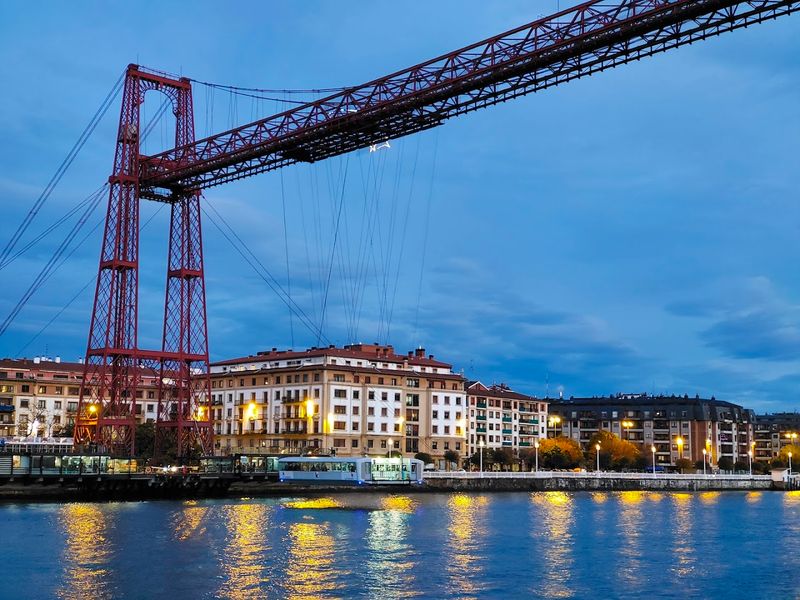
Most bridges just sit there looking sturdy and dependable. The Vizcaya Bridge, built in 1893, decided to do something far more interesting.
Instead of a conventional road or rail crossing, it uses a hanging gondola suspended from a high iron framework to ferry passengers and even vehicles across the Nervión River. This design, called a transporter bridge, was a revolutionary engineering solution at the time, and Vizcaya is the oldest surviving example anywhere in the world.
The bridge was designed by Alberto Palacio, a student of Gustave Eiffel, and it shows in the elegant lattice ironwork that rises 164 feet above the river. The gondola, which hangs from moving cables, carries up to six cars and several dozen passengers per crossing.
Remarkably, it still operates today on a regular schedule, serving commuters just as it did over a century ago.
Visitors can cross on the gondola for a small fee, or climb up to the walkway at the top for panoramic views of the estuary and the surrounding industrial landscape. The bridge connects the towns of Getxo and Portugalete, both of which have pleasant waterfronts worth exploring after the crossing.
Bilbao and the Guggenheim Museum get most of the Basque Country’s tourist attention, but the Vizcaya Bridge offers something equally fascinating and far more unexpected just fifteen minutes away.
Monuments of Oviedo and the Kingdom of Asturias – Asturias
Long before the great cathedrals of medieval Europe were built, a small Christian kingdom tucked into the mountains of northern Spain was quietly constructing some of the most elegant churches on the continent. The Kingdom of Asturias flourished between the 8th and 10th centuries, and the buildings it left behind in and around Oviedo represent a unique architectural style that bridges the gap between late Roman design and the Romanesque period that followed.
The most celebrated of these buildings are Santa María del Naranco and San Miguel de Lillo, both perched on a hillside just outside Oviedo. Santa María was originally built as a royal palace before being converted into a church, and its long, barrel-vaulted hall with open loggias on each end is unlike almost anything else from the period.
The craftsmanship feels surprisingly refined for a building over 1,100 years old.
Asturias is often bypassed by travelers heading to the more famous regions of Spain, which means these monuments receive a fraction of the attention they deserve. The region itself is dramatically beautiful, with green mountains, rugged coastline, and a food culture built around cider, fabada bean stew, and extraordinary cheese.
Visiting Oviedo and its pre-Romanesque churches feels like uncovering a chapter of European history that most people never knew existed.
Share this story