There is a restaurant in Bergen County, New Jersey, that stays open until 2 AM every single day of the week and serves food that most people in the area have never tried before. It brings the culinary traditions of Uzbekistan, a Central Asian country with a cooking history stretching back thousands of years, straight to a quiet stretch of road in the suburbs.
The menu is long, the portions are generous, and the setting is unlike anything else in the region. For anyone curious about what real Central Asian cooking looks and tastes like outside of a major city, this spot in River Edge is worth the trip.
Where to Find This Late-Night Central Asian Gem
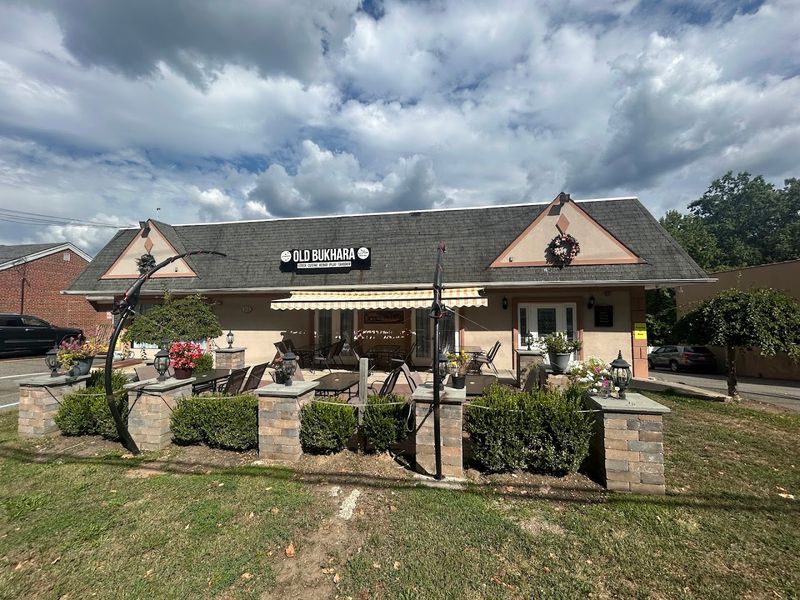
Old Bukhara sits at 606 Kinderkamack Rd, River Edge, NJ 07661, right along one of Bergen County’s busiest local roads. It is the kind of address that might surprise first-time visitors, because the restaurant’s interior and cultural identity feel worlds away from the suburban surroundings outside.
River Edge is a small borough in northeastern New Jersey, and it is not typically known as a culinary destination. That makes finding a full-scale Uzbek restaurant here all the more unexpected.
The building offers plenty of free parking, which is a genuine convenience for those driving in from surrounding towns or making the trip from New York City. The restaurant is open every day from 11 AM to 2 AM, making it one of the latest-closing dining spots in the entire county.
That late closing time alone sets it apart from almost every other restaurant on Kinderkamack Road.
The Story Behind the Name
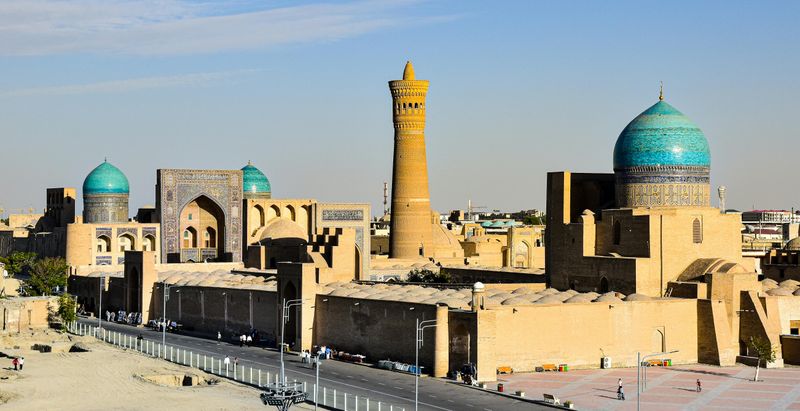
The name Old Bukhara is a direct reference to Bukhara, one of the oldest and most historically significant cities in Uzbekistan. For centuries, Bukhara served as a major stop along the Silk Road, the ancient network of trade routes connecting China, Central Asia, Persia, and Europe.
Uzbekistan itself is a doubly landlocked country, meaning it is surrounded entirely by other landlocked countries, and it is the most populated nation in Central Asia. Its culinary traditions are a blend of Turkic and Persian cooking styles, shaped by centuries of trade, migration, and regional agriculture.
The restaurant’s name is not just a branding choice. It signals a genuine commitment to representing that cultural and culinary heritage in a meaningful way.
Every dish on the menu connects back to a region with a deep and layered food history, and the name reminds diners of that connection before they even sit down.
A Space That Tells Its Own Story
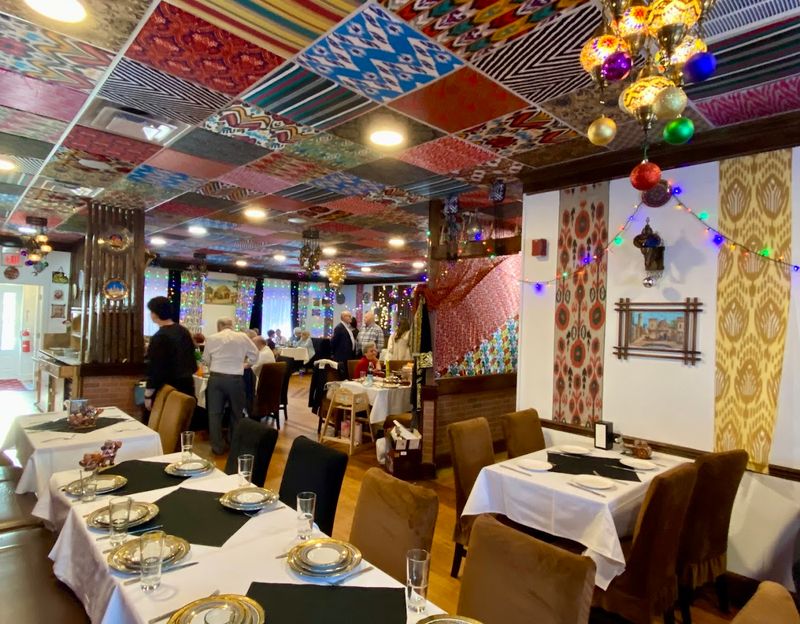
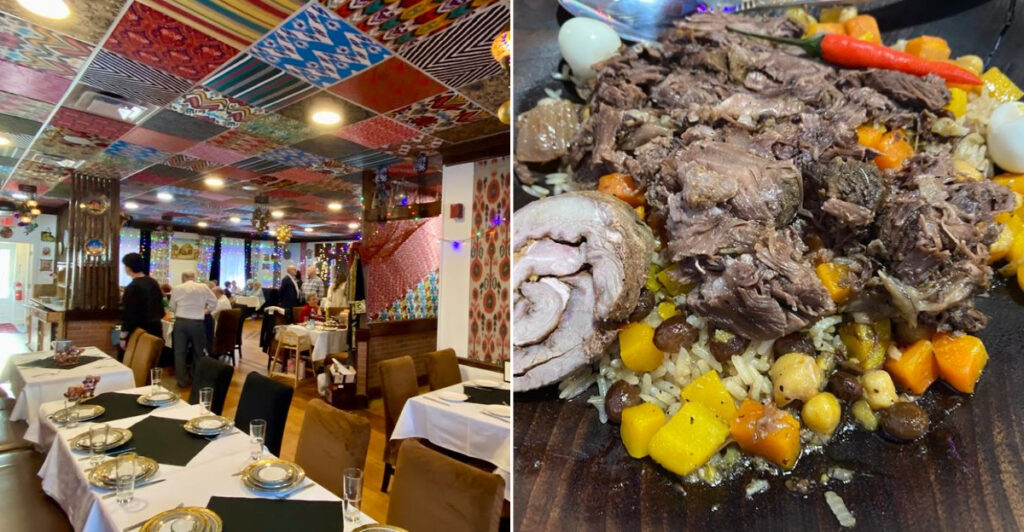
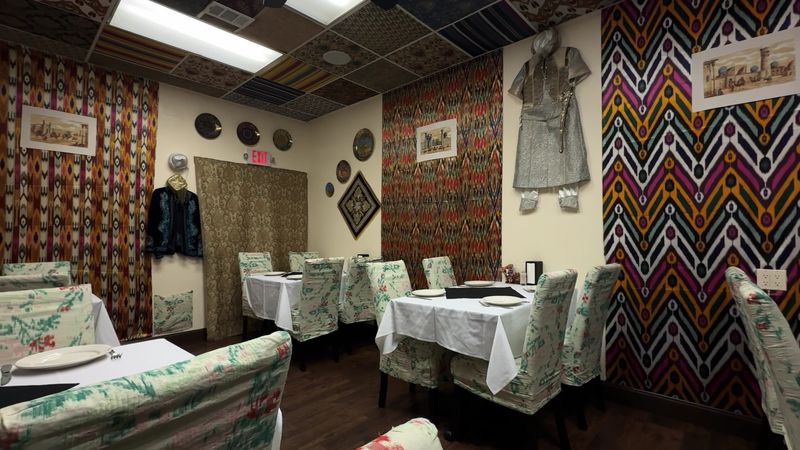
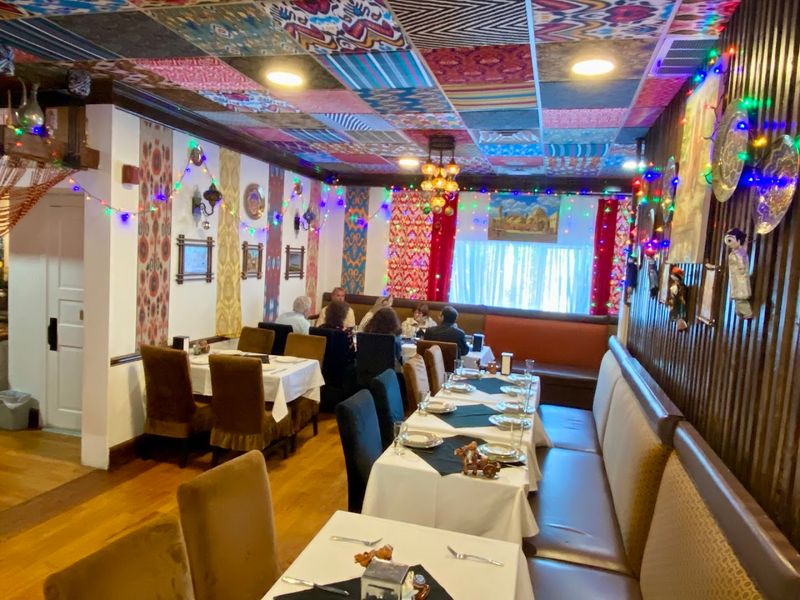
The interior of Old Bukhara is decorated with traditional Uzbek objects, including handmade instruments, national clothing, and carpets displayed across the walls. These are not generic decorations purchased in bulk.
They reflect the actual material culture of Uzbekistan and give the space a distinct character that is hard to replicate.
The restaurant is surprisingly spacious for a suburban New Jersey location. It operates across two levels, with the main dining room upstairs and additional seating in the basement.
There are also three separate rooms available, which makes the venue well-suited for private events, birthday parties, and group gatherings without requiring the entire restaurant to be booked.
A small stage is set up for live performances, and outdoor seating is available as well. The overall layout gives the space flexibility, whether a table for two or a party of twenty is walking through the door.
The design choices make it clear that this is a place built for celebration.
Open Until 2 AM, Every Day of the Week
One of the most practical and appealing facts about Old Bukhara is its operating hours. The restaurant opens at 11 AM and stays open until 2 AM, seven days a week, including weekdays.
That kind of schedule is genuinely rare in a suburban setting.
Most restaurants in Bergen County close well before midnight, especially on weeknights. Old Bukhara’s extended hours make it a reliable option for late dinners, post-event meals, and anyone who simply prefers eating later in the evening.
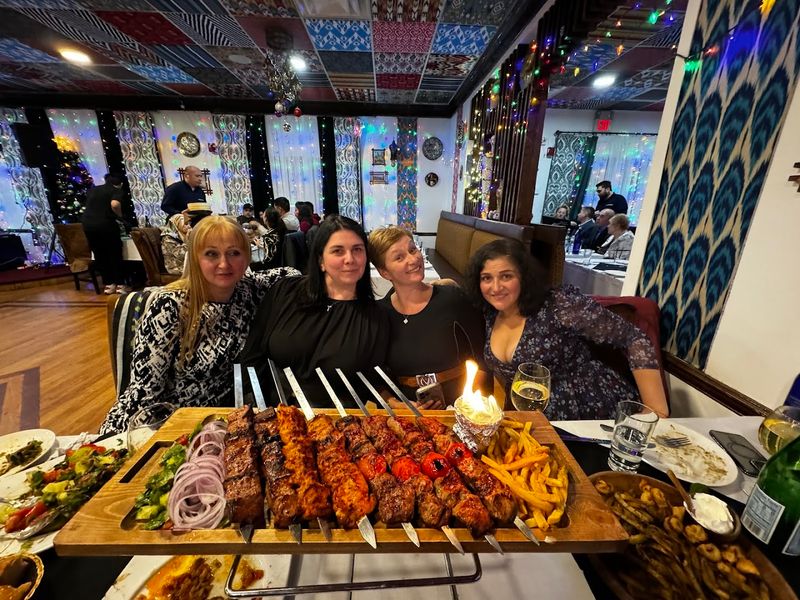
The late hours also contribute to the restaurant’s reputation as a nightlife destination, not just a dining spot. On weekends especially, the atmosphere inside shifts as the evening progresses, with music and dancing becoming a bigger part of the experience.
The kitchen keeps running through all of it, which means a full meal is available at midnight just as easily as it is at noon. That combination of food and atmosphere late into the night is a genuine differentiator in the local market.
A Menu That Takes Exploration Seriously
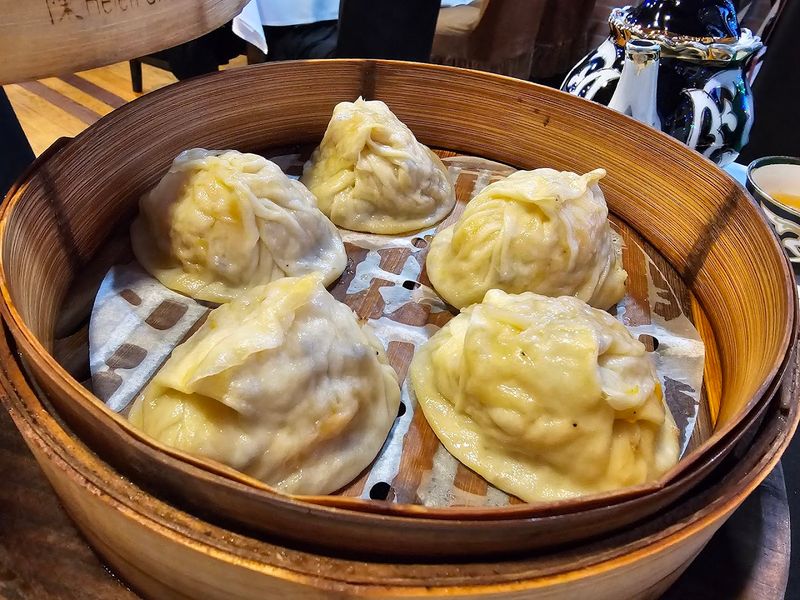
The menu at Old Bukhara is notably long. It covers a wide range of Uzbek and broader Central Asian dishes, from soups and salads to grilled meats, dumplings, rice dishes, noodle plates, and fish preparations.
For first-time visitors unfamiliar with the cuisine, it can feel like a lot to process.
Halal certification applies to all the food served, which broadens the restaurant’s appeal across different communities and dietary requirements. The portions tend to be generous, and some dishes are clearly designed as shared plates for the table rather than individual servings.
The menu rewards repeat visits. There are enough options that regulars can return multiple times and still find dishes they have not yet tried.
Some items, like certain fish preparations, come with specific details worth knowing in advance, so asking the staff for guidance on unfamiliar options is always a reasonable approach. The variety on offer is one of the restaurant’s clearest strengths.
The National Dish and Why It Matters
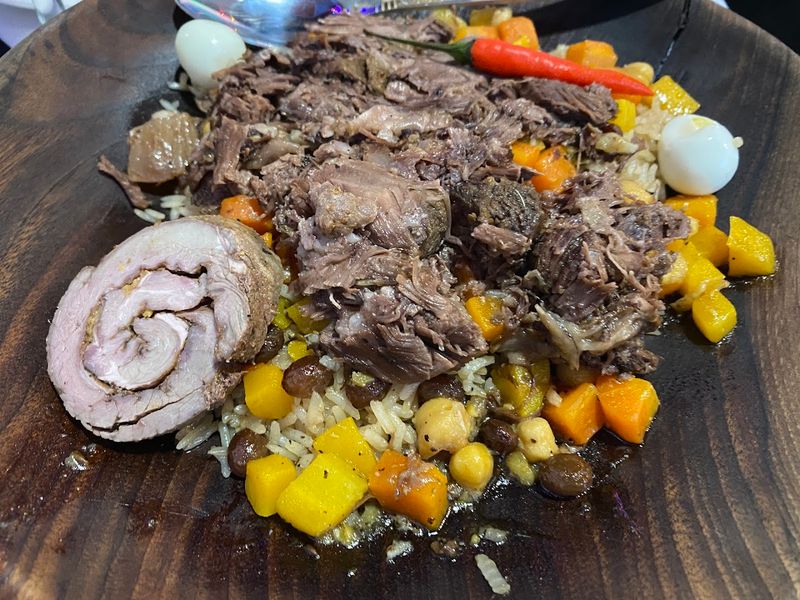
Plov, also known as pilaf, is the national dish of Uzbekistan, and Old Bukhara’s version, specifically the Samarkand Plov, appears consistently across accounts from people who have dined there. It is a rice-based dish cooked with meat, carrots, and a specific combination of spices that varies by region within Uzbekistan.
The Samarkand style is named after Samarkand, another historically significant city in Uzbekistan and one of the oldest continuously inhabited cities in Central Asia. The dish is deeply tied to Uzbek identity and is traditionally prepared for celebrations, gatherings, and important occasions.
At Old Bukhara, the plov is served in portions substantial enough to satisfy a hungry table. The dish represents a direct line to Uzbek culinary tradition and is often the first recommendation for anyone trying the cuisine for the first time.
Starting with plov is a reasonable way to anchor an entire meal around something genuinely central to the culture being represented.
Dumplings, Pastries, and the Art of the Cheburek
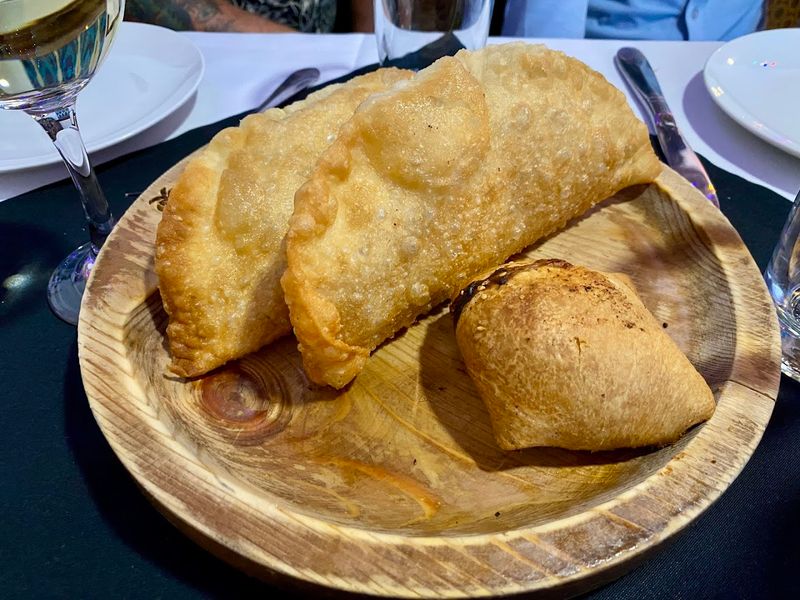
Among the most talked-about items on the menu are the filled pastries and dumplings, particularly the cheburek and the various manti preparations. The cheburek is a fried pastry that requires precise technique.
Too little cooking time and it does not work. Too much and it becomes unpleasant.
The version at Old Bukhara has earned consistent praise for getting that balance right, arriving crispy on the outside with a juicy interior.
Manti are steamed dumplings that come in different fillings, including pumpkin and meat variations. The tandoori crispy samsa, a baked pastry also available with pumpkin filling, adds another option for those who prefer something baked over fried.
These dishes reflect the broader Central Asian tradition of wrapping fillings in dough and cooking them in different ways. Each preparation has its own texture and character.
For a table looking to try multiple things without committing to full entrees immediately, starting with these items is a practical and satisfying approach.
Grilled Meats and Kebabs Worth the Drive
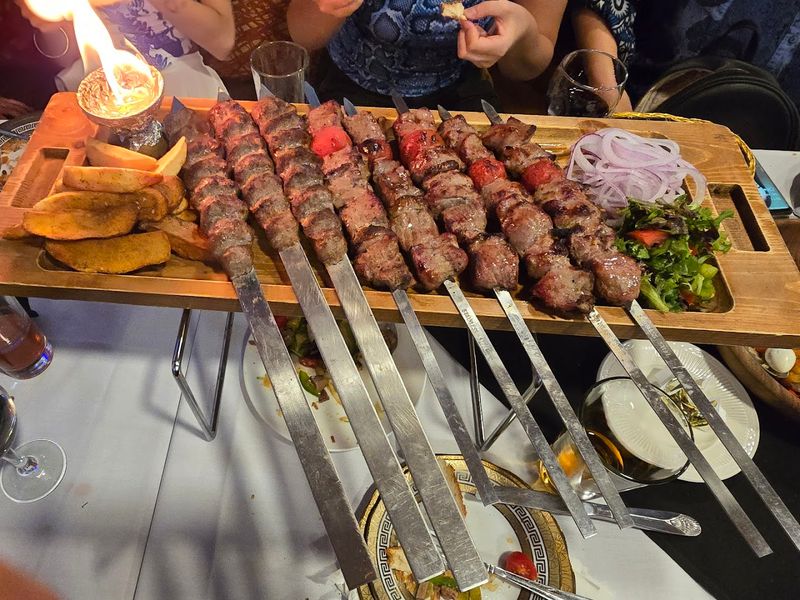
Grilled meats are a cornerstone of Uzbek cooking, and Old Bukhara takes that part of the menu seriously. Lamb and beef kebabs appear regularly among the dishes that stand out, and the restaurant’s handling of meat has drawn specific attention from people who know what well-prepared grilled protein should look like.
The kebabs are served on skewers and come in both lamb and chicken versions, giving the table options depending on preference. Beef dishes prepared with mushrooms in white sauce represent a different direction entirely, showing that the menu moves beyond the grill when needed.
For a cuisine where the quality of the meat preparation is often the clearest indicator of a kitchen’s skill level, Old Bukhara’s consistency with grilled dishes is a meaningful signal. The drive from New York City or from elsewhere in New Jersey for a plate of properly cooked kebabs is a calculation that many regular customers have already made and repeated.
Soups, Noodles, and Dishes You Have Probably Never Heard Of
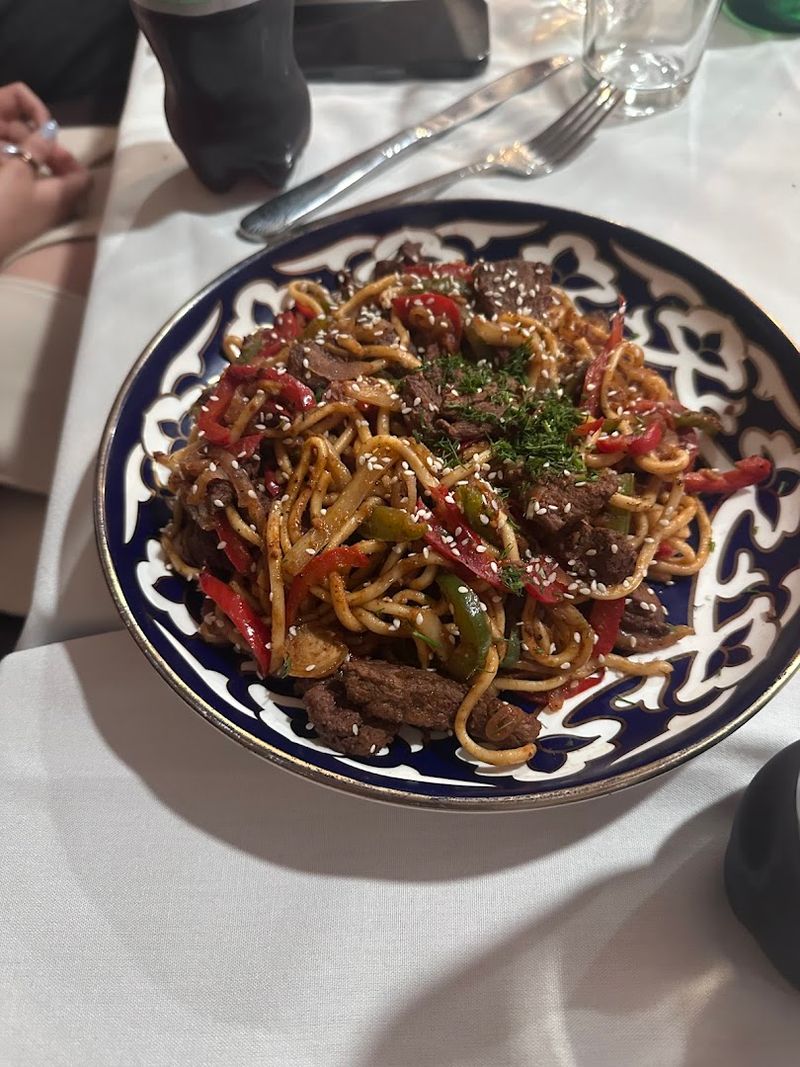
Beyond the grilled items and rice dishes, Old Bukhara’s menu includes a range of soups and noodle preparations that represent a different side of Uzbek cooking. Lagman, a noodle dish with meat and vegetables, and shurpa, a hearty meat and vegetable soup, are among the options that give the menu its depth.
Norin, a cold noodle dish served with meat, and chuchvara, small boiled dumplings often served in broth, add further variety for those willing to move past the more familiar items. Beshbarmak, a dish of boiled meat served over flat noodles, is another preparation with roots across Central Asia.
These are dishes that most diners in New Jersey will encounter for the first time at a place like Old Bukhara. They represent cooking traditions that developed far from the Mediterranean or European influences that dominate the regional restaurant landscape.
That unfamiliarity is part of what makes the menu worth working through over multiple visits.
What to Know Before You Go
A few practical details are worth knowing before visiting Old Bukhara for the first time. Making a reservation is strongly recommended, particularly for weekend evenings.
Walk-in guests on busy nights may be seated in the basement rather than the main dining room upstairs, and the two spaces offer noticeably different atmospheres.
The menu is extensive enough that first-time visitors benefit from taking a few minutes to look it over in advance. The restaurant’s website at oldbukharanj.com provides a starting point.
Staff are generally friendly and willing to help, though guidance through the menu can vary depending on how busy the evening is.
Large group reservations are well-supported by the space. The three separate rooms and the overall capacity make Old Bukhara a workable option for birthday dinners, family gatherings, and community events.
Arriving with a general sense of what to order and a reservation in hand makes the experience considerably smoother, especially for a first visit to Uzbek cuisine.
Why This Restaurant Has Built a Following Far Beyond River Edge
Old Bukhara has developed a following that extends well beyond Bergen County. People make the trip from New York City and from other parts of New Jersey specifically to eat there, which says something meaningful about what the restaurant offers that cannot easily be found elsewhere in the region.
The combination of factors that draws repeat customers is not simple to replicate. It includes a cuisine that is genuinely underrepresented in the Northeast, a space that supports both quiet dinners and lively celebrations, operating hours that accommodate late-night plans, and a menu large enough to justify multiple return visits.
For a suburban restaurant on a county road in northern New Jersey, that kind of reach is unusual. Old Bukhara has positioned itself as a destination rather than a convenience, and the regulars who drive past dozens of closer options to get there are the clearest evidence that the positioning has worked.
Some restaurants simply earn their reputation the old-fashioned way.
Share this story