Ireland is the kind of country where ancient legends feel completely believable. From twisted tree tunnels to cliffside ruins, every corner of the island seems to hold a secret waiting to be discovered.
Whether you love history, nature, or just the thrill of standing somewhere truly extraordinary, Ireland delivers magic in every direction. Get ready to explore 15 places so breathtaking, you might forget they’re actually real.
The Dark Hedges – County Antrim
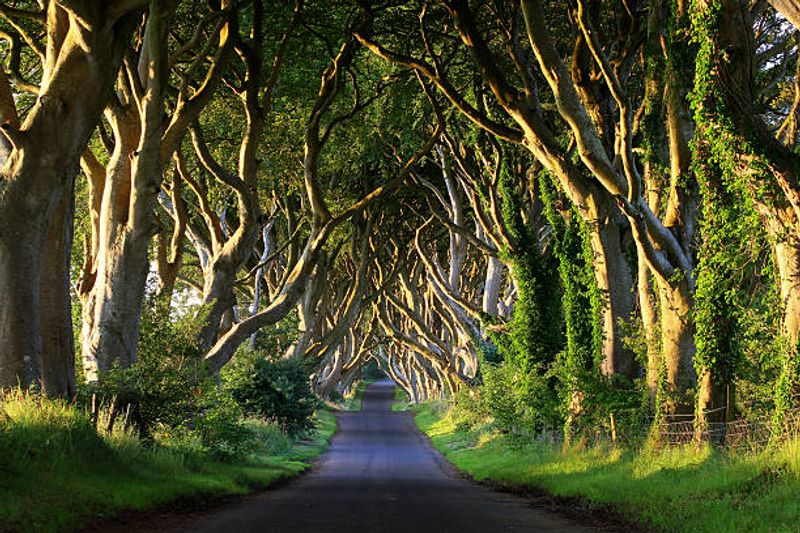
Some roads take you from one place to another. The Dark Hedges takes you somewhere else entirely.
Planted in the 18th century by the Stuart family, these ancient beech trees have grown so tall and tangled that they form a cathedral-like canopy over the road below.
Morning mist is the secret ingredient here. Arriving just after dawn, when fog drifts between the twisted trunks, turns the whole scene into something you would expect from a fantasy novel.
Game of Thrones fans will recognize it immediately as the Kingsroad, but the trees were already legendary long before cameras arrived.
The best time to visit is early morning on a weekday, before the tour buses show up. Parking is limited nearby, so plan ahead.
Locals say the Grey Lady, a ghostly figure, wanders the avenue at night, which is either terrifying or the best reason to book a night walk. Either way, the Dark Hedges earns its reputation as one of Ireland’s most hauntingly gorgeous spots without trying very hard at all.
Newgrange – County Meath
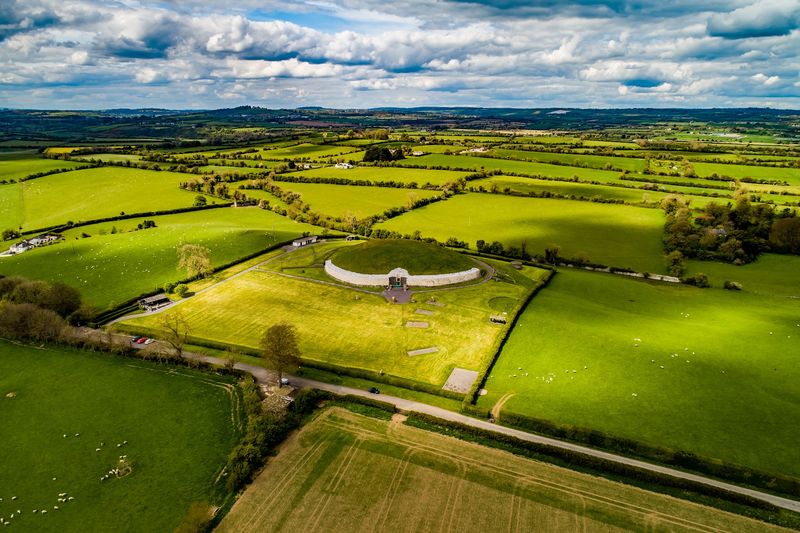
Older than Stonehenge and the Egyptian pyramids, Newgrange has been sitting quietly in County Meath for over 5,000 years. That fact alone is enough to stop you in your tracks.
Built by Neolithic farmers whose names we will never know, this massive circular mound hides a carefully designed stone passage inside.
Every year on the winter solstice, something remarkable happens. For about 17 minutes, sunlight enters through a tiny roof box above the entrance and travels down the 19-meter passage to light up the inner chamber.
No electricity, no technology, just ancient genius at work. The site is so popular that a lottery is held each year to decide who gets to witness the event in person.
Even without the solstice magic, Newgrange is stunning to visit. The white quartz facade sparkles in daylight, and the carved spiral patterns on the stones are mesmerizing up close.
The surrounding landscape is calm and green, giving the whole place a sacred, almost dreamlike quality. Booking a guided tour in advance is strongly recommended, as this UNESCO World Heritage Site draws enormous crowds throughout the year.
Kylemore Abbey – County Galway
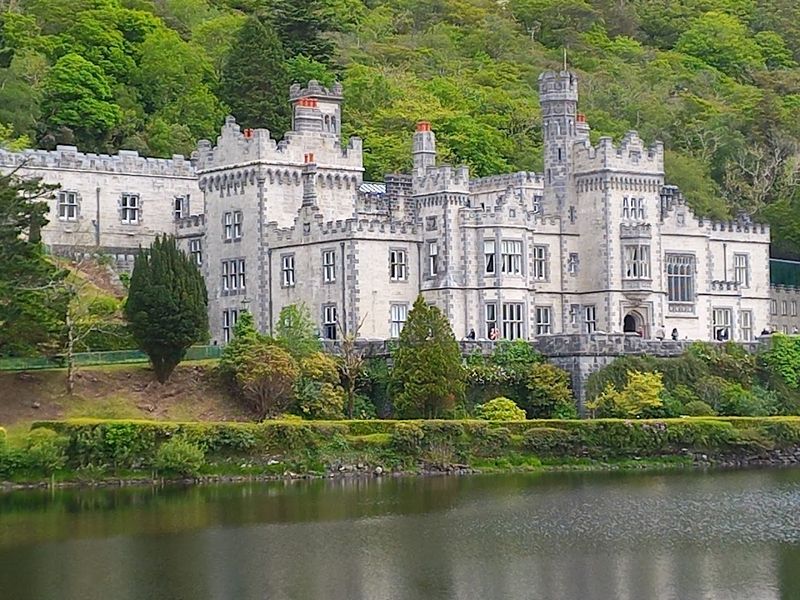
Reflected in the glassy surface of a lake, with mountains rising behind it and woodland spilling down to the water’s edge, Kylemore Abbey looks like a painting that forgot to stay on the canvas. Built in the 1860s by Mitchell Henry as a romantic gesture for his wife, the neo-Gothic castle has one of the most storybook settings in all of Ireland.
Tragedy followed the fairy tale, though. Margaret Henry died young, and Mitchell eventually sold the estate.
Benedictine nuns later made it their home in 1920 after fleeing Belgium during World War One, and they still live and work there today. The abbey houses a beautiful Victorian walled garden that has been lovingly restored and is absolutely worth the extra walk.
Inside, you can explore the Gothic church, the main abbey rooms, and a fascinating exhibition about the nuns’ history. The grounds stretch across thousands of acres, with forest trails that invite long, quiet walks.
A cozy cafe and craft shop sit nearby for anyone who needs a warm bowl of soup after exploring. Kylemore is family-friendly, visually stunning, and genuinely one of those places that exceeds expectations at every turn.
Glendalough – County Wicklow
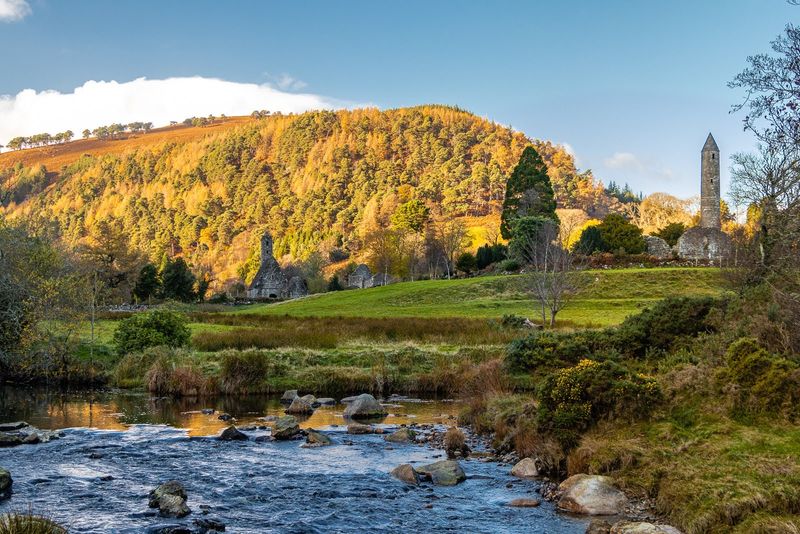
Tucked into a glacial valley in the Wicklow Mountains, Glendalough feels like the world pressed pause and never quite pressed play again. The name translates from Irish as “valley of two lakes,” and both lakes are stunning in their own quiet way.
But it is the ancient monastic ruins that truly steal the show.
St. Kevin founded a monastery here in the 6th century, seeking solitude in the wilderness. What grew from his simple hermit life became one of Ireland’s most important early Christian settlements.
The round tower still stands remarkably intact, rising over 30 meters into the sky and serving as both a landmark and a mystery, since scholars still debate exactly how monks used it.
Walking the trails around the upper and lower lakes takes you through ancient woodland, past mossy ruins, and along the water’s edge where herons stand perfectly still like statues. The atmosphere shifts depending on the weather.
Sunshine turns the valley golden and welcoming, while fog and rain transform it into something far more atmospheric and slightly eerie. Entry to the monastic site is free, making Glendalough one of the best value experiences in the entire country.
Rock of Cashel – County Tipperary
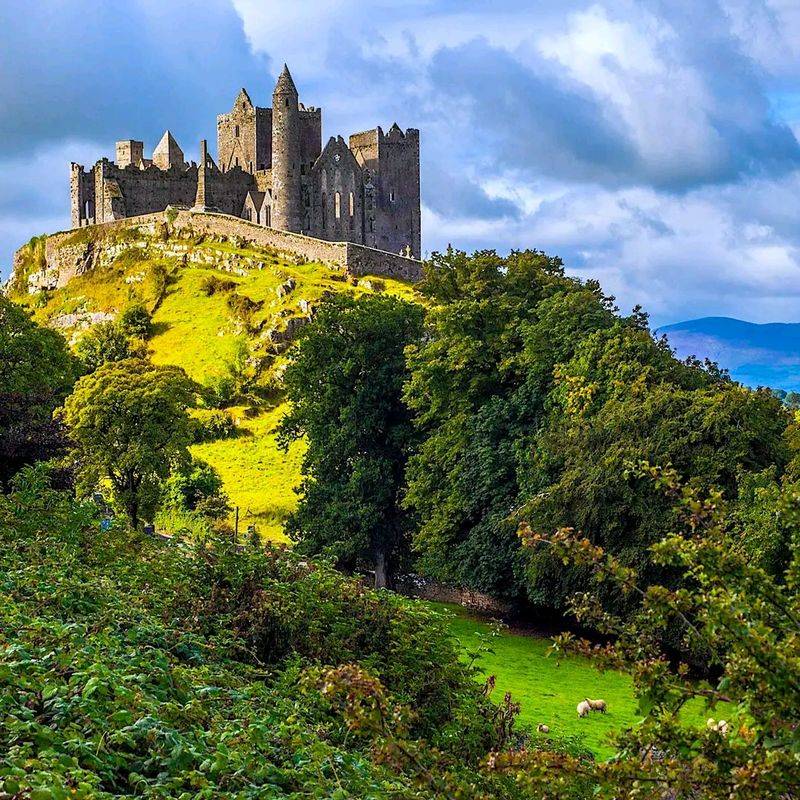
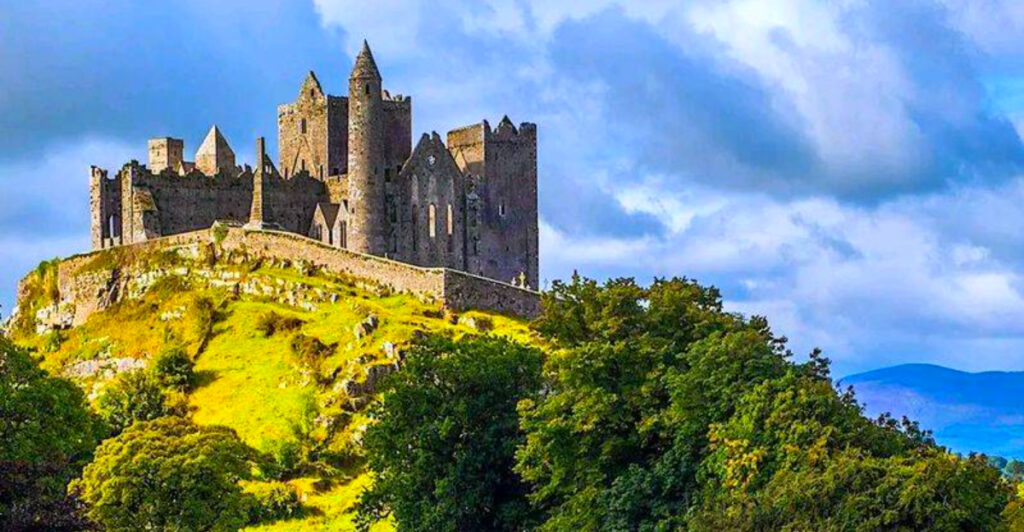
You can see the Rock of Cashel from miles away, rising sharply from the flat Tipperary plains like a medieval crown. The cluster of towers, cathedral walls, and a round tower perched on a limestone outcrop creates one of the most dramatic skylines in Ireland.
It is the kind of sight that makes you pull over the car immediately.
The site has a history stretching back to the 4th century, when it served as the seat of the Kings of Munster. St. Patrick himself is said to have visited, and legend claims he used a shamrock to explain the Holy Trinity here, which is one of Ireland’s most famous stories.
The buildings visible today mostly date from the 12th and 13th centuries, including the stunning Cormac’s Chapel, which contains rare Romanesque carvings.
Exploring the interior reveals intricately carved stone crosses, a medieval hall, and sweeping views across the surrounding countryside from the hilltop. The guided tours are enthusiastic and packed with fascinating stories.
Visiting at golden hour, when the warm light catches the old stone walls, turns the whole experience into something truly cinematic. Comfortable walking shoes are essential, as the grounds are uneven and the hill is steeper than it looks.
Dingle Peninsula – County Kerry
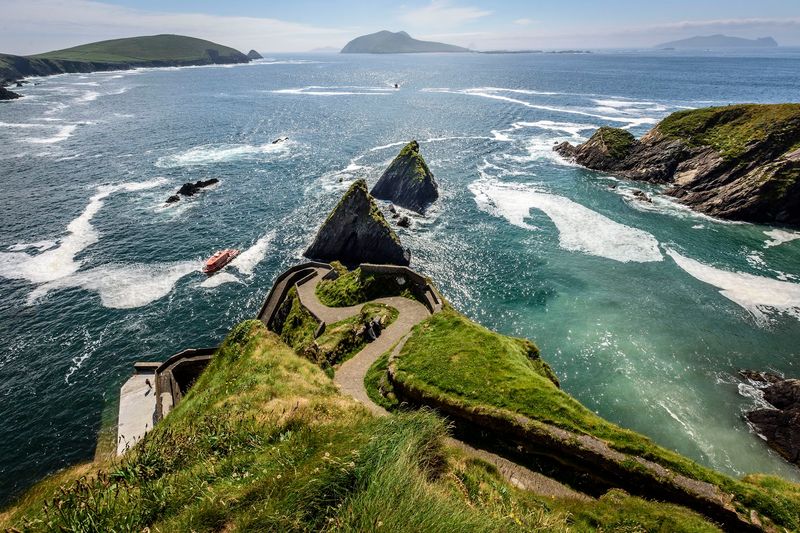
There is a particular shade of green that exists only on the Dingle Peninsula, the kind that makes you wonder if someone turned up the saturation on the whole landscape. Stretching out into the Atlantic in County Kerry, this narrow strip of land packs cliffs, mountains, beaches, ancient ruins, and charming villages into one breathtaking package.
The Slea Head Drive is the most popular route, looping around the tip of the peninsula with views that are almost unfairly beautiful. Stone beehive huts called clocháns, built over a thousand years ago, dot the hillsides like tiny honeycombs.
The town of Dingle itself is full of colorful pubs, excellent seafood restaurants, and independent shops that make it easy to spend an entire afternoon wandering happily.
Fungie the dolphin made Dingle world-famous for decades before his disappearance in 2020, but the peninsula’s charm runs much deeper than one beloved marine visitor. The Irish language is still spoken here as part of everyday life, giving the area a cultural richness that feels genuinely special.
Sunsets over the water here are the kind that make people go completely silent, which, if you know any tourists, is quite an achievement.
Ashford Castle – County Mayo
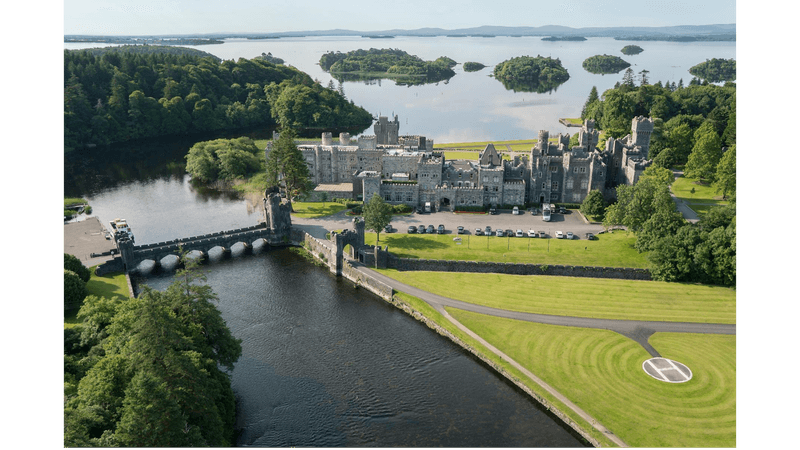
Staying at Ashford Castle is the closest most people will ever come to living inside a fairytale. Sitting on the shores of Lough Corrib in County Mayo, this 800-year-old castle has welcomed kings, presidents, and even a Hollywood film crew or two over its long and storied history.
Today it operates as one of Ireland’s finest five-star hotels.
The castle was originally built in 1228 and expanded over the centuries by various owners, including the Guinness family, who gave it much of its current grandeur. The surrounding estate covers nearly 350 acres of woodland, gardens, and lakeside trails, giving guests an enormous playground to explore.
Falconry, horse riding, clay pigeon shooting, and boat trips on the lough are just some of the activities on offer.
You do not need to book a room to appreciate Ashford Castle. Afternoon tea in the grand dining rooms is available to non-guests and comes with an atmosphere that is hard to match anywhere else in the country.
The manicured grounds are open for a stroll, and simply standing by the lake looking back at the castle towers is a genuinely jaw-dropping experience. Few places in Ireland command quite the same sense of regal, timeless wonder.
Slieve League Cliffs – County Donegal
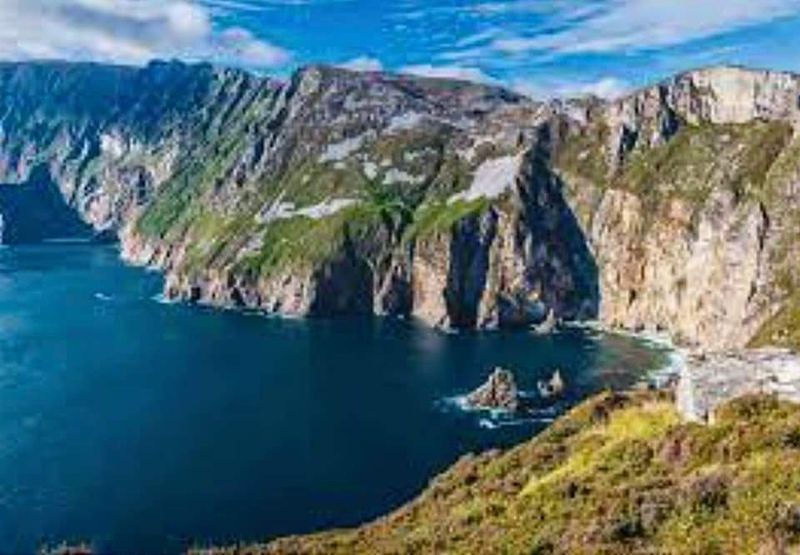
At nearly 600 meters above sea level, Slieve League is one of the tallest sea cliffs in Europe, and somehow, it still manages to fly under the radar compared to its more famous cousins in Clare. That is actually great news for visitors who prefer wild, uncrowded scenery over gift shop queues.
Donegal keeps things refreshingly real.
The cliffs are striped with extraordinary layers of quartzite, sandstone, and shale in shades of rust, silver, and green, making them look like a geological painting. On clear days, the views stretch out across the Atlantic toward the horizon, and on stormy days, the waves crashing hundreds of meters below create a sound and spectacle that feels genuinely primal.
Two viewing points are accessible by car, but the adventurous option is hiking the cliff-top trail known as One Man’s Pass, a narrow ridge walk that rewards the brave with truly unforgettable panoramas. The path is well-maintained but requires a good head for heights.
The village of Teelin at the base of the cliffs has a small pier and a handful of local pubs where you can warm up after the wind has done its very best to rearrange your hair and your plans.
Menlo Castle – County Galway
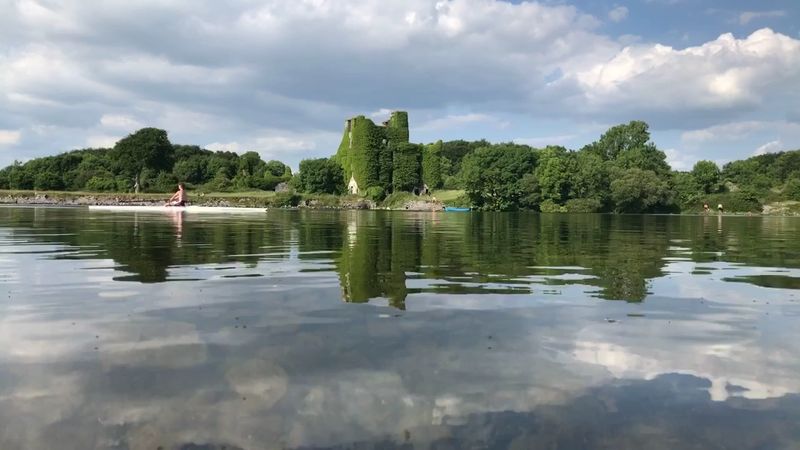
Most people walk straight past Menlo Castle without realizing it exists, which somehow makes it even more magical. Hidden behind a tangle of trees just outside Galway city, these ivy-smothered ruins sit beside the River Corrib in a state of beautiful, crumbling silence.
The castle burned down in 1910 under mysterious circumstances, and nature has been reclaiming it ever since.
The Blake family, one of Galway’s famous Fourteen Tribes, built the original castle in the 16th century. The ruins that remain are genuinely atmospheric, with broken walls rising through thick curtains of ivy and wildflowers pushing up through the stone floors.
The riverside location adds an extra layer of quiet drama, especially when the Corrib is running fast after rain.
Getting there requires a pleasant walk along the riverbank from the city, making it a lovely half-day adventure combined with a stroll through Galway’s charming streets. There are no entrance fees, no guided tours, and no gift shop, just you, some ancient stonework, and the sound of the river.
Local legend claims the ghost of a woman in white has been spotted near the ruins, which is exactly the kind of detail that makes Menlo Castle impossible to forget.
Giant’s Causeway – County Antrim
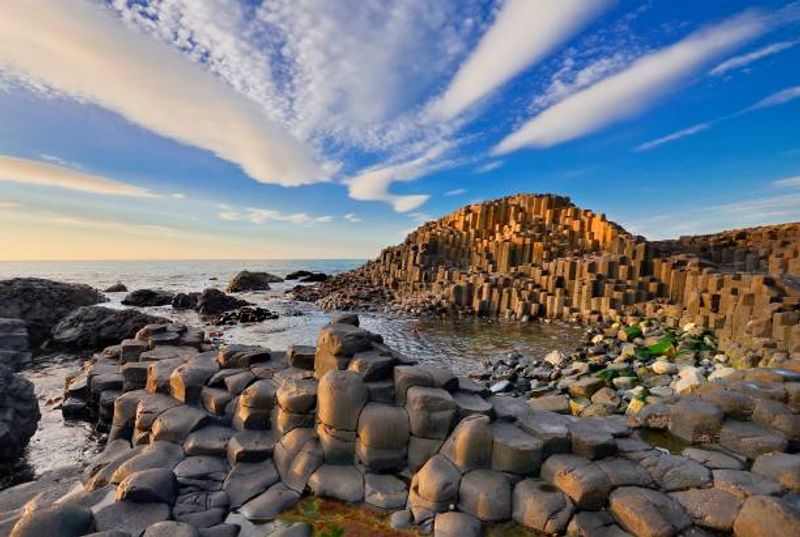
Around 60 million years ago, a volcanic eruption cooled so slowly and evenly that it produced thousands of perfectly interlocking hexagonal basalt columns stretching from the cliffs into the sea. Science explains the how, but it does absolutely nothing to prepare you for the sheer weirdness and wonder of standing on them in person.
Irish mythology offers a far more entertaining explanation. The giant Finn McCool, apparently not one to back down from a challenge, built the causeway as a bridge to Scotland so he could fight his rival Benandonner.
When he saw the size of his opponent, the story takes a sharp comedic turn involving a disguise and a very quick retreat. The Scottish side of the causeway, known as Fingal’s Cave, still exists across the water.
The site is managed by the National Trust and sits within a UNESCO World Heritage Site. The visitor centre is modern, informative, and a good starting point before heading down to the rocks.
Wear shoes with good grip, because the columns are slippery when wet, which in Antrim is most of the time. Arriving early beats the crowds and rewards you with the rare pleasure of having one of the world’s great geological wonders almost entirely to yourself.
Torc Waterfall – County Kerry
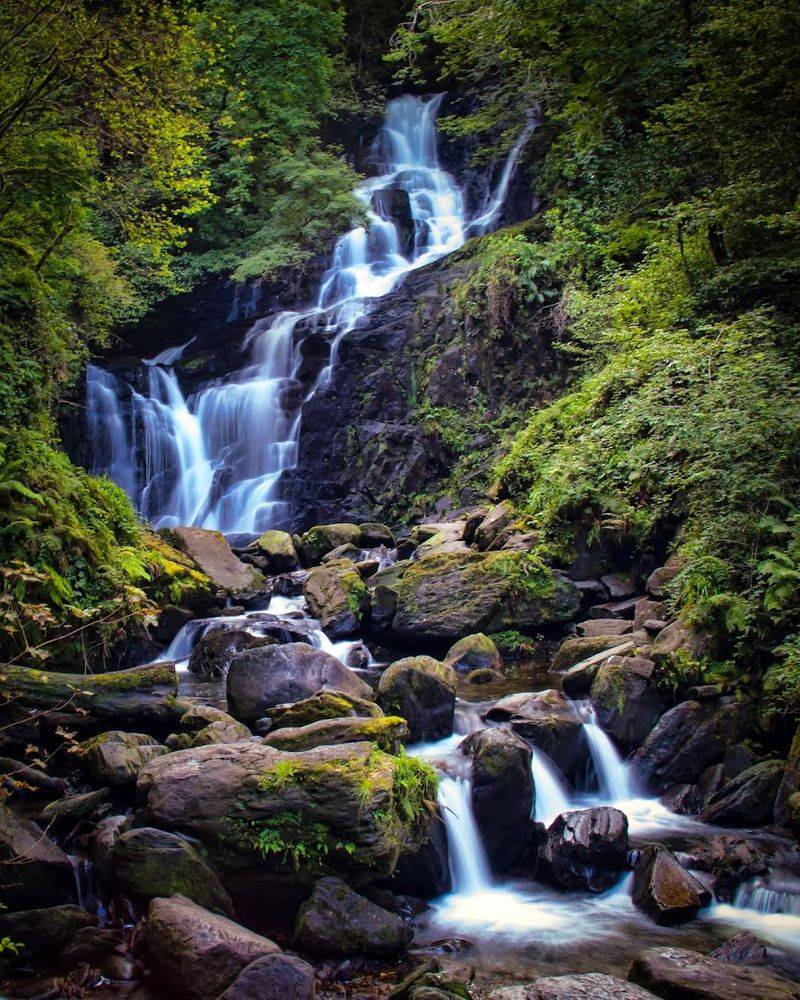
Follow a short forest trail through Killarney National Park and the sound of rushing water grows louder before the trees suddenly open up to reveal Torc Waterfall tumbling 20 meters over ancient mossy rock. It is the kind of place that makes you stop talking mid-sentence and just stare.
The woodland surrounding it is thick with old oak trees, ferns, and the kind of deep green that only exists in Kerry.
The waterfall is fed by the Owengarriff River flowing down from the Mangerton Mountains above. After heavy rain, the cascade doubles in power and the spray drifts out across the viewing area in cool, refreshing clouds.
The whole scene has a wild, untouched quality that makes it easy to understand why this area features so heavily in Irish mythology and folklore.
The main viewing platform is only a short walk from the road, making it accessible for most visitors. A longer trail continues uphill through the forest to a panoramic viewpoint overlooking the lakes of Killarney, which is worth every step of the climb.
Combining Torc Waterfall with a visit to Muckross House and Gardens nearby makes for a genuinely perfect day out in one of Ireland’s most beloved national parks.
Brigit’s Garden – County Galway
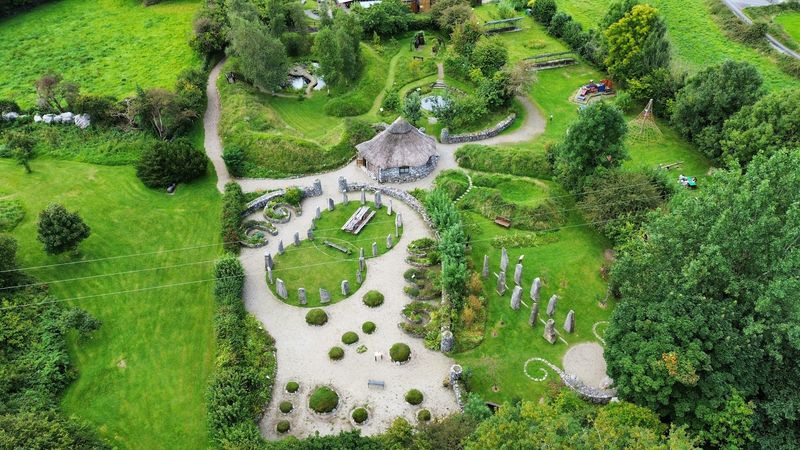
Named after the beloved Celtic goddess Brigid, this garden near Roscam in County Galway is one of those places that feels intentionally designed to make you slow down. Four themed gardens represent the ancient Celtic festivals of Imbolc, Bealtaine, Lughnasa, and Samhain, weaving mythology and nature together in a way that is genuinely creative and deeply peaceful.
A full-size replica of a megalithic cairn sits at the heart of the Samhain garden, aligned with the winter solstice sunrise just like its prehistoric inspirations. Stone circles, fairy forts, and carved wooden sculptures appear around every corner, each connected to a specific myth or seasonal story.
The wildflower meadows are spectacular in summer, buzzing with pollinators and painted in shades of purple, yellow, and white.
Children love the space because there is always something to discover, a hidden path, a carved figure, a thatched roundhouse where storytelling sessions are sometimes held. Adults tend to find it unexpectedly moving, especially the quieter woodland sections where the light filters through the trees at just the right angle.
A charming cafe on site serves homemade food using local ingredients. Brigit’s Garden is small in size but enormous in atmosphere, and it rewards visitors who take their time exploring every corner.
Great Blasket Island – County Kerry
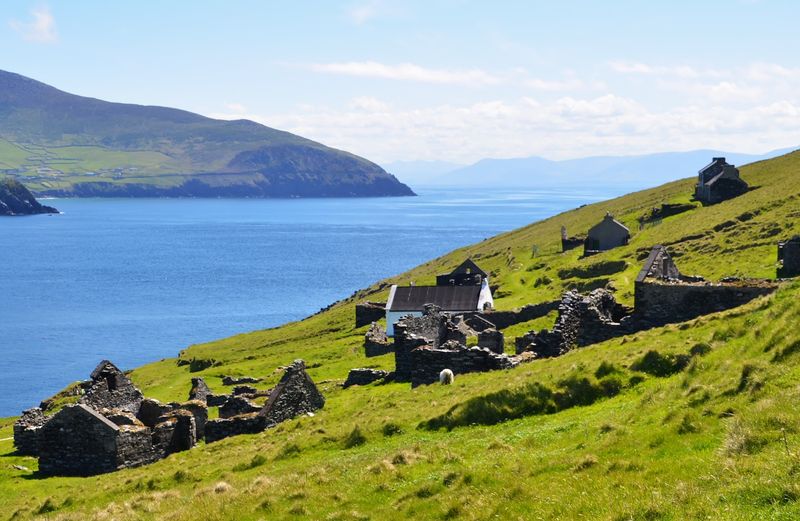
Just three kilometers off the tip of the Dingle Peninsula, Great Blasket Island sits in the Atlantic like a place time gave up trying to reach. The last permanent residents left in 1953, evacuated by the Irish government after years of isolation and hardship, and the abandoned stone cottages they left behind have never been rebuilt or modernized.
Walking through them is quietly extraordinary.
The island produced three remarkable writers in the early 20th century, Tomas O’Crohan, Peig Sayers, and Maurice O’Sullivan, whose books about island life became classics of Irish literature. Their words transformed a remote rock in the Atlantic into one of the most written-about communities in the world.
Reading any of their books before visiting adds a whole extra layer to the experience.
Ferries run from Dunquin Pier during summer months, weather permitting, and the Atlantic swell can make the crossing lively. Once on the island, walking trails take you up to high viewpoints where seals, dolphins, and seabirds are regularly spotted below.
There are no cars, no shops, no Wi-Fi, and no noise beyond the wind and the waves. For anyone who has ever wondered what genuine silence sounds like, Great Blasket Island has a very convincing answer.
Tollymore Forest Park – County Down
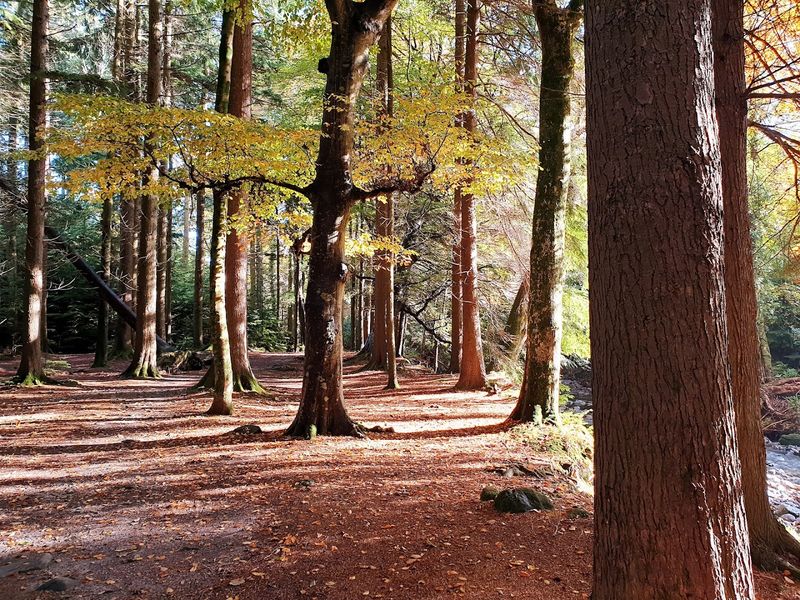
Tollymore Forest Park looks like the kind of forest where enchanted creatures would feel completely at home, and as it turns out, Game of Thrones producers agreed. Several scenes from the show were filmed here, drawn by the ancient trees, stone bridges, and unmistakably cinematic atmosphere.
But Tollymore was already spectacular long before any production crew arrived with cameras.
The park sits at the foot of the Mourne Mountains in County Down and covers over 630 hectares of mixed woodland, riverside trails, and open hillside. The Shimna River runs through the heart of the forest, crossed by a series of beautifully crafted stone arched bridges that are genuinely centuries old.
The roots of the ancient trees grip the riverbanks in dramatic, twisting formations that look almost deliberately artistic.
Hiking trails range from gentle riverside strolls to longer routes that climb into the lower Mournes for mountain views. Red squirrels live in the park, making any walk feel like a bonus wildlife experience.
The forest is particularly magical in autumn, when the canopy turns gold and copper and fallen leaves carpet every path. Admission is charged per car rather than per person, making it excellent value for families looking for a full day of outdoor adventure in genuinely spectacular surroundings.
The Long Room Library – Dublin
Walking into the Long Room at Trinity College Dublin feels like stepping into a dream that a very well-read person had once. The barrel-vaulted ceiling soars overhead, two levels of dark oak shelves stretch away into the distance, and the smell of old books hangs in the air like the world’s most satisfying perfume.
It holds over 200,000 of the oldest volumes in the library’s collection.
Built in the early 18th century, the Long Room was originally designed with a flat ceiling, which was raised in the 1850s to create extra shelf space. The result is one of the most architecturally stunning library interiors anywhere in the world.
A row of marble busts lines the central aisle, including one of Jonathan Swift, author of Gulliver’s Travels, who studied at Trinity College centuries ago.
The star attraction housed here is the Book of Kells, an illuminated manuscript created by Celtic monks around 800 AD, featuring incredibly detailed artwork that still astonishes historians and artists today. Tickets should be booked online well in advance, especially during peak tourist season, as queues can be very long.
The experience is genuinely worth every bit of planning. Few libraries in the world manage to feel both deeply scholarly and completely magical at the same time.
Share this story