There is a restaurant in Boston where the wooden booths have absorbed nearly two centuries of conversation, laughter, and the briny scent of freshly shucked oysters. It has outlasted wars, recessions, and every food trend that ever tried to make clam chowder seem uncool.
Families who visited as children now bring their own kids, and those kids grow up to do the same. This place is not just a restaurant; it is a living piece of American history that keeps earning its seat at the table, one bowl of chowder at a time.
A Historic Address on Union Street
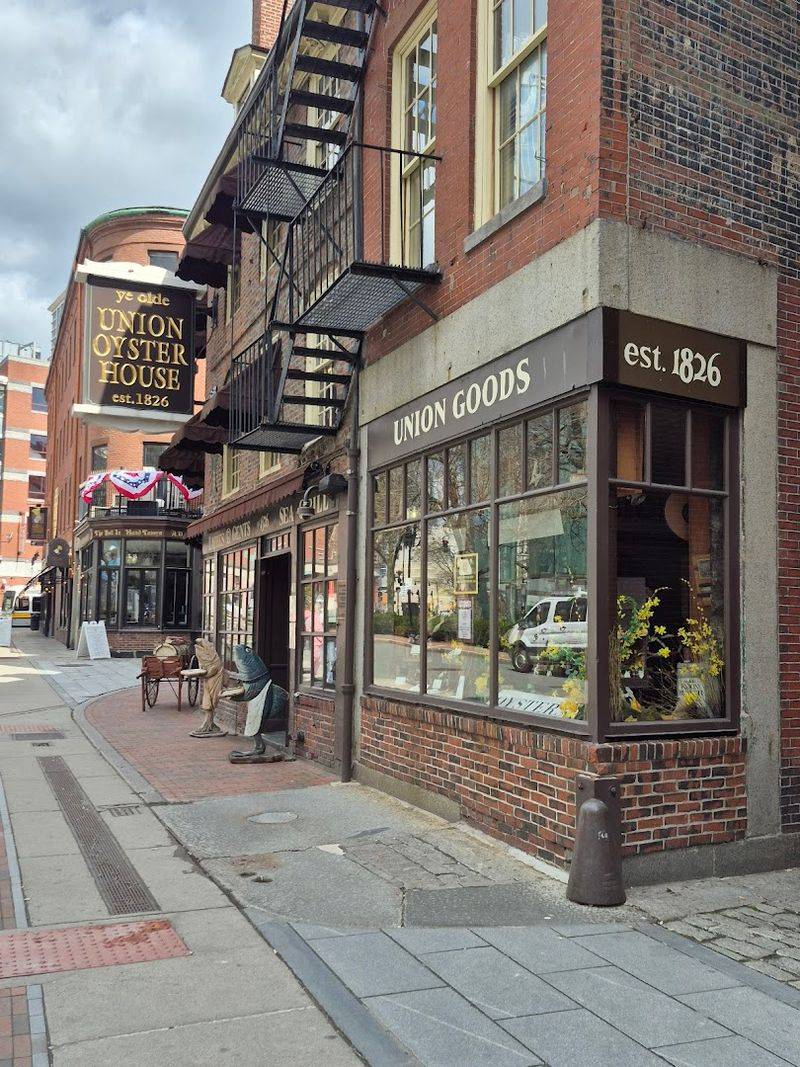
Right at 41 Union Street in Boston, Massachusetts, sits a building that has been feeding people since 1826. That is not a typo.
Union Oyster House holds the title of America’s oldest continuously operating restaurant, and it wears that crown without any hint of pretension.
The address puts you squarely in the heart of Boston’s historic district, just steps from Faneuil Hall and the Freedom Trail. You could easily stumble upon it mid-sightseeing, which is exactly how many visitors discover it for the first time.
The red-brick exterior and hand-painted signage look like they belong on a postcard, and honestly, they do. Tourists snap photos outside before they even walk through the door.
But unlike some landmarks that trade entirely on reputation, this one backs up its storied past with food worth returning for.
Visitors from as far away as California and, yes, even Oklahoma have made this a deliberate stop on their Boston itineraries. The phone number is +1 617-227-2750, and the website at unionoysterhouse.com makes reservations straightforward.
History this accessible rarely comes with such a practical front door.
Nearly Two Centuries of Unbroken History
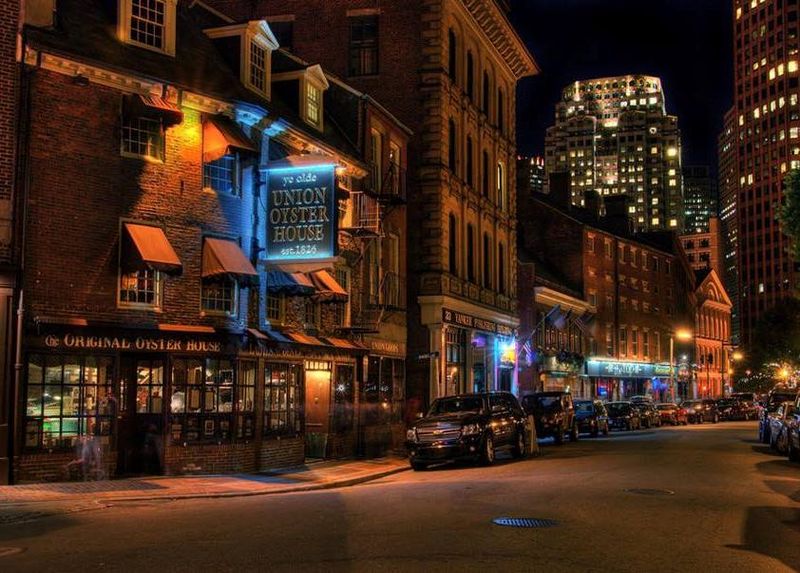
Most restaurants celebrate a tenth anniversary with a party. Union Oyster House recently marked its 200th year in business, which puts it in a category that has almost no peers anywhere in the United States.
That kind of longevity does not happen by accident.
The building itself dates back even further than the restaurant. Before oysters were ever shucked at the curved bar, the space served as a dry goods store and, during the Revolutionary War era, as a place where the Massachusetts Spy newspaper was printed.
History is genuinely baked into the walls here, not just painted on for atmosphere.
Daniel Webster, one of America’s most celebrated 19th-century statesmen, was a regular customer who reportedly consumed alarming quantities of oysters at the bar. His preferred spot is still pointed out to guests today, which adds a layer of storytelling that no museum exhibit could quite replicate.
The restaurant has survived every major shift in American dining culture by staying true to its New England seafood roots. That consistency, across generations and centuries, is what turns first-time visitors into lifelong fans who eventually pass the tradition down to their own families.
The Oyster Bar That Started It All
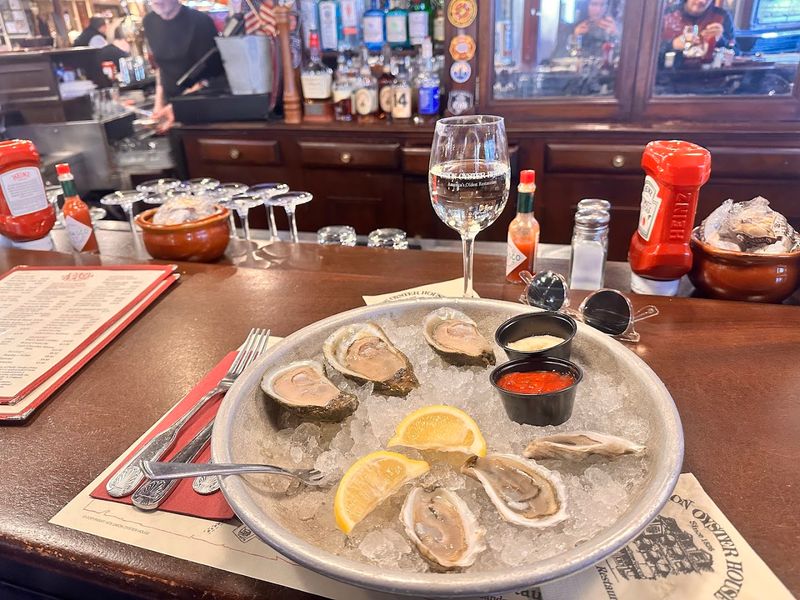
The semicircular oyster bar near the entrance is the soul of this restaurant. It seats a handful of lucky guests at a time, and snagging one of those spots on a busy Friday night feels like a small personal victory worth celebrating quietly.
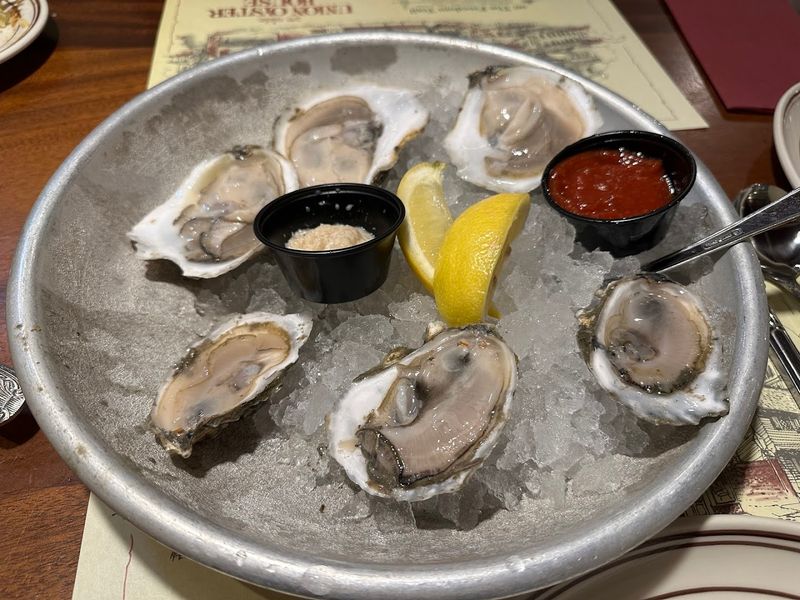
The oyster shuckers work with a focused, practiced rhythm that is genuinely satisfying to watch. Fresh oysters arrive from sources ranging across New England and into Canada, giving the selection real variety on any given visit.
The cherrystones are particularly impressive, arriving clean, large, and juicy without a trace of grit.
Sitting at the bar means you get to watch each oyster opened right in front of you, which adds a live-performance quality to the meal. The housemade cocktail sauce earns its place on the plate without overpowering the natural brine of the shellfish.
Regulars who visit consistently report that the bar experience feels more intimate than dining at a table, and the shuckers are known for being friendly and knowledgeable about the day’s selection. One guest visited on New Year’s Eve and returned two days later specifically to sit at the bar again, which says everything about the pull of that curved wooden counter.
Clam Chowder Worth Every Spoonful
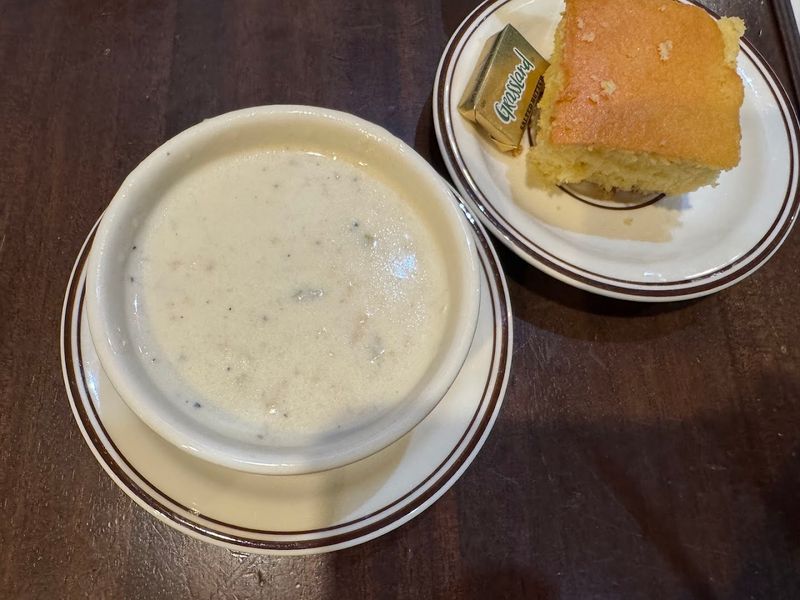
New England clam chowder is practically a religion in Boston, and Union Oyster House has been practicing it longer than almost anyone else. The bowl arrives thick, creamy, and hearty in a way that feels genuinely comforting rather than heavy.
The chowder is not a flashy dish. It does not arrive garnished with microgreens or drizzled with anything trendy.
What it does is deliver consistent, honest flavor that matches the setting perfectly. The clams are tender, the broth is rich, and the seasoning is restrained enough to let the seafood speak for itself.
Multiple visitors single out the chowder as a highlight worth ordering even when the rest of the table is focused on raw shellfish or lobster dishes. It pairs well with the complimentary cornbread that arrives at the table, which has its own devoted following among regulars.
The cornbread recipe is apparently so well-regarded that the restaurant sells a packaged mix to take home. One traveler bought a bag, had it inspected by airport security on the way out of Boston, baked it at home, and reported it tasted just as good as the restaurant version.
That is the kind of detail that tells you the food here has real staying power beyond the zip code.
Lobster Rolls and the Price of Perfection
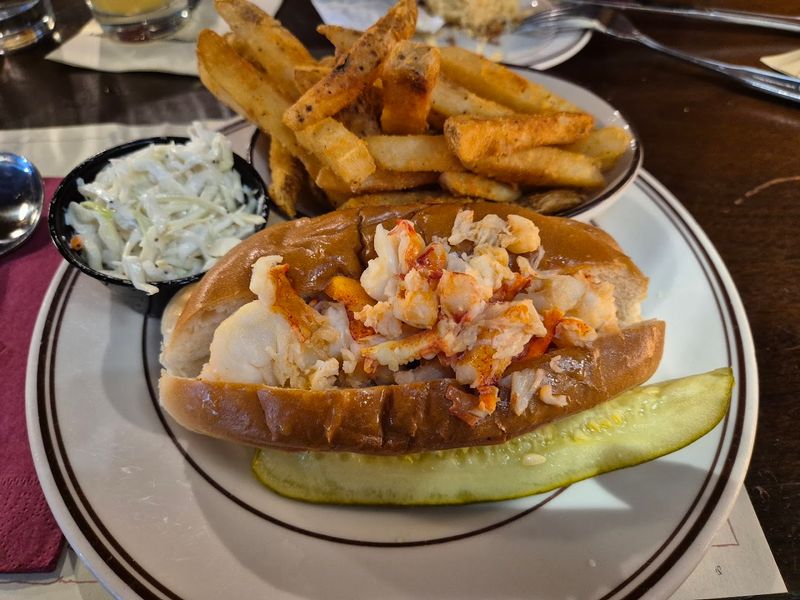
The lobster roll at Union Oyster House is the kind of dish that sparks genuine debate among Boston food lovers. At around $43.95, it is not a casual impulse order, and opinions on whether it earns that price tag tend to be strong in both directions.
The cold version features chilled lobster meat paired with a warm, toasted bun, and the contrast works well. The hot version arrives with butter, which is a simpler and arguably more honest preparation.
Both options use lobster that tastes genuinely fresh rather than previously frozen and thawed.
Some guests feel the portion size justifies the market price, while others wish the sauce ratio leaned a bit more generous. The key is going in with clear expectations: this is a classic preparation, not a maximalist modern interpretation loaded with aioli and pickled everything.
The restaurant also offers a hot lobster roll served with butter that draws consistent praise for its clean, straightforward flavor. Visitors from Oklahoma and beyond make a point of ordering it as a bucket-list Boston experience, and most leave satisfied even when the bill makes them pause briefly before signing.
Fresh lobster in a historic setting has always commanded a premium, and this one at least delivers on the freshness.
The Atmosphere Inside the Walls
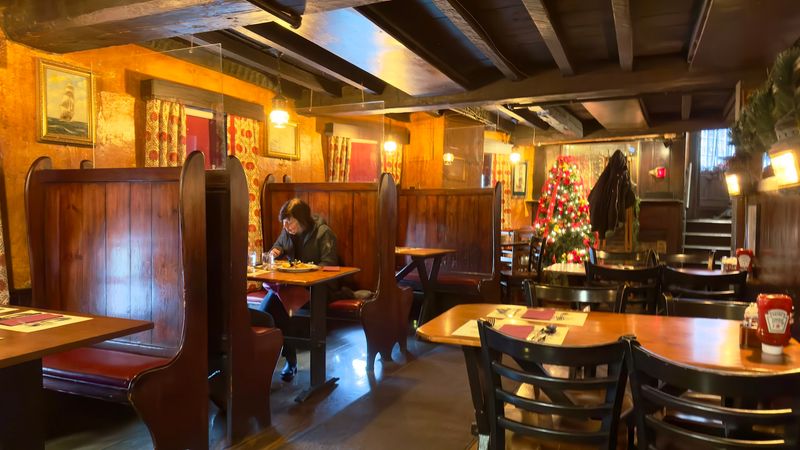
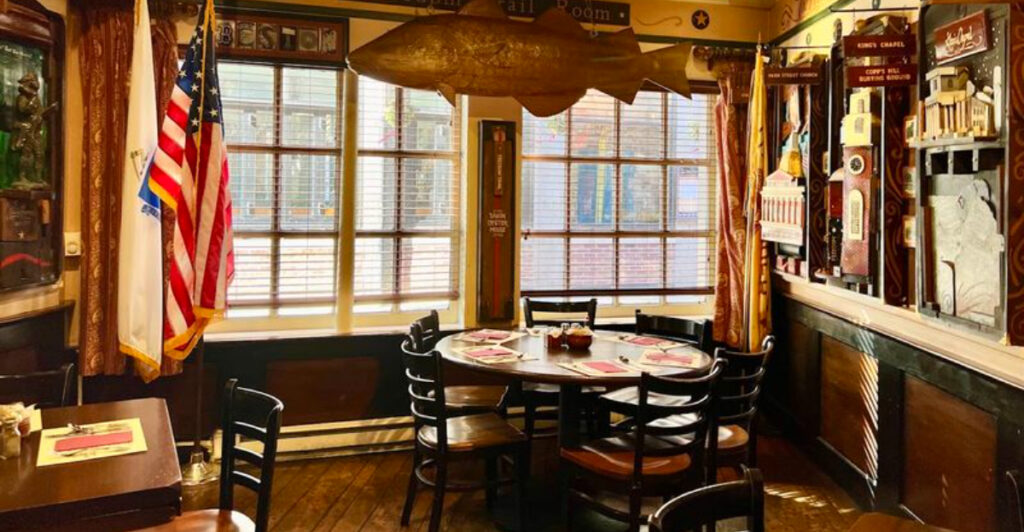
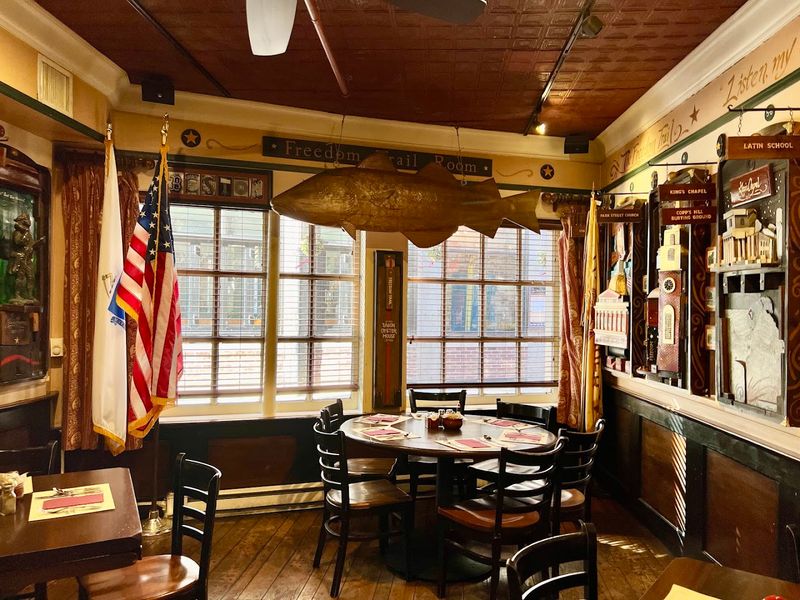
The booths at Union Oyster House are the kind that make you want to linger long after the plates are cleared. They are dark wood, worn smooth by generations of elbows, and they offer a sense of privacy that is surprisingly rare in a restaurant this popular.
The overall atmosphere leans comfortably into its own age. Old photographs, nautical details, and the general patina of a building that has been in continuous use since 1826 create an environment that no interior designer could manufacture from scratch.
It simply takes time, and this place has had plenty of it.
The upstairs dining room adds additional seating, though some guests have noted it can run cooler than the ground floor on winter evenings. The ground-floor tables and bar area tend to feel warmer and more energetic, especially on weekends when the room fills quickly.
There is a particular booth that carries its own celebrity weight. President John F.
Kennedy reportedly dined at a specific booth here regularly, and that spot is now marked and pointed out to guests who ask about it. Seeing the Kennedy booth in person adds a layer of American history to the meal that turns dinner into something closer to a genuine cultural experience.
The Fried Haddock That Stops People Mid-Bite
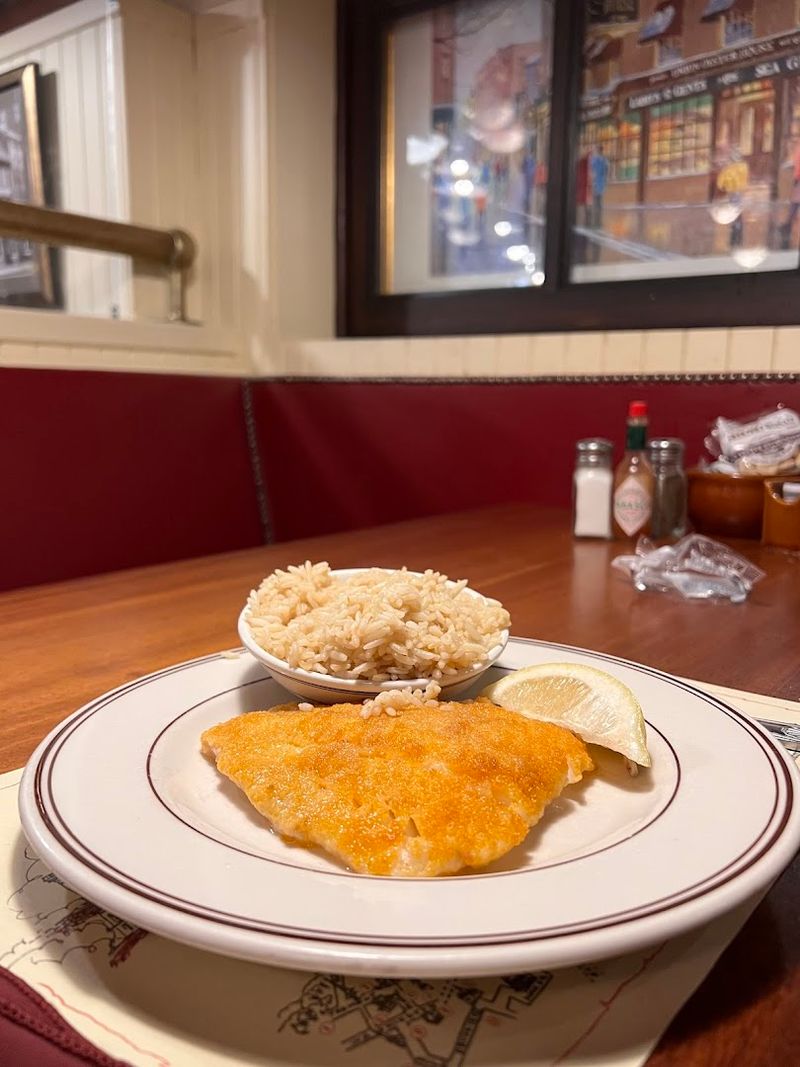
Fried fish is one of those dishes that is easy to get wrong and genuinely impressive when executed well. The fried haddock at Union Oyster House lands firmly in the impressive category, with a coating that is light and crackling-crisp without smothering the fish underneath.
The haddock itself arrives clearly fresh, with a clean flavor and a texture that holds together rather than falling apart into flakes the moment a fork touches it. That quality of freshness is what separates a memorable piece of fried fish from a forgettable one, and this kitchen clearly understands the difference.
Several guests describe it as the best fried fish they have eaten anywhere, which is a bold claim in a city surrounded by serious seafood competition. The portion is substantial enough to satisfy without tipping into excess, and it pairs naturally with the restaurant’s crispy fries.
For visitors who are not devoted oyster enthusiasts or lobster seekers, the fried haddock offers a quieter but equally rewarding entry point into what Union Oyster House does best. It is the kind of dish that reminds you why simple preparations, done with quality ingredients, never really go out of style no matter how many decades pass on the calendar.
Lobster Mac and Cheese Worth the Wait
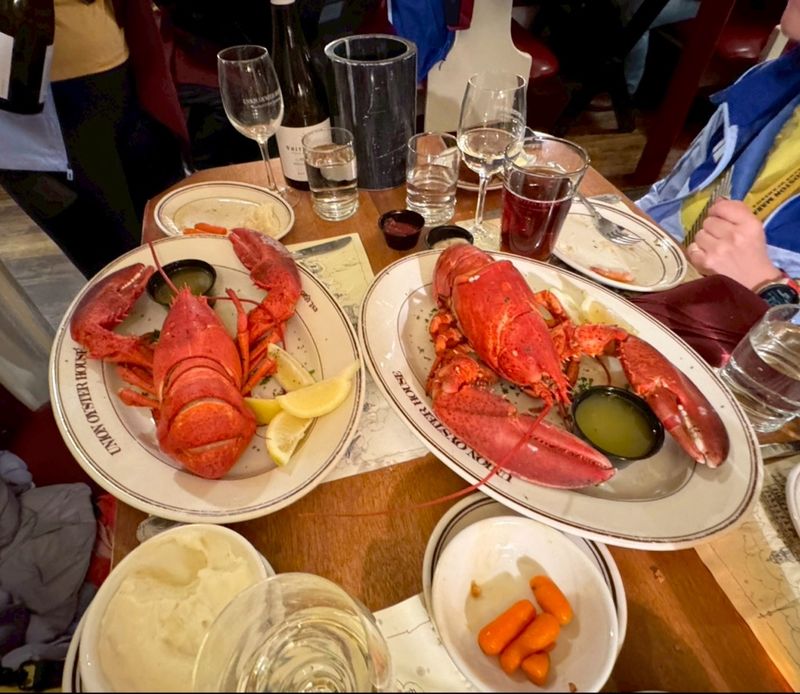
Lobster mac and cheese sounds like it was invented specifically to make people feel good about their dinner choices, and the version at Union Oyster House commits to that premise fully. The dish arrives loaded with lobster meat and carries enough heat to warm you from the inside out on a cold Boston evening.
The pasta is rich and creamy, and the lobster is distributed generously throughout rather than scattered as a token garnish on top. One server reportedly suggested pairing it with fries for scooping, which is either brilliant or chaotic depending on your dining philosophy.
Some guests have noted that the lobster can occasionally tip toward the firmer side of the texture spectrum, which is worth keeping in mind if you prefer a softer bite. That said, the overall dish remains a consistent crowd-pleaser and one of the more memorable comfort food options on the menu.
The Boston Cream Pie served as dessert makes for an ideal finish after the mac and cheese, and more than one guest has described that combination as genuinely exceptional. Even visitors who come in skeptical about a tourist-adjacent restaurant tend to leave the table pleasantly surprised by how much care goes into the cooking here.
Complimentary Cornbread and Small Touches That Matter
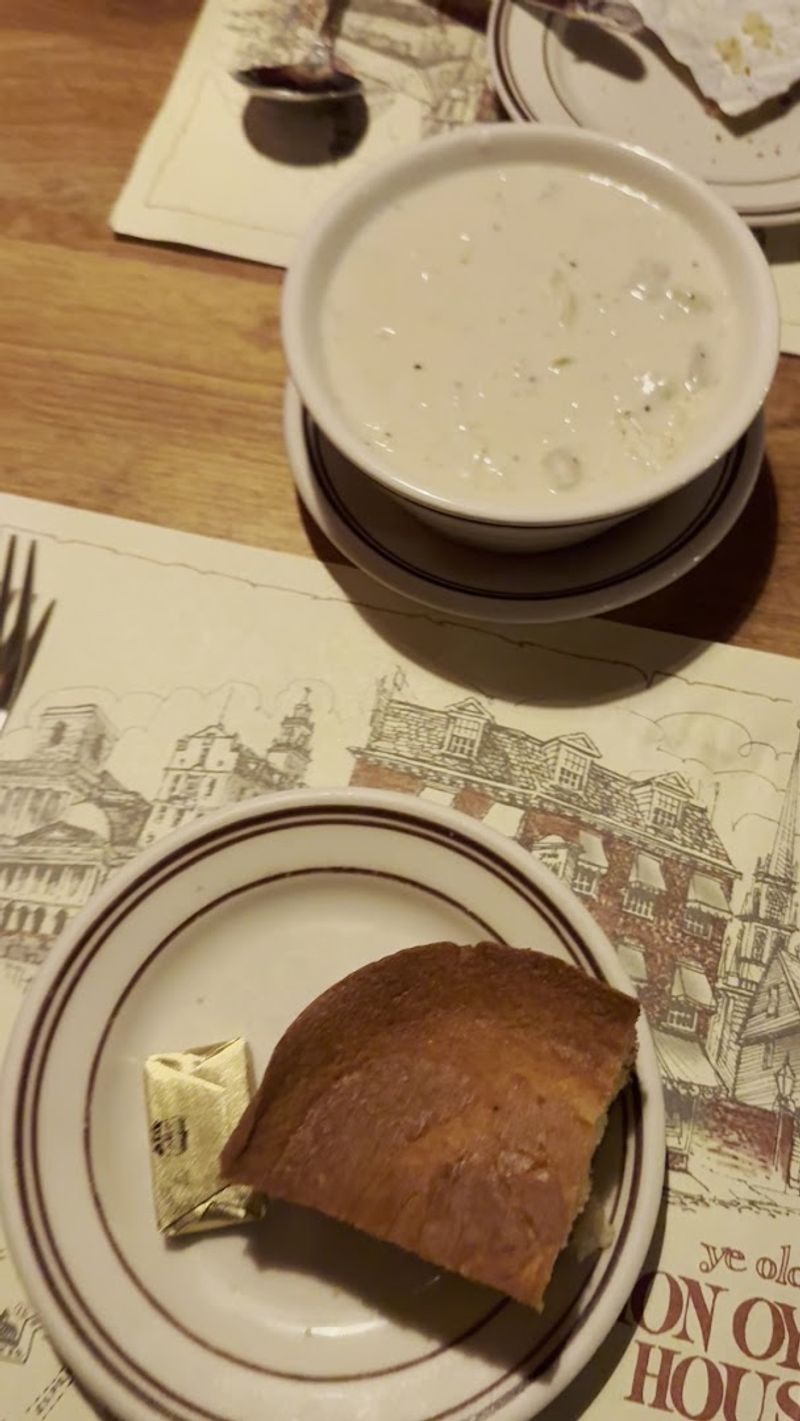
Free cornbread might sound like a minor detail, but at Union Oyster House it has become a signature moment that guests consistently mention when they describe their meals. The cornbread arrives warm, slightly sweet, and dense in a way that feels old-fashioned in the best possible sense.
Multiple visitors have asked for a second basket and reported that the staff obliges without hesitation or an added charge. That kind of easy generosity sets a tone for the meal before the main courses even arrive, and it signals that the kitchen takes the whole experience seriously, not just the dishes that appear on the printed menu.
The restaurant even sells a packaged cornbread mix so guests can attempt the recipe at home. The fact that people actually buy it, carry it through airport security, and bake it successfully suggests the recipe holds up outside the restaurant’s own kitchen, which is a harder test than most restaurants would volunteer for.
Small gestures like complimentary cornbread, attentive servers who remember to refill water, and staff who genuinely seem to enjoy explaining the menu are the kinds of details that turn a single visit into a habit. Diners from Oklahoma to California return to Union Oyster House not just for the oysters but for the full texture of the experience.
Practical Tips for First-Time Visitors
Union Oyster House is open daily from 11 AM, closing at 9 PM Sunday through Thursday and at 10 PM on Fridays and Saturdays. Those extra Friday and Saturday hours matter more than they might seem, because weekend evenings tend to draw the largest crowds by a significant margin.
Walk-ins are possible but come with a waiting list on busy nights, especially weekends. The wait tends to run around 15 to 20 minutes for smaller parties, which is manageable if you plan around it.
Reservations made through the website or by calling +1 617-227-2750 are the smarter move for groups or anyone with limited time.
The oyster bar operates on a first-come, first-served basis and does not accept reservations, so arriving early gives you the best shot at those coveted seats. A Wednesday or Thursday afternoon visit offers a noticeably calmer experience with quicker service and more room to explore the dining rooms.
Prices sit in the moderate-to-splurge range depending on what you order. Oysters, chowder, and the baked beans offer a satisfying and more affordable introduction to the menu, while lobster dishes push the bill higher.
Visitors from Oklahoma and beyond consistently find the experience worth budgeting for, especially given the historical weight of the address.
The Kennedy Connection and Celebrity History
Few restaurants in America can claim a sitting president as a regular, but Union Oyster House can. John F.
Kennedy dined at a specific booth in the restaurant so frequently that the spot has been formally recognized and marked in his honor. Seeing it in person carries a quiet weight that is hard to manufacture.
The Kennedy connection is not the only thread of notable history woven through the building. The space has hosted politicians, literary figures, and generations of Boston locals who simply needed a reliable meal in a reliable place.
That mix of the famous and the everyday is part of what makes the restaurant feel genuinely democratic rather than precious.
Staff are happy to point out historically significant details when asked, which makes a meal here feel more like a guided experience than a standard dinner out. The combination of documented history and good food creates something that a purely trendy restaurant cannot replicate no matter how clever its branding might be.
Guests who discover the Kennedy booth mid-meal often describe it as a genuinely cool bonus rather than a staged attraction. The history at Union Oyster House has not been curated into a theme; it has simply accumulated over nearly two centuries of continuous use, and that authenticity is entirely its own reward.
Why Generations Keep Coming Back
There is something quietly remarkable about a restaurant that grandparents, parents, and children all visit within the same family across different decades. Union Oyster House has that quality in abundance, and it is not accidental.
Consistency is the engine behind that kind of loyalty.
The menu has evolved carefully over the years without abandoning the New England seafood identity that has defined the restaurant since 1826. New dishes have been added, but the chowder, the oysters, and the classic preparations remain exactly what regulars expect them to be.
That reliability is rare and genuinely valuable in a dining culture that cycles through trends at a dizzying pace.
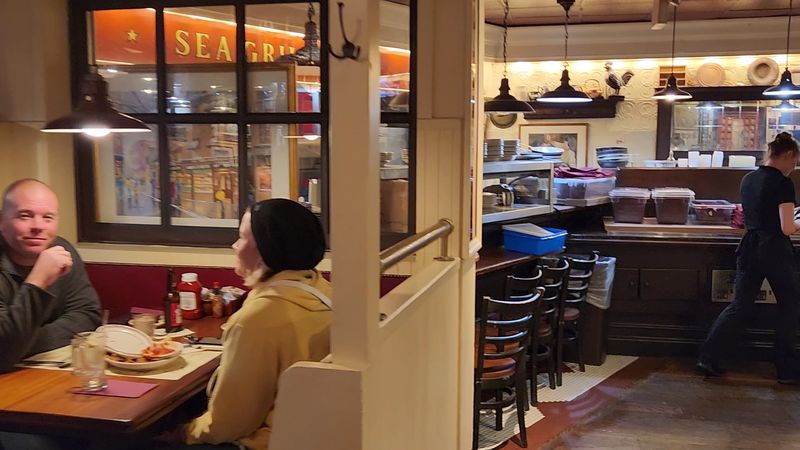
The staff contribute significantly to the returning-visitor effect. Servers who are knowledgeable, friendly, and genuinely engaged with their tables create the kind of atmosphere where guests feel like welcomed regulars rather than table numbers to be turned over quickly.
Travelers from Oklahoma, California, North Carolina, and dozens of other states have made Union Oyster House a deliberate destination rather than a casual stop. The restaurant has earned that status not through marketing campaigns but through nearly 200 years of showing up, shucking oysters, and making people feel that Boston is exactly where they are supposed to be sitting right now, in that particular wooden booth, with a bowl of chowder going cold in the best possible way.
Share this story