Throughout history, some of the most disturbing stories have involved children, not adults. Whether driven by cruelty, ambition, or deeply troubled upbringings, these young individuals left marks on history that are hard to forget.
From real-life killers to future tyrants, their stories raise serious questions about human nature, environment, and the capacity for evil at any age. Here is a look at 10 of the most notorious children who shocked the world.
1. Leopold and Loeb
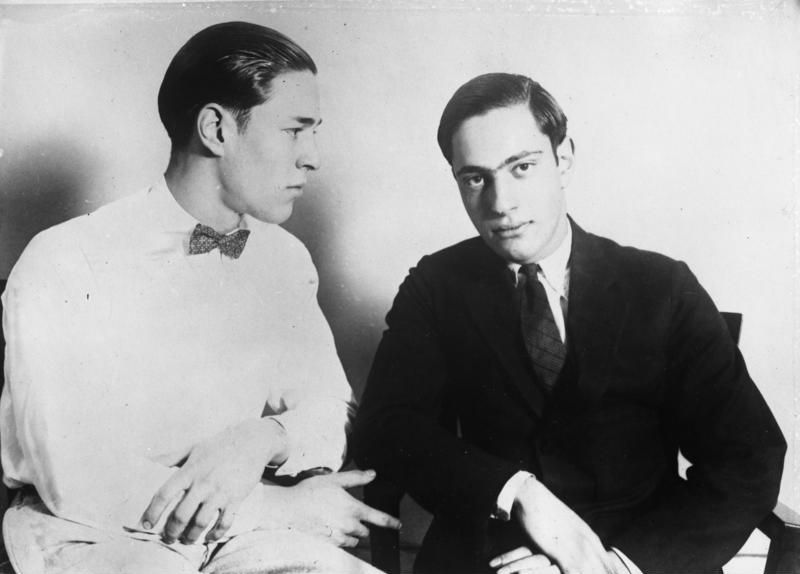
Two teenage boys with everything going for them decided to throw it all away in the name of thrill-seeking. Nathan Leopold and Richard Loeb were wealthy, highly intelligent students from Chicago who believed they were smart enough to commit the perfect crime.
In 1924, they kidnapped and murdered 14-year-old Bobby Franks simply to prove they could get away with it.
Their plan failed quickly. Police linked Leopold to the crime through a pair of glasses left at the scene.
The trial became one of the most publicized in American history, defended by the legendary lawyer Clarence Darrow.
Darrow argued against the death penalty, and both boys were sentenced to life in prison instead. Loeb was later killed in prison.
Leopold was eventually paroled in 1958. Their case still appears in law school discussions about crime, punishment, and moral responsibility today.
2. Jesse Pomeroy
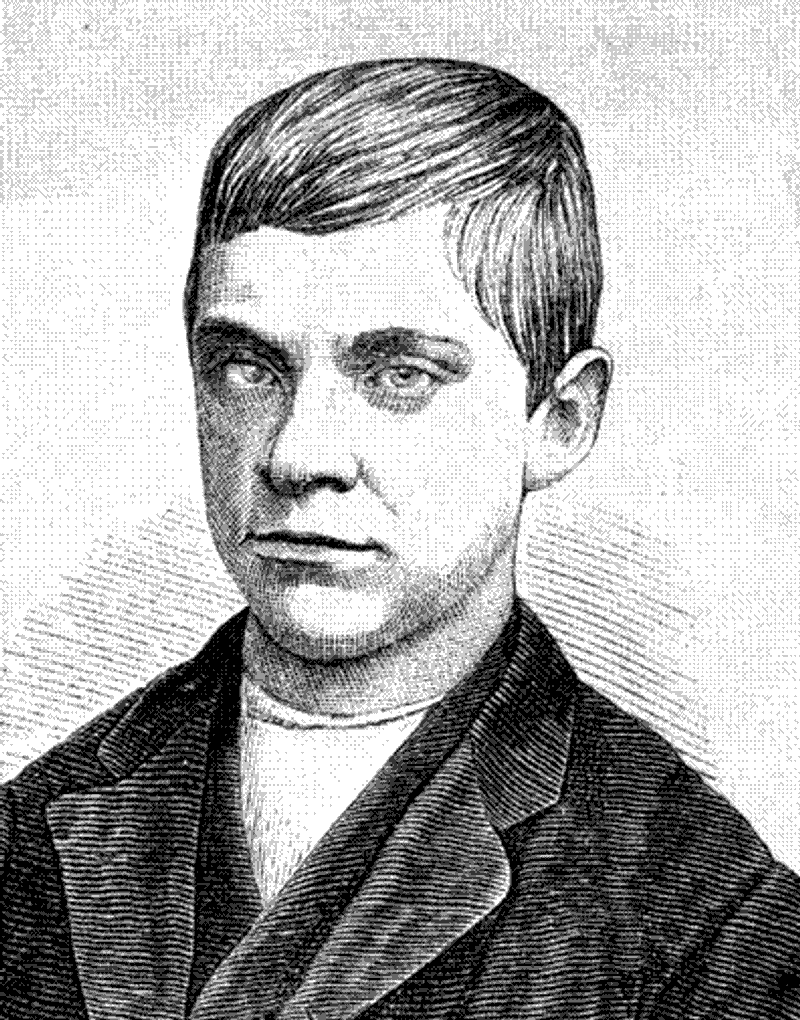
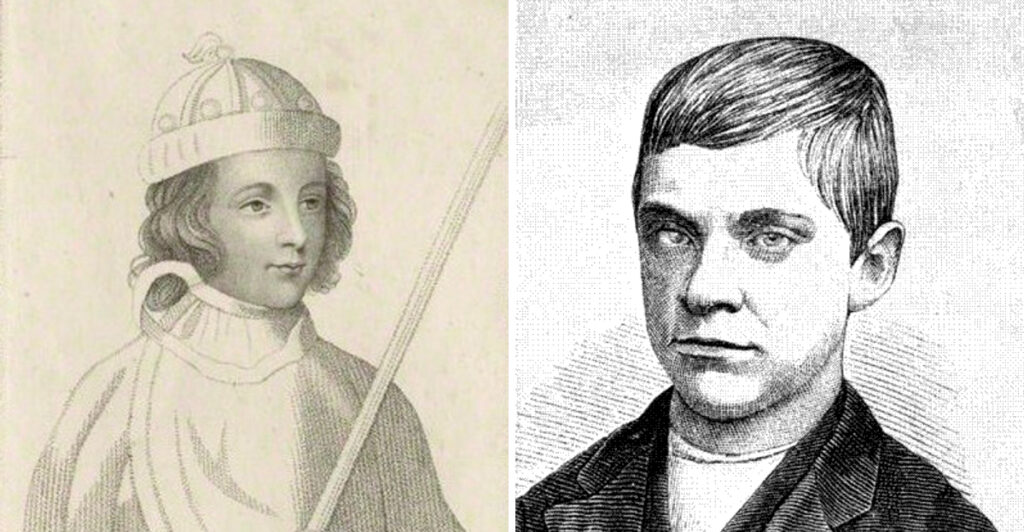
Known as “The Boy Fiend,” Jesse Pomeroy earned his chilling nickname long before most kids his age were thinking about anything more serious than schoolwork. Growing up in Boston during the 1870s, Pomeroy began torturing younger children at around age 12.
He was caught, sent to reform school, and then released, which turned out to be a catastrophic mistake.
After his release, the attacks escalated. Pomeroy murdered a young girl named Katie Curran and a boy named Horace Millen before he was caught again.
He was only 14 years old at the time of his arrest for murder, making him the youngest person convicted of first-degree murder in Massachusetts history.
Pomeroy spent most of his life in solitary confinement. He died in prison in 1932 at age 72, never showing genuine remorse.
His case remains one of the earliest and most disturbing examples of juvenile violence in American history.
3. Caligula
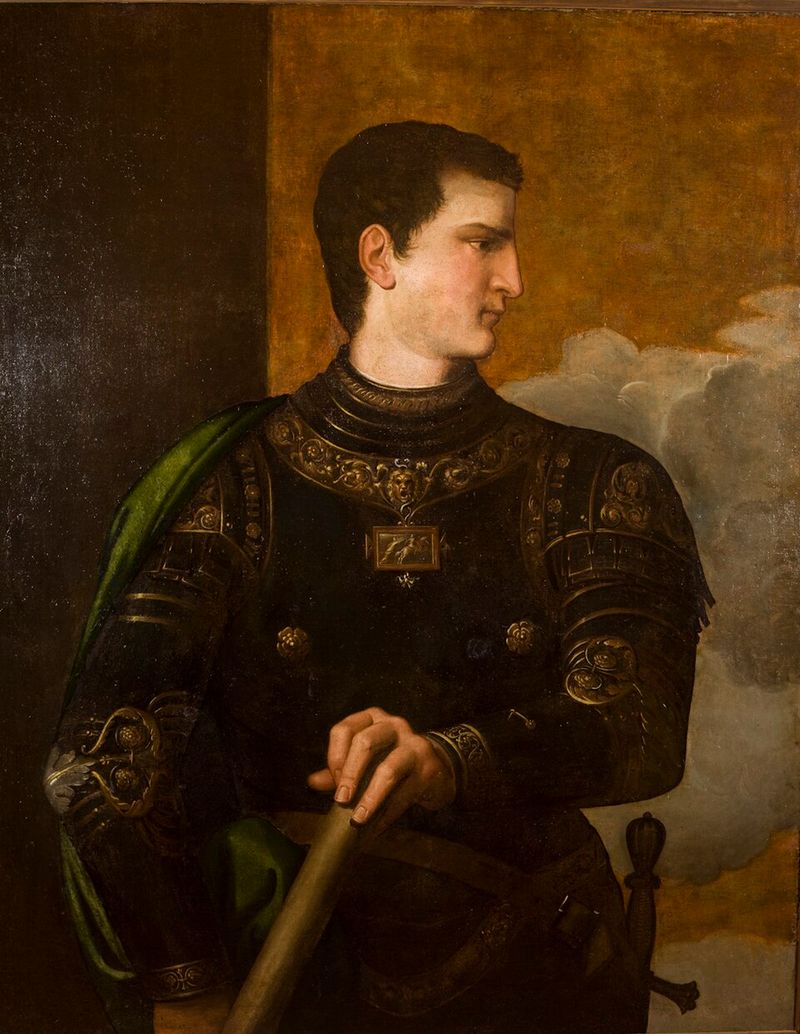
Growing up inside the Roman imperial court was never a safe experience, especially for Caligula. Born Gaius Julius Caesar Germanicus in 12 AD, he spent his early years surrounded by political assassinations, family betrayals, and constant fear.
His father, the popular general Germanicus, died under suspicious circumstances, and several of his relatives were executed or exiled.
Caligula witnessed extreme cruelty from an early age, and some historians believe this environment warped his understanding of power and human life. As a child, he was reportedly erratic and showed early signs of emotional instability.
When he eventually became emperor at age 24, those tendencies exploded into full-blown tyranny.
Ancient sources describe him ordering executions on a whim, humiliating senators, and making bizarre decisions that confused even his closest advisors. Whether his behavior stemmed from illness, trauma, or both, his childhood clearly shaped the ruler he became, for the absolute worst.
4. Nero
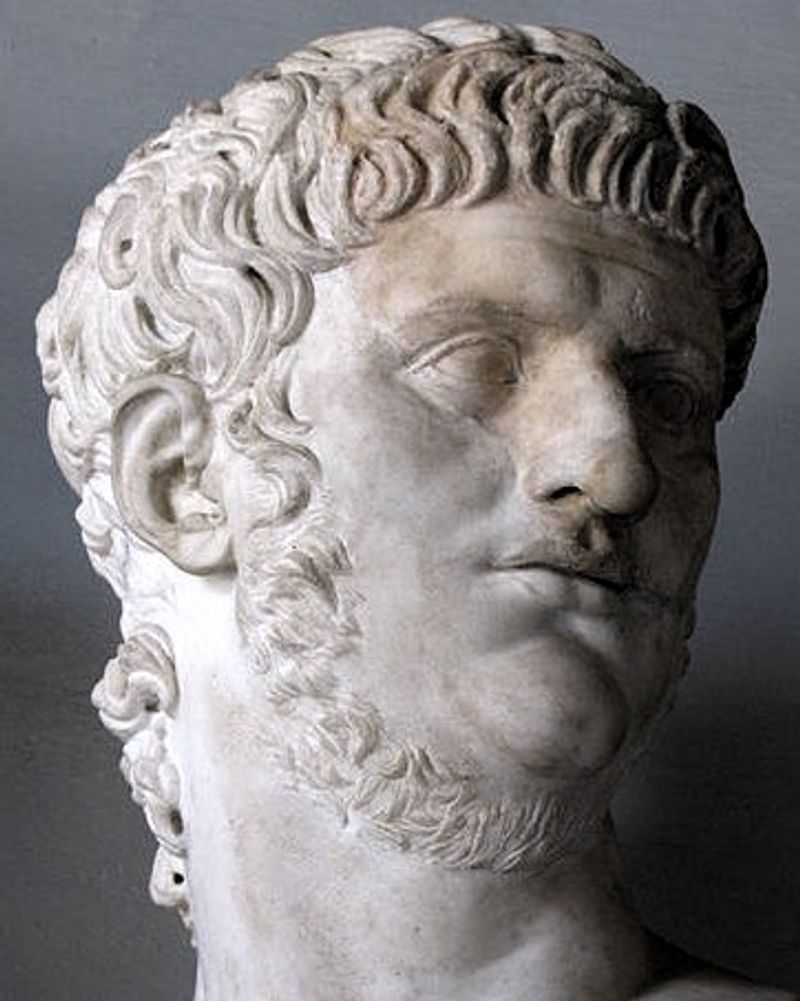
Nero was groomed for power almost from birth, and the pressure of imperial life left visible marks on his character long before he ever sat on the throne. Born in 37 AD, he was adopted by Emperor Claudius and carefully shaped into a future ruler by his ambitious mother, Agrippina the Younger.
She pulled strings ruthlessly on his behalf, including allegedly poisoning Claudius to speed up Nero’s rise.
Even as a teenager, Nero showed signs of self-indulgence, vanity, and a troubling detachment from consequence. Once he became emperor at 16, those traits were amplified dramatically.
He eventually had his own mother executed, ordered the deaths of political rivals, and reportedly played music while Rome burned in 64 AD.
Whether or not every ancient account is fully accurate, historians agree that Nero’s upbringing inside a court built on manipulation and murder made a lasting imprint on his psychology and his reign.
5. Ivan the Terrible
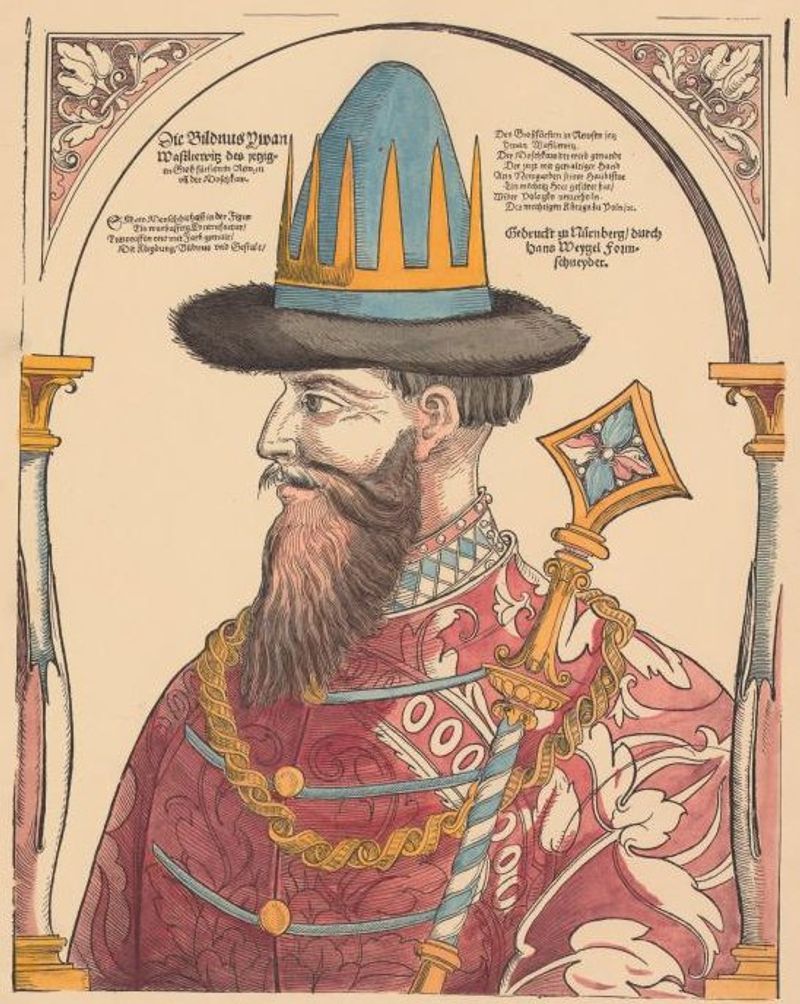
Ivan IV of Russia did not become terrifying overnight. His path to cruelty began in childhood, rooted in neglect, trauma, and brutal political surroundings.
Ivan’s father died when he was just three years old, and his mother followed when he was eight, possibly poisoned by rival nobles. From that point on, Ivan was essentially a political pawn, mistreated and ignored by the powerful boyar families who competed for control.
By his early teens, Ivan was reportedly torturing animals and throwing dogs from the palace walls. At age 13, he ordered the execution of a powerful boyar who had humiliated him, an act that signaled the terrifying ruler he would become.
When Ivan formally took power as Tsar at age 16, he initially ruled wisely. But later in life, paranoia and violence consumed him completely.
His childhood of fear and powerlessness planted seeds that would eventually grow into one of history’s most brutal reigns.
6. Edward of Lancaster
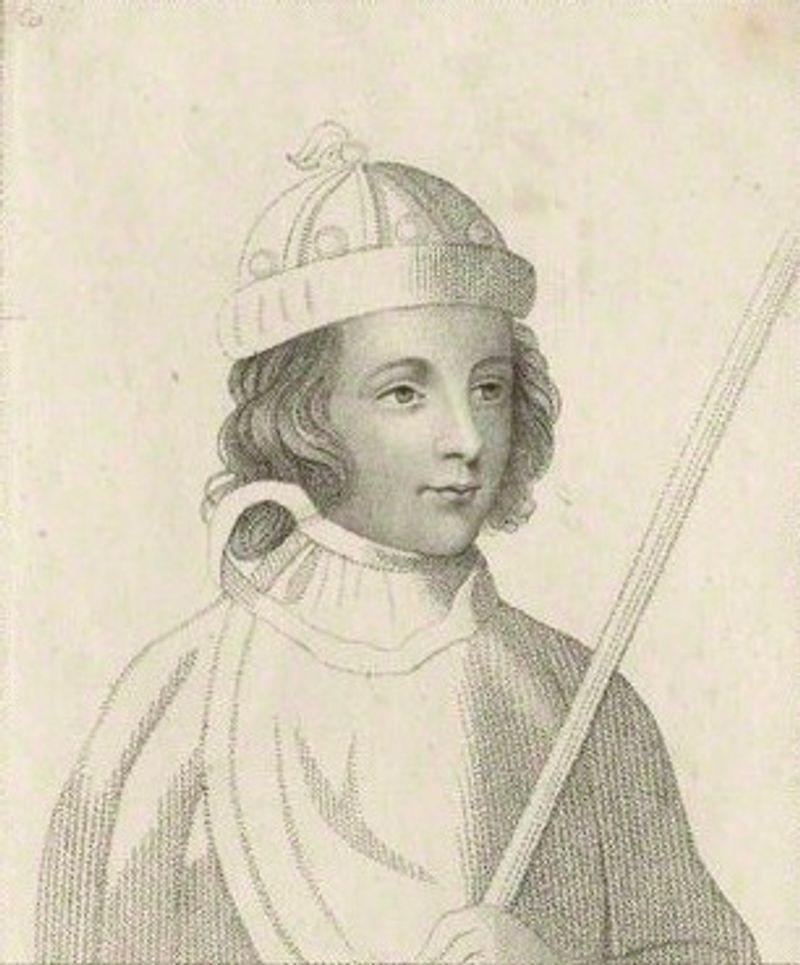
Edward of Lancaster, the Prince of Wales and son of King Henry VI, was not the kind of teenage boy who shied away from conflict. Born in 1453, Edward grew up during the bloody Wars of the Roses, a civil war that tore England apart for decades.
His father was known for being gentle and deeply religious, but Edward seemed to inherit none of that temperament.
Contemporary accounts describe Edward as aggressive, hot-tempered, and almost enthusiastic about the prospect of violence. Even as a teenager, he reportedly spoke openly about executing his enemies with little hesitation.
His enthusiasm for warfare alarmed even those who supported the Lancastrian cause.
Edward was killed at the Battle of Tewkesbury in 1471 at just 17 years old, so the world never got to see what kind of king he might have become. Given the accounts of his youth, historians suggest it might not have been a peaceful reign.
7. Gilles de Rais
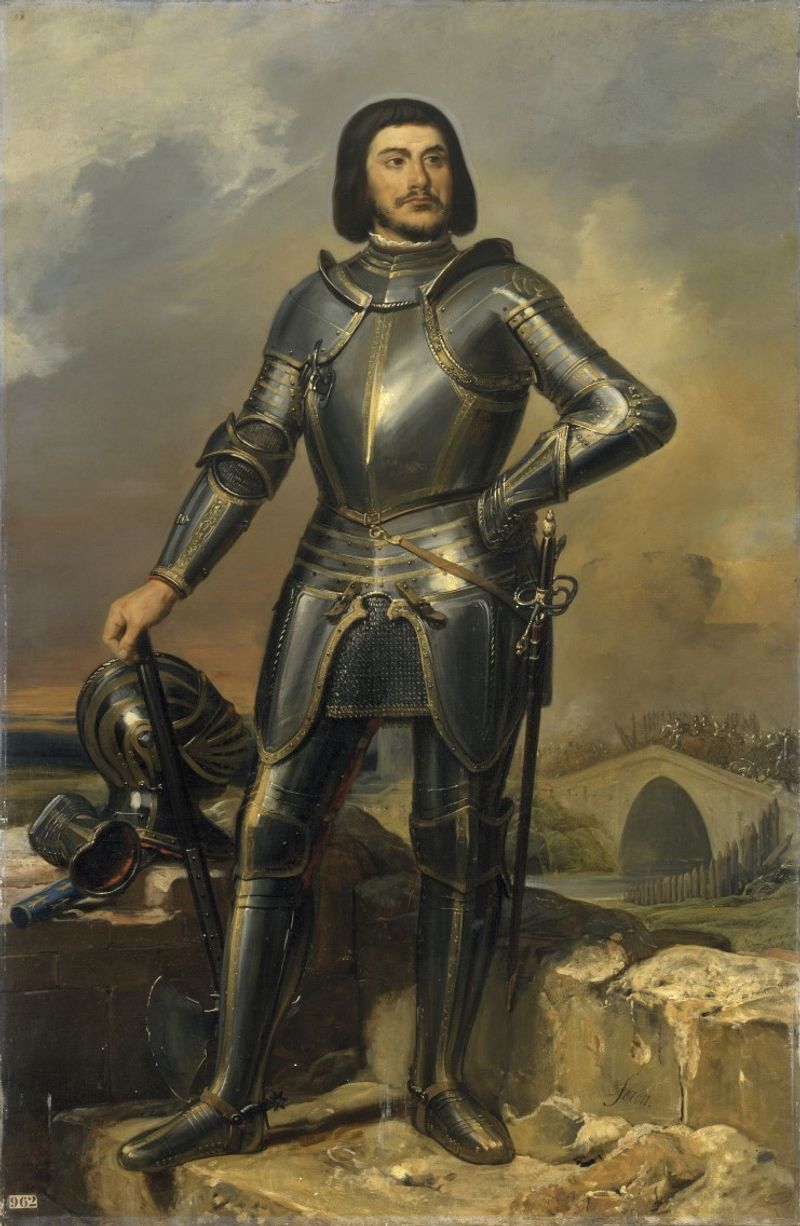
Gilles de Rais began his life as a celebrated war hero, fighting alongside Joan of Arc during the Hundred Years War. He was wealthy, brave, and respected across France.
But behind the heroic reputation, something deeply sinister was growing. After Joan of Arc’s execution in 1431, Gilles reportedly spiraled into increasingly dark behavior that would eventually horrify all of Europe.
He confessed to the kidnapping, torture, and murder of dozens, possibly hundreds, of children, mostly young boys, at his various castles in France. The exact number of victims has never been confirmed, but estimates range from 80 to over 200.
He was tried by both church and civil authorities and was executed in 1440.
His case is one of the earliest documented examples of serial child murder in recorded European history. Some historians have even suggested that his crimes may have inspired the legend of Bluebeard, the fictional wife-killing nobleman of French fairy tales.
8. Lizzie Borden

Few names in American true crime history carry the same eerie weight as Lizzie Borden. On the morning of August 4, 1892, in Fall River, Massachusetts, Andrew Borden and his wife Abby were found brutally murdered with a hatchet in their home.
Their 32-year-old daughter Lizzie was the prime suspect, and the trial that followed gripped the entire nation.
The evidence against Lizzie was largely circumstantial, but the details were deeply suspicious. She had reportedly burned a dress shortly after the murders, gave inconsistent statements to police, and had a strained relationship with her stepmother.
Despite all of this, an all-male jury acquitted her after just over an hour of deliberation.
Lizzie lived out the rest of her life in Fall River, shunned by much of the community. She died in 1927, and her guilt or innocence has never been officially settled.
A famous nursery rhyme about her and an axe ensures she will never be forgotten.
9. Adolf Hitler
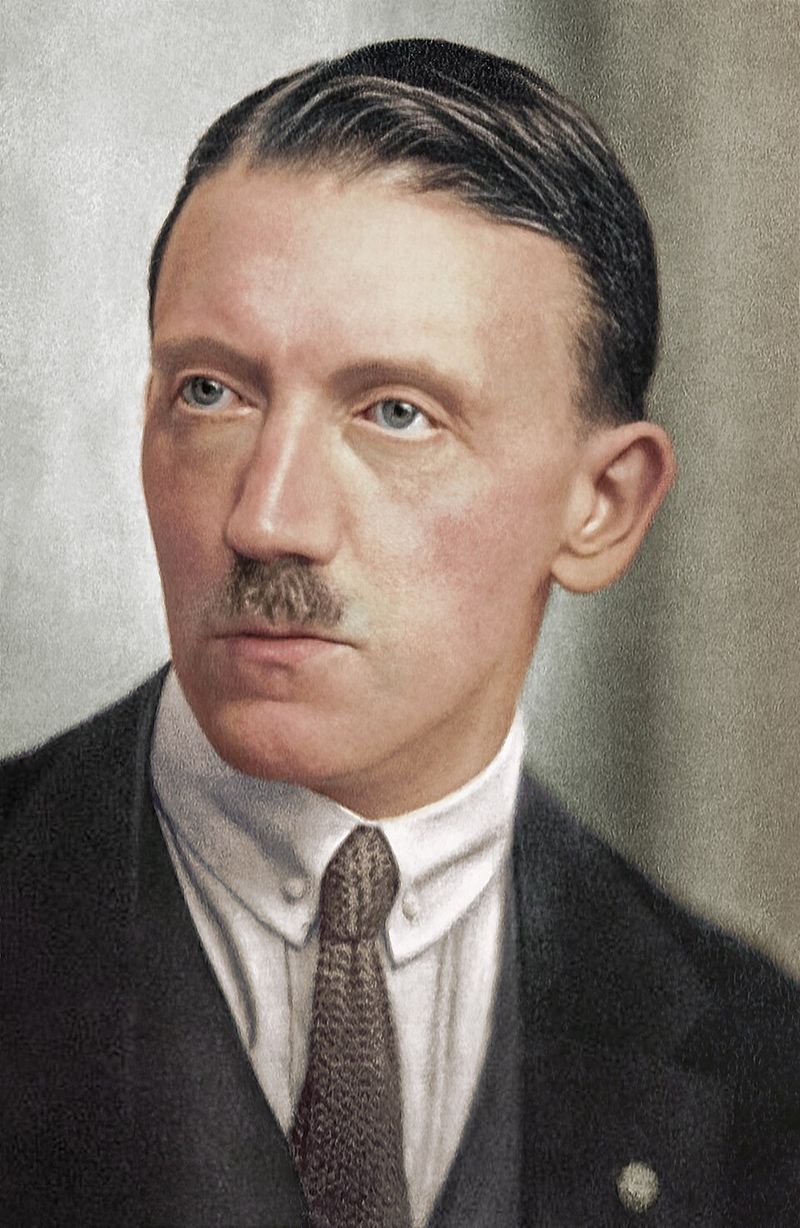
Adolf Hitler’s childhood has been studied more thoroughly than almost any other figure in history, and for obvious reasons. Understanding how one of the world’s most destructive leaders developed has been a central question for historians, psychologists, and educators for decades.
Born in 1889 in Austria, Hitler grew up in a household marked by an authoritarian father and a deeply devoted mother.
His early years were shaped by repeated failures, including rejection from the Vienna Academy of Fine Arts twice, and a growing resentment toward the society he felt had overlooked him. He developed extreme nationalist and antisemitic views during his late teens and early twenties while living in Vienna.
Those early obsessions eventually became the ideological foundation for the Holocaust and World War II, events that killed tens of millions of people. Studying Hitler’s youth is not about finding excuses.
It is about understanding how hatred and ideology can take root and grow when left unchecked.
10. Kim Jong-un
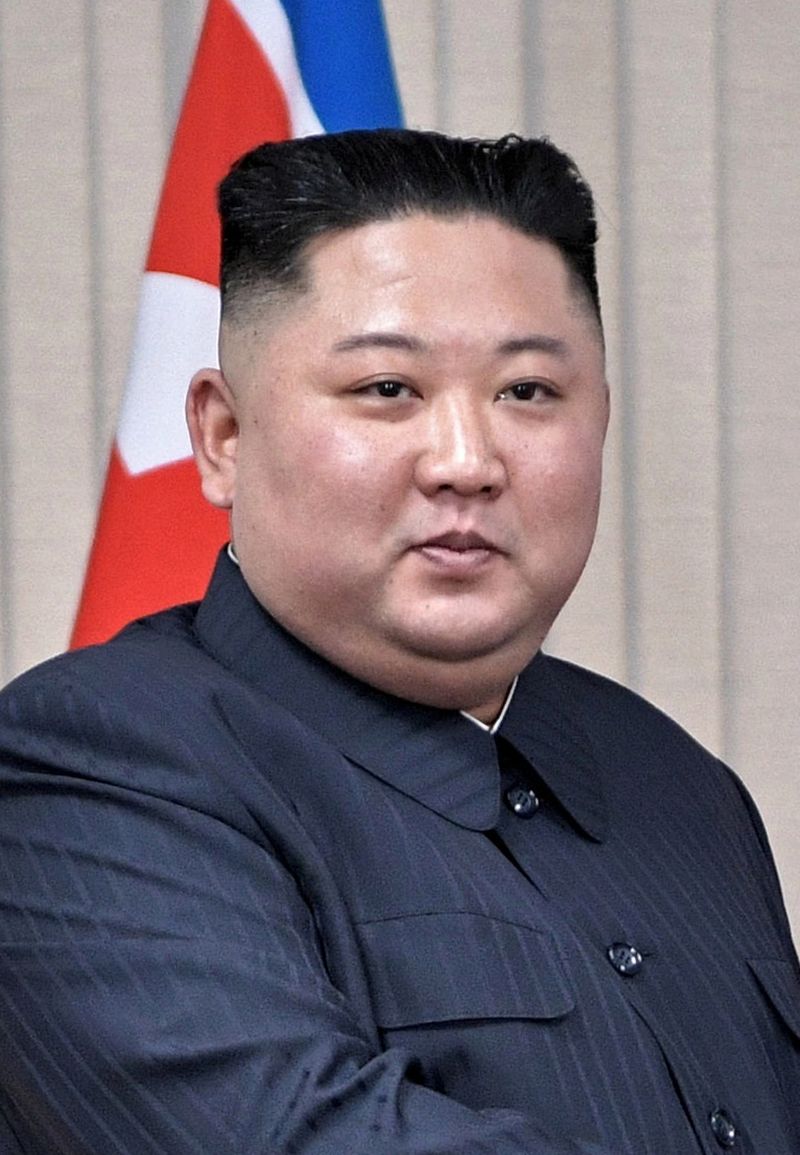
Long before Kim Jong-un became the feared leader of North Korea, he was a student at a private school in Bern, Switzerland, living under a false name. Former classmates and teachers have since described a boy who was quiet but intense, obsessed with basketball, and deeply uncomfortable with being questioned or challenged in any way.
Even among peers, his sense of entitlement was reportedly noticeable.
Back home in North Korea, he was being groomed in secret by his father, Kim Jong-il, to eventually take power. Reports from former regime insiders describe a young Kim who was competitive, aggressive, and deeply invested in being seen as dominant and untouchable.
When Kim Jong-un took power in 2011 following his father’s death, he moved quickly to eliminate rivals, including members of his own family. The personality traits described by those who knew him as a child appear to have translated directly into his leadership style, with devastating consequences for North Korea’s people.
Share this story