Spain has a secret weapon against summer heat, tourist crowds, and general street chaos: the courtyard. Tucked behind heavy wooden doors and ancient stone walls, these patios are where the real magic happens.
I stumbled into my first one by accident in Seville, half-melted from the afternoon sun, and instantly understood why Spaniards have been organizing their lives around them for centuries. From Córdoba to Granada to a quiet corner of Madrid, here are 15 courtyards worth every step off the beaten path.
Patio de los Naranjos, Mosque-Cathedral of Córdoba
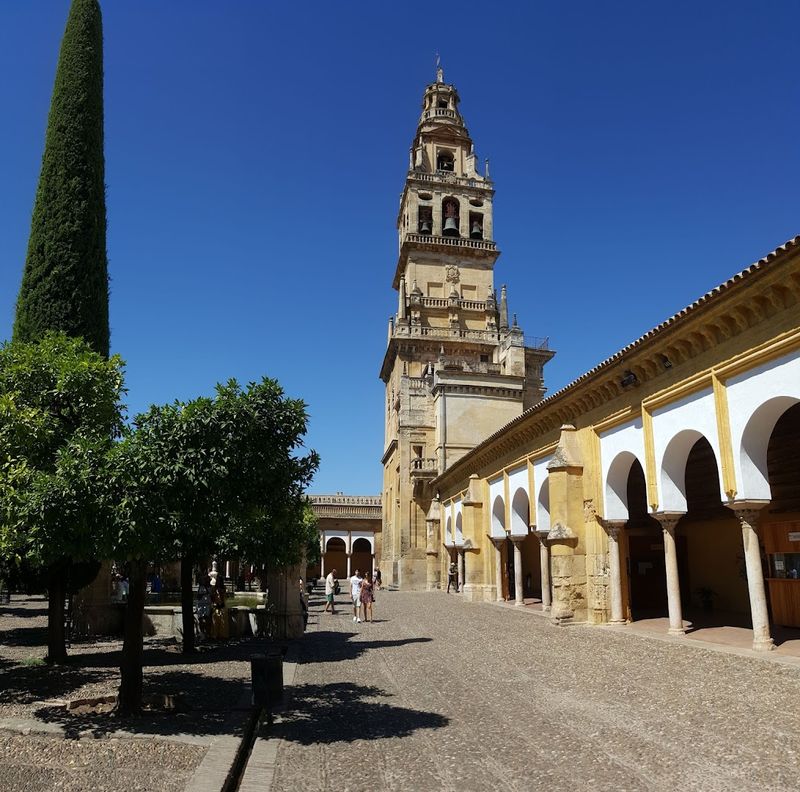
Orange trees, fountains, and one of the most jaw-dropping buildings in the world behind you. That is the Patio de los Naranjos at Córdoba’s Mosque-Cathedral, and it earns every bit of its reputation.
The trees are neatly arranged in rows that date back to the original mosque’s design, giving the whole space a geometry that feels intentional and calming.
What surprises most visitors is how functional it still feels. This was historically a place for ritual washing and gathering before entering the sacred interior.
It was not decorative for decoration’s sake. Today it works as a brilliant cooling threshold between Córdoba’s sunlit streets and the extraordinary interior beyond the doors.
The stone paving stays shaded for much of the day, and the fountain keeps things pleasant even in July. Tickets are available through the official Mosque-Cathedral site.
Arrive early to catch the courtyard before the tour groups settle in.
Patio de los Naranjos, Seville Cathedral
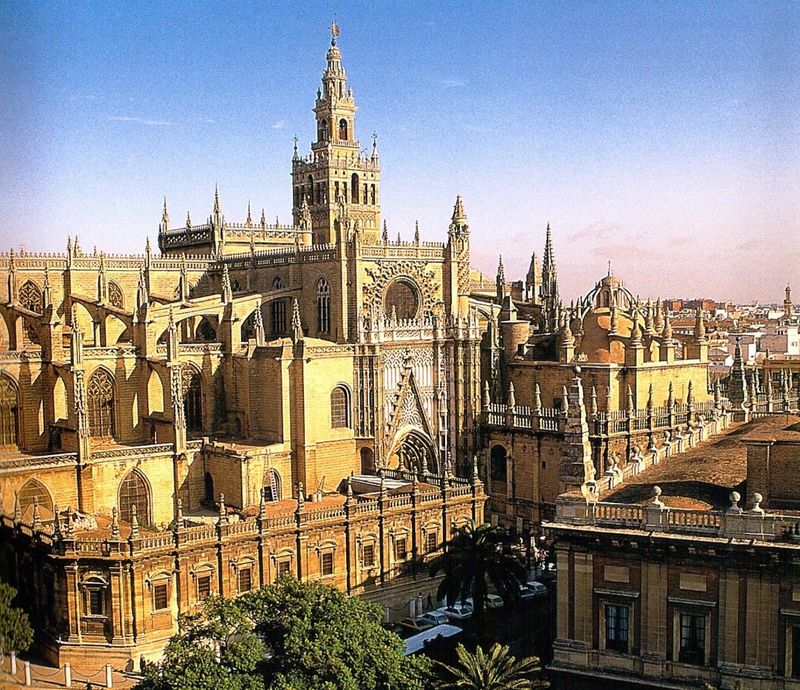
Same name, completely different personality. Seville’s Patio de los Naranjos sits beside the enormous Cathedral of Seville and La Giralda, offering a quieter pause inside one of the city’s most hectic monumental zones.
The orange trees here feel softer against all that heavy stone, and the contrast genuinely works in your favor.
History stacks up here in interesting layers. This was once the courtyard of the mosque that preceded the cathedral, and you can still feel that older rhythm underneath the Christian architecture.
The orange trees were planted long before the cathedral’s current walls went up. Spain’s official tourism site flags it as a must-see, and the cathedral’s own site handles tickets and cultural visit schedules.
Avenida de la Constitución outside is relentless with foot traffic, so stepping into this courtyard feels like pressing a pause button on the whole city. Go mid-morning for the best light through the trees.
Patio de las Doncellas, Real Alcázar of Seville
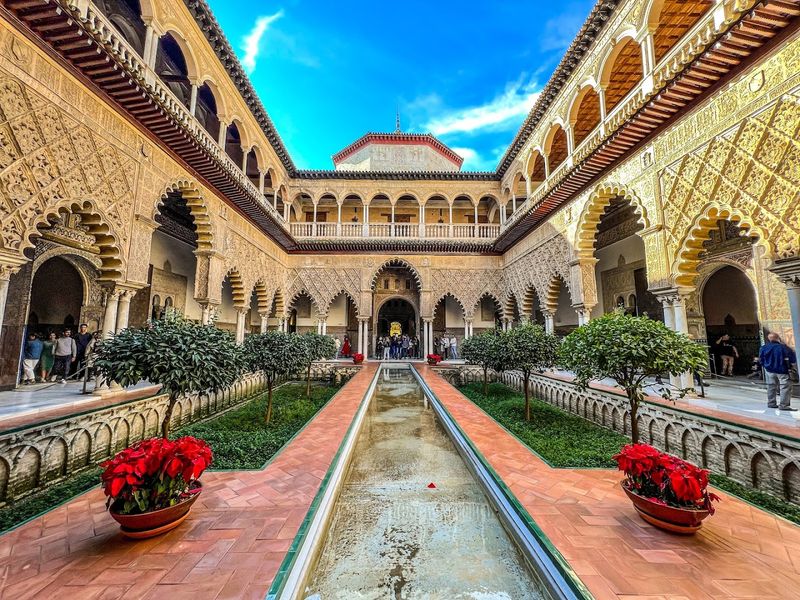
The Real Alcázar is full of gorgeous rooms and tiled passages, but the Patio de las Doncellas is the one that stops people mid-step. Its long reflecting pool runs down the center of the courtyard like a mirror, bouncing the carved Mudéjar arcades back at you in perfect symmetry.
The proportions are quietly spectacular.
Fair warning: this is not a hidden gem. Peak hours bring real crowds, and the space can feel busy despite its size.
The trick is timing. Arriving early or visiting later in the afternoon gives you a much better shot at experiencing the stillness the courtyard was actually designed for.
The official Real Alcázar website handles tickets and entry times, and booking ahead is genuinely necessary here. Still, even with a few dozen other visitors around, the courtyard’s scale and design manage to absorb the noise.
It is one of those places that earns its postcard status honestly.
Casa de Pilatos, Seville
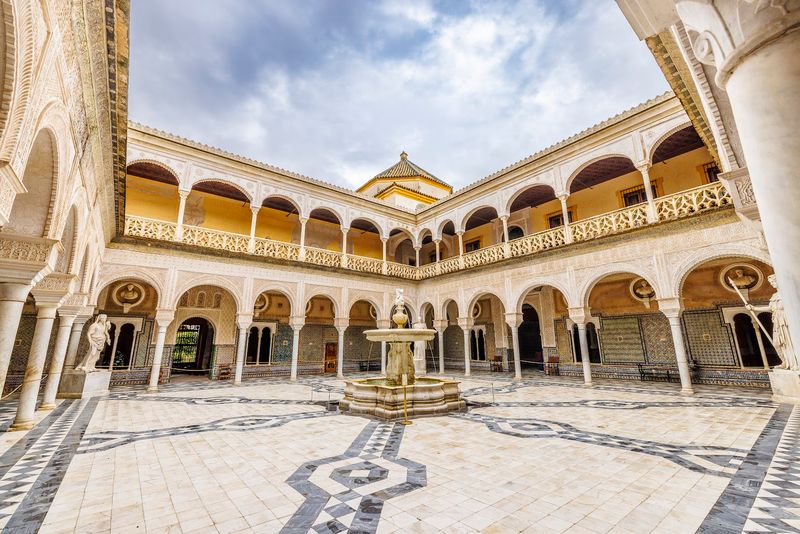
Casa de Pilatos is what happens when Gothic, Mudéjar, Renaissance, and classical styles all show up to the same party and somehow get along. The main patio feels like a collector’s dream arranged around open air: columns, tiles, sculptures, and just enough greenery to keep things from feeling too formal.
The Medinaceli Foundation, which manages the palace, dates its construction mainly to the 15th and 16th centuries.
This is a brilliant alternative when the Alcázar feels overwhelming. The style is similar but the scale is more contained, and the crowds are noticeably lighter.
I spent almost an hour in the main courtyard on a weekday morning with barely ten other people around, which felt like a minor miracle in central Seville. The tiled benches around the edges are genuinely comfortable, and the fountain in the center keeps a steady, pleasant sound going.
It is the kind of place that rewards slow visitors over quick ones.
Palacio de las Dueñas, Seville
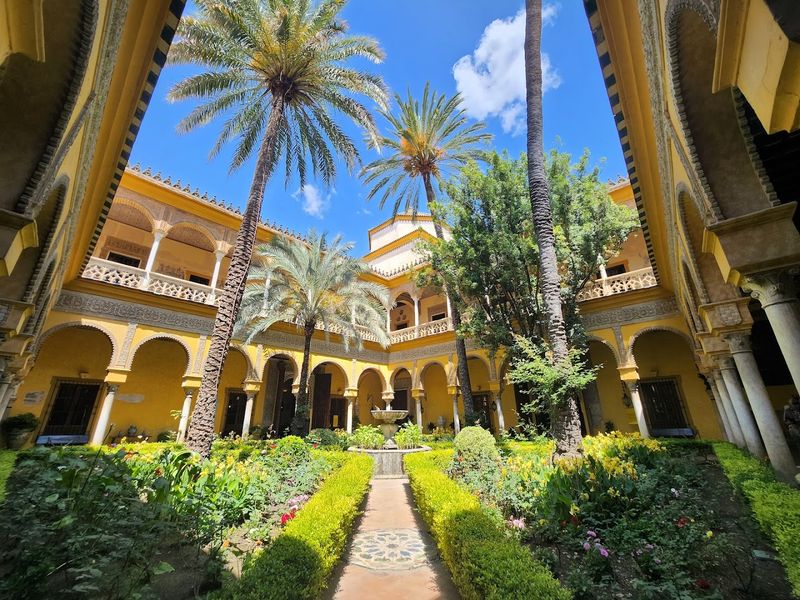
Not every great courtyard in Seville belongs to a museum or monument. The Palacio de las Dueñas is a working aristocratic residence, and its patios feel like the organizing heart of the whole building rather than a set piece for tourists.
Orange trees, palms, lemon trees, and tiled fountains soften the architecture in a way that feels genuinely lived-in.
The poet Antonio Machado was born here in 1875, which gives the place an unexpected literary weight. That detail alone makes wandering the patios feel a bit more interesting than your average palace visit.
The official visitor information page lists opening times, entry fees, and guided tour options, so checking before you go is worth the two minutes it takes. Central Seville’s heat and foot traffic can grind you down by mid-morning, and this courtyard is exactly the kind of reset you need.
Unhurried, shaded, and genuinely beautiful without trying too hard.
Palacio de la Condesa de Lebrija, Seville
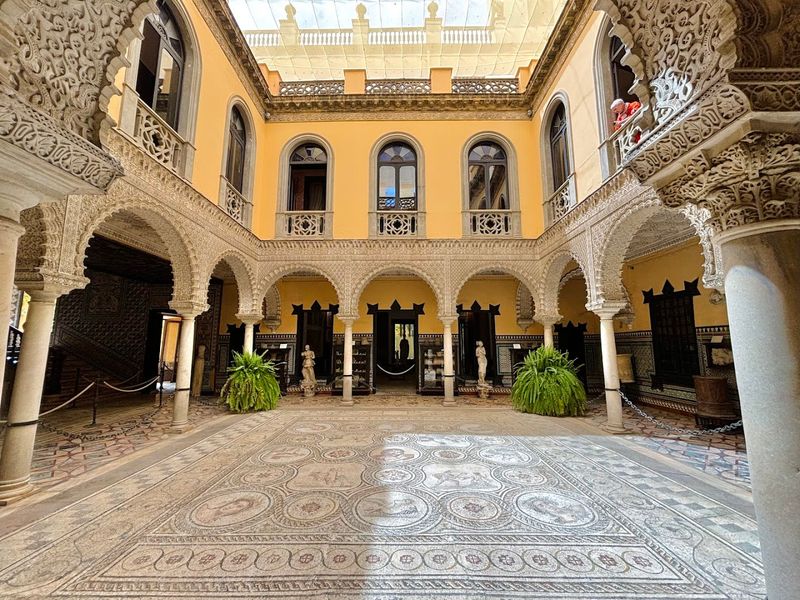
Roman mosaic floors inside a Sevillian palace courtyard. That combination should not work as well as it does, but the Palacio de Lebrija pulls it off with serious confidence.
The palace’s official website describes a collection spanning ancient Greece and Rome all the way through to Sorolla, and the courtyard sets the tone for all of it.
This is a layered place, not a minimal one. You are walking over genuinely ancient floors while surrounded by Mudéjar-influenced architecture and noble-house decor that accumulated across several centuries.
It rewards people who like their history served in multiple courses rather than one clean narrative. The courtyard itself feels more intimate than grand, which works in its favor.
Groups tend to be smaller here than at the headline palaces, and the guides are typically excellent at explaining what you are actually looking at underfoot. Worth every euro of the entry fee.
Casa de Salinas, Seville
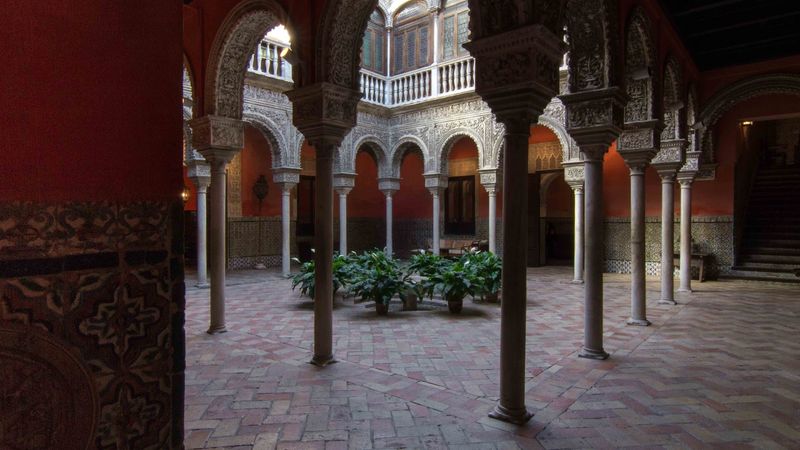
Smaller is sometimes better, and Casa de Salinas makes a strong case for that argument. Its official site describes it as one of the few palace houses in Seville that still faithfully represents the city’s 16th-century golden age, and stepping inside the courtyard, that claim feels entirely credible.
The scale is domestic rather than monumental.
Because it lacks the fame of the Alcázar, Casa de Pilatos, or Dueñas, the atmosphere here is noticeably more personal. You get that classic Andalusian mix of tile, arches, light, and fountain without the choreographed tourist flow that shapes visits at bigger sites.
The courtyard does not try to dazzle you with scale. It works through detail and proportion instead, which is a much harder trick to pull off.
If you have already done Seville’s headline palaces and want something that feels more like a discovery than a checklist item, this one fits the brief perfectly.
Hospital de los Venerables, Seville
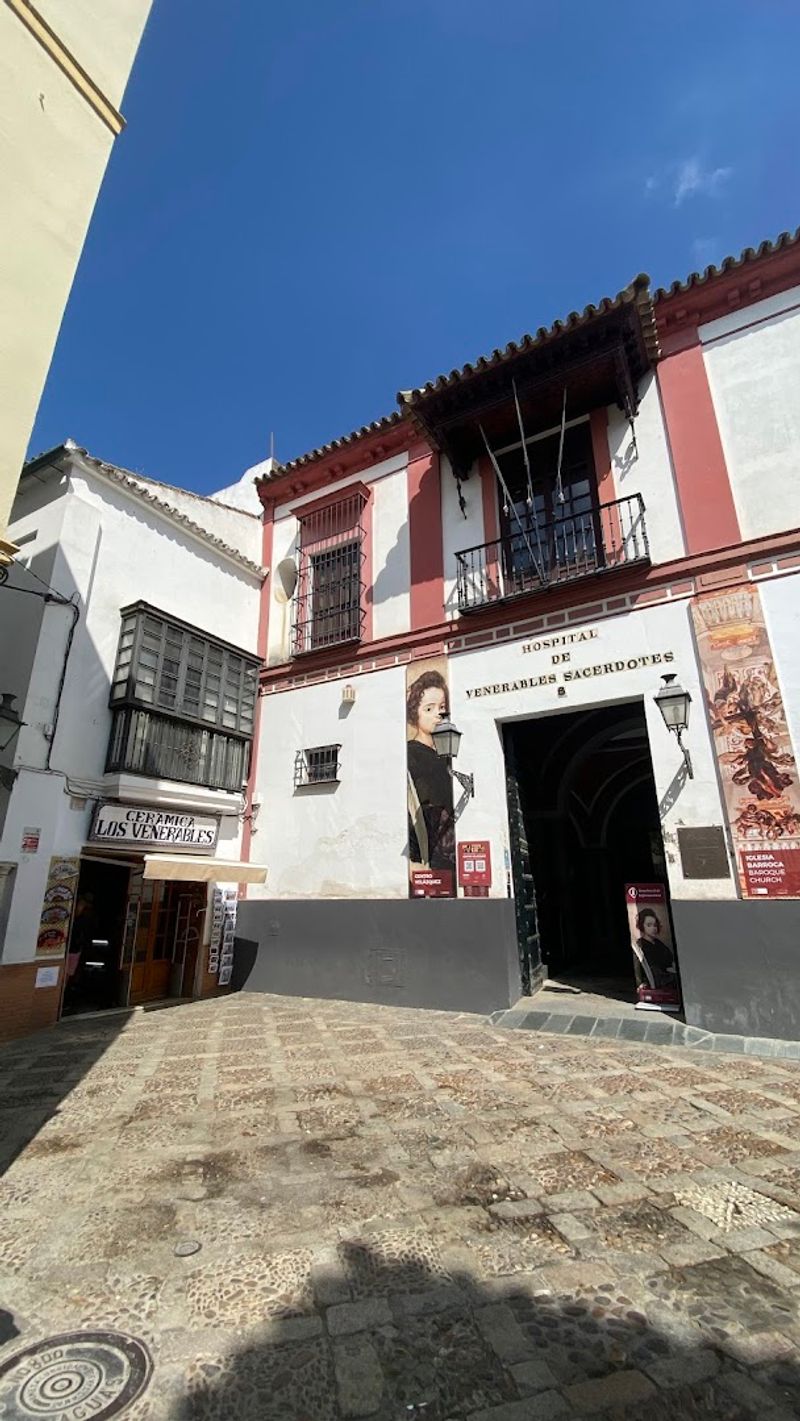
The Santa Cruz neighborhood is famous for its narrow, winding lanes, and the Hospital de los Venerables sits right in the middle of all that atmospheric chaos. Step through the entrance and the Baroque courtyard opens up with a central fountain, raised arcades, and tiled steps descending in a circular pattern.
Andalucía’s official tourism page calls it a strong example of 17th-century Sevillian Baroque, and it is hard to argue with that.
The contrast between the tight streets outside and the open courtyard inside is exactly what makes Spanish patios feel so restorative. One moment you are squeezing past other tourists on a lane barely wide enough for two people.
The next you are standing in a calm, symmetrical space with water sounds and good shade. The building also houses an art foundation with rotating exhibitions, which gives the visit an extra dimension beyond architecture.
A genuinely satisfying stop that most visitors to Santa Cruz walk right past without knowing it exists.
Palacio de Viana, Córdoba
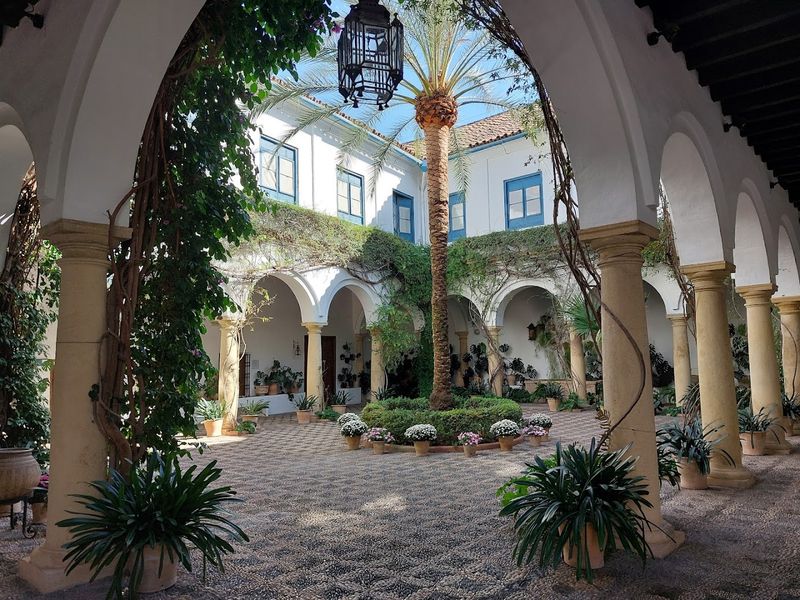
Twelve courtyards in one visit. That is the Palacio de Viana’s main selling point, and it absolutely delivers on the promise.
The official site notes the palace has been open to the public for more than 40 years and brings together the largest concentration of patios in Córdoba, shaped by five centuries of history. Monday closures and seasonal hours apply, so check before going.
The real appeal is variety. Some patios feel formal and architectural, others are loose and garden-like, and a few feel genuinely domestic, as if someone just stepped inside for lunch.
No two feel identical in mood or planting. After visiting a few of Spain’s headline courtyards, Palacio de Viana is where you start to understand how many different emotional registers a courtyard can operate in.
It is less about any single stunning moment and more about the cumulative effect of moving from one enclosed world to the next. Córdoba’s best courtyard marathon, by a considerable distance.
Year-Round Córdoba Patio Visits
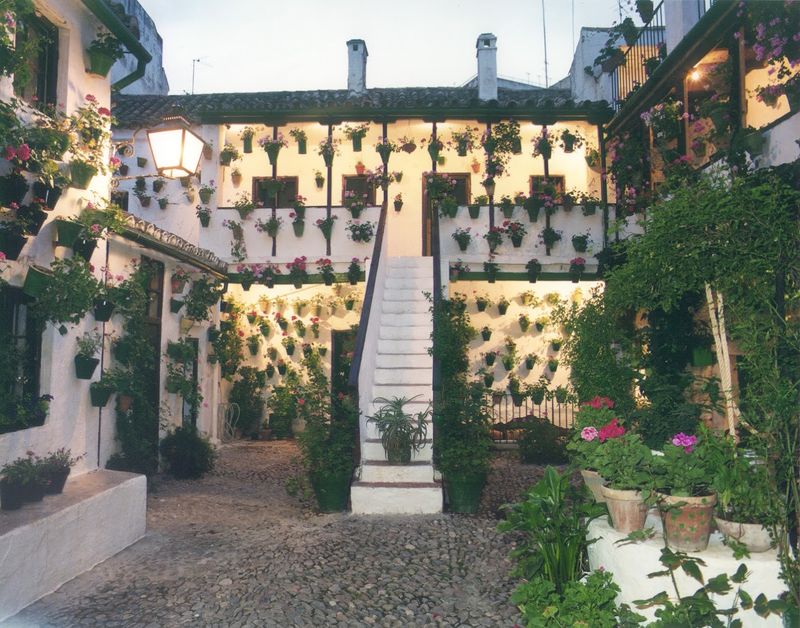
Most people know Córdoba’s patios from the annual Patio Festival in May, when private homes open their flower-filled courtyards to the public in a city-wide competition. What fewer people realize is that Córdoba offers organized patio visits year-round through companies and organizations listed by the official tourism office.
The hot, dry climate here literally shaped the courtyard house tradition.
Homes were built around inner patios, fountains, wells, and plants specifically to pull cool air through the house during brutal summers. The courtyard was not an aesthetic choice first.
It was an engineering solution that happened to look spectacular. That context makes visiting them feel more interesting than just ticking off pretty tiles.
Book through official or reputable guided routes rather than wandering and hoping doorways are open. Most are not.
The year-round options tend to include a mix of historic homes and active residences, which gives you a sense of this tradition as something still very much alive in the city.
Court of the Myrtles, Alhambra, Granada
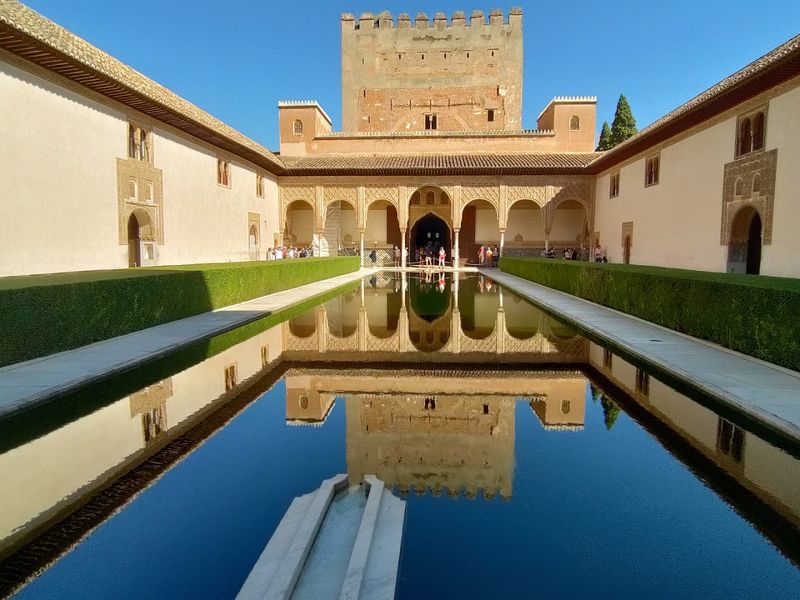
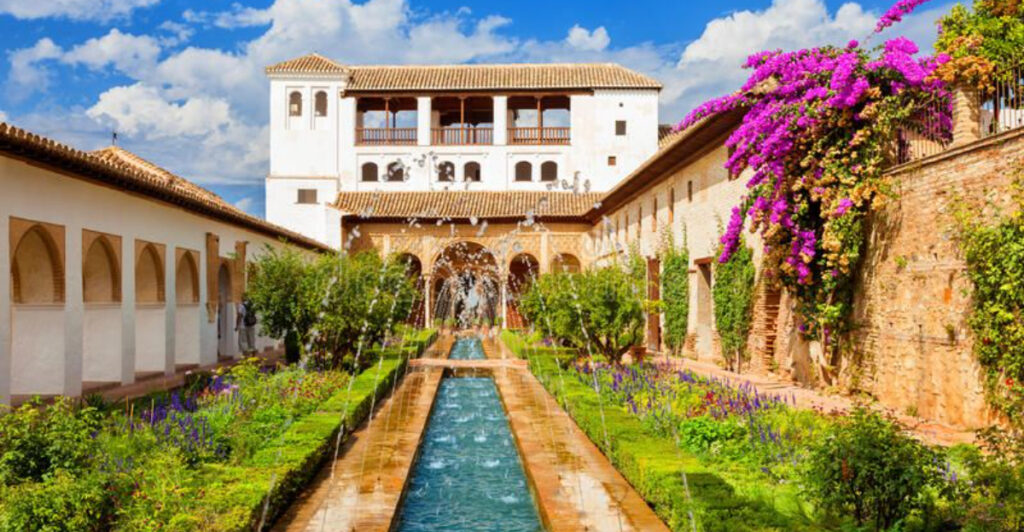
Water, symmetry, and pale stone. The Court of the Myrtles inside the Alhambra’s Nasrid Palaces does not need much else to make its point.
The long rectangular pool runs the full length of the courtyard, and the clipped myrtle hedges frame it on both sides with a tidiness that borders on obsessive. The reflections in still water on a calm morning are genuinely something else.
The Alhambra is one of Spain’s most visited monuments, so quiet in the solitary sense is not what you are getting here. But the courtyard is architecturally designed for calm, and it works even with other visitors present.
Water, shade, and proportion do most of the emotional heavy lifting. The official Alhambra visitor page handles tickets and entry times, and booking well in advance is not optional.
Timed entry keeps the crowd manageable once you are inside. The Court of the Myrtles rewards people who slow down long enough to actually look at what is in front of them.
Court of the Lions, Alhambra, Granada
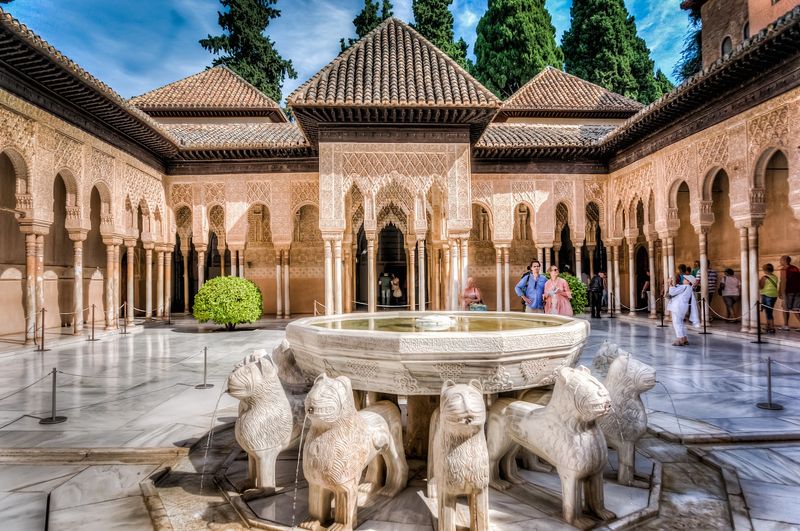
Before I ever set foot in Granada, I had seen photos of the Court of the Lions so many times that I assumed the real thing would be a letdown. It was not.
The fountain, the slender marble columns, the carved stucco that looks like frozen lace, and the open sky above all combine into something that feels genuinely weightless for a stone building.
It is part of the Nasrid Palaces visit, which means timed entry and advance booking are non-negotiable. The official Alhambra site is clear about this, and the demand is real.
Showing up without a ticket and hoping for the best is a reliable way to spend the afternoon outside the gates. Once inside, the courtyard rewards people who resist the urge to photograph everything immediately and instead just stand there for a moment.
The balance between delicate stonework and open sky is the whole point, and it takes a few seconds to land properly.
Generalife, Granada
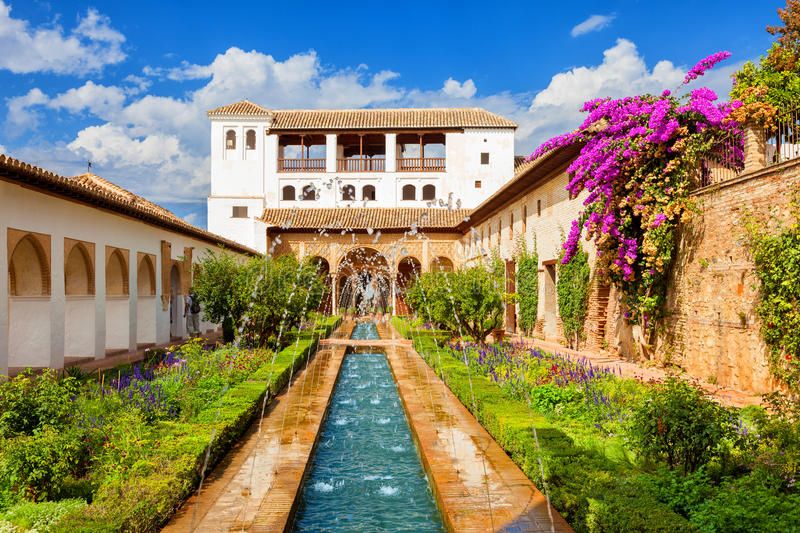
The Generalife was the summer retreat of the Nasrid rulers, and it shows. Where the palace rooms feel dense and layered with decoration, the Generalife’s garden courts feel open, breezy, and genuinely relaxed.
Water channels run through the patios, hedges frame the paths, and the whole place has a rhythm that invites you to slow your walking pace without even noticing you have done it.
This is not one single courtyard but a series of garden courts and water features spread across a hillside above the city. It is included in the Alhambra and Generalife ticket, so no extra planning is needed beyond the standard advance booking.
On a warm Granada afternoon, the Generalife makes the strongest possible case for shade as an architectural feature. The gardens feel more approachable than the palace interiors for visitors who find dense decoration exhausting.
A genuinely pleasant place to end an Alhambra visit rather than beginning with it and running out of energy too soon.
Cloister of San Juan de los Reyes, Toledo
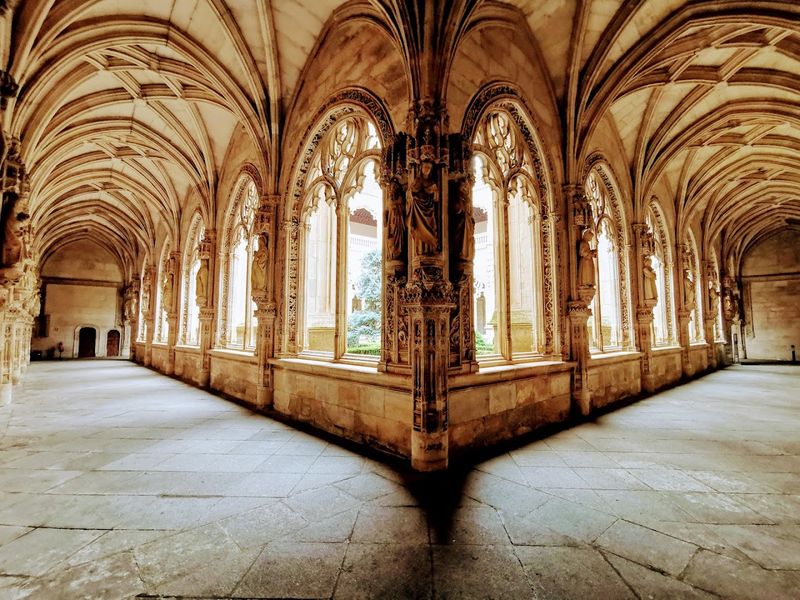
Toledo is steep, hot, and relentlessly scenic, which makes finding a good courtyard feel almost medicinal. The cloister of San Juan de los Reyes delivers exactly that.
Spain’s official tourism site lists the monastery as a key visitor attraction, and the monastery’s own cloister page highlights the lower level’s Gothic windows, vaulted galleries, and sculptural decoration that catches light in genuinely interesting ways throughout the day.
This is a quieter kind of courtyard than anything you find in Andalusia. No orange trees, no azulejo tiles, no fountain splashing cheerfully in the center.
Instead you get stone tracery, monastic calm, and a small garden-like center that feels made for walking slowly with your hands behind your back. The Gothic detail in the arcade windows is worth examining up close rather than admiring from a distance.
Toledo tends to rush visitors through its monuments, but San Juan de los Reyes is one place where lingering in the cloister is absolutely the right call.
Casa Museo Lope de Vega, Madrid
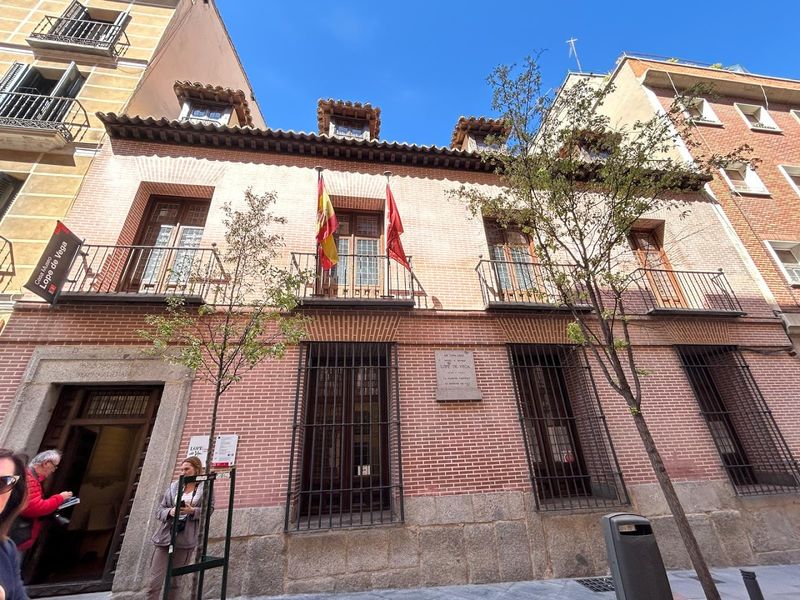
Madrid does not have a patio culture the way Seville or Córdoba does, which makes the Casa Museo Lope de Vega feel like a genuine find. The great Spanish playwright lived here from 1610 until his death in 1635, and the small courtyard-garden attached to the house still carries that quiet, domestic atmosphere.
The official museum page lists free entry, Tuesday to Sunday from 10:00 to 18:00, with Mondays and selected holidays closed.
Nothing here is grand. That is entirely the point.
The courtyard is small, shaded, and tucked away from the busy streets of the Barrio de las Letras in a way that feels almost conspiratorial. It rewards visitors who are already tired of Madrid’s bigger, louder attractions and want something that feels genuinely calm.
Literary history, a well-preserved historic house, and a pocket of green in a central neighborhood all in one free visit. For a city not known for its patios, this one punches well above its weight.
Share this story