Some places on Earth are so extraordinary that they stop you in your tracks and make you forget everything else. From ancient tombs built without modern tools to natural landscapes carved over millions of years, our planet is full of jaw-dropping wonders.
Whether you are a history lover, an adventure seeker, or just someone who enjoys a good view, these legendary destinations have something for everyone. Pack your curiosity and get ready to explore ten of the most awe-inspiring places on the planet.
Great Pyramid of Giza, Egypt
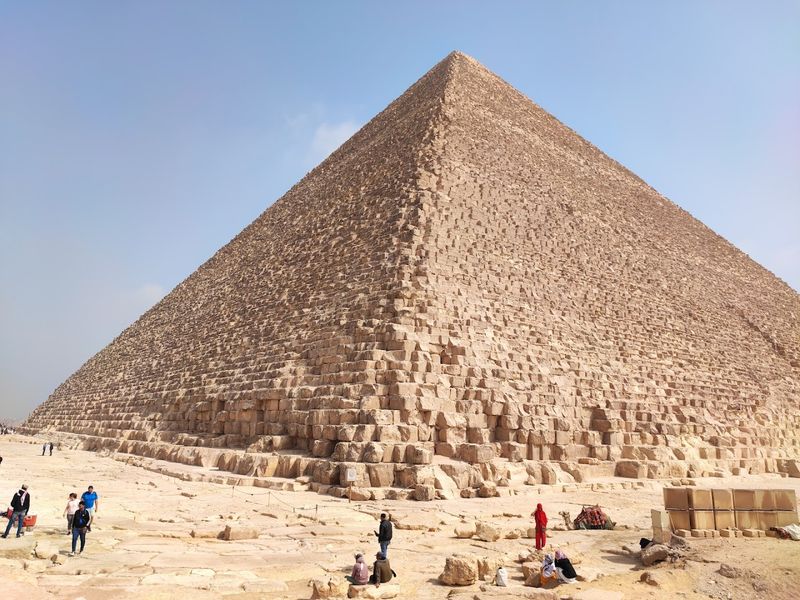
Four thousand five hundred years ago, workers moved over two million stone blocks to build something so massive it can be seen from miles away. The Great Pyramid of Giza was constructed as a tomb for Pharaoh Khufu, and it still holds the title of the oldest surviving wonder of the Ancient World.
No cranes, no computers, just human determination on an almost unbelievable scale.
Standing at the base of the pyramid is a genuinely humbling experience. Photos simply cannot prepare you for how enormous these structures actually are.
The stones are taller than a person, yet they were stacked with remarkable precision that modern engineers still find impressive.
Archaeologists continue debating exactly how the pyramids were built, and honestly, that mystery is part of the fun. Nearby, the Sphinx watches over the complex like a silent guardian.
Visiting at dawn, before the crowds arrive, gives you a quiet moment that feels almost sacred. The surrounding desert adds a dramatic backdrop that makes every photo look unreal.
If you only visit one ancient site in your lifetime, the Great Pyramid deserves serious consideration for the top spot.
Great Wall of China, China
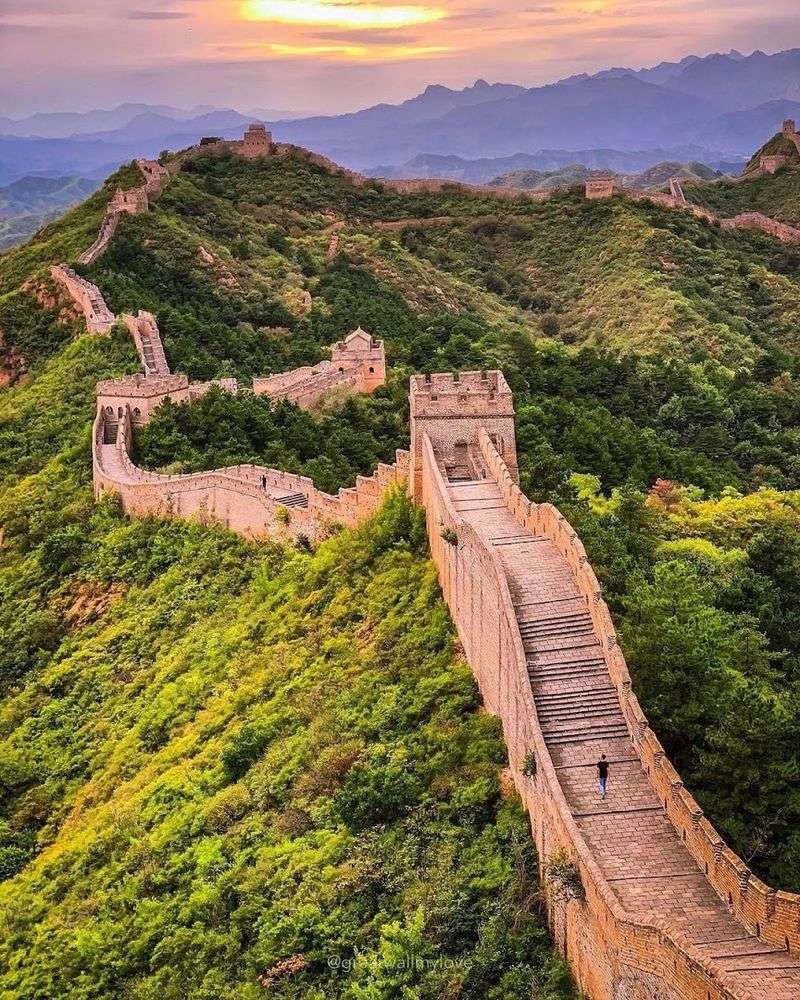
Stretching over 13,000 miles across mountains, valleys, and deserts, the Great Wall of China is the kind of project that makes your brain short-circuit a little just thinking about it. Construction began more than 2,000 years ago and continued for centuries under different dynasties.
Soldiers, farmers, and prisoners all played a role in building this colossal barrier.
Walking along a restored section like Mutianyu gives you sweeping views of forested hills rolling endlessly into the horizon. The wall rises and dips dramatically with the terrain, making each turn feel like a new discovery.
Some watchtowers are open to explore, offering a glimpse into the lives of soldiers who once stood guard here.
If you prefer a wilder experience, unrestored sections like Jiankou attract adventurous hikers who do not mind crumbling steps and overgrown paths. Autumn is particularly spectacular when the surrounding trees turn red and gold.
Fun fact: the wall is not actually visible from space with the naked eye, despite the popular myth. What is visible, however, is how much effort went into creating one of history’s most ambitious building projects.
Petra, Jordan
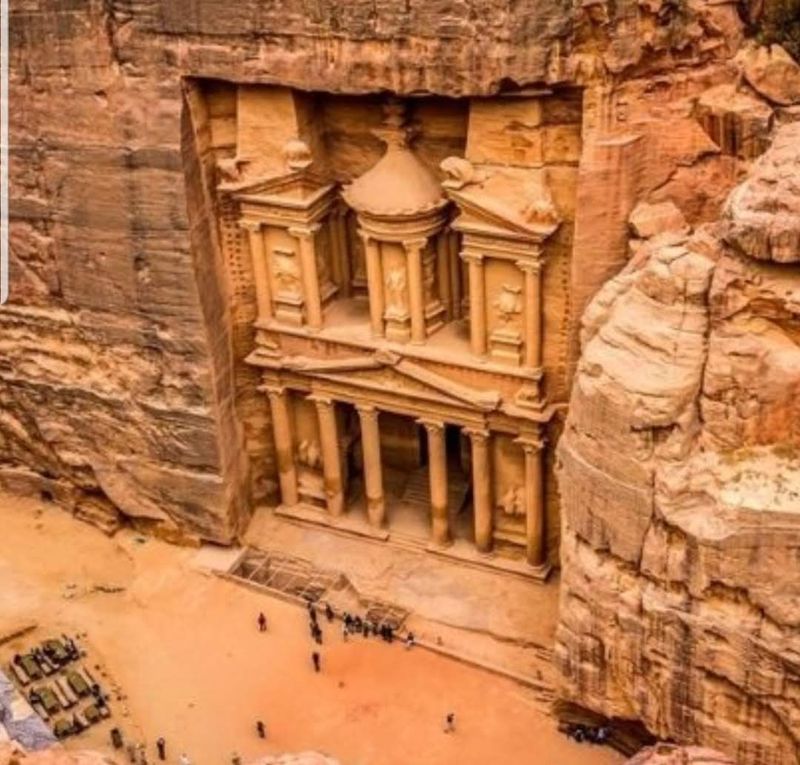
Imagine walking through a narrow canyon for over a mile, sandstone walls towering above you on both sides, and then suddenly the path opens to reveal an enormous temple carved directly into the cliff face. That is the moment Petra introduces itself, and it never gets old.
Known as the Rose City for its pink-red rock, this ancient Nabataean settlement in Jordan is genuinely unlike anything else on Earth.
The Treasury, or Al-Khazneh, is the most famous structure, but Petra is far larger than most visitors expect. The site covers over 100 square miles and includes tombs, temples, a Roman-style colonnaded street, and even a monastery perched high in the hills.
Plan for at least a full day, because rushing through Petra feels almost criminal.
Visiting Petra by Night is a separate experience offered several times a week, where the Siq is lit entirely by candles and traditional Bedouin music fills the air. It creates an atmosphere that feels genuinely magical.
Comfortable shoes are non-negotiable here because the walking is extensive. The combination of dramatic scenery, rich history, and that legendary first reveal through the Siq makes Petra one of the most theatrical destinations in the world.
Machu Picchu, Peru
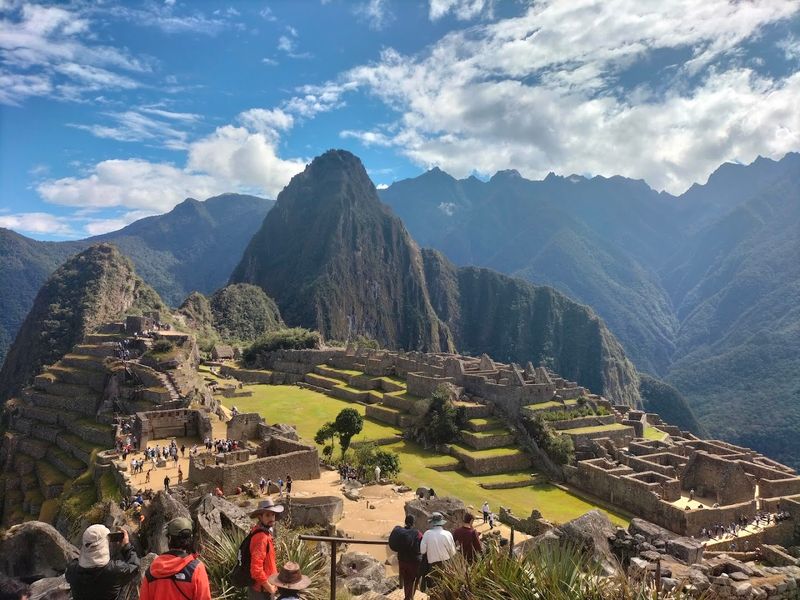
Perched at nearly 8,000 feet above sea level in the Peruvian Andes, Machu Picchu was so well hidden that the outside world did not know it existed until 1911. The Inca built this extraordinary citadel without using a single wheel or iron tool, yet the stone walls fit together so perfectly that not even a piece of paper can slide between them.
That level of craftsmanship, done by hand, is staggering.
Arriving at sunrise, when mist rolls through the ruins and the mountains emerge slowly from the clouds, is the kind of moment travelers talk about for years. Llamas wander freely through the site, completely unbothered by the crowds, which adds a surprisingly charming touch to the whole experience.
Getting there is part of the adventure. You can hike the famous Inca Trail over four days through cloud forest and mountain passes, or take the scenic train from Cusco for a more relaxed arrival.
Either way, the destination rewards every bit of effort. Altitude sickness is a real consideration, so spending a day or two in Cusco beforehand helps your body adjust.
Machu Picchu earns its reputation as one of the most spectacular places humans have ever built.
Taj Mahal, India
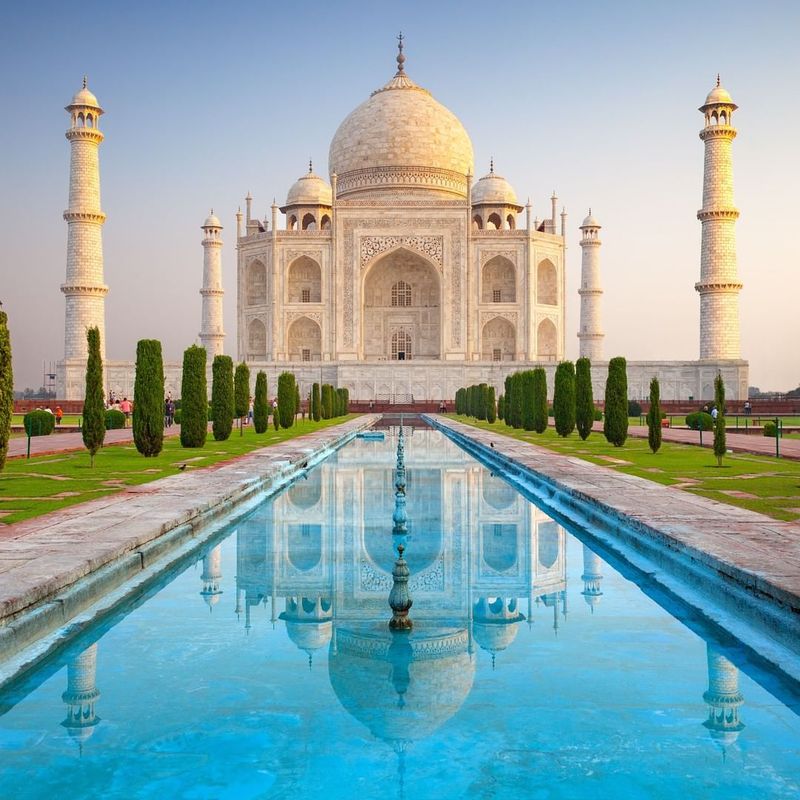
Built from grief and devotion, the Taj Mahal is the kind of building that makes you pause and reconsider what love actually looks like when it has unlimited resources. Emperor Shah Jahan commissioned this white marble mausoleum in 1632 after the death of his beloved wife Mumtaz Mahal.
More than 20,000 workers and artisans spent over 20 years bringing his vision to life.
The symmetry of the Taj Mahal is almost mathematically perfect, and the intricate inlaid gemstone work up close is breathtaking in a way that photos completely fail to capture. The four surrounding minarets lean ever so slightly outward, a clever design choice made so that if they ever fell, they would fall away from the main tomb rather than toward it.
Sunrise is the most popular time to visit, and for good reason. The white marble shifts through shades of pink, gold, and soft white as the light changes, creating a completely different mood throughout the day.
Visiting on a full moon night is another option, when the Taj glows silver and surreal. Agra can be reached easily from Delhi by high-speed train, making it a perfectly manageable day trip or overnight stay.
Colosseum, Rome, Italy
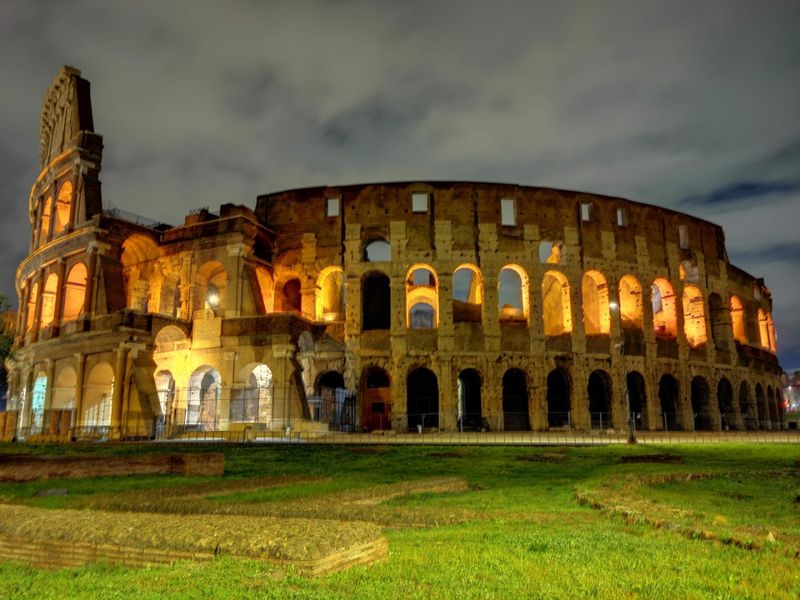
On any given day, nearly 20,000 people line up to walk inside a building that has been standing since 70 AD. The Colosseum in Rome is that magnetic.
Built by Emperor Vespasian and completed under his son Titus, this massive amphitheater once held between 50,000 and 80,000 spectators who came to watch gladiator fights, animal hunts, and elaborate public events.
Walking through the arched corridors and standing on the arena floor where gladiators once fought is a genuinely eerie thrill. Below the main floor lies the hypogeum, a network of underground tunnels and chambers where animals and fighters were kept before being raised into the arena through trapdoors.
Tours of the underground level are available and absolutely worth booking in advance.
The Colosseum is best visited early in the morning or late afternoon to avoid the worst of the crowds and the midday heat. Combining your visit with the nearby Roman Forum and Palatine Hill is a smart move, since one ticket covers all three sites.
Rome surrounds the Colosseum with excellent food, history, and atmosphere at every corner. Standing in front of this ancient structure at night, lit dramatically against the dark sky, is one of Europe’s great travel moments.
Chichen Itza, Mexico
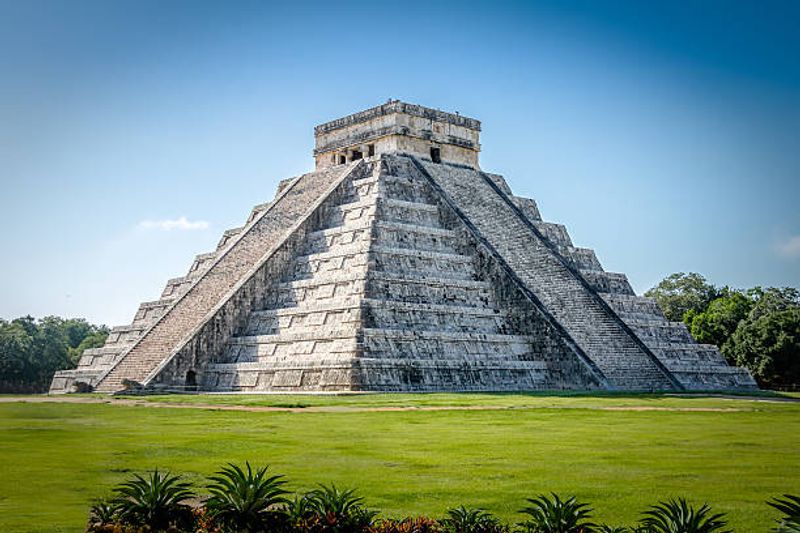
Every year during the spring and autumn equinoxes, something remarkable happens at Chichen Itza. The setting sun casts a shadow along the edge of El Castillo pyramid that creates the unmistakable illusion of a feathered serpent slithering down the staircase.
The ancient Maya engineered this effect intentionally, which says everything you need to know about how advanced their civilization truly was.
El Castillo, also called the Temple of Kukulcan, has exactly 365 steps when you count all four sides, one for each day of the year. The Maya were masterful astronomers and mathematicians, and Chichen Itza serves as a monument to that brilliance.
The site also includes a massive ball court, a sacred cenote, and the Temple of the Warriors covered in intricate carvings.
Located in Mexico’s Yucatan Peninsula, Chichen Itza is easily accessible from Cancun or Merida by bus or car. Arriving early is strongly recommended because the site gets crowded and hot by midday.
Vendors selling handmade crafts line the pathways throughout the complex, making it easy to pick up a memorable souvenir. Nearby cenotes offer a refreshing swim after exploring.
Chichen Itza is one of those places where history feels alive, not locked behind a museum display case.
Christ the Redeemer, Brazil

Standing 98 feet tall with arms stretched wide enough to span a basketball court, Christ the Redeemer watches over Rio de Janeiro from the top of Corcovado Mountain like a permanent embrace. Completed in 1931, the statue has become one of the most photographed monuments on the planet, and seeing it in person still manages to surprise people who thought they were fully prepared.
Getting to the statue is an experience in itself. A scenic cog train winds through the dense Tijuca rainforest before depositing you near the summit, where the views of Rio unfold in every direction.
The city below looks almost impossibly beautiful, with beaches, mountains, and the glittering Guanabara Bay all visible at once.
Cloudy days create their own kind of magic, when the statue disappears into the mist and then suddenly reappears as you climb higher. Sunrise visits are popular for the soft golden light and fewer crowds.
The statue is lit at night and visible from much of the city, becoming a comforting landmark for Rio residents. Whether you are religious or not, standing at the feet of Christ the Redeemer with the entire city spread below you is genuinely moving in a way that is hard to put into words.
Angkor Wat, Cambodia
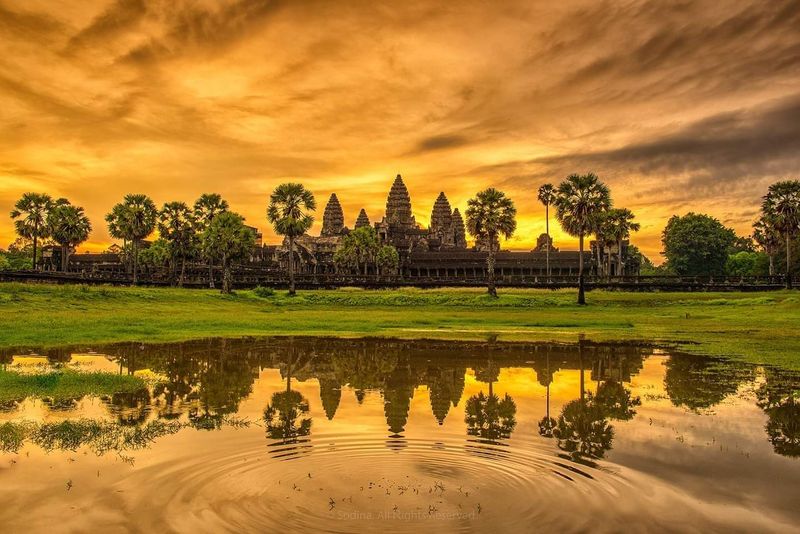
Built in the 12th century by King Suryavarman II, Angkor Wat covers an area so vast that it makes most historical sites look like footnotes. The temple complex stretches across roughly 400 acres and is surrounded by a moat nearly two miles long.
Originally dedicated to the Hindu god Vishnu, it later became a Buddhist temple and remains an active place of worship today.
Arriving before dawn and watching the sun rise over the iconic five towers reflected in the moat is one of travel’s most celebrated experiences. The sky shifts from deep purple to blazing orange while the towers emerge slowly from the darkness, and the whole scene feels almost too beautiful to be real.
Monks in saffron robes sometimes pass through at this hour, adding to the quiet spiritual atmosphere.
Beyond the main temple, the broader Angkor Archaeological Park contains dozens of other structures including the hauntingly beautiful Ta Prohm, where massive tree roots have grown over and through the ancient stone walls. Hiring a local guide is highly recommended because the history and symbolism carved into every surface goes far deeper than it appears.
Siem Reap, the nearest city, offers excellent food and accommodation, making it a comfortable base for exploring this extraordinary UNESCO World Heritage Site.
Grand Canyon, United States
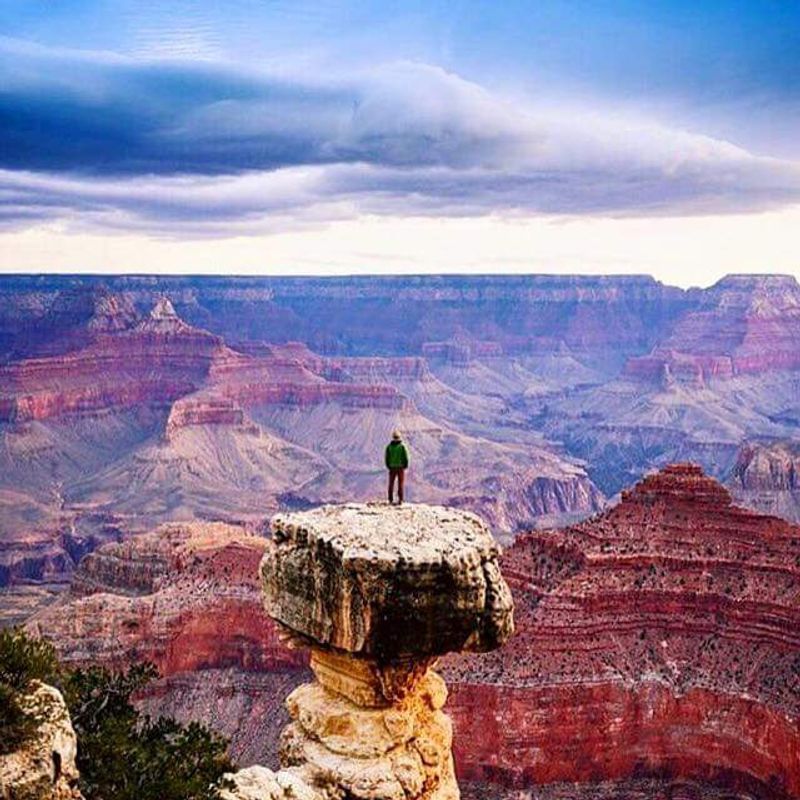
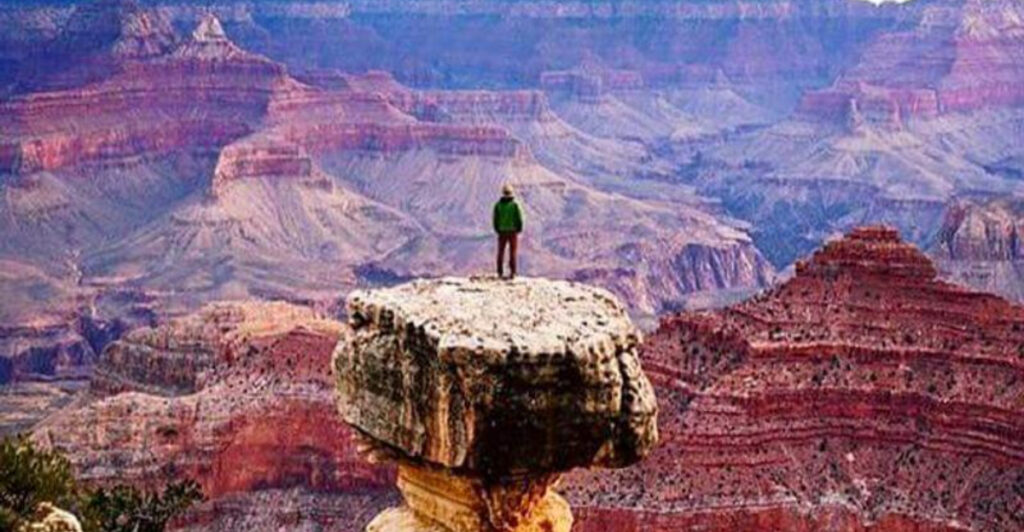
Roughly six million years of erosion created one of the most staggering landscapes on Earth, and standing at the rim of the Grand Canyon for the first time tends to produce the same reaction in almost everyone: a long silence followed by a quiet wow. Words and photos both fall short.
The canyon stretches 277 miles long, reaches up to 18 miles wide, and plunges over a mile deep in places.
The South Rim is the most visited section and offers accessible viewpoints, ranger-led programs, and trails suitable for various fitness levels. Bright Angel Trail is the most popular hike heading into the canyon, though rangers strongly caution against attempting to reach the Colorado River and back in a single day.
The desert heat and elevation gain make it far more demanding than it looks from the top.
Sunrise and sunset transform the canyon completely, as the shifting light plays across the layered rock in shades of amber, crimson, and violet. Stargazing here is exceptional because the area is designated as a Dark Sky Park, meaning light pollution is minimal.
A helicopter or small plane tour offers a perspective that ground viewpoints simply cannot match. The Grand Canyon rewards patience and earns every superlative ever thrown at it.
Share this story