There is a spot in the Pacific Northwest where you can stand at the edge of a volcanic summit and count five mountain peaks stretching across the horizon like a postcard that refuses to end. The air smells like pine and cool stone, the kind of freshness that makes city air feel like a distant memory.
Getting there involves a scenic forest drive and a short but steep climb up railroad-tie steps that genuinely earn you the view waiting at the top. Whether you are a seasoned hiker or someone who just wants a jaw-dropping overlook without committing to a full-day trek, this Oregon destination delivers something rare: a feeling that the whole world just got a little bigger and a little quieter at the same time.
Where Exactly You Are Going: Address, Location, and Setting

Larch Mountain Trail sits in the Mount Hood National Forest, accessed via Larch Mountain Road near Troutdale, Oregon 97060. The trailhead and summit viewpoint are roughly 14 miles southeast of Troutdale, deep in the Columbia River Gorge region of the Pacific Northwest.
The phone number for the ranger district is (541) 308-1700, and the trail is open 24 hours a day, seven days a week, year-round. That said, Larch Mountain Road typically closes during winter months due to snow, so calling ahead or checking road conditions before you drive up is a smart move.
A Northwest Forest Pass or a $5 day-use fee is required to park at the trailhead. The parking lot includes vault toilets, which hikers describe as well maintained for a remote forest facility.
The elevation at Sherrard Point, the rocky summit overlook, reaches approximately 4,056 feet above sea level, giving the entire experience a genuinely alpine feel that surprises first-time visitors.
The Summit View That Makes the Climb Worth Every Step

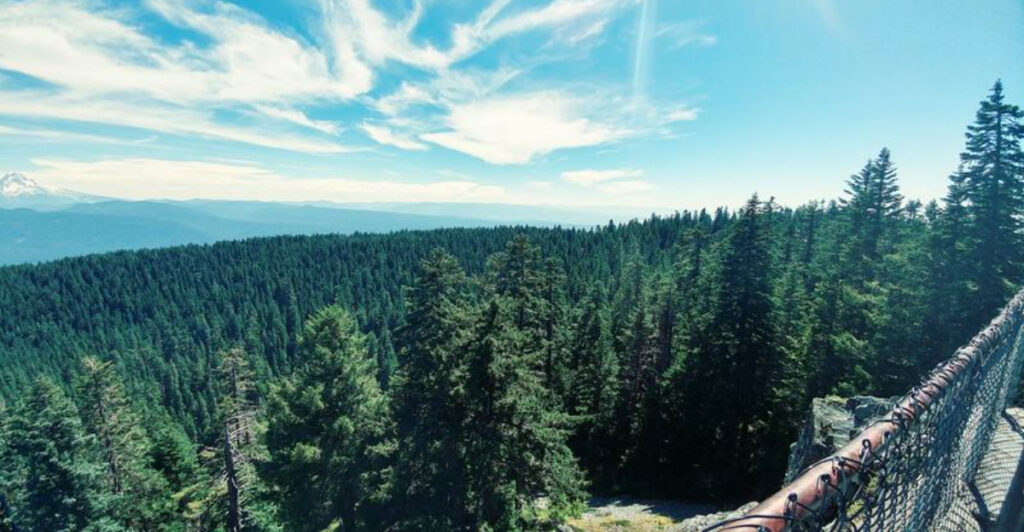
At the top of Larch Mountain, a rocky outcrop called Sherrard Point delivers one of the most celebrated panoramic views in all of Oregon. On a clear day, you can see five volcanic peaks from a single vantage point: Mount Hood, Mount Adams, Mount St. Helens, Mount Rainier, and Mount Jefferson.
That is five Cascade giants lined up in one sweeping glance, which feels almost unfair in the best possible way. The Columbia River is also visible from up here, a silvery ribbon threading through the green valley far below.
Hikers consistently describe the moment they reach the top as one of those rare travel payoffs that exceeds the hype.
The short paved path from the parking area to the viewpoint ends with a series of large railroad-tie steps that require some effort, but the climb takes only a few minutes. Those with physical limitations may want to consider alternate viewpoints, but for anyone who can manage stairs, Sherrard Point rewards every bit of that final push with a view that genuinely stops you in your tracks.
The Drive Up: A Scenic Forest Road That Sets the Mood

Long before you lace up your boots, the drive to Larch Mountain starts doing its job. Larch Mountain Road winds upward through thick stands of Douglas fir and western red cedar, the kind of forest canopy that turns midday sunlight into something soft and dappled.
Motorcycle riders in particular have praised this road as one of the most enjoyable routes in the region, with smooth curves and constant forest scenery keeping the ride interesting from start to finish. Even in a car, the journey feels like a gradual transition from everyday life into something quieter and more deliberate.
The road gains significant elevation as it climbs, and on overcast days the upper sections can disappear into low cloud cover, which adds a moody, almost cinematic quality to the approach. In winter and early spring, snow closes the road entirely, so timing your visit matters.
Late spring through early fall tends to offer the most reliable access and the clearest summit views, making those months the sweet spot for planning your trip up this memorable forest corridor.
Trail Options for Every Type of Hiker

One of the best things about Larch Mountain is that it does not force everyone into the same experience. The short paved trail from the parking lot to Sherrard Point takes only about 15 to 20 minutes each way, making it genuinely accessible for families, casual walkers, and visitors who want the view without a full workout.
For those who want more, Trail 441 runs through the forest and passes old abandoned fire pits and weathered picnic tables scattered among the trees, remnants of earlier recreational use that give the woods a quietly historical atmosphere. The longer route connecting Larch Mountain to Multnomah Falls covers approximately 7.2 miles one way, gaining around 4,000 feet in elevation over its full length.
That connector trail passes multiple waterfalls, follows Multnomah Creek for several miles, and winds through old-growth forest that feels genuinely ancient. Hikers who have completed the full route describe it as challenging but deeply rewarding, with the scenery shifting constantly from waterfall canyons to dense ridgeline forest.
Picking the right distance for your group makes all the difference in how enjoyable the day turns out to be.
Waterfalls Along the Way: A Cascade of Surprises

Hikers who tackle the longer route from Multnomah Falls up to Larch Mountain are treated to a parade of waterfalls that keep the trail visually interesting for miles. The trail follows Multnomah Creek upward, and the sound of rushing water is a near-constant companion through the lower sections of the hike.
Upper Multnomah Falls marks a key turning point on the route, and beyond it the trail passes three additional waterfalls before the forest character begins to shift. Some sections of the creek are deep and calm enough for wading, and on warm summer days those cool pools become natural rest stops that are hard to walk past without at least dipping a hand in.
The combination of moving water, old-growth trees, and mossy basalt rock gives this stretch of trail a lush, layered quality that photographs beautifully but honestly looks even better in person. The Eagle Creek fire of 2017 left visible marks on some sections of the surrounding forest, adding a layer of ecological history to the walk that makes the surviving old growth feel all the more remarkable and worth protecting.
Wildlife and Forest Life You Might Encounter

The forests around Larch Mountain are genuinely alive in ways that catch you off guard. Owls have been spotted swooping through the tree line near the forest edges, and the dense canopy provides habitat for a wide range of bird species that reward patient observers willing to pause and listen.
Bears are present in the area, which is worth keeping in mind when planning your visit. Staying on marked trails is not just a navigation tip here; it is also a basic safety practice in a forest that still functions as real wildlife habitat.
Mushroom hunters have long been drawn to the Larch Mountain corridor, particularly near older logging roads, where the forest floor produces impressive seasonal yields of edible fungi.
The biodiversity of this area reflects the broader richness of the Mount Hood National Forest ecosystem. Deer, smaller mammals, and a variety of amphibians all make use of the creek drainages and forest understory.
Bringing binoculars is a genuinely useful choice, especially if you plan to spend time near the forest edges where open sky meets the tree line and wildlife movement tends to be most visible during morning hours.
Best Times to Visit and What the Seasons Look Like

Timing a trip to Larch Mountain takes a little planning because the road conditions change dramatically with the seasons. The summit area receives significant snowfall in winter, and Larch Mountain Road typically closes from late fall through early spring, sometimes as late as May depending on the year.
Late spring through early fall is the prime window for most visitors. By June, the road is usually open, wildflowers are blooming along the trail edges, and the summit views tend to be at their clearest before summer haze builds later in the season.
Early morning visits in July and August often deliver the sharpest mountain views before afternoon clouds roll in.
Fall brings a quieter atmosphere and cooler temperatures that make the hike genuinely comfortable, and the forest takes on warm amber and gold tones that contrast beautifully with the evergreen canopy. Snow occasionally appears at the summit even in May, which adds a striking visual element to the landscape.
Whatever season you choose, dressing in layers is a practical necessity since the summit runs noticeably cooler than the valley below, sometimes by 10 to 15 degrees.
Practical Tips for a Smooth and Enjoyable Visit

A few practical details can make the difference between a great day on Larch Mountain and a frustrating one. The trail is rated moderate to difficult depending on which route you choose, and proper footwear matters more than some visitors expect.
Trail runners or hiking boots with good grip are strongly recommended, especially on the steeper sections and rocky stretches near the summit.
Bringing enough water is essential. While the creek provides water in the lower sections of the longer route, treating or filtering any natural water source before drinking is the responsible approach.
The vault toilets at the trailhead are functional and reasonably maintained, but there are no other services on the mountain, so pack out everything you bring in.
Cell service is limited to nonexistent in most of the trail area, so downloading an offline map before you leave is a genuinely useful preparation step. Trail 441 in particular has sections where it is easy to wander off the marked path toward old fire pits or abandoned picnic areas, so staying aware of your route keeps the day stress-free.
Arriving early on weekends helps you secure parking before the lot fills up by midmorning.
The History and Forest Heritage of Larch Mountain

Larch Mountain carries layers of human and natural history that are easy to overlook when you are focused on the view at the top. The mountain sits within the Mount Hood National Forest, a federally managed landscape that covers over a million acres of Pacific Northwest terrain.
Early 20th-century logging operations left traces throughout the area, including remnants of old machinery, log frames, and overgrown roads that once served steam-powered cable systems used to haul timber down the slopes.
Some of those old logging roads are still walkable today, though the surrounding forest has changed significantly over the decades. Sections of the mountain that were heavily logged have not fully recovered, and the contrast between stripped hillsides and intact old-growth stands tells a clear story about land use decisions that continue to shape the landscape visitors experience today.
The Eagle Creek fire of 2017 added another chapter to that story, burning through portions of the Columbia River Gorge and leaving visible scars that are slowly being reclaimed by new growth. The surviving old-growth sections of the Larch Mountain Trail corridor represent some of the most ecologically significant forest in the entire region, and their preservation remains a point of genuine local importance.
Why This Oregon Overlook Deserves a Spot on Your Travel List

Oregon has no shortage of scenic destinations, but Larch Mountain earns its reputation by delivering something that feels genuinely proportional to the effort required to get there. The combination of a forested drive, a manageable hike, and a summit view that spans five volcanic peaks is a rare package that suits a wide range of visitors and skill levels.
Families with young children have made the trip successfully, including parents who brought toddlers along and found the shorter paved route to the overlook entirely doable. Experienced hikers who want a full-day challenge can connect the trail all the way down to Multnomah Falls for a route that covers serious mileage and elevation change.
The mountain does not ask you to choose one version of itself; it offers both.
Unlike some destinations that require you to travel far from the Pacific Northwest to find this kind of scenery, Larch Mountain is right there in Oregon, accessible from the Portland metro area in under two hours. It is the kind of place that reminds you why people move to this corner of the country and why, once they arrive, so few of them ever want to leave.
Share this story