Nashville has a reputation for country music and cowboy boots, but the city has quietly built itself into one of the most well-rounded travel destinations in the entire country. You can spend a morning at a world-class museum, an afternoon hiking through a forest, and an evening watching a legendary live performance, all without leaving city limits.
The food alone could fill a separate article. What makes Nashville truly stand out is how it manages to pack so much history, culture, and personality into a city that still feels approachable and fun.
This list covers 14 places that locals love and visitors remember long after the trip is over. Some are famous for good reason, and a few might genuinely surprise you.
By the end of this article, you will have a solid plan for making the most of your time in Music City.
1. Broadway Honky-Tonks

There is no street in America quite like Lower Broadway on a Friday night. Neon signs stack up on every building, and live music pours out of multiple venues simultaneously from noon until well past midnight.
Each honky-tonk has its own personality. Some are multi-story venues with rooftop decks and city views.
Others are narrow, classic bars where the stage is practically in the crowd. The performers range from up-and-coming songwriters to seasoned veterans who have been playing this strip for decades.
No reservations are required, and most venues have no cover charge, which means you can hop between spots and catch a completely different vibe each time. Broadway can get loud and crowded, especially on weekends, so arriving earlier in the day gives you a more laid-back experience.
Either way, it is an essential Nashville stop that earns its reputation every single night.
2. The Country Music Hall of Fame

Over 2.5 million artifacts live inside this museum, and that number alone should tell you how seriously Nashville takes its musical heritage. The Country Music Hall of Fame is not just a collection of old guitars and costumes, though it has plenty of both.
Exhibits trace the full arc of country music from its Appalachian roots through rockabilly, outlaw country, and the modern Nashville sound. The wall of gold records is genuinely impressive, and the rotating special exhibits mean that repeat visitors almost always find something new.
Interactive stations let you listen to rare recordings and learn about the songwriting process. The museum also manages tours of RCA Studio B, which you can book directly here.
Plan for at least two to three hours if you want to do it justice. Even visitors with zero country music background tend to walk out with a new appreciation for the genre’s place in American history.
3. Printer’s Alley

One block off Broadway sits a narrow passage that has been part of Nashville’s nightlife since the early 1900s. Printer’s Alley earned its name from the newspaper and printing businesses that once lined it, but by mid-century it had transformed into a corridor of jazz clubs and entertainment spots.
Today it retains a vintage, slightly moody character that feels distinct from the tourist energy of the main strip. Neon signs from decades past still hang on brick walls, and the clubs here tend to feature jazz, blues, and classic country rather than the pop-leaning sets common on Broadway.
It is a favorite among locals who want live music without the weekend crowds. The alley is short enough to walk end to end in two minutes, but you will likely spend much longer once you find a spot you like.
It is one of those Nashville secrets hiding in plain sight.
4. The Loveless Cafe

About 20 miles southwest of downtown, a roadside restaurant has been feeding people since 1951 and still has lines out the door on weekend mornings. The Loveless Cafe built its reputation on one thing above all else: biscuits.
The recipe has been closely guarded for over 70 years, and regulars will tell you without hesitation that they are the best in Tennessee. The full menu leans deep into Southern tradition, with country ham, fried chicken, catfish, and homemade fruit preserves that come with every order.
The setting matches the food perfectly. Old tin signs, checkered tablecloths, and a gift shop full of Tennessee-made products give it an authentic, unhurried feel.
It is a bit of a drive from the city center, but nearly every Nashville travel guide includes it for good reason. Arrive early or expect a wait, and consider that wait completely worth it.
5. RCA Studio B

More than 1,000 hit songs were recorded inside a modest building on Music Row, and the piano Elvis Presley used still sits exactly where he left it. RCA Studio B is one of the most historically significant recording spaces in American music.
Between 1957 and 1977, artists including Elvis Presley, Dolly Parton, Roy Orbison, and Waylon Jennings used this studio to create some of the most recognized songs in history. The room has been preserved with remarkable care, keeping much of the original equipment intact.
Tours depart daily from the Country Music Hall of Fame, making it easy to combine both attractions in a single visit. Guides share detailed stories about specific recording sessions and the musicians who passed through.
It is a relatively short tour, running about 45 minutes, but the density of history packed into that time makes it one of the most memorable stops on any Nashville itinerary.
6. Radnor Lake State Park

Just seven miles from downtown Nashville, a 1,368-acre nature preserve operates as if the city around it does not exist. Radnor Lake State Park is the kind of place that surprises first-time visitors who expected Nashville to be all neon and noise.
The park surrounds a quiet lake with several miles of hiking trails ranging from easy lakeside walks to more challenging ridge routes. White-tailed deer are spotted here so regularly that seeing one barely causes a pause among regular visitors.
Herons, turtles, and hawks are also common sightings.
The Barbara J. Mapp Aviary Education Center on the grounds houses birds of prey and reptiles for up-close educational viewing.
The park does not allow bikes, dogs, or jogging on most trails, which keeps the atmosphere calm and wildlife-friendly. Early morning visits tend to offer the best wildlife sightings and the most peaceful experience on the trails.
7. The Gulch

Not long ago, the Gulch was an industrial rail yard with little reason to visit. Today it is one of Nashville’s most photographed and talked-about neighborhoods, a walkable district packed with upscale restaurants, boutique hotels, and creative businesses.
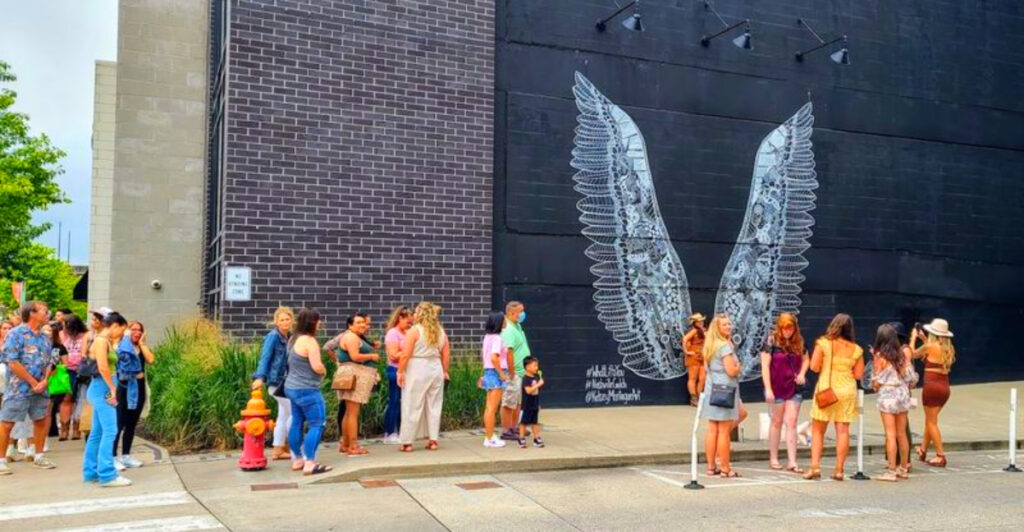
The famous “What Lifts You” angel wings mural by artist Kelsey Montague has become one of the most shared images associated with Nashville, drawing a constant stream of visitors looking for the perfect photo. But the neighborhood has plenty more to offer beyond that one wall.
Restaurants in the Gulch cover serious ground, from refined Southern cuisine to Korean barbecue, wood-fired pizza, and gourmet tacos. The streets are compact and easy to navigate on foot, making it ideal for an afternoon of exploring without a fixed plan.
At night, rooftop bars fill up quickly, so arriving before 7 p.m. is a smart move if you want a good table.
8. Grand Ole Opry

Founded in 1925, the Grand Ole Opry holds the record as the longest-running live radio broadcast in American history, and it is still going strong with performances every week. That kind of consistency over a century is not something many entertainment institutions can claim.
The Opry House seats about 4,400 people and features a mix of established country legends and newer artists on the same bill each night. The famous wooden circle at the center of the stage was cut directly from the original Ryman Auditorium floor, making it a literal piece of history.
The Grand Ole Opry will celebrate its 100th anniversary in fall 2026, with expanded programming already being planned. Tickets sell out quickly for milestone events, so booking ahead is strongly recommended.
Even a regular Tuesday night show here delivers something special. It is one of those venues where the history of the place adds a layer to every single performance.
9. Belle Meade Historic Site

Established in 1807, Belle Meade was once one of the most celebrated thoroughbred horse breeding farms in the entire country. The estate produced multiple Kentucky Derby champions and attracted buyers from across the United States and abroad.
Today the site operates as a historic landmark with guided tours of the Greek Revival mansion and outbuildings. What makes these tours stand out is their commitment to telling the full story of the property, including the lives and contributions of the enslaved people who built and maintained it.
That honesty makes the experience far more meaningful than a typical house tour.
The grounds are beautifully maintained and particularly striking in spring and fall when the trees are at their best. A winery and tasting experience now operates on the property as well.
The combination of landscape, architecture, and layered history makes Belle Meade one of the most thought-provoking stops in all of Nashville.
10. Assembly Food Hall

Group trips to Nashville often hit a wall when it comes to choosing a restaurant, because everyone wants something different. Assembly Food Hall solves that problem with dozens of vendors under one very large roof.
The selection spans Nashville hot chicken, Japanese ramen, wood-fired pizza, fresh sushi, Texas-style barbecue, gourmet burgers, and much more. It is genuinely one of the most diverse food collections in the city.
Live music stages are positioned throughout the hall, so there is usually a performer worth watching while you eat.
The space itself is spread across multiple floors in the Fifth and Broadway complex, which also includes retail shops and a rooftop terrace with city views. It is centrally located and easy to reach on foot from most downtown hotels.
For first-time visitors trying to figure out what Nashville food is all about, this is a practical and entertaining starting point that covers a lot of ground quickly.
11. Johnny Cash Museum

Rare handwritten lyrics sit behind glass next to the stage costumes he wore, and personal letters give visitors a glimpse into a life that was far more complex than the legend alone suggests. The Johnny Cash Museum is compact but densely packed with meaningful artifacts.
The collection covers Cash’s entire career, from his early Sun Records days through his landmark American Recordings era late in life. Family photographs, instruments, tour memorabilia, and video installations fill every section of the museum.
It is the kind of place where you find yourself reading every single caption instead of skimming past them.
The museum is located in downtown Nashville, just a short walk from Broadway, making it easy to fit into a full day of exploring. It typically takes about 90 minutes to move through at a comfortable pace.
Widely considered one of the best celebrity museums in the United States, it earns that reputation with consistent quality and genuine depth.
12. Pictured Murals Around East Nashville

East Nashville has transformed over the past two decades from a quiet residential area into one of the city’s most creatively charged neighborhoods. The change shows up most visibly on its walls, which have become a rotating outdoor gallery of large-scale murals by local and national artists.
No two blocks look the same. One stretch might feature a detailed portrait mural, and the next might have an abstract geometric piece covering an entire building side.
Independent coffee shops, vintage clothing stores, and small restaurants fill the gaps between. The neighborhood rewards slow, unplanned exploration more than any specific itinerary.
East Nashville also hosts regular community events, art walks, and pop-up markets that bring the creative community together in public spaces. It is a neighborhood that feels genuinely lived-in and evolving rather than packaged for tourists.
Spending a few hours here gives you a very different picture of Nashville than the one most visitors arrive expecting to find.
13. Ryman Auditorium

Built in 1892 as a gospel tabernacle, the Ryman Auditorium has hosted performers across nearly every genre imaginable, from Hank Williams and Johnny Cash to Jack White and Adele. The building’s history is genuinely staggering for a single venue.
The original church pews still serve as seating for most of the audience, and the arched windows give the space a quality that is hard to replicate in a modern arena. The acoustics are frequently cited by performers as among the best in the world for live music.
Visitors can tour the auditorium during the day even when no show is scheduled, with exhibits covering the building’s history and the artists who have performed there. Evening concerts sell out regularly, so checking the schedule well in advance is highly recommended.
Whether you attend a show or take a daytime tour, the Ryman delivers an experience that justifies every bit of its legendary status in American music.
14. The Bluebird Cafe

Capacity at the Bluebird Cafe tops out at around 300 people, which is exactly the point. This tiny venue in Green Hills has launched more major music careers than almost any other club in the world, and it did so by keeping things small and honest.
The signature format is called “in the round,” where four songwriters sit in a circle at the center of the room, taking turns performing original songs and sharing the stories behind them. You might sit ten feet from someone who wrote a number one hit.
That kind of access is rare anywhere.
Reservations are strongly recommended and often sell out days in advance, especially for weekend shows. The Bluebird has no flashy production or elaborate staging.
It is just musicians, songs, and a room full of people paying close attention. For anyone serious about understanding what makes Nashville’s music culture so distinctive, this is the place that explains it better than any museum could.
Share this story