Open a typical American refrigerator in 1960 and you would find a lineup of foods that looked nothing like today’s shelves. The postwar economy had reshaped how families shopped, cooked, and ate, with processed convenience foods sitting right alongside homemade preserves and old-fashioned staples.
Gelatin molds, canned meat spreads, and powdered drink mixes were not quirky choices but genuine household standards that millions of families relied on every week. Food science was booming, television advertising was changing what people bought, and refrigerators themselves were becoming symbols of modern success.
What families stored inside those humming white boxes reflected the values, budgets, and cultural habits of a very specific moment in American history. Some of these items faded because nutrition science caught up with them, others because technology changed how we cook, and a few simply because tastes moved on.
Reading through this list, you might recognize a few from a grandparent’s kitchen, or discover foods that feel almost unbelievable today.
1. Aspic Molds
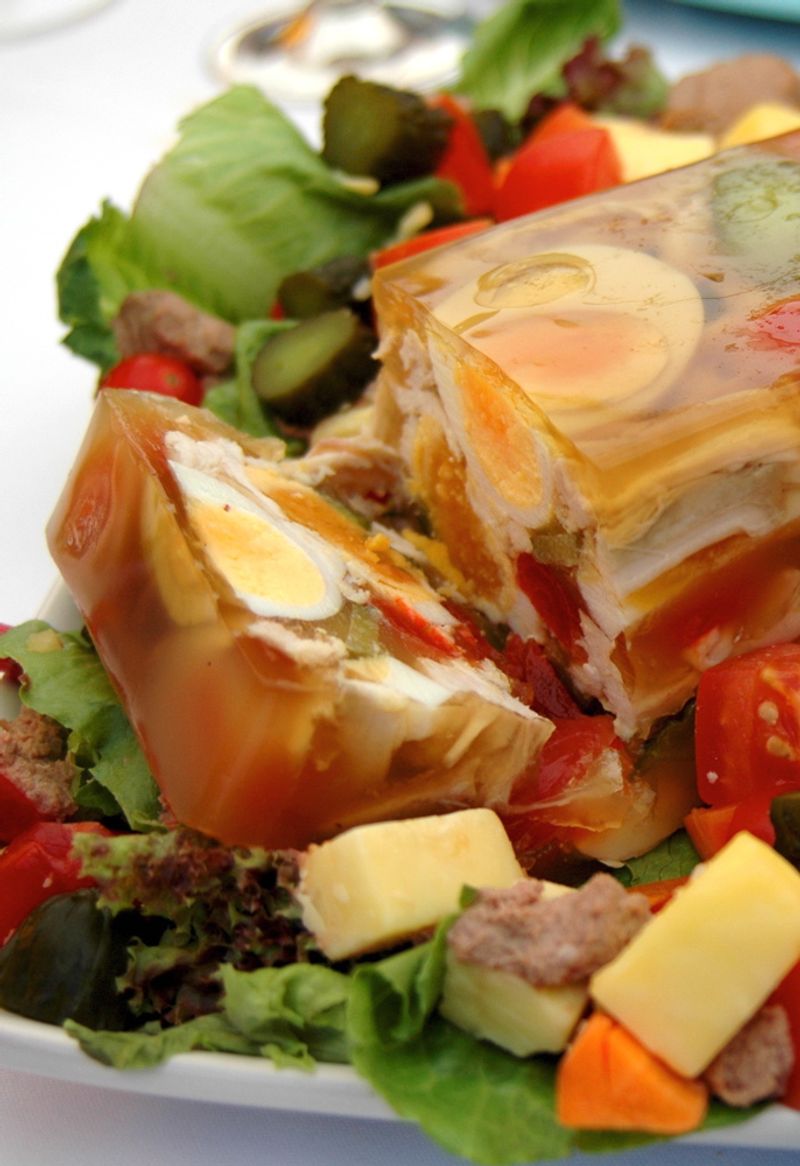
Savory gelatin was once treated as a mark of culinary sophistication, not a source of confusion. Aspic molds combined clear, meat-based gelatin with suspended vegetables, hard-boiled eggs, seafood, or cold cuts and were refrigerated for hours before serving.
Homemakers followed recipes from popular magazines like Good Housekeeping and Better Homes and Gardens, which regularly featured aspic as a centerpiece dish.
The technique actually dates back centuries in European cooking, but it reached peak American popularity during the 1950s and 1960s when gelatin became affordable and widely available. Decorative ring molds and fish-shaped pans gave the dish its signature look.
Aspic appeared at dinner parties, holiday tables, and church potlucks as a signal that the host had put in real effort.
By the 1970s, tastes had shifted sharply, and savory gelatin became a frequent target of food humor. Today it survives mostly in culinary history books and retro recipe collections.
2. Tang Breakfast Drink

When NASA selected Tang as part of John Glenn’s 1962 orbital mission supplies, General Foods had one of the greatest accidental marketing moments in food history. The orange-flavored powder had actually been introduced in 1957, but the space program connection turned it into a household name almost overnight.
Families across America began keeping pitchers of it chilled in the refrigerator as a breakfast drink alternative.
Tang cost significantly less than fresh orange juice and had a much longer shelf life, making it practical for families managing tight budgets. Television commercials reinforced the space-age appeal, and children genuinely believed they were drinking the same thing as astronauts.
The brand expanded internationally and found massive success in countries across Latin America and the Middle East.
In the United States, however, Tang gradually lost ground as fresh juice options multiplied and nutrition labels became more important to shoppers. It remains a cultural reference point more than a refrigerator staple today.
3. Cottage Cheese with Fruit
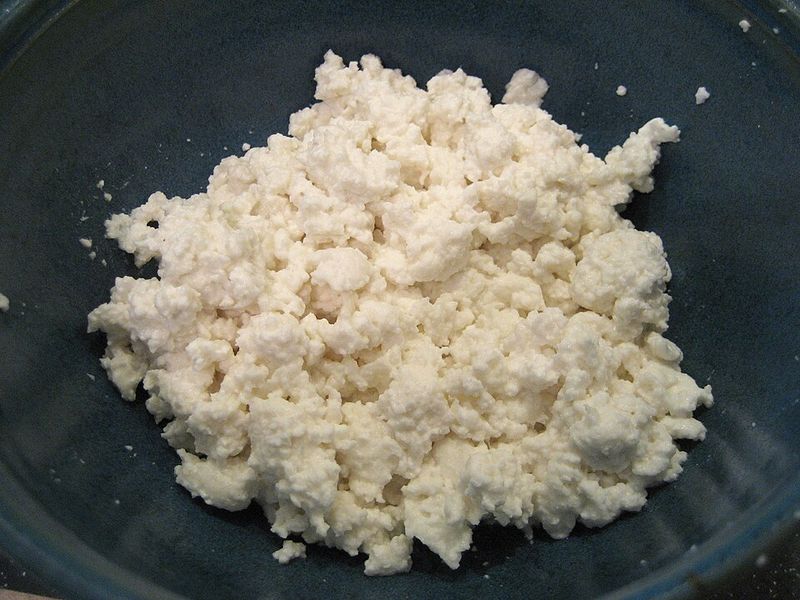
Cottage cheese held a surprisingly prominent place in American diet culture throughout the 1960s. It appeared in women’s magazines as the cornerstone of low-calorie meal plans, often paired with canned peaches, pineapple rings, or pear halves from a can.
Large tubs sat front and center in refrigerators, ready to assemble a quick lunch or light dinner side dish.
The pairing of dairy and canned fruit was considered both wholesome and modern, fitting neatly into the era’s enthusiasm for processed convenience. Weight-loss programs of the period regularly featured it on their approved food lists, which helped cement its reputation as a health food.
Department store lunch counters and diners served cottage cheese plates as standard menu items.
Its cultural moment faded as Greek yogurt, smoothie bowls, and other protein-rich foods crowded the health food space. Cottage cheese still sells today, but it no longer commands the refrigerator real estate it once did.
4. Bacon Grease in a Coffee Can
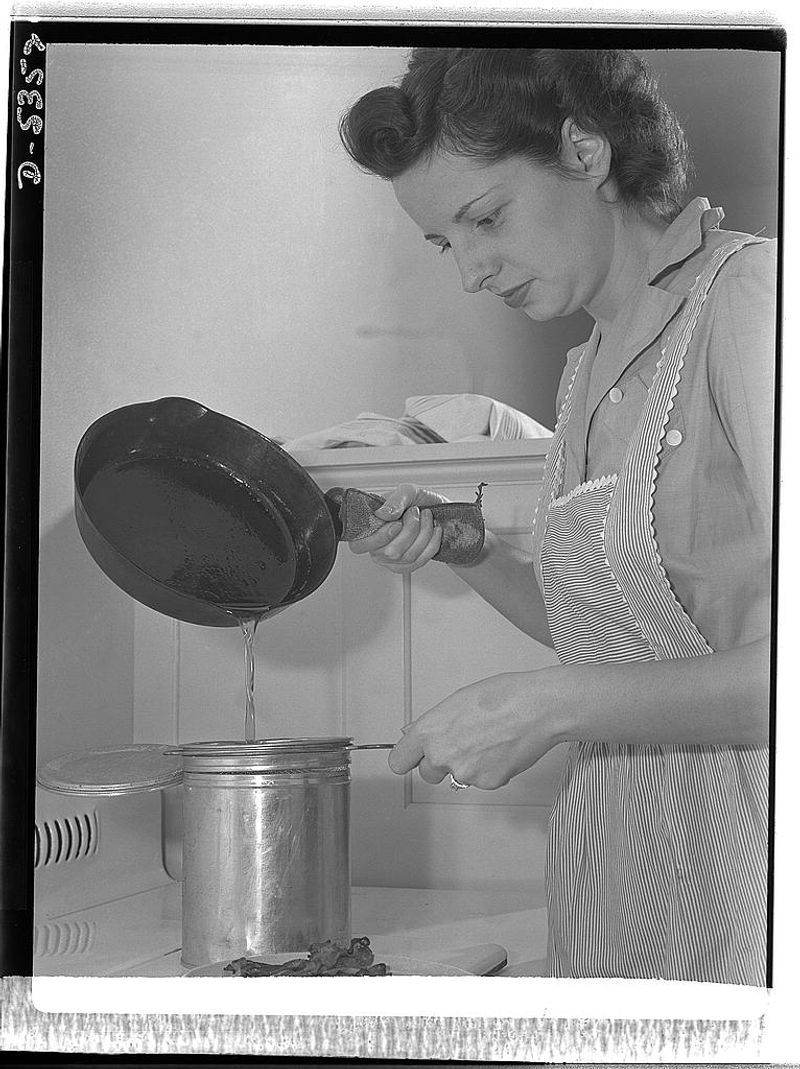
Keeping a coffee can of saved bacon grease in the refrigerator was not a quirky habit but a deeply practical one rooted in Depression-era and wartime frugality. Families who had grown up rationing fats during World War II did not stop the practice simply because grocery stores were now well-stocked.
The solidified grease was used to fry potatoes, season cast-iron skillets, cook green beans, and add flavor to cornbread batter.
Maxwell House and Folgers cans were the preferred containers, sturdy enough to hold the grease and easy to seal. The can typically lived on the back of a refrigerator shelf or near the stove, within easy reach during cooking.
It represented a specific generational attitude toward food and waste that was common among families who remembered lean years.
Concerns about saturated fat and cardiovascular health, which grew significantly through the 1970s and 1980s, gradually ended the practice for most households. Younger generations rarely inherit the habit.
5. TV Dinners in Aluminum Trays
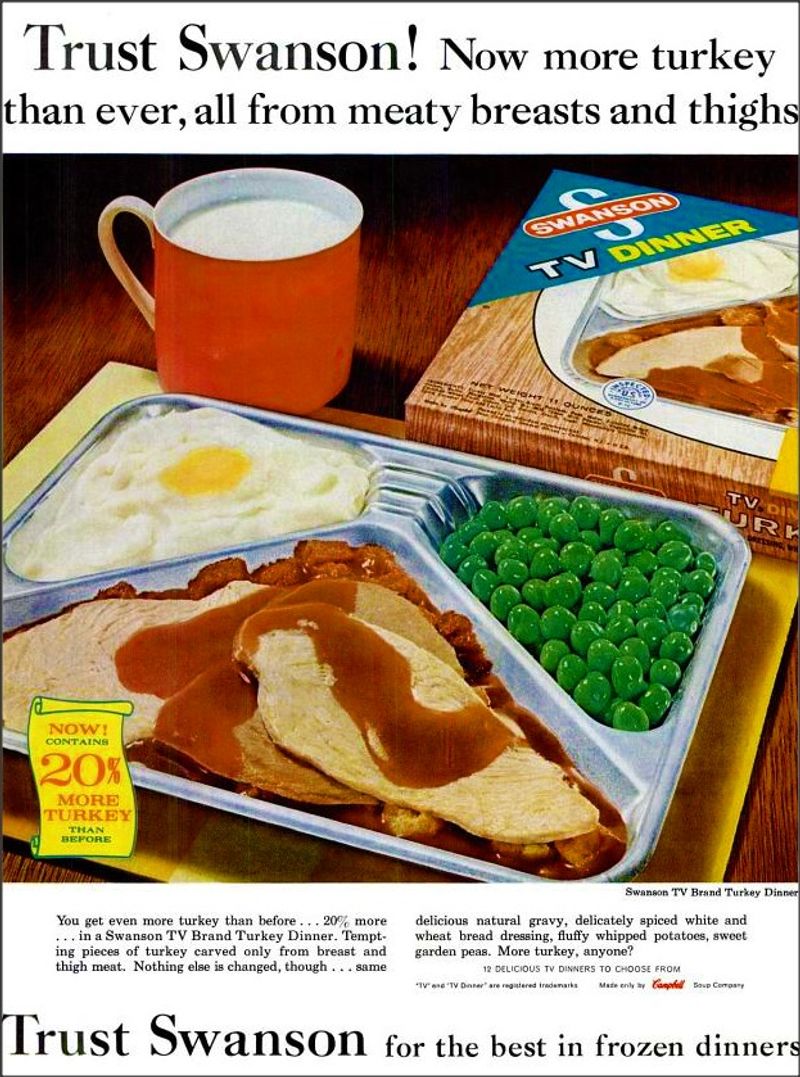
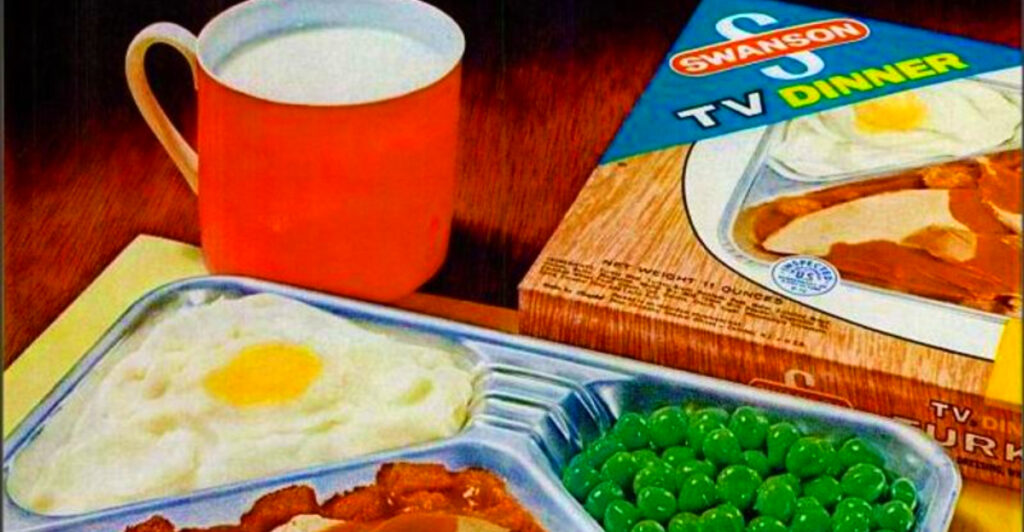
Swanson introduced its iconic TV dinner in 1953, but the product hit its stride during the 1960s when television ownership became nearly universal in American homes. The divided aluminum trays held turkey, mashed potatoes, peas, and a small dessert section, designed to be heated in the oven and eaten in front of the television set.
Families stacked them in freezer compartments as a solution for busy weeknights.
The product was originally developed to use surplus Thanksgiving turkey, and Swanson sold ten million units in its first year. By the 1960s, competitors had flooded the market with their own versions.
The aluminum tray became a symbol of modern convenience and the cultural shift toward eating meals outside the traditional dining room setting.
Microwave ovens eventually replaced conventional ovens as the preferred reheating method, and manufacturers switched to plastic trays. The original foil-tray format was discontinued, making it a genuinely vanished piece of American food culture.
6. Powdered Coffee Creamer
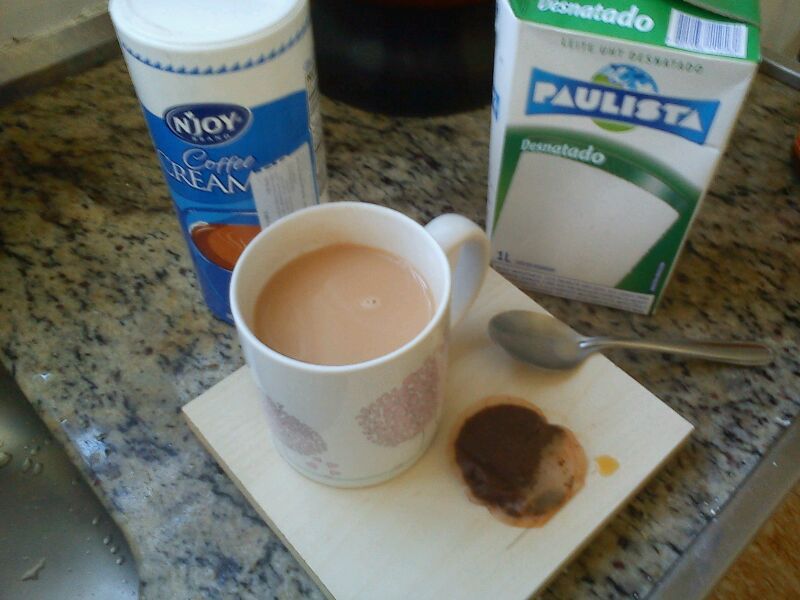
Coffee-mate launched in 1961 and almost immediately changed how American families approached their morning cup. The non-dairy powder dissolved quickly into hot coffee and required no refrigeration, which appealed to households that went through cream slowly enough for it to spoil.
Many families kept jars chilled in the refrigerator anyway out of habit or because they preferred a slightly cooler consistency.
The product was marketed aggressively through television commercials that emphasized its convenience and modern efficiency. Carnation, which produced Coffee-mate, positioned it as a scientific improvement over traditional dairy cream.
The timing aligned perfectly with the rise of instant coffee, which had become a staple in millions of homes by the early 1960s.
Today’s coffee culture has moved decisively toward refrigerated liquid creamers, flavored half-and-half options, and plant-based milk alternatives. Powdered creamer still exists on store shelves, but it no longer holds the central role it once played in American kitchen routines.
7. Pickled Everything
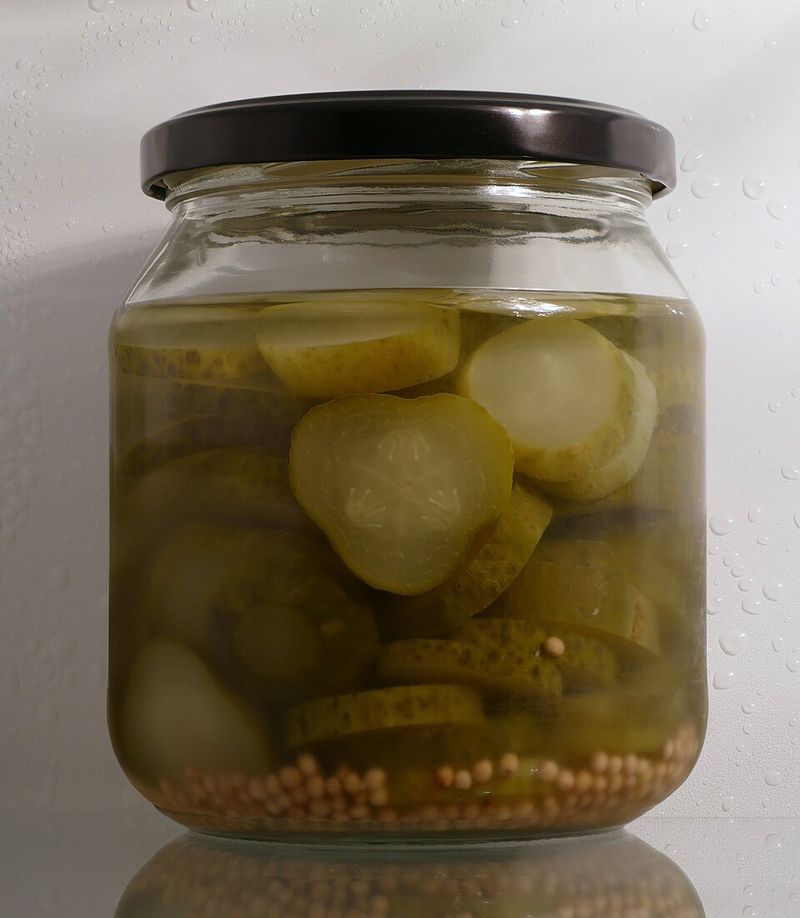
The refrigerator shelves of a 1960s household often looked like a small-batch canning operation. Jars of pickled beets, pickled eggs, watermelon rind preserves, and okra lined up in rows, representing both regional food traditions and practical preservation methods.
Many families still maintained vegetable gardens and relied on pickling to extend the harvest through colder months.
Pickled pigs’ feet, a regional specialty in parts of the South and Midwest, also appeared regularly in home refrigerators and at deli counters. The practice connected directly to immigrant food traditions from Eastern Europe, Germany, and Appalachia, where fermented and pickled foods had been central to diets for generations.
Home economics classes of the era taught pickling as a standard domestic skill.
While artisan pickles have enjoyed a revival in recent years, the wide variety of home-pickled items that once filled family refrigerators has largely disappeared. Most households today rely on commercially produced pickles limited to cucumbers and a few standard varieties.
8. Frosted Glass Soda Bottles
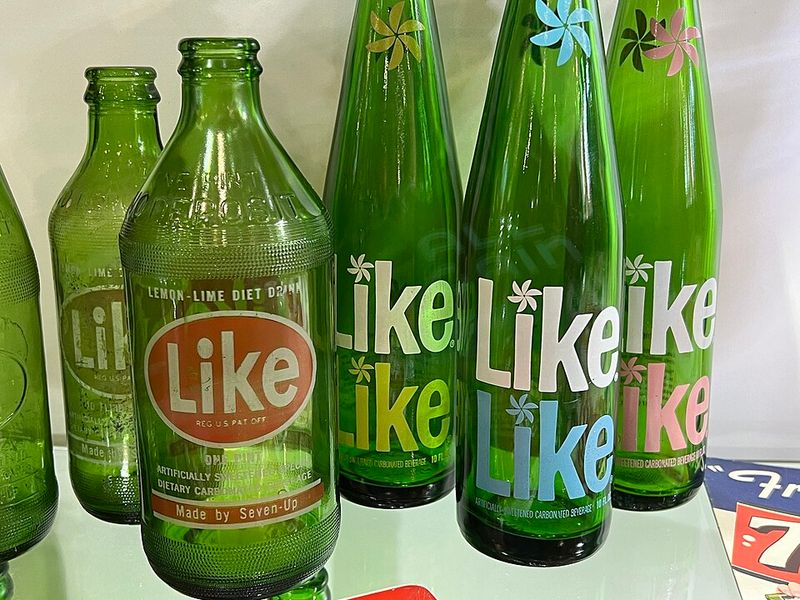
Before two-liter plastic bottles became the default, refrigerators across America held thick glass soda bottles chilled for family meals and guests. Brands like RC Cola, Orange Crush, Nehi, and Coca-Cola were sold in reusable glass bottles that consumers returned to stores for a deposit refund.
Many neighborhoods also had home delivery services that swapped empty cases for fresh ones on a weekly schedule.
The bottles were heavy, durable, and designed to be returned rather than thrown away. This created a deposit-return system that functioned effectively for decades before disposable packaging became dominant.
Glass bottles kept carbonation sealed longer than early canned versions, and many consumers preferred the taste associated with them.
The shift toward aluminum cans in the mid-1960s and plastic bottles in the 1970s effectively ended the glass bottle era for most American households. A few regional bottlers maintained glass bottle lines for specialty markets, but the refrigerator staple of chilled glass sodas largely belongs to pre-1970 America.
9. Liverwurst and Olive Loaf
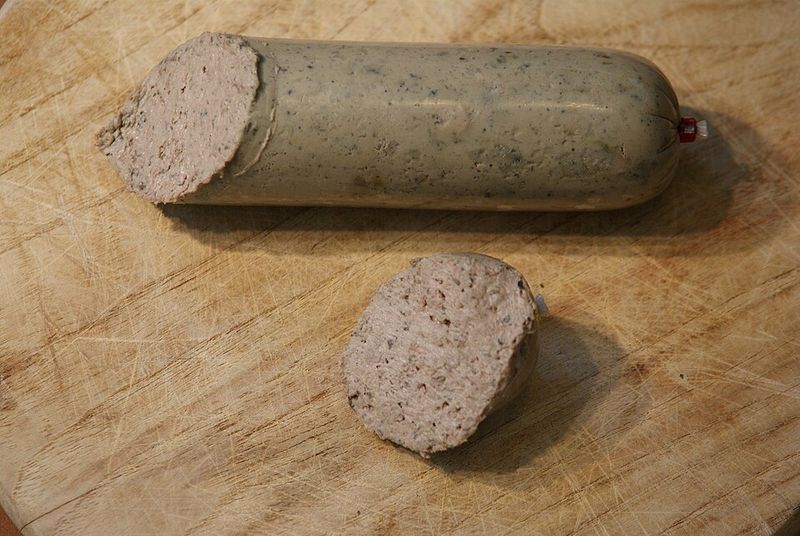
The cold cut drawer of a 1960s refrigerator looked dramatically different from what most families stock today. Liverwurst, a smooth spreadable sausage made from pork liver and seasonings, was a common sandwich filling for both adults and children.
Olive loaf, which embedded green olives into processed pork, and pimento loaf, a similarly constructed product, were standard deli offerings at grocery counters nationwide.
These products reflected both the affordability and the food manufacturing capabilities of postwar America. Meat packers like Oscar Mayer and Eckrich produced them at scale, and they cost less per serving than whole cuts of meat.
Families used them for school lunches, quick dinners, and snack plates alongside crackers and mustard.
Changing attitudes toward processed meat, sodium content, and organ-based ingredients gradually pushed these products to the margins of American grocery stores. Liverwurst still exists in specialty and German deli markets, but olive loaf and pimento loaf have nearly vanished from mainstream shelves.
10. Jell-O Desserts in Every Color
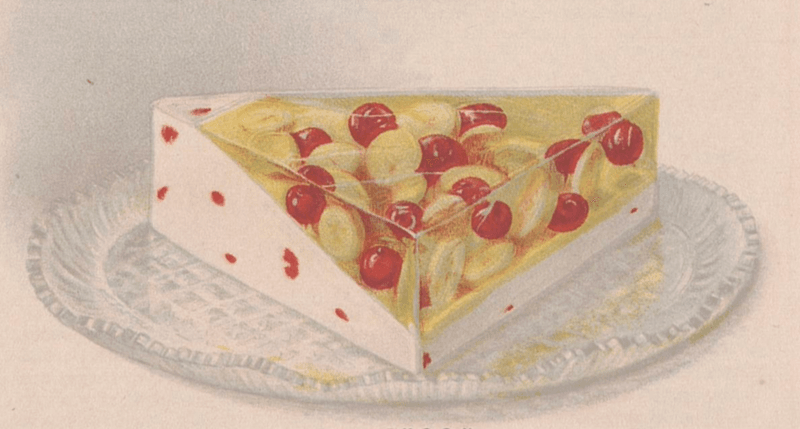
Jell-O occupied a remarkable amount of refrigerator space in the average 1960s household. The General Foods brand had been popular since the early 1900s, but its postwar advertising campaigns elevated it to near-universal status.
Refrigerators regularly held multiple molds in different flavors, each layered with canned fruit cocktail, mini marshmallows, or Cool Whip, which itself launched in 1966.
Advertising campaigns of the period featured Jell-O as a versatile, affordable, and festive food suitable for any occasion. The brand partnered with celebrities and published its own recipe booklets, which encouraged homemakers to experiment with layered molds, parfaits, and pie fillings.
Utah became so associated with Jell-O consumption that the state legislature officially designated it the state snack in 2001.
The broader gelatin dessert category declined steadily from the 1980s onward as dessert options multiplied and the novelty faded. Jell-O still sells, but the elaborate molded presentations that once defined American entertaining have largely disappeared from modern tables.
11. Carnation Evaporated Milk
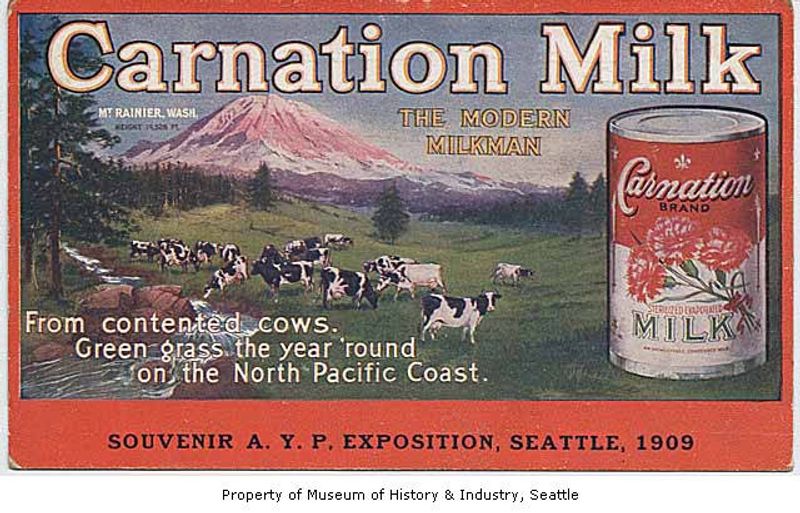
Carnation Evaporated Milk was a refrigerator fixture in millions of American homes throughout the 1960s, used in a range of recipes that stretched far beyond dessert. Cooks added it to mashed potatoes for extra creaminess, stirred it into casseroles, mixed it into pie fillings, and poured it into coffee as a richer alternative to fresh milk.
Its concentrated form meant a small amount went a long way.
The product was particularly valued because fresh milk had a shorter shelf life in that era, before ultra-pasteurization extended refrigerator longevity. Families kept extra cans on hand as insurance against running out mid-recipe.
Carnation’s advertising consistently promoted evaporated milk as a nutritional product suitable for infants, children, and adults alike.
As fresh dairy products became more reliably available and shelf-stable, the urgency of keeping evaporated milk stocked diminished. Today it remains a baking ingredient for specific recipes like pumpkin pie and fudge, but it no longer qualifies as a daily refrigerator essential.
12. Homemade Gelatin Salads
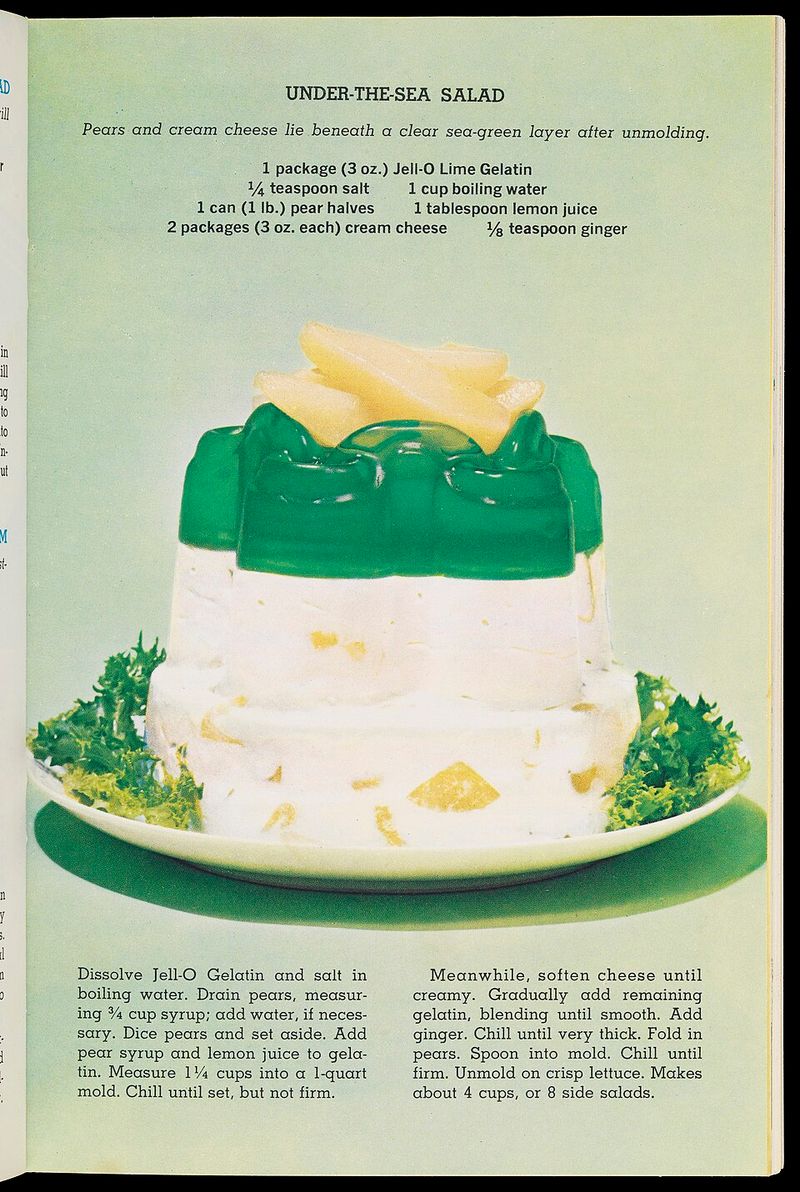
The term “salad” carried a much broader definition in 1960s American kitchens. Gelatin salads combined flavored or unflavored gelatin with ingredients like shredded carrots, celery, tuna, shrimp, cream cheese, or mayonnaise and were refrigerated until firm before serving.
They appeared at dinner tables as side dishes rather than desserts, sitting alongside roasted meats and vegetables without raising any eyebrows.
Postwar refrigerator cookbooks devoted entire chapters to gelatin salads, treating them as a legitimate culinary category. The technique allowed cooks to stretch ingredients, create colorful presentations, and prepare dishes well in advance of a meal.
Community cookbooks from the 1950s through the early 1970s are filled with regional variations that reflect local ingredients and preferences.
Food writers began satirizing gelatin salads in the late 1970s, and the category never recovered its respectability. Today they appear primarily in historical food discussions and retro cooking challenges, fascinating to read about but rarely reproduced in modern home kitchens.
Share this story