There is a stretch of the Oregon coast so quietly spectacular that most travelers blow right past it on their way to somewhere more famous. A rugged beach dotted with dramatic sea stacks, tidal pools teeming with starfish, and a campground tucked behind a curtain of lush coastal vegetation sits just north of the California border.
National Geographic has recently shone a spotlight on the small town of Brookings, Oregon, calling it one of the most underrated coastal destinations in the country. I made the trip myself, and after spending several days exploring every corner of this place, I can tell you that the hype is not only deserved but honestly not strong enough.
Where Exactly You Will Find This Hidden Coastal Treasure
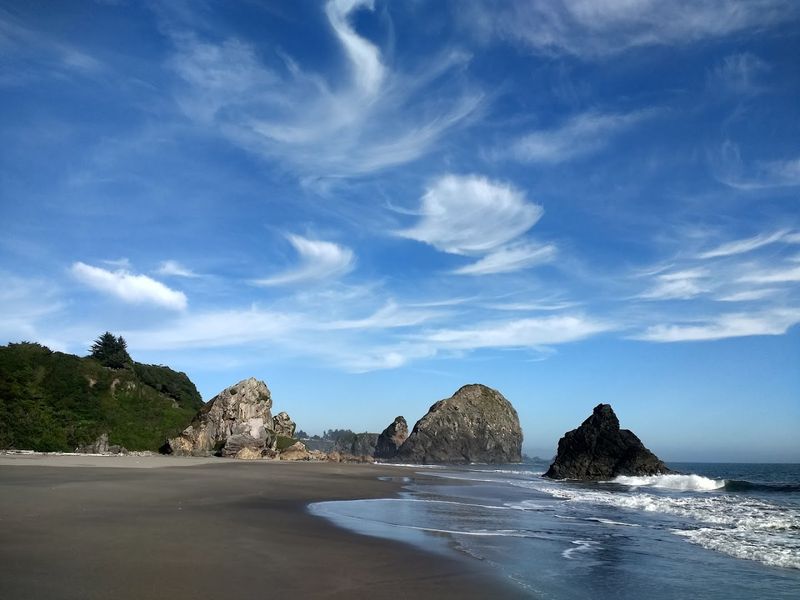
Harris Beach State Park sits at 101 96577 W Harris Heights Rd, Brookings, OR 97415, right along the southern Oregon coast, just a short drive from the California state line.
Brookings is a small town that most road-trippers overlook, but that oversight works in your favor when you arrive and find the parking lot far less packed than at more famous Oregon beaches.
The park itself is managed by Oregon State Parks and carries a rating of 4.8 stars from nearly 3,800 visitors, which is a number that speaks for itself.
Non-resident day-use parking runs about twelve dollars, which honestly feels like a bargain once you see what is waiting for you beyond the trailhead.
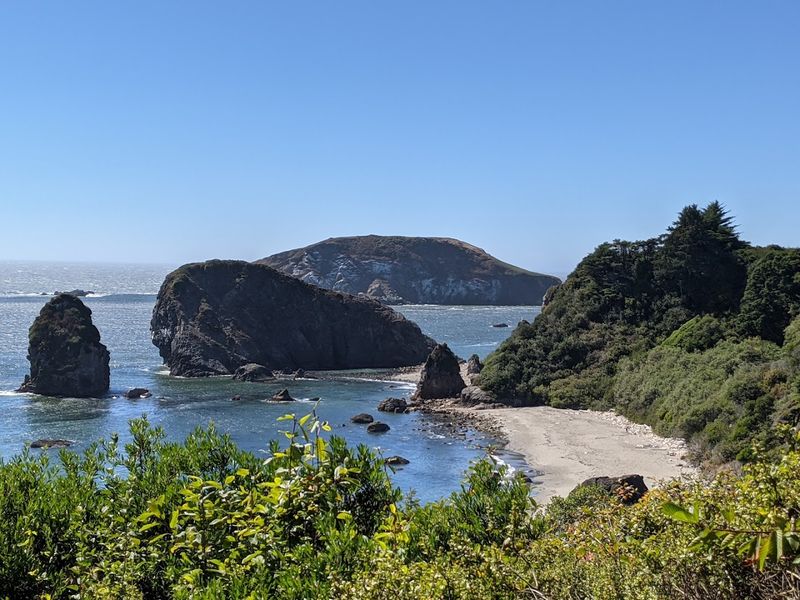
The coastal geography here is unlike anything I had seen on previous trips up and down the West Coast. Massive volcanic rock formations rise straight out of the surf, and the beach curves in a way that frames every photograph almost perfectly.
This corner of Oregon deserves far more attention than it currently gets, and I have a feeling that is about to change.
The Rock Formations That Stop Every Single Visitor Cold
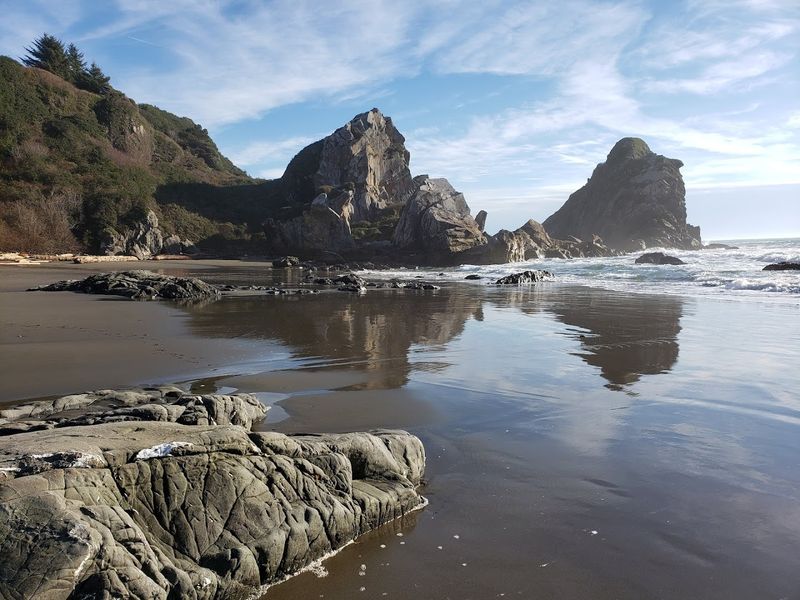
The very first thing that hits you when the trail opens up onto the beach is the sheer scale of the rock formations rising from the water.
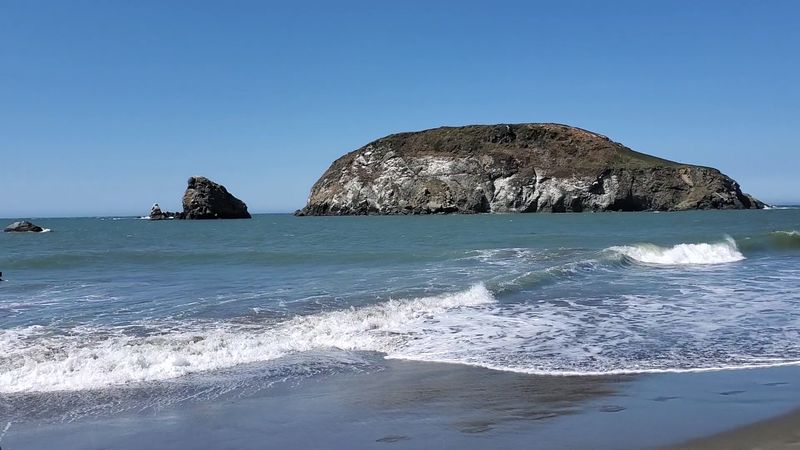
Harris Island, the largest offshore island in Oregon, sits just beyond the surf line and serves as a protected nesting ground for seabirds.
The dark basalt columns and stacks scattered across the shoreline are remnants of ancient volcanic activity, and standing next to them gives you a real sense of how old this coastline actually is.
At low tide, the rocks create a natural maze of channels and pools that beg to be explored one careful step at a time.
Photographers, both amateur and professional, tend to plant themselves at the water’s edge for long stretches, and it is not hard to understand why. The way the light bounces off the wet rock faces during golden hour produces colors that no filter can fully replicate.
National Geographic’s recognition of Brookings as a destination worth visiting almost certainly had something to do with these formations, because they are genuinely unlike anything else on the West Coast.
Tidal Pools Packed With Creatures Worth Getting Your Feet Wet For
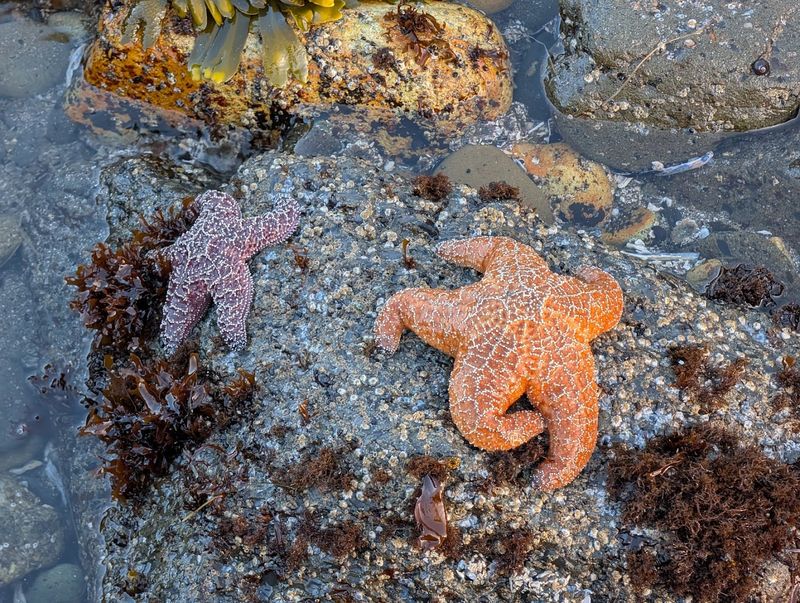
Low tide at Harris Beach turns the rocky shoreline into a living exhibit that puts most aquariums to shame.
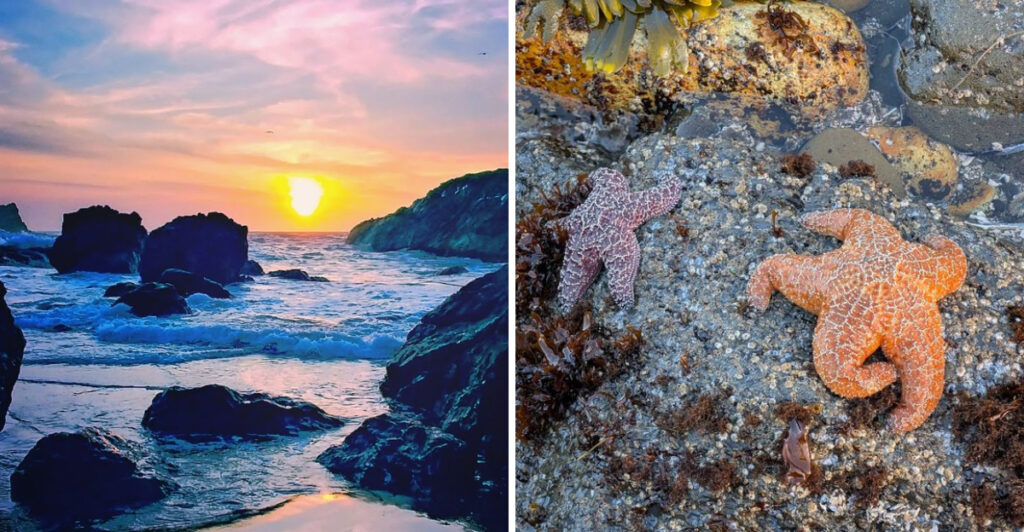
Purple sea urchins, orange and ochre sea stars, hermit crabs, and green anemones cluster in every shallow basin the receding water leaves behind.
The best time to visit the tidal pools is during winter low tides, when the water pulls back farther than usual and exposes sections of reef that stay submerged the rest of the year.
Families with kids tend to congregate here, and the enthusiasm is contagious. Children who arrived glued to their phones are suddenly crouched over rock pools, completely absorbed in watching a tiny crab navigate its way across a bed of mussels.
A few practical notes: wear shoes with good grip, because the algae-covered rocks are slippery, and always check a tide chart before planning your visit.
The Oregon coast does not operate on your schedule, but when the timing lines up, the tidal pools at this park reward patience with one of the most up-close wildlife encounters you can have without booking a guided tour.
A Campground That Actually Lives Up to Its Five-Star Reviews
The campground at Harris Beach State Park offers a mix of full hook-up sites, water and electric sites, and rustic tent sites, so there is a setup for almost every kind of camper.
Each site is generously sized and screened by thick hedgerows and native vegetation, which means you get real privacy rather than the elbow-to-elbow experience common at more crowded parks.
Three nights in a full hook-up site runs around one hundred and thirteen dollars, which is a fair price given the condition of the facilities. The bathhouses are spotlessly maintained, the showers are heated even when coastal temperatures drop into the thirties, and the park recycles its waste.
Loop A offers some sites with direct ocean views, particularly spots 20, 24, and 25, which are worth booking early if they are available.
The campground hosts are genuinely friendly and helpful, and rangers keep the whole operation running smoothly. The vibe among fellow campers tends toward the relaxed and good-natured, which makes evenings around the fire pit feel like a proper reset from ordinary life.
Yurt Life on the Oregon Coast Is a Whole Different Experience
For anyone who wants the full coastal camping experience without sleeping directly on the ground, the yurts at Harris Beach State Park are a genuinely appealing option.
Each yurt comes equipped with a bunk bed setup, a futon-style couch, a heater, a table with chairs, one electrical outlet, and a dome skylight in the center that can be opened to let in the night air.
The floors are solid panel flooring, the space is pet-friendly, and the whole setup is surprisingly comfortable for a couple or a small family.
One couple I spoke with had been returning to these yurts for twenty years, and their enthusiasm had not dimmed one bit. They specifically recommended visiting during the rainy season, when the sound of rain hitting the canvas roof becomes its own kind of entertainment.
Booking a yurt during the off-season also means the campground is quieter overall, the light is softer, and the tidal pools are at their most dramatic.
The yurt experience at Harris Beach is one of those rare accommodations that feels both rustic and genuinely comfortable at the same time.
Trails Through Lush Coastal Vegetation That Lead to Pure Reward
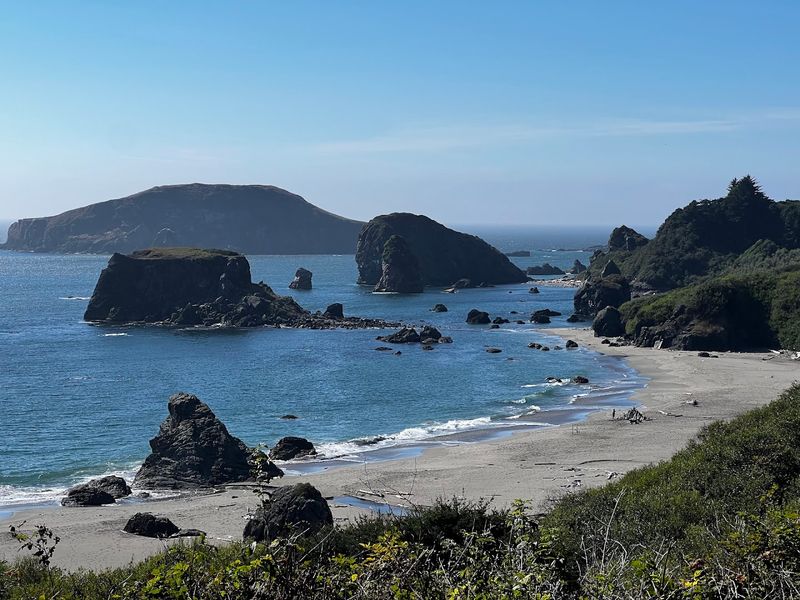
The trail system at Harris Beach State Park starts with a paved walkway bordered by dense berry bushes and coastal shrubs, then transitions into a dirt path full of exposed roots and smooth stones as it descends toward the water.
The change in terrain happens gradually enough that you barely notice the shift, but by the time the foliage opens up onto the beach, the contrast between the green tunnel and the wide open ocean feels almost theatrical.
The main beach trail has a noticeable incline on the return trip, which is worth knowing before you head down in flip-flops. Trail shoes make the experience significantly more comfortable.
Beyond the main beach access, the park connects to additional hiking opportunities within a short drive, including trails through old-growth redwood forests about twenty minutes south, just across the California border.
Dog owners will be pleased to know the trails are dog-friendly, and the park sees a steady stream of four-legged hikers on any given morning.
The whole trail network rewards a slow pace, because the details along the way, a spider web catching the coastal mist, a banana slug crossing the path, are worth stopping for.
Sunset Views That Justify Every Mile of the Drive
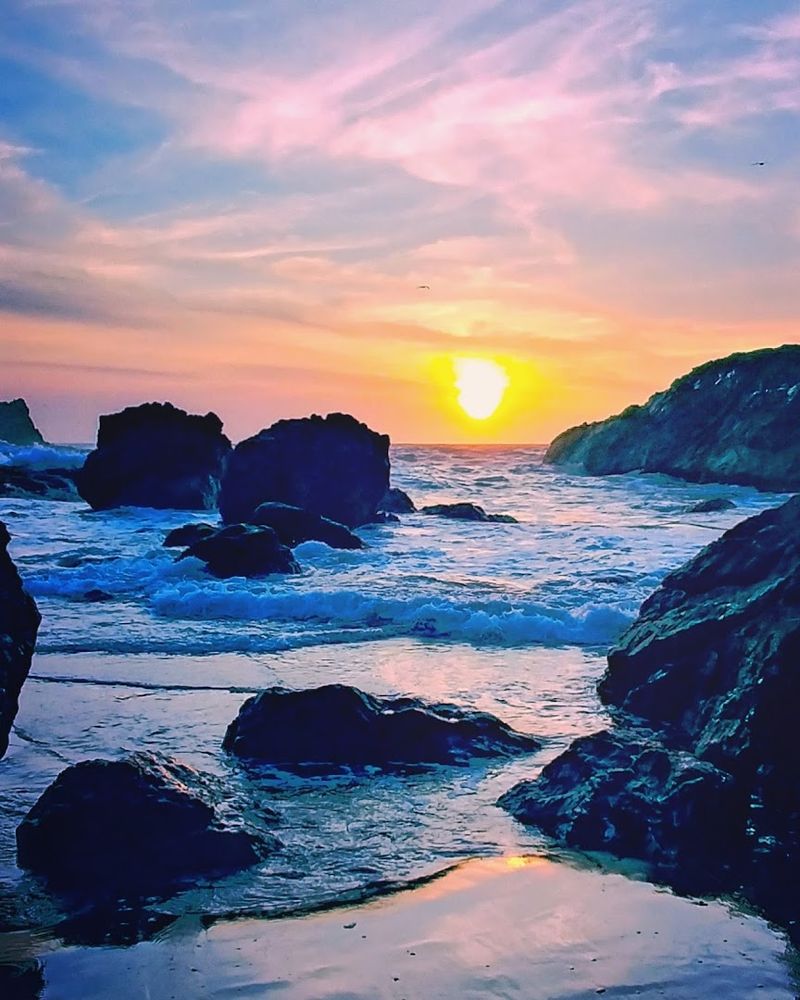
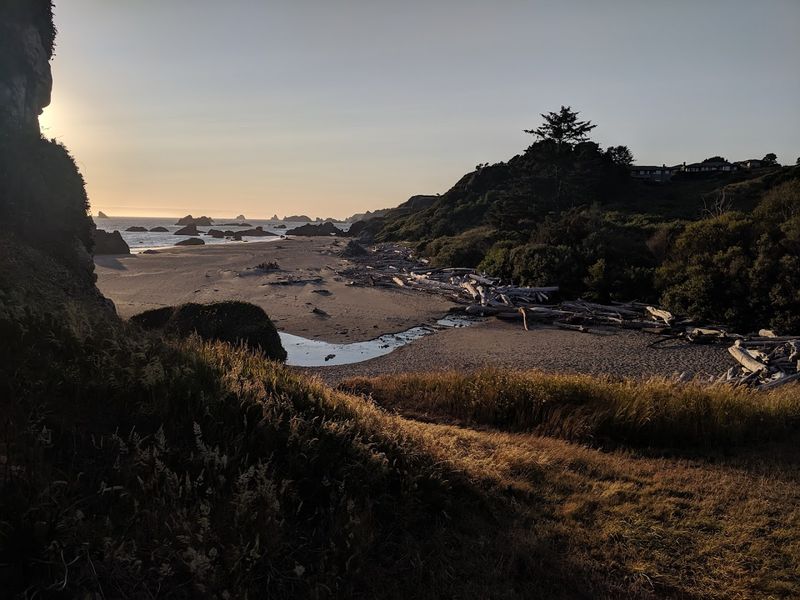
The sunset at Harris Beach is the kind of event that draws people down from the campground in small groups, all of them quietly competing for the best vantage point on the sand.
The sea stacks create natural silhouettes against the orange and pink sky, and the wet sand mirrors the colors in a way that doubles the visual impact.
Even on cloudy evenings, the diffused light over the water produces a moody, atmospheric quality that photographers find just as compelling as a clear-sky sunset.
The beach tends to get a little busier around sundown, so arriving fifteen to twenty minutes early to claim a good spot is a smart move.
Visiting over Memorial Day weekend, I was surprised to find the sunset crowd manageable rather than overwhelming, which is a testament to how under-the-radar Brookings remains compared to coastal towns farther north.
The overall seascape here is genuinely unique along the Oregon coast, and the combination of rock formations, surf, and fading light creates a backdrop that stays with you long after you have packed up and headed home.
Bird-Watching Opportunities That Serious Birders Should Not Skip
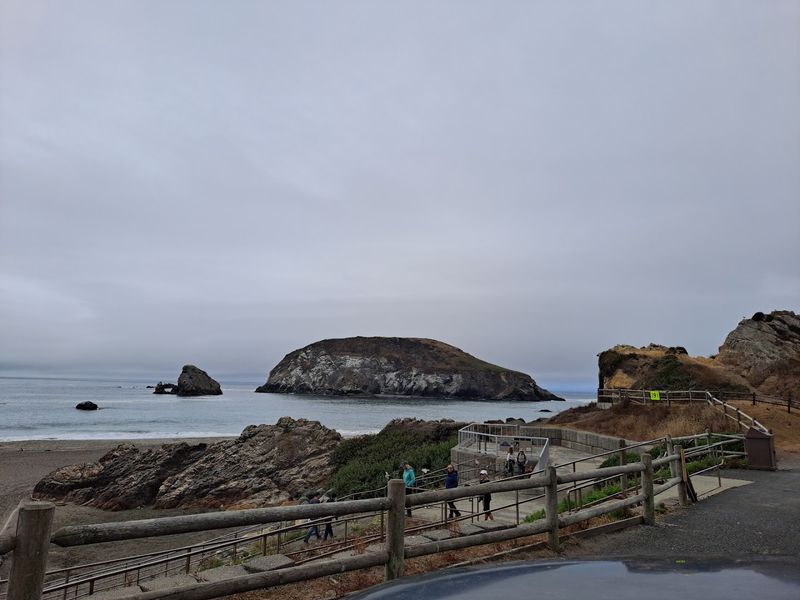
Harris Island, the large sea stack visible just offshore from the beach, is one of the most significant seabird nesting sites on the entire Oregon coast.
The island is protected habitat, which means you observe from the shore rather than setting foot on it, but a decent pair of binoculars brings the action close enough to be genuinely exciting.
Common murres, tufted puffins, Brandt’s cormorants, and pelagic cormorants all use the island as a nesting site, and the activity peaks during spring and early summer when chicks are present.
Shorebirds work the tidal zone throughout the year, and the rocky outcroppings attract species that rarely appear on sandy beaches. A patient observer with a field guide can easily log a dozen species in a single morning visit.
The park is officially designated as a bird-watching site, and the combination of offshore nesting habitat, rocky intertidal zones, and coastal scrub creates a layered environment that supports an unusually diverse avian community.
For travelers who have never considered bird-watching before, this beach has a way of turning casual curiosity into a full-blown new hobby by lunchtime.
Brookings and the Surrounding Area Offer More Than Just the Beach
The town of Brookings sits about a fifteen-minute walk from the campground, which makes supply runs and restaurant visits genuinely convenient for campers.
Multiple stores are close enough that forgetting a camp essential is a minor inconvenience rather than a trip-ruining disaster.
Brookings itself is a compact, unpretentious coastal town with a working harbor, a few solid local restaurants, and a community that has not yet been overrun by the kind of tourism that changes the character of a place.
The town holds the distinction of being one of the warmest spots on the Oregon coast year-round, thanks to its position near the California border and the warm air that flows down from the Siskiyou Mountains.
Within a twenty-minute drive south, the ancient redwood forests of northern California begin, and the contrast between the open beach and the cathedral-like quiet of those trees is a combination that is hard to beat in a single day of exploring.
Brookings may not have the name recognition of Cannon Beach or Astoria, but that is precisely what makes it worth the detour, and National Geographic clearly agrees.
Driftwood, Logs, and the Fascinating Story the Beach Tells Daily
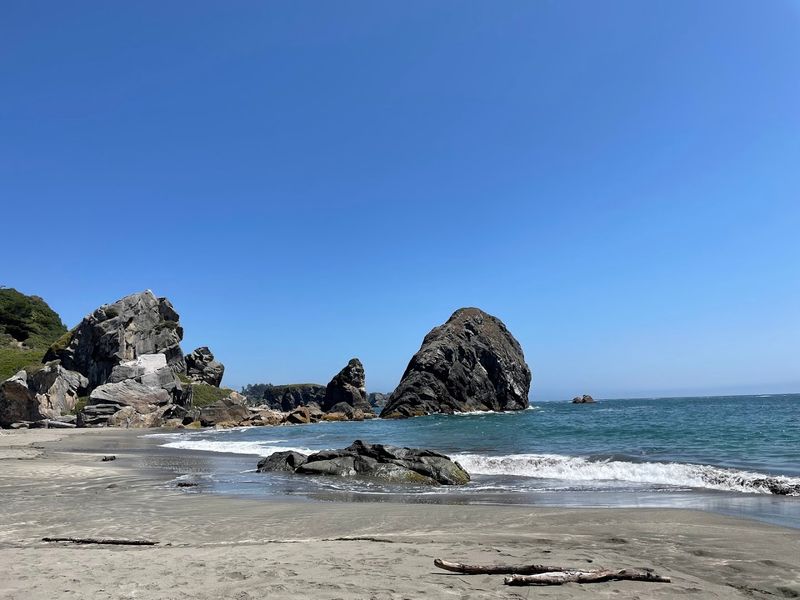
One of the most visually striking features of the beach at Harris Beach State Park is the sheer volume of driftwood that accumulates along the shoreline.
Massive logs washed down from coastal rivers during winter storms pile up in layers, creating a natural sculpture garden that changes with every tide cycle.
Families have turned some of the larger log arrangements into impromptu forts and shelters, which adds a playful, communal quality to the beach experience that you do not find at more manicured coastal parks.
The driftwood also serves as a practical windbreak during breezy afternoons, and you will often see picnickers tucked behind a well-placed log, completely sheltered from the coastal gusts.
Beyond the logs, the beach carries a variety of natural material: kelp, shells, smooth stones in a range of colors, and the occasional interesting piece of sea glass.
The beach has a raw, unfiltered quality that feels honest and alive rather than groomed for a postcard. That authenticity is part of what draws people back here year after year, and it is something that no amount of development could replicate or improve.
Practical Tips That Will Make Your Visit Significantly Smoother
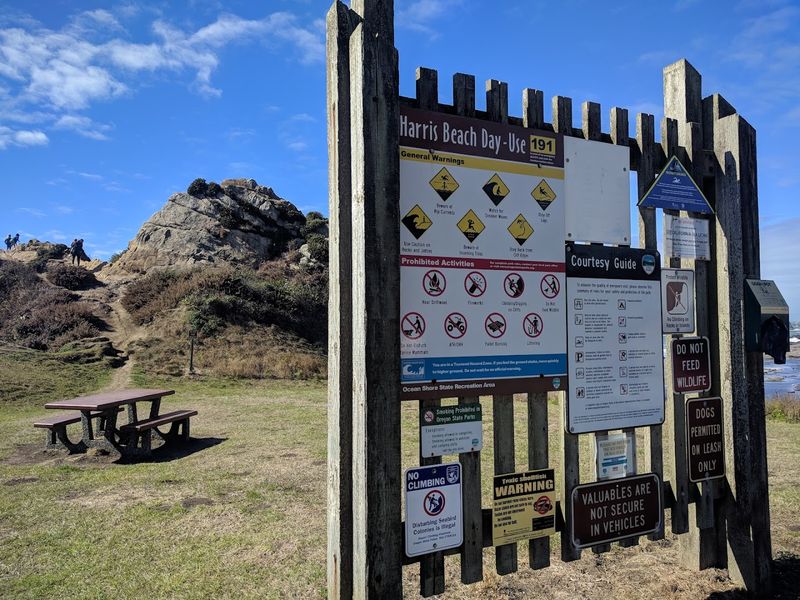
A few logistical details can make the difference between a smooth visit and a frustrating one at Harris Beach State Park.
Day-use parking costs twelve dollars for non-residents, so bringing cash or a card is essential. The park phone number is (800) 551-6949, and the official website through Oregon State Parks is the best place to check current conditions and make campsite reservations.
The campground fills up quickly during summer weekends and holiday periods, so booking well in advance is strongly recommended. Sites in Loop B are spacious and work well for larger rigs, though the tall trees can interfere with satellite internet signals.
Coastal weather here is famously unpredictable, and even a warm morning can turn damp and cool by early afternoon. Layering is the only sensible strategy, and a waterproof tarp over a tent is not optional if rain is in the forecast.
The park is open year-round, and off-season visits offer quieter conditions, better tidal pool access, and the same dramatic scenery without the summer crowds.
Coming prepared means you can spend your energy on the beach instead of solving problems that a little planning would have prevented entirely.
Why This Spot Deserves a Permanent Place on Your Oregon Coast Itinerary
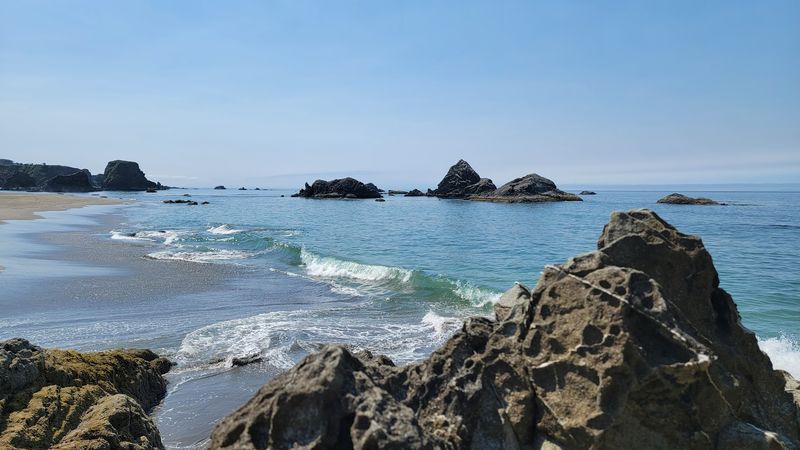
After several days at Harris Beach State Park, the thing that struck me most was not any single feature but the way all the elements work together to create something genuinely memorable.
The rock formations, the tidal pools, the trails, the campground, the sunsets, and the proximity to both Brookings and the California redwoods form a combination that is hard to replicate anywhere else on the West Coast.
Oregon has no shortage of beautiful state parks, but Harris Beach stands apart because it delivers a complete coastal experience rather than just one standout attraction.
National Geographic’s recognition of this area reflects a broader truth that locals have known for years: Brookings and Harris Beach offer the kind of unhurried, crowd-free coastal experience that most travelers spend years searching for at more famous destinations.
Whether you are a camper, a day-tripper, a birder, a photographer, or someone who simply wants to sit on a beach and watch the waves hit ancient rock, this park has something worth showing up for.
The Oregon coast has many chapters worth reading, and Harris Beach is one of the best ones, so do not skip it on your next trip north from Oklahoma or south from Portland.
Share this story