There is a stretch of Highway 101 on the Oregon coast where the trees grow so thick and mossy that the roadside feels like it belongs to another era entirely. Tucked into that lush green corridor is a roadside attraction that has been charming travelers since the 1950s, one that features life-sized dinosaur sculptures standing among ancient ferns and hanging moss in a genuine coastal rainforest.
My first visit left me grinning like a kid who just found a secret door in the library. The whole place runs on a kind of cheerful, unhurried energy that is rare to find anywhere in the country today, and once you see that giant T-Rex guarding the entrance, you will understand exactly why generations of Oregon coast road-trippers have been pulling over here for decades.
The Address and Setting of Prehistoric Gardens
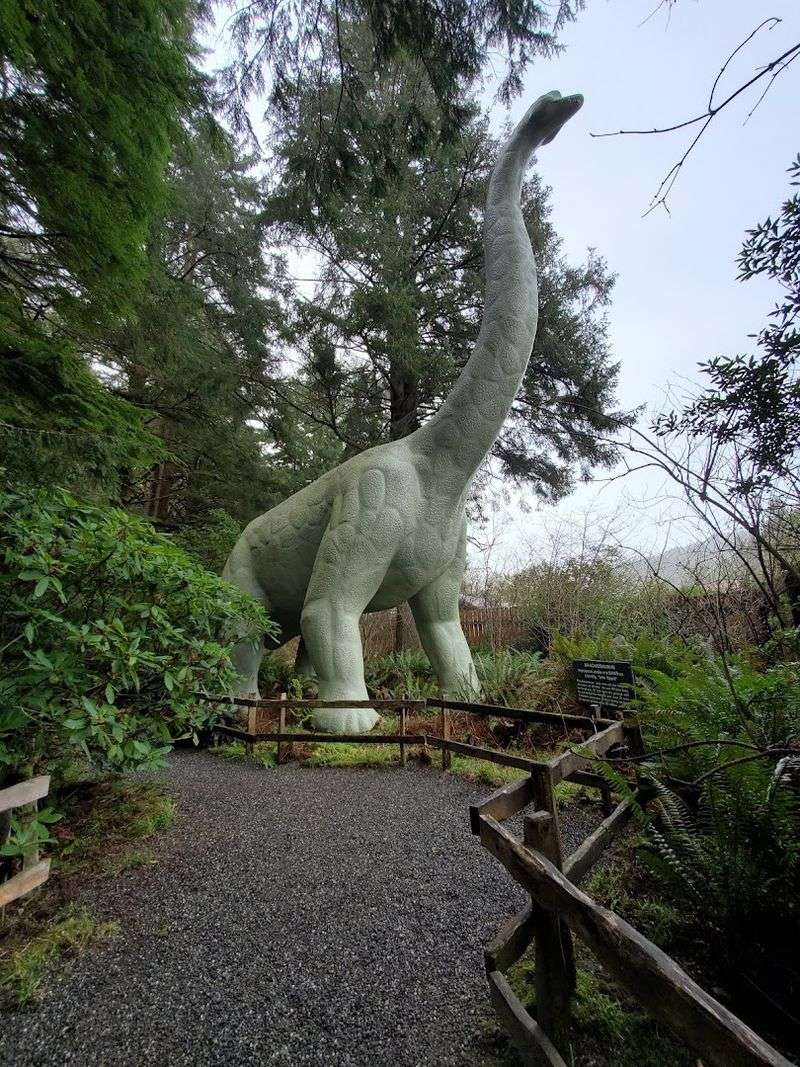
Right off Highway 101, at 36848 US-101 in Port Orford, Oregon, there is a place that looks like the forest itself decided to grow a theme park. Prehistoric Gardens sits nestled against a hillside draped in ferns, mosses, and ancient temperate rainforest plants that make the surrounding scenery feel genuinely primordial.
Port Orford is a small coastal town on the southern Oregon coast, roughly halfway between Coos Bay and the California border. The location alone makes it a natural stopping point for anyone doing the classic Highway 101 coastal drive, and the giant dinosaur standing near the road entrance makes it nearly impossible to pass without at least slowing down.
The park is open every day of the week from 9 AM to 5 PM, and the phone number is +1 541-332-4463 if you want to call ahead. The website at prehistoricgardens.com has current admission details.
Unlike flashier attractions you might find in bigger cities, this spot earns its appeal through sheer character, not spectacle, and the forest setting does most of the heavy lifting before you even buy a ticket.
The Man Behind the Dinosaurs: Ernie Nelson’s Vision
Some roadside attractions are built by committees with marketing budgets. Prehistoric Gardens was built by one man with a chisel, a paintbrush, and an obsession with prehistoric life.
Ernie Nelson, a self-taught sculptor and artist, began constructing the park in 1953, shaping each dinosaur by hand from steel, wire mesh, and cement.
Nelson reportedly consulted with scientists and studied paleontological references to make his creatures as accurate as he could with the knowledge available at the time. The result is a collection of sculptures that carry a certain earnest quality, as if their creator genuinely cared about getting the details right even when working alone in the rainforest.
The park has been in the Nelson family ever since, and today Ernie’s granddaughter Kiki runs the attraction, keeping the spirit of the original vision alive. That kind of multigenerational stewardship is increasingly rare in the world of roadside Americana, and it gives Prehistoric Gardens a warmth that no corporate attraction could replicate.
The family history woven into every sculpture is part of what makes a visit here feel personal rather than transactional.
The Rainforest Trail and What You Will Actually See
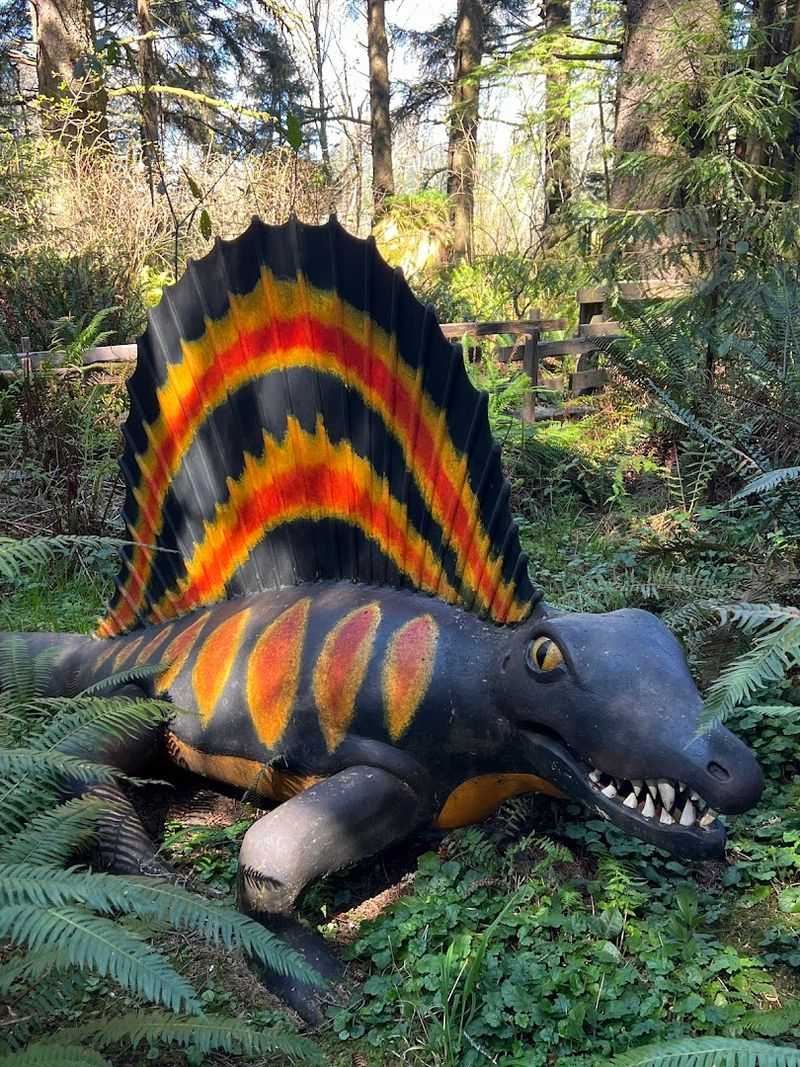
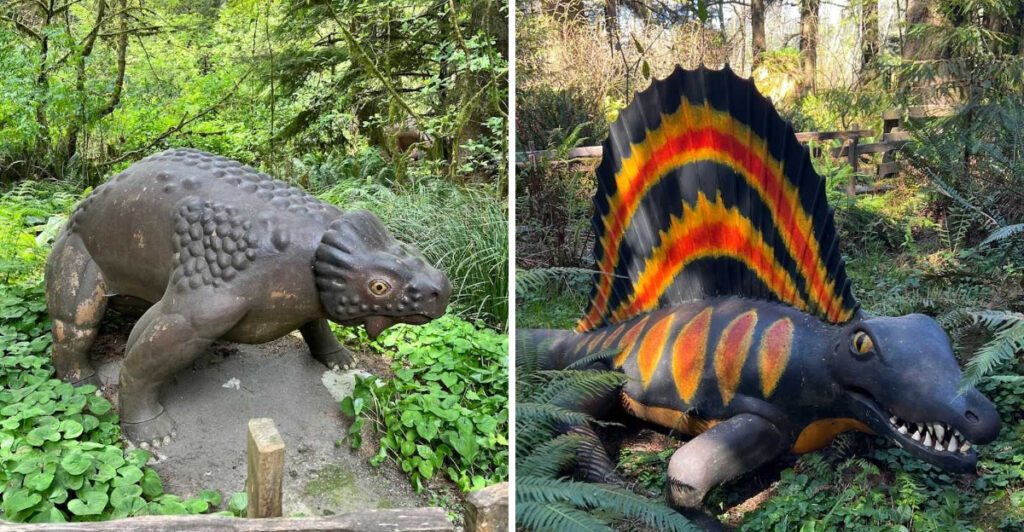
The trail itself is a short, flat walk that winds through genuine Pacific Northwest rainforest, and the path is lined with some of the most dramatically oversized ferns and skunk cabbage you will ever encounter. Each turn in the trail reveals another dinosaur, some tucked back into the foliage, others looming right over the path in a way that makes you instinctively take a half-step backward.
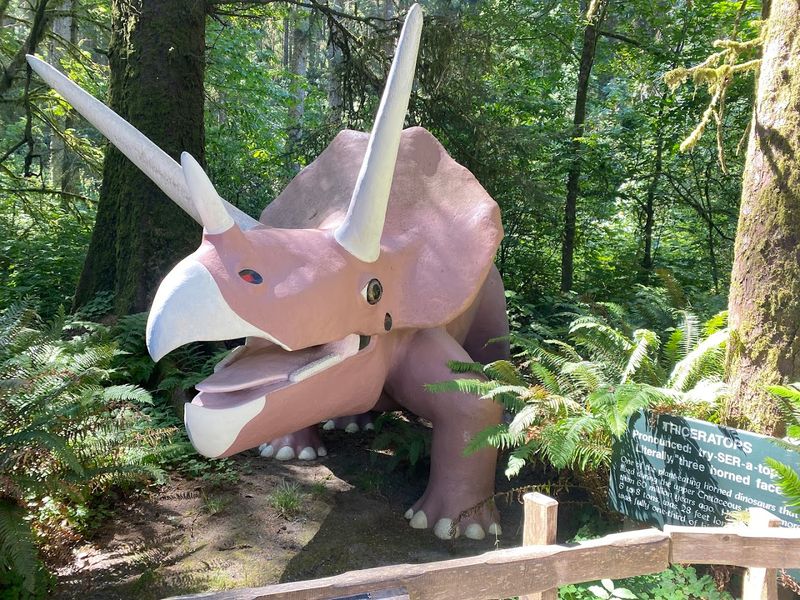
There are around two dozen life-sized dinosaur sculptures scattered along the route, covering a range of species from the famous T-Rex to lesser-known prehistoric creatures. Informational boards placed near each sculpture give you the creature’s name, time period, and a handful of facts, which adds a genuinely educational layer to what might otherwise just be a photo opportunity.
The walk can take anywhere from ten minutes to nearly an hour depending on how much time you spend reading the signs and photographing the sculptures. Families with young children tend to linger the longest, which makes complete sense because the combination of towering plants and enormous prehistoric animals is exactly the kind of thing that lights up a young imagination.
Umbrellas are available to borrow at the entrance on rainy days.
The Retro Aesthetic That Sets This Place Apart
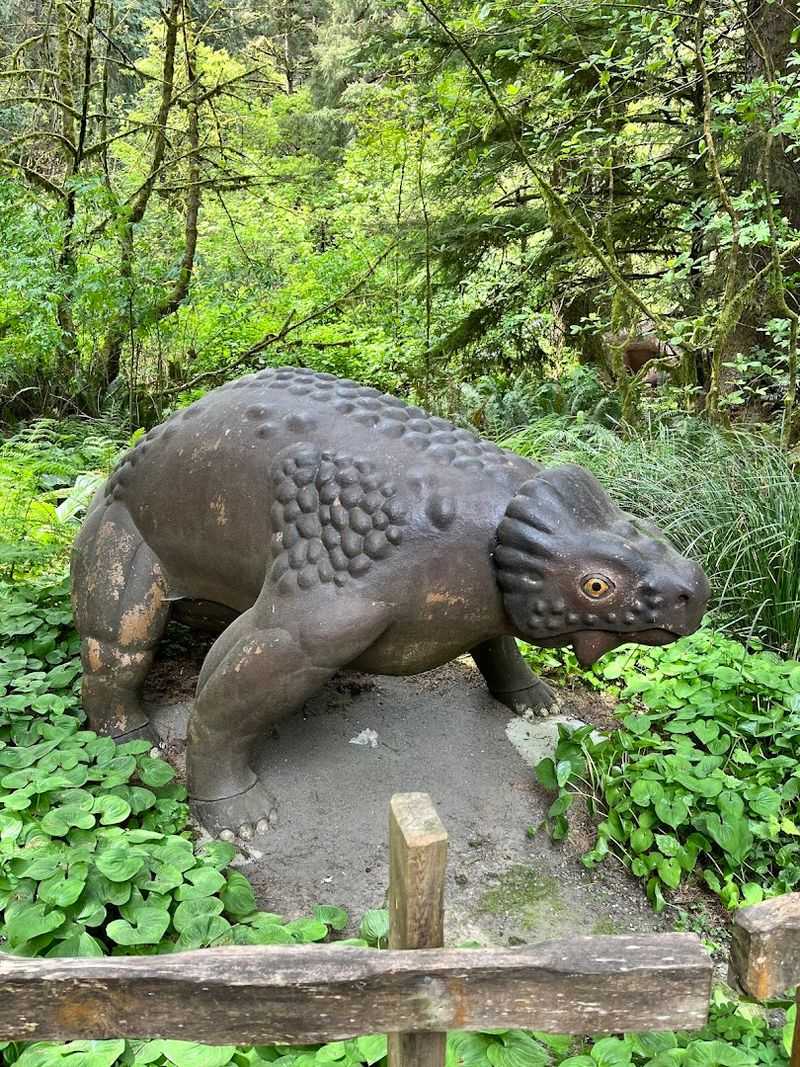
There is no mistaking the era in which these dinosaurs were made. The sculptures carry that distinctive mid-century charm, broad shapes, somewhat simplified features, and expressions that lean more toward friendly curiosity than menace.
Compared to the hyper-realistic animatronic dinosaurs at modern theme parks, these feel refreshingly handmade.
That retro quality is actually a big part of the appeal for many visitors. The dinosaurs are not trying to terrify you or dazzle you with technology.
They are doing something harder to pull off: making you smile. Several of the creatures have faces that can only be described as endearingly goofy, which makes the whole experience feel lighthearted rather than intense.
The paint and finish on the sculptures show careful maintenance, and the overall condition of the park reflects decades of consistent upkeep by a family that clearly takes pride in the place. There is something genuinely satisfying about seeing a 1950s roadside attraction still operating in its original form, without being turned into something slicker or more commercial.
The retro aesthetic is not a marketing angle here; it is simply what the place has always been, and that authenticity is exactly why people keep coming back year after year.
The Famous T-Rex Out Front
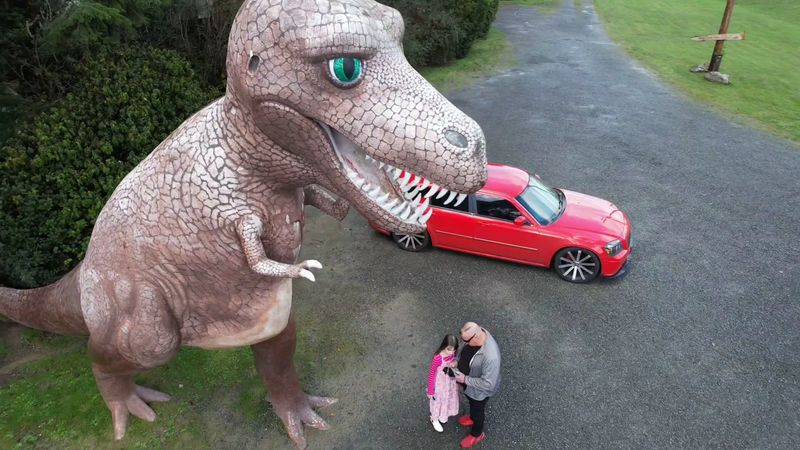
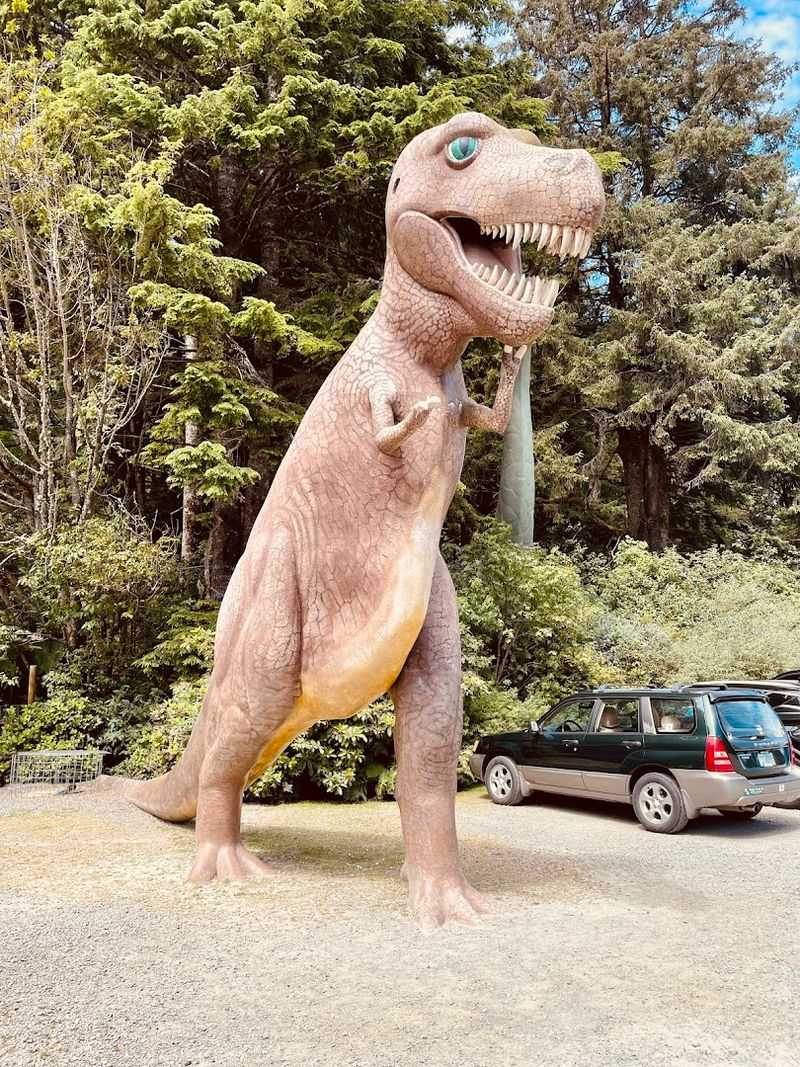
Before you even pay for a ticket, the park gives you something for free: a giant T-Rex standing right at the entrance, visible from the highway and perfectly positioned for a roadside photo. That dinosaur has probably appeared in more Oregon vacation albums than almost any other single landmark on the entire coast.
The T-Rex is large enough to feel genuinely impressive even to adults, and its posture, slightly forward-leaning with open jaws, gives it a dramatic presence that photographs well from almost any angle. Families with kids tend to cluster around it for group shots, and solo travelers seem to gravitate toward it for the sheer novelty of standing next to something that enormous.
Even visitors who decide not to purchase admission often stop just to take a picture with the T-Rex before heading back to the car. It functions as both a teaser and a welcome sign, giving the road-weary traveler a reason to stretch their legs and feel a little bit of childlike delight.
On a long coastal drive, that kind of spontaneous joy is worth more than it sounds. The T-Rex is a small icon of Oregon highway culture that has earned its place on the roadside over seven decades.
The Gift Shop at the End of the Trail
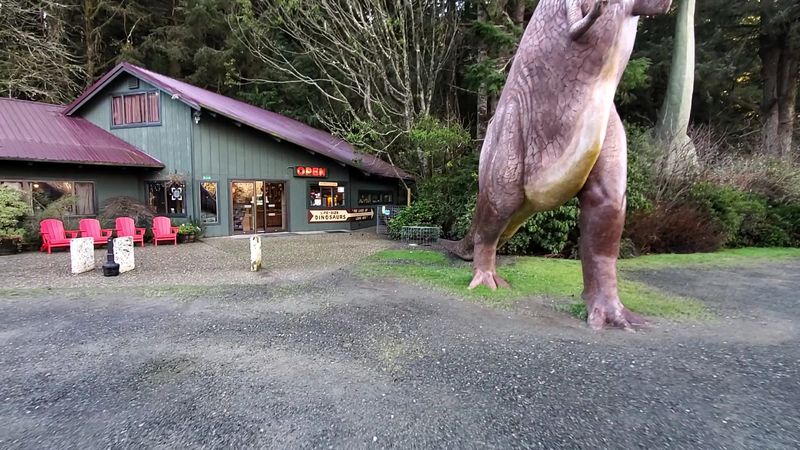
The gift shop sits at the end of the trail, which means it functions as both a reward and a natural conclusion to the experience. The shop is small but well-stocked with items that lean into the park’s retro personality, including T-shirts, stickers, postcards, dinosaur toys, and various novelty items that you are unlikely to find anywhere else.
The merchandise feels specific to this place rather than generic, which is a meaningful distinction. A postcard of Prehistoric Gardens is a genuine souvenir of a genuine experience, not something produced by a regional gift wholesaler.
The T-shirts in particular seem to be a consistent favorite, with several visitors reporting that they spent more than expected and felt fine about it.
Pricing in the gift shop runs on the higher side, which is worth knowing in advance if you are traveling with children who will want everything they see. That said, the quality of the items appears to justify the cost for most shoppers.
The shop also serves as the ticket booth and entry point for the trail, so your interaction with the staff begins and ends here. The staff experience varies by visit, but the shop itself consistently delivers on its promise of fun, unique keepsakes from a one-of-a-kind Oregon attraction.
What It Costs and Whether It Is Worth It
Admission runs around fourteen dollars for adults and approximately ten dollars for children, with kids under two getting in free. Those prices put it in the range of a modest paid attraction, not a theme park, and the value question really comes down to what you are looking for from the experience.
The trail is short. A quick walk through takes as little as ten to fifteen minutes, while a thorough visit with sign-reading and photo stops might stretch to forty-five minutes.
For a family road trip along Highway 101, that time investment feels very reasonable, especially when the surrounding rainforest is as beautiful as it is.
For solo travelers or couples without children, the calculus is slightly different, and some visitors feel the admission price is a bit steep for the length of the trail. However, the consensus across hundreds of reviews points toward satisfaction outweighing any sticker shock, particularly for first-time visitors.
The experience is genuinely unlike anything else on the Oregon coast, and that novelty carries real weight. Compared to what you might spend on a mediocre chain restaurant lunch, the price of a walk through a dinosaur-filled ancient rainforest starts to look like a very reasonable trade.
The Plants and Trees: A Rainforest Worth Noticing
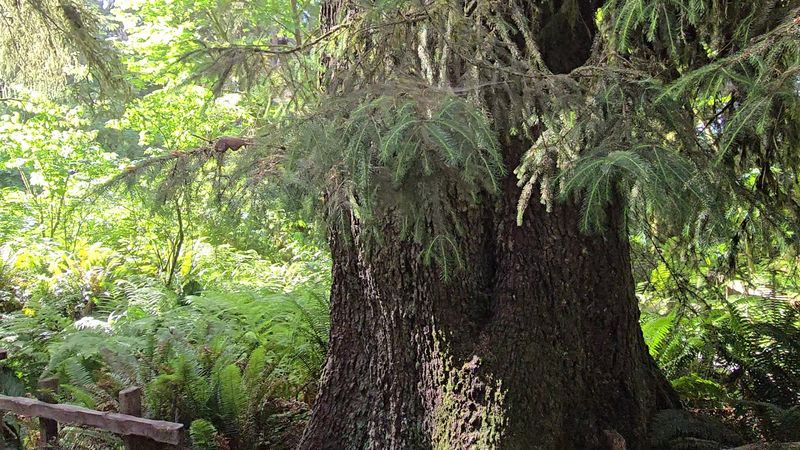
Most visitors come for the dinosaurs, but plenty leave talking about the plants. The forest surrounding the trail is a genuine temperate rainforest, with the kind of dense, layered vegetation that feels almost architectural.
Giant ferns spread out at eye level, mosses coat every surface, and the overhead canopy filters the light into something soft and green.
Skunk cabbage grows in dramatic clusters near the lower parts of the trail, and several of the trees are impressively old and wide. The plant life reinforces the prehistoric theme in a way that no amount of set dressing could achieve artificially, because these are actual ancient plant lineages growing in their natural habitat alongside the sculptures.
Even on a rainy Oregon coast day, the forest feels welcoming rather than dreary. The moisture actually enhances the atmosphere, making the moss glow and the ferns drip in a way that feels genuinely elemental.
This is one of those rare places where the setting and the concept align so naturally that the whole experience feels inevitable rather than constructed. The rainforest does not just frame the dinosaurs; it completes them, and that organic relationship between sculpture and environment is what keeps Prehistoric Gardens feeling timeless rather than dated.
Visiting With Kids: What Families Should Know
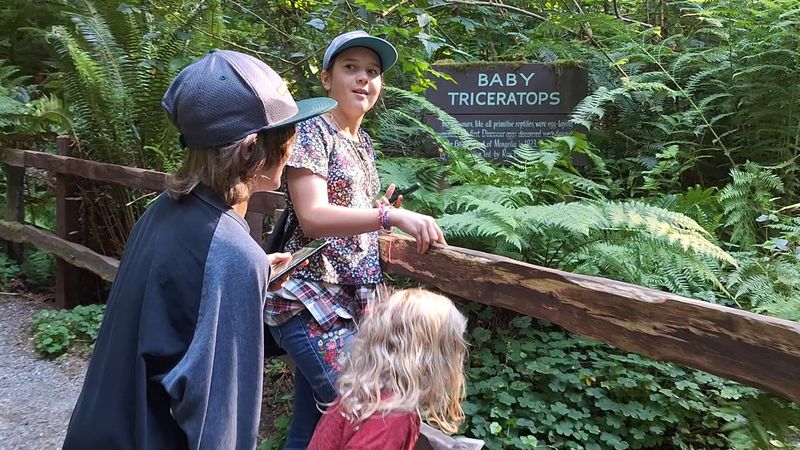
Families with young children consistently report some of the most enthusiastic experiences at Prehistoric Gardens. The combination of manageable trail length, flat terrain, and oversized dinosaurs scattered through the forest creates an environment that holds a child’s attention without overwhelming them or exhausting anyone’s legs.
The park provides strollers and umbrellas for guest use at the entry, which is a thoughtful touch for families arriving unprepared for the Oregon coast’s famously changeable weather. The trail surface is gravel, and while a standard stroller handles it reasonably well, a wide double stroller may find some sections a tight fit.
Children receive a map of the trail at entry, and the treasure-hunt quality of finding each dinosaur along the path tends to turn even reluctant walkers into enthusiastic explorers. Kids as young as two have been known to talk about the visit for weeks afterward, which is about the highest endorsement a family attraction can receive.
Parents should budget a little extra time if their children are the type to stop and study every informational sign, because the educational content is genuinely accessible and interesting for curious young readers. The whole experience has a gentle, non-intimidating energy that works well for children across a wide age range.
The Oregon Coast Drive and How This Stop Fits In
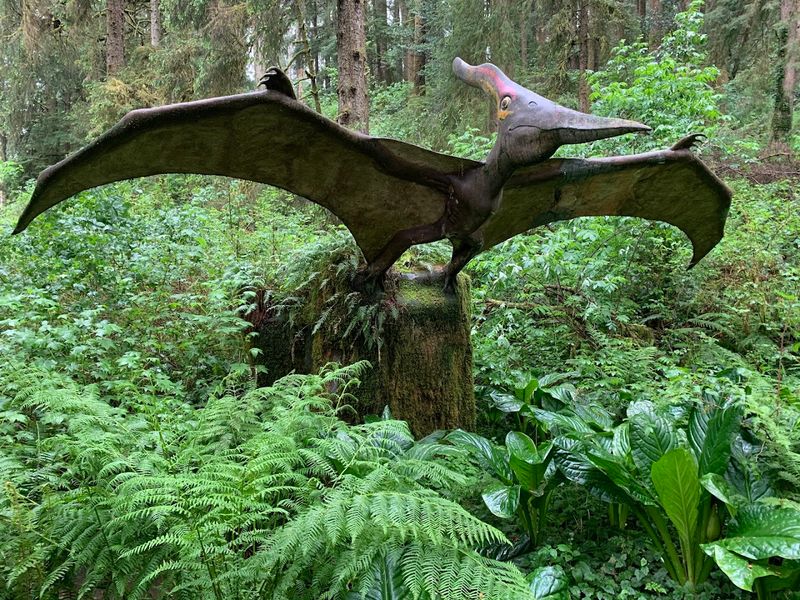
Highway 101 along the Oregon coast is one of the great American road trips, and Prehistoric Gardens sits right in the middle of a particularly scenic stretch between Gold Beach and Bandon. Port Orford itself is a small, appealing coastal town with good food options and easy access to beaches, making it a natural place to build a half-day stop.
The park works especially well as a midday break on a longer coastal drive. You pull off the highway, spend thirty to forty-five minutes in the forest with the dinosaurs, browse the gift shop, and get back on the road feeling genuinely refreshed rather than drained.
That rhythm fits the pace of a road trip perfectly.
The surrounding area offers sea stacks, dramatic coastal overlooks, and the kind of rugged scenery that defines southern Oregon. While Prehistoric Gardens is not exactly comparable to a natural landmark, it earns its place on the itinerary through sheer personality.
It is the kind of stop that becomes a story you tell later, the one where you found dinosaurs in the rainforest on a Tuesday afternoon. Road trips need those moments, and this stretch of Oregon coast delivers them reliably.
Travelers coming from as far away as Oklahoma have made it a deliberate detour.
Seven Decades of History and What Has Stayed the Same
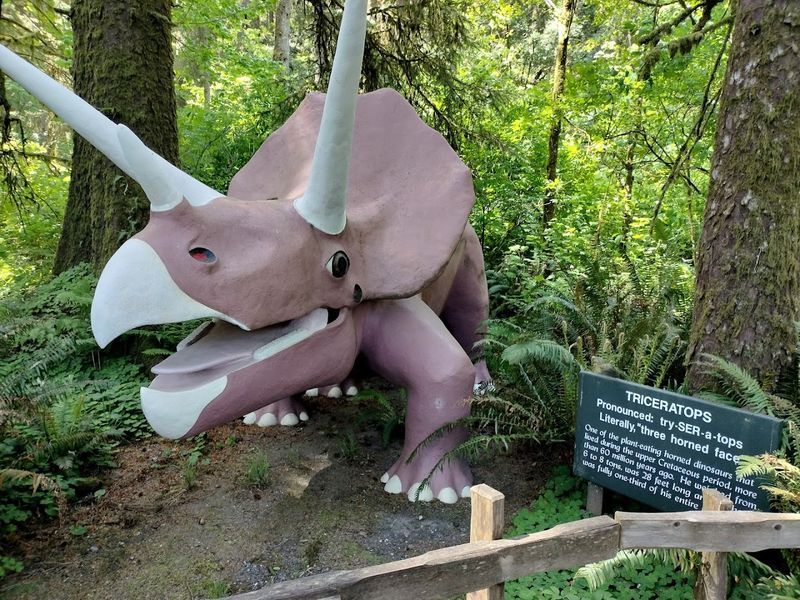
Few roadside attractions survive seven decades without either closing or transforming into something unrecognizable. Prehistoric Gardens has done neither, and that continuity is one of the most interesting things about it.
The core experience today is essentially the same one that travelers discovered when Ernie Nelson first opened the gates in 1953.
The sculptures have been maintained and repaired over the years, but they have not been replaced with modern replicas or upgraded to animatronics. The gift shop has evolved with new merchandise, but the building and layout retain their original character.
The forest, of course, has only grown denser and more impressive with each passing decade.
That consistency is not the result of neglect; it reflects a deliberate choice by a family that understands what makes this place worth preserving. Vintage postcards of Prehistoric Gardens from the 1950s show a park that looks remarkably similar to what visitors find today, which is either comforting or astonishing depending on your perspective.
Travelers who visited as children bring their own children and grandchildren, and the multigenerational loyalty that creates is a testament to something getting done right. Oklahoma families on Pacific coast road trips have been known to plan their routes specifically to include this stop, which says something about its lasting reputation.
Practical Tips for Getting the Most Out of Your Visit
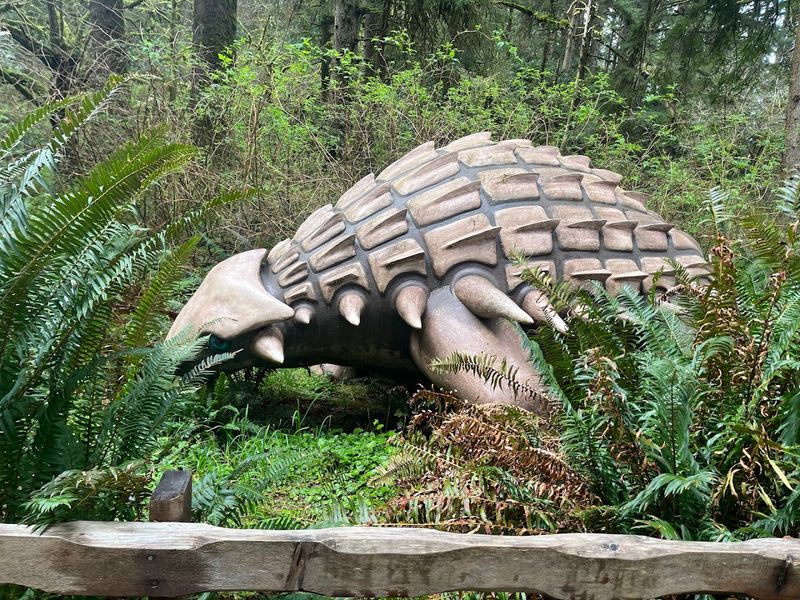
A few small pieces of planning can make the difference between a good visit and a great one. Arriving right at opening time, 9 AM, gives you the best chance of having the trail mostly to yourself, which makes the forest atmosphere feel more immersive and gives you better photo opportunities without other visitors in the frame.
Wear shoes with some grip, since the gravel trail can be slippery after rain, and on the Oregon coast, rain is always a reasonable possibility regardless of the season. The park provides umbrellas for free use, but a light jacket with a hood is a smarter backup plan.
The forest canopy provides some cover, but a steady coastal drizzle will find its way through eventually.
Read the informational signs along the trail rather than skipping them, because they add real context and make the experience noticeably richer. Budget about forty-five minutes for a thorough visit, and leave a little time for the gift shop at the end.
The website at prehistoricgardens.com is worth checking before you go for any updates on hours or pricing. Visitors traveling from states like Oklahoma or other inland regions will find the coastal rainforest setting alone worth the detour, quite apart from the dinosaurs themselves.
Share this story