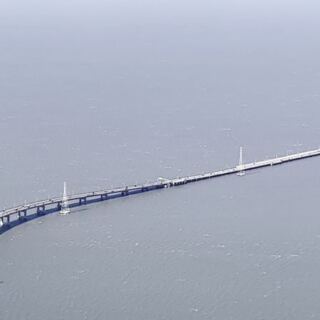
There is a stretch of old concrete in the Florida Keys that sits just inches above the open water, connecting two small islands with nothing but sky and sea on every side. It was once part of one of the most ambitious railroad projects in American history, and today it serves a completely different but equally remarkable purpose.
The Old Seven Mile Bridge in Marathon, Florida, is now a pedestrian and cycling trail where you can walk or ride two miles out over the Atlantic Ocean and the Gulf of Mexico at the same time. Whether you catch it at sunrise or at golden hour, this bridge has a way of making you stop, look around, and feel genuinely glad you made the trip.
The Bridge That History Built
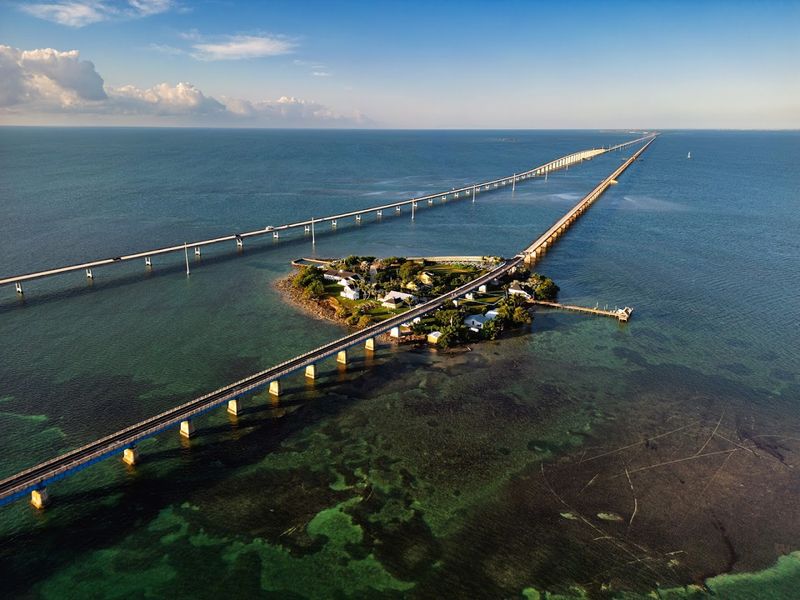
Long before the Old Seven Mile Bridge became a trail, it was a railroad. Henry Flagler, the oil tycoon who helped build Standard Oil, decided in the early 1900s that he wanted to connect Key West to the mainland by rail.
That vision produced what many called the Eighth Wonder of the World, the Florida Overseas Railroad. The Seven Mile Bridge was one of its most challenging sections, completed in 1912 and stretching across open water between Knight’s Key and Little Duck Key.
When a devastating hurricane struck in 1935, the railroad was badly damaged and never rebuilt as a rail line. Instead, the bridge was converted into a road in the 1930s, becoming part of the famous Overseas Highway.
A newer bridge replaced it in 1982, but the old structure survived. After years of restoration work and significant funding, it reopened as a pedestrian and cycling trail, giving it a remarkable third life.
Where Exactly You Will Find It
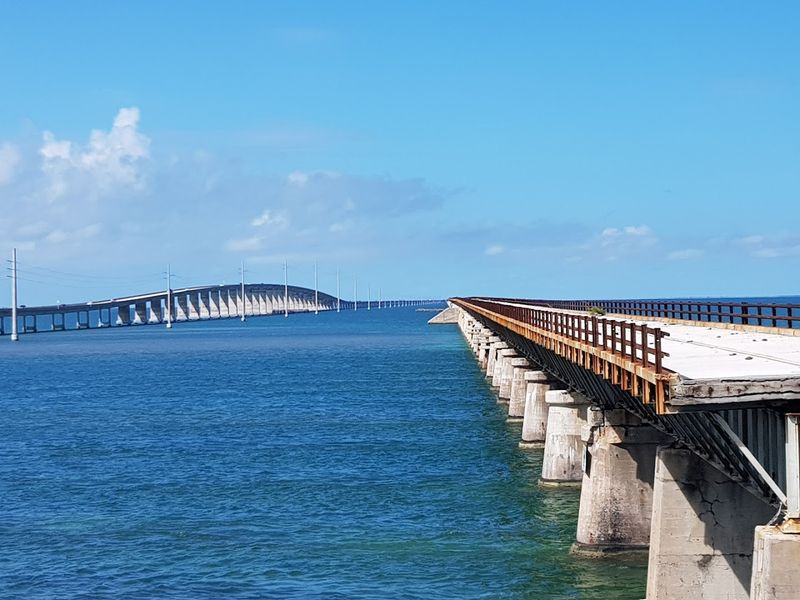
The Old Seven Mile Bridge is part of the Florida Keys Overseas Heritage Trail, with its trailhead located at the end of Marathon Key along US-1 southbound. The official address is Florida Keys Overseas Heritage Trail, Marathon, placing it right at Mile Marker 47 on the Overseas Highway.
Marathon sits in the heart of the Middle Keys, roughly two and a half hours south of downtown Miami and about 45 minutes northeast of Key West. The bridge entrance sits on the bay side of the road, and the parking lot is easy to spot as you approach.
There is a free parking lot with around 20 or more spaces right at the trailhead. If that fills up, additional parking is available across the road.
The bridge is open 24 hours a day, seven days a week, with no admission fee to walk or bike across it.
Two Miles of Open Water Beneath Your Feet
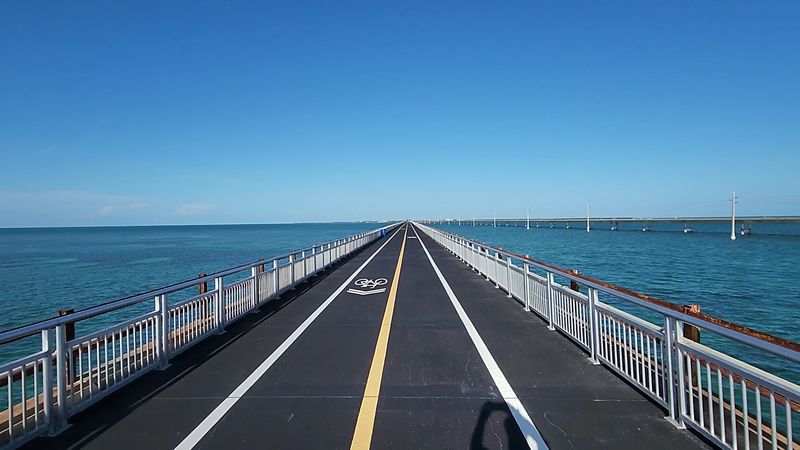
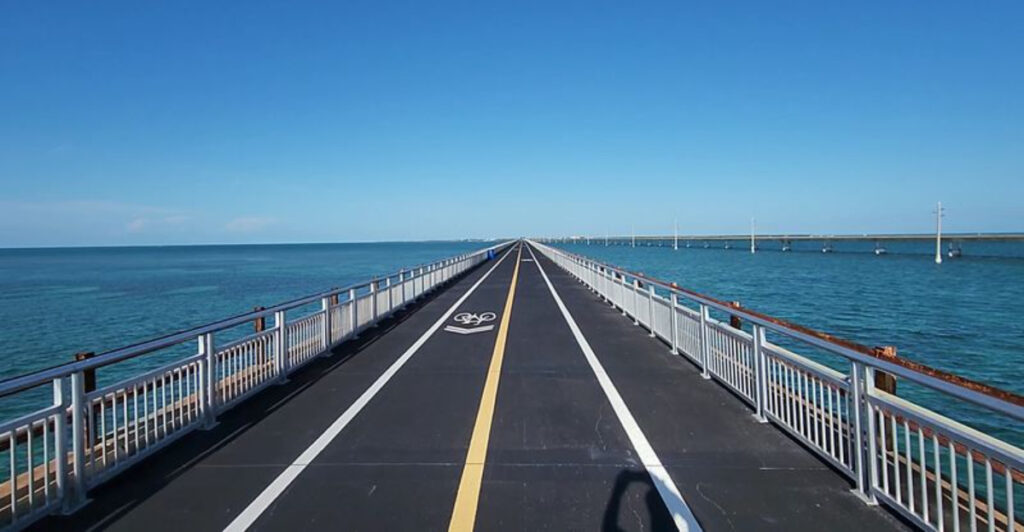
The trail runs exactly two miles in one direction, making the round trip a four-mile walk or bike ride. The surface is well-paved and wide enough to comfortably share between walkers, joggers, and cyclists moving in both directions.
What makes this trail unlike any other is the view. From the moment you step onto the bridge, water surrounds you on both sides.
To the north is Florida Bay and the Gulf of Mexico, and to the south is the Atlantic Ocean. On a clear, calm day, the water shifts between shades of deep blue, seafoam green, and soft teal depending on the depth and angle of the light.
The bridge sits low enough over the water that you genuinely feel immersed in the environment rather than just passing over it. Boats cruise underneath, pelicans glide alongside the railing, and the wind off the open water keeps things cool even on warm days.
Wildlife You Can Spot From the Railing
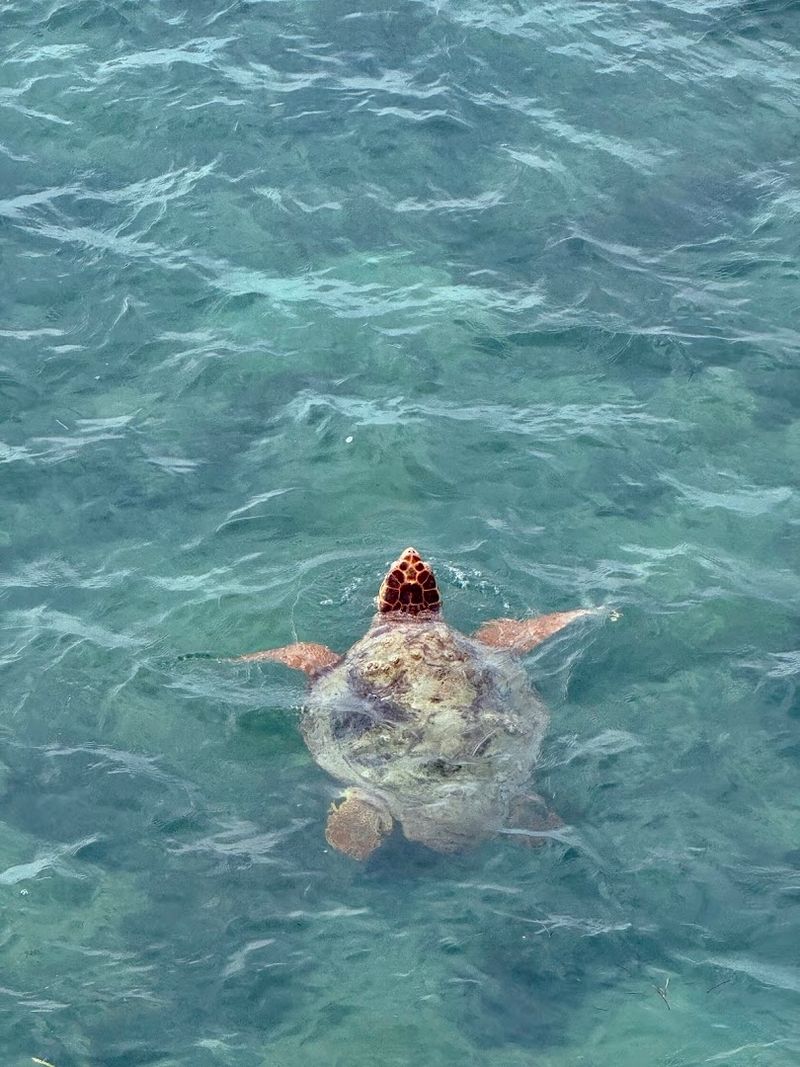
One of the most unexpected pleasures of walking this bridge is the wildlife visible directly below. On calm days when the water has not been stirred up by strong winds, the visibility through the surface can be surprisingly clear.
Sea turtles are a fairly common sighting, moving slowly through the shallows near the bridge supports. Nurse sharks rest on the sandy bottom and are easy to spot if you take your time at the railing.
Spotted eagle rays, barracuda, and grouper also make appearances for those patient enough to look.
Brown pelicans are practically permanent fixtures along the bridge, perching on the old railings or diving into the water just below. Cormorants, herons, and various shorebirds pass through regularly as well.
Bringing polarized sunglasses is one of the smartest things you can do here, since they cut the glare off the water and make underwater sightings dramatically easier. The marine life alone is worth the walk.
Pigeon Key at the End of the Trail
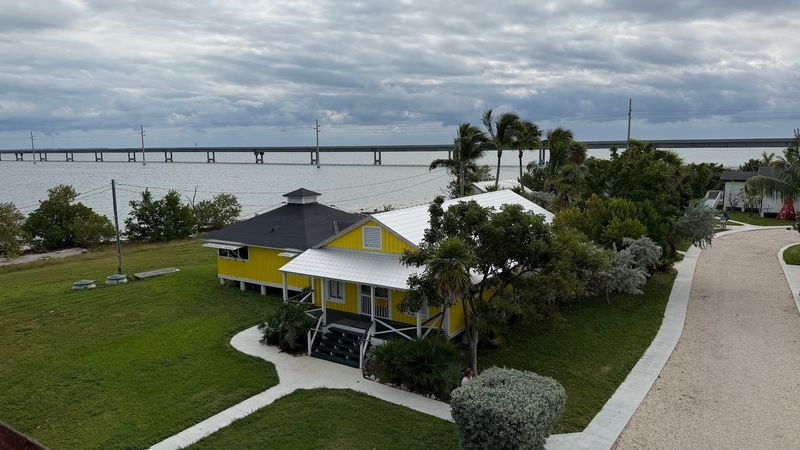
The trail ends at Pigeon Key, a five-acre island that served as the base camp for the workers who built Flagler’s railroad in the early 1900s. It is one of the most historically significant spots in the entire Florida Keys, and reaching it on foot or by bike feels like a genuine reward after the two-mile journey.
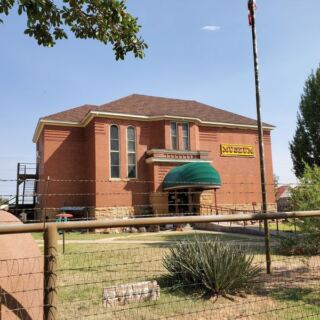
Several of the original worker cottages and buildings from the railroad era still stand on the island, and a small museum tells the story of the construction project and the people who made it possible. The island is managed by the Pigeon Key Foundation, and there is typically an entry fee to visit the museum and explore the grounds.
The contrast between the open, breezy bridge and the shaded, historic island at the end creates a satisfying sense of arrival. Many visitors spend time at Pigeon Key before making the return trip back to Marathon, turning the outing into a proper half-day adventure.
The Best Times to Make the Walk
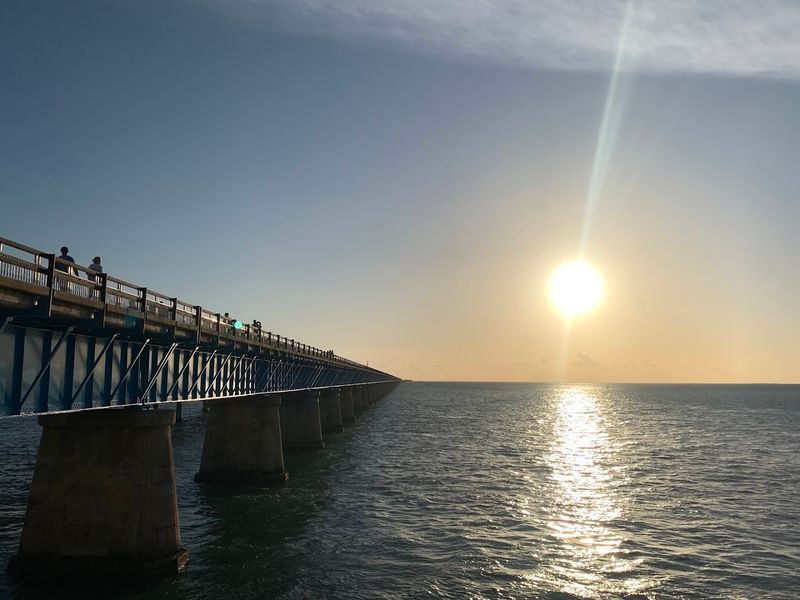
Timing your visit to the Old Seven Mile Bridge can make a significant difference in the experience. Early morning is widely considered the best time to go, especially for those who want to catch the sunrise over the Atlantic side.
The light during those first hours is soft and golden, the air is cooler, and the bridge is far less crowded than it gets later in the day.
Late afternoon is another excellent window, particularly for sunsets. At certain times of year, the sun sets almost perfectly between the old bridge and the newer Seven Mile Bridge running parallel to it, creating a framing effect that makes for outstanding photographs.
Midday in summer can be genuinely intense out on the open bridge, with no shade and full sun reflecting off the water. Going early or late is not just a preference but a practical tip for staying comfortable.
Arriving early also helps secure a parking spot, which can fill up quickly on weekends and during peak season.
Walking vs. Biking the Bridge
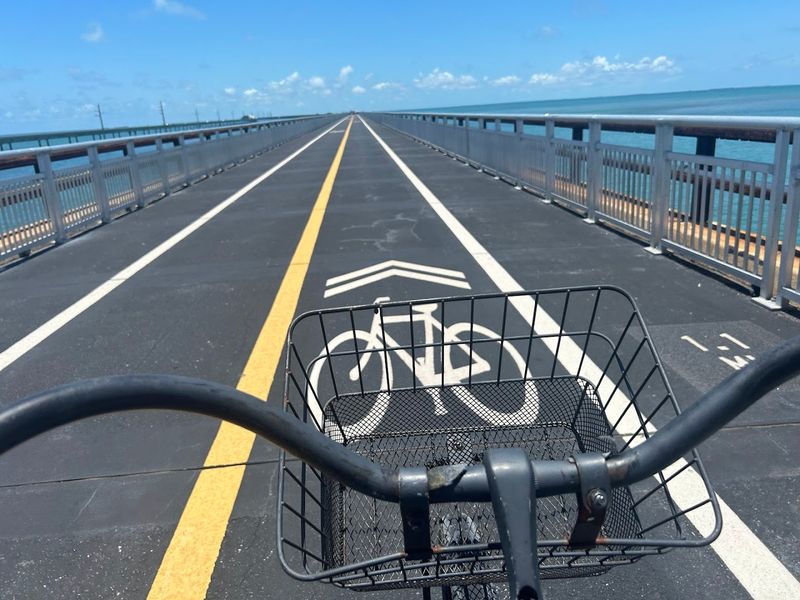
Both walking and biking are popular ways to experience the bridge, but they offer noticeably different experiences. Walking allows you to stop frequently, lean over the railing, and spend as much time as you want watching the water below.
The four-mile round trip on foot takes most people between one and two hours depending on pace and how many times you stop.
Biking covers the distance more quickly and lets you feel the breeze more intensely, which is a real advantage on warm days. Several local bike rental shops in Marathon offer options for renting cycles, including electric bikes, making the ride accessible even for those who have not cycled in a while.
If you rent an e-bike, it is worth inspecting the equipment before heading out. Check that the seat adjusts properly and that the brakes respond well before you commit to the full trail.
Either way, the bridge rewards both paces equally, and some visitors do the first mile on foot and pick up speed on the return trip.
Meet Fred the Tree
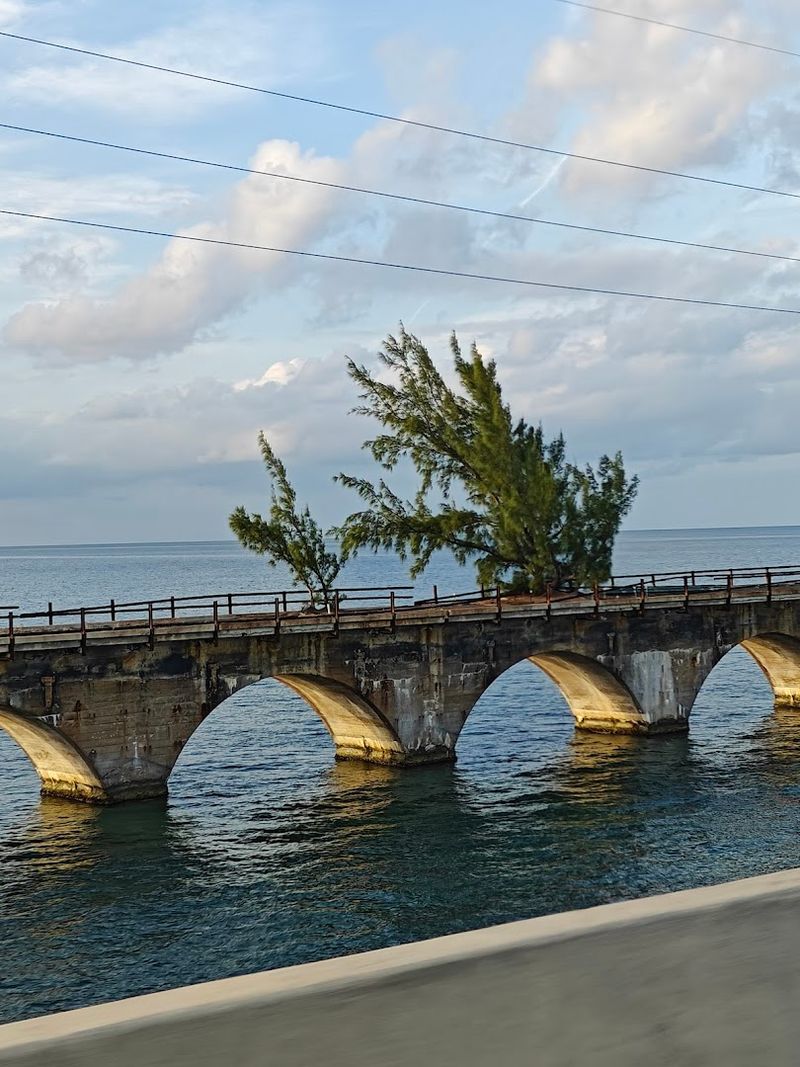
Roughly halfway along the bridge, you will encounter one of its most beloved and quirky landmarks: a lone tree that has somehow taken root in the concrete of the old bridge deck. Locals and visitors alike have named this tree Fred, and he has become something of a celebrity on the trail.
Fred is a small but determined tree growing out of a crack in the pavement, with the open ocean stretching away on all sides. There is something genuinely charming about a tree stubbornly existing in the middle of a bridge with no soil and no apparent reason to thrive.
Most people stop to take a photo with Fred, and the tree has become one of those unofficial landmarks that gives the bridge its personality. Keep an eye out for the halfway mark and you will not miss him.
Fred is a good reminder that nature in the Florida Keys finds a way to show up in the most unexpected places, even in the middle of an old concrete bridge.
Practical Tips Before You Head Out
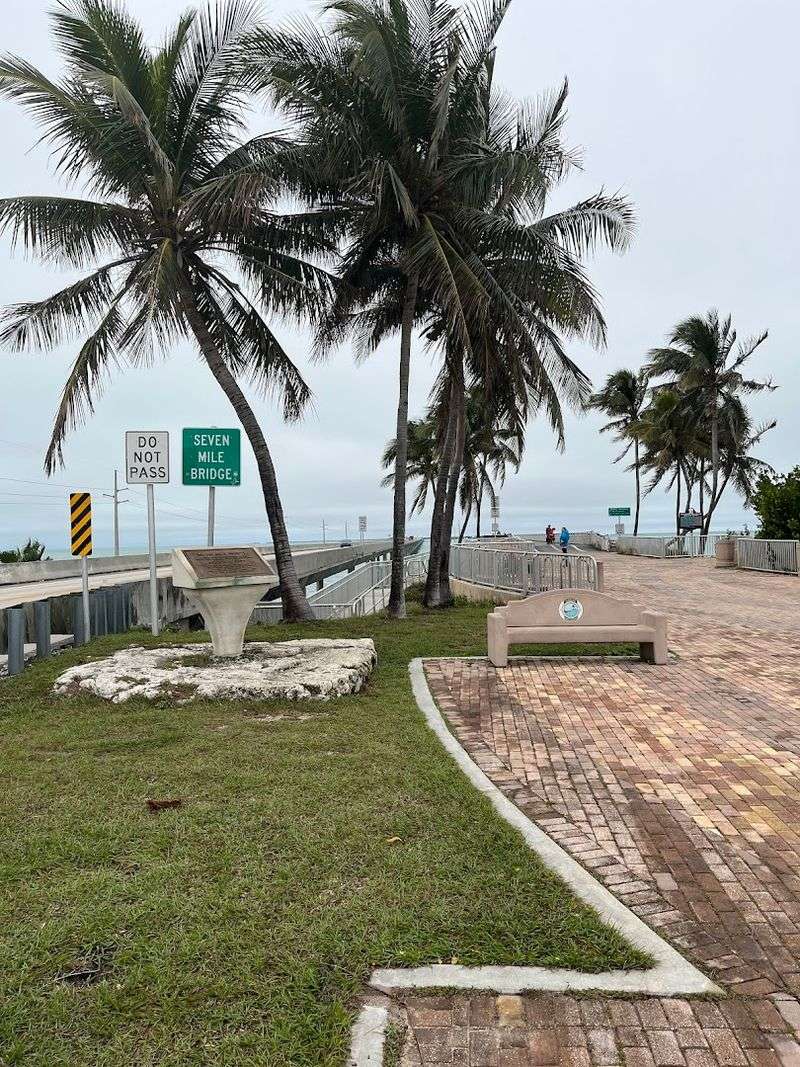
A few practical details can make the difference between a comfortable outing and a tough one. Sunscreen is non-negotiable on this bridge.
There is zero shade from one end to the other, and the sun reflects off the water as well as the pavement, meaning exposure comes from multiple directions at once.
Bringing a water bottle is equally important. There are no water fountains or vendors on the bridge itself, so whatever you carry is what you have for the full four-mile round trip.
A reusable bottle with cold water is one of the most useful things to pack.
Comfortable, closed-toe shoes work better than sandals for the walk, especially if you plan to cover the full distance. The surface is smooth and well-maintained, but sturdy footwear keeps your feet happy on the return stretch.
Trash cans are placed approximately every 0.2 miles along the trail, so keeping the bridge clean is easy. The parking lot is free, and the trail itself costs nothing to access.
The Lookout Huts and Ground-Level Access
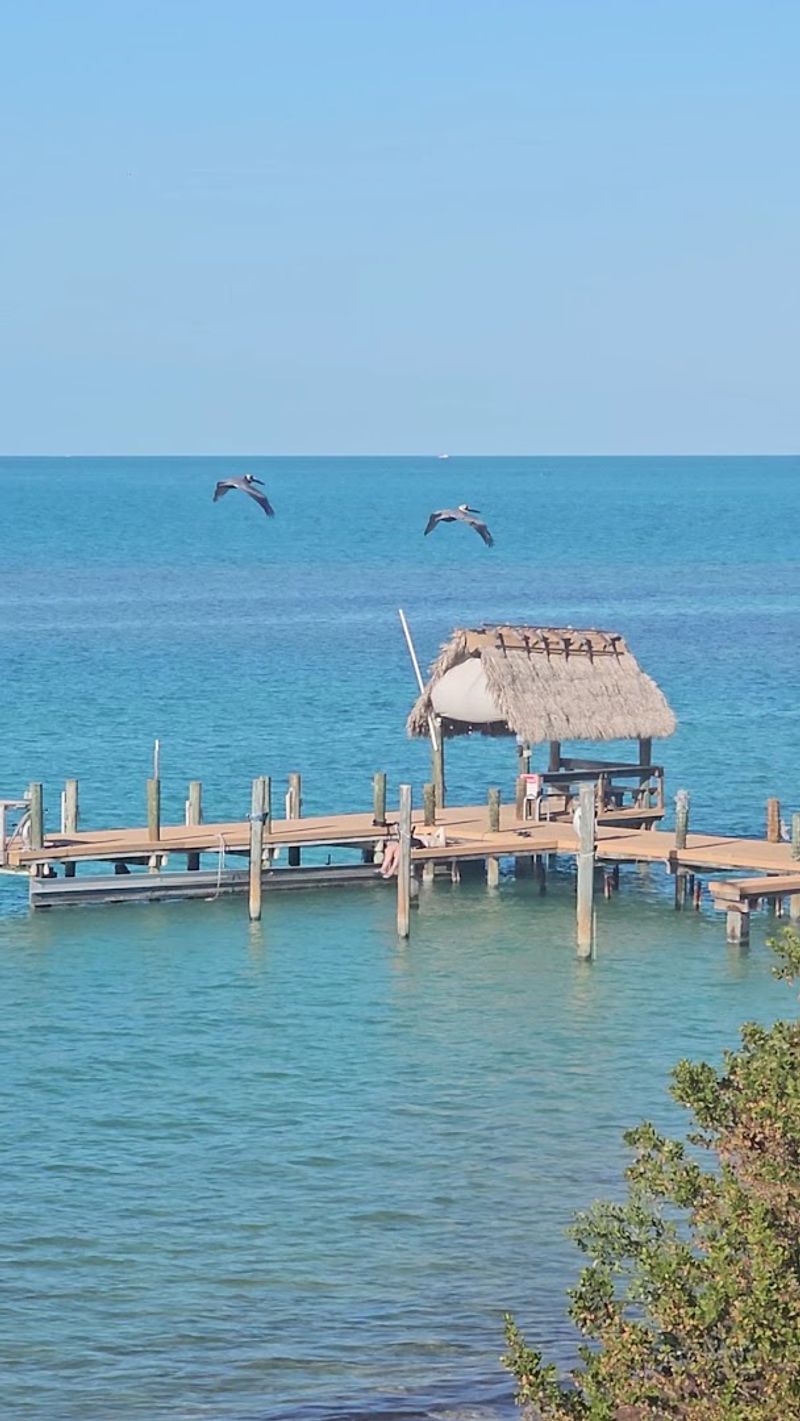
At the base of the bridge, near the Marathon trailhead, there are small covered huts at ground level that offer a completely different perspective on the water. These structures are accessible by a staircase or a ramp from the bridge deck, and they sit close enough to the surface of the water to feel genuinely immersive.
The huts provide one of the few shaded resting spots available at the bridge, making them a popular stop for visitors who want to cool down, eat a snack, or simply sit and watch the water move past the old pilings.
From ground level, the scale of the old bridge above becomes much more apparent. Looking up at the concrete span from the water’s edge gives a new appreciation for the engineering involved in building this structure over open ocean more than a century ago.
These lower platforms are also a good spot for watching boats navigate through the channel and for catching close-up views of the bird activity around the bridge supports.
Why This Bridge Stays on Every Florida Keys Itinerary
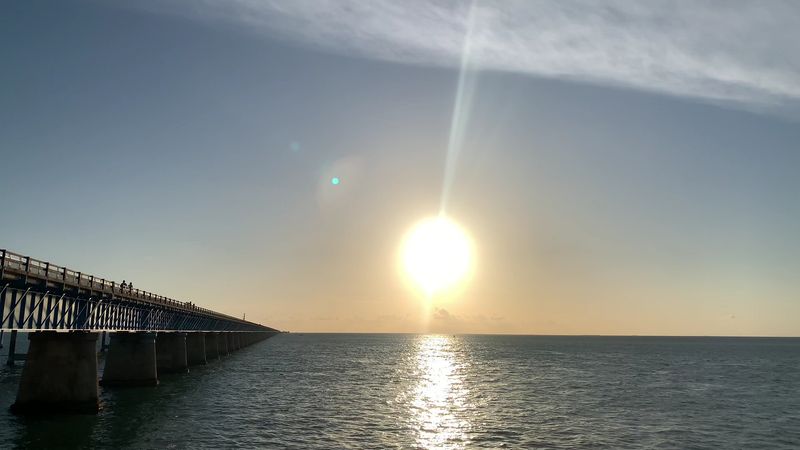
The Old Seven Mile Bridge earns its place on every Florida Keys itinerary not because of flashy attractions but because of what it genuinely delivers: open water, open sky, history underfoot, and a sense of being somewhere that most roads simply do not reach.
It is free, accessible at any hour, and requires no special equipment beyond sunscreen and water. Families with young children, solo cyclists, couples watching the sunset, and early morning joggers all find something here that fits their pace.
The bridge sits just minutes from the 7 Mile Grill and other Marathon restaurants, making it easy to pair the walk with a meal before or after. A morning on the bridge followed by lunch at a nearby spot makes for a complete and satisfying Keys experience.
After more than a century of history, three separate lives as a railroad, a road, and now a trail, the Old Seven Mile Bridge keeps drawing people back. That kind of staying power is earned, not manufactured.
Share this story