Michigan’s most impressive waterfalls are usually the ones hidden far from the main highways. Across the Upper Peninsula and parts of the Lower Peninsula, remote forest roads and short hiking trails lead to cascades that many residents do not even realize exist.
This list highlights ten lesser-known waterfalls scattered across the state, from rugged wilderness gorges to quiet roadside surprises. Some are easy to reach, while others require a bit of planning and a willingness to explore, but every stop offers a side of Michigan that most travelers never see.
1. Hungarian Falls, Hubbell
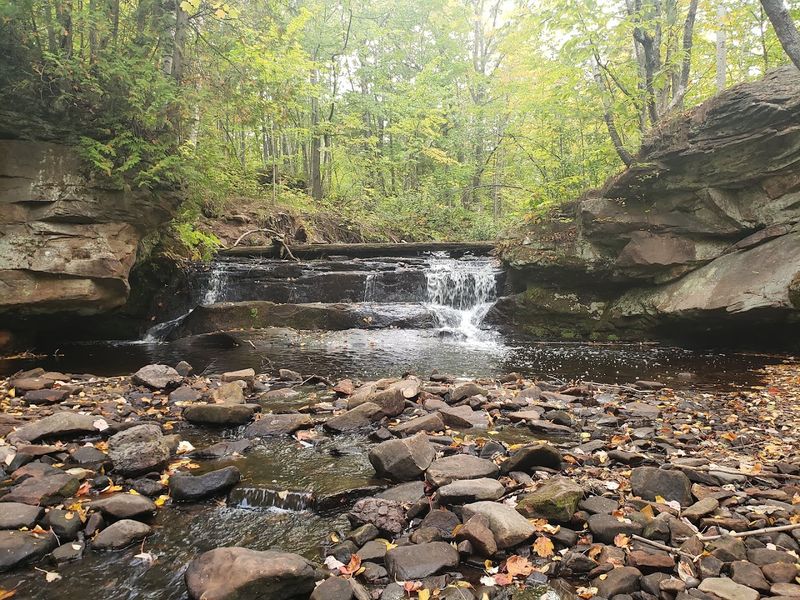
Not every waterfall announces itself with a parking lot and a gift shop, and Hungarian Falls is proud of that fact. Tucked deep in the woods near Hubbell in the Upper Peninsula, this is actually a series of three separate cascades stacked at different elevations, each one more dramatic than the last.
The upper and middle falls are reachable via a trail that winds through thick forest, with rocky terrain that keeps casual strollers from wandering in by accident. The lower falls, which drop roughly 60 feet, have no official designated path, so reaching them requires some careful scrambling over uneven ground.
This is exactly the kind of place where you earn the view. The waterfall sits on land that was once part of Michigan’s copper mining region, and the area still has a rugged, untamed character that feels nothing like a state park with manicured boardwalks.
Bring sturdy footwear, go slowly, and take your time exploring each level before heading back to the car.
2. O Kun de Kun Falls, Bruce Crossing
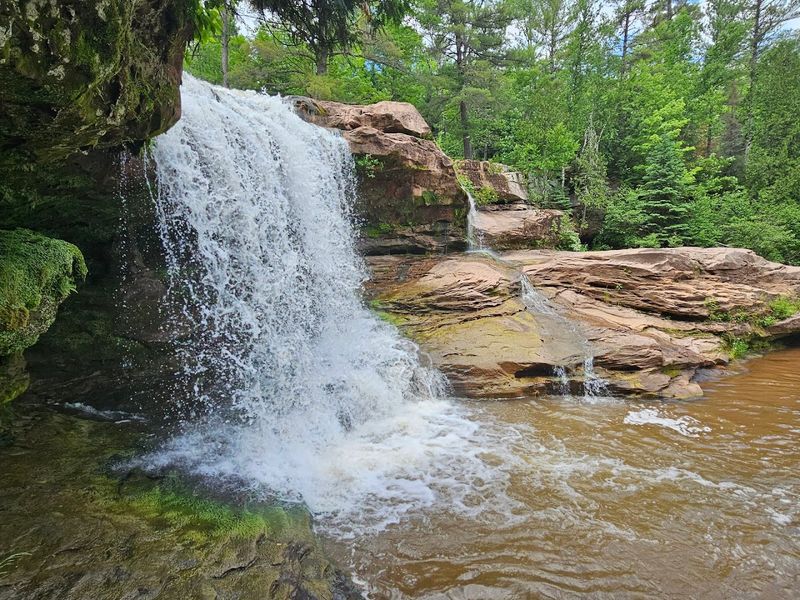
There is a waterfall in Ottawa National Forest that most people drive right past without knowing it exists, and that is a genuine shame. O Kun de Kun Falls crashes into a deep forest gorge near Bruce Crossing, surrounded by old-growth trees that have been standing since before Michigan was even a state.
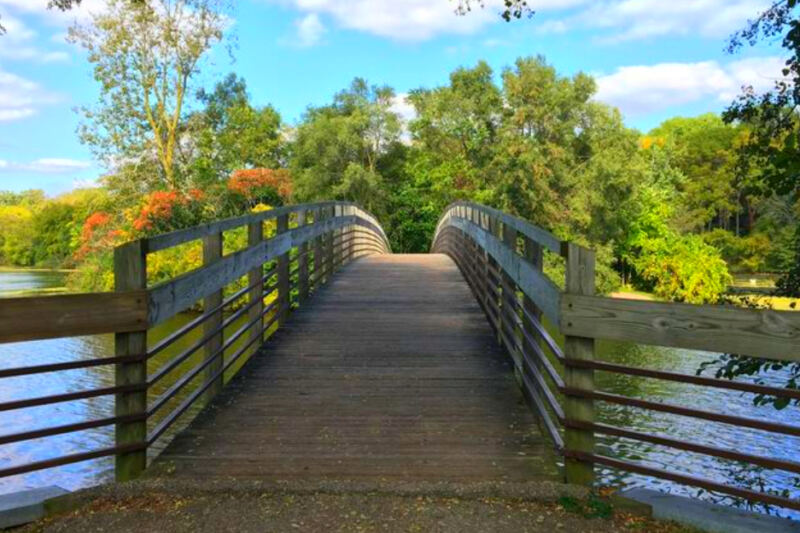
Getting there involves a hike that is described by most visitors as moderately easy, which is good news because the trail itself is beautiful enough to justify the trip on its own. A suspension bridge crosses the river near the falls, giving you a bird’s-eye view of the gorge below that is genuinely hard to forget.
The Ottawa National Forest setting means the roads leading here pass through miles of undisturbed woodland, making the drive itself feel like part of the experience. Fall is a particularly rewarding time to visit when the tree canopy above the gorge turns gold and red.
Plan for at least two hours to do the area justice.
3. Canyon Falls, L’Anse
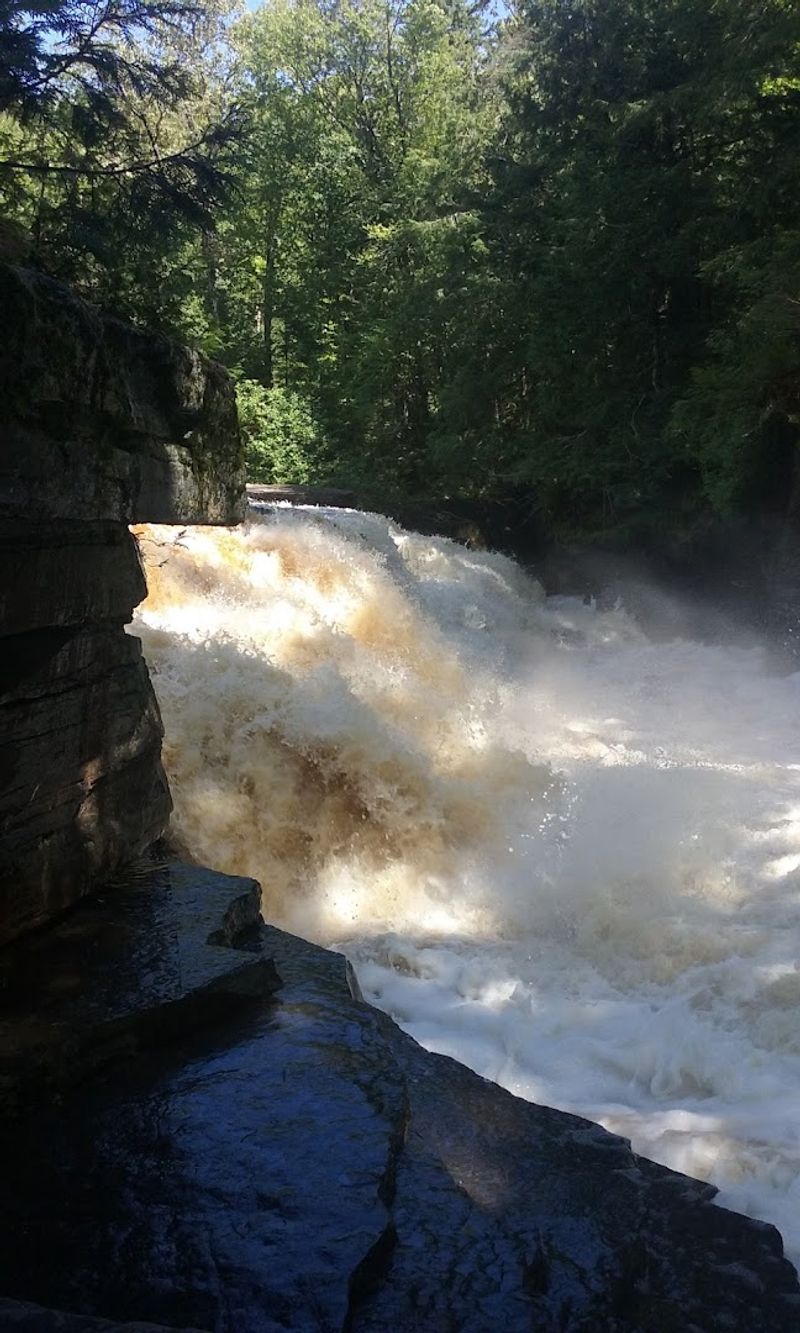
People often travel thousands of miles to see dramatic river canyons, completely unaware that Michigan has one hiding in plain sight near L’Anse. Canyon Falls earns its nickname as the Grand Canyon of Michigan by tumbling through a narrow rocky gorge with walls that rise steeply on both sides of the river.
The trail to reach it is a one-mile round trip, making it one of the more accessible hidden falls on this list. What makes the experience feel remote is the dense forest around the trailhead and the fact that the gorge itself is completely invisible until you are standing right at the edge of it.
After heavy rainfall, the water surges through the canyon with noticeably more force, and the volume of water in the gorge increases enough to make the whole scene look completely different from a dry summer visit. Canyon Falls Roadside Park provides a convenient stopping point along US-41, so this one works well as part of a longer Upper Peninsula road trip without requiring a major detour.
4. Bond Falls, Paulding
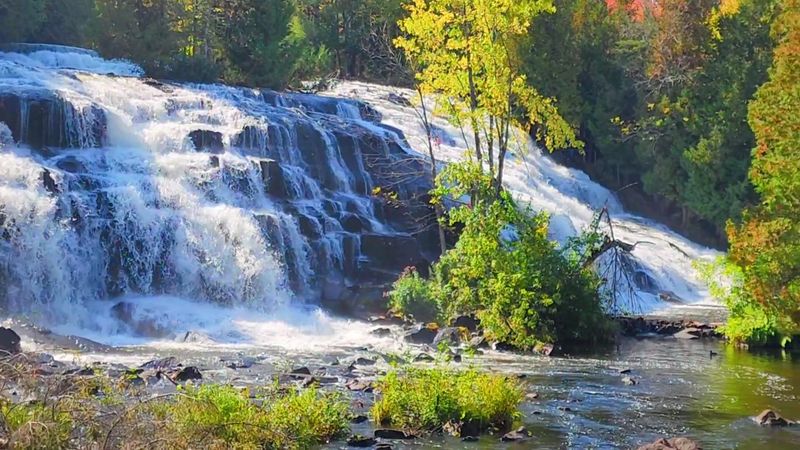
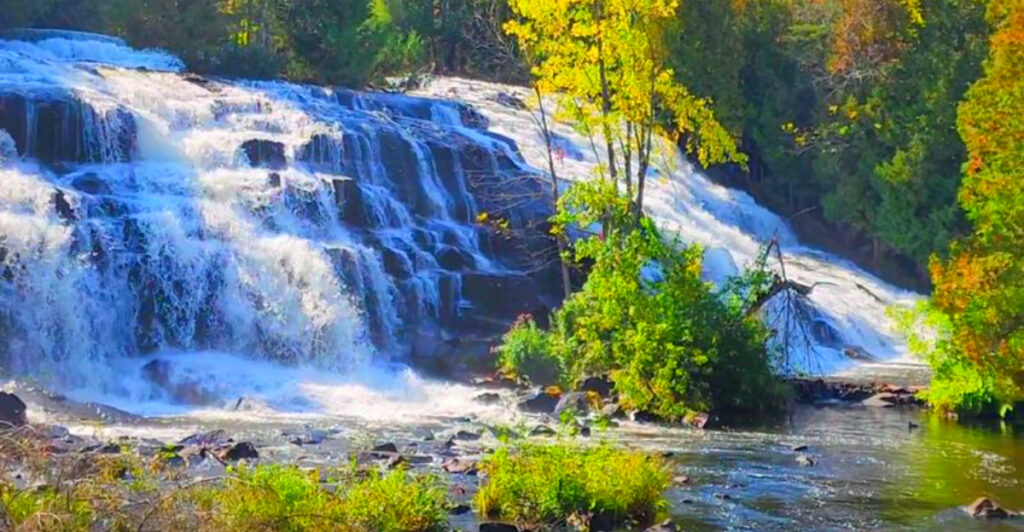
Roughly 100 feet wide and dropping about 50 feet over a series of tiered rocky ledges, Bond Falls has the kind of scale that makes people stop mid-sentence when they first see it. Located near Paulding in the western Upper Peninsula, it sits at the end of a long forest drive that passes through some of the most sparsely populated land in the entire state.
Multiple viewing platforms are positioned along the base and sides of the falls, giving photographers and casual visitors alike a clear angle on the full cascade. Stairs lead up to Upper Bond Falls, which is a smaller but still impressive secondary drop worth the extra few minutes of walking.
Bond Falls is technically more well-known than some of the truly off-the-radar spots on this list, but the remote location ensures it never feels crowded the way more accessible waterfalls do. The forest surrounding the falls is thick and undisturbed, and the drive through the western U.P. on the way there is scenic enough to make the whole day worthwhile.
5. Spray Falls, Pictured Rocks National Lakeshore
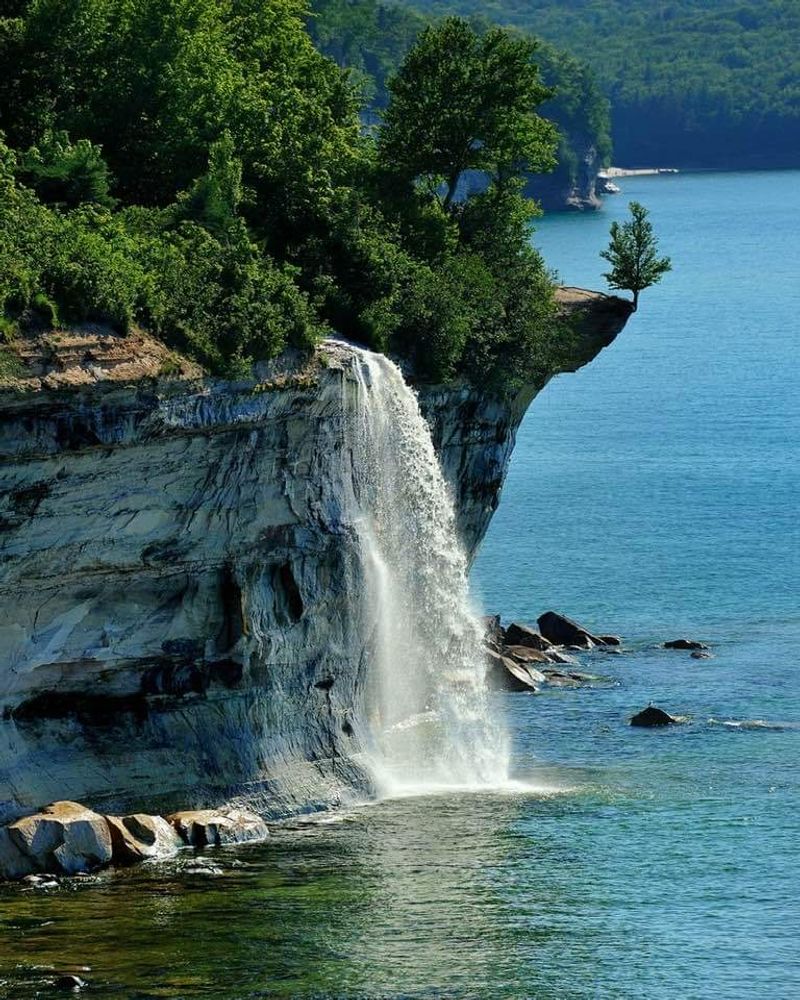
Most waterfalls in Michigan flow into rivers or pools, but Spray Falls takes a different approach entirely by plunging straight off a sandstone cliff and dropping directly into Lake Superior. That alone makes it one of the most unusual waterfall experiences in the state.
Reaching it is the challenge. Spray Falls is accessible primarily by kayak or boat along the Pictured Rocks shoreline, or by a long hiking route through the national lakeshore.
Neither option is quick, and that is precisely why the falls remain one of the least-visited spectacular sights in Michigan.
Pictured Rocks National Lakeshore already draws visitors for its colorful cliffs and clear blue water, but most people on a day trip never make it as far as Spray Falls. The cliff face from which the water drops is part of the same dramatic sandstone formations that define the entire lakeshore.
If you are planning a multi-day kayaking trip or a serious hiking adventure, putting Spray Falls on the itinerary is a decision you will not regret.
6. Sable Falls, Grand Marais
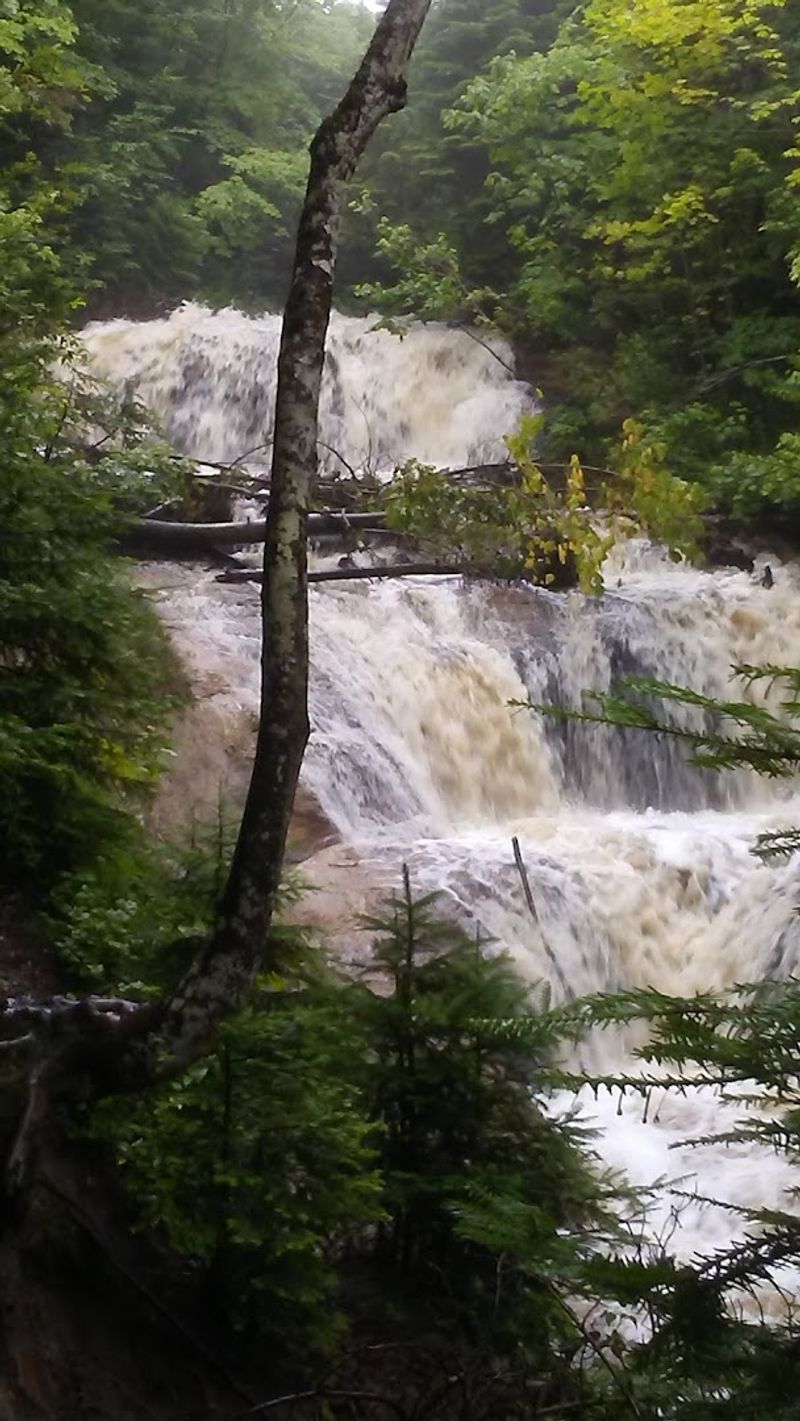
Grand Marais is a tiny Lake Superior town that most people pass through without stopping, and that is a mistake worth correcting on your next road trip. Just outside of town, Sable Falls drops through a wooded canyon and empties out near the Lake Superior shoreline, making it one of the few waterfalls in Michigan where you can see a Great Lake from the trail.
A series of wooden stairways and viewing platforms make the descent to the falls manageable for most fitness levels, though the stairs do get steep toward the bottom. The forest surrounding the canyon is dense and well-preserved, and the trail feels genuinely peaceful in a way that more popular destinations rarely manage.
Sable Falls sits within Pictured Rocks National Lakeshore, which means it benefits from the protections and trail maintenance that come with national park status. Combine a visit here with a walk along the nearby Sable Dunes for a full afternoon of exploring one of the Upper Peninsula’s most underappreciated corners.
Early morning visits offer the most solitude.
7. Silver River Falls, Baraga County
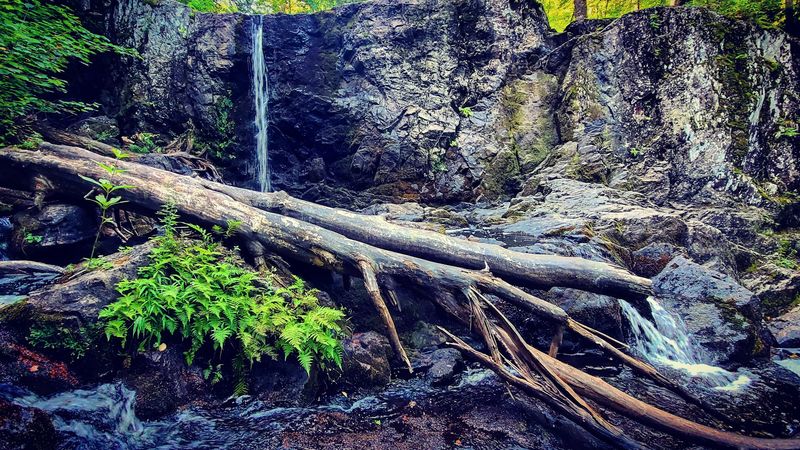
Baraga County is not exactly on most road-trippers’ radar, which is exactly why Silver River Falls remains one of the most genuinely overlooked waterfalls in the Upper Peninsula. The area near Silver Mountain is thick with wilderness, and the falls sit far enough off the main roads to filter out anyone who is not actually committed to finding them.
What makes this spot appealing beyond the waterfall itself is the atmosphere of the surrounding landscape. There are no crowds, no interpretive signs, and no manicured overlooks.
It is the kind of place where you might spend an hour without seeing another person, which is increasingly rare in a world where every scenic spot ends up on a trending social media post.
The drive through Baraga County on the way to the falls passes through some genuinely beautiful forest terrain. Road conditions can vary depending on the season, so checking current conditions before heading out is a smart move.
This one rewards independent travelers who enjoy piecing together a route and figuring things out as they go.
8. Miners Falls, Munising
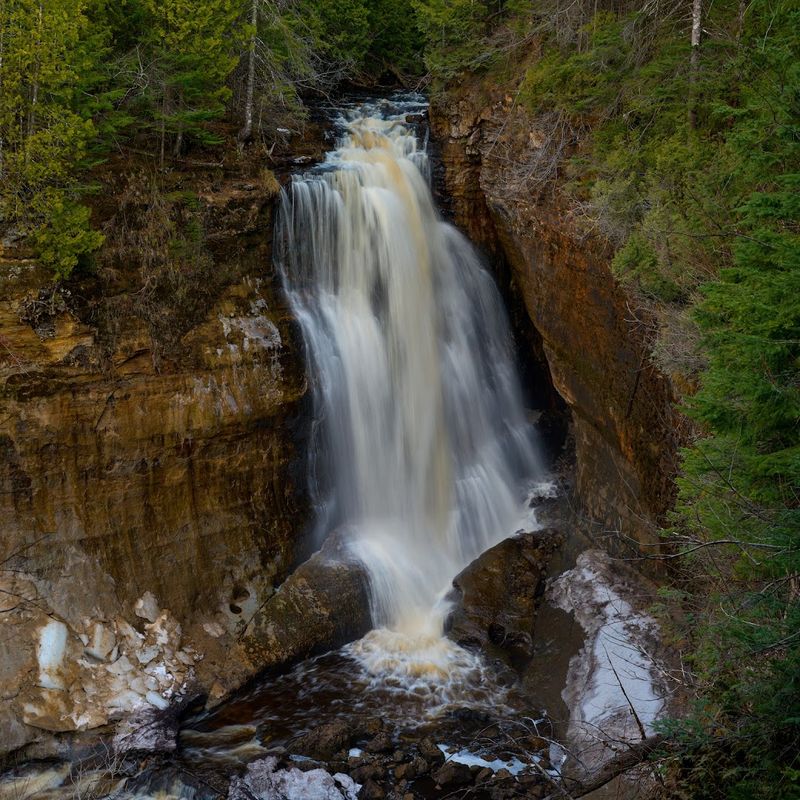
A nearly 50-foot drop into a sandstone canyon is not something you stumble across on a casual afternoon walk, but Miners Falls makes it happen at the end of a forested trail inside Pictured Rocks National Lakeshore near Munising. The canyon walls surrounding the base of the falls are made from the same distinctive sandstone that defines the entire lakeshore, giving the whole scene a cohesive geological character.
The trail from the parking area is about 1.2 miles round trip, passing through a quiet forest before arriving at a scenic overlook above the falls. The overlook gives a clear view of the full drop without requiring any scrambling or off-trail navigation.
Munising is already a popular base camp for Pictured Rocks visitors, but many day-trippers focus exclusively on the boat tours and miss the inland waterfall trails entirely. Miners Falls is genuinely one of the better reasons to skip the boat for a day and explore the forest instead.
The trail is well-maintained and clearly marked, making it accessible for a wide range of hikers.
9. Ocqueoc Falls, Presque Isle County
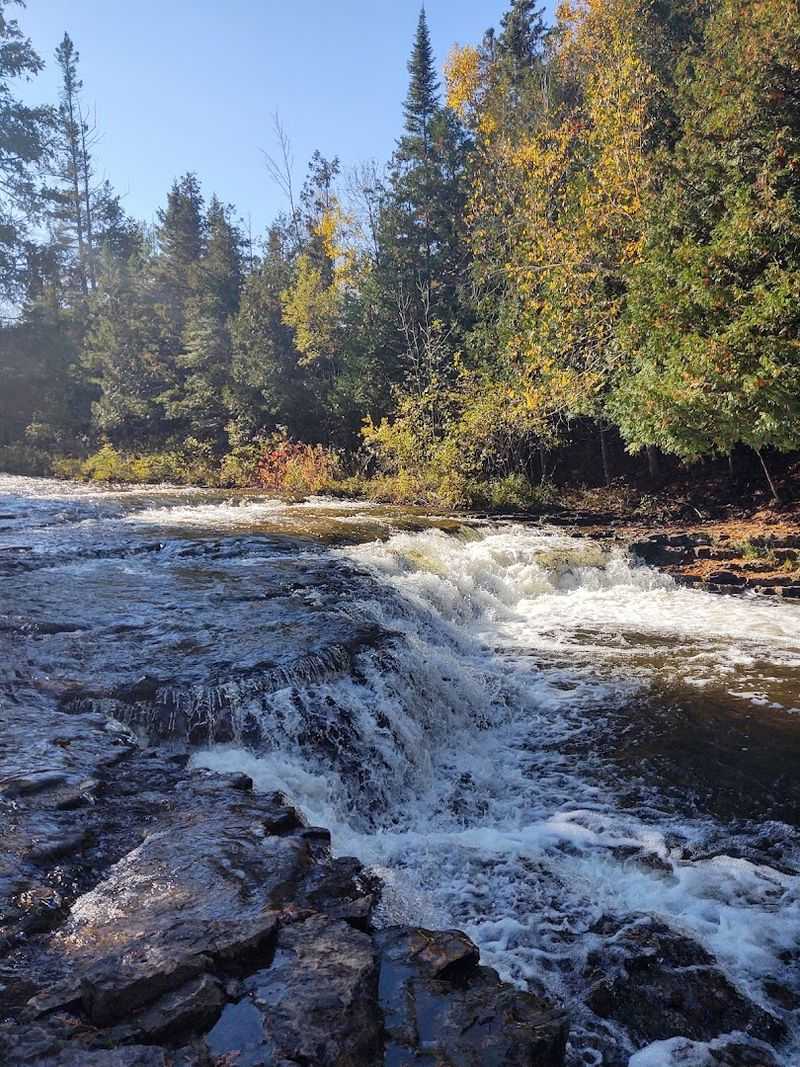
Here is a fact that surprises most Michigan residents: the largest waterfall in the entire Lower Peninsula is not on any major tourist map and does not have a line of visitors waiting to see it. Ocqueoc Falls sits in Presque Isle County near Rogers City, quietly holding that title while most people assume all the good waterfalls are north of the Mackinac Bridge.
The falls flow over a series of wide limestone ledges that spread the water across a broad, shallow cascade rather than concentrating it into a single dramatic plunge. It is a different kind of waterfall experience, more horizontal than vertical, and the effect is surprisingly photogenic from the right angle.
Six miles of trails fan out from the falls area, open to hikers, mountain bikers, and cross-country skiers depending on the season. A picnic area near the parking lot makes this a practical stop for families on a longer road trip through northern Michigan.
For anyone who has only chased waterfalls in the U.P., Ocqueoc is a genuinely unexpected discovery.
10. Gorge Falls, Ironwood
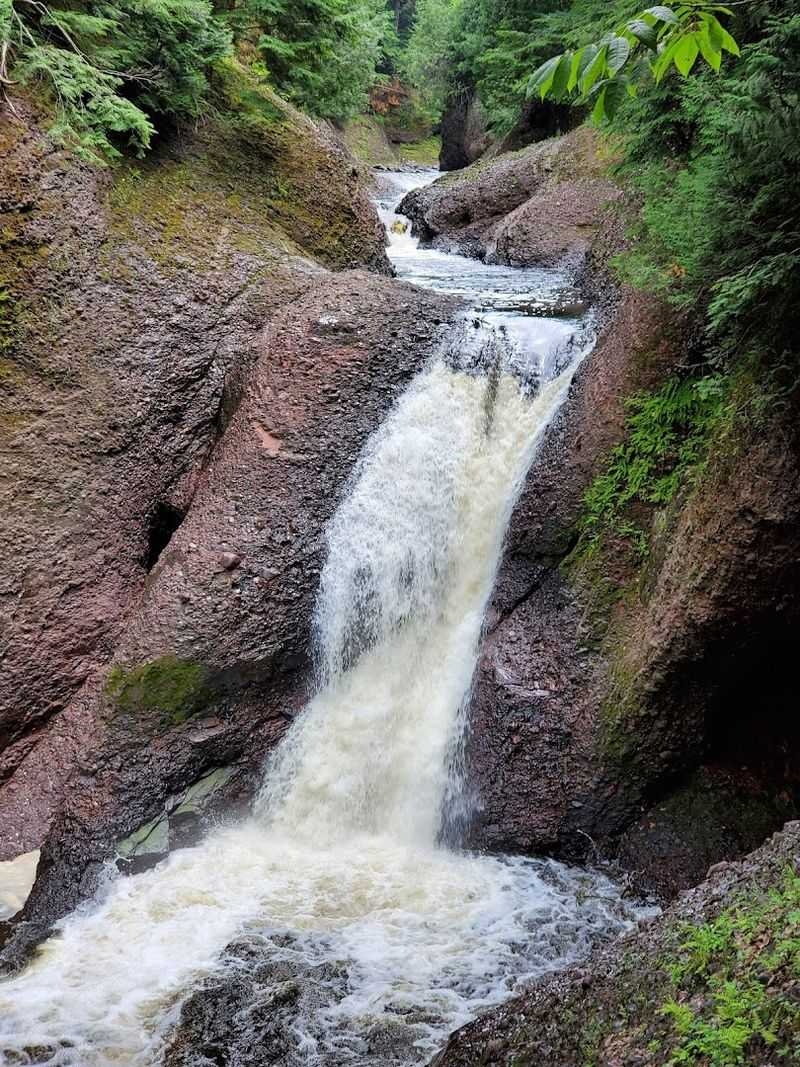
The Black River Scenic Byway near Ironwood is one of those drives that waterfall enthusiasts talk about in reverent tones, and Gorge Falls is a big reason why. Located about 400 feet from its parking area, the falls drop into a steep, dramatic gorge that requires navigating a long wooden stairway to view properly from below.
The stairway descent is part of the experience, giving you a gradual reveal of the gorge as you descend toward the water. Photographers particularly favor this spot because the angle from the bottom of the stairs frames the falls against the rocky walls in a way that is hard to replicate anywhere else in Michigan.
Gorge Falls is one of several impressive waterfalls clustered along the Black River Byway, including Potawatami, Rainbow, and Great Conglomerate Falls, which means a single afternoon can cover multiple stops without much extra driving. The western Upper Peninsula near the Wisconsin border is often overlooked in favor of the more famous Pictured Rocks area, but this stretch of forest and river makes a compelling case for changing that habit.
Share this story