New York City has a reputation for being loud, crowded, and impossible to fully explore. Most visitors tick off the same list: the Statue of Liberty, Times Square, the Brooklyn Bridge.
But the city has a second layer that most tourists never reach, and that layer is honestly more interesting. Tucked behind unmarked doors, up elevated walkways, and across short ferry rides are places that locals quietly love and guidebooks often skip.
Some are free. Some are centuries old.
Some are so strange that you will genuinely wonder how they exist in the middle of one of the world’s busiest cities. This list covers 13 of those places, from a park that floats above the East River to an apartment legally filled with dirt.
No fluff, no filler. Just real, specific stops that will make your NYC trip feel like something most people never get to experience.
1. The Elevated Acre
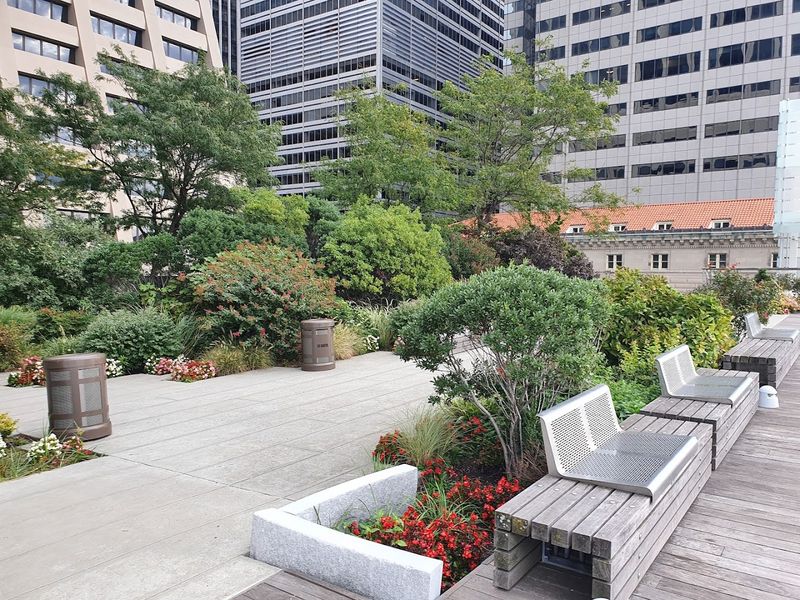
Most people walk past 55 Water Street without any idea that a full park is sitting above their heads. The Elevated Acre is a green public space perched one level above the street in the Financial District, offering views of the East River, the Brooklyn Bridge, and Governors Island all at once.
Access is free and the entrance is easy to miss, which is exactly why the crowds stay thin. On summer evenings, the space hosts free outdoor performances, giving it more personality than most rooftop spots in the city.
There are real grassy areas, open seating, and a wide terrace that lets you look out over the water without any fences blocking the view. If you need a real break from the pace of Lower Manhattan, this is the most underrated place to take it.
2. City Hall Station
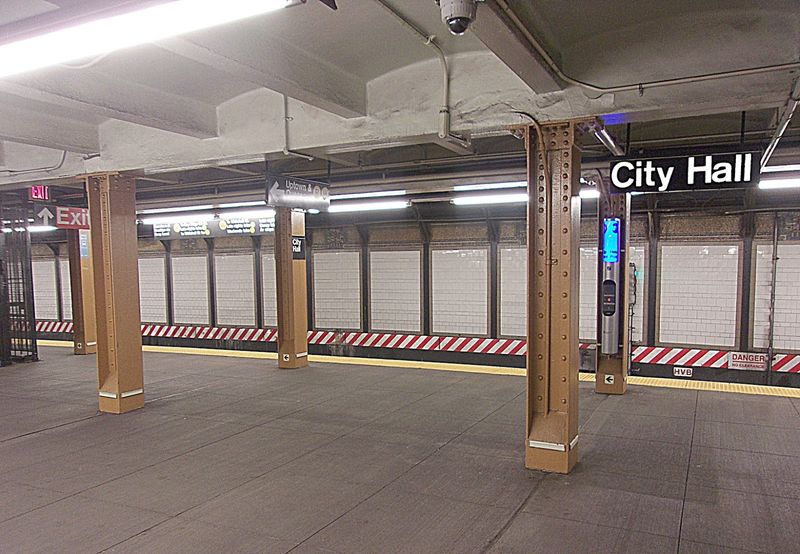
Opened in 1904, the original City Hall subway station was the crown jewel of New York City’s first underground rail line. It was designed with arched ceilings, Guastavino tile work, and skylights that made it look more like a European cathedral than a transit stop.
The station closed to regular passengers in 1945 because its curved platform could not safely accommodate the longer train cars the city needed. Since then, it has sat largely unchanged beneath City Hall Park, which makes it one of the best-preserved examples of early 20th-century transit design anywhere in the country.
The New York Transit Museum runs occasional tours that allow visitors to see the station up close. Spots fill quickly, so booking in advance is the smartest move.
For anyone interested in architecture or city history, this is one of those rare stops that genuinely delivers on its reputation.
3. Roosevelt Island Tramway
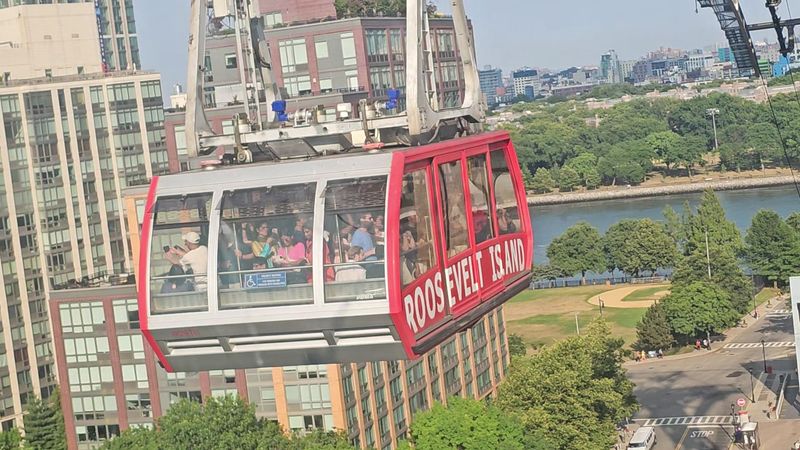
For the price of a standard subway fare, the Roosevelt Island Tramway gives you one of the best aerial views of Manhattan that money can buy. The cable car rises 250 feet above the East River and travels between Midtown Manhattan and Roosevelt Island in just a few minutes.
From the tram, you can see the Empire State Building, the United Nations Headquarters, and long stretches of the NYC skyline from an angle most visitors never get. The tram runs frequently and accepts regular MetroCards, which means there is no extra cost involved.
Roosevelt Island itself is worth a short walk once you arrive. Four Freedoms Park sits at the island’s southern tip and offers quiet waterfront views of the Manhattan skyline from a completely different perspective.
The whole trip, tram ride included, takes less than an hour and punches well above its weight as a sightseeing experience.
4. Green-Wood Cemetery
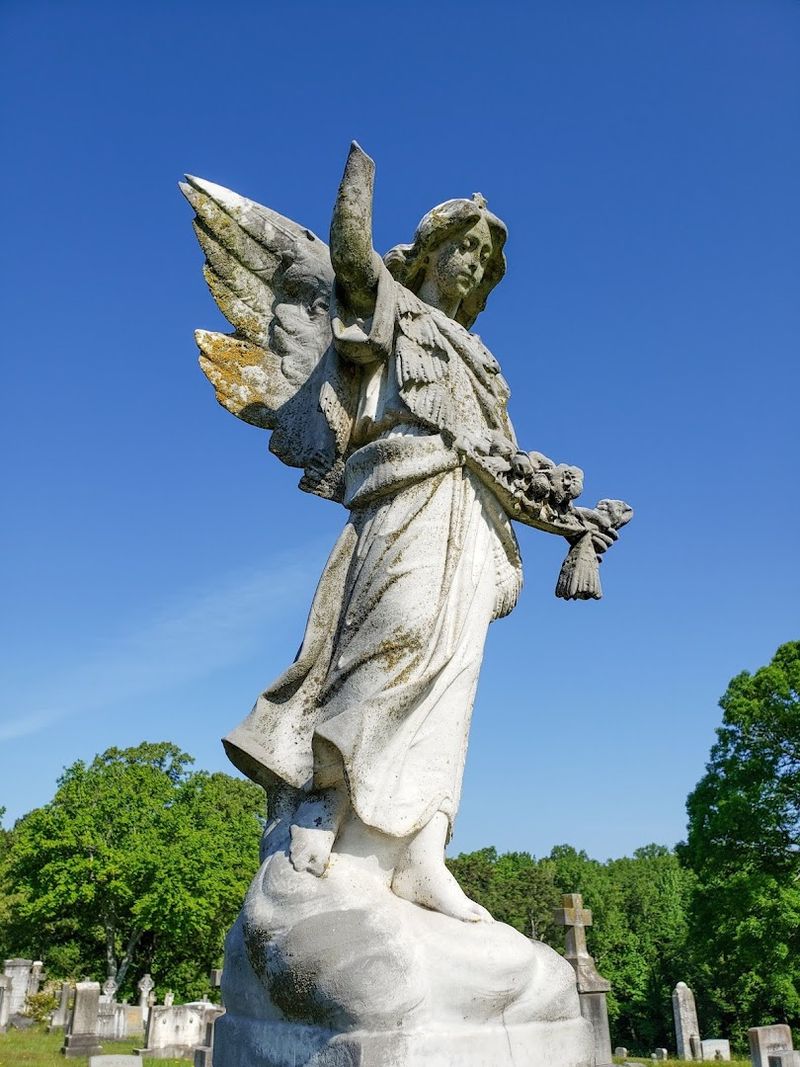
Founded in 1838, Green-Wood Cemetery in Brooklyn is one of the oldest public green spaces in New York City. Its rolling hills and tree-lined paths were so appealing to the public that the city’s demand for a similar space directly inspired the competition that eventually produced Central Park two decades later.
The Gothic Revival entrance gates at the Fifth Avenue entrance are a landmark on their own, and the grounds cover over 478 acres of hills, ponds, and historic monuments. Notable figures buried here include artist Jean-Michel Basquiat and political boss William Tweed, giving the place a surprisingly rich cultural layer.
From some of the higher points within the cemetery, you get clear views of the Manhattan skyline. Green-Wood is open to visitors daily and offers guided tours on weekends.
It manages to be both a working historic cemetery and one of Brooklyn’s most genuinely peaceful outdoor spaces.
5. Mmuseumm
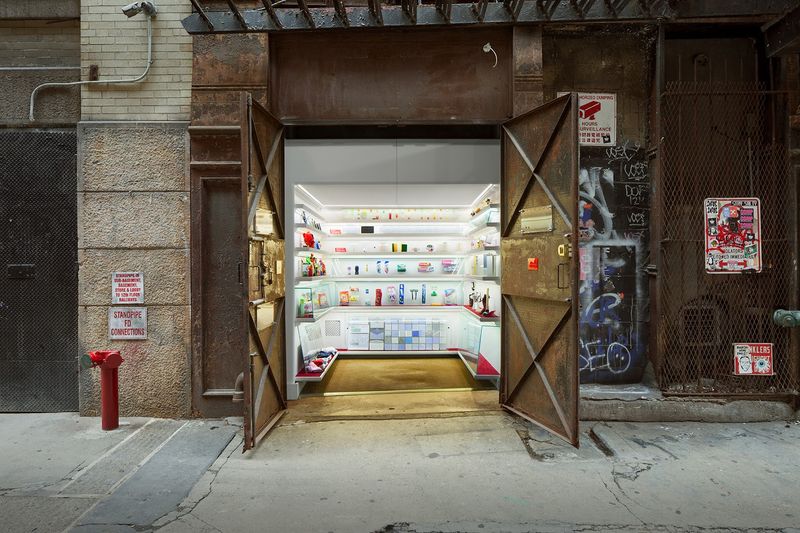
Cortlandt Alley in Tribeca does not look like a museum destination. But tucked into what used to be a freight elevator shaft is Mmuseumm, a tiny institution that packs more curiosity into a few square feet than most galleries manage in entire floors.
The museum displays everyday objects chosen for their ability to reveal something unexpected about modern life, politics, or culture. Past exhibits have included rejected products, political paraphernalia, and items collected from around the world that tell surprisingly sharp stories about how people live.
The space is intentionally small. You view the current exhibit through a window when the museum is closed, and can step inside during open hours for a closer look.
Admission is low-cost and the experience is fast, but it tends to stick with visitors longer than most conventional museum visits. Mmuseumm is a good example of what happens when curators stop worrying about scale.
6. The Whispering Gallery at Grand Central
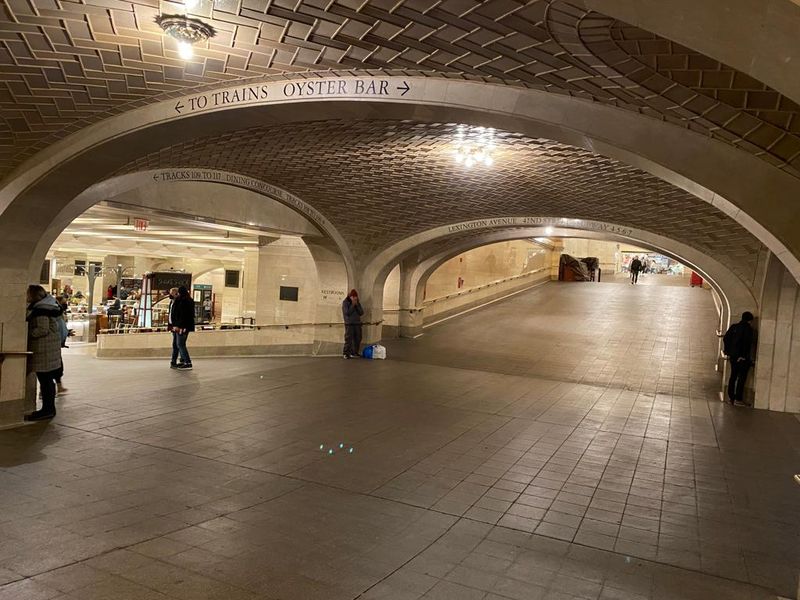
Grand Central Terminal gets millions of visitors each year, but most of them walk right past one of its most entertaining architectural tricks. Near the entrance to the Oyster Bar on the lower level, four arched corners form what is known as the Whispering Gallery.
The curved Guastavino tile ceiling creates an acoustic path that carries a whisper spoken into one corner directly to the opposite corner, about 40 feet away. Two people standing in diagonal corners can hold a conversation at a near-whisper with remarkable clarity, even with background noise around them.
The effect works because of the dome’s geometry, which directs sound waves along the curved surface rather than letting them scatter into the room. No special equipment is needed and there is no fee to try it.
It is the kind of small, specific detail that makes Grand Central worth exploring beyond its famous main concourse.
7. Freeman Alley
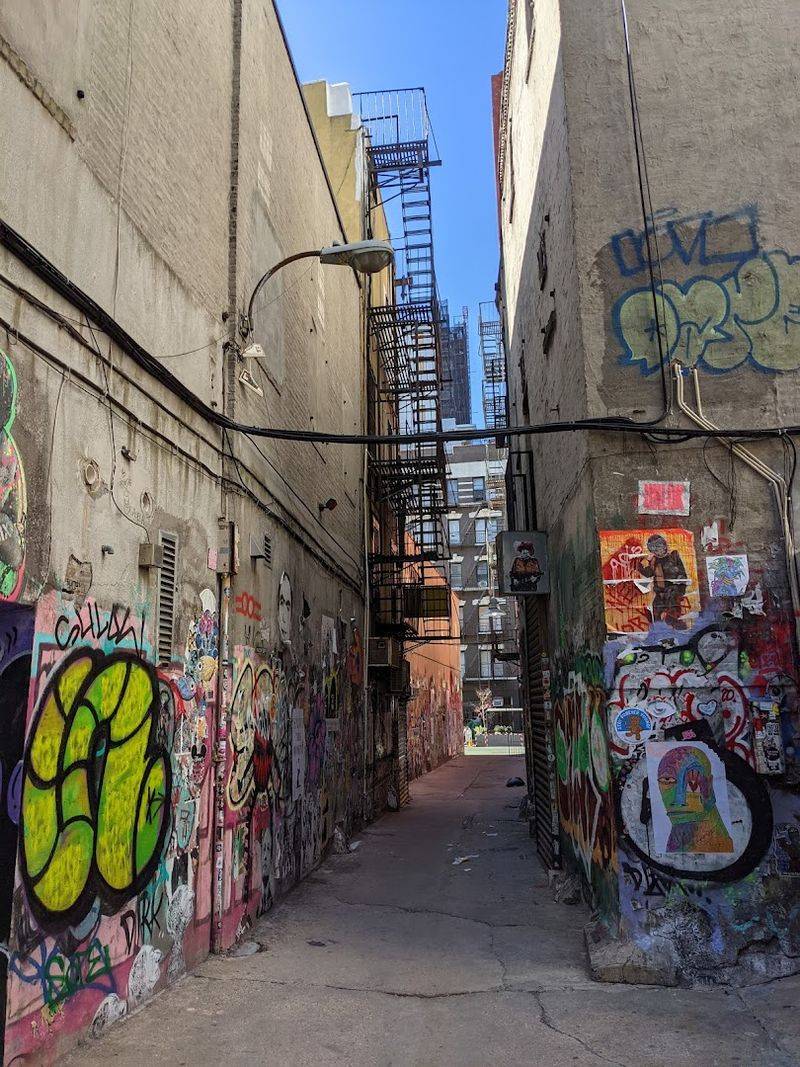
Freeman Alley runs off Rivington Street on the Lower East Side and is easy to overlook because it looks, at first glance, like a dead end. Get past that first impression and you find one of Manhattan’s best open-air street art collections packed into a remarkably small space.
The alley’s brick walls have been covered and recovered by artists over many years, meaning the work changes regularly and no two visits look exactly the same. Murals range from large-scale graphic pieces to smaller, more detailed work layered over older paint.
Photographers tend to find it particularly useful because the narrow width and varied wall surfaces create interesting compositions that are hard to replicate anywhere else in the neighborhood. There is no admission, no official hours, and no staff.
Freeman Alley is just there, doing its thing, completely free to anyone who notices the entrance and decides to walk through it.
8. The Morgan Library & Museum
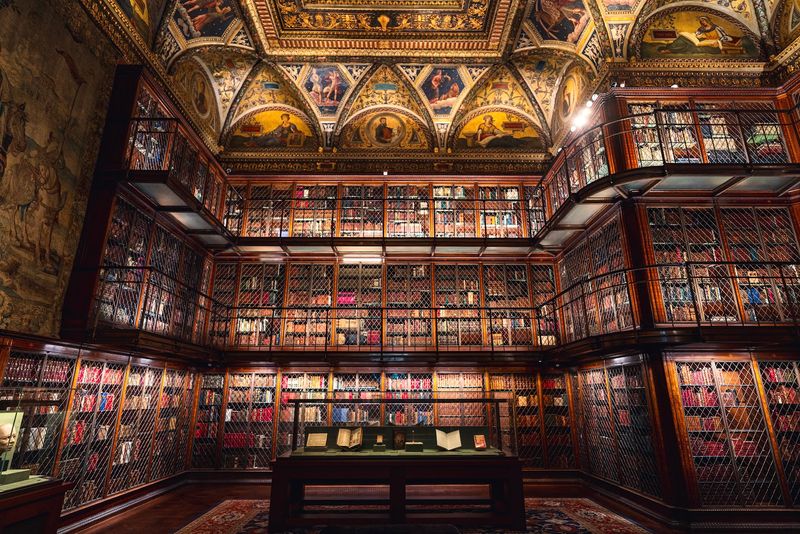
J.P. Morgan spent serious money building his private library on East 36th Street, and the result is one of the most remarkable interiors in New York City.
The original library room features three tiers of bookshelves, a painted ceiling, and a fireplace that together make it look less like a Manhattan building and more like a Renaissance palazzo.
The collection includes original manuscripts by authors like Charles Dickens and Jane Austen, rare medieval illuminated books, and personal correspondence from historical figures. The museum expanded significantly in 2006, adding a modern central atrium that connects the original buildings without disrupting their character.
Admission is reasonably priced and the museum rarely feels crowded, which makes it a reliable alternative on days when larger institutions are packed. The reading room alone is worth the visit.
It is one of those spaces that earns its reputation without needing any exaggeration to sell it.
9. Pomander Walk
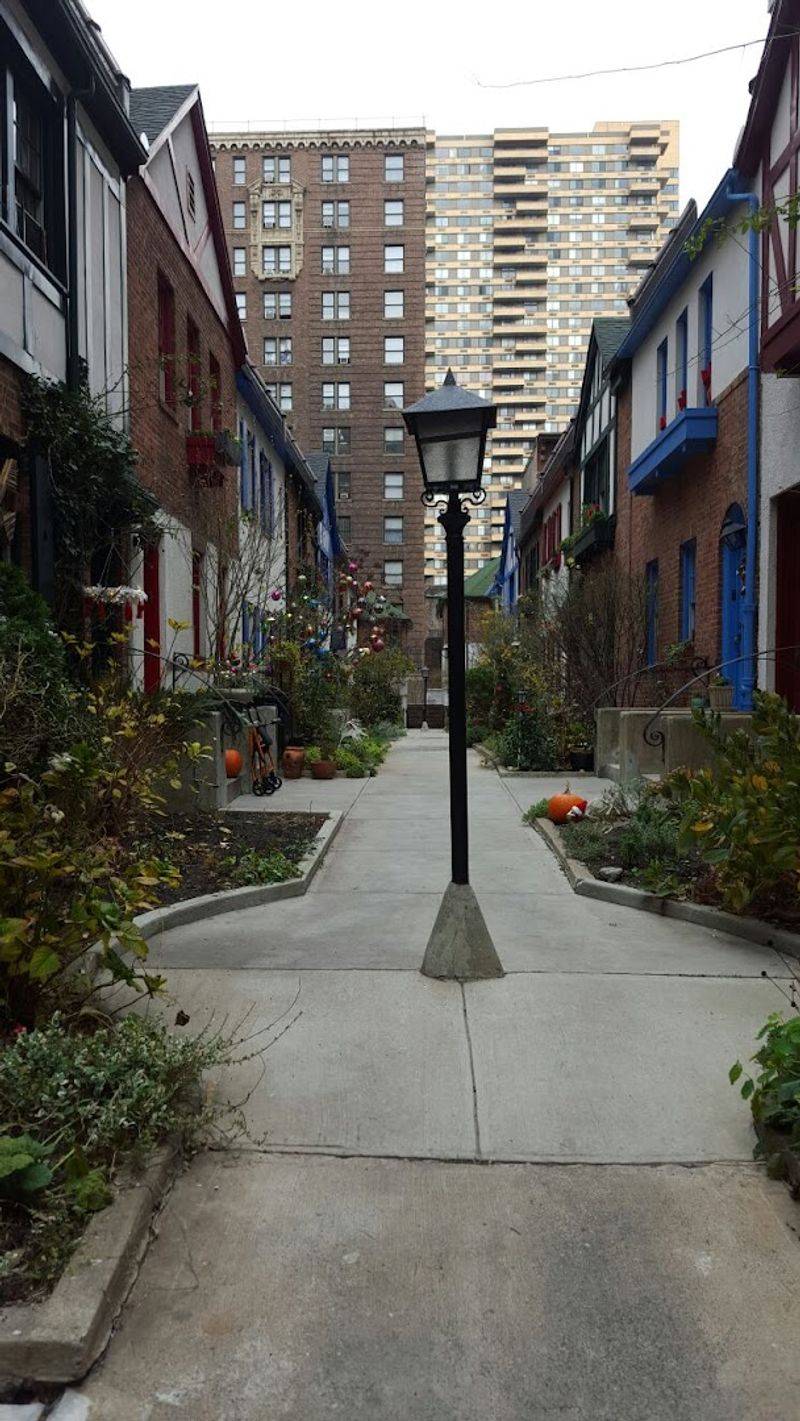
Between 94th and 95th Streets on the Upper West Side, there is a gated entrance that most people pass without a second glance. Behind it sits Pomander Walk, a private residential lane that looks like a Tudor village that somehow got compressed and relocated to Manhattan.
The lane was built in 1921 and was designed to resemble the set of a popular play of the same name. It consists of two rows of small attached cottages facing each other across a narrow pedestrian path, with small gardens and exterior details that look nothing like the rest of the neighborhood.
Because it is a private residence, you cannot walk through the lane, but the view from the gate is clear and worth the short detour. Notable past residents include actors Humphrey Bogart and Lillian Gish.
It is a genuine architectural oddity that has survived a century of Manhattan development without losing any of its original character.
10. Roosevelt Island Smallpox Hospital Ruins
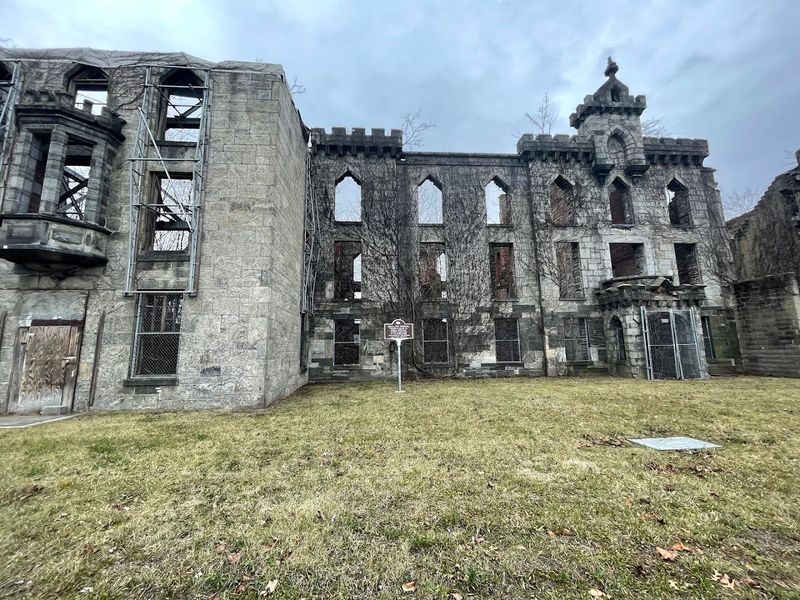
At the southern tip of Roosevelt Island, a set of Gothic stone walls stands partially open to the sky, held together by careful preservation work rather than a fully intact roof. The Renwick Smallpox Hospital was built in 1856 and designed by James Renwick Jr., the same architect behind St. Patrick’s Cathedral in Midtown Manhattan.
The hospital treated patients during New York’s smallpox outbreaks throughout the 19th century and was eventually abandoned in the early 20th century. The structure was stabilized in 2009 to prevent further deterioration, but it was intentionally left as a ruin rather than restored to its original state.
The combination of Gothic stone arches and open sky creates a genuinely striking visual, especially with the Manhattan skyline and the Queensboro Bridge visible just across the water. Access is free and the ruins are part of a short walking path that runs along the island’s southern edge.
11. The Earth Room
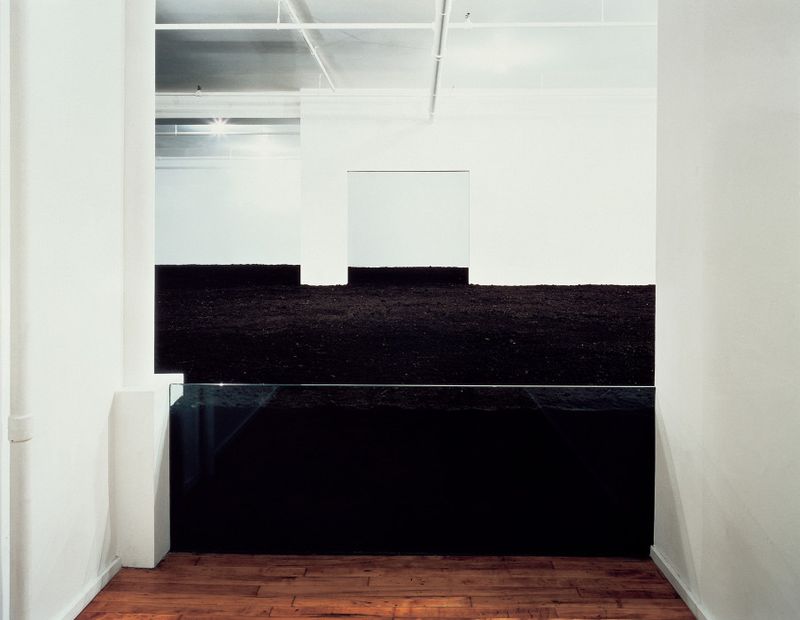
Walter De Maria’s Earth Room has occupied the second floor of a SoHo building since 1977, and it does exactly what its name suggests. The entire apartment floor is covered with 280,000 pounds of dark soil, filled to a depth of 22 inches, and maintained by the Dia Art Foundation at ongoing expense.
The installation takes up 3,600 square feet and visitors view it from behind a low barrier at the entrance. There is no interactive component and no guided explanation.
You look at it, think about what you are looking at, and then leave.
That simplicity is the point. The Earth Room is one of the longest-running permanent art installations in the United States and admission is completely free.
It is open several days a week with a midday break. For a city that constantly tears things down and rebuilds, the fact that this installation has stayed in place for nearly five decades is itself a kind of statement.
12. Little Island
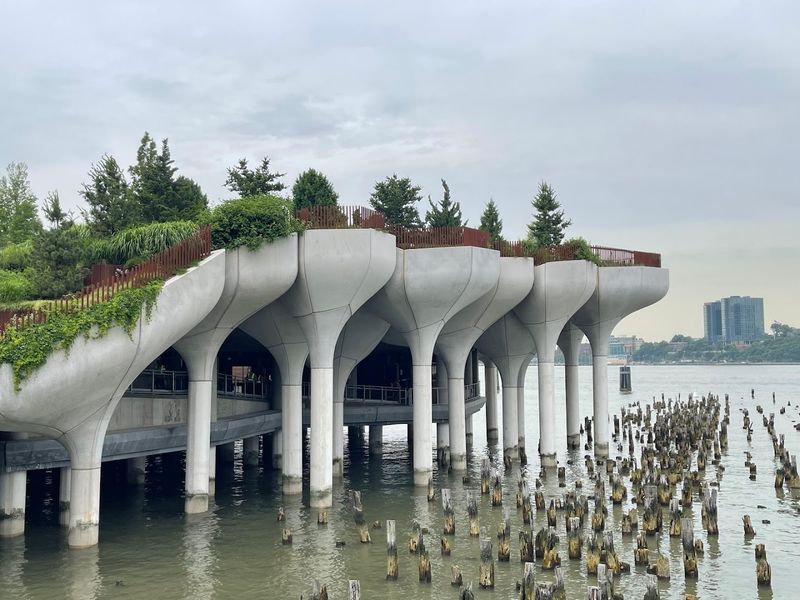
Little Island opened in 2021 on the Hudson River at Pier 55 in the West Village, built on 132 tulip-shaped concrete columns that rise directly from the water. The design replaced a deteriorating old pier structure and created a park that sits above the river rather than beside it.
The park covers 2.4 acres and includes gardens, open lawns, an amphitheater, and multiple viewpoints looking out over the Hudson. Free performances take place at the amphitheater during warmer months, ranging from music to theater to outdoor film events.
Entry to the park is free, though timed reservations are required during peak hours on weekends. The layout is deliberately varied, with different elevations and plantings creating distinct zones within a compact footprint.
Little Island manages to feel like a genuine neighborhood park rather than a tourist installation, which is harder to pull off than it sounds for a structure built on top of a river.
13. The Back Room Speakeasy
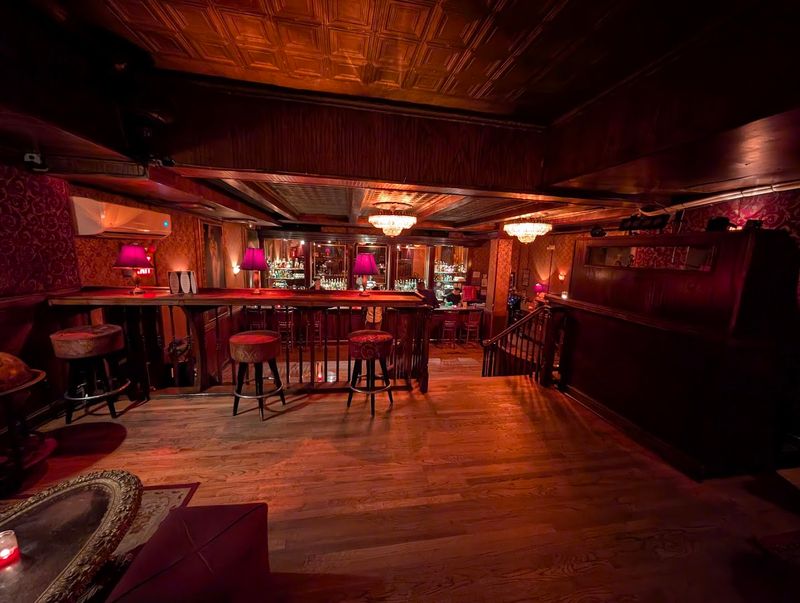
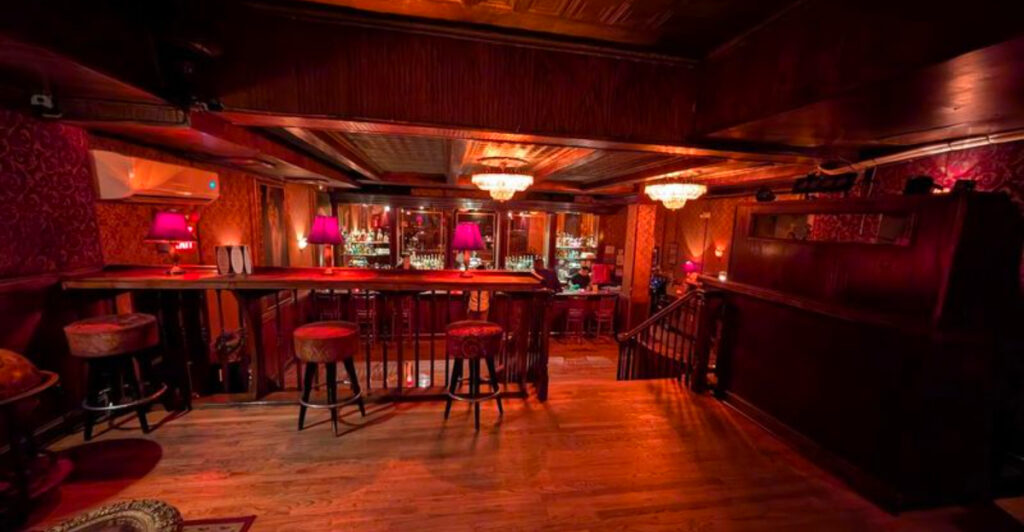
The Back Room has been operating on Norfolk Street on the Lower East Side since 2004, but its whole identity is built around an earlier era. The bar is designed to look and function like a Prohibition-era speakeasy, accessed through an unmarked entrance down a narrow alley behind what appears to be a toy store front.
Inside, the decor includes pressed tin ceilings, vintage lighting fixtures, and leather furniture arranged in a way that feels deliberately private. Non-alcoholic options are available alongside the full menu, and the bar’s signature move is serving drinks inside teacups, a nod to the Prohibition tactic of disguising beverages from authorities.
The Back Room keeps its hours and reservation details on its website, and the experience is more about the setting and the story than anything else. It is a well-executed concept that has maintained its appeal for two decades without feeling like a gimmick.
Share this story