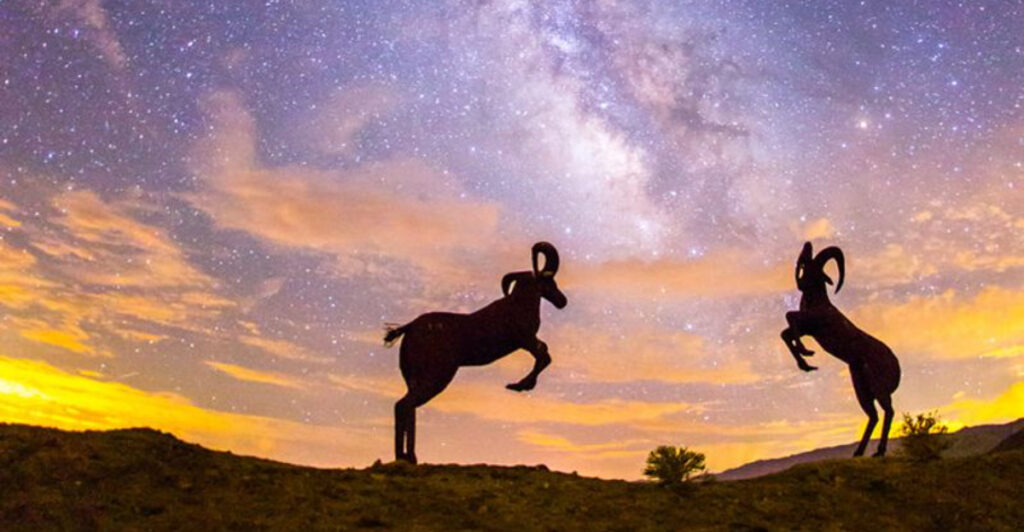
Not all nightlife involves dance floors and cocktails. Some of the best after-dark adventures in America happen under open skies, where stars, auroras, and even glowing bioluminescent bays steal the show.
Noctourism, the art of traveling specifically for nighttime experiences, is booming across the country. Whether you are chasing the Milky Way in the desert or watching a rocket light up a Florida coastline, these 15 American cities are ready to blow your mind after sunset.
Flagstaff, Arizona
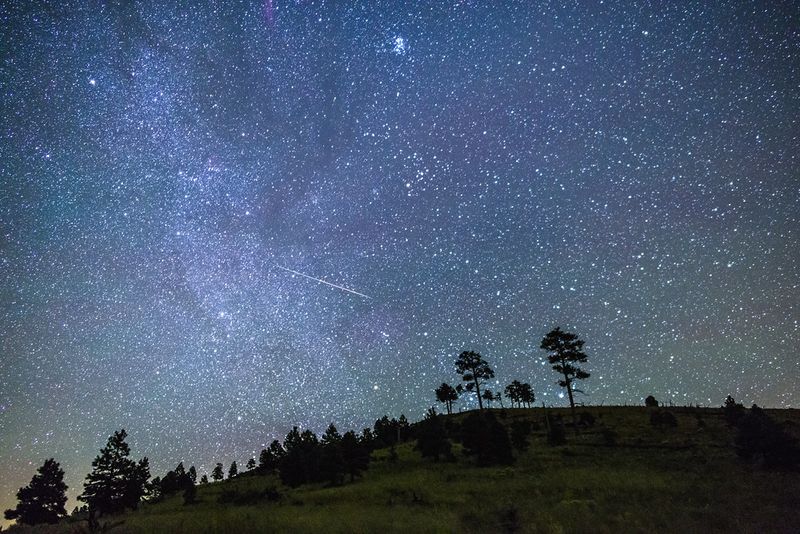
Flagstaff did not accidentally become the world’s first International Dark Sky Place. It earned that title the hard way, with strict lighting ordinances going back to 1958 and a city-wide commitment most places only talk about.
DarkSky International made it official, and Lowell Observatory has been welcoming stargazers ever since.
Lowell hosts regular events, public telescope nights, and special programs that make the sky feel surprisingly personal. I once looked through a telescope there and immediately understood why astronomers get obsessive about this stuff.
The stars are not just bright. They are crisp, layered, and almost absurdly close-looking.
Flagstaff also sits at 7,000 feet elevation, which cuts down atmospheric interference significantly. The combination of altitude, dark-sky policy, and world-class facilities puts it in a category of its own.
For anyone serious about noctourism, this is the starting point, full stop.
Tucson, Arizona
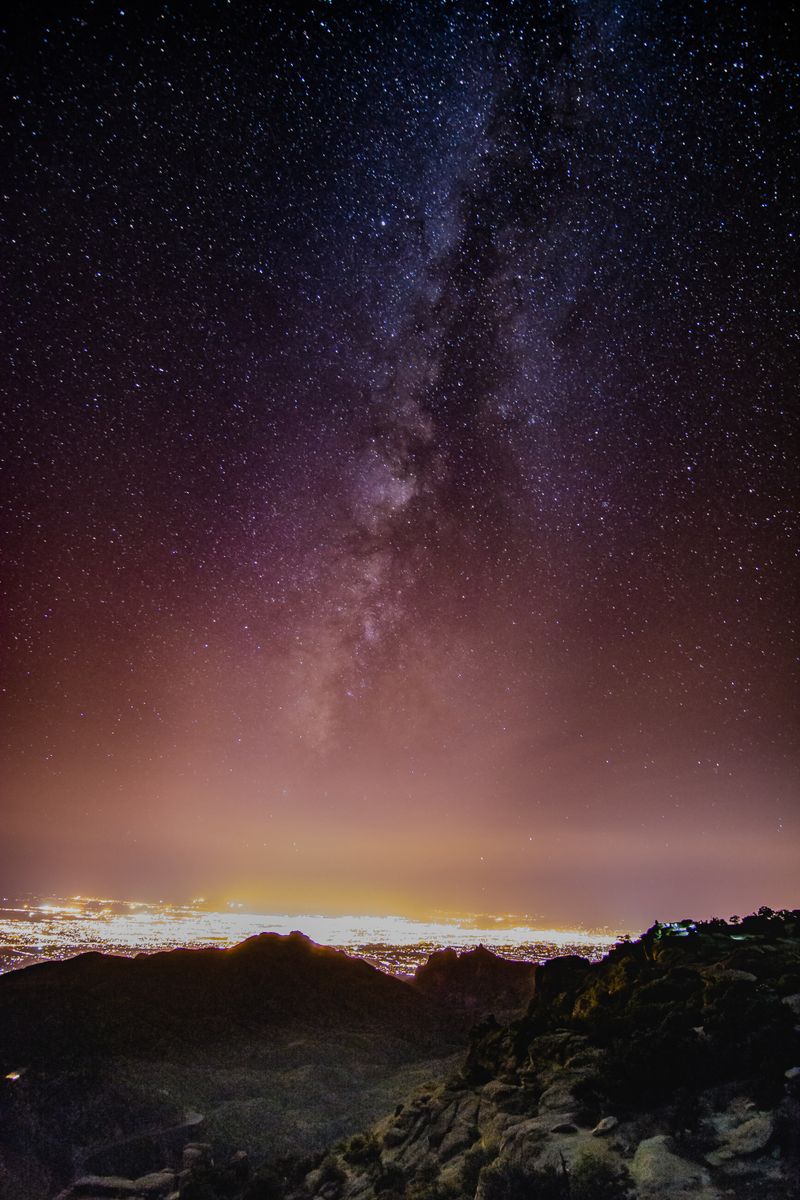
Tucson pulls off something rare. It is a real, functioning city of nearly a million people, and it still manages to protect its night skies well enough to earn serious dark-sky credentials.
That balance is genuinely hard to achieve, and Tucson has been working at it for decades.
DarkSky International recognizes the city’s long-standing outdoor lighting practices, which limit light pollution without making the city feel dim or unsafe. Nearby Saguaro National Park went even further, earning certification as an Urban Night Sky Place, which is a relatively new designation reserved for protected areas near cities.
The Kitt Peak National Observatory is also just an hour’s drive away, offering public programs and professional-grade viewing. Tucson essentially gives you urban convenience by day and genuine dark-sky access by night.
That combo is hard to beat anywhere in the country, let alone in a city with good tacos on every corner.
Sedona, Arizona
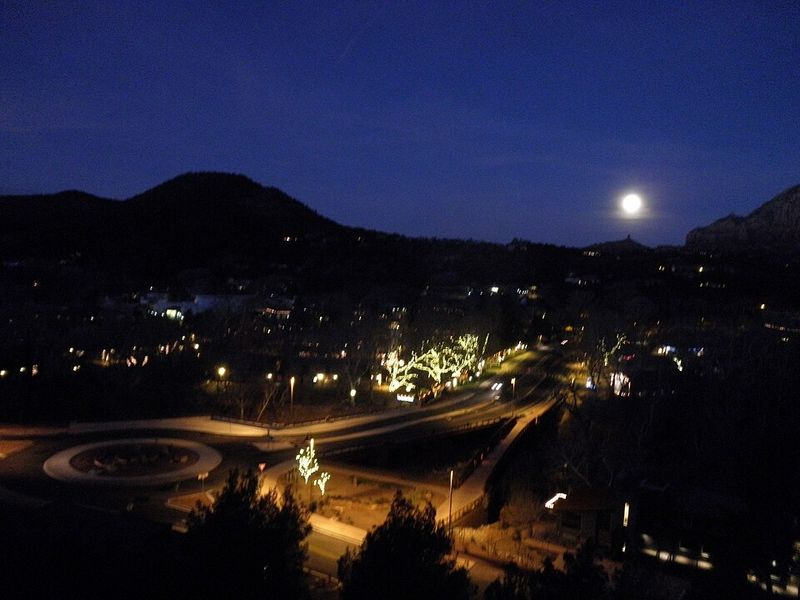
Most people know Sedona for its jaw-dropping red rock scenery and its reputation as a spiritual retreat. Fewer people know it is also a certified International Dark Sky Community, which gives the whole place a surprisingly legit astronomy angle.
That official designation means Sedona has taken real steps to reduce light pollution and protect nighttime visibility across the area. The result is a destination where you can spend the day hiking among towering sandstone formations and then spend the night watching the same landscape disappear into a star-drenched sky.
Several local tour operators run guided stargazing experiences specifically designed around the dark-sky certification, making it easy to show up without any equipment or expertise. The combination of dramatic scenery, warm desert air, and genuinely dark skies makes Sedona one of those rare places that looks equally spectacular at noon and midnight.
Honestly, midnight might have the edge.
Moab, Utah
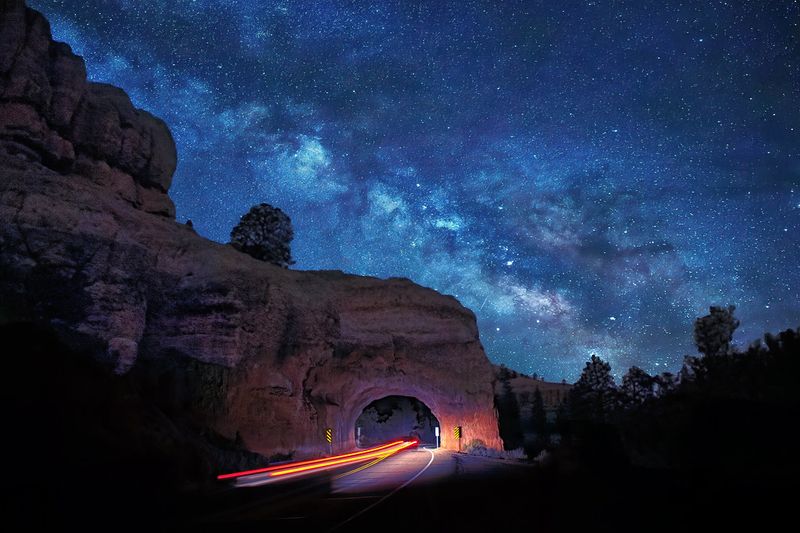
Moab has always attracted adventure seekers, but the city’s recent designation as an International Dark Sky Community added a whole new dimension to its appeal. DarkSky describes it as a destination for millions, surrounded by canyon country where the night sky becomes part of the landscape itself.
That description is not marketing fluff. Arches National Park and Canyonlands National Park both sit on Moab’s doorstep, and both offer night sky access that makes even casual stargazers stop mid-sentence.
The red canyon walls glow faintly under starlight in a way that feels almost theatrical.
Moab also has a solid infrastructure for noctourism, including guided night hikes, astrophotography tours, and ranger-led astronomy programs inside the parks. The town itself is lively enough to keep you entertained before the stars come out.
It is the kind of place where the daytime activities are excellent, but you will genuinely look forward to nightfall.
Borrego Springs, California
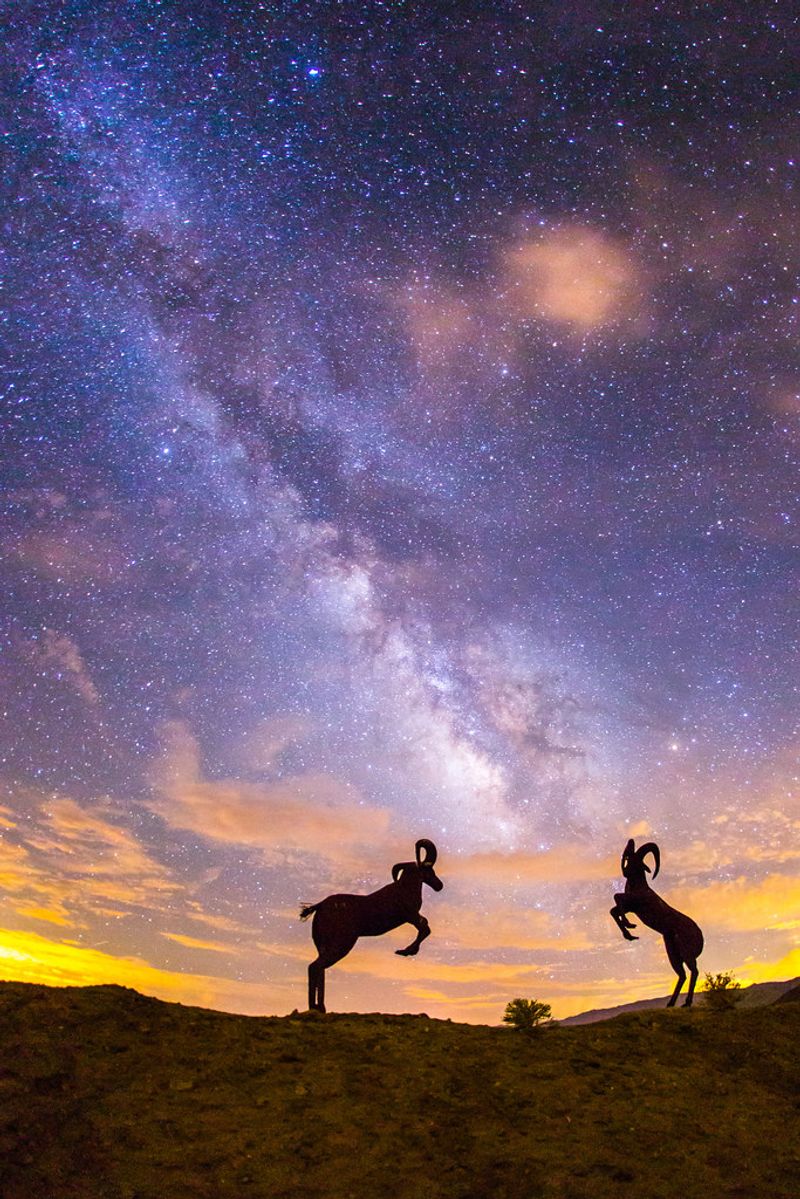
California does not have a great reputation for dark skies, and honestly, most of it deserves that reputation. Borrego Springs is the exception that makes the rule embarrassing.
It is a certified International Dark Sky Community sitting inside Anza-Borrego Desert State Park, which is also DarkSky-recognized.
The town has fewer than 4,000 residents, which helps keep the light pollution minimal. The surrounding desert amplifies the effect, giving you wide, flat horizons and skies that rival anything in Arizona or Utah on a clear night.
The Milky Way appears here like a physical structure, not just a faint smear.
Borrego Springs hosts the annual Dark Sky Festival each February, drawing astronomers, photographers, and curious travelers from across the state. The park’s size, over 600,000 acres, means you can find genuinely remote viewing spots without much effort.
For California residents desperate to escape the coastal glow, this is the closest thing to a dark-sky miracle within driving distance.
Bar Harbor, Maine
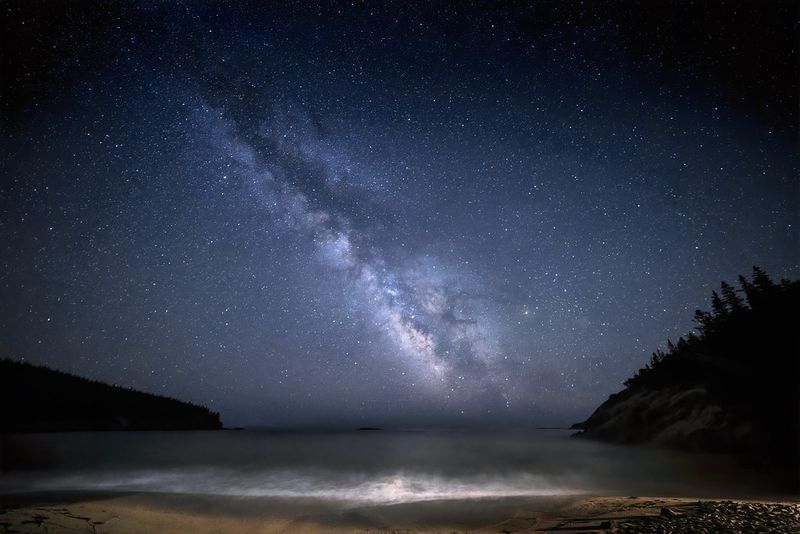
Bar Harbor is the kind of place where the lobster rolls get all the credit and the night sky gets almost none. That is a genuine injustice.
Acadia National Park, which wraps around the town like a very scenic hug, offers some of the darkest skies on the entire eastern seaboard.
Both the National Park Service and the local chamber of commerce back that claim up, making Bar Harbor one of the most credible East Coast options for a night-sky-focused trip. The park sits far enough from major urban centers that light pollution stays manageable, especially on the park’s eastern and southern edges.
Cadillac Mountain, the highest point on the eastern US coastline, is a particularly spectacular stargazing spot. Rangers run astronomy programs during the summer season, and the combination of ocean air, pine forest, and a genuinely dark sky creates an atmosphere that no planetarium can replicate.
The lobster rolls are still worth it too.
Fairbanks, Alaska
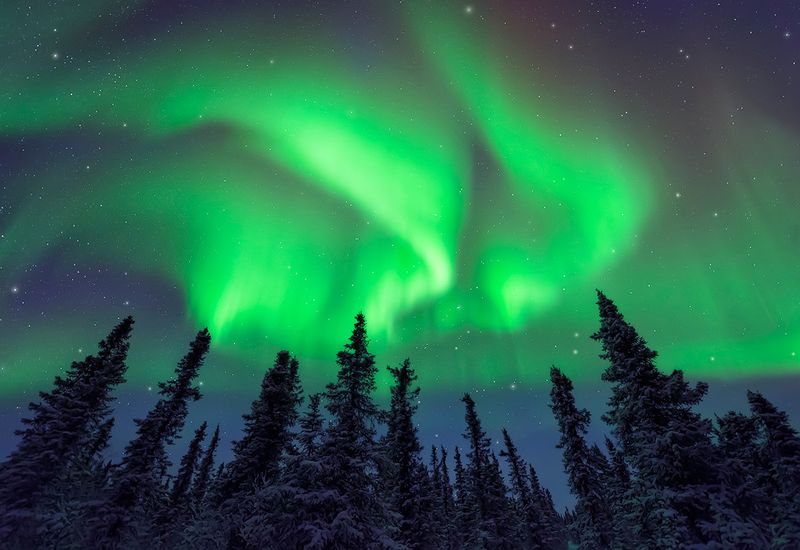
If your idea of noctourism involves curtains of green light rippling across a frozen sky, then Fairbanks is not just on the list. It is the list.
The city sits directly under the auroral oval, which is the ring-shaped zone where aurora activity is consistently strongest on Earth.
Explore Fairbanks confirms that aurora season runs from August 21 through April 21, giving travelers an unusually long window to plan a trip. On a clear night during peak season, the display can last for hours and shift through green, purple, and red in ways that genuinely defy description.
Fairbanks also offers aurora viewing packages, heated viewing domes, and guided tours that take the guesswork out of chasing the lights. The cold is real and worth preparing for, but the payoff is equally real.
I have seen photos from Fairbanks that looked obviously fake until I realized the camera does not lie that well. Go in winter.
Dress in layers. Look up.
Hilo, Hawaii
Hilo is not the flashiest city in Hawaii. It does not have the resort strip or the famous surf breaks.
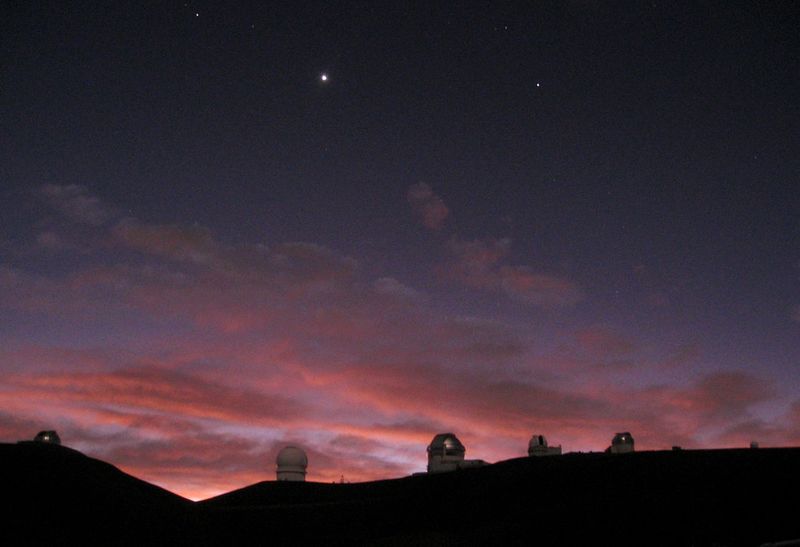
What it does have is a direct road to Maunakea, one of the best astronomical observatories on the planet, and that is a noctourism trump card almost no other city can match.
The University of Hawaii at Hilo confirms that the Maunakea Visitor Information Station is open daily from 9 a.m. to 9 p.m., giving travelers a structured, accessible entry point into the stargazing experience. The station sits at 9,200 feet, well below the summit but already above most of the cloud cover.
Rangers and volunteers set up telescopes at the station each evening, and the views through those instruments are genuinely world-class. The summit, at nearly 14,000 feet, hosts some of the most advanced telescopes in existence.
Hilo itself is a charming, affordable base with good food and a genuine local character that the resort towns tend to sand off.
Los Angeles, California
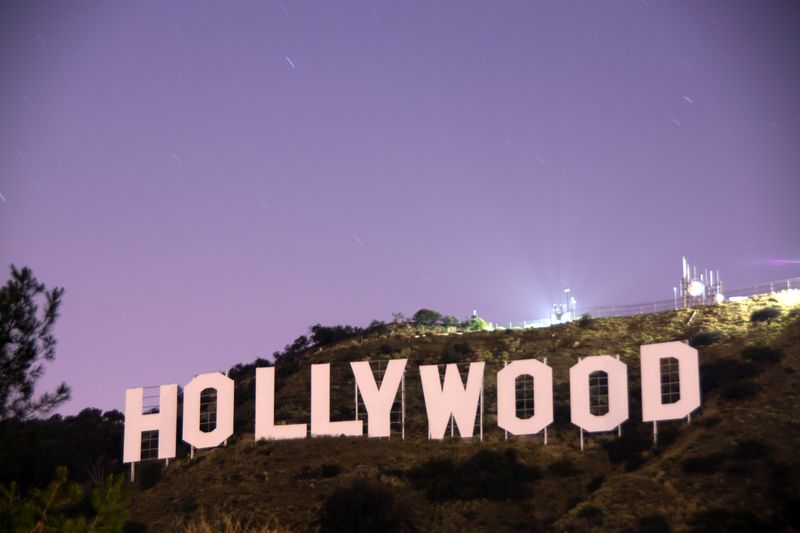
Los Angeles makes this list not despite its size but partly because of it. Griffith Observatory sits on a hillside above the city, open to the public, and currently operating with telescopes, planetarium shows, and spectacular nighttime views of both the sky above and the city below.
Yes, the skies over LA are light-polluted. Nobody is pretending otherwise.
But Griffith offers something different from a rural dark-sky site. It offers the experience of astronomy inside one of the world’s great cities, with exhibits, live telescope access, and a rooftop terrace that draws locals and tourists alike.
The planetarium shows are legitimately impressive, using modern projection systems to simulate skies that the actual LA atmosphere cannot provide. For families, first-timers, or anyone who wants astronomy without a four-hour drive into the desert, Griffith delivers consistently.
Plus, the city view from the terrace at midnight is its own kind of spectacle. LA knows how to put on a show, even accidentally.
Chicago, Illinois
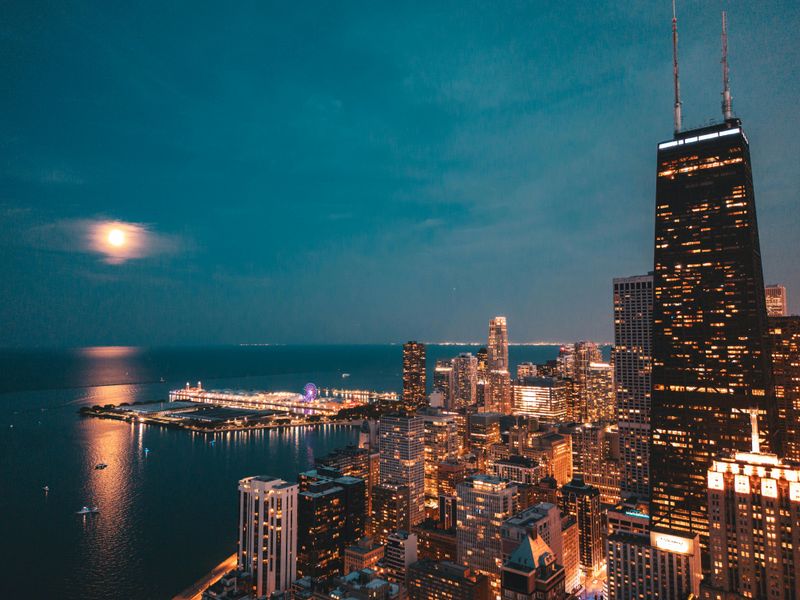
Chicago earned its place on this list through one very specific and very good reason: Adler Planetarium. It is the oldest planetarium in the Western Hemisphere, and it is still going strong with current evening programming, public telescope nights, and exhibits that manage to make astrophysics feel genuinely exciting.
The Adler sits on a lakefront peninsula, which means it offers some of the best unobstructed sky views available inside a major American city. On clear nights, the combination of Lake Michigan’s dark horizon and the planetarium’s public telescopes creates a surprisingly effective urban stargazing setup.
The city leans into its astronomy heritage more than most people expect. Adler hosts special events tied to eclipses, meteor showers, and planetary alignments, often drawing crowds that prove Chicago takes its science seriously.
For a city better known for deep-dish pizza and iconic architecture, the night sky programming is a genuinely pleasant surprise. The pizza is still better, but the stars are close.
New York City, New York
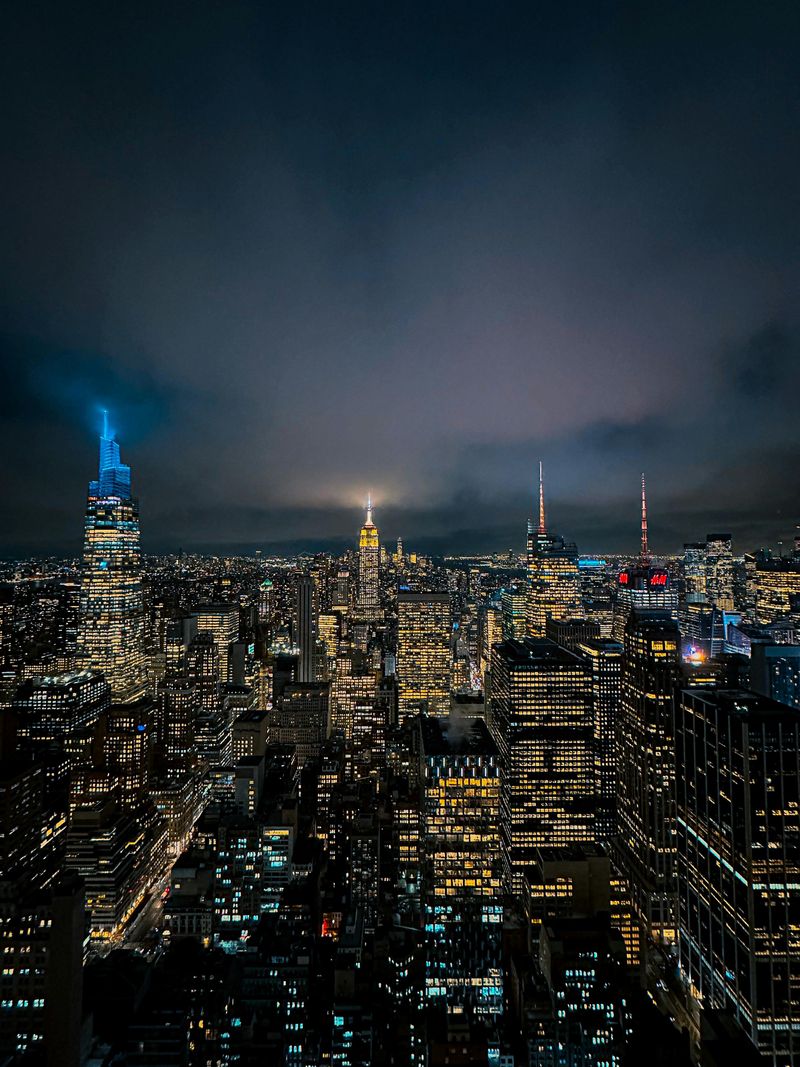
New York City has almost no usable night sky. The light pollution is legendary, and on most nights the only stars visible are planes on approach to JFK.
And yet, the city still makes this list, because the Hayden Planetarium at the American Museum of Natural History is one of the best astronomy facilities in the world.
The Rose Center for Earth and Space, which houses the Hayden, stays open late on Friday evenings, giving visitors a proper after-dark astronomy experience inside a building that looks like it was designed by someone who really wanted to live in space. The programming is cutting-edge and frequently updated.
Shows at the Hayden use a state-of-the-art digital projection system that renders the universe with a level of detail most observatories cannot match with actual telescopes. The irony of New York hosting world-class astronomy is not lost on anyone.
But if you are stuck in the city and the stars are hiding, the Hayden is the next best thing by a wide margin.
Austin, Texas
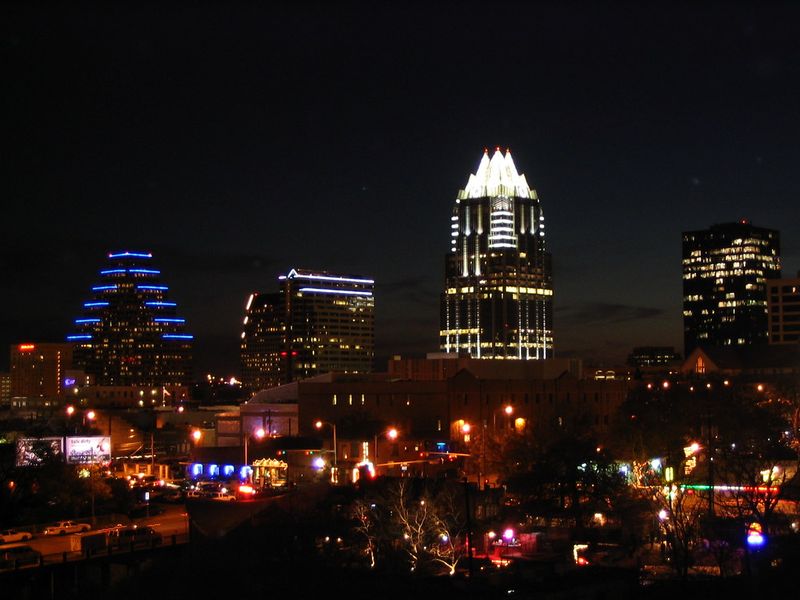
Austin has a reputation for doing things its own way, and its approach to public astronomy fits that perfectly. The University of Texas astronomy department sponsors free public star parties every Wednesday night while the university is in session, which is one of the most generous recurring public science programs in the country.
These are not watered-down events for children. They are real astronomy nights with proper telescopes, faculty involvement, and a rotating focus on whatever happens to be interesting in the current sky.
Planets, double stars, nebulae, and galaxies all get their turn.
The fact that it is free and recurring makes Austin a standout among cities where astronomy usually costs money or requires a long drive. You can spend the evening on Sixth Street, catch some live music, and then head to campus for a legitimately good telescope session before midnight.
That kind of variety is exactly what makes Austin one of the most fun noctourism cities in the country.
Cincinnati, Ohio
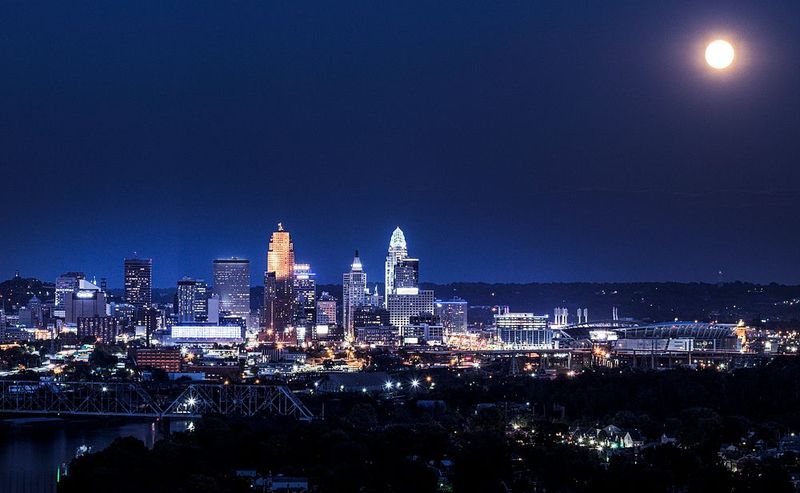
Cincinnati does not usually come up in conversations about great American astronomy cities, which is exactly why it belongs on this list. The Cincinnati Observatory is one of the oldest public observatories in the United States, and it is still actively running regular Astronomy Evening programs built around presentations and telescope viewing.
The observatory sits on Mount Lookout, a quiet hilltop neighborhood that provides enough elevation to clear some of the urban haze. The programs are designed for general audiences, meaning you do not need a physics degree to enjoy them.
The staff explains what you are seeing in plain language, which makes a real difference.
Cincinnati also benefits from being genuinely underrated. The crowds that flood into more famous astronomy destinations are not here, which means you actually get time at the telescope without elbowing past twelve other people.
For Midwest residents looking for a quality noctourism experience close to home, Cincinnati is a legitimately excellent option hiding in plain sight.
Portland, Oregon
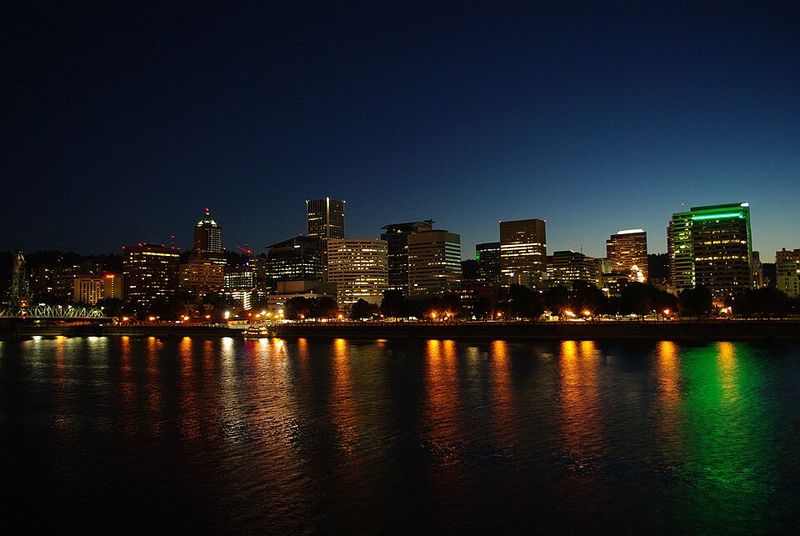
Portland is the first city on this list where the weather actively works against you. The Pacific Northwest is not exactly famous for clear skies, and anyone who has spent a November in Portland knows exactly what that means.
But OMSI’s Kendall Planetarium does not need clear skies to deliver a solid astronomy experience.
The Omsi Science Museum is currently promoting planetarium programming tied to visible planets, constellations, meteor showers, and the moon. The shows are updated regularly to reflect what is actually happening in the current sky, which keeps the content feeling relevant rather than canned.
Portland also has a growing community of amateur astronomers who organize viewing events on clear nights outside the city, where the coastal range provides some protection from urban glow. The noctourism scene here is softer than in the desert Southwest, but it is real, accessible, and perfectly matched to Portland’s general vibe of being enthusiastically nerdy about things that matter.
Stars definitely qualify.
Fredericksburg, Texas
Fredericksburg has spent years being known primarily for its German heritage, its wine trail, and its peach season. Those are all excellent reasons to visit.
But the town quietly added another credential that most visitors do not even know about: International Dark Sky Community status.
That designation puts Fredericksburg in the same category as Sedona and Moab, which is genuinely impressive for a small Texas Hill Country town. The surrounding landscape is flat enough and rural enough to keep light pollution minimal, and the skies on a clear night are legitimately dark by Texas standards.
Several local ranches and observatories offer guided stargazing sessions, often combined with wine tastings or dinner, which is a combination I fully endorse. The Enchanted Rock State Natural Area is also nearby, providing a dramatic granite dome that serves as an excellent elevated viewing platform.
Fredericksburg proves that noctourism and wine tourism are not mutually exclusive. In fact, they pair rather well.
Share this story