Germany is a country where history practically jumps out at you around every corner. From soaring Gothic cathedrals to fairy-tale castles perched on rocky cliffs, the country holds centuries of stories just waiting to be explored.
Whether you love medieval towns, royal palaces, or ancient Roman ruins, Germany has something that will genuinely blow your mind. Pack your curiosity and comfortable shoes, because these 15 historic gems are absolutely worth the trip.
Neuschwanstein Castle, Bavaria
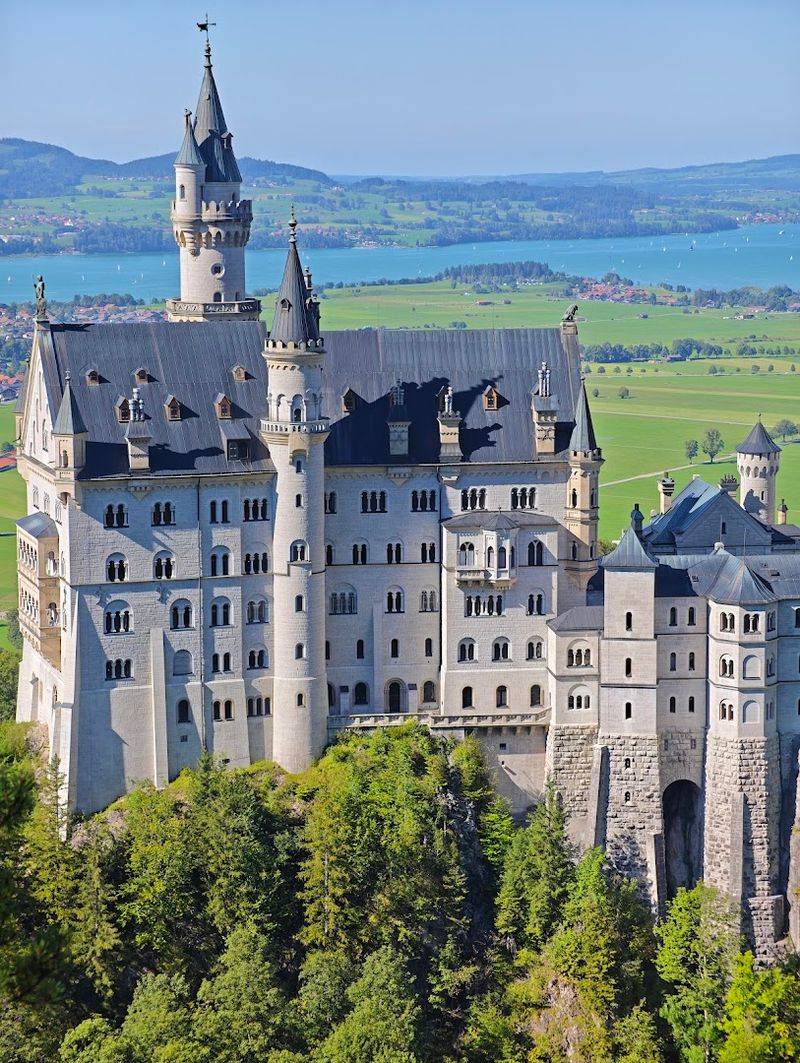
If a castle ever looked like it was designed by someone who had too much imagination and a royal budget to match, it is Neuschwanstein. King Ludwig II commissioned this breathtaking Bavarian fortress in 1869, pouring his love of medieval legend and opera into every tower and turret.
Walt Disney was so inspired by its silhouette that he based Sleeping Beauty Castle on it.
The interiors are just as dramatic as the exterior. Rooms are decorated with elaborate murals depicting scenes from German mythology, hand-carved wooden furniture, and gilded ceilings that catch every bit of light.
Ludwig lived here for only 172 days before his mysterious death in 1886.
Visiting Neuschwanstein means booking tickets well in advance, especially during summer. The nearby Marienbrucke bridge offers the most iconic view of the castle hanging above a gorge.
Guided tours run regularly and last around 35 minutes inside. The surrounding Alpine scenery alone makes the journey completely worthwhile for any history lover.
Cologne Cathedral, Cologne
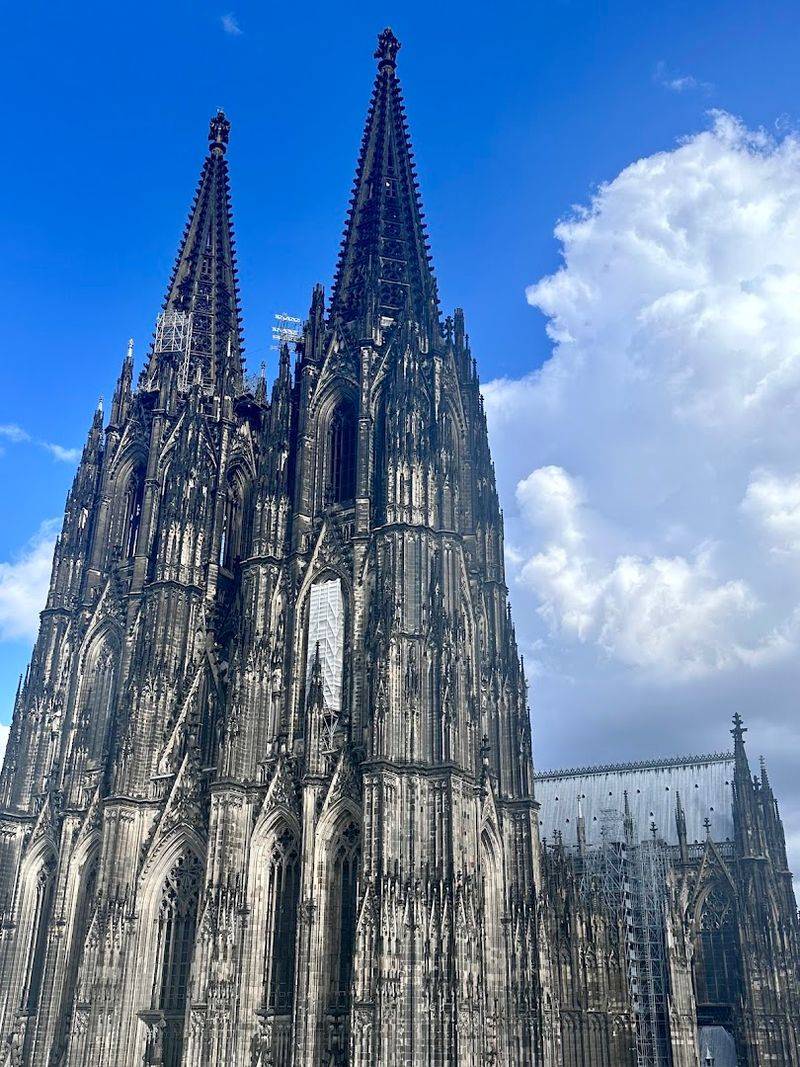
Standing beneath the twin spires of Cologne Cathedral for the first time genuinely makes your neck hurt from looking up. At 157 meters tall, this Gothic giant took over 600 years to complete, with construction starting in 1248 and finishing in 1880.
That makes it one of the longest building projects in human history.
The cathedral houses the Shrine of the Three Kings, a gold reliquary said to contain the remains of the Biblical Magi. Pilgrims have been traveling here for centuries just to see it.
The stained glass windows are extraordinary, including a modern one designed by artist Gerhard Richter that fills the south transept with brilliant color.
Climbing the 533 steps to the top of the south tower rewards visitors with sweeping views across Cologne and the Rhine River. The cathedral survived World War II bombing raids largely intact, which many locals consider nothing short of miraculous.
UNESCO listed it as a World Heritage Site in 1996. Arriving early in the morning means you will have quieter moments to appreciate the sheer scale of this remarkable structure.
Heidelberg Castle, Heidelberg
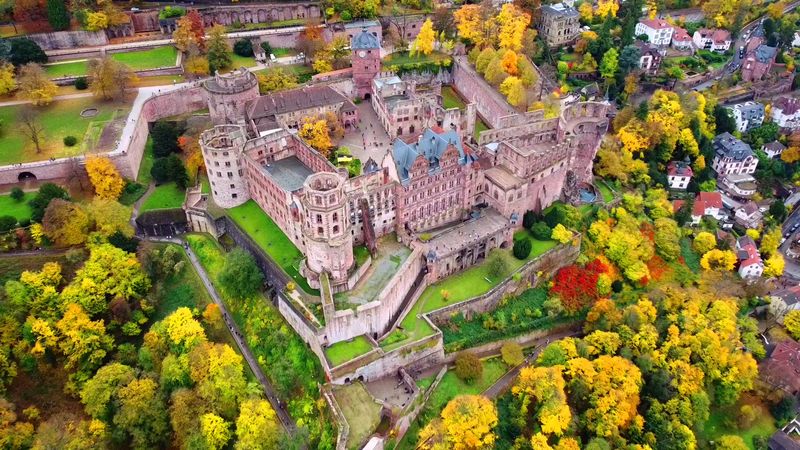
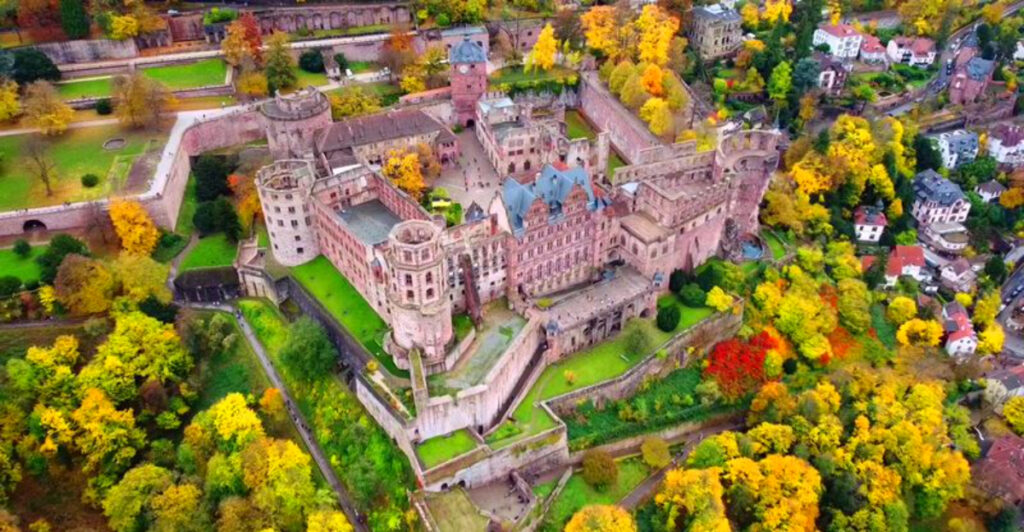
Ruins can be just as powerful as fully intact buildings, and Heidelberg Castle proves that point spectacularly. Perched 80 meters above the Neckar River, this partially destroyed Renaissance fortress has been inspiring artists, poets, and Romantic-era travelers since the 18th century.
Lord Byron and Mark Twain both wrote about its haunting beauty.
The castle was blown up twice by French forces in the 1690s, leaving behind dramatic broken towers and collapsed walls that feel almost theatrical against the sky. One section of the outer wall was split so cleanly that visitors can walk right through the gap.
Inside, the German Pharmacy Museum is a surprisingly fascinating stop.
The Great Barrel inside the castle is worth seeking out. It holds 221,726 liters of wine and is considered one of the world’s largest wine barrels.
A small wooden figure called Perkeo supposedly guarded it and reportedly drank extraordinary amounts of wine daily. The funicular railway connecting the old town to the castle makes access easy.
Evening visits during summer offer magical views of Heidelberg lit up below the hillside.
Brandenburg Gate, Berlin
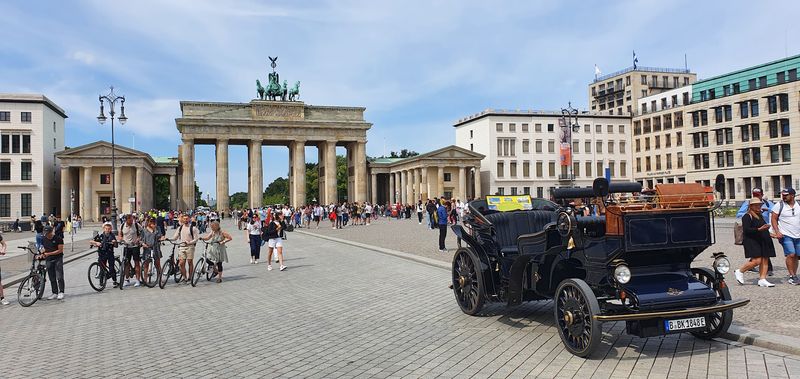
Few monuments carry as much emotional weight as the Brandenburg Gate. Built between 1788 and 1791 by Prussian King Frederick William II, this neoclassical sandstone gateway was once a symbol of division when the Berlin Wall ran directly beside it.
Today it stands as a powerful reminder of reunification and resilience.
The gate was designed by Carl Gotthard Langhans and features twelve Doric columns supporting a massive entablature. On top sits the Quadriga, a chariot pulled by four horses and driven by the goddess of victory.
Napoleon famously stole the Quadriga and took it to Paris in 1806 before it was returned eight years later.
Pariser Platz, the square surrounding the gate, buzzes with life year-round. Street performers, tourists, and locals gather here daily, especially during major events like New Year’s Eve celebrations.
The gate looks equally stunning at sunrise when the crowds are thinner and the light is warm. Nearby Holocaust Memorial and the Reichstag building make this area one of Berlin’s most historically rich neighborhoods, perfect for a full morning of exploration.
Bamberg Old Town, Bavaria
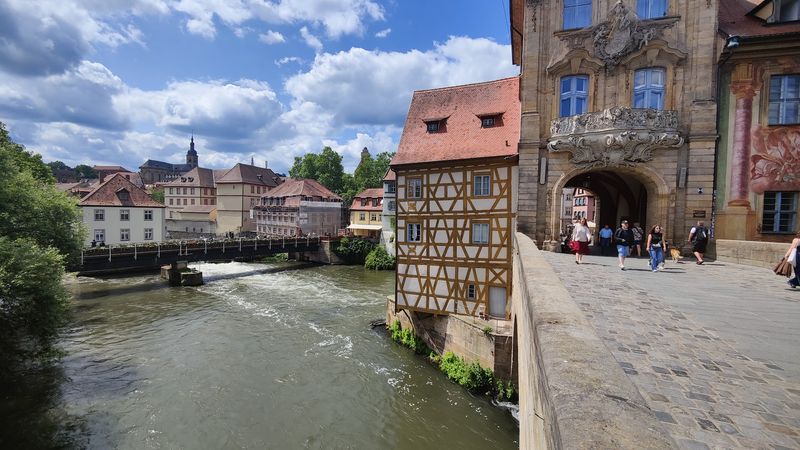
Bamberg is the kind of place that makes you wonder why it is not more famous than Paris. This Bavarian gem sits across seven hills, each topped with a church, earning it the nickname ‘Franconian Rome.’ Its medieval center is so well-preserved that UNESCO added it to the World Heritage list in 1993.
The Old Town Hall is one of the most photographed buildings in Bavaria. It was literally built on an artificial island in the Regnitz River because the bishop and the townspeople could not agree on where to place it.
That compromise led to one of Germany’s most charming architectural oddities.
Bamberg is also Germany’s capital of smoked beer, called Rauchbier, which tastes smoky and rich in a way that surprises first-time visitors. The town has nine working breweries, an impressive number for a city of just 78,000 people.
Strolling through the narrow lanes of Klein Venedig, or Little Venice, where fishermen’s houses line the riverbank, feels genuinely timeless. Spring and early autumn offer the most pleasant weather for exploring Bamberg’s winding streets and outdoor cafe culture.
Berlin Wall Memorial, Berlin
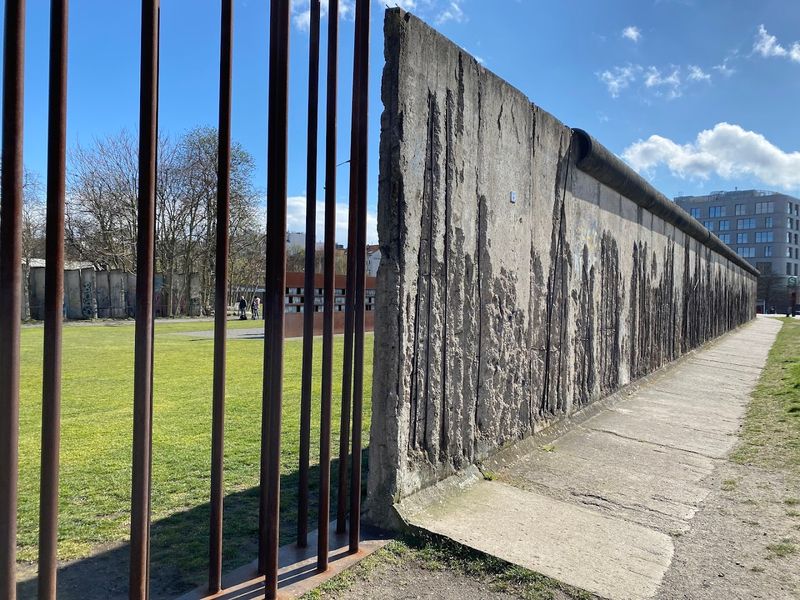
There is a particular stillness at the Berlin Wall Memorial that you do not find at most tourist sites. This is not just a piece of concrete history.
It is a place where real people lost their lives trying to cross a border that divided families, neighborhoods, and an entire nation for 28 years.
Located along Bernauer Strasse, the memorial preserves a 1.4-kilometer section of the original border strip, complete with a watchtower, signal fence, and the so-called death strip between the two walls. The Documentation Center nearby explains the full history of the wall through photographs, personal testimonies, and detailed exhibits.
More than 140 people died attempting to cross the Berlin Wall between 1961 and 1989. Memorial crosses and plaques honor many of them by name.
The open-air exhibition is free to visit and available year-round, making it one of Berlin’s most accessible historic sites. Visiting on a grey, cloudy day somehow makes the experience feel more appropriate.
The memorial sits about a 10-minute walk from Nordbahnhof station, and audio guides are available in multiple languages for deeper context.
Rothenburg ob der Tauber, Bavaria
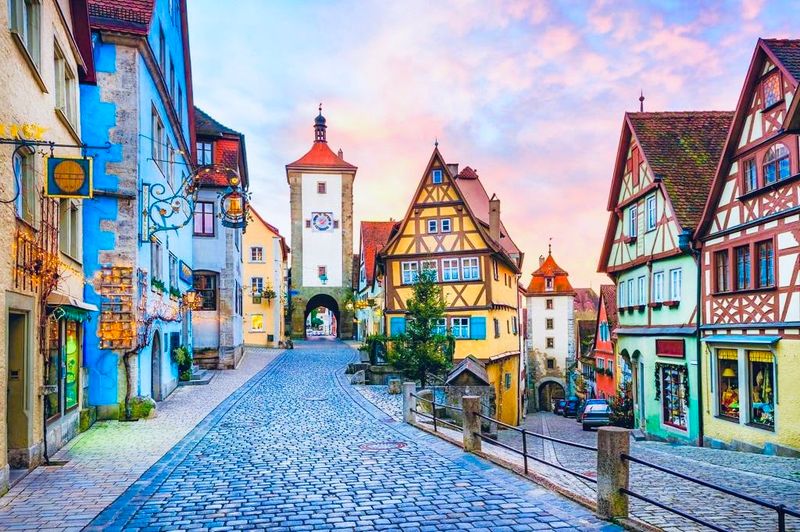
Walking through Rothenburg ob der Tauber feels like stepping directly into a medieval painting that somehow stayed fresh. The town’s walls, towers, and half-timbered houses survived World War II almost entirely intact, making it one of the most authentically preserved medieval towns anywhere in Europe.
Photographers absolutely love this place.
The most photographed spot is the Plonlein, a small junction where two towers and a crooked yellow house create a scene so picturesque it almost looks fake. The town has maintained its medieval appearance so carefully that it has been used as a filming location for numerous historical movies and television productions.
Rothenburg sits along the Romantic Road, a famous tourist route through Bavaria connecting historic towns and castles. The Christmas Market here, called the Reiterlesmarkt, runs from late November and draws visitors from across Europe.
Even outside the holiday season, the Medieval Crime Museum offers a genuinely interesting and slightly dark look at historical punishments and justice systems. Staying overnight lets you experience the town after day-trippers leave, when the cobblestone streets become wonderfully quiet and atmospheric under the soft glow of old-fashioned street lamps.
Sanssouci Palace, Potsdam
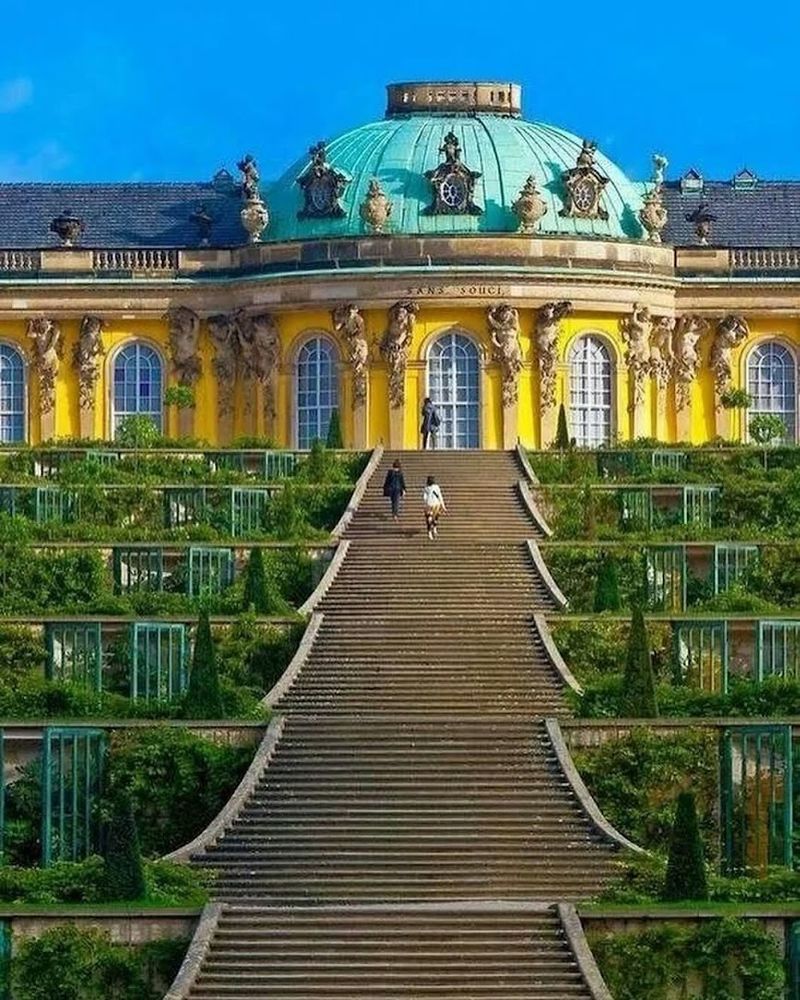
King Frederick the Great built Sanssouci as his personal escape from royal duties, and the name itself tells you exactly what he had in mind. Sanssouci means ‘without worries’ in French, and the palace has a lighter, more intimate feel than most royal residences of its era.
It is smaller than you might expect, which is precisely the point.
Completed in 1747, the rococo palace sits atop a series of terraced vineyard gardens that cascade down a hillside in Potsdam. Frederick designed much of the layout himself and reportedly preferred this retreat to his grand Berlin palaces.
He is buried in a simple grave on the terrace, just as he requested.
The surrounding Sanssouci Park covers 290 hectares and contains several additional palaces, including the much larger New Palace built to impress foreign visitors. UNESCO recognized the entire palace and park complex as a World Heritage Site in 1990.
Potsdam sits just 30 minutes by train from central Berlin, making it an easy and rewarding day trip. Spring visits are especially beautiful when the gardens bloom and the fountains are switched on for the season.
Roman Ruins of Trier, Trier
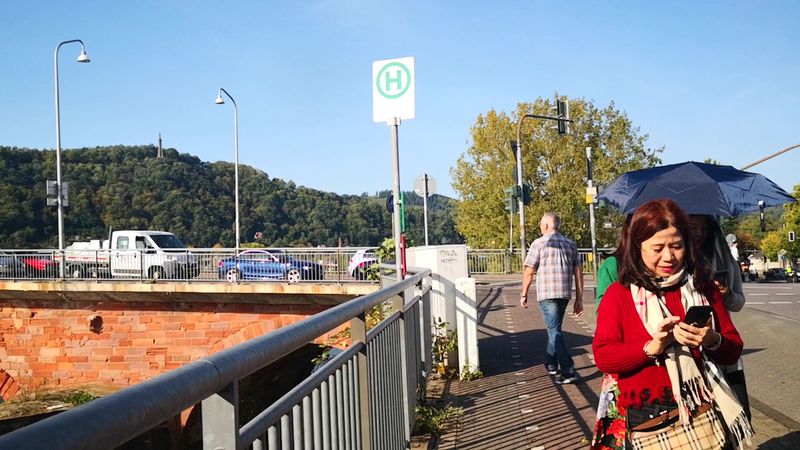
Trier has a bold claim: it is the oldest city in Germany. Founded by the Romans around 16 BC under Emperor Augustus, the city served as one of the most important administrative centers of the entire Roman Empire.
At its peak, Trier was home to over 80,000 people, which was enormous for the ancient world.
The Porta Nigra, or Black Gate, is the most dramatic surviving Roman structure. This massive city gate was built around 180 AD and stands four stories tall, constructed without any mortar.
The stones were held together purely by iron clamps, and the structure has survived remarkably well considering its age of nearly 2,000 years.
Beyond the Porta Nigra, Trier contains Roman baths, an amphitheater that once held 20,000 spectators, and the Aula Palatina, a massive brick basilica that served as Emperor Constantine’s throne room. Six UNESCO World Heritage Sites are clustered within the city, making it one of Europe’s most concentrated areas of Roman archaeology.
The Rheinisches Landesmuseum holds an outstanding collection of Roman artifacts found locally, including extraordinary stone carvings and mosaic floors that reveal daily Roman life in vivid detail.
Quedlinburg, Saxony-Anhalt
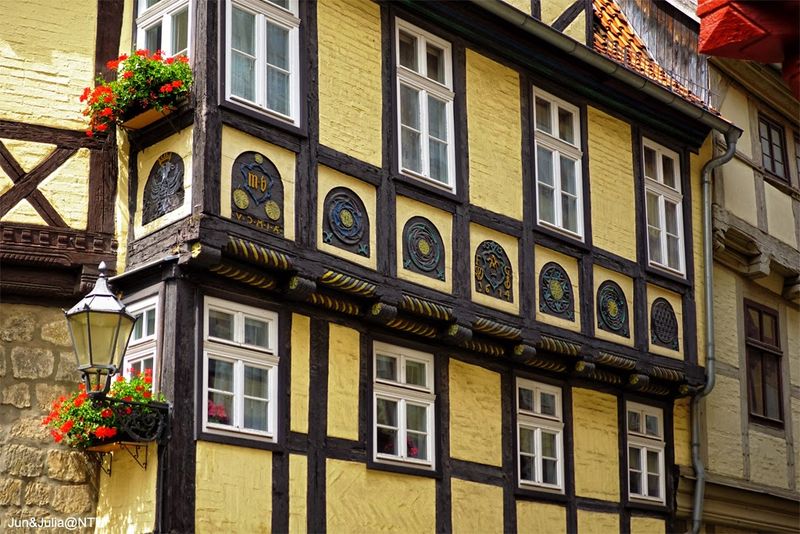
Quedlinburg is the kind of town that architecture students dream about. Over 1,300 timber-framed buildings survive within this compact UNESCO World Heritage town in Saxony-Anhalt, ranging from simple medieval structures to elaborate Renaissance and Baroque examples.
No other town in Germany has this density of historic half-timbered architecture.
The town was founded in the 10th century and served as a royal residence under the Ottonian dynasty, the first ruling family of the Holy Roman Empire. King Henry the Fowler and his wife Mathilde are both buried in the collegiate church that crowns the rocky hilltop above the town.
Their graves remain intact and are still visited today.
Walking through Quedlinburg requires no particular plan. The streets twist and turn in ways that reward wandering, with surprising architectural details appearing on nearly every building.
The town largely escaped wartime destruction, which is why so much of its medieval fabric survives intact. The market square hosts seasonal events throughout the year, and several excellent local restaurants serve hearty regional cuisine.
Quedlinburg sits about an hour’s drive from Magdeburg and makes a perfect stop along a broader Saxony-Anhalt road trip through central Germany.
Aachen Cathedral, Aachen
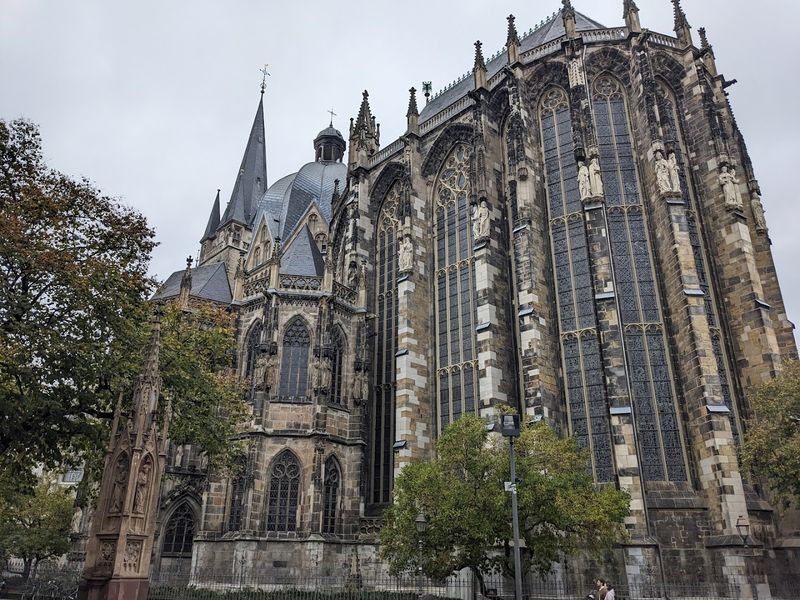
Charlemagne built Aachen Cathedral in the 8th century, and it became the most important church in the entire Carolingian Empire. Thirty-one German kings were crowned here between 936 and 1531, making this octagonal chapel arguably the most politically significant religious building in medieval European history.
That is quite a resume for a single church.
The original Carolingian chapel, completed around 805 AD, still forms the heart of the cathedral. Its design was influenced by Byzantine architecture, particularly the Basilica of San Vitale in Ravenna, which Charlemagne greatly admired.
The golden mosaics covering the dome ceiling are breathtaking and were largely restored in the 19th century.
Charlemagne’s throne, where German kings sat during coronation ceremonies for centuries, is still inside the cathedral and can be viewed during tours. His remains are housed in an elaborate golden reliquary called the Karlsschrein, which is brought out for public display every seven years.
Aachen Cathedral became Germany’s very first UNESCO World Heritage Site in 1978. The cathedral treasury next door houses one of the finest collections of medieval religious art in Europe, including ivory carvings, golden crosses, and ancient manuscripts that are genuinely priceless.
Rhine Gorge Castles, Rhine Valley
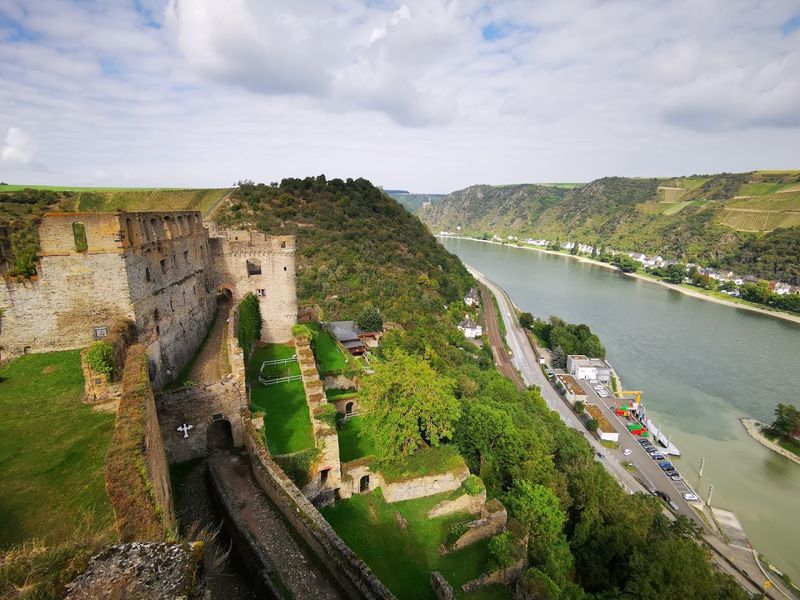
Somewhere between Koblenz and Rudesheim, the Rhine River squeezes through a narrow gorge lined with steep vineyard slopes, rocky cliffs, and more medieval castles per kilometer than almost anywhere else on earth. Counting them all from a river cruise becomes a surprisingly competitive activity among passengers on deck.
The Middle Rhine Gorge stretches for about 65 kilometers and contains over 40 castles and castle ruins, most built between the 11th and 13th centuries. These fortresses were constructed by powerful lords to control river traffic and collect tolls from passing merchants.
Trade along the Rhine was extremely lucrative, and whoever held the high ground held the money.
The Lorelei rock is one of the gorge’s most famous landmarks, a 132-meter slate cliff that inspired a legendary story about a siren luring sailors to their doom. The legend became one of Germany’s most beloved folk tales, immortalized in a poem by Heinrich Heine.
UNESCO designated the Rhine Gorge a World Heritage Site in 2002. Taking a boat cruise through the gorge remains the most atmospheric way to experience the scenery, and several operators run daily trips from both Koblenz and Rudesheim between spring and autumn.
Naumburg Cathedral, Saxony-Anhalt
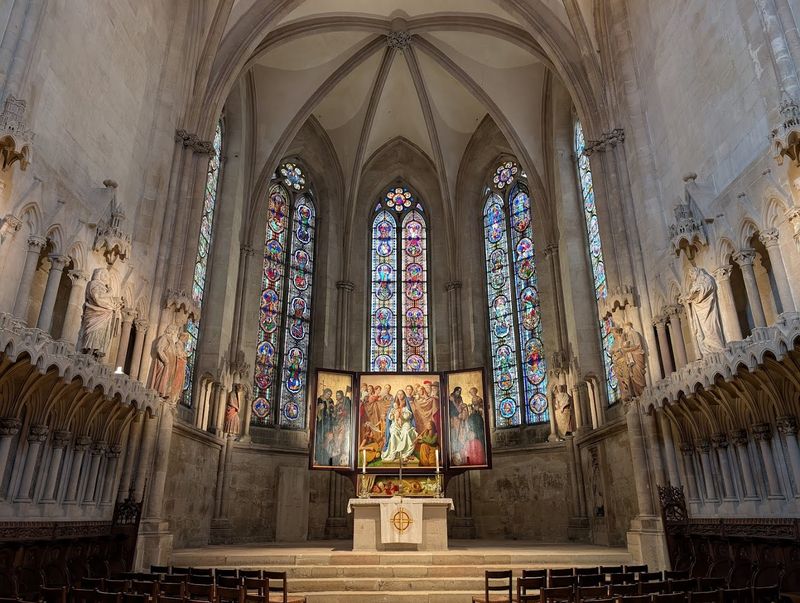
Art historians get genuinely excited about Naumburg Cathedral, and once you see why, you will too. The cathedral’s west choir contains twelve life-sized donor statues carved in the 13th century by an artist known only as the Naumburg Master.
These figures are considered among the greatest works of medieval sculpture in Europe, remarkable for their emotional realism and individual personalities.
The statue of Uta von Ballenstedt has become especially iconic. Her subtle, thoughtful expression and elegant pose have captivated visitors for centuries, and she has appeared in countless art history books worldwide.
Some scholars believe her likeness even influenced the character design of the Evil Queen in Disney’s Snow White, though this remains a popular theory rather than a confirmed fact.
The cathedral itself blends late Romanesque and early Gothic styles in a way that reflects the architectural transition happening across Europe during the 1200s. Four towers mark the corners of the building, and the interior contains beautifully carved stone screens and stained glass windows.
UNESCO added Naumburg Cathedral to the World Heritage list in 2018, recognizing its extraordinary artistic and architectural significance. The town of Naumburg itself is charming and worth exploring beyond the cathedral grounds.
Wartburg Castle, Thuringia
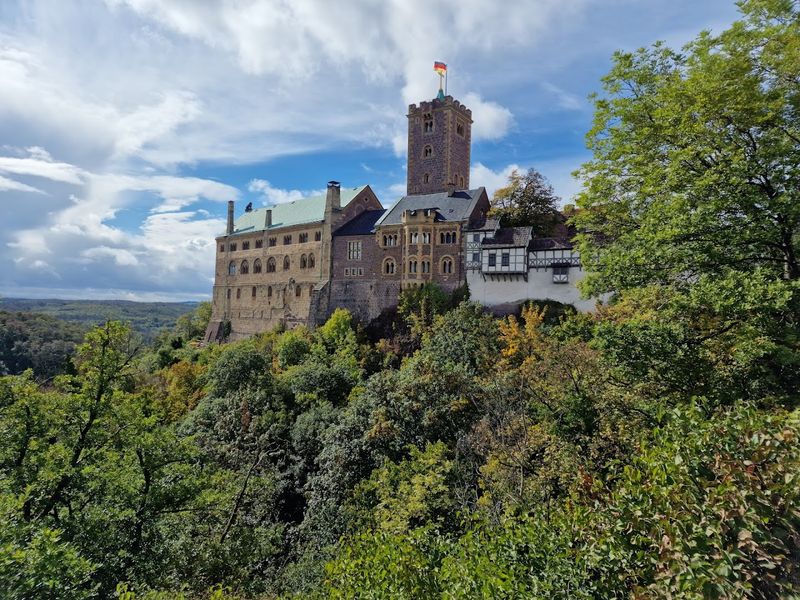
Martin Luther changed the course of Western history while hiding in a small room at Wartburg Castle in 1521. Declared a heretic by the Holy Roman Emperor and needing somewhere safe to lay low, Luther spent ten months translating the New Testament from Greek into German.
That translation helped shape the modern German language itself.
The castle sits on a wooded hilltop above the town of Eisenach in Thuringia and dates back to 1067. It is one of the best-preserved medieval fortresses in Germany and feels genuinely ancient when you walk its stone corridors.
Luther’s room, called the Lutherstube, is preserved as a historic site and still draws visitors who want to stand where that translation happened.
Wartburg also inspired composer Richard Wagner, who set his opera Tannhauser partly within its walls. The castle hosted the legendary Wartburg Song Contest of 1207, a real historical singing competition between medieval poets that Wagner dramatized.
UNESCO recognized Wartburg as a World Heritage Site in 1999. The surrounding Thuringian Forest offers excellent hiking trails, and the view from the castle battlements across the green valley below is genuinely spectacular regardless of what season you visit.
Meersburg Castle, Lake Constance
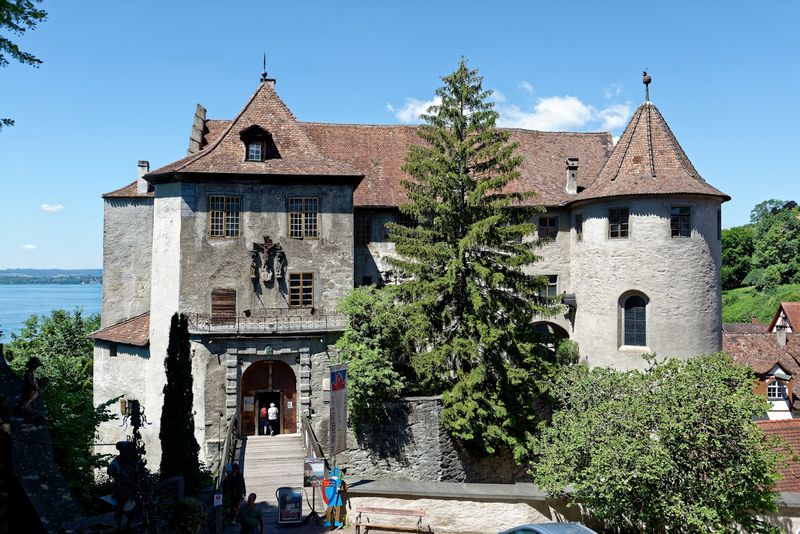
Meersburg Castle has been occupied almost continuously since the 7th century, making it one of the oldest inhabited castles in the entire German-speaking world. Sitting above the sparkling blue waters of Lake Constance near the Swiss and Austrian borders, it combines genuine medieval atmosphere with one of the most scenic lake settings in southern Germany.
The castle’s oldest section, the Dagobert Tower, reportedly dates to 628 AD, though historians debate the exact founding date. What is undeniable is the layered sense of history inside, with rooms furnished across different eras showing how life in the castle evolved over more than a thousand years.
The great hall, dungeon, and knights’ quarters are all accessible during guided tours.
German poet Annette von Droste-Hulshoff lived at Meersburg Castle in the 19th century and drew inspiration from the surrounding landscape for her writing. She is considered one of the greatest German-language poets of her era, and her former rooms are preserved as a small museum.
The town of Meersburg below the castle is equally charming, with steep lanes, wine taverns, and ferry connections to the Swiss side of Lake Constance. Visiting in late spring when the surrounding vineyards are lush and green makes the scenery especially memorable.
Share this story