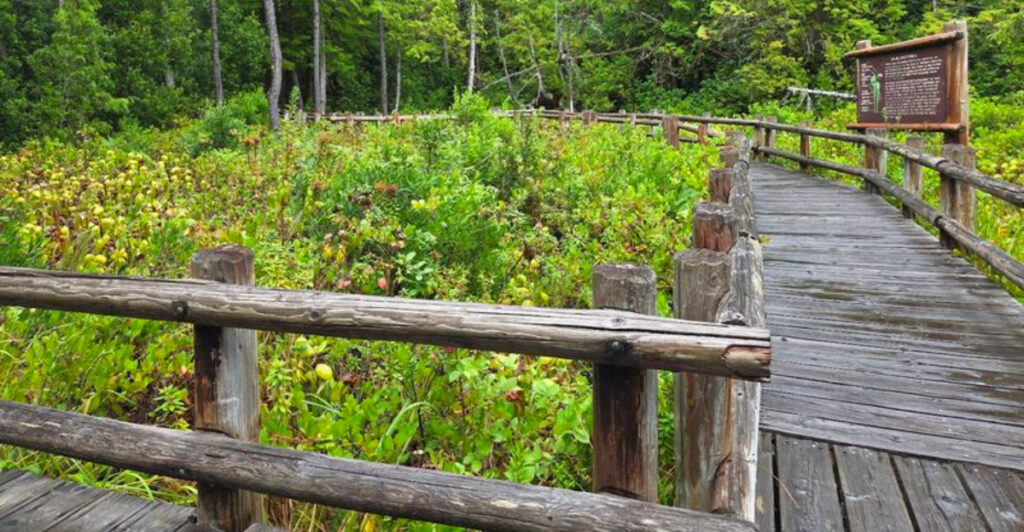
There is a small patch of Oregon coastline where the plants eat the bugs, not the other way around. Tucked just off Highway 101 near Florence, a protected bog is packed with thousands of wild cobra lilies, one of the most unusual carnivorous plants in North America.
These hooded, twisting plants trap insects inside their hollow tubes and digest them, and they do it in plain sight, right along a short, accessible boardwalk. Whether you are on a coast road trip or just need a reason to pull over, this quirky little natural site delivers something you genuinely cannot see almost anywhere else in the world.
Keep reading, because this place is stranger and more fascinating than it sounds.
Where to Find This Botanical Oddity
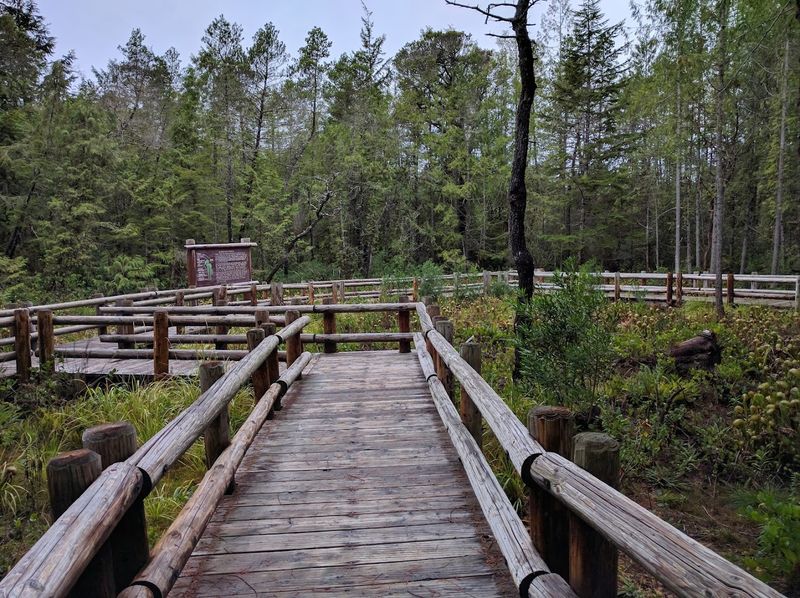
The full address is 5400 Mercer Lake Rd, Florence, OR 97439, right off Highway 101 on the central Oregon coast. The site sits just north of Florence, and the turnoff is easy to spot from the road.
There is no fee to enter, and the parking lot is spacious enough to handle a fair number of vehicles without any stress.
Oregon State Parks manages this natural site, and you can reach them at 1-800-551-6949 or visit oregonstateparks.org for more details. The site is open 24 hours a day, every day of the week, so there is no need to rush or plan around closing times.
That said, natural light makes a real difference when you are trying to get a good look at the plants, so a daytime visit is worth the effort.
The location is not far from the Oregon Dunes National Recreation Area, so many travelers combine both stops on a single coastal drive. Unlike some parks that require a long hike before you reach anything interesting, the cobra lilies here are visible within a few minutes of leaving your car.
It is the kind of stop that fits neatly into any road trip itinerary without eating up half your day.
The Plant That Earns Its Scary Name
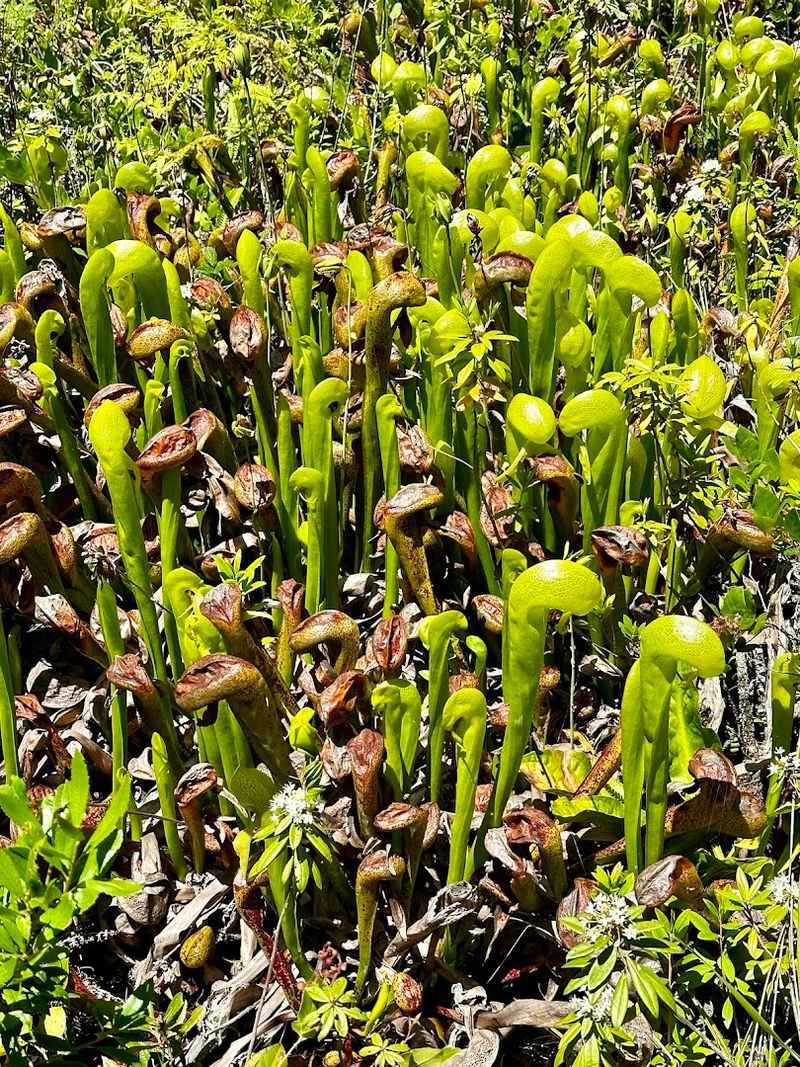
Darlingtonia californica goes by a few names, including California pitcher plant and cobra lily, but that last one is the one that really sticks. The hooded top of each plant curves forward and fans out at the tip in a way that looks remarkably like a cobra rearing up before a strike.
Two drooping, tongue-like appendages hang below the hood, and the whole structure is streaked with pale veins that let light filter through.
That filtered light is actually part of the trap. Insects fly into the hood through a small opening, get disoriented by the glowing veins, and cannot find their way back out.
The interior is lined with downward-pointing hairs that make escape even harder. Eventually, the insect falls into the water-filled tube at the base, where bacteria break it down and the plant absorbs the nutrients.
This feeding strategy evolved because the bog soil is extremely low in nitrogen and other key nutrients. Eating bugs is the plant’s way of making up the difference.
It is a genuinely clever solution to a tough environment, and seeing hundreds of these plants clustered together in a real bog makes the whole process feel both fascinating and a little unsettling in the best possible way.
A Bog Unlike Anything Else on the Coast
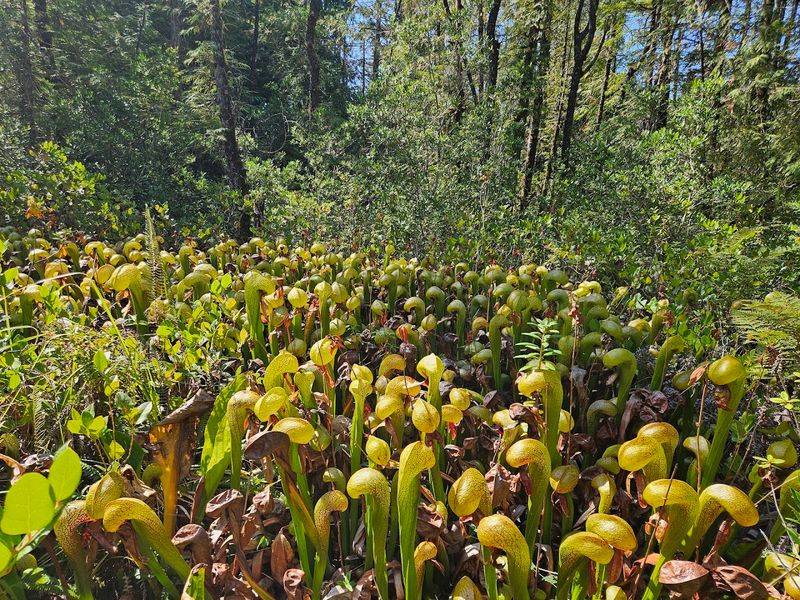
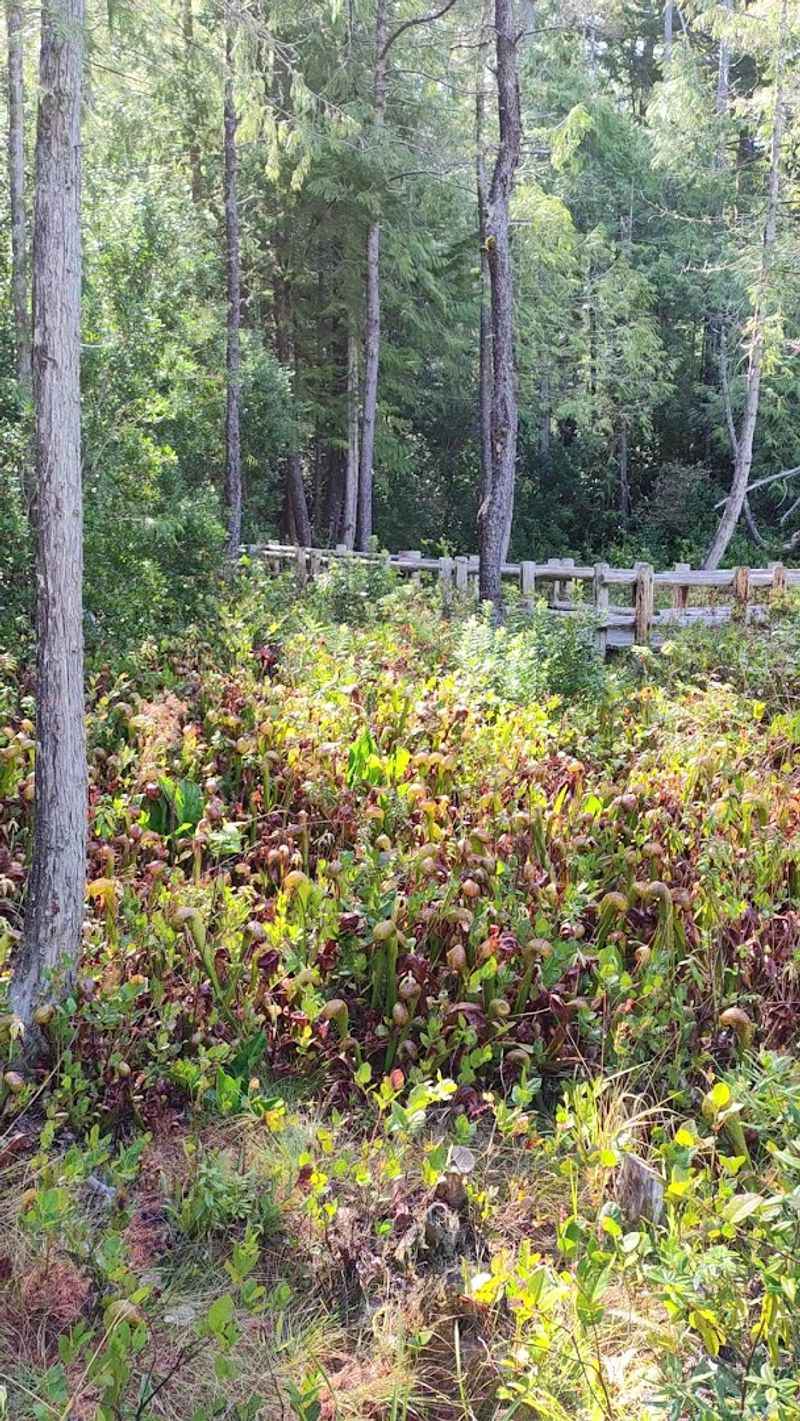
The bog itself is a surprisingly lush and moody place. Dense stands of western red cedar and Port Orford cedar ring the edges, and the ground between them is a spongy mat of sphagnum moss that holds water year-round.
Cold, mineral-poor water seeps up from underground springs, creating exactly the wet, nutrient-starved conditions that cobra lilies need to thrive.
What makes this bog particularly special is the sheer number of plants packed into a relatively small area. Thousands of cobra lilies grow here in tight clusters, their hooded heads all pointing in slightly different directions.
In summer, the bog turns a vivid green that almost glows against the darker tree trunks surrounding it. In winter, the plants go dormant and the bog fills with more water, giving it an entirely different character that is still worth seeing.
Oregon is the only state where Darlingtonia californica grows wild in significant numbers, and this bog is one of the most accessible examples of that habitat anywhere along the coast. The protected status of the site means the ecosystem has stayed largely intact, which is why the colony remains so dense and healthy.
You are not looking at a handful of specimens here; you are looking at a thriving, functioning wild population.
The Boardwalk That Keeps You Above the Muck
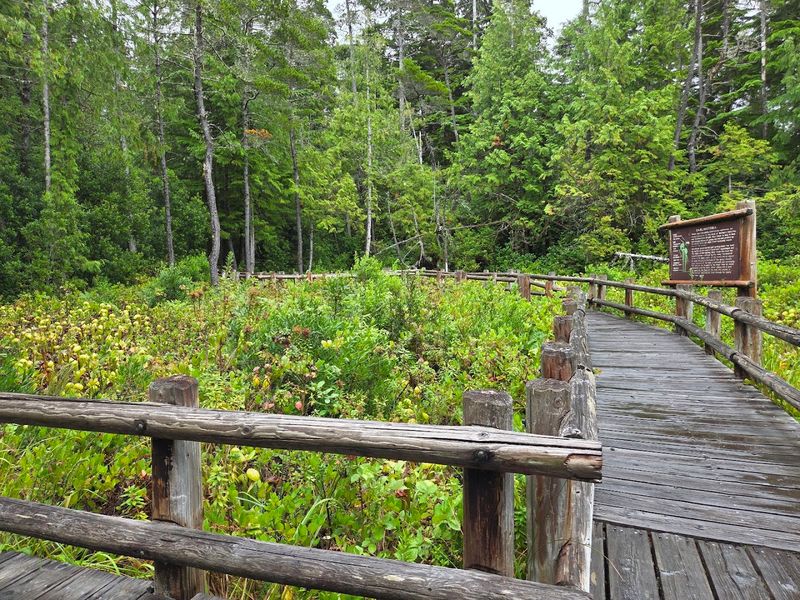
One of the smartest things about this park is the boardwalk system. Rather than letting visitors tromp through the fragile bog and crush the plants, Oregon State Parks built a raised wooden walkway that loops through the heart of the colony.
The result is a clear path that puts you right in the middle of the cobra lilies without doing any damage to them or the surrounding ecosystem.
The loop is short, flat, and well-maintained. Most people complete the full circuit in ten to fifteen minutes, though anyone who stops to look closely at individual plants or read the interpretive signs will naturally take longer.
The boardwalk is wide enough to be comfortable, and the surface is solid underfoot even when the surrounding ground is saturated with water.
Accessibility is genuinely good here. The path from the parking lot to the boardwalk is paved, and the boardwalk itself is level enough for most mobility needs, with only a few minor uneven sections near the edges.
Dogs on leashes are welcome, and the park provides informative signs along the route that explain the biology of the plants in clear, readable language. It is one of those rare natural sites that manages to be both protective of its subject and genuinely welcoming to a wide range of visitors.
The Best Time of Year to Visit
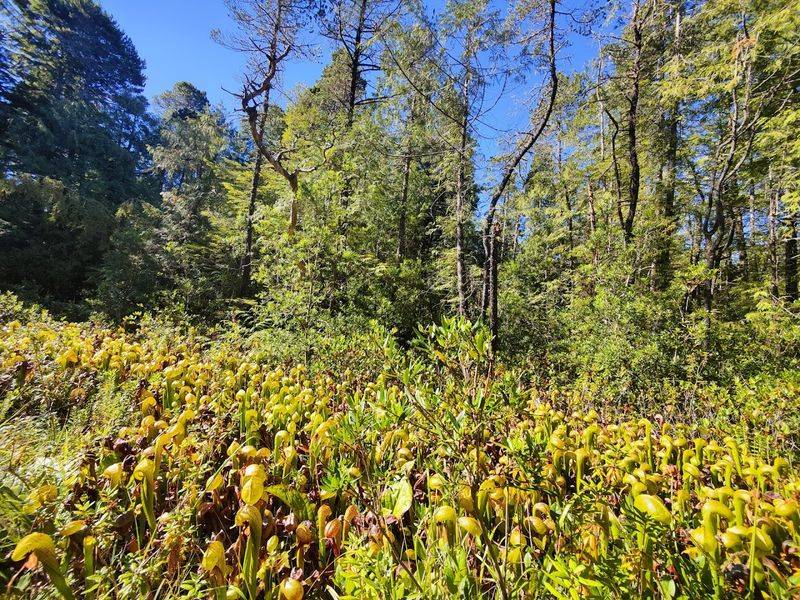
Timing your visit makes a noticeable difference in what you will see. The cobra lilies bloom in late spring and early summer, typically from May through July, when tall, nodding flowers rise above the hooded leaves on long stalks.
The flowers are unusual-looking, with drooping purple-veined petals that complement the alien appearance of the leaves below them. July is often cited as the peak month for catching both the flowers and the fully developed leaves at their most dramatic.
Summer visits also tend to bring more insect activity around the plants, so you have a real chance of watching the trapping process unfold in slow motion. Flies and other small insects hover near the hoods, and if you watch patiently, you will see some of them disappear inside.
It adds a layer of live drama that photographs simply cannot replicate.
Winter visits have their own appeal. The plants go dormant and lose some of their vivid color, but the bog fills with more water and the whole site takes on a quieter, more atmospheric quality.
Crowds thin out considerably in the off-season, and the surrounding cedar forest looks especially beautiful in the rain. Oregon’s coast gets a lot of rainfall between November and March, so a rain jacket is a practical addition to any winter visit here.
Practical Tips for Your Stop
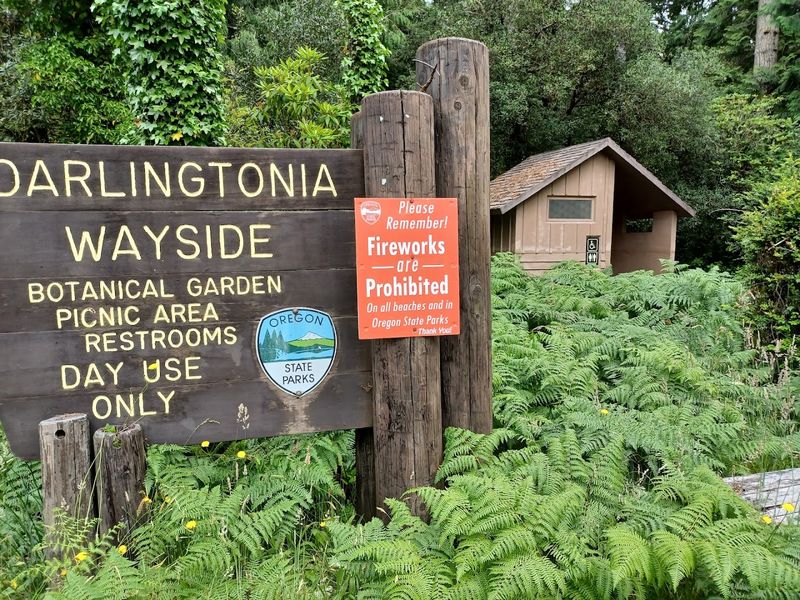
A few quick facts will save you time and prevent any minor frustrations on the day of your visit. The park is free to enter, which is a welcome detail given how many Oregon State Parks require a day-use fee or parking pass.
There are no gates and no entry booth, so you simply pull in, park, and head for the trail.
The parking lot is paved and reasonably sized, with enough room for both cars and larger vehicles like camper vans. A vault restroom sits near the parking area, though its availability can vary depending on the season and maintenance schedules.
Picnic tables are also available near the trailhead, making this a decent spot to eat lunch if you are on a longer coastal drive. No trash cans are provided on-site, so the pack-it-in, pack-it-out rule applies.
The trail to the right of the main path leads to the observation deck and the bog; the trail to the left near the picnic tables does not lead to the plants and is not an official route. That small detail has apparently sent more than a few visitors in the wrong direction.
Cell service can be spotty in this stretch of coastal Oregon, so downloading the park map ahead of time is a smart move before you leave Florence.
The History Behind the Name
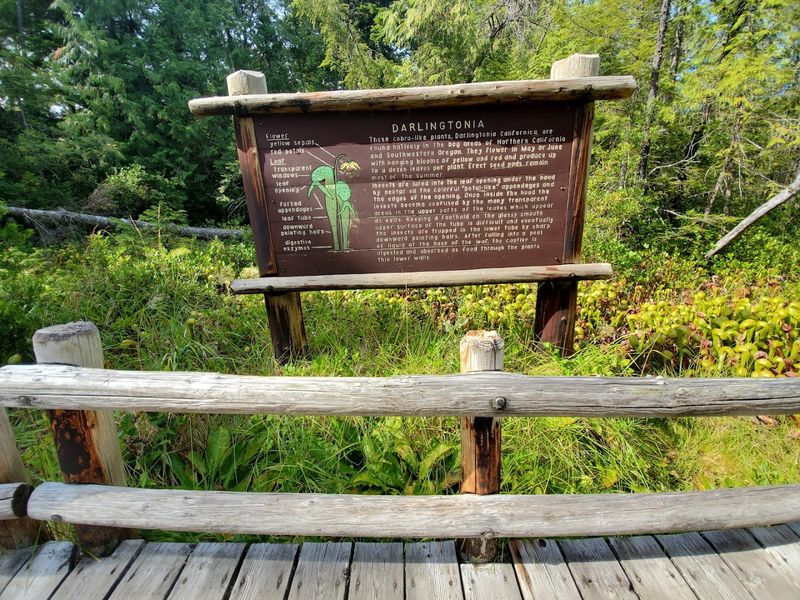
The plant’s scientific name, Darlingtonia californica, honors William Darlington, a 19th-century American botanist from Pennsylvania who was well-regarded in botanical circles during his lifetime. The species was formally described in 1853 by John Torrey, another prominent American botanist, based on specimens collected in northern California.
Despite the californica in its name, the plant grows most abundantly in southwestern Oregon, which makes this part of the coast particularly significant for the species.
The site itself was established specifically to protect this colony, and it remains one of the few places in the world where Darlingtonia grows in such large, undisturbed numbers. Conservation efforts here have focused on keeping the hydrology of the bog intact, since any disruption to the underground spring system that feeds it could threaten the entire population.
Interestingly, while Darlingtonia is sometimes called the California pitcher plant, it is not closely related to the eastern pitcher plants found across much of the United States, including as far south and east as Oklahoma. It belongs to its own genus and represents a separate evolutionary solution to the same ecological problem of surviving in nutrient-poor soil.
That independent origin makes it even more remarkable as a subject of study for botanists and curious visitors alike.
Why This Stop Deserves a Place on Every Oregon Coast Itinerary
There are plenty of reasons to drive Highway 101 along the Oregon coast, from the dramatic headlands and sea stacks to the sprawling Oregon Dunes. Most of those attractions are well-known and well-visited.
This little natural site, by contrast, tends to fly under the radar, and that is a genuine shame given what it offers.
The combination of rarity, accessibility, and pure visual strangeness makes it one of the most memorable stops on the entire coast. You do not need to be a plant enthusiast or a science nerd to appreciate thousands of carnivorous plants clustered in a wild bog, doing exactly what they evolved to do.
The experience is odd and fascinating in equal measure, and it takes almost no time or physical effort to enjoy it fully.
Visitors coming from farther afield, even those road-tripping up from states like California or as far as Oklahoma, consistently describe this as one of the standout moments of their Oregon coast trip. The fact that it is free, open every day, and located right off a major highway removes every possible excuse not to stop.
Some places earn their reputation through size and spectacle; this one earns it through sheer biological strangeness, and that is more than enough.
Share this story