There is a small city on the Oregon coast where the fog rolls in off the Columbia River every morning, Victorian houses cling to steep hillsides like colorful barnacles, and the whole place feels like it was quietly borrowed from a Norwegian fishing town. The streets are narrow, the history runs deep, and the waterfront smells like salt, timber, and something faintly adventurous.
I had heard people compare it to a Scandinavian village for years before I finally made the trip myself, and honestly, the comparison undersells it. This city has its own personality, its own quirks, and its own stories to tell, and every corner I turned revealed something worth writing home about.
Where the Columbia Meets the Coast: Finding Astoria
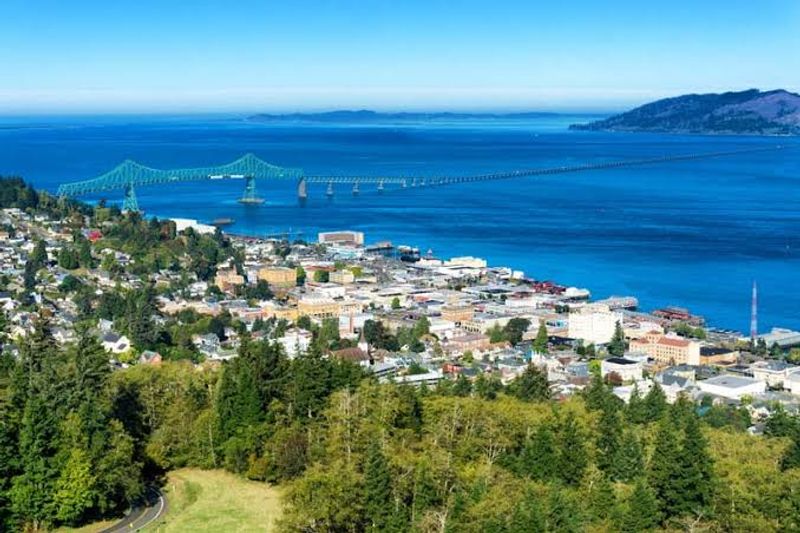
Tucked into the northwestern tip of Oregon, Astoria sits at the point where the mighty Columbia River finally meets the Pacific Ocean. The full address is Astoria, Oregon 97103, and you can find it by following U.S.
Route 30 west until the road practically dips its toes in the river.
Getting there is part of the experience. The drive along the Columbia offers wide-open views of the water and forested hillsides that slowly give way to the city’s distinctive skyline of steepled churches and Victorian rooftops.
Astoria holds the distinction of being the oldest American settlement west of the Rocky Mountains, founded in 1811 by the Pacific Fur Company. That kind of history gives the whole city a grounded, lived-in quality that newer destinations simply cannot fake.
Unlike resort towns that feel built for tourists, Astoria feels built for people who actually live there, which makes visiting it feel like a privilege rather than a transaction. The city sits close to the Oregon-Washington border, making it a natural crossroads with a personality all its own.
The Scandinavian Connection That Shaped This City
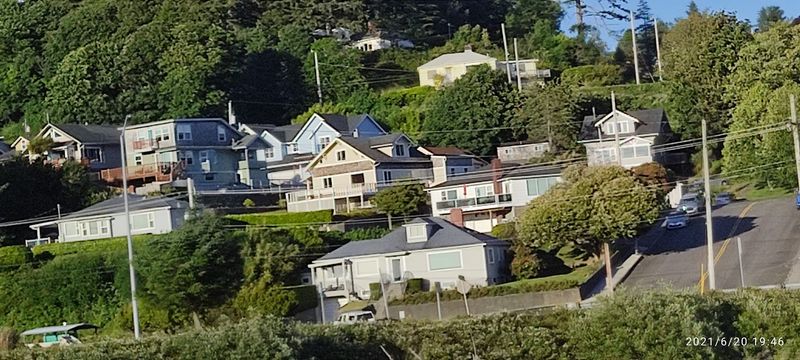
Astoria’s resemblance to a Scandinavian fishing village is not a coincidence or a marketing angle. Finnish, Norwegian, and Swedish immigrants arrived here in large numbers during the late 1800s, drawn by the booming salmon cannery industry along the Columbia River.
At its peak, Astoria was home to more than 30 canneries, making it one of the most productive fishing ports on the entire West Coast. The Scandinavian workers who ran those operations brought their building styles, their work ethic, and their cultural traditions with them.
You can still feel that heritage walking through certain neighborhoods, where the steep hillside lots, the modest wooden homes, and the general tidiness of the streets carry a quiet Nordic energy. The Suomi Hall, a Finnish community building that has hosted gatherings for over a century, still stands as a reminder of who built this place.
Even the local food culture carries echoes of that Scandinavian past, with smoked fish, hearty soups, and fresh seafood taking center stage at many local spots. It is history you can taste, touch, and walk through all at once.
The Astoria Column: A Hilltop Story in Spiral Form
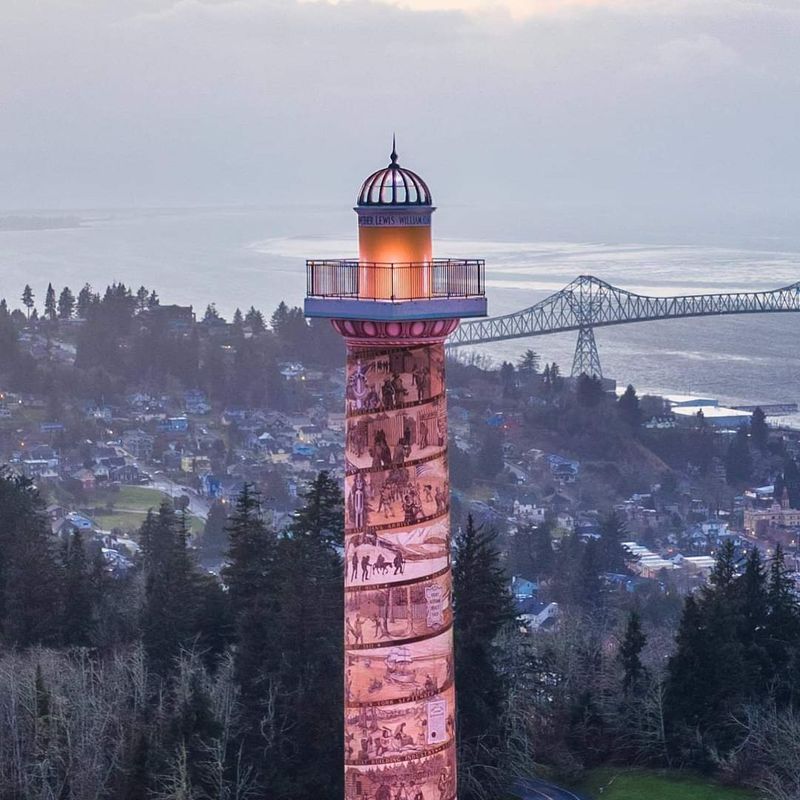
Few landmarks in the Pacific Northwest can match the sheer drama of the Astoria Column, and I say that as someone who has visited quite a few of them. The column rises 125 feet from the top of Coxcomb Hill, and the murals that spiral around its exterior tell the story of the region’s exploration and settlement in vivid painted detail.
Climbing the 164 interior steps to the observation deck is a workout worth every huff and puff. From the top, you can see the Columbia River, the Pacific Ocean, the rolling Coast Range, and on a clear day, the snow-capped peak of Mount Rainier far to the north.
The column was built in 1926 as a joint project between the Great Northern Railway and a local historical society, and it was modeled after Trajan’s Column in Rome. That kind of ambition in a small Oregon city says a lot about how seriously Astoria takes its own story.
Kids love launching small wooden gliders from the top, a tradition that has been going on for decades. Watching those little planes spiral down over the treetops is oddly satisfying for adults too.
Columbia River Maritime Museum: Where the River Tells Its Own Story
The Columbia River has one of the most treacherous river-mouth crossings in the world, a stretch of water known as the Graveyard of the Pacific where hundreds of ships have gone down over the centuries. The Columbia River Maritime Museum on the Astoria waterfront takes that dangerous, dramatic history and turns it into one of the most engaging museum experiences on the Oregon coast.
The building itself is a statement, shaped like a breaking wave and planted right on the riverfront so that the real Columbia is always visible through the windows. Inside, exhibits cover salmon fishing, the U.S.
Coast Guard, the fur trade, and the lighthouse keepers who tried to keep ships from meeting their end on the bar.
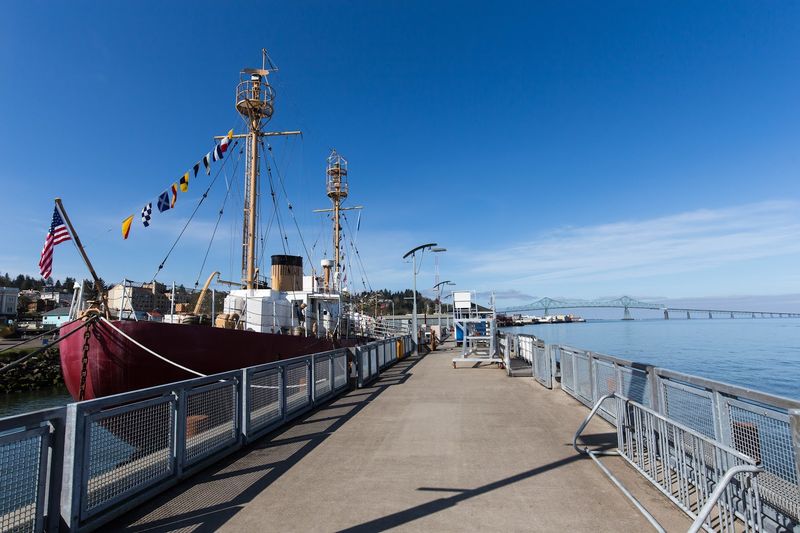
The retired lightship Columbia, moored just outside, is open for tours and gives a visceral sense of what it meant to live and work on the water in the early 20th century. I spent nearly three hours here and still felt like I had only scratched the surface.
The museum does a particularly good job of honoring the Indigenous peoples of the region, whose relationship with the Columbia River predates European contact by thousands of years.
Flavel House Museum: Victorian Grandeur on a Hillside Street
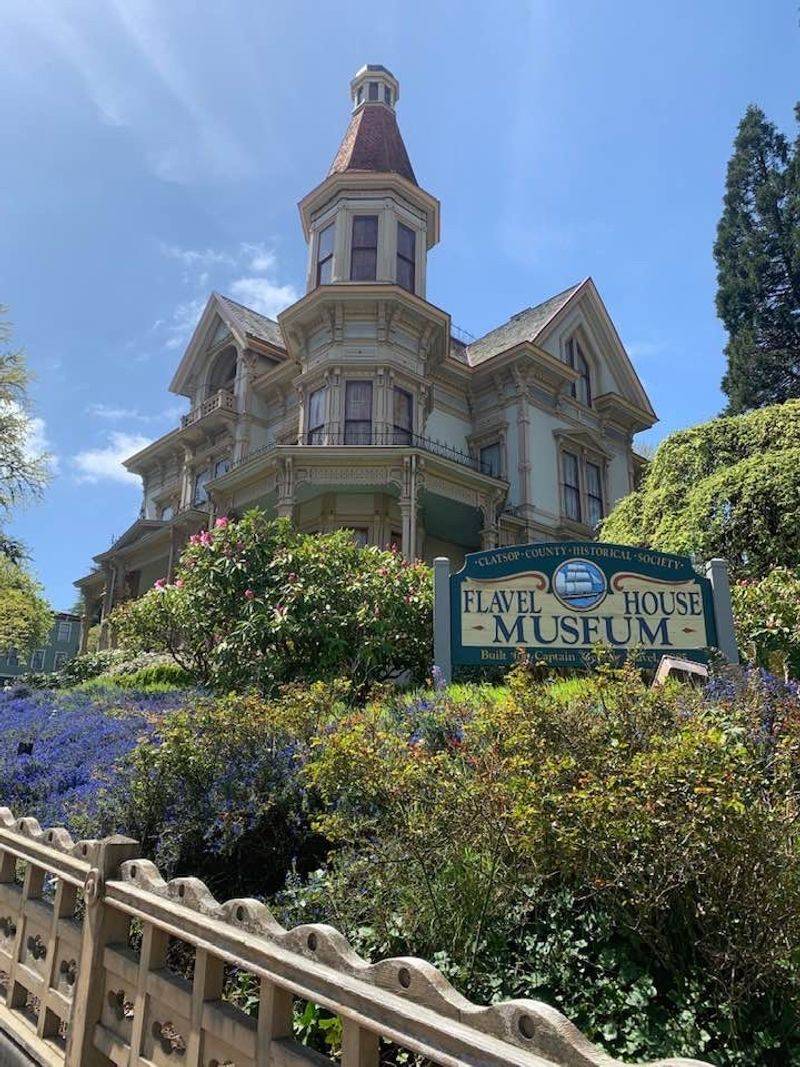
Captain George Flavel was Astoria’s first millionaire, a bar pilot who made his fortune guiding ships safely across the Columbia River bar. The house he built for himself in 1885 is one of the finest examples of Queen Anne Victorian architecture in the entire Pacific Northwest, and walking through it feels like stepping into a world where every detail was chosen to impress.
The Flavel House Museum stands at 441 Eighth Street in Astoria, and its exterior alone is worth a detour. The turrets, the wraparound porch, the intricate woodwork, and the manicured gardens all come together in a way that feels almost theatrical.
Inside, the rooms are filled with period furniture, original fixtures, and carefully preserved decor that paint a vivid picture of upper-class life in a booming 19th-century port city. The carriage house out back adds another layer to the story.
The Clatsop County Historical Society runs the museum with obvious care and enthusiasm, and the guided tours are genuinely informative rather than just reciting dates. Flavel House is the kind of place that makes you appreciate how much personality a building can hold when it is properly looked after.
The Riverwalk: Astoria’s Waterfront Pulse
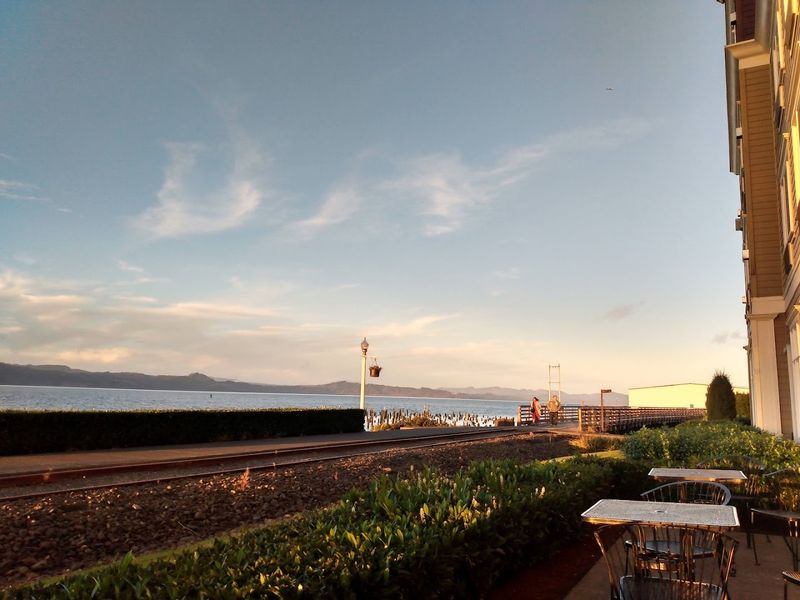
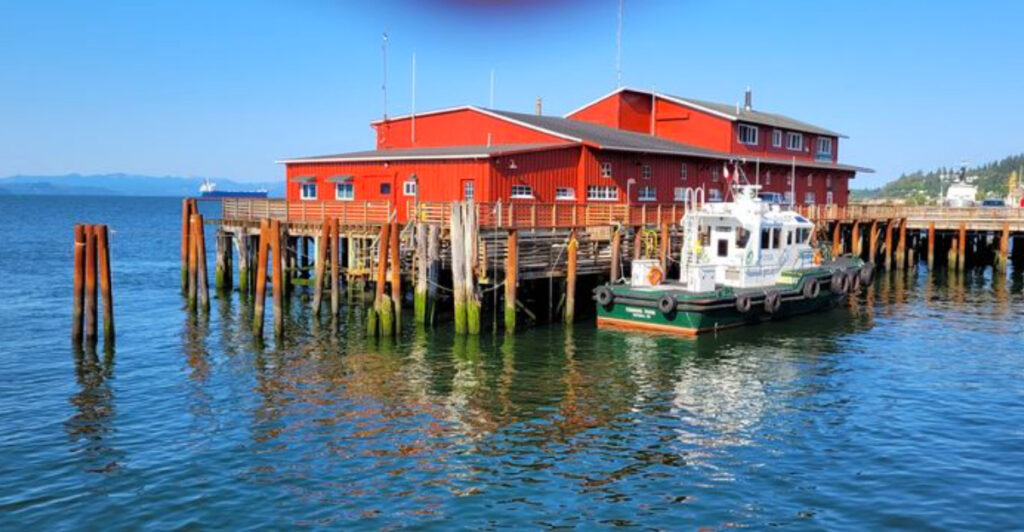
Running for about six miles along the Columbia River, the Astoria Riverwalk is the kind of path that reveals the city’s character one slow step at a time. Converted from a historic railroad corridor, the trail connects the working waterfront with restaurants, museums, parks, and quiet stretches of riverbank where you can just stand and watch the water move.
The old trolley that runs along part of the route adds a lovely vintage touch. It is a restored 1913 Brill trolley car that clangs its way between the east and west ends of the waterfront on weekends and summer days, and riding it costs almost nothing.
Sea lions have taken over a cluster of wooden docks near the east end of the riverwalk, and they make their presence known loudly and enthusiastically. Watching them pile on top of each other while arguing over the best spot is genuinely entertaining.
The Astoria-Megler Bridge, which stretches more than four miles across the Columbia into Washington State, frames the western end of the walk in a way that feels almost cinematic. Early morning is the best time to walk this route, when the mist is still hanging over the water.
Fort Clatsop: Where Lewis and Clark Spent a Very Wet Winter
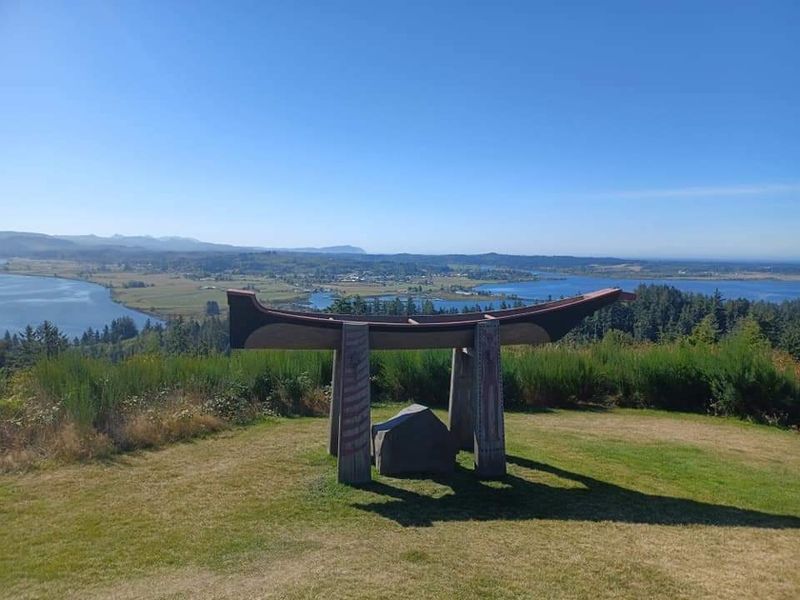
Lewis and Clark’s Corps of Discovery spent the winter of 1805 to 1806 at a small log fort just south of present-day Astoria, and by all accounts it was a miserable few months. It rained for all but twelve days of their stay, the food was monotonous, and everyone was ready to go home long before spring arrived.
Fort Clatsop, now part of the Lewis and Clark National Historical Park, preserves and interprets that soggy but historically enormous chapter of American exploration. The reconstructed fort is small and unassuming, which somehow makes the accomplishment of getting there feel even more impressive.
Rangers in period clothing demonstrate camp skills, explain the expedition’s goals, and bring the winter of 1805 to life in ways that go well beyond what any textbook can offer. The surrounding forest, dense and perpetually damp, gives an honest sense of what the Corps actually experienced.
The park sits about five miles southwest of downtown Astoria, an easy drive or a rewarding bike ride. Visitors who are used to grand, sweeping monuments sometimes underestimate this place, but the quiet intensity of Fort Clatsop tends to change their minds quickly.
Local Eats and the Seafood That Makes Astoria Worth the Drive
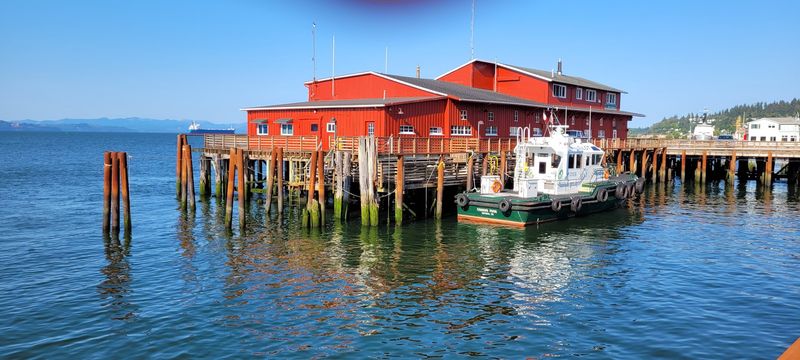
Astoria’s food scene is rooted in what the river and ocean actually provide, which means the seafood here is fresh in a way that genuinely makes a difference. Dungeness crab, Chinook salmon, Pacific oysters, and razor clams appear on menus across the city, and the best preparations tend to be the simplest ones.
The Astoria Sunday Market, held from May through October in the parking lot near the waterfront, is a good place to start any food exploration. Local farmers, fishers, and small-batch producers set up stalls that reflect the real culinary character of the region rather than a curated tourist version of it.
Several coffee roasters have set up shop in Astoria, and the cafe culture here punches well above the city’s weight in terms of quality. A good flat white and a view of the river on a foggy morning is a very specific kind of happiness.
Smoked fish, chowder, and fresh-baked bread show up at multiple spots along the waterfront, and the prices remain surprisingly reasonable for a destination that attracts visitors from across the country, including travelers making their way up from California or down from the Pacific Northwest interior.
Film History and the Goonies Effect
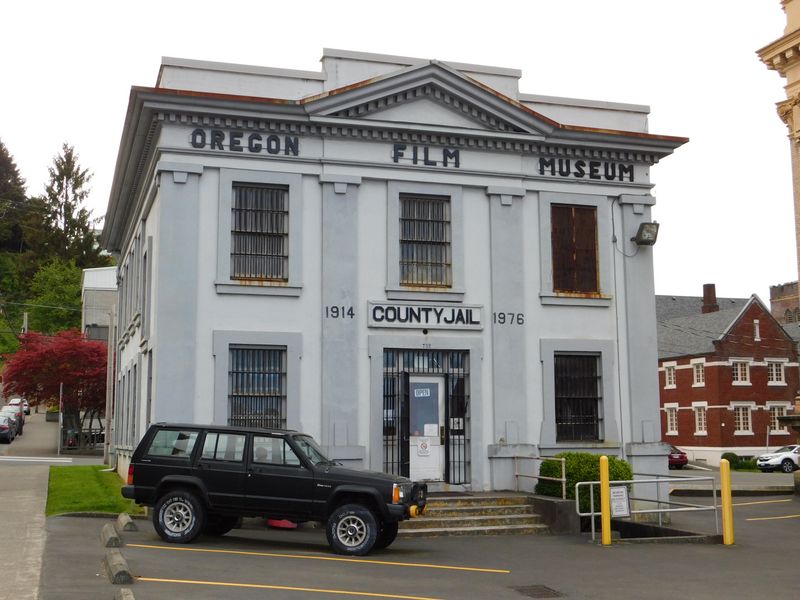
Astoria has a surprisingly significant place in film history, and not just because of one famous 1985 adventure movie, though that movie certainly helped put the city on the pop culture map in a way that still draws visitors decades later. The Goonies was filmed almost entirely in and around Astoria, and fans still make pilgrimages to the house used in the film on 38th Street.
The Oregon Film Museum, housed in the old Clatsop County Jail, celebrates the city’s cinematic history with exhibits, props, and interactive displays that appeal to both serious film buffs and casual visitors. The jail itself is a historic building with its own stories to tell.
Kindergarten Cop, Short Circuit, and Free Willy were also filmed in and around Astoria, giving the city a broader cinematic legacy than most people realize. There is something charming about a small coastal city that has served as the backdrop for so many different kinds of stories.
The film museum staff are enthusiastic and knowledgeable, and the admission price is modest enough that it feels like a bonus stop rather than a major commitment. It is well worth an hour of anyone’s afternoon.
Planning Your Visit: Practical Tips for Getting the Most Out of Astoria
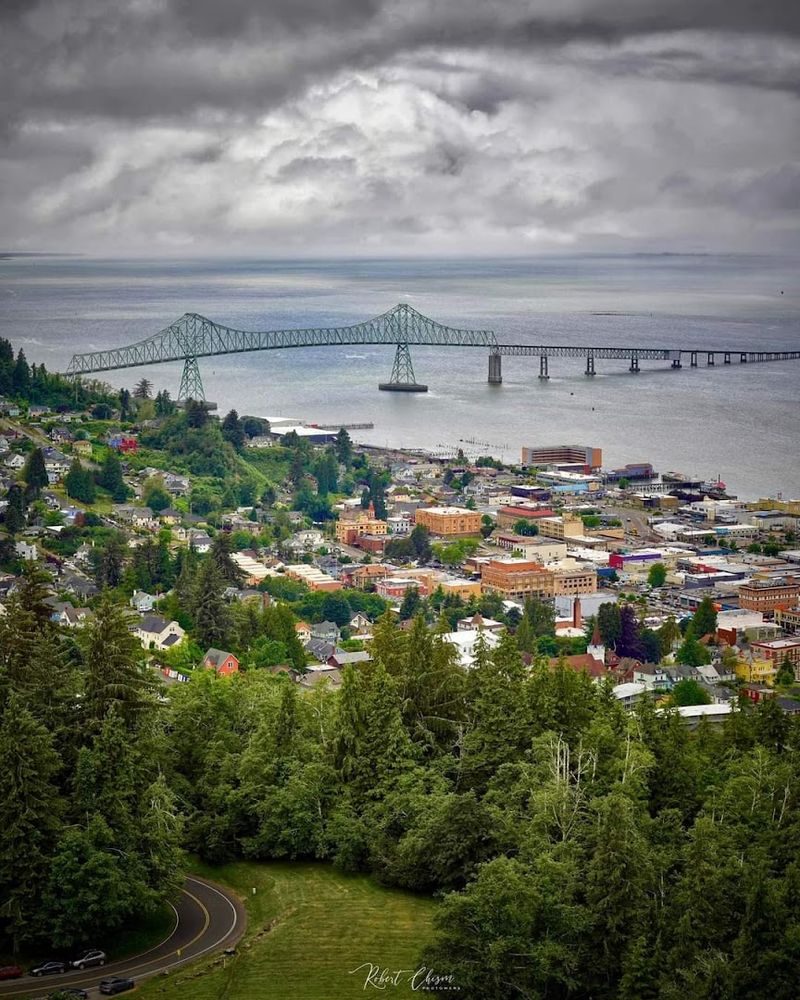
Astoria is located in the far northwestern corner of Oregon, about 96 miles northwest of Portland along U.S. Route 30.
The drive from Portland takes roughly two hours and passes through some genuinely beautiful river valley scenery, making the journey part of the experience rather than just a means to an end.
The city is worth at least two full days, and three days allows you to cover the major attractions without feeling rushed. Summer and early fall bring the most reliable weather, though Astoria’s fog and drizzle in spring have their own moody appeal that many visitors find surprisingly enjoyable.
Accommodation ranges from historic bed and breakfasts in restored Victorian homes to modern hotels near the waterfront. The Victorian-style inns are particularly atmospheric and tend to fill up quickly in summer, so booking ahead is a smart move.
Astoria is not Oklahoma, and it does not try to be. But just as Oklahoma has its own distinct regional character, Astoria has carved out an identity that feels completely its own.
Travelers who appreciate authenticity, history, and a city that has not been sanded smooth for tourist consumption will find exactly what they are looking for here.
Share this story