History often unfolds in ordinary places before anyone realizes its significance. Across the United States, battlefields, churches, bridges, courtrooms, and city streets became the settings for moments that permanently changed the nation’s direction.
These sites witnessed revolutions, social movements, political decisions, and turning points that reshaped American life for generations. Today, they stand as reminders that history is often made by ordinary people facing extraordinary moments.
1. Gettysburg Battlefield, Gettysburg, Pennsylvania
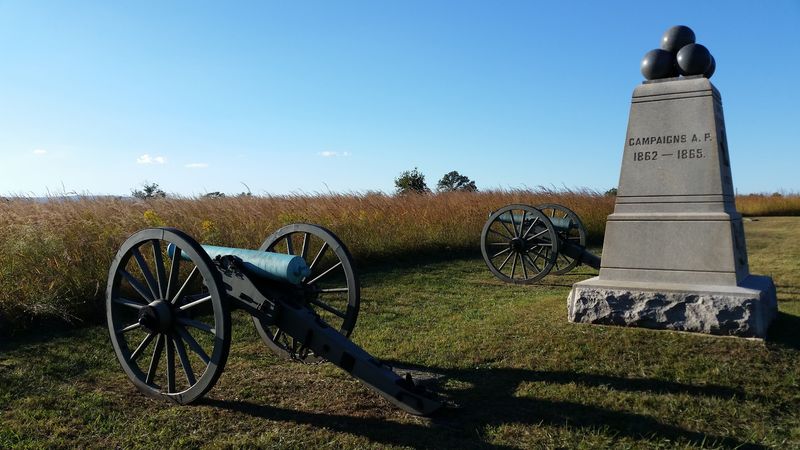
Three days of fighting in July 1863 transformed a quiet Pennsylvania town into one of the most significant locations in American history. The Battle of Gettysburg marked a major turning point in the Civil War and permanently altered the trajectory of the nation.
Union and Confederate forces clashed across farms, hills, orchards, and ridges surrounding Gettysburg in a battle that produced staggering casualties. The fighting culminated with Pickett’s Charge, a massive Confederate assault that failed disastrously and effectively ended General Robert E.
Lee’s invasion of the North.
The battlefield today preserves large sections of the original terrain, allowing visitors to understand the enormous scale of the conflict. Cannons, monuments, stone walls, and preserved farm buildings stretch across miles of rolling countryside.
Months after the battle, President Abraham Lincoln delivered the Gettysburg Address at the site of a national cemetery dedication. The speech lasted only a few minutes yet became one of the most influential speeches in American history, redefining the Civil War as a struggle tied directly to equality and democratic ideals.
2. Selma’s Edmund Pettus Bridge, Selma, Alabama
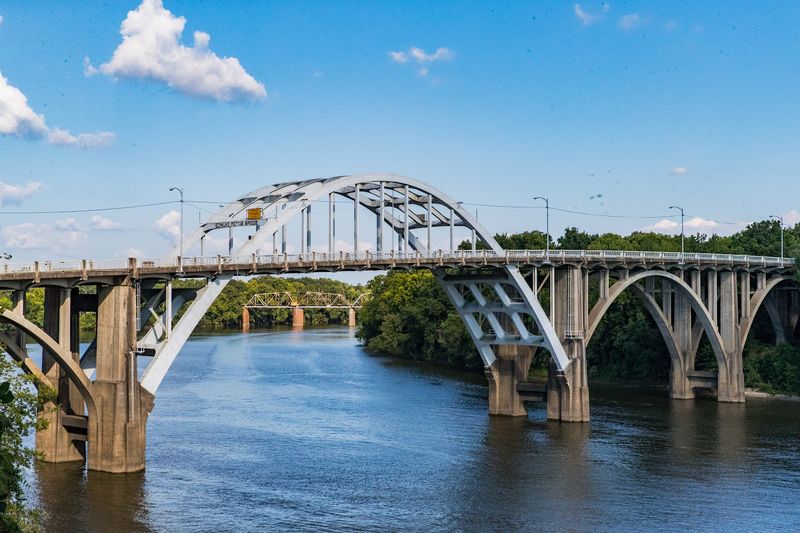
A steel bridge in Alabama became one of the defining symbols of the Civil Rights Movement after television cameras captured violence that shocked the nation in 1965.
The Edmund Pettus Bridge spans the Alabama River in Selma and served as the site of “Bloody Sunday,” when peaceful voting rights marchers were attacked by state troopers while attempting to march to Montgomery. The brutal images spread nationwide and dramatically increased public support for federal voting rights protections.
Activists including John Lewis and Hosea Williams led marchers across the bridge despite threats, arrests, and violence. The confrontation exposed the severe discrimination Black Americans faced in the South and intensified pressure on the federal government to act.
Later that year, President Lyndon B. Johnson signed the Voting Rights Act of 1965, one of the most important civil rights laws in American history.
The legislation transformed voter access across the country and became a major milestone in the struggle for racial equality.
3. Ford’s Theatre, Washington, D.C.
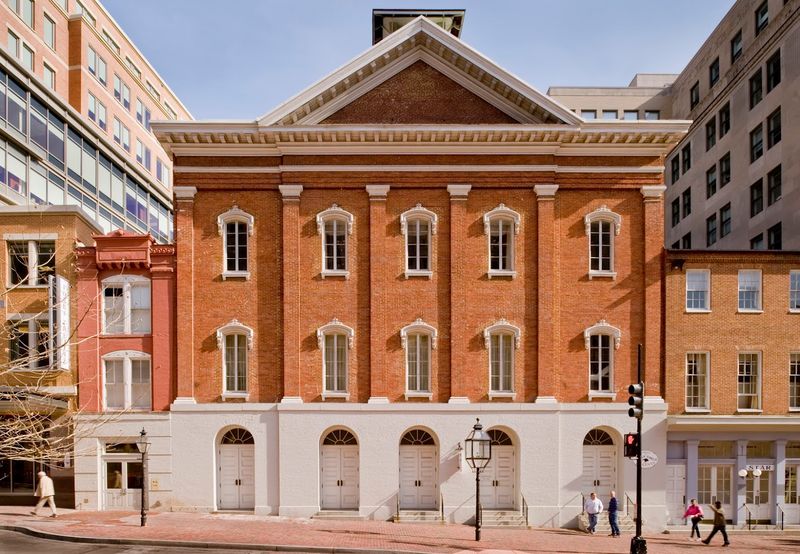
A night at the theater changed the course of American history forever on April 14, 1865, when President Abraham Lincoln was assassinated inside Ford’s Theatre just days after the Civil War effectively ended.
Actor and Confederate sympathizer John Wilkes Booth entered Lincoln’s private box during a performance of Our American Cousin and shot the president before escaping into the night. Lincoln died the following morning across the street at the Petersen House.
The assassination stunned a nation already exhausted from years of war. Lincoln’s leadership during the Civil War had preserved the Union, and his death created enormous uncertainty during the fragile early stages of Reconstruction.
Ford’s Theatre eventually reopened decades later after periods of closure and government use. Today, the site functions as both a working theater and a museum dedicated to Lincoln’s life, presidency, and assassination.
Visitors can view the presidential box restored to its nineteenth-century appearance along with exhibits detailing the assassination conspiracy and national aftermath. The nearby Petersen House preserves the room where Lincoln spent his final hours.
4. Stonewall Inn, New York City, New York
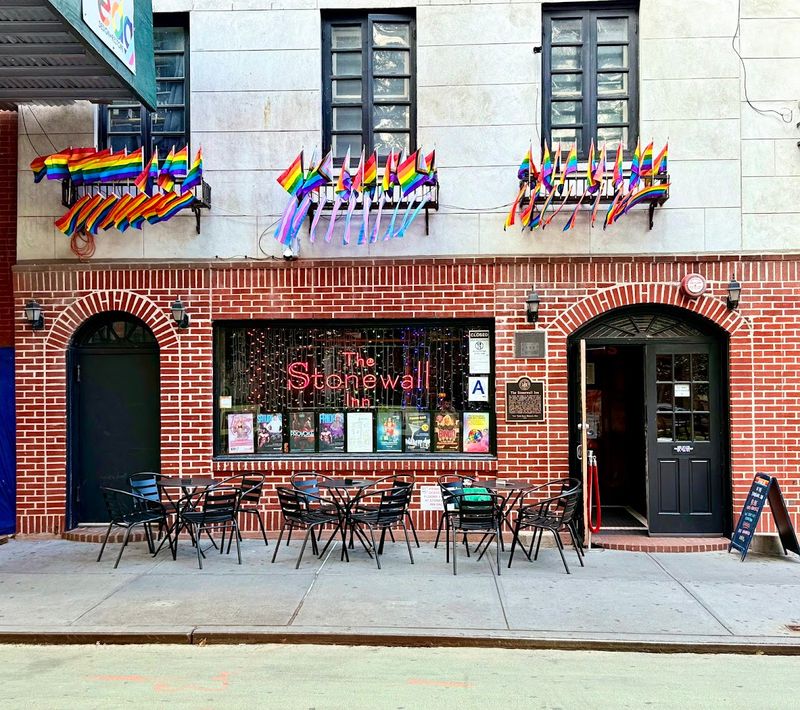
A police raid at a Greenwich Village bar unexpectedly became the spark that transformed LGBTQ+ rights activism in America.
In June 1969, patrons at the Stonewall Inn fought back during a police raid targeting the gay bar. At the time, discrimination, harassment, and raids against LGBTQ+ communities were common, but resistance during the Stonewall uprising lasted for several nights and quickly evolved into a broader movement demanding equal rights and visibility.
The protests galvanized activists across the country and helped launch modern LGBTQ+ advocacy organizations. Pride marches held the following year commemorated the uprising and eventually evolved into annual celebrations and demonstrations worldwide.
The Stonewall Inn itself remains relatively modest in appearance compared with its enormous historical significance. Located in Manhattan’s Greenwich Village, the site now functions both as a bar and a national historic landmark.
5. Independence Hall, Philadelphia, Pennsylvania
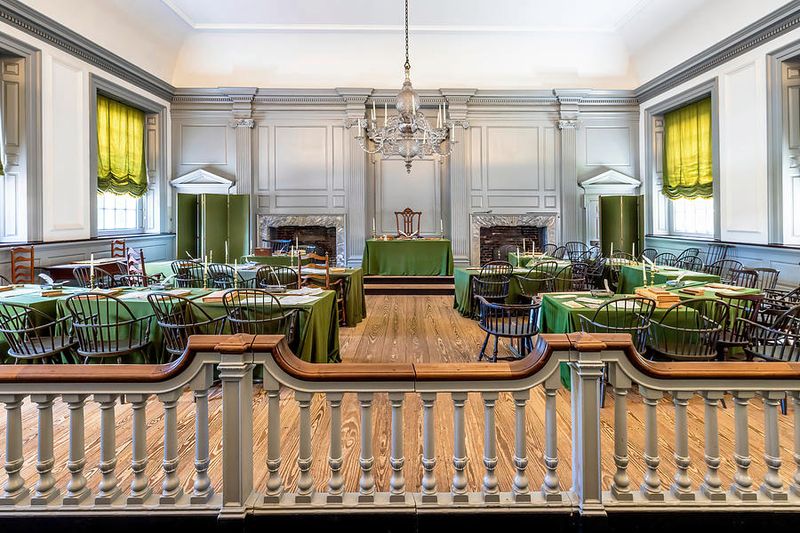
One brick building in Philadelphia managed to produce both the Declaration of Independence and the United States Constitution, which is an absurdly impressive résumé for a meeting hall.
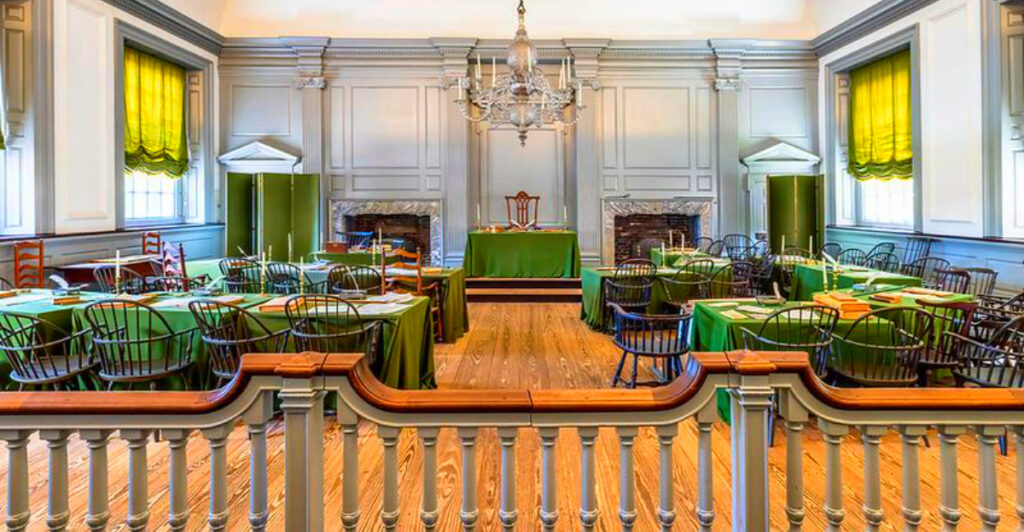
Independence Hall became the political center of the American Revolution during the late eighteenth century. Delegates from the thirteen colonies gathered here to debate independence from Britain, draft founding documents, and argue intensely about the future of a country that technically did not exist yet.
The Declaration of Independence was adopted here in 1776, formally announcing the colonies’ break from British rule. A little over a decade later, the Constitutional Convention met inside the same building to create the framework for the federal government still used today.
Visitors touring the Assembly Room often notice how relatively small the space feels compared with its historical importance. It is strangely humbling to realize that debates shaping an entire nation happened inside rooms no larger than modern conference spaces.
6. Pearl Harbor National Memorial, Honolulu, Hawaii
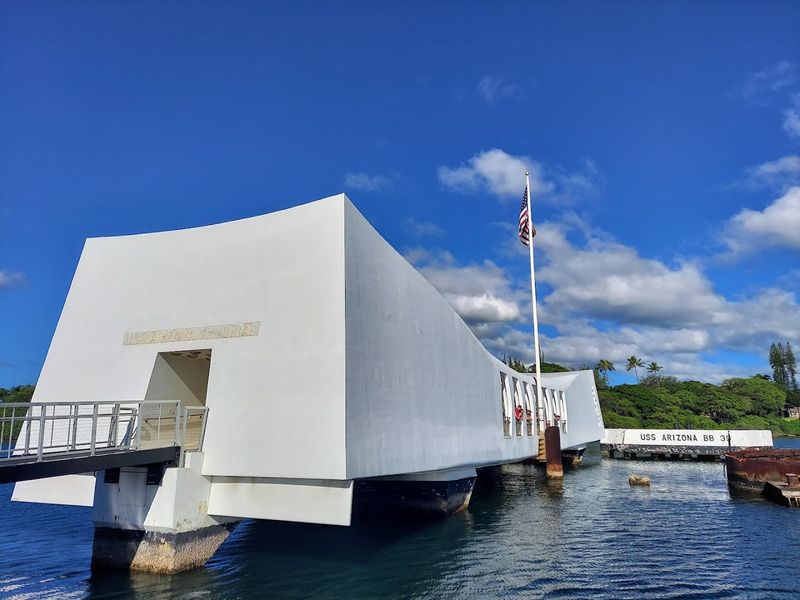
A quiet Sunday morning in Hawaii suddenly became one of the most consequential days in twentieth-century American history.
On December 7, 1941, Japanese forces launched a surprise attack on Pearl Harbor, devastating the U.S. Pacific Fleet and killing thousands of military personnel and civilians.
Battleships burned, aircraft were destroyed, and the attack shocked Americans who had largely remained divided about entering World War II.
The following day, the United States declared war on Japan, officially entering the global conflict. America’s involvement would dramatically reshape international politics, military power, technology, and the nation’s role in world affairs for generations.
Today, the Pearl Harbor National Memorial preserves several major historic sites including the USS Arizona Memorial, which spans the remains of the sunken battleship where many sailors are still entombed. Oil continues leaking slowly from the wreckage decades later, often called the “tears of the Arizona.”
Museums and exhibits explain the attack’s timeline, military context, and enormous global consequences. Visitors often describe the memorial as deeply emotional because the destruction remains physically visible rather than abstract.
7. Seneca Falls Convention Site, Seneca Falls, New York
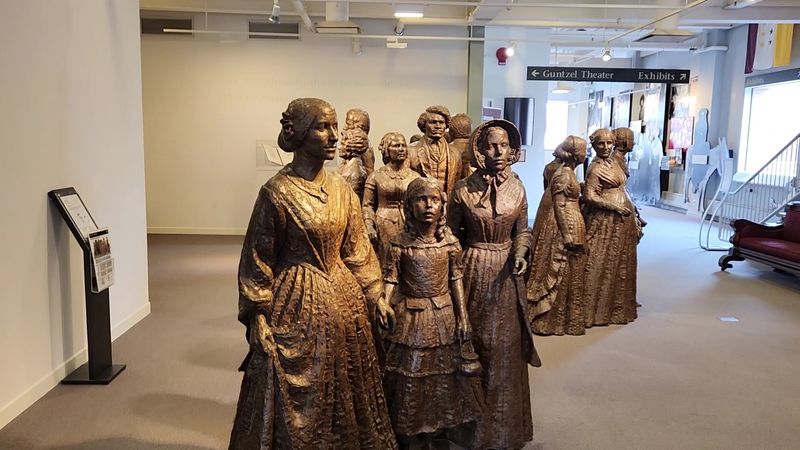
A small gathering in upstate New York launched a movement that would eventually reshape voting rights, property laws, education, and political participation for women across America.
The Seneca Falls Convention of 1848 marked the first women’s rights convention in the United States. Organized by activists including Elizabeth Cady Stanton and Lucretia Mott, the meeting addressed legal and social inequalities faced by women during the nineteenth century.
Attendees debated issues ranging from education access to employment opportunities, but the most controversial demand involved women’s right to vote. The convention produced the “Declaration of Sentiments,” a document modeled after the Declaration of Independence that argued women deserved equal rights and opportunities.
At the time, many viewed the demands as radical or unrealistic. Yet the convention became the foundation for decades of organized activism leading eventually to the ratification of the Nineteenth Amendment in 1920.
8. The Alamo, San Antonio, Texas
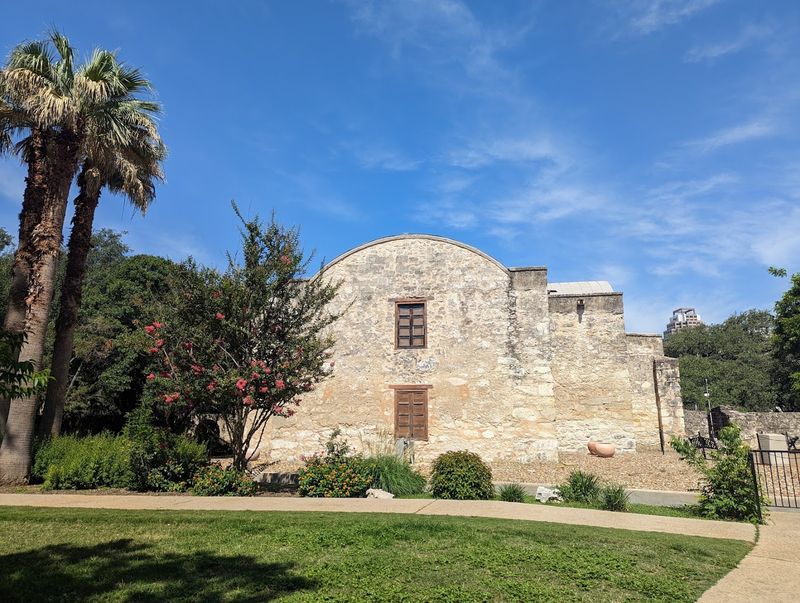
A former Spanish mission became one of America’s most enduring symbols of resistance after a battle that lasted less than two weeks.
The Alamo played a central role in the Texas Revolution during 1836, when Texan defenders fought against Mexican forces led by General Antonio López de Santa Anna. Outnumbered defenders including James Bowie, William B.
Travis, and Davy Crockett held the mission for thirteen days before Mexican troops overwhelmed the compound.
Although the defenders were defeated, the battle became a powerful rallying cry for Texan independence. “Remember the Alamo” inspired forces led by Sam Houston during later victories that helped secure Texas independence from Mexico.
The site later became deeply woven into American expansion history after Texas joined the United States in 1845. Myths, legends, and popular culture further elevated the Alamo’s status in national memory.
Today, the preserved mission sits in downtown San Antonio surrounded by modern development, creating a striking contrast between old stone walls and urban skyscrapers. Museums and exhibits explain both the famous battle and the site’s broader Spanish colonial history.
9. Appomattox Court House, Appomattox, Virginia
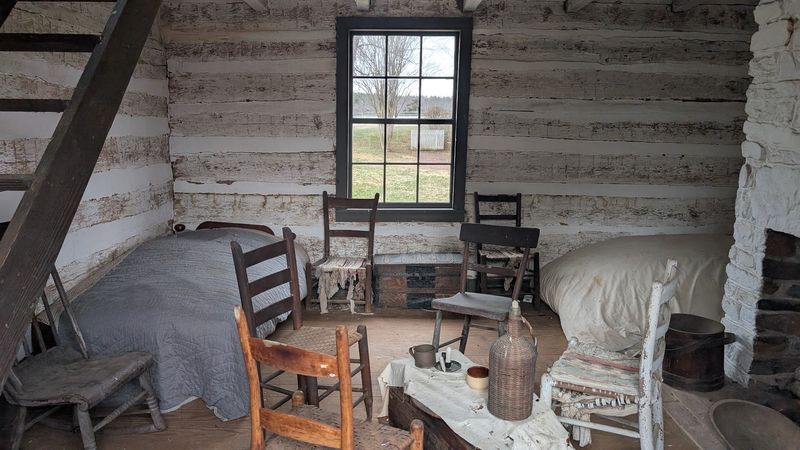
One surrender inside a modest Virginia village effectively ended four years of Civil War and began the difficult process of reuniting the country.
On April 9, 1865, Confederate General Robert E. Lee surrendered the Army of Northern Virginia to Union General Ulysses S.
Grant at Appomattox Court House. Although other Confederate forces remained active briefly afterward, the surrender marked the symbolic conclusion of the Civil War.
Grant’s surrender terms proved remarkably lenient. Confederate soldiers were allowed to return home with personal possessions and horses, helping ease tensions during the immediate aftermath of the conflict.
The meeting occurred inside the home of Wilmer McLean, a businessman whose property had previously been near the First Battle of Bull Run years earlier. McLean famously remarked that the war began in his front yard and ended in his parlor.
Today, Appomattox Court House National Historical Park preserves much of the reconstructed village including the McLean House, taverns, homes, and surrounding landscape.
10. Little Rock Central High School, Little Rock, Arkansas
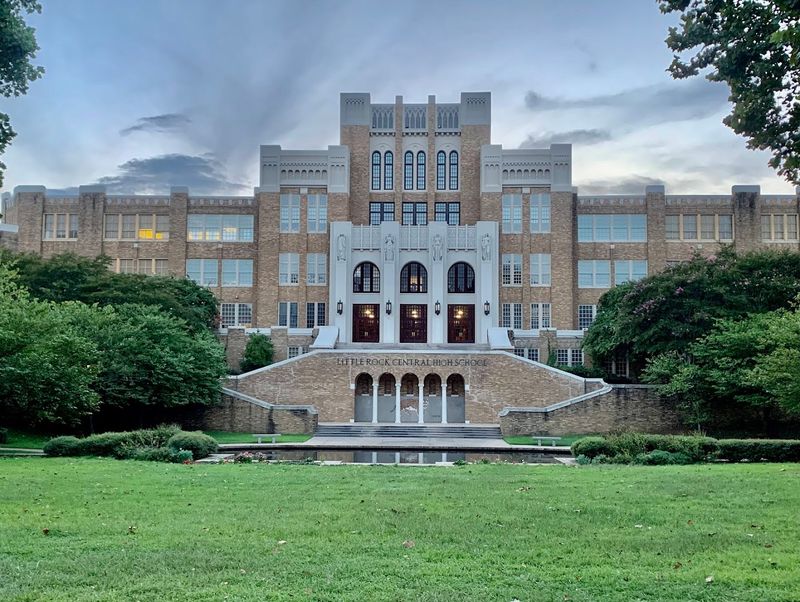
A public high school in Arkansas became the center of a constitutional crisis that tested federal authority and school desegregation in 1957.
After the Supreme Court’s decision in Brown v. Board of Education declared segregated schools unconstitutional, nine Black students enrolled at the previously all-white Little Rock Central High School.
Arkansas Governor Orval Faubus attempted to block their entry using the National Guard.
The confrontation escalated nationally as angry crowds gathered outside the school and television coverage exposed the hostility facing the students. President Dwight D.
Eisenhower eventually federalized the National Guard and sent U.S. Army troops to enforce desegregation orders and protect the students.
The “Little Rock Nine” became enduring symbols of courage and educational equality. Their experiences revealed the enormous resistance facing civil rights reforms even after Supreme Court rulings.
Today, the school remains active while also functioning as a National Historic Site with museums and interpretive programs explaining the crisis and its national impact.
11. Cape Canaveral, Florida
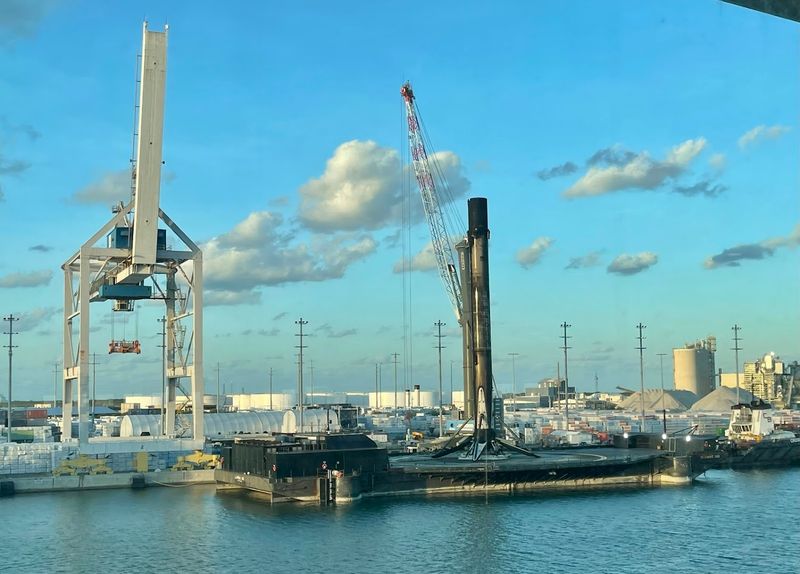
A stretch of Florida coastline became the launch point for one of the most ambitious technological competitions in human history.
Cape Canaveral and nearby Kennedy Space Center served as central hubs for America’s space program during the Cold War. Rockets carrying astronauts, satellites, and lunar missions launched from the region as the United States raced against the Soviet Union for dominance in space exploration.
The Apollo 11 mission launched from here in 1969 before successfully landing humans on the moon for the first time. Millions of Americans watched the launch and moon landing on television, experiencing a moment that combined science, politics, engineering, and national identity.
The achievements transformed technology far beyond space travel itself. Advances in computing, communications, materials science, and engineering emerged partly from the demands of the space race.
Today, visitors can tour launch complexes, museums, and enormous rockets preserved at Kennedy Space Center Visitor Complex. Modern launches continue regularly, linking the site’s historic legacy with current space exploration efforts.
12. Ellis Island, New York Harbor, New York
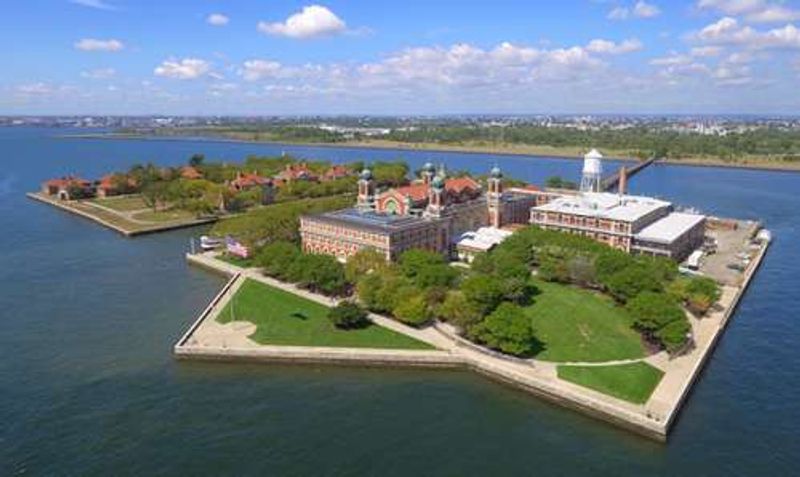
Millions of immigrants passed through Ellis Island carrying suitcases, documents, hopes, fears, and occasionally very questionable ideas about how cold New York winters might actually be.
From 1892 to 1954, Ellis Island served as America’s busiest immigration inspection station. More than twelve million immigrants entered the United States through the island during years of enormous demographic change and industrial growth.
Families arriving here underwent medical exams, legal inspections, and interviews before gaining entry into the country. For many, Ellis Island represented both opportunity and uncertainty as they prepared to begin entirely new lives.
The immigration waves passing through the island transformed American culture, labor, politics, religion, food, language, and urban development. Entire neighborhoods and industries evolved partly because of newcomers arriving through New York Harbor.
Today, the Ellis Island National Museum of Immigration preserves records, exhibits, and restored halls explaining the immigrant experience. Many Americans can trace family histories directly through documents connected to the site.
Share this story