There is a place in Oregon where you can stand behind a curtain of falling water, feel the cool mist on your face, and hear nothing but the roar of nature all around you. I had heard about this park for years before I finally made the trip, and honestly, I kept asking myself why I had waited so long.
The Trail of Ten Falls is one of those rare hikes where every single turn brings something new to see, and the whole experience feels almost unreal. By the time I finished the loop, I was already planning my next visit.
Where the Adventure Begins: Location and Park Overview
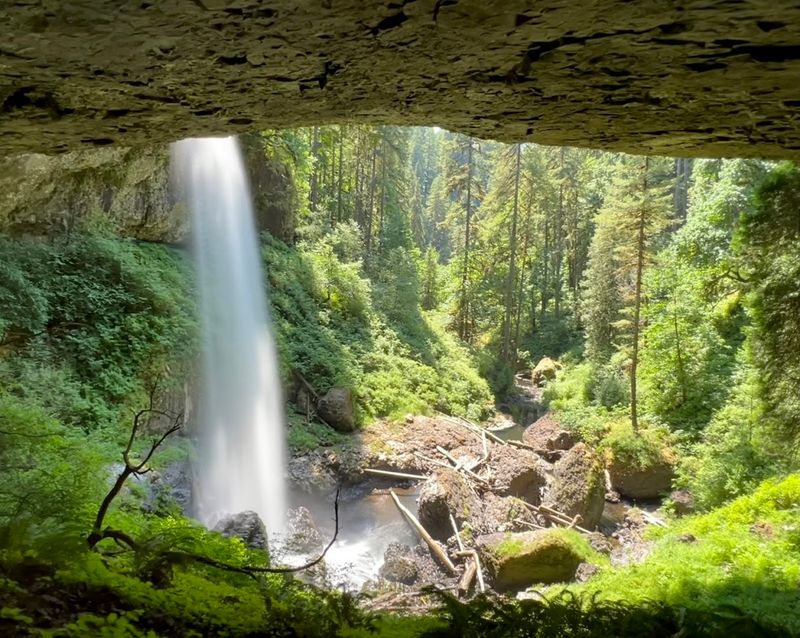
Silver Falls State Park sits about 26 miles east of Salem, Oregon, at 20024 Silver Falls Highway SE, Sublimity, OR 97385. It is the largest state park in Oregon, covering roughly 9,200 acres of old-growth forest, canyon trails, and creek-carved terrain that feels genuinely wild.
The park is open daily from 8 AM to 6 PM, and a day-use parking fee of around $10 to $12 applies. You can reach the park by phone at 1-800-551-6949, or find detailed information on the official Oregon State Parks website.
The first thing I noticed when I arrived was how well the whole place is organized. There is ample parking, clean restrooms, a cozy cafe inside the South Falls Lodge, and a nature gift shop stocked with trail maps and outdoor gear.
Rangers are genuinely helpful and easy to reach, which made the whole visit feel welcoming from the very start.
The Trail of Ten Falls: Oregon’s Most Spectacular Loop Hike
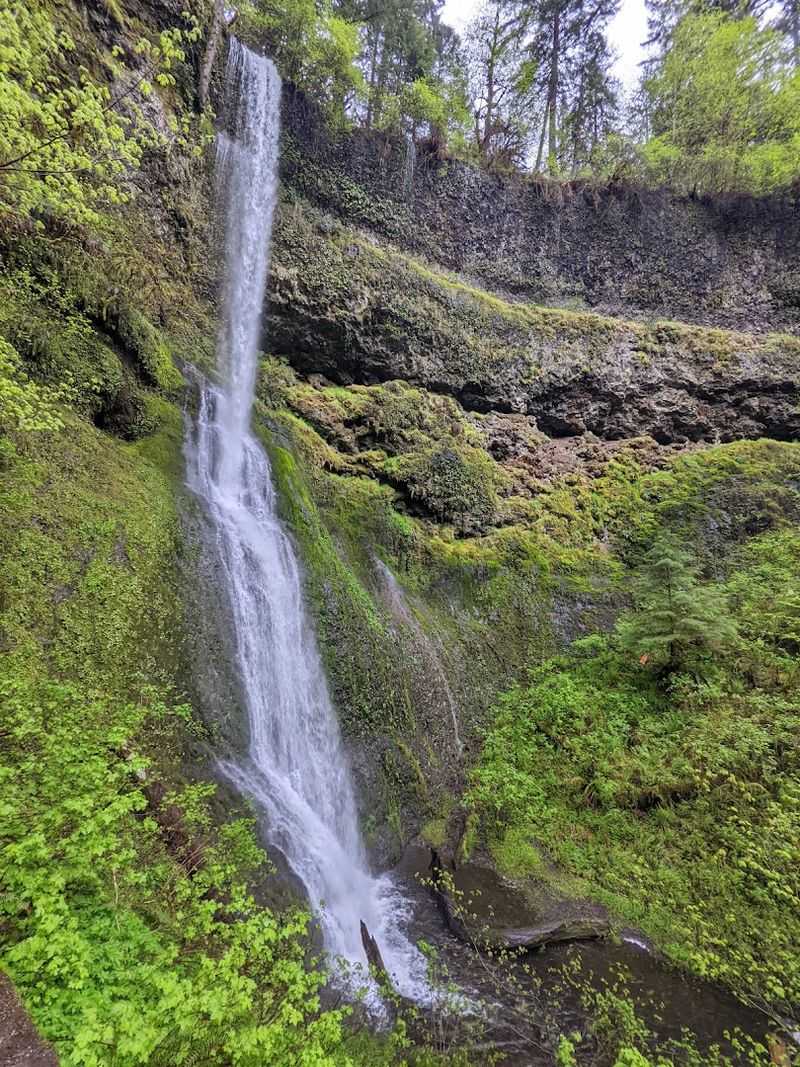
Few hikes in the Pacific Northwest pack as much visual reward into a single route as the Trail of Ten Falls. The full loop stretches 7.2 miles and guides you past ten distinct waterfalls, each with its own personality, height, and surrounding landscape.
The trail is rated easy to moderate, which means most people with a reasonable fitness level can complete it comfortably. Families with kids tackle it regularly, and the path is wide and well-maintained throughout.
That said, some sections include steep staircases carved into the canyon walls, so good footwear is non-negotiable.
I started from the South Falls Day Use Area early in the morning, and the forest was still quiet when I set off. The trail winds through fern-lined canyons, crosses wooden bridges, and hugs the canyon rim in places that offer sweeping views down to Silver Creek below.
The whole loop took me about three and a half hours at a relaxed pace, with plenty of stops for photos and just standing still to take it all in.
South Falls: The Crown of the Canyon
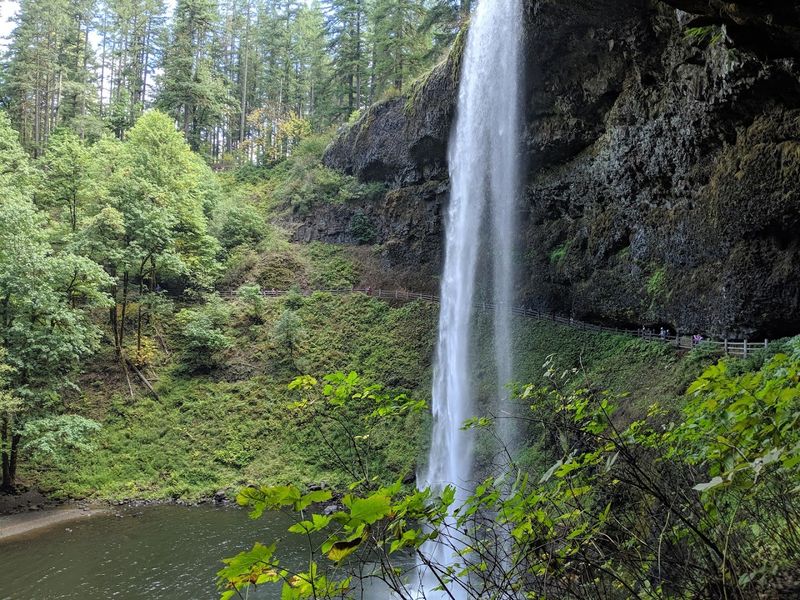
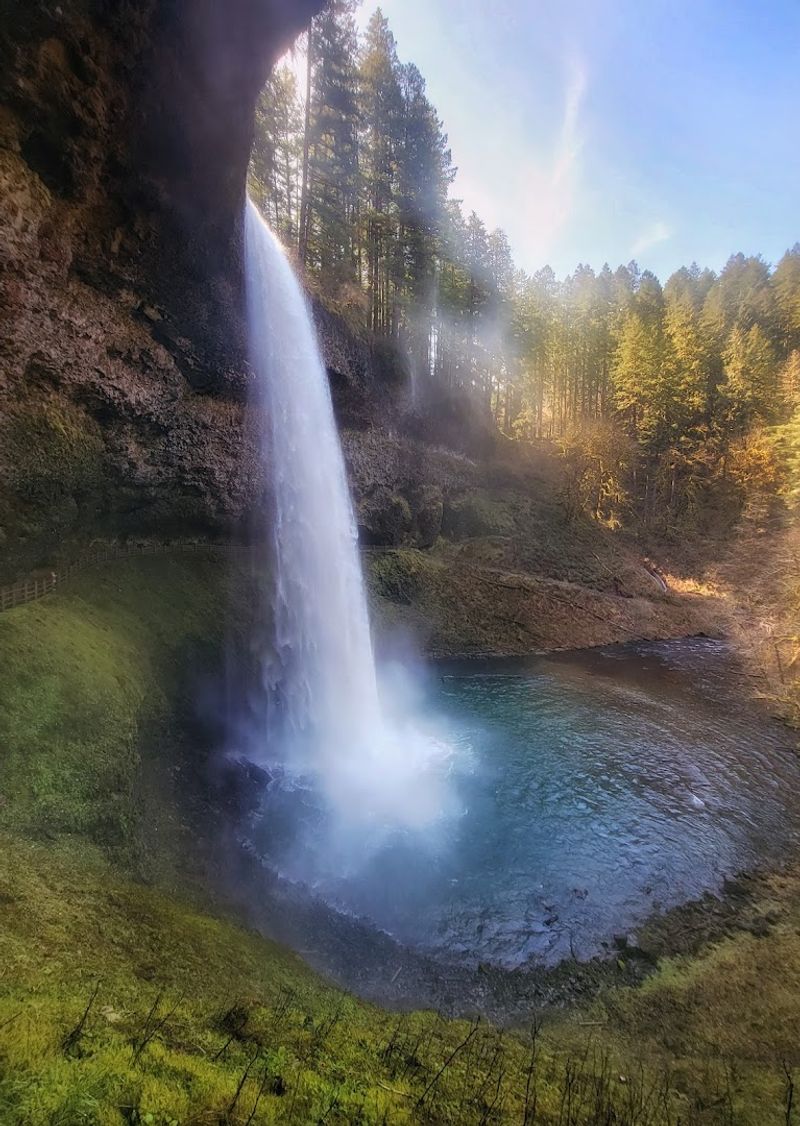
South Falls is the showstopper of the entire park, and it earns that title without any argument. Dropping 177 feet into a wide basalt pool, it is the tallest waterfall in the park and the first major landmark you reach from the South Falls trailhead.
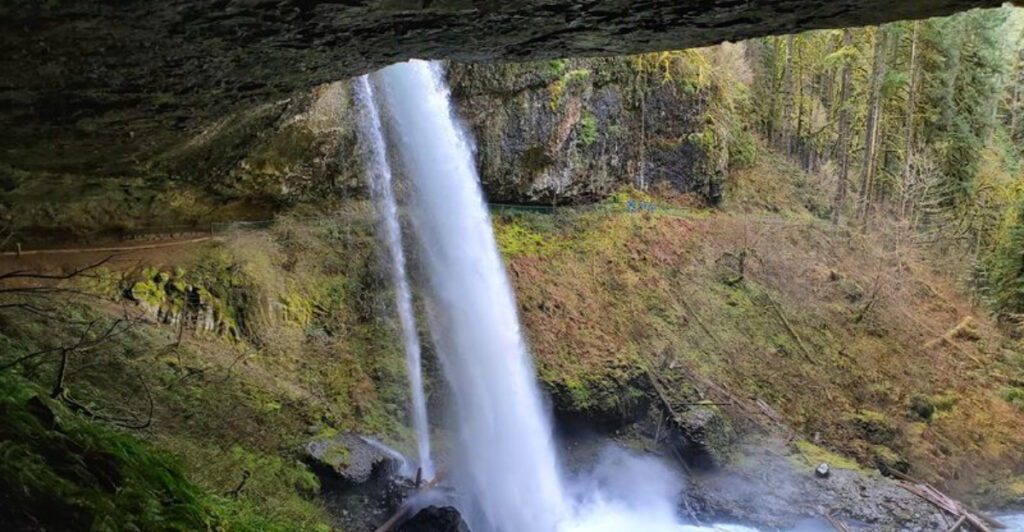
What makes it truly special is the trail that curves behind the falls itself. You walk along a narrow basalt ledge, with the waterfall crashing just feet in front of you and the canyon wall at your back.
The mist hits your face, the sound is thunderous, and the light filtering through the falling water creates a color effect that no photo fully captures.
I had seen pictures before my visit, but nothing prepared me for actually being there. The scale of it, the noise, the cold spray, the way the rock gleams wet beneath your feet, it all adds up to something genuinely memorable.
South Falls alone would justify the drive from Salem or Portland. The fact that nine more waterfalls follow it on the same trail is almost unfair in the best possible way.
Walking Behind the Waterfalls: The Experience You Cannot Miss
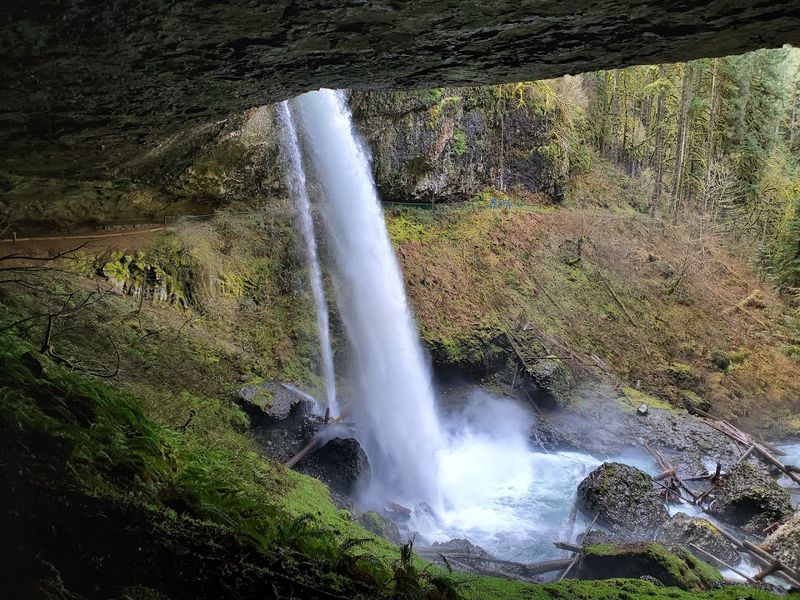
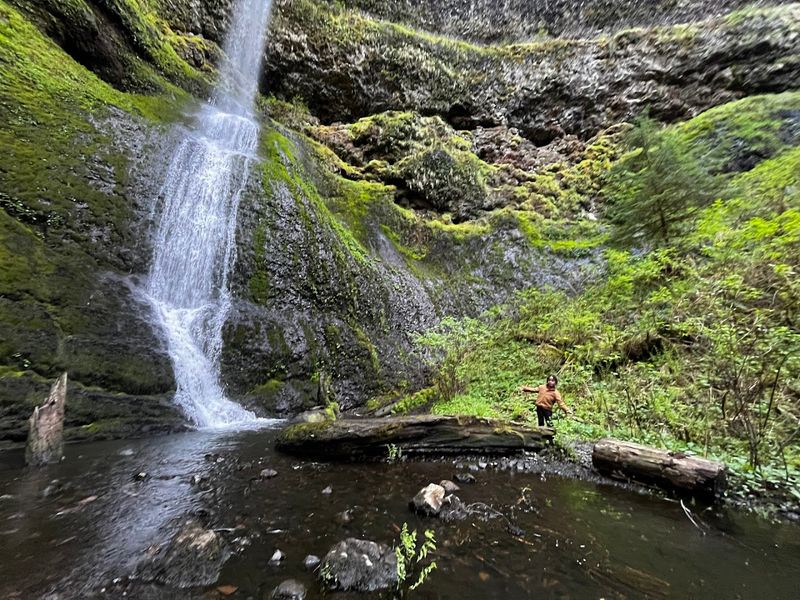
Four of the ten waterfalls on the trail allow you to walk directly behind the falling water, and that detail alone sets Silver Falls State Park apart from most parks in the country. South Falls and Lower South Falls are the two most dramatic examples, but Upper North Falls and North Falls also offer behind-the-falls access.
The basalt rock formations here were created by ancient lava flows, and over thousands of years, the softer rock behind the harder outer layer eroded away, carving out the cave-like alcoves that now form the passages behind the falls. So when you walk behind one, you are essentially standing inside a geological story millions of years in the making.
The experience is sensory in a way that surprises most first-time visitors. The sound bounces off the canyon walls and surrounds you completely.
The air is noticeably cooler and wetter. The view looking outward through the curtain of water is something that sticks in your memory long after you have dried off and driven home.
A light rain jacket is genuinely useful here, not just a precaution.
North Falls and the Quieter Side of the Park
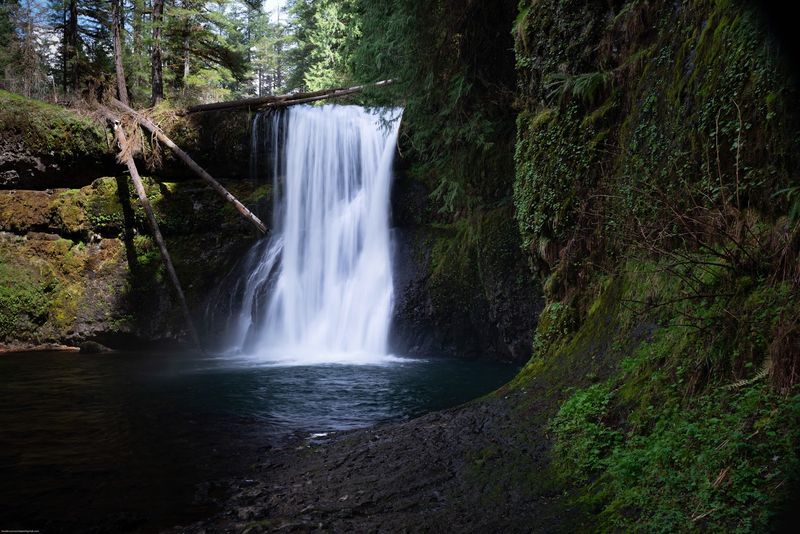
Most visitors make a beeline for South Falls and call it a day, but the north section of the trail rewards those who push further. North Falls drops 136 feet and is wide enough that the water spreads into multiple streams before crashing into the pool below.
The trail behind it is one of the most dramatic passages in the park.
Upper North Falls is a quieter spot that many hikers pass quickly, but it is worth slowing down there. The creek runs shallow and clear nearby, and on my visit I spotted dozens of crawdads moving along the streambed, which was an unexpected and entertaining bonus.
The north side of the loop tends to see fewer visitors, especially on weekday mornings, so the atmosphere feels more peaceful. The forest canopy is dense and the trail occasionally narrows, giving the whole section a wilder feel compared to the polished south end.
If you have the time and energy for the full 7.2-mile loop, the north falls section is the part of the hike that will make you feel like you genuinely earned the views.
Best Times to Visit and What to Expect Each Season
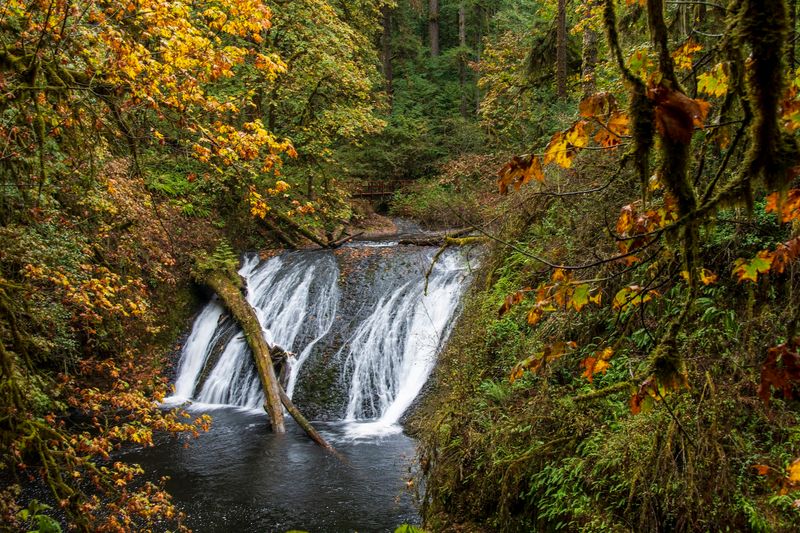
Silver Falls State Park is open year-round and looks beautiful in every season, though each time of year brings a different character to the trail. Spring is widely considered the peak season for waterfall volume, with snowmelt and heavy rain sending Silver Creek surging and all ten falls running at full force.
Summer draws the largest crowds, especially on weekends. Arriving at opening time, which is 8 AM, is the single best strategy for getting a parking spot and having the first stretch of trail nearly to yourself.
By mid-morning, the lot fills up fast and the trail gets noticeably busy near South Falls.
Fall brings dramatic color to the canyon, with maples and alders turning gold and orange against the evergreen backdrop. Late October visits can be absolutely stunning if the timing lines up with peak foliage.
Winter is the least crowded season, and while the trails can get slippery, the waterfalls sometimes develop ice formations around their edges that are genuinely striking. Shoe grips and waterproof layers make a winter visit very manageable, and the park even sells traction cleats at the nature store near the lodge.
Practical Gear and Trail Tips That Actually Matter
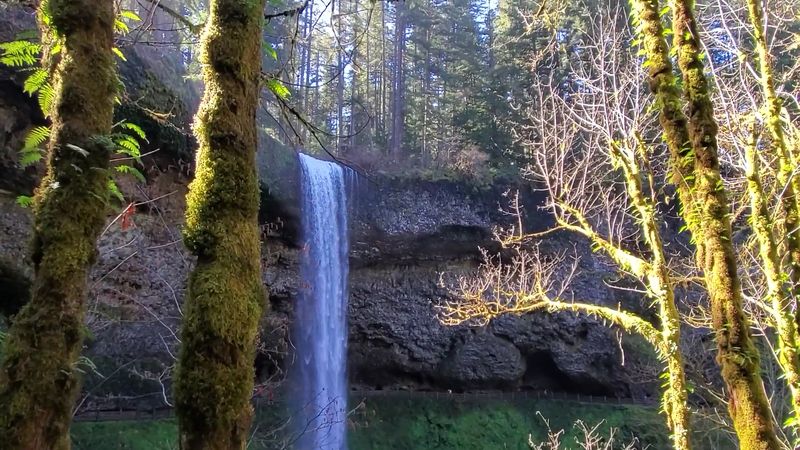
The trail conditions at Silver Falls can catch unprepared visitors off guard, so a little planning goes a long way. The most important piece of advice is to wear proper footwear.
The path includes steep staircases, wet rock ledges behind the waterfalls, and sections that stay muddy long after rain. Flip-flops are a genuinely bad idea here, and the trail will make that clear quickly.
Bring a water bottle, even though the hike is not extreme. The full loop is 7.2 miles, and many people who plan to walk just two miles end up going much further because the trail keeps pulling them forward.
Packing a snack is a smart move too, especially if you plan to do the full loop.
A light rain jacket doubles as both waterproof protection from Oregon weather and a shield against the mist behind the falls. The park also recommends bringing a state park pass or being prepared to pay the day-use parking fee at the gate.
Cell service can be spotty inside the canyon, so downloading a trail map before you arrive, or picking one up at the visitor area, saves a lot of guesswork mid-hike.
Camping and Cabin Stays Inside the Park
Spending the night inside Silver Falls State Park is a completely different experience from a day trip, and the park offers several ways to do it. There are traditional campsites with hookups for RVs as well as tent camping areas, plus a set of rental cabins that are comfortable enough to feel like a real retreat.
The cabins are a popular choice for families, and they fill up quickly once reservations open. Some of the cabins are handicap-accessible, and proximity to the shower and restroom facilities is something worth checking when booking, especially if you are camping with young kids or older guests.
Cabin 7 sits close to the bathrooms, which turns out to be more useful than it sounds at two in the morning.
Wildlife is active around the campground, particularly raccoons, so storing food in sealed containers or locking it in your vehicle is essential. The park surroundings are genuinely forested and quiet at night, and waking up to birdsong with a short walk to the trailhead is the kind of morning that makes you feel like you made an excellent decision.
Reservations during peak season go fast, so booking well in advance is strongly recommended.
The Cafe, Lodge, and Gift Shop Worth Stopping At
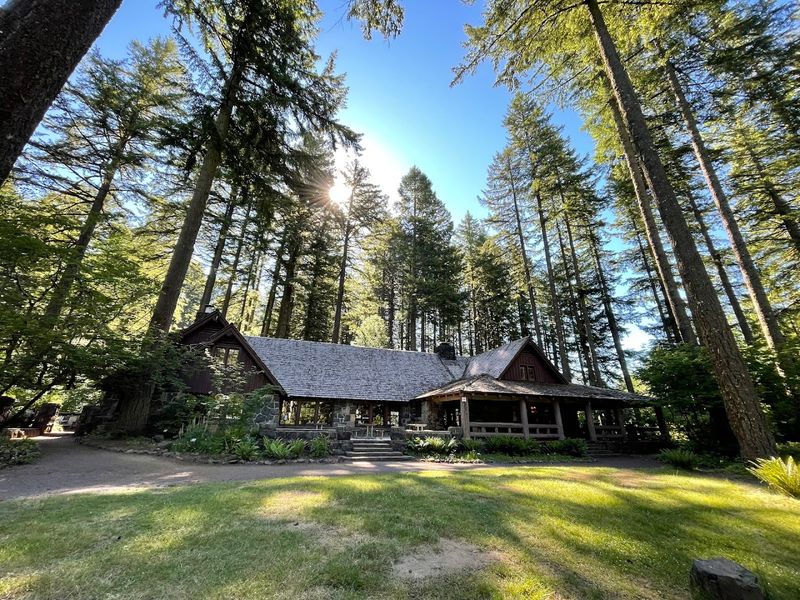
The South Falls Lodge sits right at the main trailhead, and it is more charming than you might expect from a park facility. The cafe inside serves warm drinks and snacks, and on a cold or rainy Oregon morning, a hot coffee or tea to carry on the trail feels like a small luxury that makes a big difference.
The lodge itself is a historic building with a stone fireplace that roars during cooler months. Sitting by the fire after a long hike, with wet boots drying out and your legs finally getting a rest, is one of those simple pleasures that Oregon seems to do particularly well.
The nature gift shop attached to the lodge stocks a solid selection of trail maps, local books, nature-themed gifts, and practical outdoor gear including walking sticks and ice traction cleats for winter hiking. The items lean toward quality rather than cheap souvenirs, and the shop has a genuine love-of-the-outdoors feel to it.
Supporting the park by spending a few dollars there feels good, and you will likely find something worth bringing home as a reminder of the visit.
Why Silver Falls Belongs on Every Oregon Itinerary
Oregon is full of natural beauty, but Silver Falls State Park holds a specific place that is hard to replicate anywhere else. The combination of ten waterfalls, canyon trails, behind-the-falls passages, historic lodge facilities, and overnight camping options makes it a destination that works for solo hikers, couples, and families with kids of all ages.
The park draws visitors from Salem, Portland, and well beyond Oregon’s borders. People travel from as far as the East Coast and even from outside the country to walk the Trail of Ten Falls, which says something real about its reputation.
It holds a 4.9-star rating across more than ten thousand reviews, which is the kind of consistency that only comes from a place that genuinely delivers on its promise.
For anyone building an Oregon travel plan, Silver Falls deserves a full day rather than a rushed half-day stop. The trail rewards patience, the scenery changes with every mile, and the moment you step behind a waterfall for the first time, you will understand completely why this park keeps pulling people back season after season.
Share this story