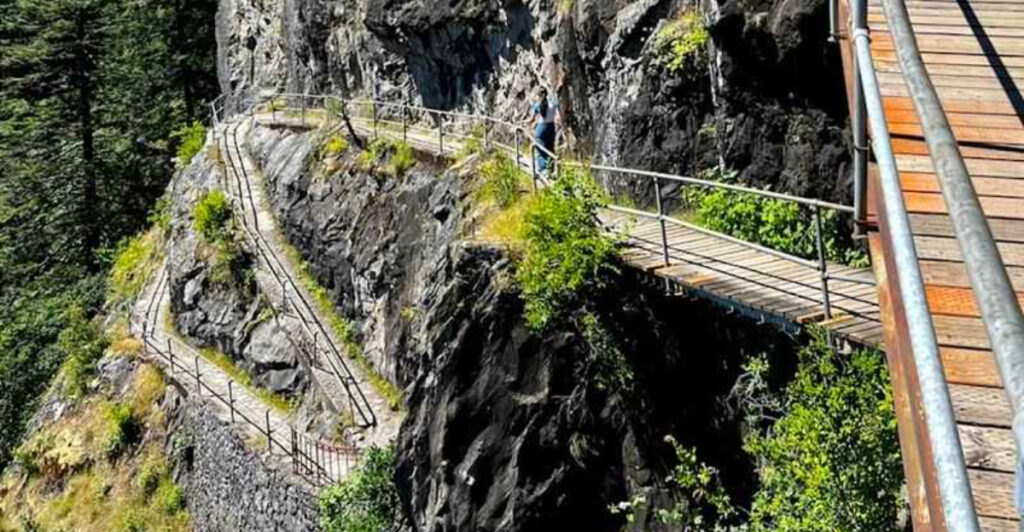
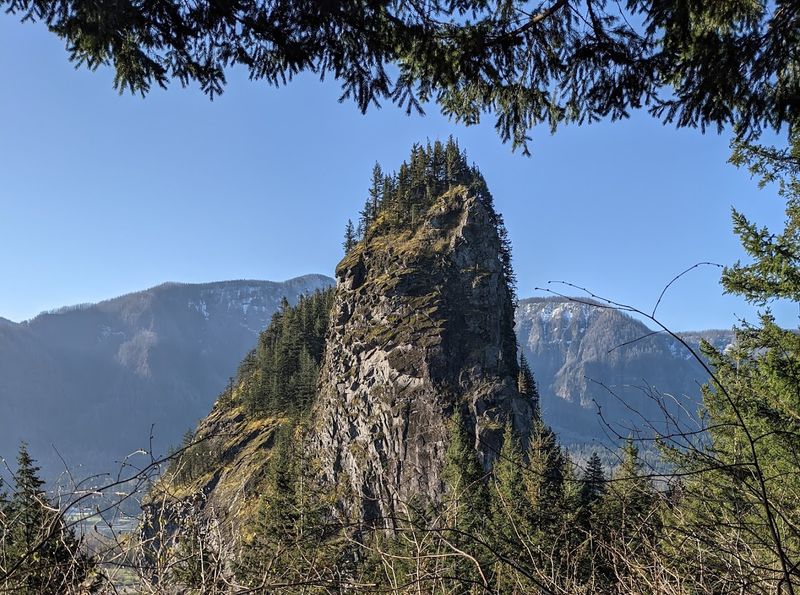
There is a hike in Washington State that literally takes you up the inside core of an ancient volcano, switchback by switchback, with the Columbia River Gorge spreading out below you like a painting. The rock itself stands nearly 850 feet tall and is one of the largest monoliths in North America.
Most people drive past it on Highway 14 without realizing what they are looking at. Once you know the story behind it, though, you cannot help but stop.
This article walks you through every important angle of the experience, from the geology and history to the trail itself, the views, the camping, and everything in between, so you leave fully prepared to make the most of your visit.
The Rock That Outlasted Everything Around It
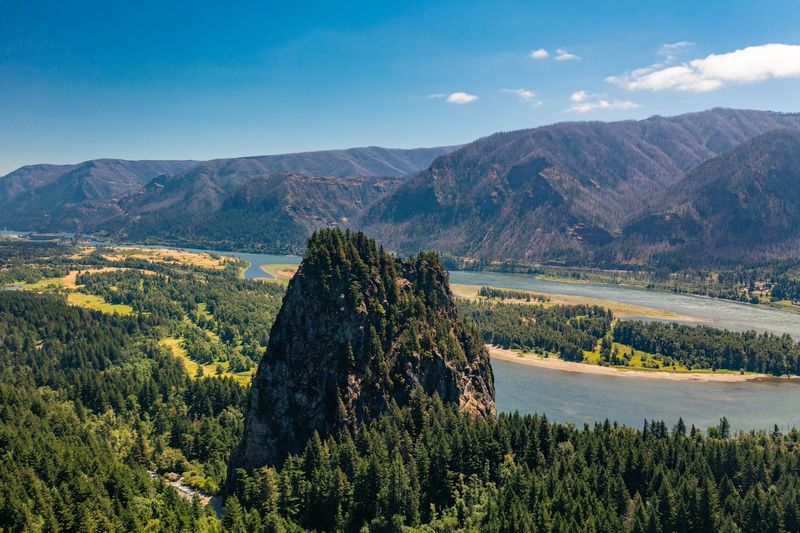
About 57,000 years ago, a volcano erupted in what is now the Pacific Northwest, and over thousands of years, everything soft and loose around its hardened core was stripped away by floods, wind, and time. What remained was Beacon Rock, a nearly 850-foot basalt plug that now stands along Highway 14 in Stevenson, Washington, at 34841 WA-14.
Geologists consider it one of the most dramatic examples of volcanic neck erosion on the continent. The same catastrophic Missoula Floods that carved the Columbia River Gorge also helped expose the rock to its current height and shape.
Lewis and Clark noted it in their journals during their 1805 expedition, calling it a key landmark as they traveled toward the Pacific Ocean. That kind of history adds a whole different layer to the experience of standing at its base.
Unlike anything you might find in Oklahoma or most other states, this monolith feels genuinely ancient and untouched in a way that is hard to put into words until you are right in front of it.
How the Trail Came to Be
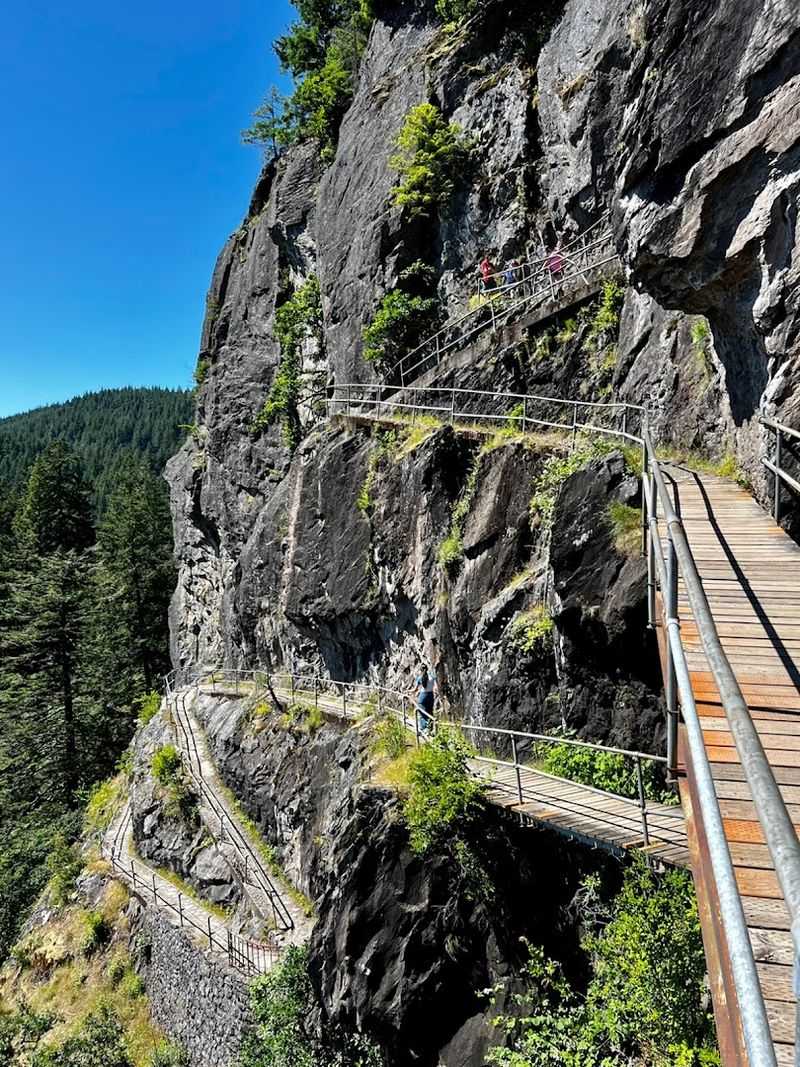
Two men built this trail by hand between October 1915 and April 1918, and that fact alone makes the climb feel completely different once you know it. Henry Biddle purchased the rock in 1915 to protect it from being blasted apart for use as a jetty, and he immediately set to work creating a path to the summit.
He and a small crew drilled bolts into the rock face, installed iron railings, and carved a series of more than 50 switchbacks into the volcanic stone. The work was painstaking, slow, and physically demanding in ways that modern trail builders rarely face.
The trail has been maintained and updated over the decades, but its original character remains largely intact. You can still feel the craftsmanship in the way each turn is placed to maximize both safety and the view.
Hikers from across the country, and even visitors who have traveled through Oklahoma and beyond, frequently mention that the hand-built quality of this trail gives it a personality that modern engineered paths simply do not have. It feels personal, almost like a gift left behind by someone who truly loved this place.
What to Expect When You Arrive
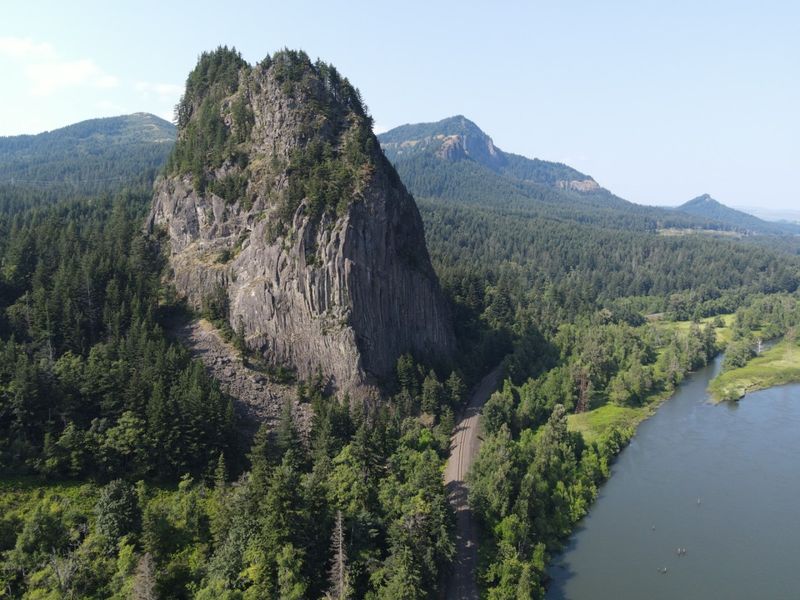
The trailhead sits right off Highway 14 in Stevenson, Washington, and the parking situation is something worth planning around. On weekday mornings, spaces open up fairly easily, but by mid-morning on a Saturday the lot fills quickly and latecomers sometimes have to wait.
A Washington State Discover Pass is required for parking, and it costs around ten dollars for a day pass or thirty-five dollars for an annual pass. You can buy the annual version at Fred Meyer, Walmart, or through the Washington State Parks website, which makes it convenient to grab ahead of time.
The restrooms are located at the parking area, so use them before you start the climb because there are no facilities on the trail itself. The park is open daily from 8 AM to 10 PM, so early morning visits offer both cooler temperatures and lighter crowds.
A small unpaved lot sits just west of the main paved parking area and offers a picnic table with a roofed shelter, which is a great spot to fuel up before the hike. First-timers often underestimate the elevation gain, so eating something light beforehand is genuinely smart planning.
The Climb Itself, Step by Step
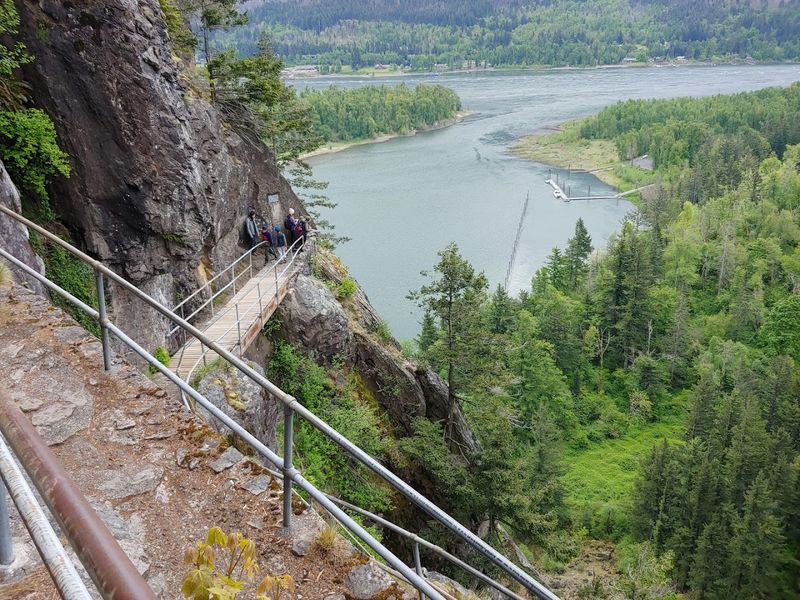
The trail is 1.4 miles round trip with over 500 feet of elevation gain, and those numbers sound modest until you are actually on the path and realize just how relentless the switchbacks are. The route starts in a forested section near the base, then transitions onto the open rock face where the zigzag pattern becomes more pronounced and the views start opening up.
Sturdy metal railings line most of the exposed sections, which makes the climb feel secure even for people who are nervous about heights. The railings are well-anchored and have held up through decades of use, so they inspire genuine confidence rather than just the appearance of safety.
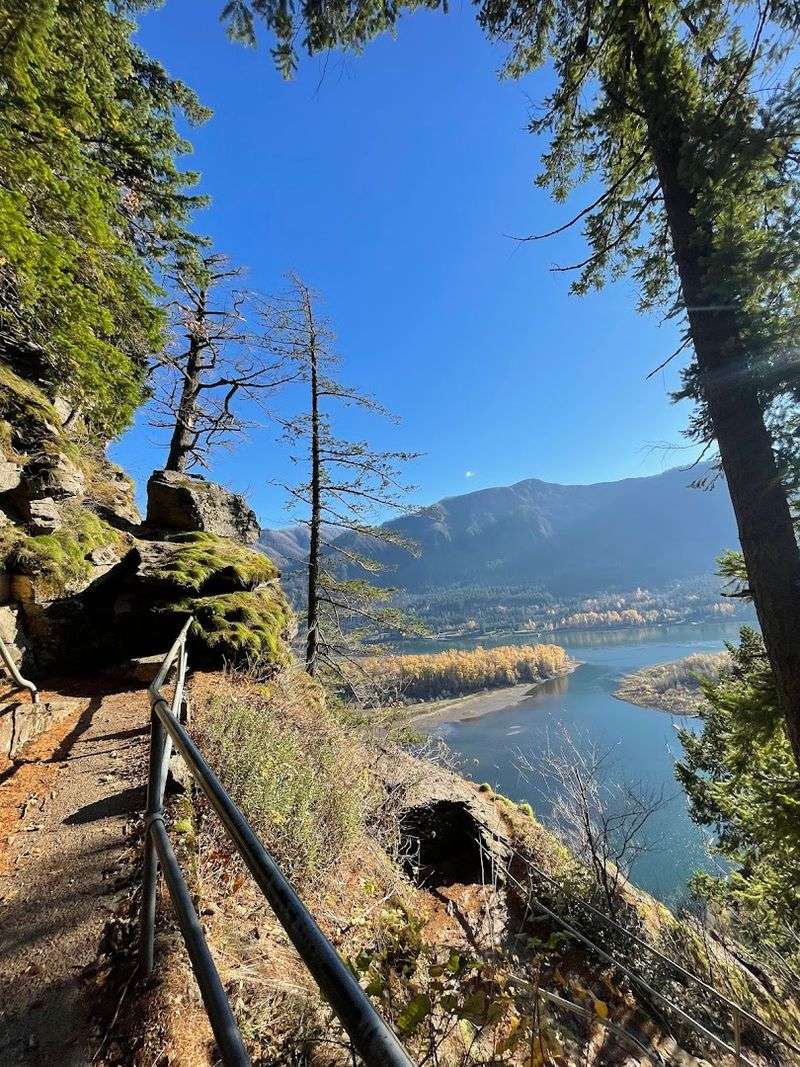
The best views actually come during the ascent rather than at the very top, where trees partially block the panorama. Around the halfway point, the trail crosses to the southeast-facing side of the rock and delivers a wide, unobstructed look at the Columbia River stretching into the distance.
Hikers who have explored trails in Oklahoma, the Rockies, and across the Southwest often say the Beacon Rock climb feels unlike anything else they have experienced, not because of its length, but because of how dramatically the scenery changes with every single turn.
Views That Reward Every Step
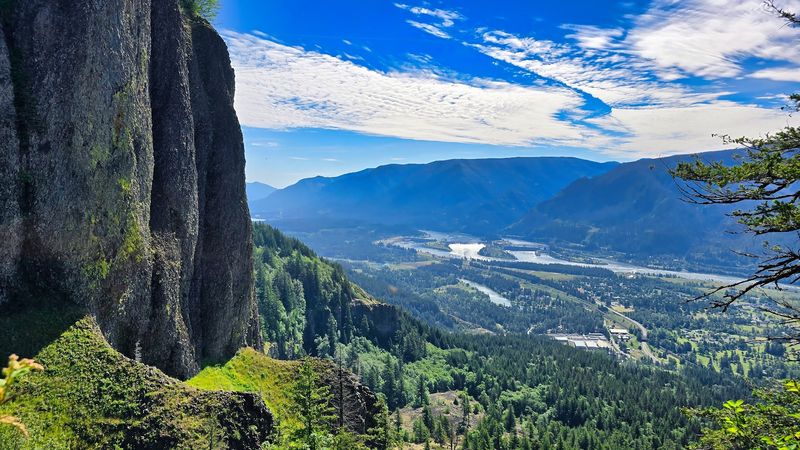
The Columbia River Gorge is one of the most visually striking landscapes in the entire Pacific Northwest, and the views from the Beacon Rock trail put you right at eye level with the best of it. As you climb higher, the river broadens below you and the layered ridgelines of Oregon and Washington stack up on either side like a scene from a geography textbook.
The first major viewpoint appears on the southwest side of the rock and gives you a clear look down the valley toward Portland. After the trail wraps around to the southeast face, the perspective shifts entirely and you see the gorge stretching eastward toward drier, more open terrain.
Many hikers describe the midpoint views as the highlight of the whole trip, even more so than the summit. The top offers a small, flat area with room for maybe ten people comfortably, and the surrounding trees reduce the view somewhat.
On clear days, the reflection of the rock itself in the river below is a favorite subject for photographers. The light in the early morning hours turns the basalt walls a warm amber color that no filter can fully replicate, making it worth the early alarm.
Wildlife and Nature Along the Way
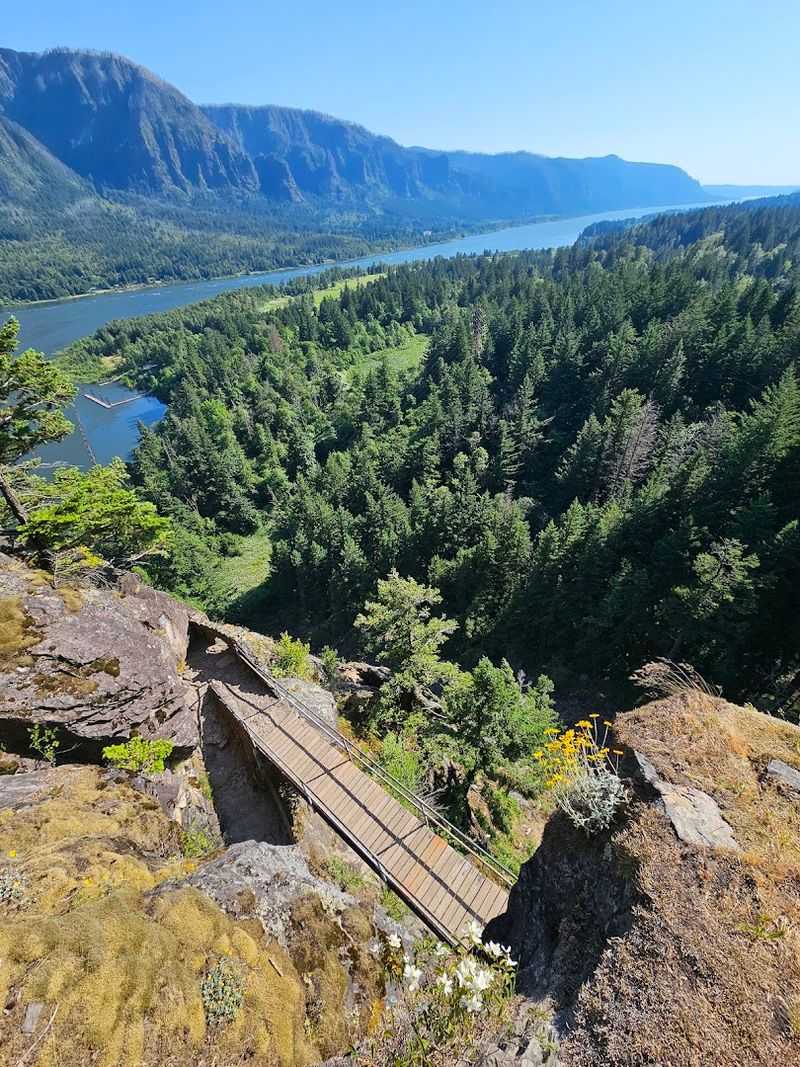
The park sits within the Columbia River Gorge National Scenic Area, which means the biodiversity here is genuinely rich and worth paying attention to even when the rock is the main draw. Bald eagles and red-tailed hawks are regular visitors, and the campground area in particular is known as a reliable spot for eagle sightings along the riverbank.
The forested lower sections of the trail are home to Douglas fir, big-leaf maple, and western red cedar, and the understory fills with ferns and wildflowers in spring. The contrast between the dense green canopy at the base and the bare volcanic rock higher up creates a dramatic shift in atmosphere as you ascend.
Deer are occasionally spotted near the day-use area in the early morning, and the river itself supports a healthy population of osprey that can be seen diving for fish from the picnic area. The park feels genuinely wild even though it sits close to the highway.
Nature lovers who have visited parks across the country, including those in Oklahoma and the Southeast, frequently note that the Pacific Northwest ecosystem here has a lushness and layered complexity that feels almost tropical compared to drier regions, especially after a rainy season.
Camping at the Park
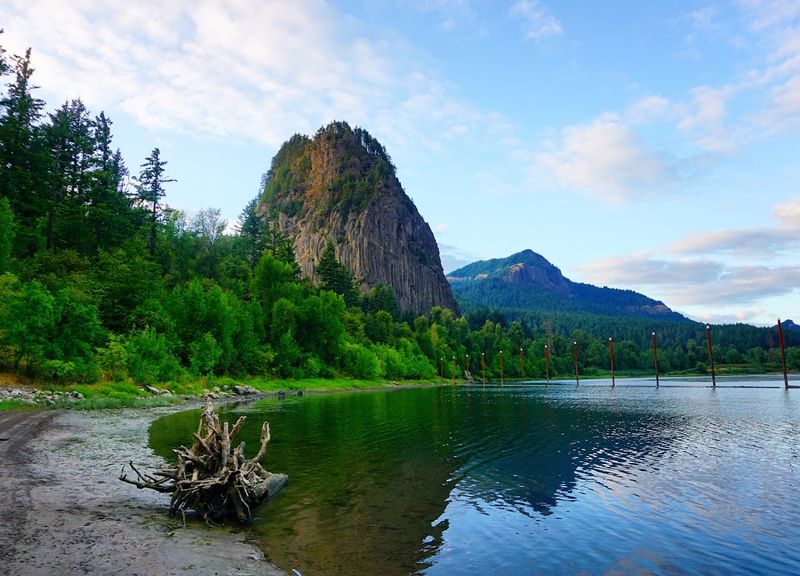
The campground at Beacon Rock State Park is small and intentionally low-key, which is part of its appeal for people who prefer a quieter overnight experience over a large, crowded facility. The year-round section sits between the highway and the railroad tracks, and while trains do pass regularly, they do not blow their horns at this stretch, so the noise is manageable.
Two primitive sites sit right beside the Columbia River and offer a front-row view of the water and the rock itself from the shoreline. Those sites fill up fast, so booking ahead through the Washington State Parks reservation system is strongly recommended, especially for summer weekends.
A separate seasonal campground on the south side of the highway opens in spring and runs through summer, offering additional sites with more amenities. The year-round campground has a 13-foot clearance limit on the train bridge, which means taller RVs cannot reach the powered sites.
Waking up with Beacon Rock right outside your tent and the Columbia River a short walk away is the kind of morning that stays with you. Visitors who have camped across Oklahoma, Montana, and the Cascades often call this one of the most uniquely situated campgrounds they have ever used.
Beyond the Main Rock
Most visitors come for the main summit trail and leave without realizing the park has considerably more to offer on both sides of the highway. The day-use area west of the trailhead includes a picnic zone with views of the gorge that several visitors have compared to scenes from the Alps or the North Cascades.
A trail to Little Beacon Rock gives you a completely different perspective on the main monolith, letting you see its full height and shape from a distance that the base simply cannot provide. That viewpoint is particularly popular with photographers who want the classic shot of the rock rising above the river.
There is also a boat launch at the park that allows access to the Columbia River, and the fishing and paddling opportunities along this stretch of water are excellent. The park connects to a broader network of trails in the gorge area, so ambitious hikers can extend their day significantly beyond the summit climb.
A waterfall trail within the park adds another layer to the experience, leading through dense forest to a dramatic cascade that drops into a deep pool. The hike to reach it is more demanding than the rock trail, but the payoff is a genuinely secluded natural feature that most casual visitors never find.
Tips for Visiting Safely and Comfortably
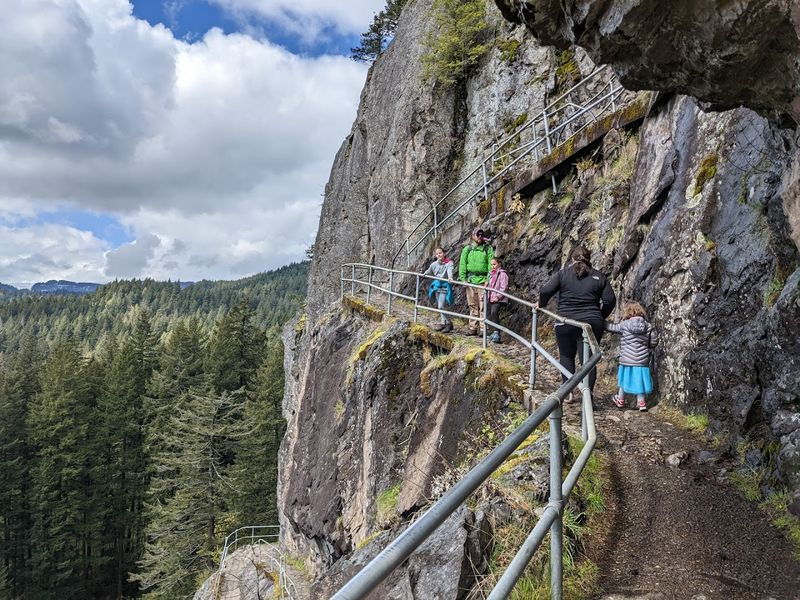
Footwear makes a real difference on this trail. The path is uneven, and the rock surface becomes genuinely slippery when wet, so hiking boots with ankle support are strongly recommended over running shoes or sandals.
Several visitors have reported near-ankle sprains when wearing lighter footwear on the steeper sections.
The trail is narrow in many places, and trail etiquette matters more here than on wider paths. Uphill hikers generally have the right of way, and stepping aside in a designated wider spot rather than on the edge of the path keeps everyone safe.
Bringing water is essential since there are no refill stations on the trail, and the combination of sun exposure and elevation gain can leave you more dehydrated than you expect. A small snack pack is worth tucking into your bag as well, especially if you plan to linger at the top or explore the day-use area afterward.
Dogs are allowed on the trail but the narrow switchbacks make it challenging with multiple large animals. Leashes are required, and the tight turns can become genuinely difficult to manage with more than one dog.
A single, well-trained dog on a short leash tends to handle the climb without too much trouble.
Why This Hike Belongs on Your Pacific Northwest List
There are hundreds of hikes in the Pacific Northwest, but very few of them let you physically climb the hardened core of an ancient volcano with the Columbia River spreading out below you at every turn. Beacon Rock State Park delivers that experience in a compact, accessible package that works for a wide range of fitness levels and schedules.
The park earns a 4.8-star rating from over 2,500 reviews, which reflects just how consistently it delivers on its promise. The combination of geological drama, hand-built trail history, wildlife, camping, and river access makes it genuinely multi-layered in a way that most day hike destinations are not.
Whether you are driving east from Portland for a quick morning adventure or road-tripping through the region from a state as far away as Oklahoma, this park fits naturally into the itinerary. The drive along Highway 14 through the Washington side of the gorge is itself scenic enough to justify the route.
The park is open daily from 8 AM to 10 PM and can be reached by phone at 509-427-8265 or through the official site at parks.state.wa.us. Some places earn their reputation quietly over many decades, and Beacon Rock is exactly that kind of place.
Share this story