Europe’s skyline reads like an open history book, with every spire, dome, and archway telling a story that stretches back thousands of years. From ancient Greek temples to quirky modern masterpieces, the continent’s buildings capture the ambitions, beliefs, and creativity of the people who built them.
Whether you love history, art, or just really cool structures, these 15 buildings are guaranteed to leave your jaw on the floor.
La Sagrada Família — Barcelona, Spain
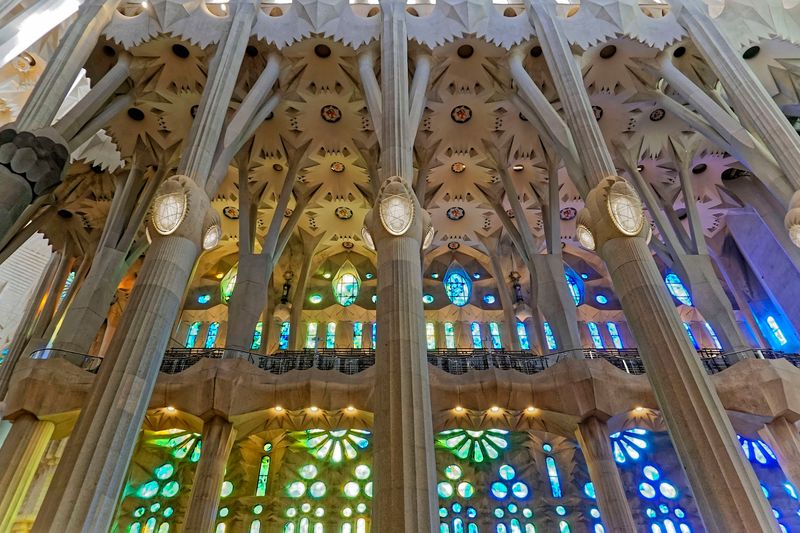
Nobody told Antoni Gaudí to play it safe, and thank goodness for that. La Sagrada Família is a basilica so wildly original that it looks more like a forest frozen in stone than a traditional church.
Construction kicked off in 1882, and the building is still not finished — making it one of the longest-running construction projects in history.
Gaudí designed the spires, facades, and interiors to reflect the natural world. Look closely and you will spot leaves, branches, and creatures carved into almost every surface.
The stained glass windows flood the interior with warm golden and deep blue light depending on the time of day, creating an atmosphere that genuinely stops visitors in their tracks.
Gaudí himself is buried in the crypt beneath the basilica, forever connected to his greatest work. Completion is expected around 2026, marking the centenary of his death.
With over four million visitors each year, La Sagrada Família is not just Barcelona’s most iconic landmark — it is one of the most visited buildings on the entire planet.
Colosseum — Rome, Italy
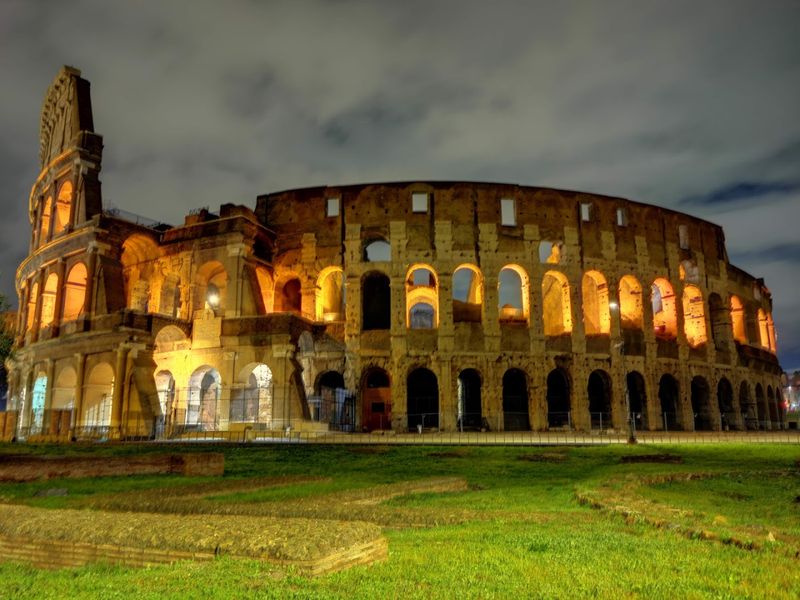
Standing inside the Colosseum, it is almost impossible not to feel the weight of 2,000 years pressing down on you. This massive oval amphitheater was built between 70 and 80 CE and could hold up to 80,000 roaring spectators.
Gladiator battles, animal hunts, and public spectacles were all part of the entertainment menu.
The engineering behind the Colosseum was genuinely ahead of its time. Roman builders used a clever system of vaults, arches, and concrete to create a structure that has survived earthquakes, lightning strikes, and centuries of stone-robbing.
Even in partial ruin, roughly two-thirds of the original structure is gone, the building still radiates raw power.
Today the Colosseum draws around six million visitors annually, making it the most popular tourist attraction in Italy. Restoration projects have been ongoing since the 1990s, slowly bringing this ancient giant back to its former glory.
Walking through its corridors is like flipping through the most dramatic chapter of Roman history — loud, brutal, and utterly fascinating.
Eiffel Tower — Paris, France
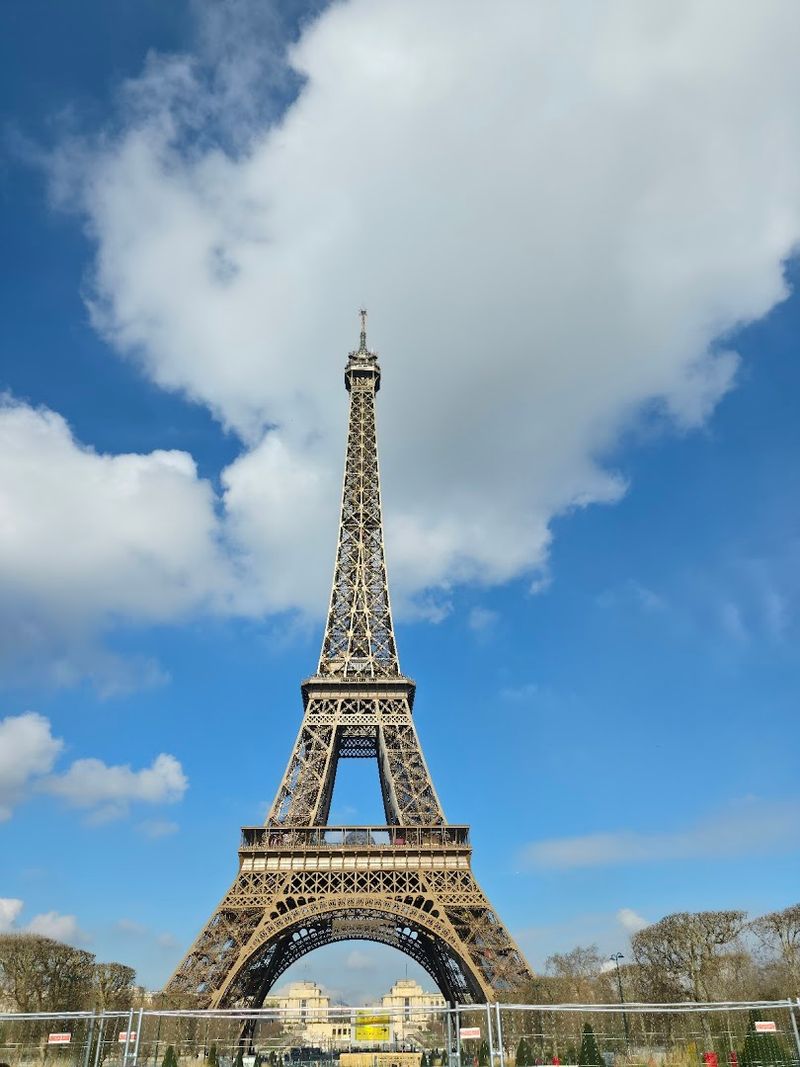
When the Eiffel Tower first appeared on the Paris skyline in 1889, critics called it an eyesore, a metal monstrosity, and an embarrassment to French culture. Fast forward to today, and it is the most visited paid monument in the entire world.
Gustave Eiffel must be having the last laugh.
Built as the entrance arch for the 1889 World’s Fair, the tower stands 330 meters tall and was the world’s tallest man-made structure for over 40 years. It is made from 18,000 individual iron parts held together by 2.5 million rivets.
Every seven years, workers repaint it entirely, using 60 tons of paint each time.
The tower has three observation levels, and the view from the top stretches up to 70 kilometers on a clear day. At night, it lights up with thousands of sparkling bulbs every hour on the hour, a display that has become one of Paris’s most beloved rituals.
Roughly seven million people climb or ride to the top each year, proving that first impressions are not always right.
Neuschwanstein Castle — Bavaria, Germany
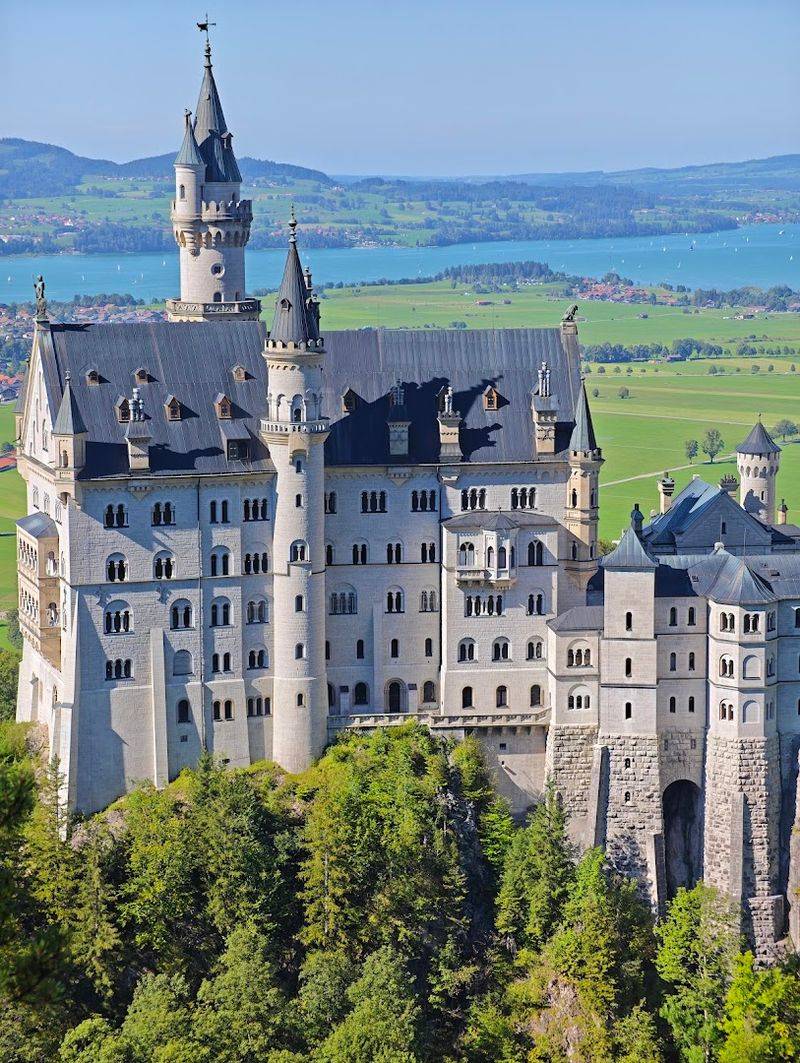
Perched on a rugged hilltop in the Bavarian Alps, Neuschwanstein Castle looks so perfect it almost seems fake. King Ludwig II commissioned it in 1869 as a personal retreat, a romanticized vision of medieval knighthood built during an era of steam engines and telegraphs.
The king lived here for only 172 days before his mysterious death in 1886.
The castle inspired Walt Disney’s design for Sleeping Beauty Castle, which means millions of people worldwide have admired a version of it without even knowing. Inside, the rooms are lavishly decorated with scenes from Germanic legends and operas by Richard Wagner, Ludwig’s favorite composer.
The Throne Room, with its stunning Byzantine-style mosaic floor, is particularly jaw-dropping.
Neuschwanstein attracts about 1.4 million visitors every year, with up to 6,000 people touring it on busy summer days. Despite its fairy-tale appearance, the castle was built using the latest 19th-century technology, including a central heating system and running water on every floor.
It proves that sometimes the most extraordinary buildings are born from one person’s wildly ambitious dream.
Notre-Dame Cathedral — Paris, France
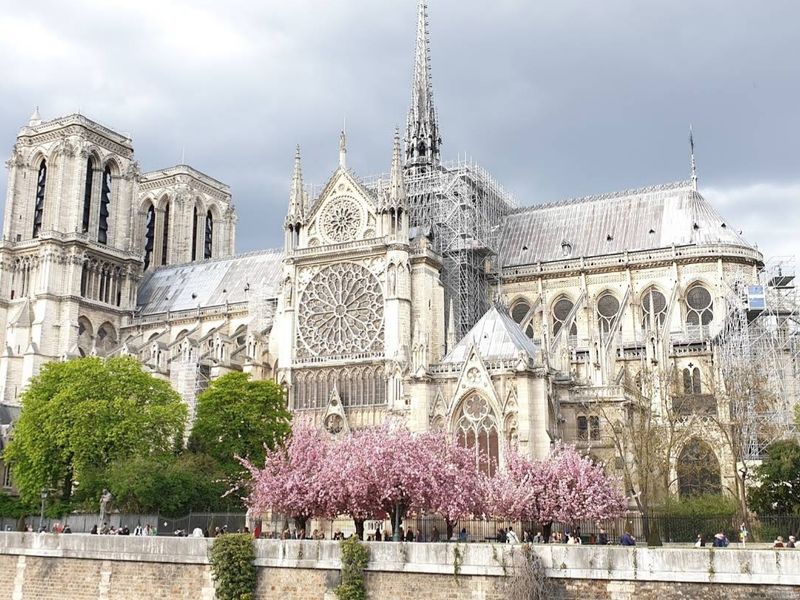
On April 15, 2019, the world watched in horror as flames tore through Notre-Dame Cathedral’s roof and collapsed its iconic spire. People gathered along the Seine River, singing hymns and weeping as centuries of history burned.
The emotional reaction proved just how deeply this Gothic cathedral is woven into the fabric of human culture.
Construction on Notre-Dame began in 1163, and it took nearly 200 years to complete. Its flying buttresses, which look like stone wings stretching out from the walls, were an engineering breakthrough that allowed builders to create much taller, thinner walls filled with enormous stained glass windows.
The three rose windows inside are among the most celebrated examples of medieval glass art in existence.
Restoration work began almost immediately after the fire, with craftspeople, architects, and historians collaborating from across the globe. The cathedral reopened in December 2024 after a massive five-year restoration effort.
Walking through its grand doors today means witnessing both 800 years of history and one of the most remarkable rebuilding stories of the modern era.
Palace of Versailles — France
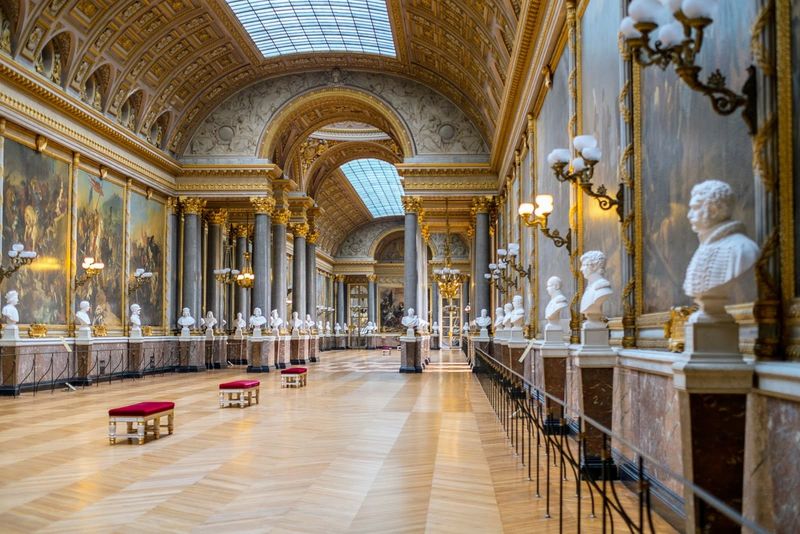
King Louis XIV of France once said he wanted a palace that would make every visiting ruler feel small by comparison. He succeeded spectacularly.
The Palace of Versailles is so enormous that it contains 2,300 rooms, 67 staircases, and gardens covering 800 hectares — roughly the size of 1,000 football fields.
The Hall of Mirrors is the palace’s most famous room, stretching 73 meters long and lined with 357 mirrors reflecting light from 17 arched windows. Louis XIV used it to dazzle diplomats and demonstrate French power.
It was also here, in 1919, that the Treaty of Versailles was signed, officially ending World War I.
Originally a royal hunting lodge, Versailles was transformed into the official royal residence in 1682 and remained the seat of French political power until the Revolution of 1789. Today it welcomes around eight million visitors per year, ranking among the most attended cultural sites in the world.
The fountains in the gardens alone contain 50 individual pieces, and on special weekends they are all switched on simultaneously for a truly spectacular show.
Acropolis and Parthenon — Athens, Greece
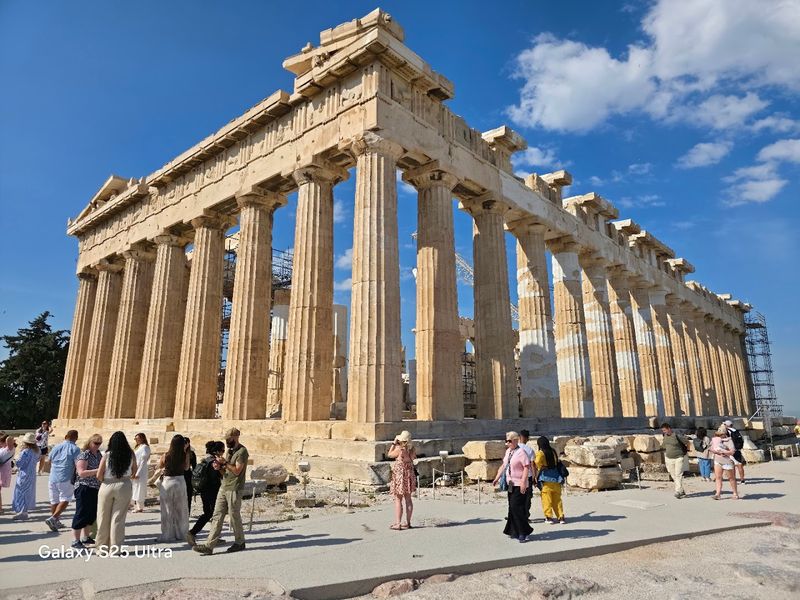
Climbing the rocky hill of the Acropolis in Athens feels like stepping backward through 2,500 years of human history. The Parthenon, completed in 432 BCE, sits at the very top, still commanding the skyline of modern Athens with its rows of white marble columns.
It was built to honor Athena, the goddess of wisdom and the city’s patron deity.
The mathematics behind the Parthenon are quietly mind-blowing. The columns are not perfectly straight — they curve slightly inward to create the optical illusion of perfect straightness when viewed from a distance.
Ancient Greek architects understood visual perception so well that they built subtle corrections into every element of the structure.
For centuries, the Parthenon served as a temple, a Christian church, and even a mosque before being badly damaged by an explosion in 1687. Restoration work has been ongoing since the 1970s, with archaeologists carefully reassembling original marble pieces.
The Acropolis Museum at the base of the hill displays many of the surviving sculptures, providing essential context for one of the most influential buildings ever constructed in human history.
Cologne Cathedral — Cologne, Germany
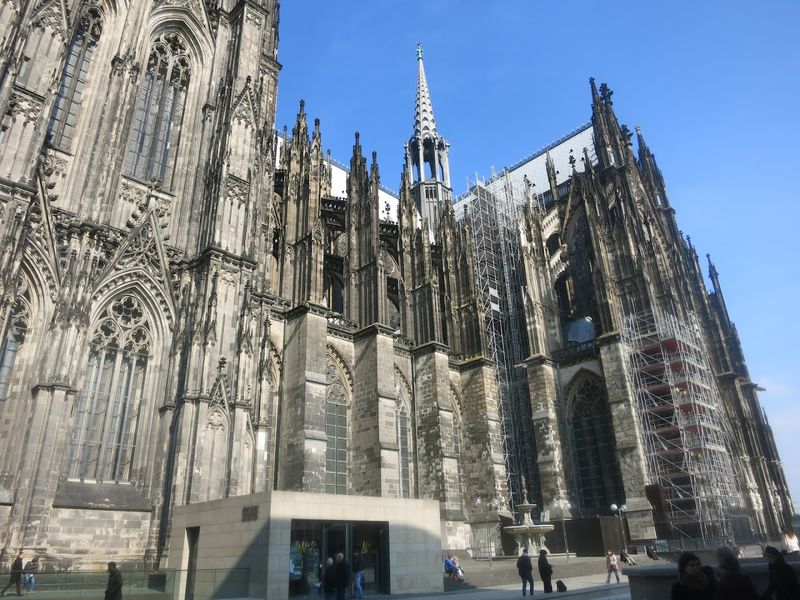
Few buildings on Earth have tested human patience quite like Cologne Cathedral. Construction began in 1248, stalled for 300 years with a crane left sitting on top of the unfinished tower, and was not completed until 1880.
That makes it a 632-year project, which might be the ultimate example of sticking with something difficult.
The twin spires reach 157 meters into the sky, making Cologne Cathedral the world’s tallest building for four years after its completion in 1880. The interior is equally stunning, with the longest nave of any Gothic church in Germany and windows containing over 10,000 square meters of stained glass.
The Shrine of the Three Kings, housed inside, is the largest reliquary in the Western world and has attracted pilgrims for centuries.
Remarkably, the cathedral survived World War II relatively intact despite Cologne being heavily bombed. Allied pilots reportedly used the twin spires as navigation landmarks, which may have helped spare them from destruction.
Today the cathedral draws six million visitors annually and remains a living place of worship, hosting regular services while welcoming tourists from every corner of the globe.
Guggenheim Museum Bilbao — Bilbao, Spain
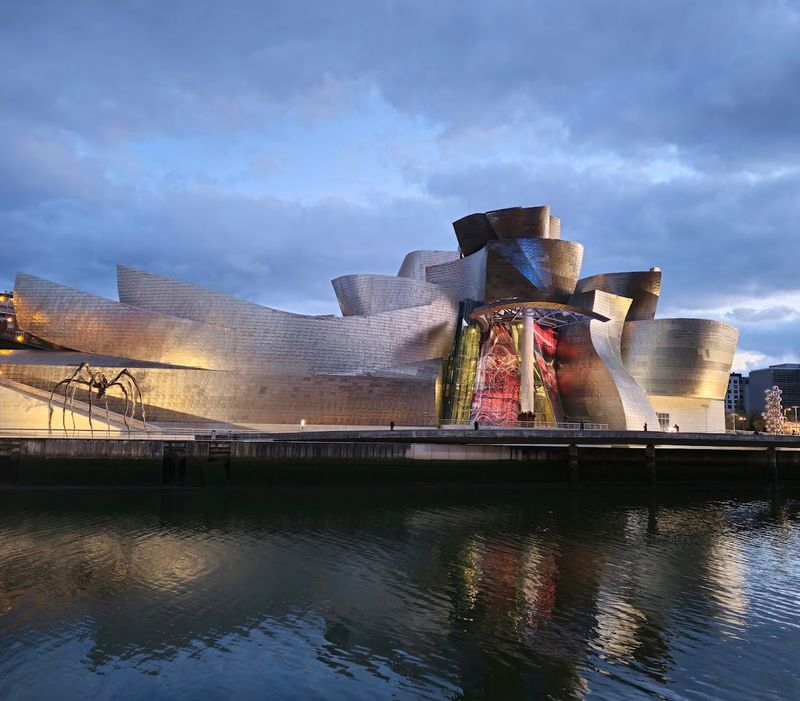
When the Guggenheim Museum Bilbao opened in 1997, architecture critics ran out of adjectives. Frank Gehry’s design features sweeping, irregular curves clad in thin sheets of titanium that shimmer and change color depending on the light and weather.
Nothing about it looks like a traditional museum, which is entirely the point.
The building’s impact on the surrounding city was so dramatic that economists coined the term “Bilbao Effect” to describe how a single iconic building can completely transform a struggling city. Before the museum opened, Bilbao was a declining industrial port.
Within a decade, it had become a thriving cultural tourism hub attracting over a million visitors annually.
Inside, the museum houses contemporary and modern art across 24,000 square meters of exhibition space. The central atrium soars 50 meters high, creating a theatrical sense of space that makes even walking through the building feel like an artistic experience.
Jeff Koons’s giant floral puppy sculpture, which sits outside the entrance, has become almost as famous as the building itself. Gehry later said the titanium panels were inspired by the scales of a fish — a detail that makes the whole design click into place.
Leaning Tower of Pisa — Pisa, Italy
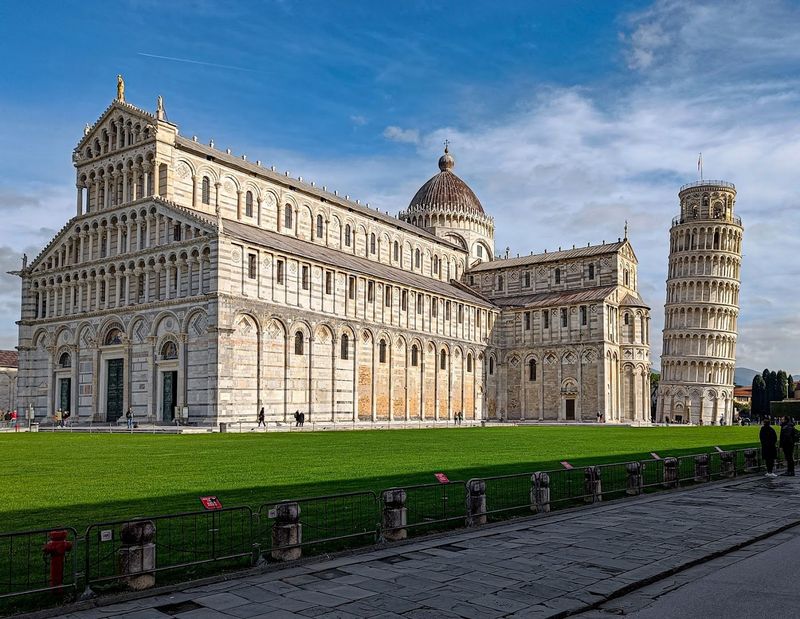
Here is a building that became world-famous precisely because something went wrong. The Leaning Tower of Pisa started tilting during construction in the 12th century due to soft, unstable soil on one side of its foundation.
Engineers have been worrying about it ever since, but the lean is now one of the most recognizable sights on Earth.
The tower is actually a freestanding bell tower, or campanile, for the nearby Pisa Cathedral. It took nearly 200 years to build, partly because construction kept stopping due to wars.
The tilt increased over the centuries until the 1990s, when engineers carried out a major stabilization project that actually straightened it slightly — from a lean of 5.5 degrees to about 3.97 degrees.
Galileo Galilei, who was born in Pisa, reportedly dropped two cannonballs of different masses from the tower to demonstrate that gravity accelerates all objects at the same rate regardless of weight. Whether the story is completely true remains debated, but it perfectly captures the tower’s role as a backdrop for big ideas.
About five million tourists visit Pisa every year, and most of them take the same photo pretending to hold the tower up.
St. Peter’s Basilica — Vatican City
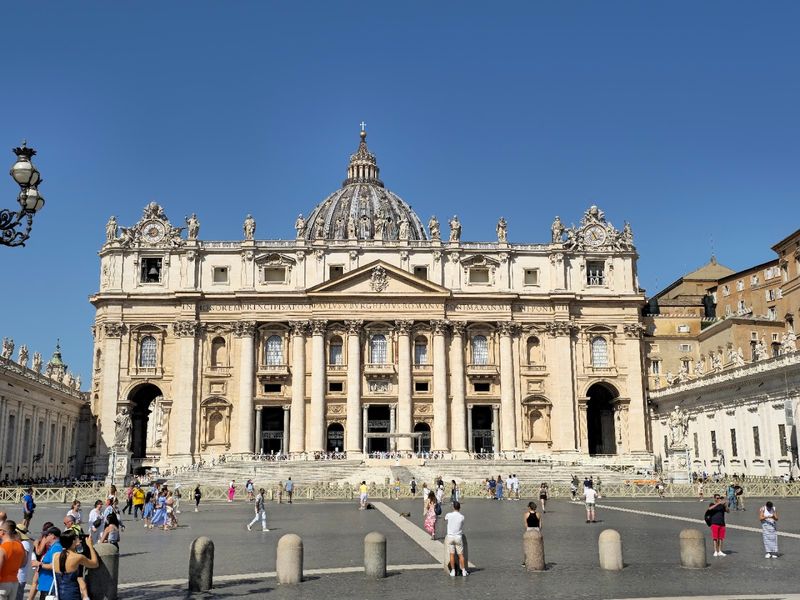
St. Peter’s Basilica is so large that it can comfortably hold 20,000 people at once, and it still manages to feel breathtaking rather than overwhelming. The basilica sits at the heart of Vatican City, the world’s smallest independent state, and serves as the spiritual center of the Roman Catholic Church.
For over a billion Catholics worldwide, this is the holiest place on Earth.
Construction on the current basilica began in 1506 and took more than 120 years to complete, with contributions from some of the greatest artists and architects of the Renaissance. Michelangelo took over as chief architect at age 71 and redesigned the iconic dome, which remains the largest in the world at 136 meters tall.
Bernini designed the sweeping colonnaded piazza in front, which he described as the church’s arms reaching out to embrace the faithful.
Inside, the scale is genuinely hard to process. The bronze baldachin over the main altar stands 29 meters tall, taller than an eight-story building, yet somehow looks proportional within the massive interior.
Michelangelo’s Pieta sculpture, carved when he was just 24 years old, is displayed in the first chapel on the right and remains one of the most emotionally powerful works of art ever created.
Casa Milà — Barcelona, Spain
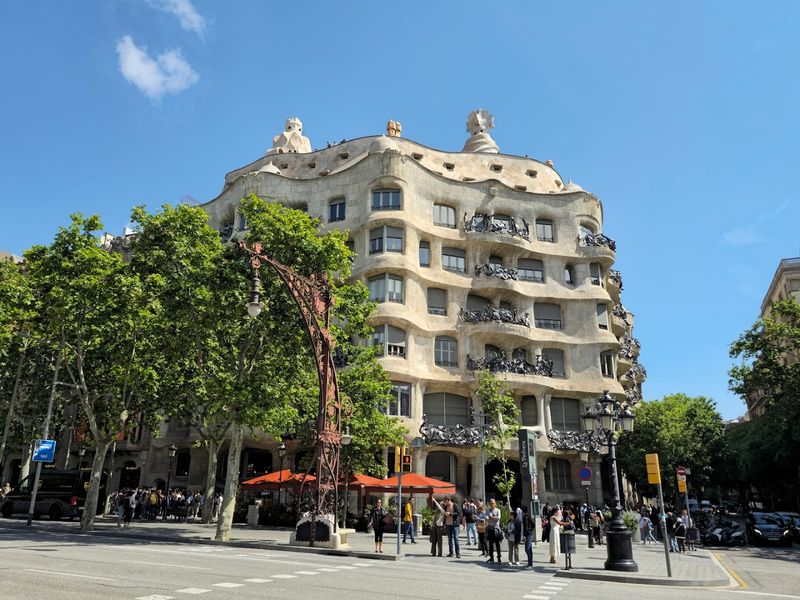
At first glance, Casa Milà looks less like an apartment building and more like a wave of stone that forgot to stop moving. Antoni Gaudí completed this residential masterpiece in 1912, and Barcelona’s residents immediately nicknamed it “La Pedrera,” meaning “the stone quarry,” not entirely as a compliment.
Over a century later, the nickname stuck and the attitude flipped completely.
The building has no straight lines anywhere in its structure, which was a radical departure from everything architecture had done before. Gaudí used a self-supporting stone facade that eliminated the need for load-bearing walls inside, giving residents the freedom to arrange their apartments however they wished.
The rooftop is particularly surreal, populated by twisted chimney stacks that look like armored warriors frozen mid-dance.
UNESCO designated Casa Milà a World Heritage Site in 1984 as part of a group of Gaudí’s works in Barcelona. The building still functions as a residential and cultural space today, with exhibitions held in the attic and rooftop areas.
Gaudí reportedly drew inspiration from Montserrat mountain and the sea, weaving natural forms into an urban building so successfully that the line between architecture and sculpture simply disappears.
Charles Bridge — Prague, Czech Republic
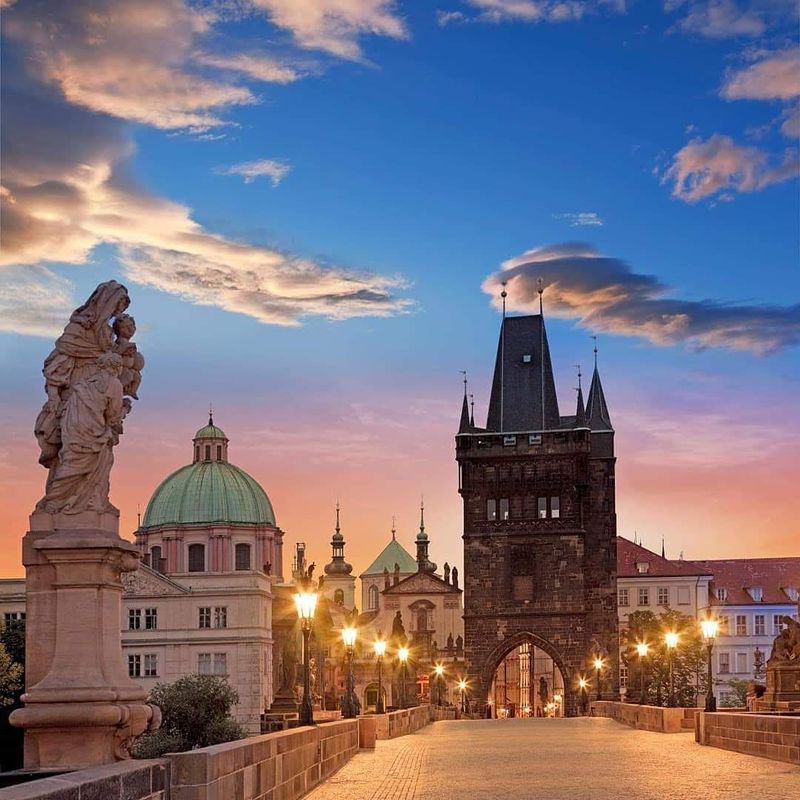
Sunrise on Charles Bridge is one of those experiences that travel writers reach for their best vocabulary to describe, and still fall short. The stone bridge stretches 516 meters across the Vltava River, connecting the Old Town with the Lesser Town and Prague Castle, and has been doing so since 1402.
Every stone in it has absorbed centuries of footsteps, stories, and history.
Thirty baroque statues line the bridge’s sides, added between the 17th and 18th centuries, each depicting a saint or religious figure with theatrical, dramatic poses. The most popular is the statue of St. John of Nepomuk, whose bronze plaque is rubbed shiny by millions of tourists who believe touching it brings good luck.
King Charles IV, who commissioned the bridge, laid the foundation stone on July 9, 1357, at exactly 5:31 AM — a date and time chosen because the numbers form a perfect palindrome sequence.
Today Charles Bridge is pedestrian-only and frequently crowded with artists, musicians, and tourists. The best strategy for experiencing its full magic is arriving before dawn, when the Gothic towers and baroque statues emerge from the morning mist like something from a dream that Prague refuses to wake up from.
Blue Mosque — Istanbul, Türkiye
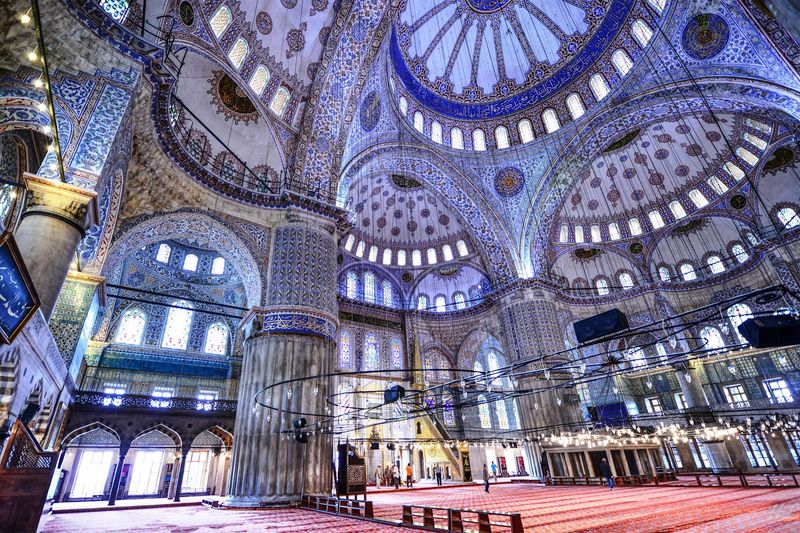
The moment you step into the courtyard of the Blue Mosque, the noise of Istanbul fades and something much quieter takes over. Officially named the Sultan Ahmed Mosque, it was built between 1609 and 1616 during the reign of Sultan Ahmed I.
The nickname comes from the 20,000 hand-painted blue Iznik tiles covering the interior walls, creating a color effect that feels almost supernatural in natural light.
Six minarets made the mosque controversial when it was built because only the mosque in Mecca had that many at the time. The Sultan reportedly had to fund an additional minaret at Mecca’s mosque to smooth things over.
The cascading domes and semi-domes of the exterior were designed to create a smooth, flowing silhouette that rises dramatically above Istanbul’s historic peninsula.
Unlike most historic mosques in Istanbul, the Blue Mosque remains an active place of worship, closing to tourists during the five daily prayer times. Visitors are welcome at other times but must remove shoes and cover their shoulders and heads.
Sitting inside beneath those luminous blue tiles while filtered light pours through 260 windows is the kind of experience that stays with you long after you leave Istanbul behind.
Dancing House — Prague, Czech Republic
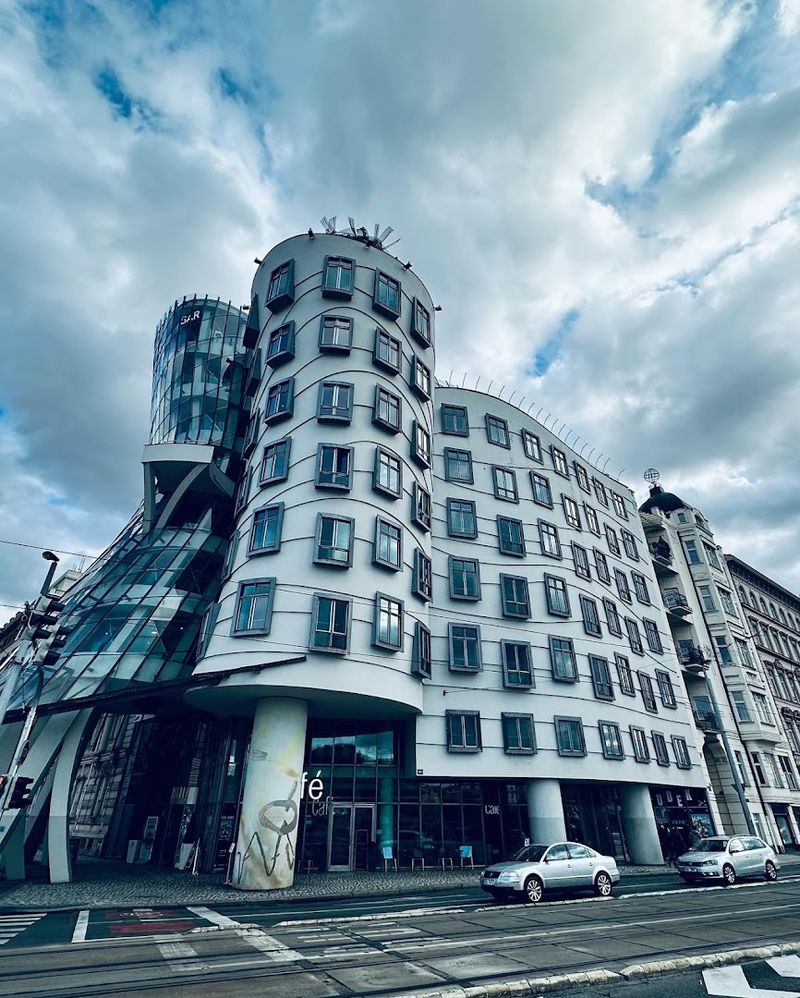
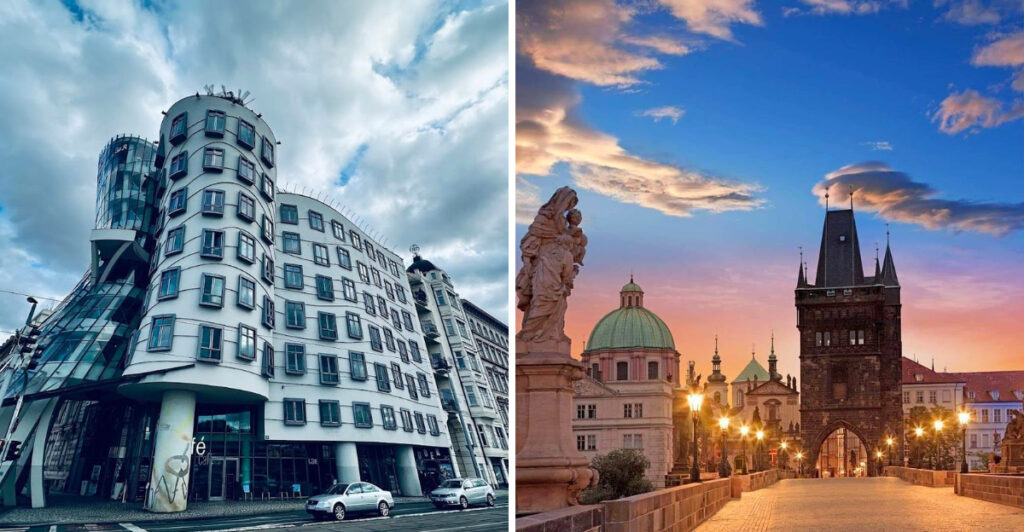
Squeezed between elegant 19th-century buildings on the bank of the Vltava River, the Dancing House looks like it showed up to the wrong party and decided to own it anyway. Completed in 1996 by Frank Gehry and Czech architect Vlado Milunić, the building’s curving glass tower and solid concrete tower were designed to represent a couple dancing together.
The nickname “Fred and Ginger” refers to Fred Astaire and Ginger Rogers, Hollywood’s most famous dancing duo.
The building was controversial when it first appeared, with many Praguers feeling it clashed too aggressively with the historic neighborhood around it. Even former Czech President Václav Havel, who lived next door and supported the project, admitted it sparked fierce debate.
Over time, attitudes shifted, and the Dancing House became one of Prague’s most photographed and celebrated modern landmarks.
Today it houses a hotel, a rooftop restaurant with panoramic views of Prague Castle, and office spaces. The design symbolizes the creative energy and openness that emerged in the Czech Republic after the fall of communism in 1989.
It proves that architecture does not always need to blend in — sometimes the most important buildings are the ones bold enough to stand out completely.
Share this story