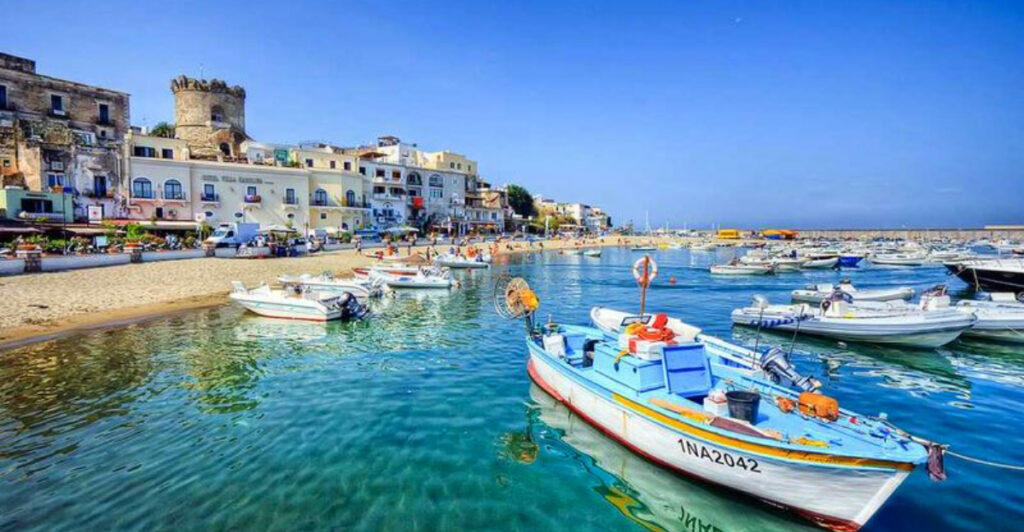
Italy’s islands are some of the most jaw-dropping places in the entire Mediterranean, offering turquoise water so clear you can see straight to the sandy bottom. From ancient volcanic cliffs to hidden coves that barely show up on maps, these islands pack serious scenery into every square mile.
Whether you’re a beach lover, a history fan, or just someone who appreciates a really good view, Italy’s islands have something spectacular waiting. Get ready to discover ten unforgettable island destinations that prove Italy isn’t just about pasta and pizza.
Sardinia
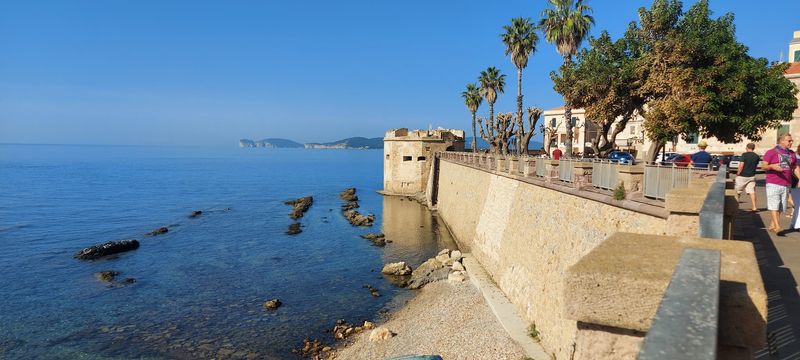
Sardinia’s water looks like someone spilled a bucket of liquid gemstones along the coastline. The Costa Smeralda, whose name literally means Emerald Coast, delivers shades of blue and green that photographers struggle to capture accurately.
Even the most vivid photos barely do justice to what you see in person.
Cala Goloritzé is one of the island’s crown jewels, a beach tucked beneath dramatic limestone cliffs and only reachable by boat or a long hike. La Pelosa, near the town of Stintino, features shallow turquoise water so calm and clear it feels more like a giant swimming pool than an open sea.
Both beaches regularly rank among Europe’s most beautiful, and honestly, that reputation is well-earned.
Beyond the beaches, Sardinia’s coastline stretches for over 1,800 kilometers, hiding countless coves, sea stacks, and natural arches waiting to be explored. Snorkeling here feels like swimming inside an aquarium.
The island also has a fascinating ancient culture, including mysterious stone towers called nuraghi that dot the landscape and hint at a civilization older than ancient Rome.
Capri
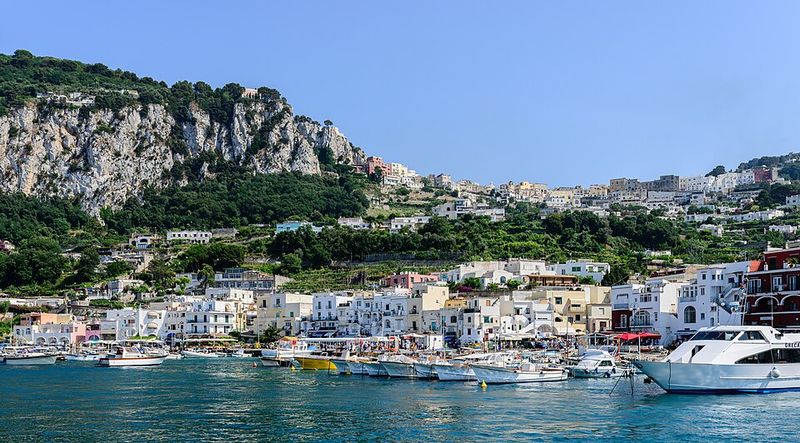
Forget everything you think you know about overrated tourist traps, because Capri genuinely earns every bit of its legendary reputation. The island rises from the Tyrrhenian Sea like a limestone fortress, with cliffs plunging dramatically into water that glows in impossible shades of blue.
Celebrities, artists, and emperors have all fallen hard for this place.
The Blue Grotto is Capri’s most famous attraction, a sea cave where filtered light turns the water inside into a shimmering electric blue. Visitors arrive by rowboat, ducking low to slip through the narrow entrance, and emerge into a glowing chamber that genuinely feels magical.
The whole experience lasts only a few minutes, but it sticks in your memory for years.
Boat tours circling the island reveal sea stacks called the Faraglioni, towering rock formations that rise straight from the sea like natural skyscrapers. The chairlift ride up to Anacapri offers sweeping panoramic views across the entire island and the surrounding coastline.
Even the island’s narrow shopping streets, lined with lemon trees and colorful ceramics, have a charm that makes it hard to leave.
Sicily
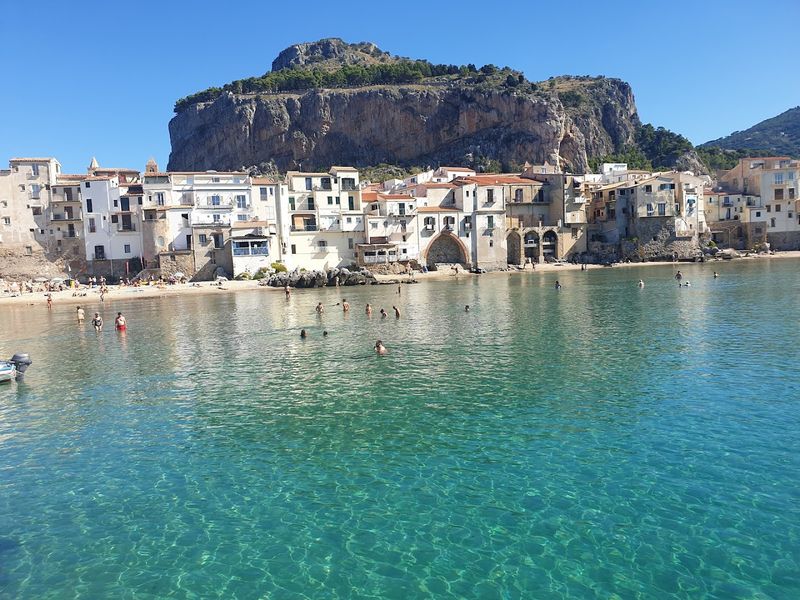
Sicily is basically two vacations in one, combining world-class ancient history with some of the Mediterranean’s most varied and dramatic coastline. The beach at San Vito Lo Capo features powdery white sand and water so brilliantly clear that boats appear to float in mid-air when viewed from above.
It’s the kind of beach that makes you question every other beach you’ve ever visited.
Then there’s Scala dei Turchi, a set of brilliant white marl cliffs that cascade down to the sea in natural terraced steps. Swimming below those white walls while the turquoise water sparkles around you is a genuinely surreal experience.
Nearby, the Valley of the Temples adds a dose of ancient Greek drama to the island’s already impressive credentials.
Sicily’s sheer size means its coastline contains multitudes, from the volcanic black sand beaches near Mount Etna to the hidden coves of the Zingaro Nature Reserve. The island also sits at the crossroads of Mediterranean cultures, which means the food, architecture, and local character reflect influences from Greek, Arab, Norman, and Spanish history.
Visiting Sicily feels like discovering a whole separate country within Italy.
Favignana
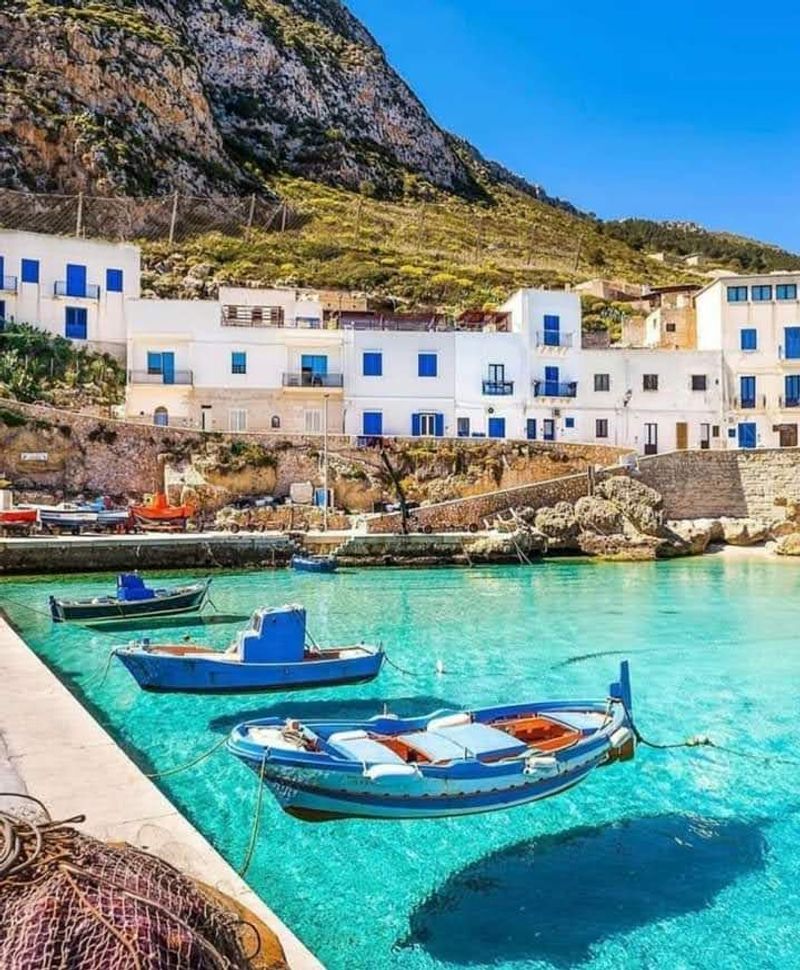
Tiny Favignana punches well above its weight when it comes to jaw-dropping coastal scenery. Part of the Egadi Islands just off the western tip of Sicily, this small butterfly-shaped island has become a serious bucket-list destination for anyone obsessed with crystal-clear Mediterranean water.
The colors here genuinely look digitally enhanced, even though they’re completely real.
Cala Rossa is the island’s most dramatic swimming spot, a rocky cove carved from ancient quarried limestone that creates a natural amphitheater of pale stone around intensely turquoise water. Cala Azzurra, whose name fittingly means Blue Cove, offers calmer conditions and shallower water perfect for snorkeling over rocky seabeds.
Both spots fill up quickly in summer, so arriving early is a smart move.
Favignana also carries a fascinating cultural history tied to traditional tuna fishing, a practice called the Mattanza that was once central to island life for centuries. The old tuna processing factory has been converted into a museum where visitors can learn about this disappearing tradition.
Getting around the island by bicycle is the best way to explore, and the flat terrain makes it surprisingly easy even for casual riders.
Ischia
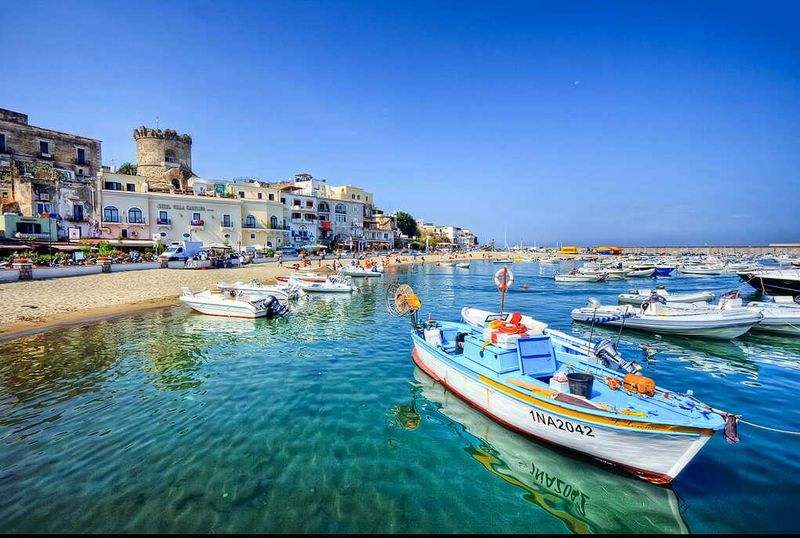
Ischia has a secret weapon that its flashier neighbor Capri simply cannot match: natural thermal springs bubbling up directly from volcanic activity beneath the island. Soaking in a warm outdoor thermal pool while gazing across brilliant blue Tyrrhenian Sea water is one of those experiences that makes you feel genuinely lucky to be alive.
The island has been drawing visitors for exactly this reason since ancient Roman times.
The coastline wraps around a series of rocky coves, sandy beaches, and dramatic volcanic cliffs that shift in character from one bay to the next. Spiaggia dei Maronti is the island’s longest beach, stretching over two kilometers with naturally warm sand heated by underground volcanic activity.
Sant’Angelo, a tiny fishing village built on a rocky peninsula, offers some of the most postcard-perfect views on the entire island.
Aragonese Castle, perched on a volcanic rock connected to the island by a stone bridge, adds a serious dose of medieval drama to Ischia’s already impressive scenery. The castle dates back over a thousand years and offers sweeping views across the bay from its upper terraces.
Ischia rewards travelers who take their time exploring rather than rushing through in a single day.
Elba
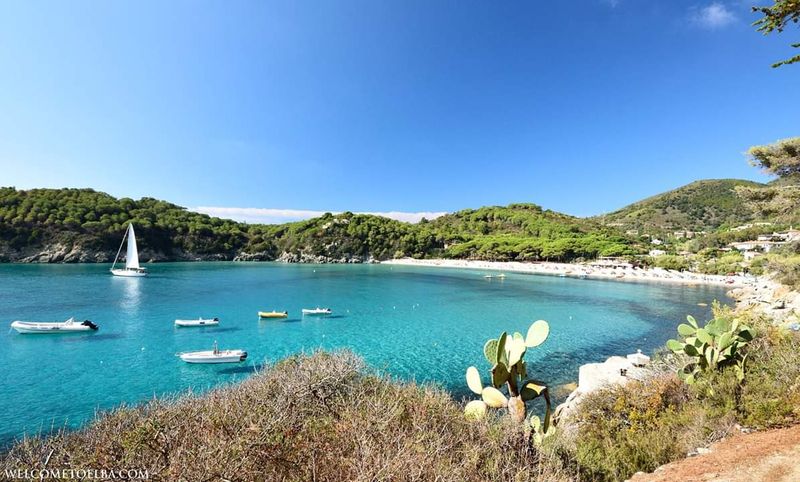
Napoleon Bonaparte spent nearly a year exiled on Elba, and honestly, given the island’s stunning beaches and turquoise water, it’s hard to feel too sorry for him. Elba is the largest island in the Tuscan Archipelago, and it’s one of those places that genuinely surprises visitors who arrive expecting something ordinary.
The water clarity here is almost ridiculous, with visibility extending several meters below the surface.
Fetovaia beach, tucked inside a sheltered cove framed by pine trees and granite boulders, is widely considered one of Elba’s most beautiful spots. Cavoli beach attracts snorkelers and divers thanks to its rocky underwater landscape teeming with marine life.
The island’s western shores tend to have calmer water, while the eastern coast faces open sea and catches better waves for active water sports.
Elba’s interior is surprisingly mountainous, with Monte Capanne rising over 1,000 meters and offering panoramic views across the entire Tuscan Archipelago on clear days. A cable car runs to the summit, making the view accessible without requiring a serious hiking commitment.
The island also has a rich mining history, and iron ore was extracted here for centuries, leaving behind fascinating geological formations along parts of the coast.
Stromboli
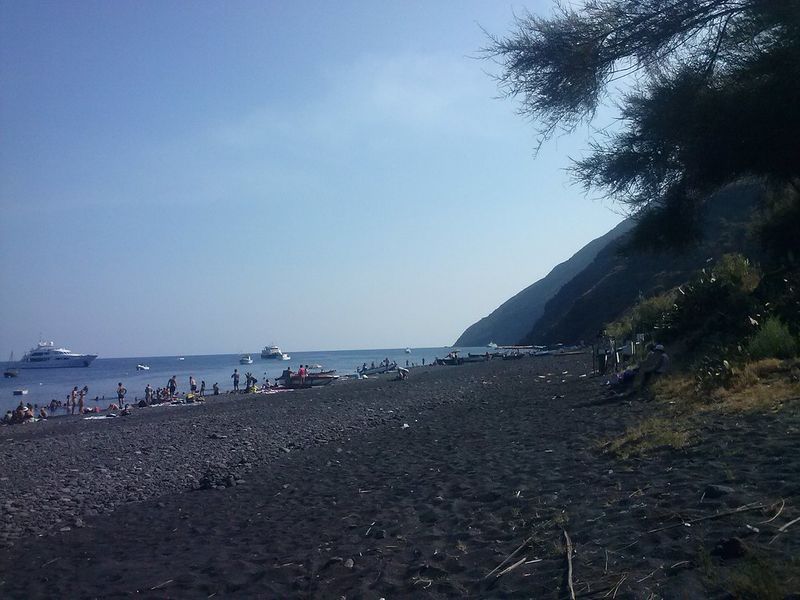
Stromboli is the only island on this list where the main attraction is an active volcano that erupts roughly every twenty minutes. That’s not a warning, that’s the selling point.
Located in the Aeolian Islands north of Sicily, this cone-shaped island rises dramatically from deep blue water and has been erupting continuously for over two thousand years. Ancient sailors used it as a natural lighthouse.
The black sand beaches at the base of the volcano create a striking visual contrast against the brilliant blue Mediterranean surrounding the island. Swimming off Stromboli feels thrillingly dramatic, with the smoking summit looming above while you float in clear, warm water.
Ficogrande is the most popular beach area, with easy water access and great views back toward the volcanic summit.
Guided night hikes up the volcano are the island’s most popular activity, rewarding climbers with front-row views of glowing lava bursting from the crater against a dark sky. The hike takes around three hours each way and requires a licensed guide, but the payoff is absolutely extraordinary.
Boat tours circling the island at night offer a safer alternative with equally spectacular views of the eruptions reflected across the water’s surface.
Ponza
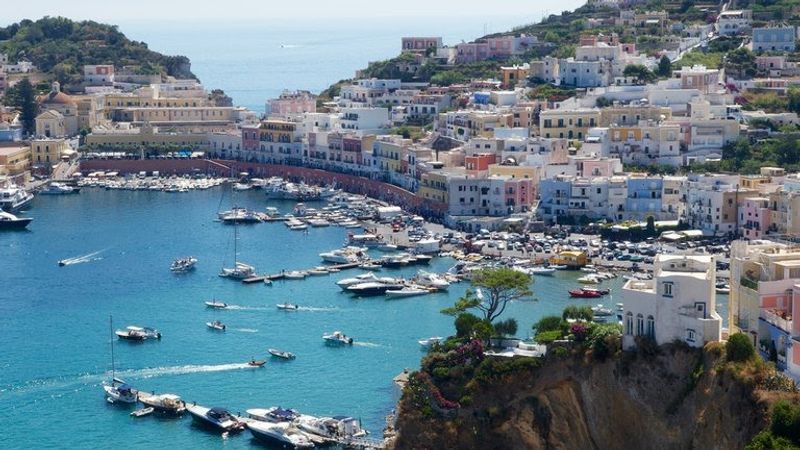
Somewhere between Rome and Naples, floating in the Tyrrhenian Sea, sits an island that most tourists have never heard of but Italians have been quietly treasuring for generations. Ponza is the kind of place where Roman families have been booking the same summer apartment for decades, which tells you everything you need to know about how good it is.
The water here hits a shade of turquoise that borders on supernatural.
Sea caves carved into the volcanic cliffs are one of Ponza’s most distinctive features, and boat tours weave through them with impressive skill. Chiaia di Luna, a sweeping crescent beach backed by towering pale cliffs, is arguably the island’s most dramatic landscape, though it has been periodically closed due to rockfall.
The harbor town of Ponza itself is painted in warm shades of yellow and pink, creating one of the most photogenic village scenes in all of southern Italy.
The island has an ancient past, with ruins from Roman times still visible in places along the coastline. Emperor Augustus and Caligula both had villas here, which gives the island a satisfying historical layer beneath its beach-holiday appeal.
Getting to Ponza requires a ferry from Anzio or Formia, and that slight effort keeps the crowds manageable even during peak summer months.
Pantelleria
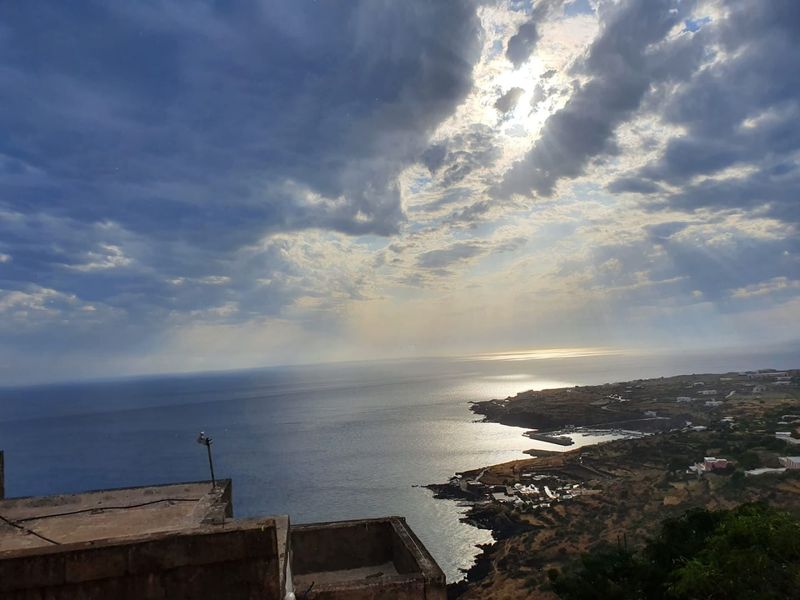
Pantelleria sits closer to Tunisia than it does to mainland Italy, which gives this volcanic island a genuinely exotic character unlike anywhere else in the country. The coastline here isn’t made of sand and gentle slopes but rather dramatic lava rock dropping straight into some of the clearest water in the entire Mediterranean.
It’s rugged, remote, and completely unforgettable.
The Specchio di Venere, which translates to Mirror of Venus, is a natural volcanic lake in the island’s interior where warm, mineral-rich water creates a spa-like swimming experience in an otherworldly setting. Along the coast, the Lago di Venere hot springs bubble up at the sea’s edge, mixing with cool saltwater to create natural thermal bathing spots that attract visitors from across Europe.
These natural features give Pantelleria a wellness appeal that goes well beyond typical beach tourism.
The island has long attracted a discreet crowd of designers, artists, and celebrities who value privacy and raw natural beauty over flashy resort amenities. Giorgio Armani famously owns a property here, which added a certain fashion-world mystique to the island’s reputation.
Local cuisine features capers, which grow wild across the volcanic terrain, and a sweet passito wine made from Zibibbo grapes that has been produced on the island for centuries.
La Maddalena Archipelago
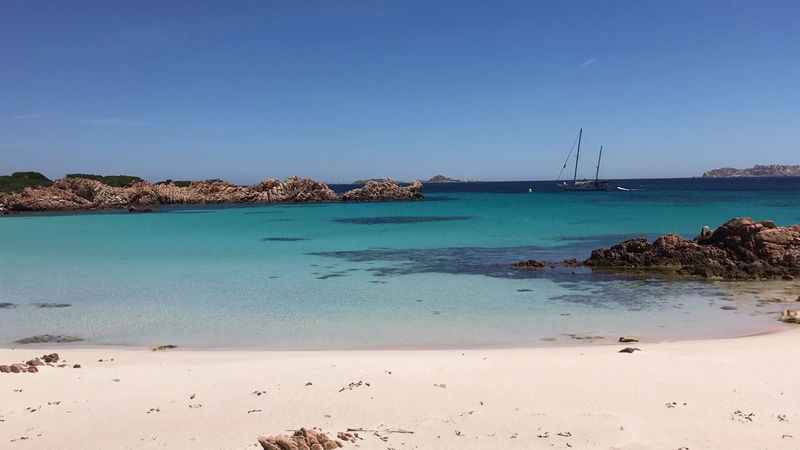
Picture a place where the water is so transparent that boat hulls appear to hover in mid-air above the sandy seabed below. That’s La Maddalena Archipelago in a nutshell, a collection of around sixty islands and islets scattered off the northeastern tip of Sardinia inside a protected national marine park.
The combination of pink granite boulders, white sand, and layered turquoise water creates scenery that honestly looks computer-generated.
Spiaggia Rosa, or Pink Beach, on the island of Budelli is one of the most famous beaches in all of Italy, its rosy sand tinted by fragments of coral and shell. Access is now restricted to protect the delicate ecosystem, but the view from the water is still breathtaking.
Spargi island has some of the most accessible and beautiful beaches in the archipelago, with Cala Corsara offering a particularly stunning swimming spot.
Day trips by boat are the most popular way to explore the archipelago, hopping between islands and snorkeling over seagrass meadows teeming with fish. The marine park designation means the water quality is strictly protected, which is exactly why visibility and clarity remain exceptional year after year.
La Maddalena town itself has a lively harbor with good restaurants and a relaxed local atmosphere worth lingering in.
Share this story