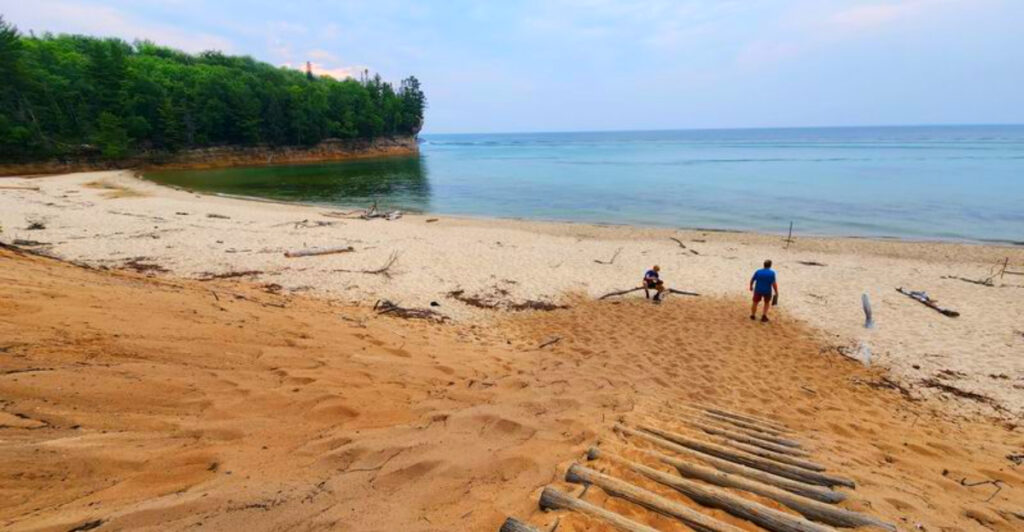
A backcountry campground inside Pictured Rocks National Lakeshore offers one of the most rewarding camping experiences in Michigan, but reaching it takes real effort. Visitors hike roughly three miles through forest before arriving at Chapel Beach, where Lake Superior, sandstone cliffs, and wide stretches of sand replace the usual campground setup.
Chapel Beach Campground keeps things intentionally simple. There are only six campsites, no electricity, no running water, and no campfires, which gives the area a quiet, remote atmosphere that is increasingly hard to find.
The tradeoff is access to one of the most striking sections of shoreline in the Upper Peninsula, where hikers and campers wake up steps from Lake Superior without the crowds found at more accessible campgrounds.
Where Exactly You Are Going and How to Get There
The mailing address puts you at Shingleton, MI 49884, but the real landmark is the Chapel Road trailhead inside Pictured Rocks National Lakeshore, located in Michigan’s Upper Peninsula. The campground sits at roughly 46.5466 degrees north, 86.4414 degrees west, directly on the shore of Lake Superior.
Reservations are made through Recreation.gov at the official campsite listing, and the phone contact for the booking system is 1-877-444-6777. The site is managed by the National Park Service as part of the Pictured Rocks backcountry system.
From the parking area at the end of Chapel Road, the hike to the campground is approximately 3 miles one way. The trailhead lot fills fast, often by 9 AM in summer and early fall, so an early start is not just a suggestion but a genuine logistical necessity that will shape your entire day.
The Hike In: What Three Miles Through the Forest Actually Feels Like
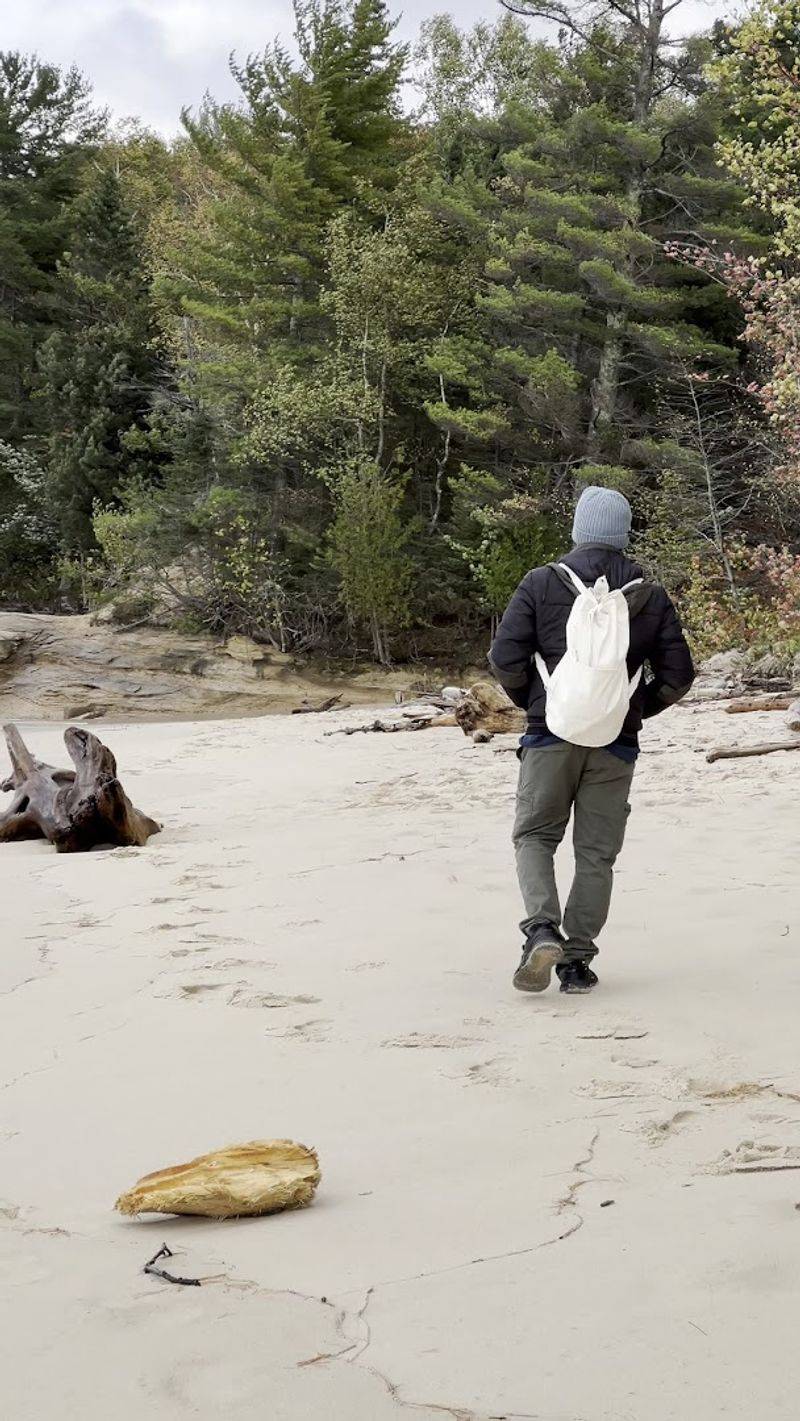
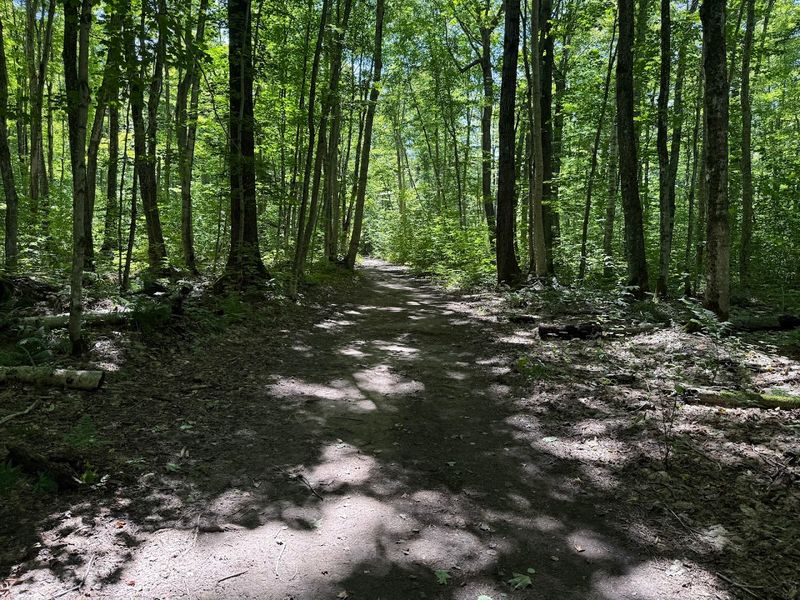
The trail from the Chapel Road parking area to the campground follows the North Country National Scenic Trail and feels genuinely manageable for most hikers with reasonable fitness. The terrain is largely level, with some rooted and uneven stretches that remind you this is not a paved path.
One thing worth knowing before you pack: the trail can feel brutal if you bring unnecessary weight. Air mattresses and four-person tents are technically possible to haul in, but the experience of doing so is not one most people would voluntarily repeat.
Lightweight gear makes the whole journey far more enjoyable.
Wild berries line parts of the trail in season, which adds a pleasant distraction. The forest itself has a quiet, enclosed quality that makes the eventual arrival at the open beach feel like a genuine reveal, and that contrast between dense woods and wide-open lake is part of what makes this hike memorable.
Chapel Rock and the Arch That Greets You at the End
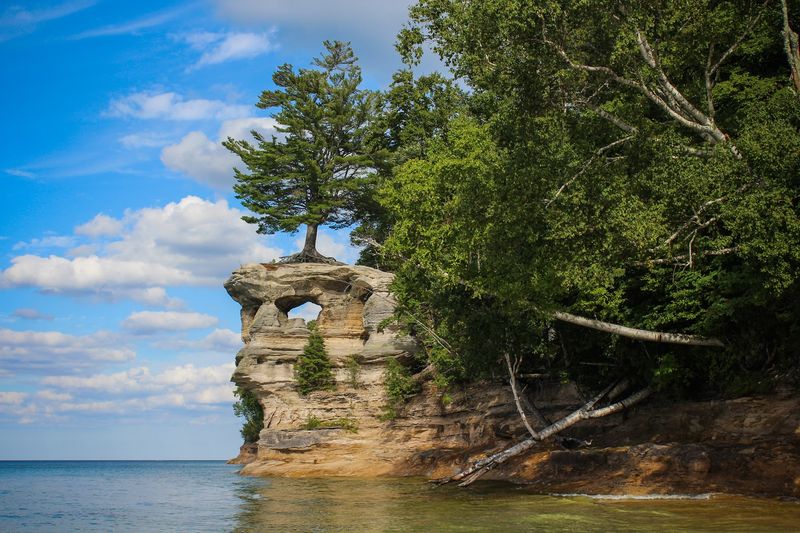
Before you reach the beach itself, the trail delivers one of the most striking geological features in the entire park: Chapel Rock. This sandstone formation rises near the shoreline with a natural arch worn through it over thousands of years of wave action and weathering.
A lone pine tree grows directly on top of the arch, its roots stretching down the rock face in a way that looks structurally impossible but has persisted for decades. The roots reach the ground through cracks in the stone, giving the tree its grip on what looks like an unlivable surface.
Most hikers stop here for photos, and it is easy to lose track of time just watching the light shift across the orange and brown sandstone. The formation also marks the psychological turning point of the hike, signaling that the campground and the beach are just moments away, which tends to produce a noticeable lift in everyone’s energy level.
The Six Campsites and What Sets Each One Apart
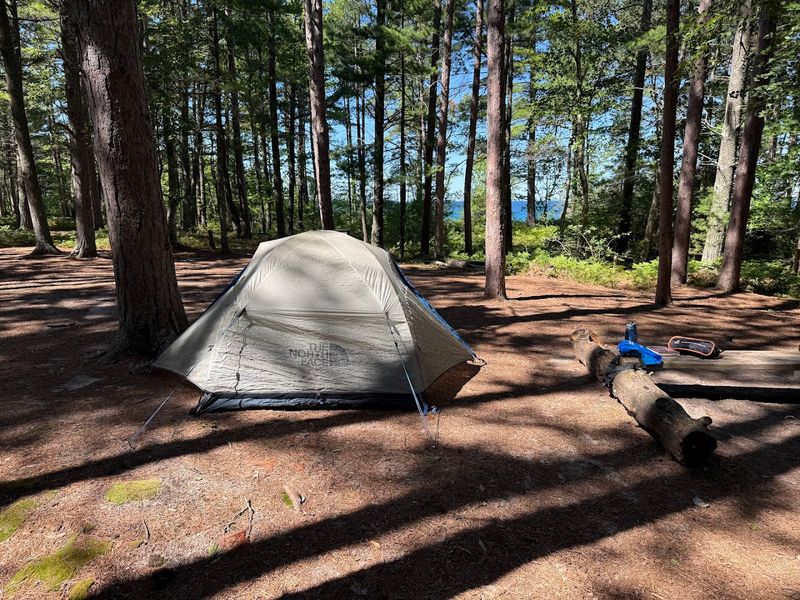
Chapel Beach Campground has only six designated tent sites, and that small number is central to its identity. The sites are dispersed well enough that it is genuinely difficult to see or hear your neighbors, which is a rare quality for a campground that also draws significant daytime foot traffic.
Sites 2 and 3 sit close to Chapel Creek where it meets the lake, giving campers easy access to the river and a pleasant sound backdrop at night. Site 5 offers solid tree cover, a level footprint, and enough space to feel private.
Site 6 is notably spacious, though it lacks a communal fire pit, which means it works better for solo travelers or groups who are self-sufficient.
At least one site on the sand bluff above the beach offers a direct sightline to the cliff line and the open lake, and waking up to that view on a clear morning is the kind of thing that makes the permit scramble feel entirely worth the effort.
Lake Superior Sunrises and Sunsets That Justify Every Step
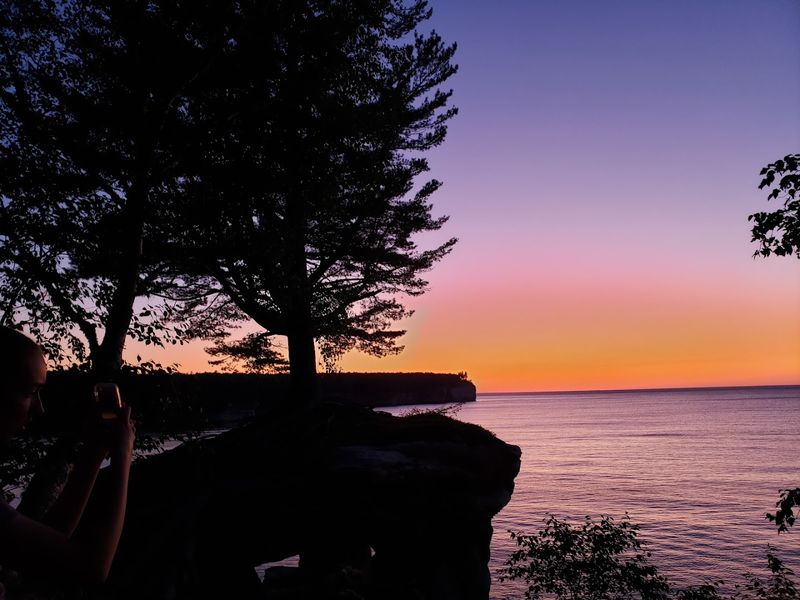
Lake Superior does not do subtle sunrises. The water is so vast and the horizon so unobstructed that the early light spreads across the surface in a way that makes the whole scene feel almost theatrical.
From the bluff sites or directly on the beach, the view at dawn is one of the most photogenic moments the park offers.
Sunsets bring an entirely different palette, with the sandstone cliffs catching warm orange and red tones that deepen as the light drops. The cliff line runs along the western horizon from certain beach positions, so the colors layer in a way that rewards patience from anyone willing to sit still for a while.
The boat tours that pass by during the day offer a small reminder of how this place looks from the water, and hearing the tour narration drift across the waves is a quirky soundtrack that comes with camping here during peak season, whether you expected it or not.
No Running Water, No Fires, No Problem – If You Prepare Right
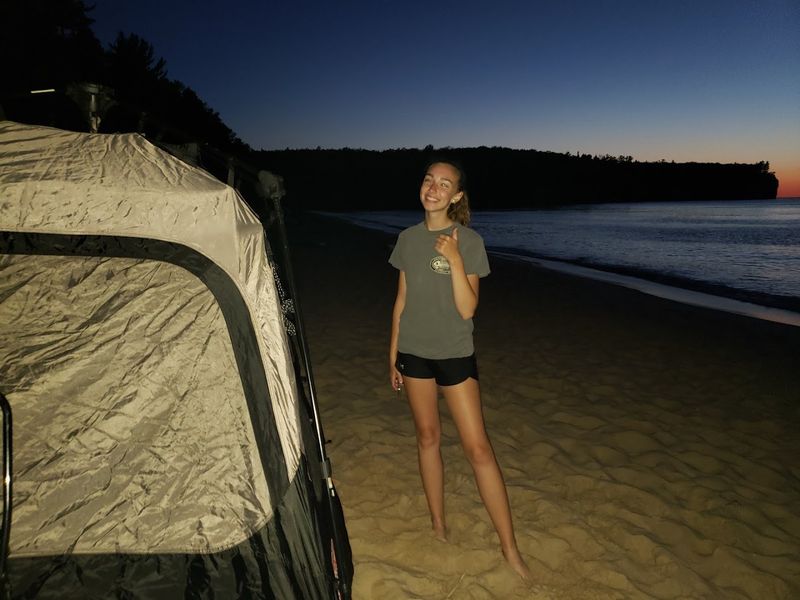
Chapel Beach Campground operates on a strict leave-no-trace framework, and the list of things it does not provide is worth memorizing before you arrive. There is no electricity, no running water, and no campfire option at any of the sites.
All cooking happens on a camp stove.
Water comes from Chapel Creek or Lake Superior, and a reliable filter or purification system is non-negotiable. The creek is the more practical source for most campers, and the flow is generally consistent through the main camping season.
Carrying extra purification tablets as a backup adds almost no weight and solves a lot of potential stress.
Trash goes out with you, full stop. Bear-proof food storage lockers are provided at each site and appear to be rodent-proof as well, which is a detail that matters more than it sounds when you wake up at 3 AM wondering about your snacks.
The lockers are a small but genuinely reassuring feature of an otherwise bare-bones setup.
Permits, Fees, and the Six-Month Reservation Window You Cannot Afford to Miss
Getting a site at Chapel Beach requires a backcountry camping permit, available year-round through Recreation.gov. The cost breaks down to a $15 reservation fee plus a $5 per-person, per-night user fee, which puts the total well within reach for most camping budgets.
Reservations open on a six-month rolling window, and popular summer weekends fill quickly once that window opens. Flexibility on dates, especially targeting weekday stays, dramatically improves your chances of landing a spot.
There are only six sites, so the math on availability is not forgiving.
Each site accommodates between one and six people, with a maximum of three tents or hammocks. Campers are limited to three consecutive nights at Chapel Beach and no more than 14 total nights per calendar year across all Pictured Rocks backcountry sites.
One practical note: a printed copy of your permit must be visibly attached to your tent at all times during your stay, so do not skip the printing step.
The Chapel Basin Loop and Other Routes Worth Considering
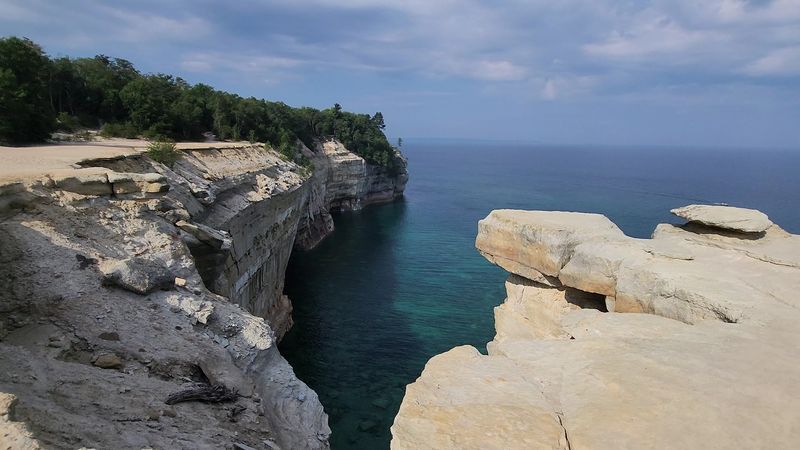
The campground sits at the center of several excellent hiking options, which makes a two-night stay particularly appealing. On the first day you hike in with your pack, settle the gear, and recover.
On the second day you tackle the surrounding trails without the weight of a full backpack, which changes the experience entirely.
The Chapel Basin Loop covers 10.4 miles of generally level terrain and passes Chapel Falls, Chapel Rock, and the full stretch of Chapel Beach before looping back through the forest. It is rated moderate and offers the most complete picture of what this corner of the park looks like from the ground.
A shorter alternative, the Chapel Beach Loop, runs about 7 miles and is considered an easier route. For those coming from elsewhere along the North Country National Scenic Trail, a return via Mosquito Beach adds roughly 10 miles round trip and passes through a different section of the lakeshore, giving the whole trip a satisfying sense of forward motion rather than retracing your steps.
Bugs, Weather, and the Conditions That Catch Visitors Off Guard
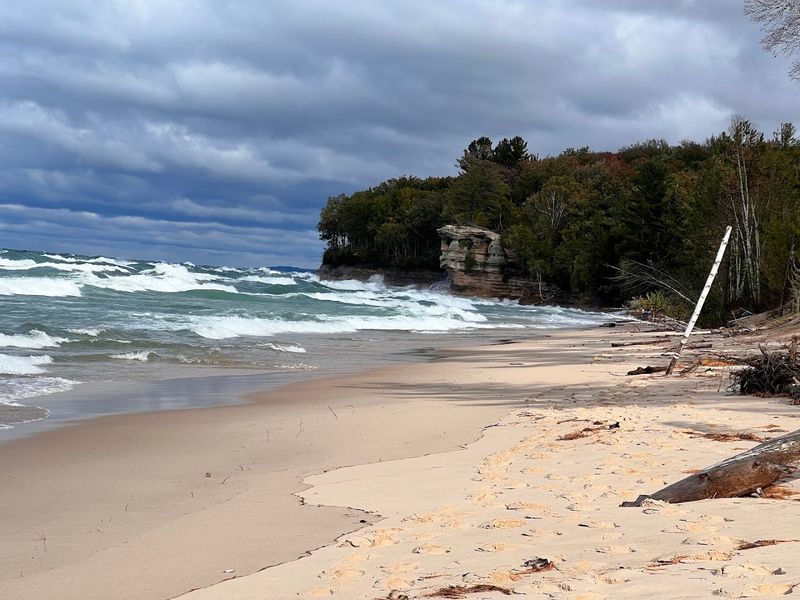
Lake Superior generates its own weather patterns, and the shoreline near Chapel Beach can shift from warm and calm to cold and windy within a few hours. Packing layers is not optional here, and the risk of hypothermia from unexpected temperature drops is real enough that the National Park Service lists it as a specific hazard for visitors.
Bug pressure runs from late May through September, with black flies, mosquitoes, and stable flies all active during that window. The stable flies in particular are an underappreciated nuisance that even experienced campers sometimes fail to prepare for.
A head net, long sleeves, and a reliable insect repellent cover most scenarios.
Wind is a consistent presence on the beach, which can be a blessing when it keeps the bugs down but becomes a challenge when you are trying to cook on a small stove or keep a tent properly staked. Arriving prepared for all of it makes the difference between a frustrating trip and a genuinely great one.
The Beach Itself and Why Chapel Creek Makes It Special
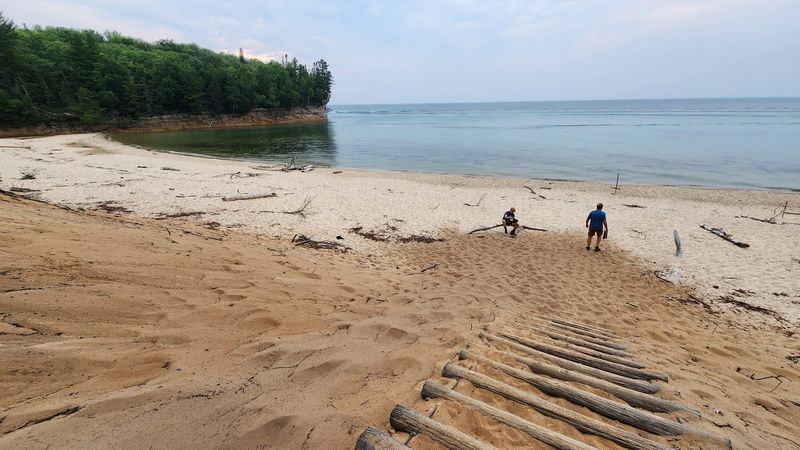
The beach at Chapel Beach Campground is soft, wide, and framed by the sandstone cliff line that defines the entire Pictured Rocks coastline. Wooden ladder-style steps descend from the bluff trail to the sand, a small but thoughtful infrastructure detail that keeps the descent manageable even with tired legs after a long hike in.
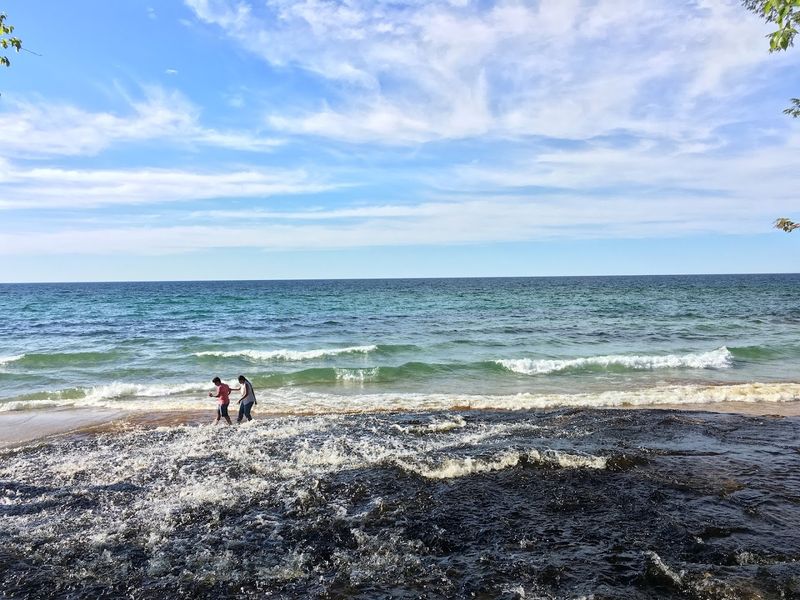
Chapel Creek enters Lake Superior right at the beach, and the creek water runs warmer than the lake, sometimes reaching temperatures around 90 degrees Fahrenheit in summer. The contrast between the warm creek and the cold lake creates a natural spot for soaking tired feet or wading in without committing to the full shock of Superior’s notoriously frigid water.
The beach draws day hikers throughout summer, so mornings and evenings tend to be quieter and more private for campers. By late afternoon the day-use crowd thins, and the beach shifts into a calmer, more contemplative space that feels genuinely removed from the rest of the world.
Pets, Rules, and the Fine Print That Protects the Place
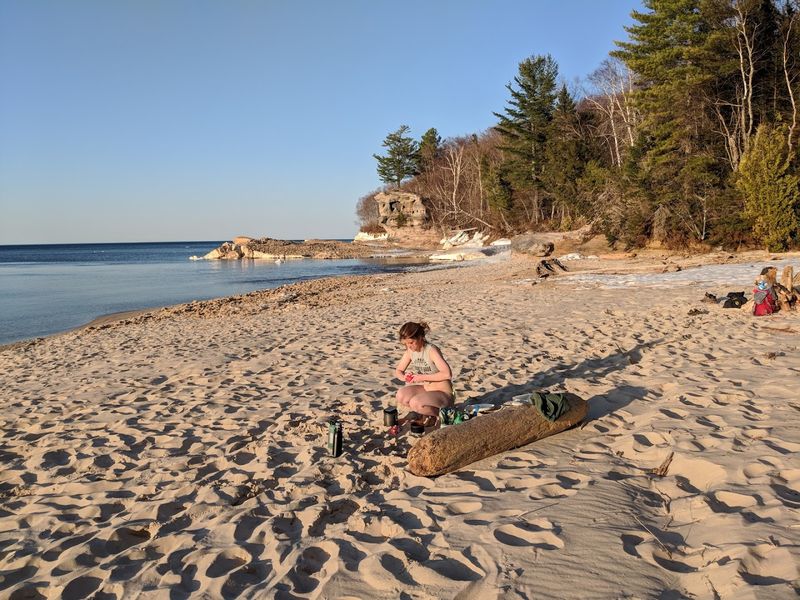
Pets are not permitted on Chapel Beach or on any of the trails in the Chapel area, which is a firm rule enforced throughout the season. For visitors who typically travel with dogs, this is a logistical consideration that requires planning well in advance rather than discovering at the trailhead.
The campground also prohibits campfires at all sites, which distinguishes it from some of the other backcountry locations within Pictured Rocks where fire rings are available. The fire ban is year-round and applies to all campers regardless of conditions, so a camp stove is a required piece of gear rather than a backup option.
Cliff edges throughout the area are unstable and the park strongly advises staying well back from the rim. The sandstone erodes continuously, and what looks like solid ground at the edge may not hold.
Respecting that boundary is the kind of common-sense rule that tends to get ignored right up until the moment it really matters.
Why Late Fall Might Be the Best-Kept Secret for Visiting
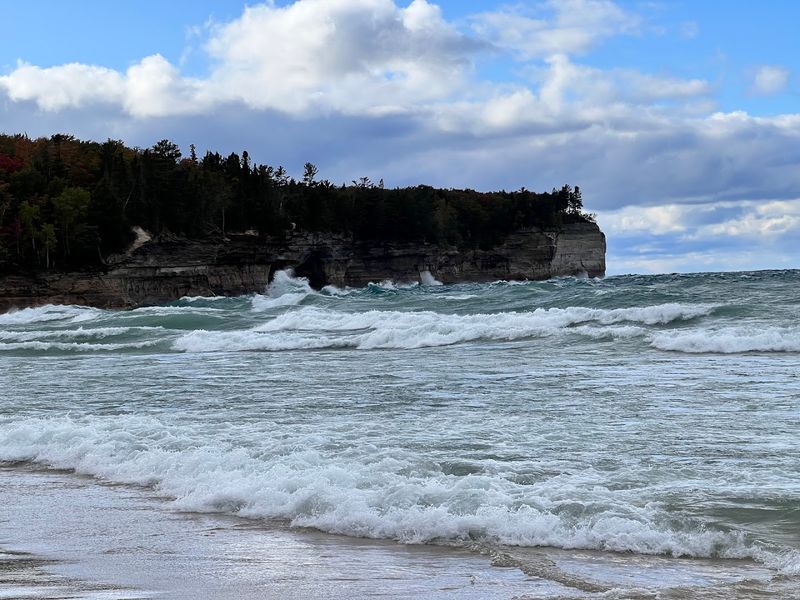
Summer gets the crowds, but late fall earns the loyalty of the people who have actually been here more than once. The bug season winds down, the day-hiker traffic drops sharply, and the forest along the Chapel trail turns into a corridor of orange, red, and yellow that rivals anything in New England.
The light in October and early November sits lower in the sky, which means the sandstone cliffs catch a warmer, more dramatic glow throughout the day rather than just at golden hour. Photographers who visit in fall tend to come back the following year, which is a reliable indicator of what the season actually delivers.
Temperatures drop significantly and the weather becomes less predictable, so the gear requirements shift toward heavier insulation and more weather protection. The tradeoff is near-total solitude, the possibility of having the entire beach to yourself, and the quiet that comes when a place this beautiful finally exhales after a long, busy summer.
Share this story