America is home to some of the most jaw-dropping waterfalls on the planet, from thundering giants that shake the ground beneath your feet to hidden gems tucked away in tropical forests and desert canyons. These natural wonders stretch across every corner of the country, each one shaped by millions of years of geology, weather, and water.
Whether you are a hardcore hiker or someone who just loves a great view, America’s waterfalls offer something truly unforgettable for every kind of traveler.
Niagara Falls, New York
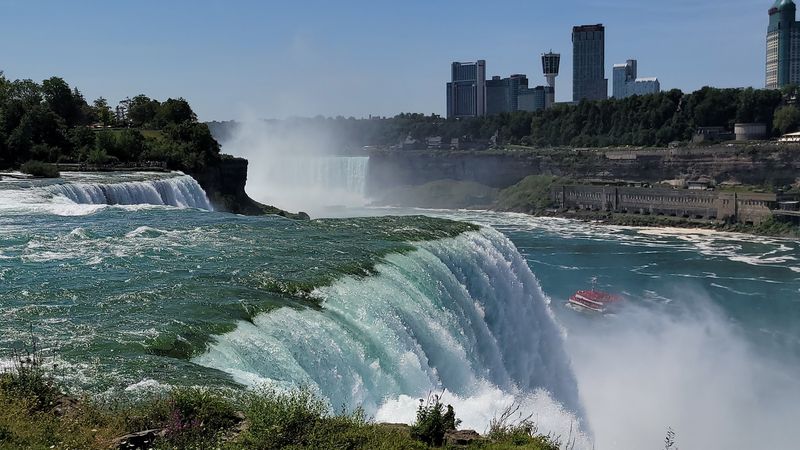
Few places on Earth can make you feel genuinely small, but Niagara Falls manages it effortlessly. Straddling the border between New York and Canada, this legendary waterfall system draws nearly 30 million visitors every year.
The sheer volume of water crashing over Horseshoe Falls every second is almost impossible to wrap your head around.
The American Falls and Bridal Veil Falls round out the trio, each one dramatic in its own right. Mist rises so high that you can spot it from miles away before you even catch a glimpse of the water itself.
The roar alone is enough to give you goosebumps.
Boat tours like the iconic Maid of the Mist take passengers right into the spray zone, which is absolutely soaking and completely worth it. Observation decks on both sides of the border offer stunning views at every angle.
Spring and summer bring the heaviest flows, making those seasons the most spectacular time to visit this legendary natural landmark.
Yosemite Falls, California
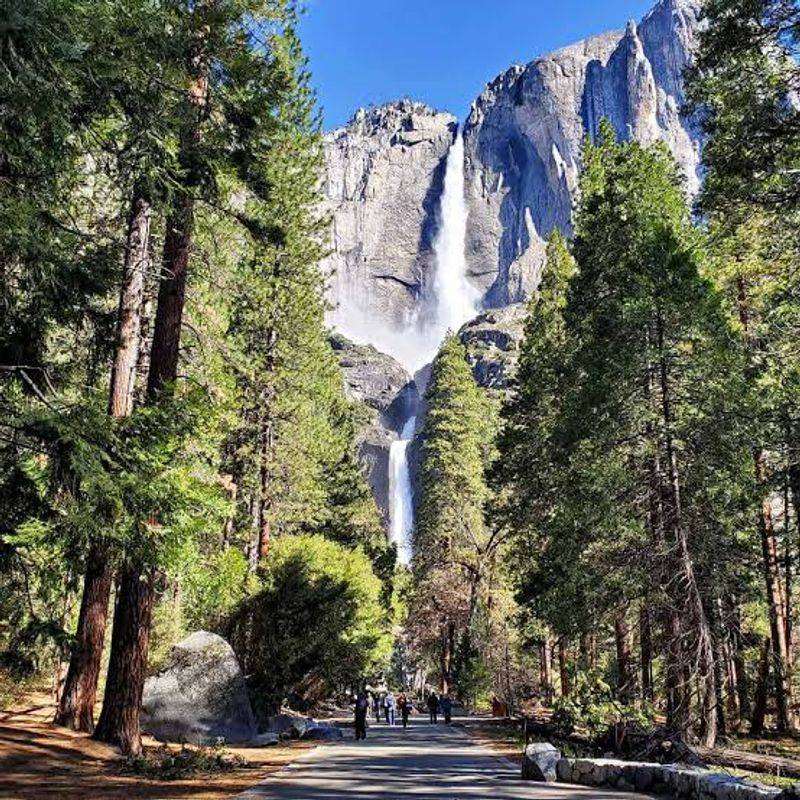
Dropping a staggering 2,425 feet in three dramatic sections, Yosemite Falls is one of the tallest waterfalls in all of North America. Spring snowmelt turns the cascade into a roaring, thundering monster that echoes across the entire valley floor.
By late summer, the falls can slow to a trickle or even dry up completely, which makes timing your visit a real game changer.
The lower falls are accessible via a short, paved trail that is great for families and casual hikers. For the truly adventurous, the upper falls trail climbs steeply through forest and granite, rewarding hikers with jaw-dropping panoramic views of Yosemite Valley.
The effort is absolutely worth every step.
Yosemite National Park surrounds the falls with towering granite cliffs, ancient meadows, and some of the most iconic scenery in American history. Photographers flock here at sunrise when golden light hits the mist and creates soft, dreamy conditions.
Whether viewed from the valley floor or up close on the trail, Yosemite Falls remains one of California’s most unforgettable natural experiences.
Multnomah Falls, Oregon
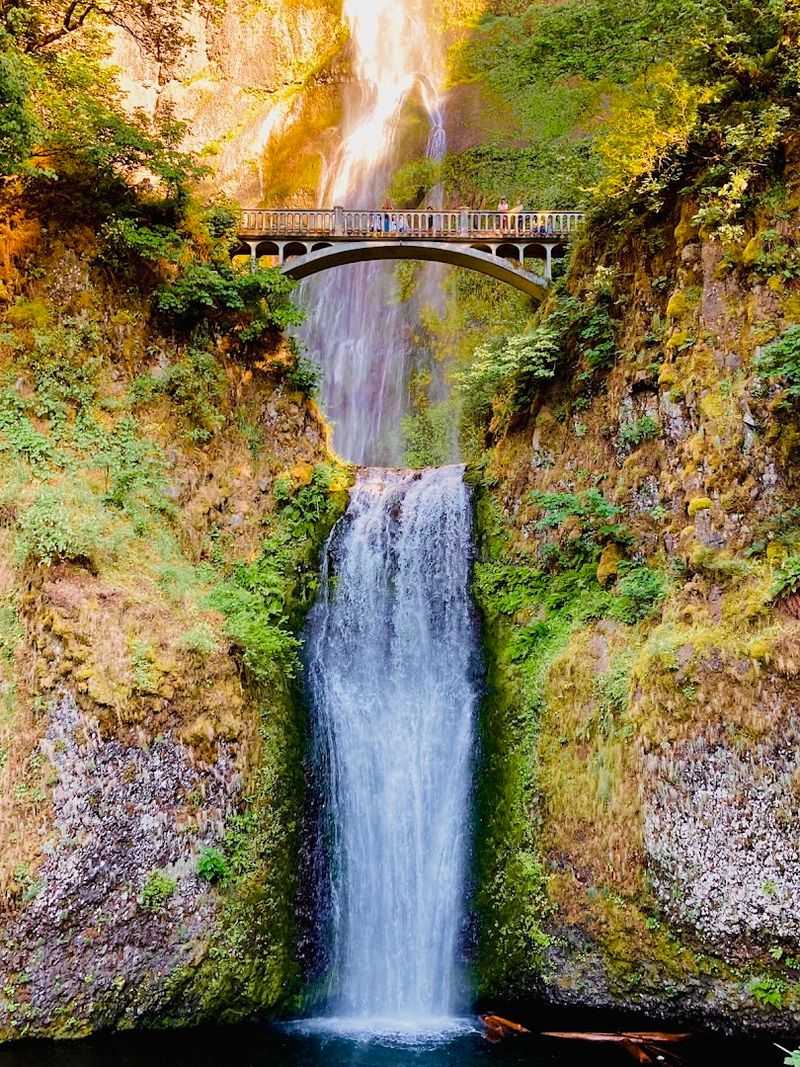
Multnomah Falls is the kind of waterfall that shows up on postcards, screensavers, and road trip bucket lists across the Pacific Northwest. Tumbling 620 feet in two gorgeous tiers through the Columbia River Gorge, it is Oregon’s most visited natural attraction by a wide margin.
The historic Benson Bridge, perched between the two falls, frames the scene so perfectly it almost looks staged.
Getting there is surprisingly easy, with a paved path leading from the parking area directly to the bridge. The trail continues upward for those who want a closer look at the upper falls or a panoramic view from above.
Crowds gather year-round, but early mornings on weekdays offer a quieter, more magical experience.
The surrounding forest stays lush and green throughout the year, making every season a great time to visit. Winter brings a frosty, almost ethereal atmosphere, while spring turns the gorge into a vivid explosion of green.
A historic lodge near the base offers warm food and shelter, which feels especially welcoming after a rainy Pacific Northwest hike. Multnomah Falls is simply one of America’s great natural treasures.
Havasu Falls, Arizona
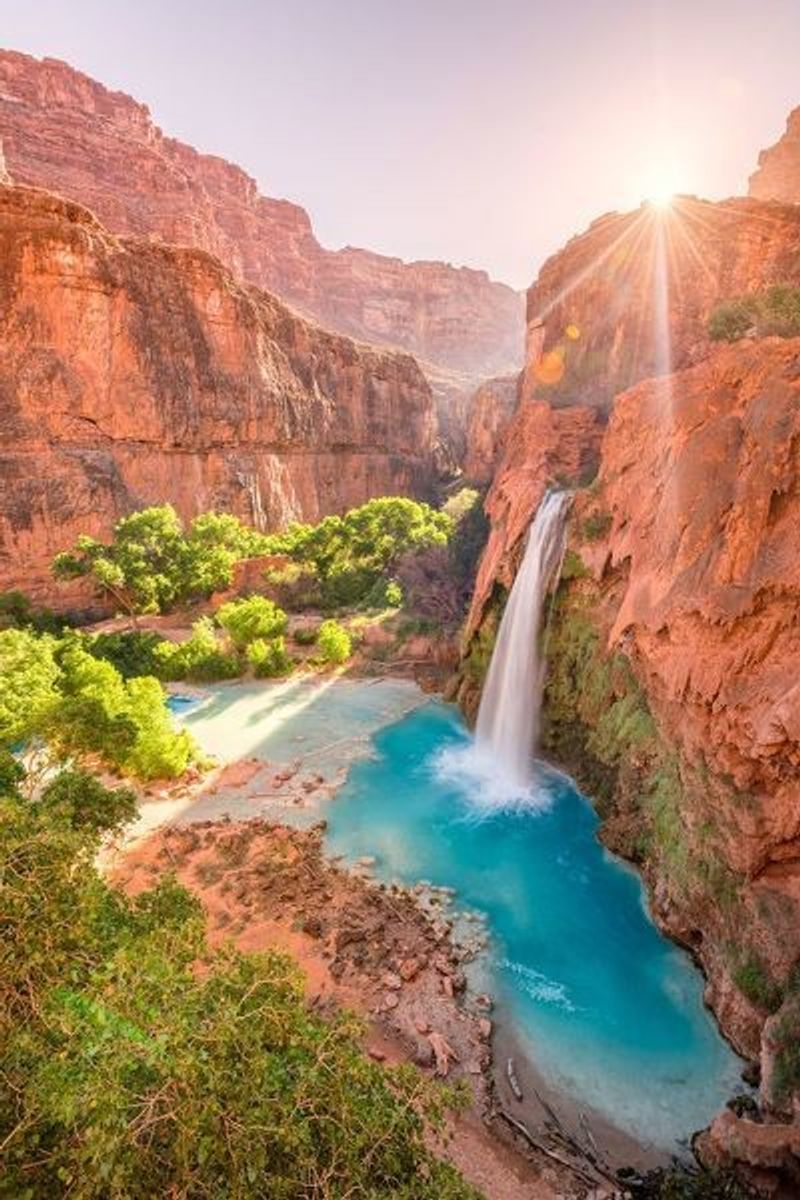
Bright turquoise water pouring through deep red canyon walls sounds like something out of a fantasy novel, but Havasu Falls is absolutely real. Located on Havasupai tribal land near the Grand Canyon, this waterfall is one of the most visually striking natural wonders in the entire country.
The contrast between the vivid blue-green water and the surrounding rust-colored rock is genuinely breathtaking.
Reaching Havasu Falls requires a permit and a roughly ten-mile hike into the canyon, which keeps crowds manageable and the experience feeling special. The tribal campground near the falls allows visitors to spend multiple nights, giving plenty of time to swim in the cool, mineral-rich pools.
Sunrise and sunset paint the canyon walls in spectacular warm tones that feel almost unreal.
The Havasupai Tribe has called this canyon home for centuries, and visiting means respecting their land, culture, and rules. Permits sell out extremely fast, often within minutes of being released online.
Planning well ahead is absolutely essential. For those lucky enough to secure a spot, Havasu Falls delivers one of the most memorable outdoor experiences anywhere in America, full stop.
Shoshone Falls, Idaho
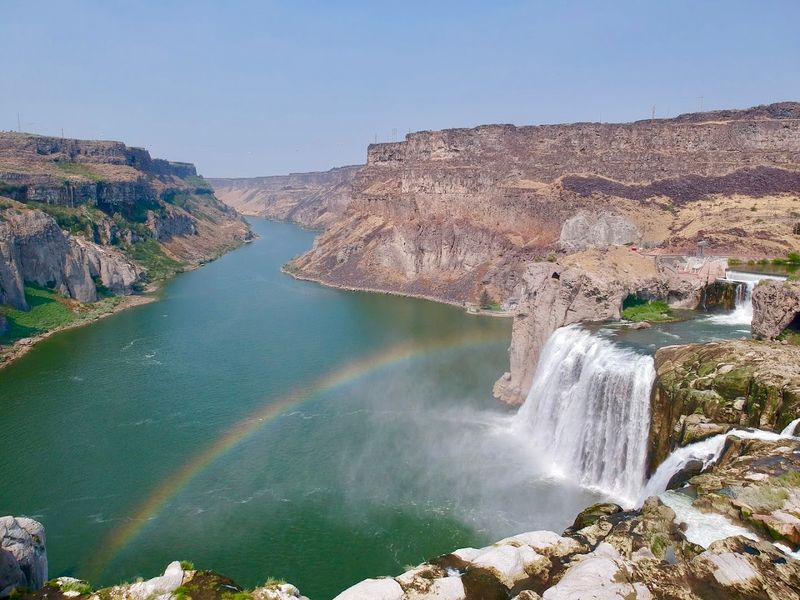
Taller than Niagara Falls by about 45 feet, Shoshone Falls somehow manages to stay off most people’s radar, which makes discovering it feel like a genuine secret. Nicknamed the Niagara of the West, this powerhouse waterfall on the Snake River near Twin Falls, Idaho reaches 212 feet at its thundering peak.
Spring runoff transforms the falls into an absolute beast of whitewater.
Summer irrigation demands upstream reduce water flow significantly by mid-year, so spring is hands-down the best time to catch the falls at full power. The state park surrounding Shoshone Falls offers picnic areas, a swimming area nearby, and observation platforms with sweeping canyon views.
Admission is affordable, making it an easy stop for road-tripping families.
The Snake River Canyon surrounding the falls adds dramatic depth to the whole scene, with rugged basalt walls dropping sharply toward the churning water below. Kayakers and thrill-seekers are drawn to the area for both the views and the challenging river conditions downstream.
Shoshone Falls proves that Idaho is hiding some seriously spectacular natural scenery that deserves far more attention than it typically gets from travelers passing through.
Akaka Falls, Hawaii
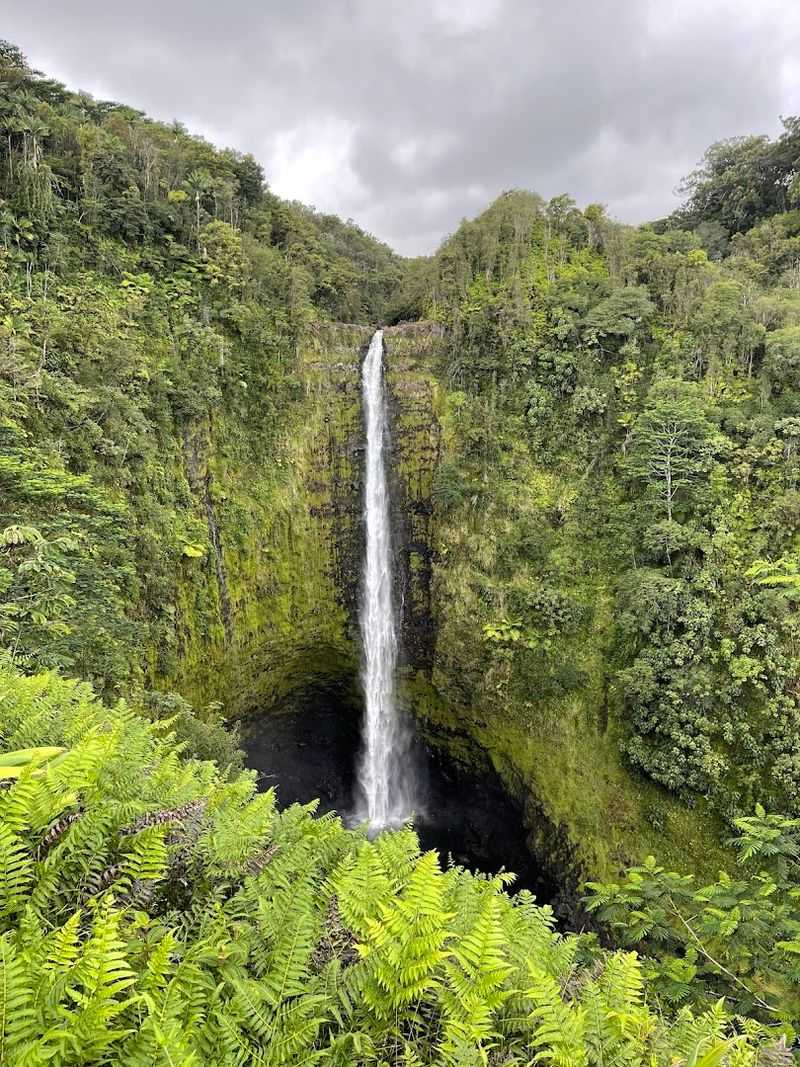
Stepping onto the Akaka Falls trail feels like walking into a real-life jungle adventure. Located on Hawaii’s Big Island, this 442-foot plunge waterfall drops into a lush, mist-filled gorge surrounded by bamboo groves, wild orchids, and enormous tropical ferns.
The humid air smells like earth and flowers, and the sound of rushing water fills the entire forest.
The paved loop trail is short, easy, and accessible for most visitors, making it a fantastic stop for families or anyone not looking for a strenuous hike. Along the way, a second waterfall called Kahuna Falls appears through the trees, adding a bonus surprise to the walk.
Both falls are fed by rainfall that soaks the Big Island’s lush Hamakua Coast almost year-round.
Hawaii’s volcanic geology gives Akaka Falls a dramatic, almost theatrical setting that feels completely different from mainland waterfalls. The dark basalt walls contrast beautifully against the vivid green vegetation and white rushing water.
Arriving early in the morning means cooler temperatures and fewer crowds, which makes the whole experience feel more personal and peaceful. Akaka Falls is proof that Hawaii’s natural beauty goes far beyond its famous beaches.
Bridalveil Fall, California
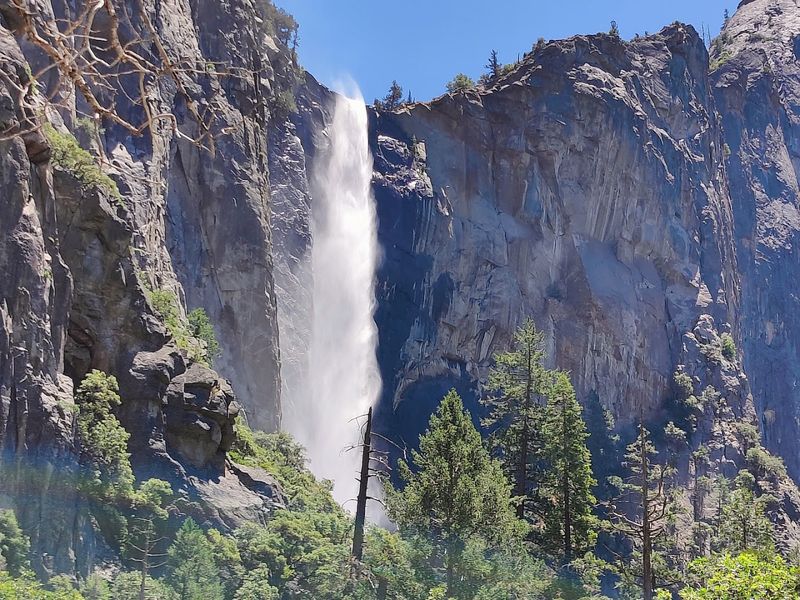
Wind has a funny way of turning Bridalveil Fall into something almost magical. Gusts regularly catch the falling water and blow it sideways, creating the wispy, veil-like effect that inspired the waterfall’s poetic name.
Located right at the entrance to Yosemite Valley, it is often the first waterfall visitors encounter, and what an introduction it is.
The short trail to the base is paved and accessible, making it one of the most visited spots in all of Yosemite National Park. Standing beneath the falls means getting lightly misted, which feels refreshing on a warm California afternoon.
The towering granite walls surrounding the fall make the 617-foot drop look even more dramatic from below.
Bridalveil Fall flows year-round, unlike some of Yosemite’s seasonal cascades, which makes it a reliable highlight no matter when you visit. Spring brings the heaviest flows when snowmelt swells the stream feeding the falls.
Native Miwok people historically called this waterfall Pohono, meaning spirit of the puffing wind, a name that perfectly captures its breezy, ever-shifting character. Bridalveil Fall is one of those sights that sticks with you long after you have left the valley.
Cumberland Falls, Kentucky
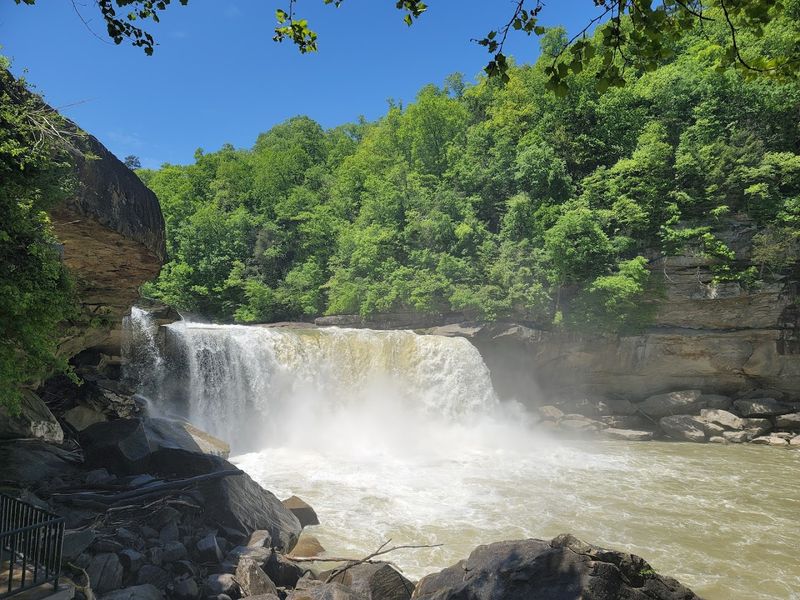
Only a handful of places on Earth can produce a moonbow, and Cumberland Falls in Kentucky is one of them. On clear nights during a full moon, the mist rising from this wide waterfall catches the moonlight and creates a ghostly rainbow arc that has to be seen to be believed.
It is one of the most unusual natural phenomena in the entire United States.
During the day, Cumberland Falls is equally impressive, stretching nearly 125 feet wide as the Cumberland River plunges 68 feet over a limestone ledge. The surrounding Daniel Boone National Forest adds a wild, remote atmosphere that makes the waterfall feel like a genuine backcountry discovery.
A state resort park nearby offers lodging, making it easy to plan an overnight moonbow viewing trip.
Families love Cumberland Falls for its accessible trails, swimming holes, and picnic areas scattered throughout the park. Whitewater rafting and kayaking below the falls attract adventure seekers looking for more excitement.
The best moonbow viewing conditions happen during peak flow months when mist production is at its highest. Cumberland Falls is a genuinely quirky and wonderful natural attraction that rewards curious travelers who venture into Kentucky’s beautiful hill country.
Snoqualmie Falls, Washington
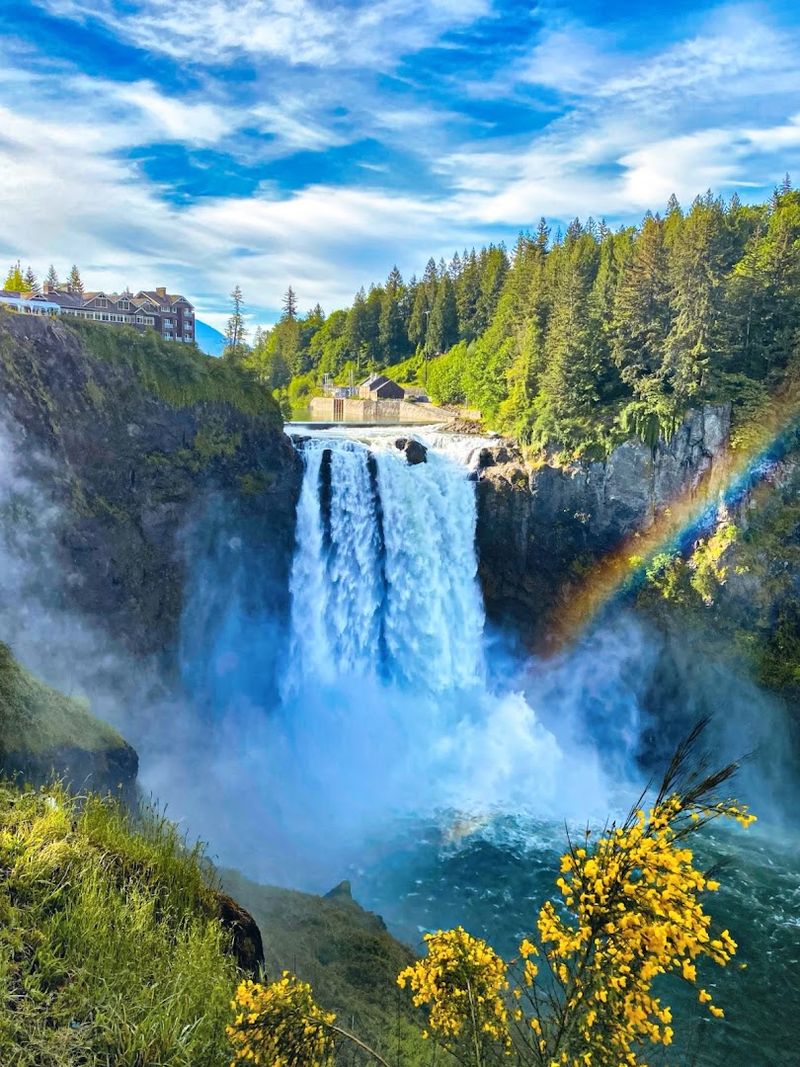
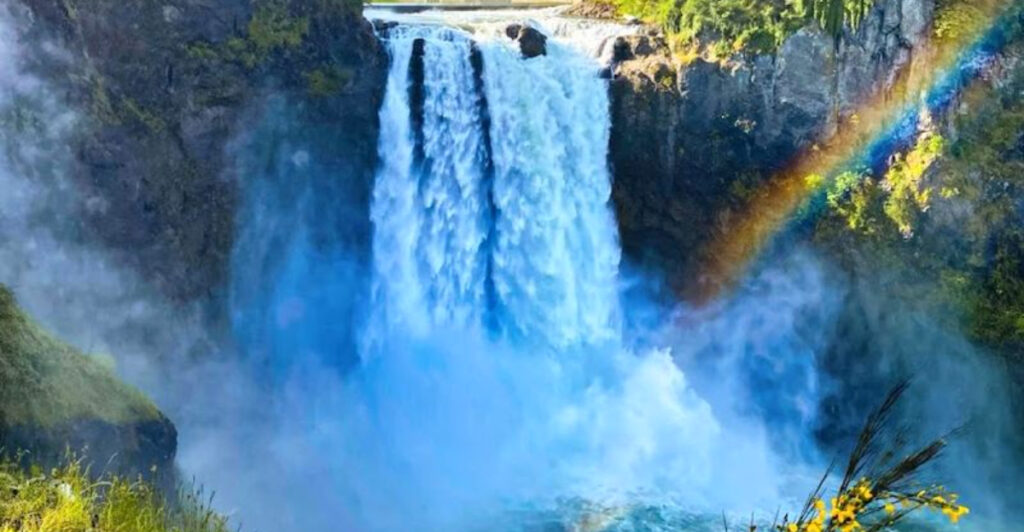
Long before Twin Peaks made it famous worldwide, Snoqualmie Falls was already one of Washington State’s most beloved natural landmarks. The waterfall drops a dramatic 268 feet, which is actually about 100 feet taller than Niagara Falls, into a churning pool surrounded by dense Pacific Northwest evergreens.
The roar from the base is genuinely impressive, vibrating through your chest on high-flow days.
Located just 30 minutes east of Seattle, Snoqualmie Falls is one of the most accessible major waterfalls in the country. Two observation decks offer different perspectives, and a short trail winds down to the river level for a closer, mist-soaked view.
The Salish Lodge sitting atop the falls adds a touch of cozy elegance to the whole scene.
The Snoqualmie Tribe considers these falls a sacred site, and the energy of the place reflects that spiritual significance. Winter rains swell the falls to their most powerful flows, while summer brings clearer skies and longer visiting hours.
Photographers love the falls at golden hour when soft light filters through the surrounding forest canopy. Whether you know it from TV or from a Washington road trip, Snoqualmie Falls never disappoints.
Lower Falls of Yellowstone, Wyoming
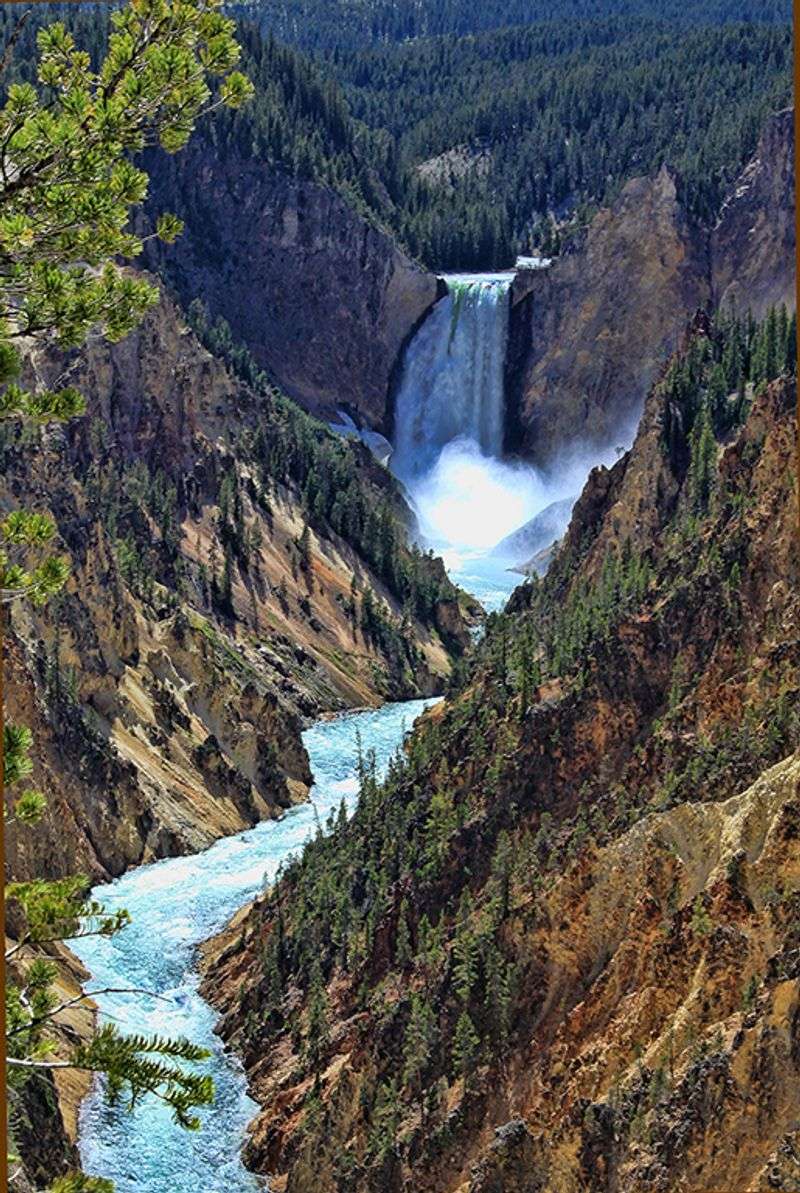
Standing at the rim of the Grand Canyon of Yellowstone and watching the Lower Falls drop more than 300 feet into the churning river below is a full sensory experience. The canyon walls glow in shades of yellow, orange, and red from hydrothermal mineral deposits, creating a backdrop so vivid it almost looks painted.
The combination of waterfall and canyon is arguably the most dramatic landscape in all of Yellowstone National Park.
Artist Point offers the most iconic view, drawing painters and photographers since the 1800s when explorers first documented this spectacular scene. The thundering water sends mist drifting upward, and on sunny days a rainbow frequently forms in the spray.
Multiple viewpoints along both canyon rims give visitors different angles and perspectives to appreciate.
The Lower Falls are nearly twice the height of Niagara Falls, a fact that surprises many first-time visitors who expect the park’s geysers to be the main attraction. Trails descend steeply into the canyon for those wanting a closer encounter with the water.
Wildlife including osprey and eagles frequently nest along the canyon walls, adding an extra layer of wonder to an already extraordinary place. This is Yellowstone at its most jaw-dropping.
Palouse Falls, Washington
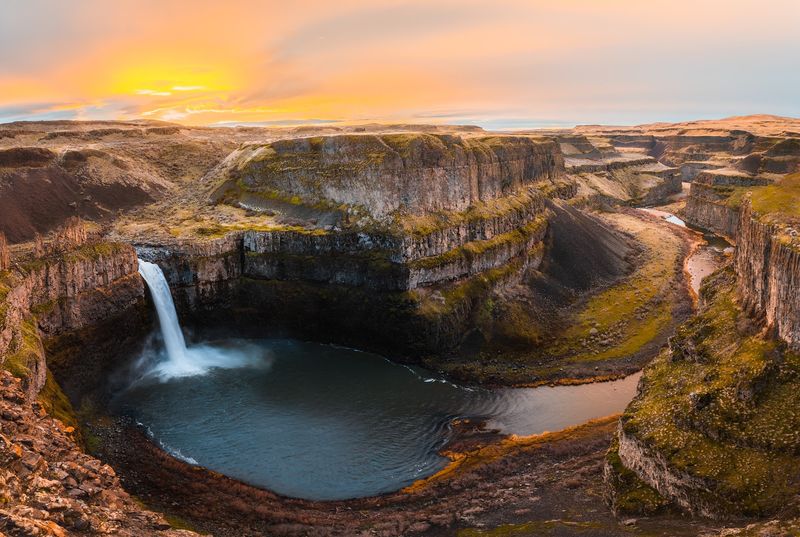
Eastern Washington is mostly known for wheat fields and wide open skies, which makes stumbling upon Palouse Falls feel like finding a hidden portal to another world. The waterfall drops 198 feet into a perfectly circular basalt bowl carved by catastrophic Ice Age floods thousands of years ago.
The geology alone is worth the trip, but the scenery seals the deal completely.
Palouse Falls State Park is small and remote, which keeps the experience feeling raw and uncrowded compared to more famous Pacific Northwest waterfalls. A short trail leads to a viewpoint directly above the falls, offering a bird’s-eye perspective that is both thrilling and slightly terrifying.
Sunrise light hitting the canyon walls turns the whole scene into something truly painterly.
Spring brings the highest water flow when snowmelt rushes down the Palouse River and pours dramatically over the basalt ledge. Kayakers have actually paddled over the falls, a feat that has earned this spot serious respect in the whitewater community.
Washington State officially named Palouse Falls its state waterfall in 2014, a well-deserved honor for one of the Pacific Northwest’s most underrated and genuinely spectacular natural landmarks.
Ruby Falls, Tennessee
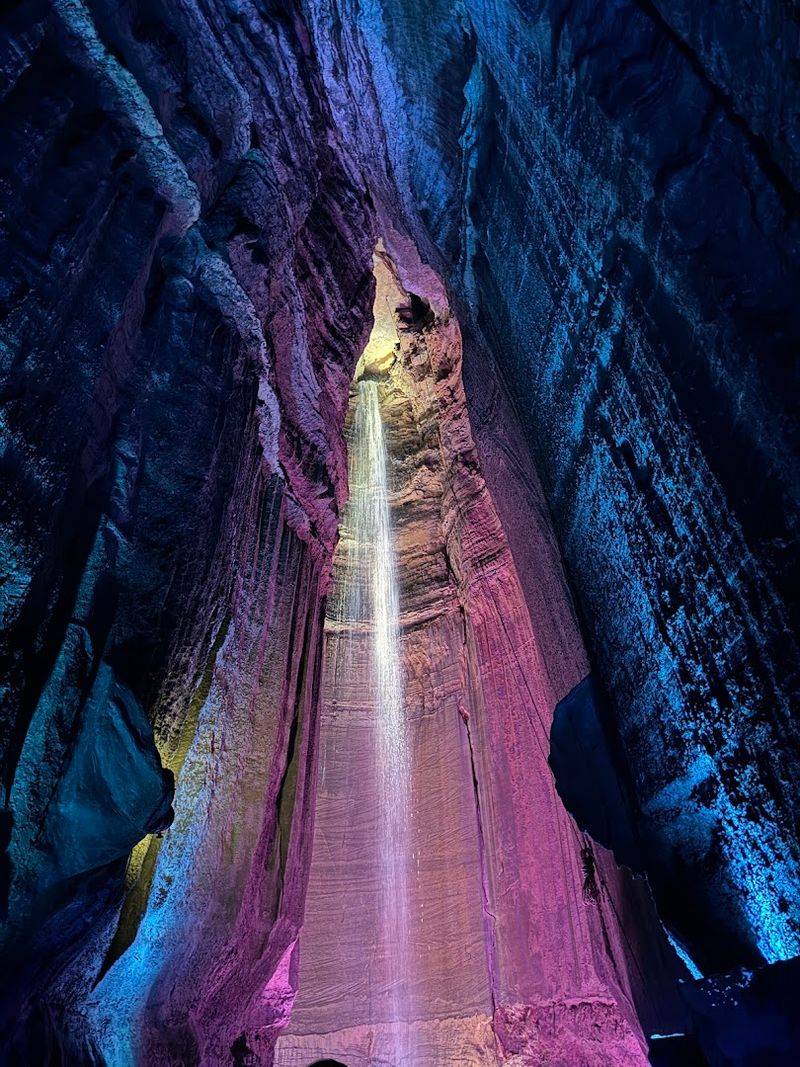
Most waterfalls require a hike through forests or canyons, but Ruby Falls demands an elevator ride 1,120 feet underground first. Hidden inside Lookout Mountain near Chattanooga, Tennessee, this 145-foot underground waterfall is the tallest and deepest cave waterfall in the United States open to the public.
The journey through the cave is half the experience, winding past dramatic stalactites and ancient rock formations.
Leo Lambert discovered the falls in 1928 while drilling an elevator shaft into the mountain for a different cave attraction entirely. He named the waterfall after his wife Ruby, which is honestly one of the sweetest geological discoveries in American history.
The cave maintains a constant cool temperature year-round, making it a welcome escape during hot Tennessee summers.
Guided tours lead small groups through the cave passages before the grand reveal of the illuminated waterfall at the end. Colored lights add a theatrical quality to the experience that kids absolutely love.
The surrounding Lookout Mountain area also offers Civil War history, the famous Rock City gardens, and stunning views of seven states from the summit. Ruby Falls is genuinely one of Tennessee’s most unique and memorable attractions, offering something no outdoor waterfall can quite replicate.
Tahquamenon Falls, Michigan
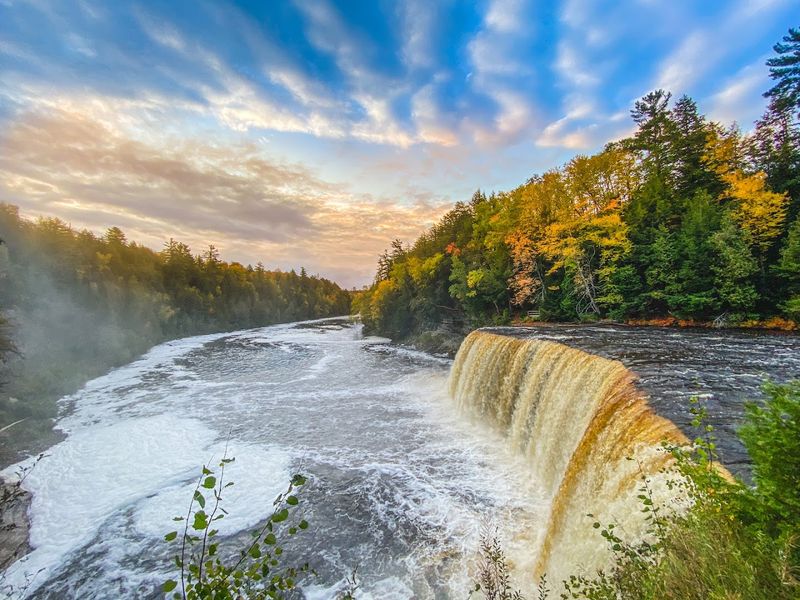
The amber-colored water rushing over Tahquamenon Falls looks like someone poured root beer over a wide, mossy ledge, and honestly the comparison is not far off. Tannins from cedar and spruce swamps upstream give the water its distinctive warm brown color, a completely natural phenomenon that surprises nearly every first-time visitor.
The Upper Falls stretch nearly 200 feet wide, ranking among the largest waterfalls east of the Mississippi River.
Located deep in Michigan’s Upper Peninsula within Tahquamenon Falls State Park, the falls feel wonderfully remote and wild. A rowboat rental allows visitors to paddle to a small island between the Upper and Lower Falls, adding an adventurous twist to the experience.
The surrounding forest turns spectacular shades of red, orange, and gold in autumn, making fall one of the most popular visiting seasons.
Henry Wadsworth Longfellow referenced these falls in his famous poem The Song of Hiawatha, cementing the waterfall’s place in American literary history. Winter transforms the scene into a frozen wonderland, with ice formations building dramatically around the cascade.
The park offers camping, hiking trails, and a microbrewery near the falls, making it an ideal destination for a full weekend adventure in Michigan’s beautiful north woods.
Alamere Falls, California
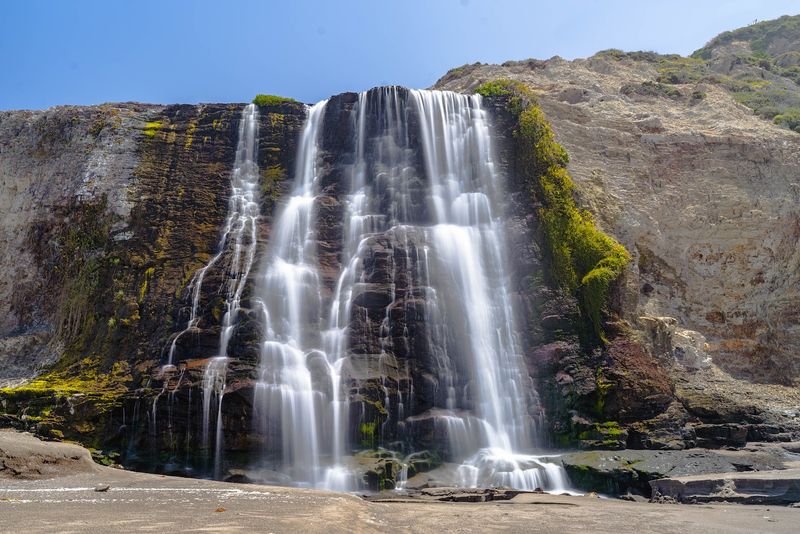
Waterfalls that flow directly onto ocean beaches are rare anywhere on Earth, which makes Alamere Falls one of California’s most extraordinary natural surprises. Located along the rugged coastline of Point Reyes National Seashore north of San Francisco, the waterfall drops 40 feet from coastal bluffs directly onto a wild, windswept beach.
The sight of freshwater meeting ocean waves is genuinely unlike anything else in the country.
Reaching Alamere Falls requires a roughly eight to ten mile round-trip hike through rolling coastal hills, meadows, and past freshwater lakes. The trail is unmarked in sections and moderately challenging, which keeps the experience feeling adventurous and the beach blissfully uncrowded.
Strong winds off the Pacific make layers essential even in summer.
The falls flow most reliably in winter and spring when coastal rains keep the seasonal stream running full and powerful. Summer often reduces the flow to a trickle, so planning around wetter months dramatically improves the experience.
Tidepools at the beach base reward patient observers with sea stars, anemones, and crabs. Alamere Falls perfectly captures the wild, untamed spirit of California’s northern coastline, combining ocean drama with waterfall beauty in a setting that feels genuinely off the beaten path.
Ramona Falls, Oregon
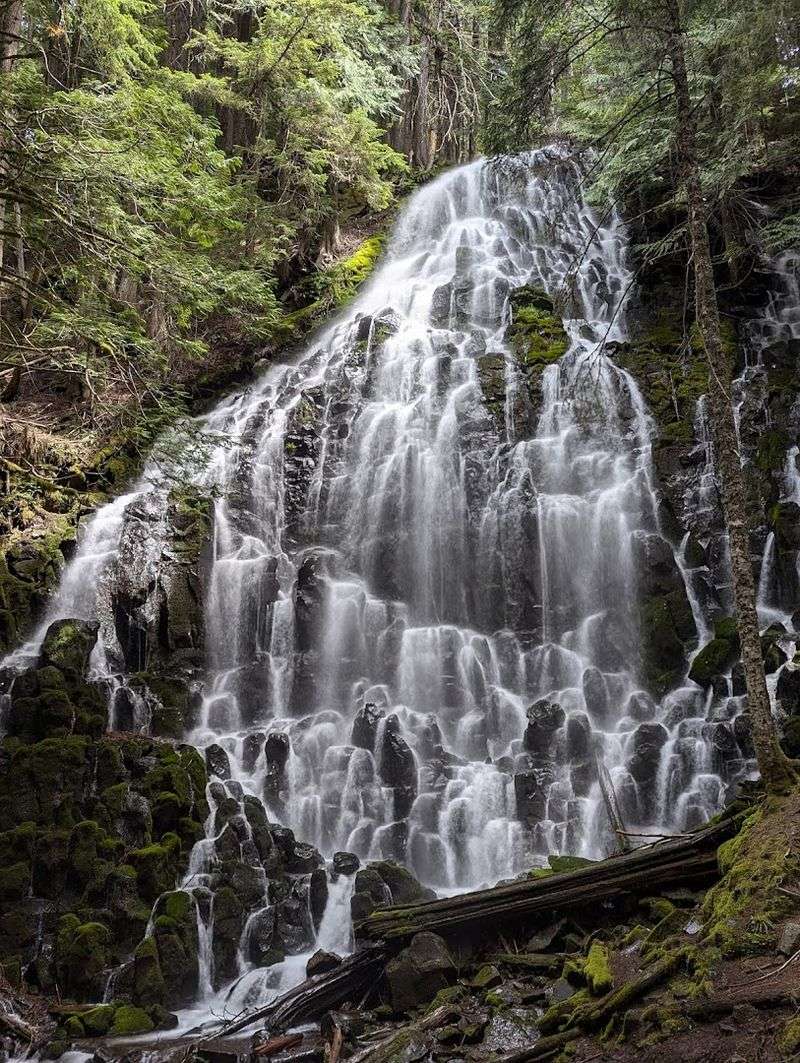
Water does not so much fall at Ramona Falls as it fans out and dances across an entire wall of moss-draped basalt columns, creating a curtain effect that feels more like a living art installation than a typical waterfall. Located in Mount Hood National Forest about an hour from Portland, Ramona Falls is one of Oregon’s most distinctly beautiful cascades.
The mossy green rock and the soft, spreading water create a scene of almost impossible tranquility.
The hike to Ramona Falls is around seven miles round trip through gorgeous old-growth forest, crossing the Sandy River twice on seasonal footbridges. The trail is well-maintained and moderately easy, making it a popular choice for families and casual hikers looking for a rewarding day out.
Spring and early summer offer the best water flow and the freshest, greenest forest conditions.
Mount Hood looms above the surrounding landscape, and on clear days the snowy peak is visible through gaps in the forest canopy. The falls stay cool and shaded throughout the day, making midday visits pleasant even during summer.
Wildflowers bloom along the trail in spring, adding bright color to the rich green forest palette. Ramona Falls is the kind of place that makes you walk slowly and speak quietly out of pure respect for the scenery.
Burney Falls, California
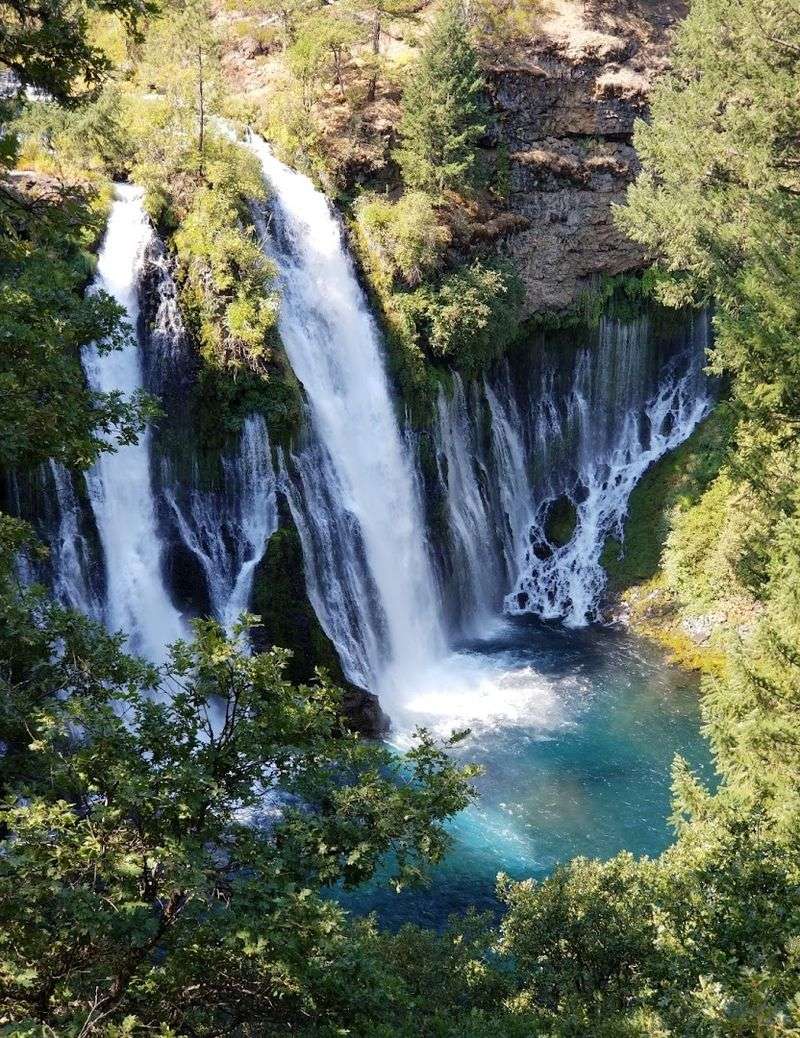
John Muir once called Burney Falls the eighth wonder of the world, and while that title gets tossed around loosely, standing in front of this waterfall makes you understand exactly what he meant. Located in McArthur-Burney Falls Memorial State Park in northern California, the falls pour not just over the top but directly out of the porous volcanic rock walls on both sides, creating a wide, shimmering curtain of water.
The effect is genuinely hypnotic.
The falls are fed partly by underground springs, which means they maintain a remarkably consistent flow of about 100 million gallons per day regardless of the season. Even during California’s driest summers, Burney Falls keeps flowing with impressive force.
The water stays crystal clear and icy cold year-round, fed by aquifers deep within the volcanic geology.
A short, easy loop trail circles the falls and the emerald green pool at their base, making this one of the most accessible spectacular waterfalls in the state. The park also offers camping, fishing on Lake Britton nearby, and excellent birdwatching in the surrounding mixed forest.
Burney Falls sits along the Pacific Crest Trail, meaning long-distance hikers get to enjoy this natural wonder as a genuine trail reward. It earns every bit of Muir’s legendary praise.
McWay Falls, California
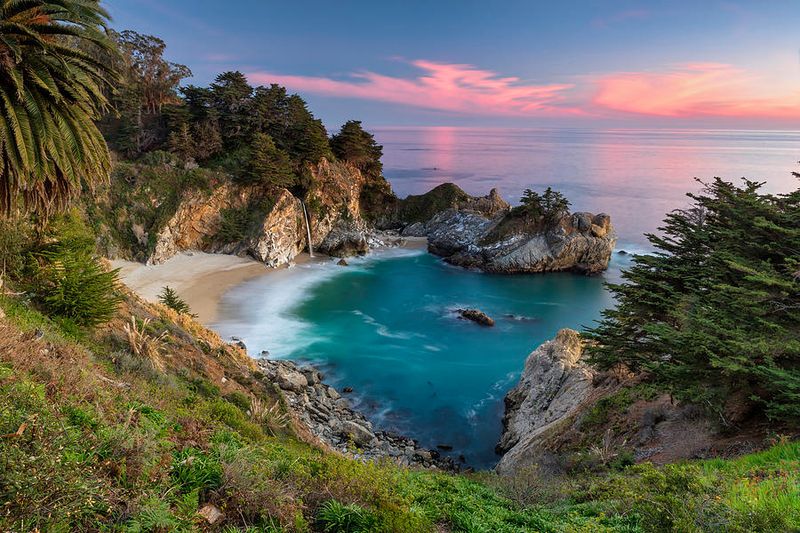
McWay Falls might be the most photogenic waterfall in America, and the competition for that title is fierce. Tucked into a hidden cove along Big Sur’s dramatic coastline inside Julia Pfeiffer Burns State Park, the waterfall drops 80 feet directly onto a crescent-shaped beach that visitors cannot actually reach on foot.
The inaccessibility somehow makes it even more beautiful and mysterious.
A short half-mile trail leads to an overlook where the full scene unfolds below: turquoise ocean water, pale sand, vertical cliffs, and a delicate ribbon of freshwater catching the Pacific breeze. Sunlight hits the cove at different angles throughout the day, creating constantly shifting moods and colors.
Photographers arrive at all hours trying to capture the perfect shot.
The falls flow year-round thanks to a small stream fed by coastal springs and seasonal rainfall. Winter storms rolling in from the Pacific add dramatic, moody atmosphere to the already stunning landscape.
Marine mammals including sea otters and harbor seals occasionally appear in the cove below, adding wildlife drama to the visual feast. McWay Falls proves that sometimes the most beautiful things are the ones you can admire but never quite touch, which only deepens the sense of wonder every visitor carries away from Big Sur.
Silver Falls, Oregon
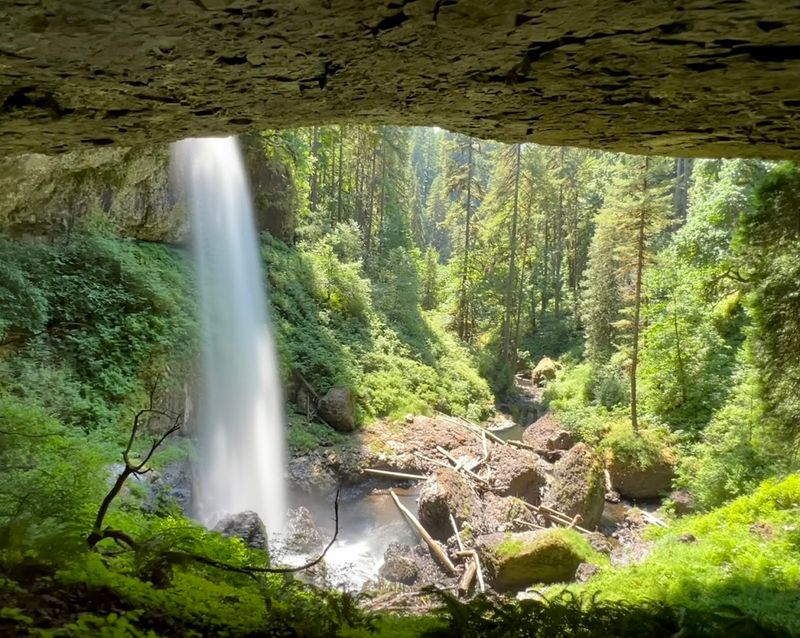
Walking behind a waterfall is one of those experiences that sounds impossible until you actually do it, and Silver Falls State Park makes it completely accessible on their famous Trail of Ten Falls. South Falls, the crown jewel of the park, drops 177 feet and features a carved-out basin behind the curtain of water where visitors can stand and watch the falls from the inside.
The cool mist, the roaring sound, and the view looking out through the water are extraordinary.
The Trail of Ten Falls loops through about seven miles of lush Pacific Northwest forest, passing ten separate waterfalls along the way. Each waterfall has its own personality, ranging from wide and powerful to narrow and graceful.
The trail difficulty is moderate, making it manageable for most hikers with reasonable fitness.
Silver Falls State Park is Oregon’s largest state park and consistently ranks among the most visited natural attractions in the Pacific Northwest. Fall is particularly stunning when maple and bigleaf trees turn the forest golden around the silver cascades.
The park also offers camping, horseback riding trails, and mountain biking routes for visitors wanting a full outdoor weekend. Silver Falls delivers more waterfall drama per mile than almost anywhere else in America, making every step of the trail feel rewarding.
Rainbow Falls, Hawaii
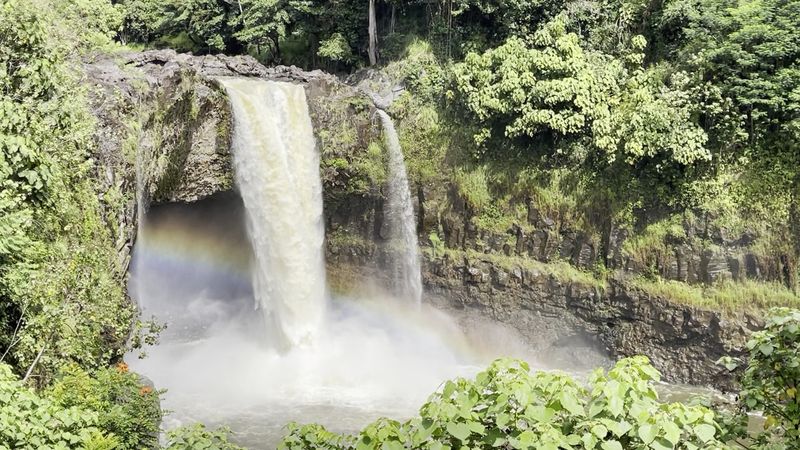
Morning visits to Rainbow Falls near Hilo earn their name every single time the sun cooperates. When early sunlight hits the mist rising from this 80-foot waterfall, a vivid rainbow reliably appears in the spray, a daily natural performance that feels almost too convenient to be real.
The waterfall drops into a large natural lava cave pool where, according to Hawaiian legend, the demigod Maui’s mother once lived.
Getting there requires almost no effort at all, which makes Rainbow Falls one of Hawaii’s most rewarding quick stops. A short paved path leads from the parking area directly to the viewing platform, making it fully accessible for visitors of all ages and mobility levels.
The surrounding tropical vegetation is lush and fragrant, with massive banyan trees and tropical flowers framing the scene beautifully.
The Wailuku River feeds Rainbow Falls, and heavy Hilo rainfall keeps the flow strong and consistent throughout the year. Hilo is one of the wettest cities in the United States, which means the falls are almost always running at impressive volume.
A short trail above the main viewpoint leads to a quieter upper area with different perspectives of the cascade. Rainbow Falls captures the magical, volcanic beauty of Hawaii’s Big Island in a package that requires almost zero hiking to fully appreciate.
Great Falls, Virginia and Maryland
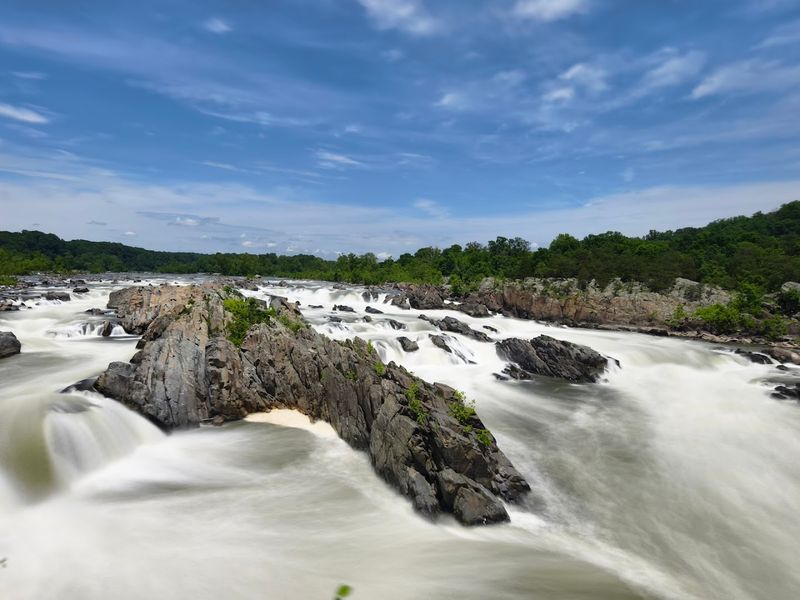
Just fifteen miles from the United States Capitol, Great Falls on the Potomac River delivers a level of raw, thundering natural power that feels completely out of place this close to a major city. The river squeezes through a narrow gorge and drops roughly 76 feet over a series of jagged rock ledges, creating one of the most powerful whitewater stretches on the entire East Coast.
The noise alone is startling for first-time visitors expecting a gentle suburban park.
Great Falls Park on the Virginia side and Chesapeake and Ohio Canal National Historical Park on the Maryland side both offer excellent overlooks and trail systems. The Virginia side features three dramatic overlooks perched directly above the churning rapids, each one offering a slightly different and equally impressive perspective.
The Maryland side adds historical canal locks and towpath trails for those wanting more context and mileage.
Spring snowmelt and heavy rains send the Potomac surging to truly spectacular flood levels, when the falls transform into an almost apocalyptic wall of whitewater. Rock climbers tackle the cliff faces on both sides of the gorge, adding human drama to the natural spectacle.
Wildlife including great blue herons, bald eagles, and river otters regularly appear along the banks. Great Falls proves definitively that the East Coast can compete with any waterfall destination in America.
Share this story