Croatia is famous for its medieval old towns and buzzing main squares, but the real magic often happens right at the water’s edge. From Istria to Dalmatia, the country’s waterfronts are packed with jaw-dropping scenery, salty breezes, and centuries of seafaring history.
I still remember standing at the Zadar waterfront at sunset, completely forgetting there was a famous square just two streets away. These 15 Croatian waterfront spots deserve way more credit than they usually get.
Sea Organ Waterfront, Zadar, Croatia
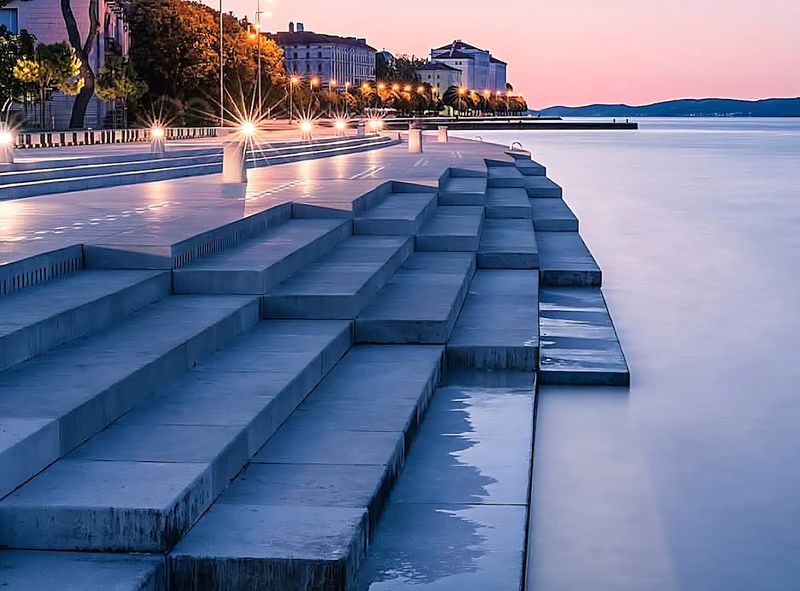
The Sea Organ in Zadar is one of those places that makes you stop, sit down, and forget where you were supposed to be. Designed by architect Nikola Basic, it uses waves to push air through underwater pipes, creating haunting musical tones 24 hours a day.
No two performances are the same. The sea literally composes the music on the spot, depending on wave strength and wind direction.
I sat here for almost an hour once, and nobody around me was on their phone.
Right next to it is the Sun Salutation, a solar-powered light installation that puts on a colorful show after dark. Locals hang out here every evening like it’s the best free concert in town.
Spoiler: it is. Arrive around golden hour for the full effect, and grab a spot on the marble steps early because they fill up fast.
Riva Promenade, Split, Croatia
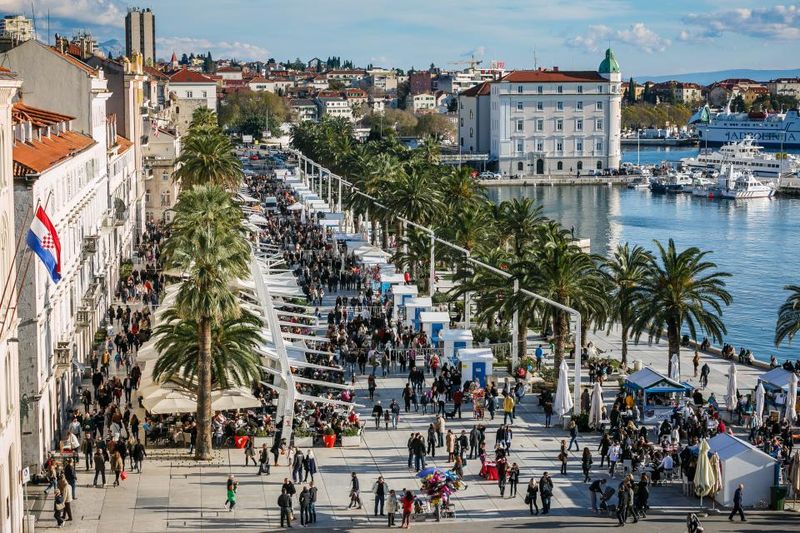
Split’s Riva is a promenade that has been people-watching since the Roman Empire was still a going concern. Stretching along the harbor right in front of Diocletian’s Palace, it’s where the whole city comes to stroll, sip coffee, and look effortlessly stylish.
The white marble pavement practically glows in the afternoon sun. Rows of outdoor cafes line one side while sailboats bob gently on the other.
It’s the kind of place where a quick coffee somehow turns into a two-hour sit-down.
The Riva was redesigned in 2007 and locals had very strong opinions about it. Old photos show a much narrower walkway crowded with parked cars.
Today it’s a car-free zone and one of the most photographed spots in all of Croatia. Come early morning if you want it mostly to yourself, before the tour groups arrive with their matching hats and selfie sticks.
Old Port and Porporela, Dubrovnik, Croatia
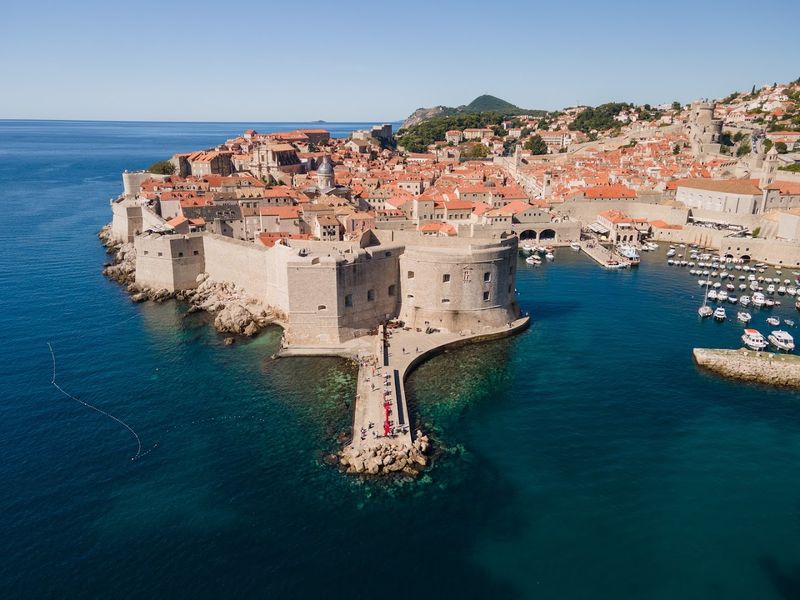
Everyone flocks to the Stradun, but the real Dubrovnik regulars head straight to the Old Port. Tucked behind the city walls, this compact harbor is where ferries depart for the islands and fishermen still unload their catch in the morning.
The Porporela is the breakwater that stretches out from the port into the open sea. Locals use it as a sunbathing platform, a fishing spot, and an evening hangout all at once.
The views back toward the city walls from the tip of the Porporela are genuinely spectacular.
What makes this spot different from the main tourist drag is the complete lack of souvenir shops. It feels like actual Dubrovnik life is still happening here.
There’s a small outdoor bar at the port entrance that serves cold drinks at reasonable prices, which in Dubrovnik basically counts as a miracle. Go in the morning or late afternoon for the best light and fewer crowds.
Old Town Waterfront, Rovinj, Istria, Croatia
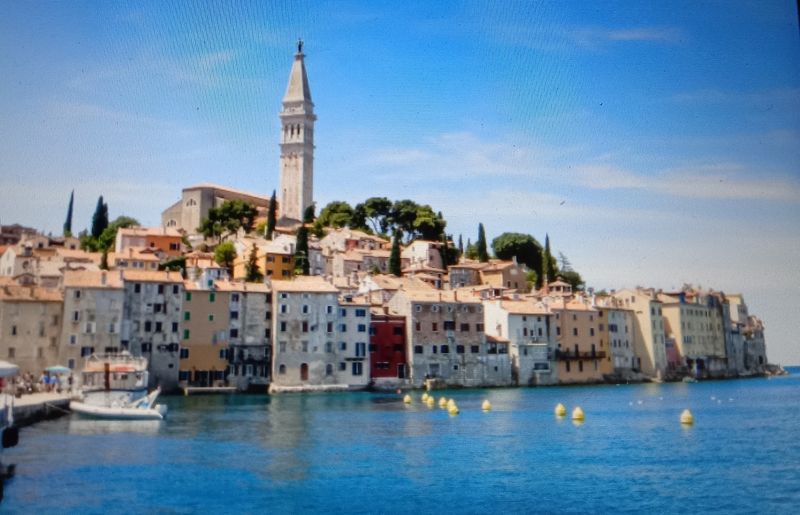
Rovinj’s waterfront looks like someone spilled a box of watercolor paints over a cluster of medieval buildings and just let it dry. The old town sits on a peninsula with colorful houses stacked right to the water’s edge, their reflections rippling in the Adriatic below.
The harbor curves around the base of the old town, dotted with fishing boats and lined with seafood restaurants. There’s a narrow path that circles the entire rocky shoreline, and it’s one of the best walks in Istria.
Flat rocks along the way serve as natural sunbathing spots for locals who clearly know something tourists don’t.
The Church of St. Euphemia towers above everything from the top of the hill, visible from pretty much anywhere along the waterfront. Rovinj is one of those towns where getting lost is actually the plan.
The waterfront path eventually loops back, so you can’t go too wrong. Just watch your step on the wet rocks.
Lungomare Promenade, Opatija, Croatia
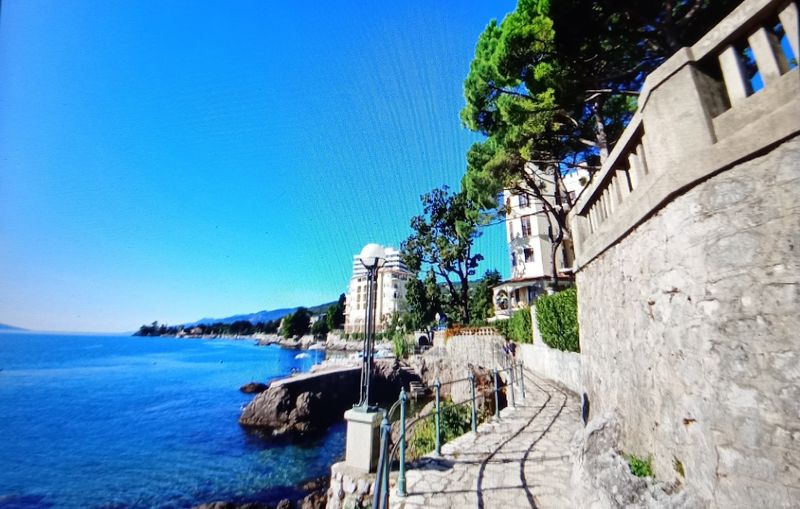
Built in 1889, the Lungomare in Opatija is one of the oldest seafront promenades in the entire Adriatic region. It stretches for about 12 kilometers along the Kvarner Bay, connecting several towns in a long, scenic coastal walk that Austro-Hungarian aristocrats once considered the height of fashion.
The path winds through lush greenery, past grand old villas, and along rocky shores where the sea is remarkably calm. Opatija was essentially Croatia’s first beach resort, and the Lungomare was the star attraction long before Instagram existed to document it.
There’s a famous bronze statue called the Maiden with the Seagull perched on a rock along the route. It’s become something of an unofficial symbol of Opatija, though the seagull seems perpetually unimpressed.
The promenade is popular with joggers, cyclists, and couples at all hours. Wear comfortable shoes because 12 kilometers is genuinely 12 kilometers, no matter how pretty the scenery is.
Trogir Riva, Trogir, Croatia
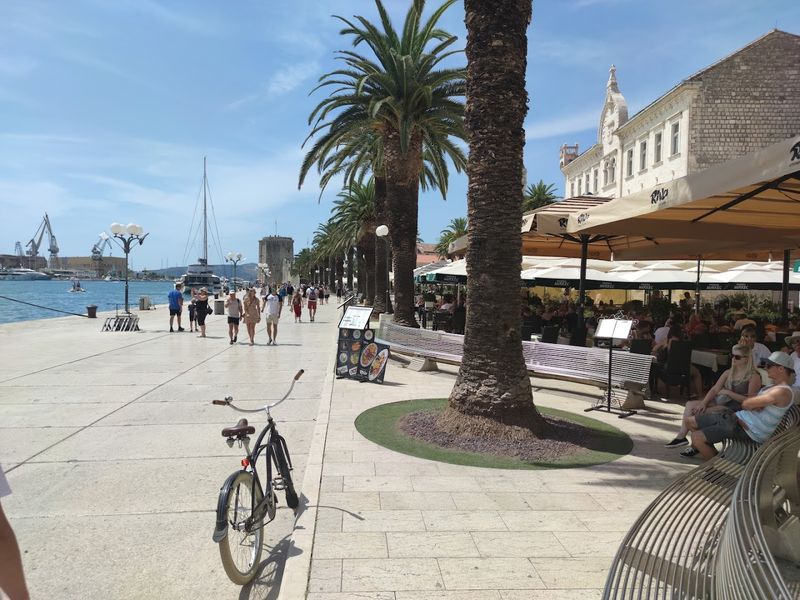
Trogir is a UNESCO World Heritage Site packed onto an island so small you can walk across it in about ten minutes. The Riva runs along its southern shore, and it might be the most relaxed waterfront on the entire Dalmatian coast.
Unlike the busier spots further south, Trogir’s Riva has a genuinely local feel. Families stroll here in the evenings, kids kick footballs near the palm trees, and restaurant owners stand outside their doors with menus, competing politely for your attention.
The boats moored along the quay range from modest fishing vessels to some seriously impressive yachts.
The medieval old town behind the Riva is extraordinary, full of Romanesque churches and Venetian architecture. But honestly, after exploring the stone streets, sitting on the Riva with a cold drink and watching the boats is hard to beat.
Trogir is only 27 kilometers from Split, making it an easy and very worthwhile half-day trip.
Šibenik Seafront, Šibenik, Croatia
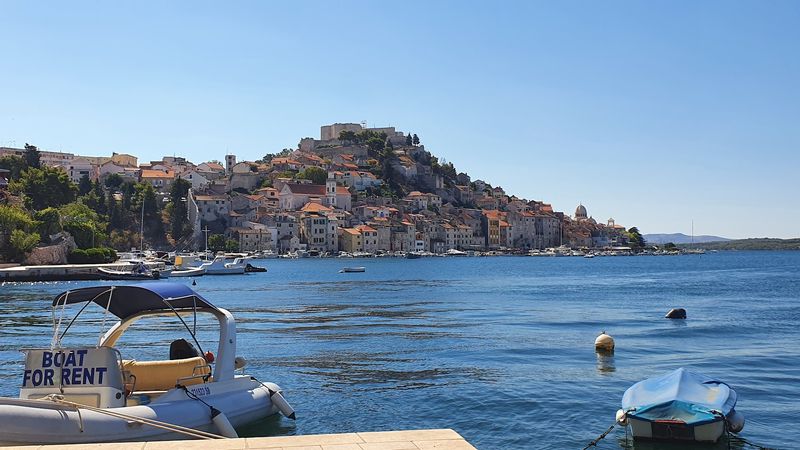
Sibenik doesn’t always make the top of Croatia travel lists, and that’s honestly its best quality right now. The seafront here is calm, scenic, and refreshingly free of the tourist overload you’ll find in some of its more famous neighbors.
The waterfront runs along the St. Anthony Channel, a narrow passage connecting the sea to the Krka River estuary. It gives Sibenik a slightly different feel from other Dalmatian towns.
The views from the quay looking back toward the old town, with St. James Cathedral looming above, are genuinely impressive.
St. James Cathedral is a UNESCO World Heritage Site and the only cathedral in the world built entirely from stone, with no brick or wood used in its construction. That fun fact alone is worth the visit.
The seafront promenade is lined with benches, cafes, and boat rental spots. Sibenik is also the perfect base for visiting the Krka National Park waterfalls, just 15 kilometers away.
Hvar Town Harbor, Hvar Town, Hvar Island, Croatia
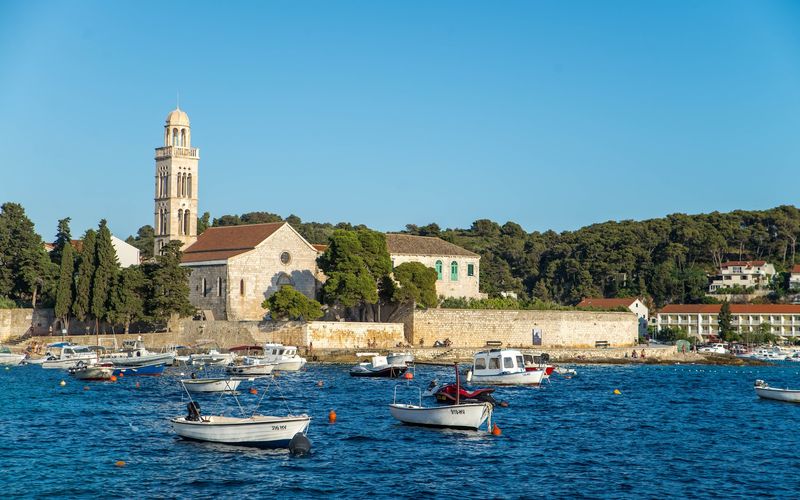
Hvar Town harbor is where superyachts go to be seen, and where everyone else goes to stare at superyachts. The harbor front is one of the most glamorous stretches of waterfront in the entire Adriatic, and it knows it.
The Renaissance loggia and clock tower frame the western end of the harbor, adding some serious historical credibility to what could otherwise feel like a floating luxury catalog. The Spanjola fortress watches over everything from the hill above, unbothered by all the designer sunglasses below.
Hvar Town gets crowded in peak summer, especially when cruise ships dock nearby. But early morning, before 9am, the harbor is almost serene.
Fishermen are still cleaning their boats, bakeries are opening, and the lavender-scented air is at its freshest. Hvar Island grows more lavender than almost anywhere else in Europe, and you can actually smell it on a calm morning near the harbor.
That’s not something many ports can claim.
Korčula Old Town Waterfront, Korčula, Korčula Island, Croatia
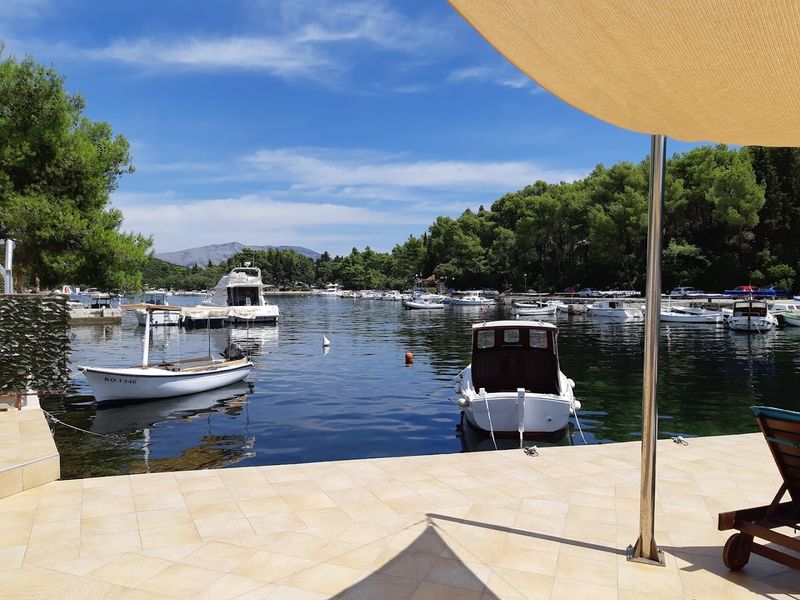
Korcula’s old town sits on a small peninsula shaped almost like a fish bone, with narrow streets branching off a central spine. From the waterfront, the whole medieval town appears to rise directly out of the sea, walls and towers included.
The waterfront path circles the base of the old town walls, and every angle offers a different view. On one side you get the open channel toward the mainland, on the other you look out toward the island of Peljesac.
Korcula is often called the birthplace of Marco Polo, which the town markets enthusiastically despite historians still arguing about it.
The local sword dance called the Moreska has been performed in Korcula for over 400 years and still happens during summer months. The waterfront is the gathering point before and after performances, giving it a festive energy that feels genuinely rooted in local tradition.
Arrive by ferry from Orebic for the best first impression of the town from the water.
Makarska Harbor and Waterfront, Makarska, Croatia
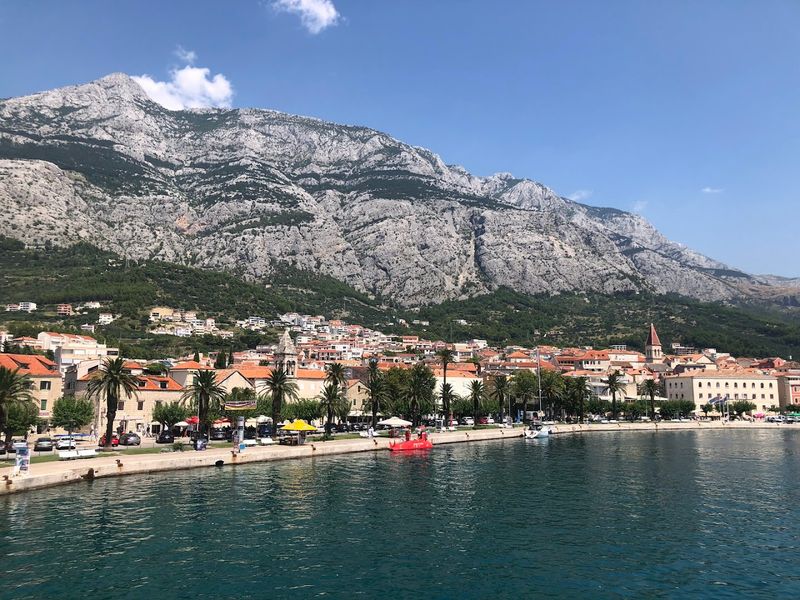
Makarska has one of the most dramatic backdrops of any harbor in Croatia. The Biokovo mountain range shoots straight up behind the town, creating a wall of grey limestone that makes the blue harbor in front look even more vivid by contrast.
The waterfront here is lively without being overwhelming. The main promenade curves around the bay, lined with palm trees, outdoor bars, and the kind of ice cream shops that require serious decision-making.
Local fishing boats share the harbor with charter yachts, which creates a pleasant mix of working port and holiday destination.
Makarska is also the gateway to some of Croatia’s best beaches, including the famous Nugal nudist beach hidden in a cove just east of town. The waterfront itself is a great spot for an evening walk after a day on the beach.
Biokovo Nature Park is accessible by road from town and offers views back down over the harbor that are genuinely hard to top.
Cavtat Waterfront Promenade, Cavtat, Croatia
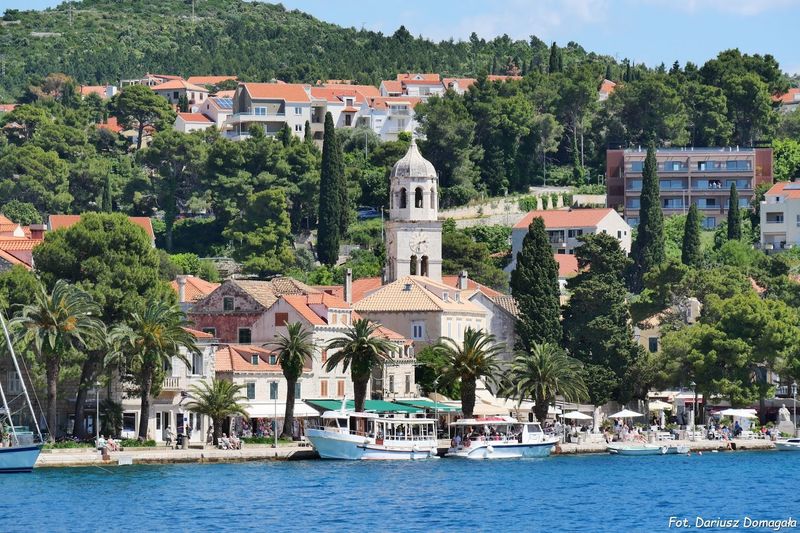
Just 18 kilometers south of Dubrovnik, Cavtat is what Dubrovnik might feel like if it hadn’t become one of the most visited cities in Europe. The waterfront promenade wraps around a small, sheltered bay lined with cypress trees and old stone houses, and the pace here is noticeably slower.
The promenade is short enough to walk in 15 minutes but pleasant enough that you’ll do it three or four times. Seafood restaurants open right onto the path, with tables practically hovering over the water.
Cavtat was actually a Greek and later Roman settlement, predating Dubrovnik by centuries.
The Racic Mausoleum on the hill above town, designed by sculptor Ivan Mestrovic, is worth the climb for both the architecture and the views over the bay. Cavtat is easy to reach from Dubrovnik by local bus or boat taxi.
The boat ride along the coast takes about 45 minutes and is a great way to arrive in style without spending yacht money.
Poreč Old Town Seafront, Poreč, Istria, Croatia
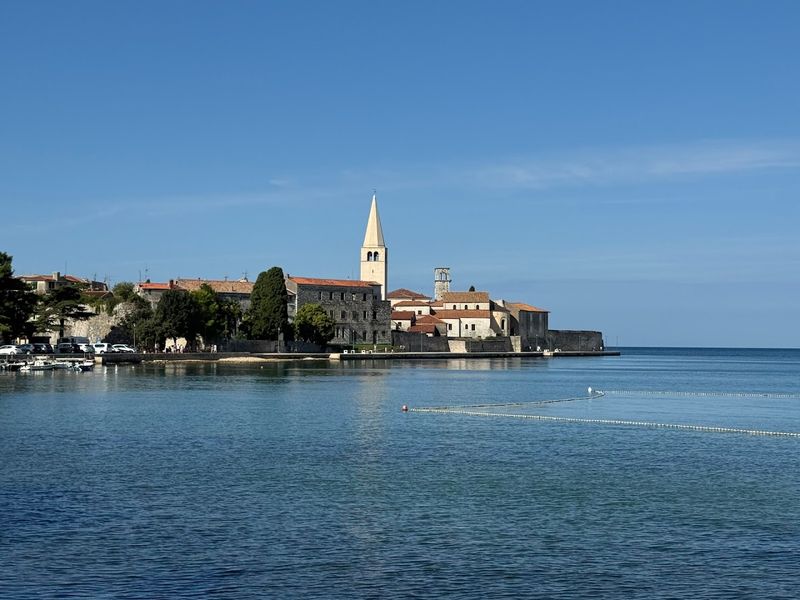
Porec is home to the Euphrasian Basilica, a 6th-century Byzantine masterpiece with gold mosaics that have survived over 1,500 years. Most visitors come specifically for the basilica, but the old town seafront surrounding it is worth just as much attention.
The town sits on a small peninsula, and the seafront path runs along both sides of it, giving you two completely different waterfront experiences in one short walk. On the western side, you face the open sea and a scattering of small islands.
On the eastern side, the marina hums with activity and the cafes stay busy all day.
Porec is one of Istria’s most visited towns, so it can get crowded in July and August. The shoulder seasons of May, June, and September are genuinely better for exploring the seafront without shoulder-to-shoulder competition.
The old town streets are Roman in their grid layout, some of the best-preserved Roman urban planning still visible in Croatia. That’s a fun detail to drop at dinner.
Molo Longo, Rijeka, Croatia
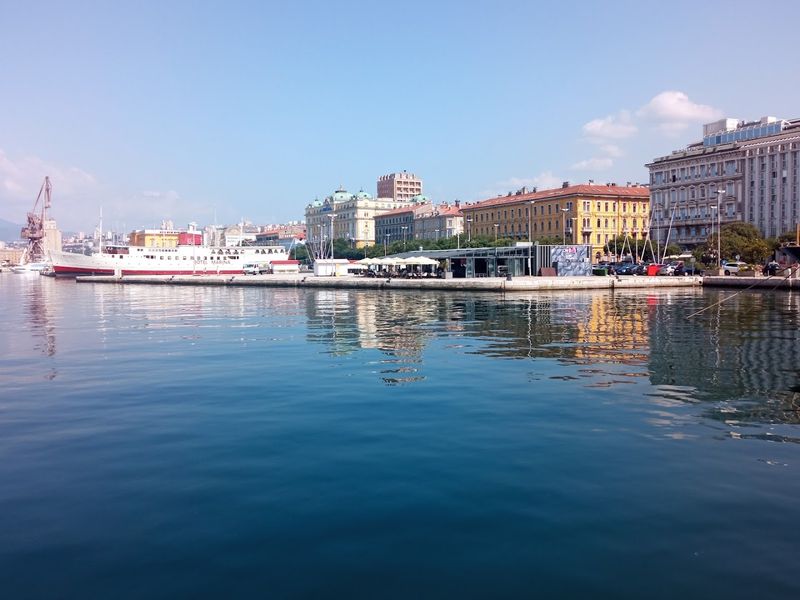
Rijeka doesn’t always get credit as a tourist destination, but this port city has a gritty, authentic charm that’s completely different from the polished Dalmatian resorts. The Molo Longo is its main waterfront feature, a long stone pier that stretches out into Kvarner Bay like a finger pointing toward the open sea.
The pier is a genuine gathering place for Rijeka residents. Joggers, dog walkers, fishermen, and teenagers on bikes all share the same stretch of stone.
At the far end, the views back toward the city and the surrounding hills are unexpectedly beautiful.
Rijeka was the European Capital of Culture in 2020, which pushed a wave of investment into the waterfront area. New cultural spaces, renovated buildings, and outdoor art installations now sit alongside the working port infrastructure.
It’s a slightly rough mix, but it feels honest. The city’s famous carnival is one of the biggest in Europe, and the waterfront plays a central role during the celebrations every February.
Stari Grad Harbor, Stari Grad, Hvar Island, Croatia
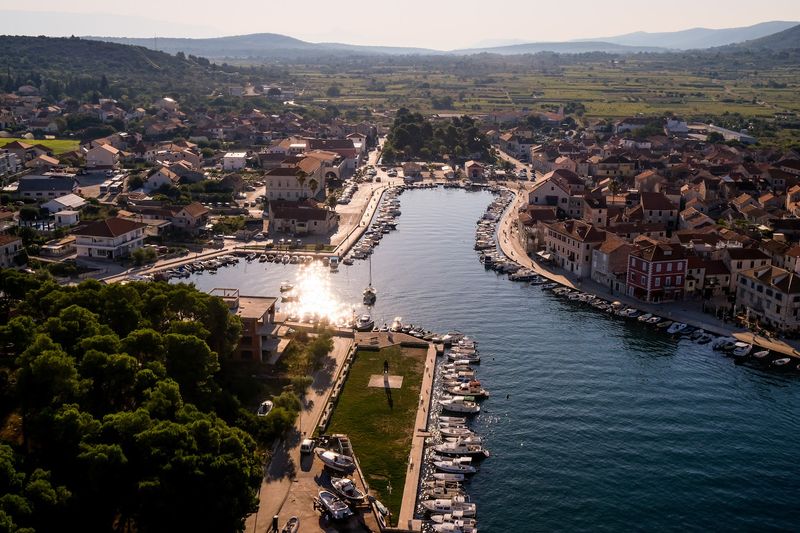
While Hvar Town gets all the glamour, Stari Grad quietly gets on with being one of the oldest towns in Europe. Founded by Greek settlers around 385 BC, its harbor has been welcoming boats for over two millennia.
That’s a lot of arrivals and departures to have witnessed.
The harbor sits at the end of a long, narrow bay that cuts deep into the island. Arriving by ferry is genuinely one of the great slow-travel experiences in Croatia, as the boat glides through the bay with vineyards and stone walls on either side.
The waterfront itself is calm, tree-lined, and completely unpretentious.
Stari Grad Plain, which surrounds the town, is a UNESCO World Heritage Site because its ancient Greek field system is still intact and in use today. Local farmers still tend the same plots that were divided up 2,400 years ago.
The harbor town reflects that same unhurried relationship with time. Come here when Hvar Town feels like too much.
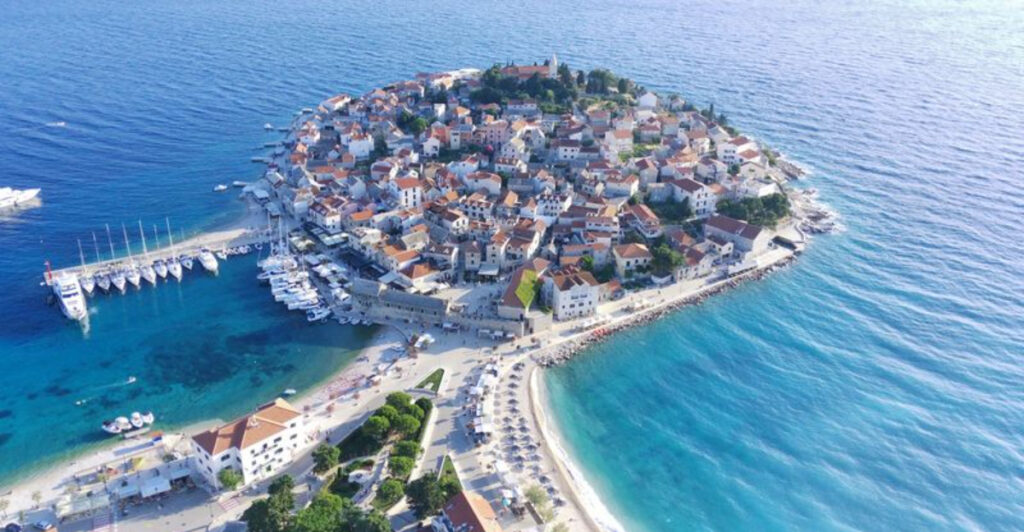
Primošten Peninsula Waterfront, Primošten, Croatia
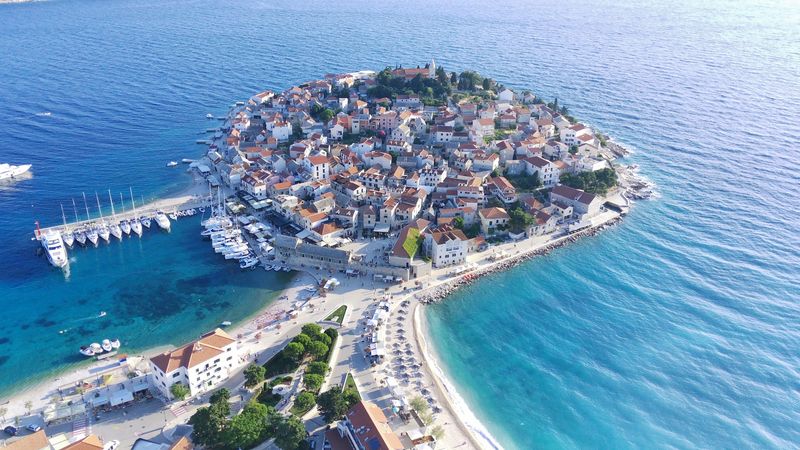
Primošten is technically a peninsula but looks so much like an island that most people do a double take when they see it on a map. The old town sits on a small rocky outcrop connected to the mainland by a short causeway, with water on nearly every side.
Walking the waterfront path around the base of the peninsula takes maybe 20 minutes, but you’ll stop so often to look at the view that it stretches into an hour easily. The combination of stone houses, a hilltop church, surrounding vineyards, and crystal-clear water is almost aggressively photogenic.
Primošten is famous for its Babic wine, a local red made from grapes grown in the rocky coastal vineyards surrounding the town. The vineyard landscape around Primošten is actually a protected cultural heritage site.
The waterfront bars serve local wine alongside the usual drinks, and sitting here at sunset with a glass of Babic is one of those simple pleasures that requires no further justification.
Share this story