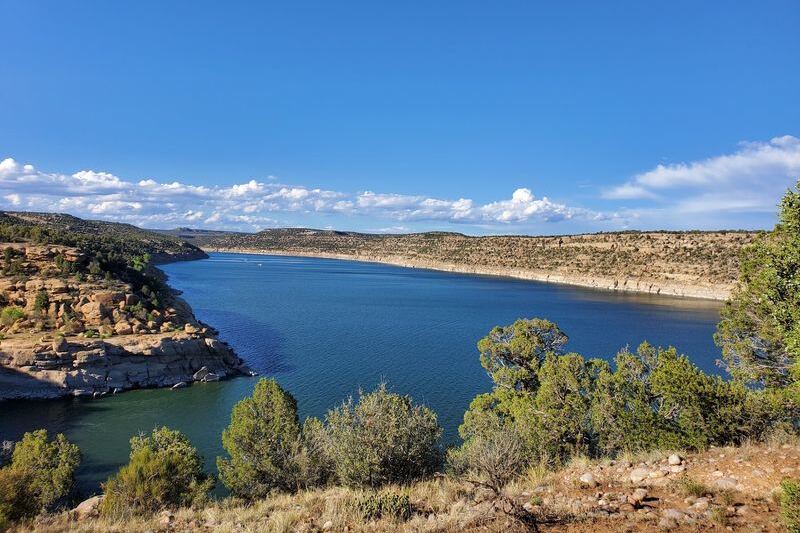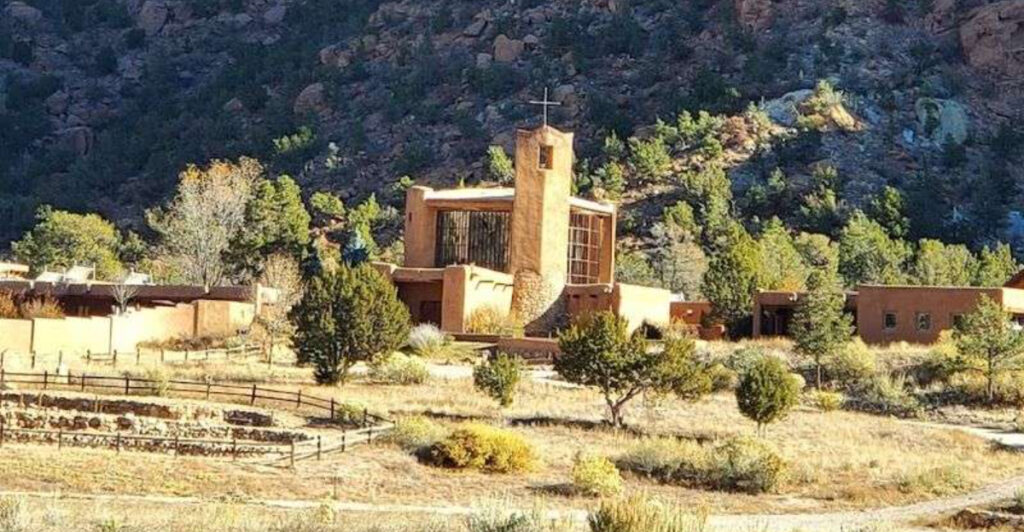
Tucked deep inside a red-walled canyon in northern New Mexico, there is a place that most people have never heard of, and that is exactly the point. A 13-mile unpaved road winds through rugged terrain before revealing a cluster of adobe buildings settled quietly beneath towering canyon walls along the Rio Chama.
This is not a tourist attraction in the traditional sense. This place is a working Benedictine monastery where monks follow a centuries-old rhythm of prayer, labor, and contemplation.
What makes it worth the long, bumpy drive is hard to pin down in a single sentence. Whether you arrive as a person of faith or simply as someone curious about a truly different way of life, the canyon has a way of slowing everything down.
This article walks through what makes this remote New Mexico destination unlike anything else in the American Southwest.
The History Behind This Benedictine Community
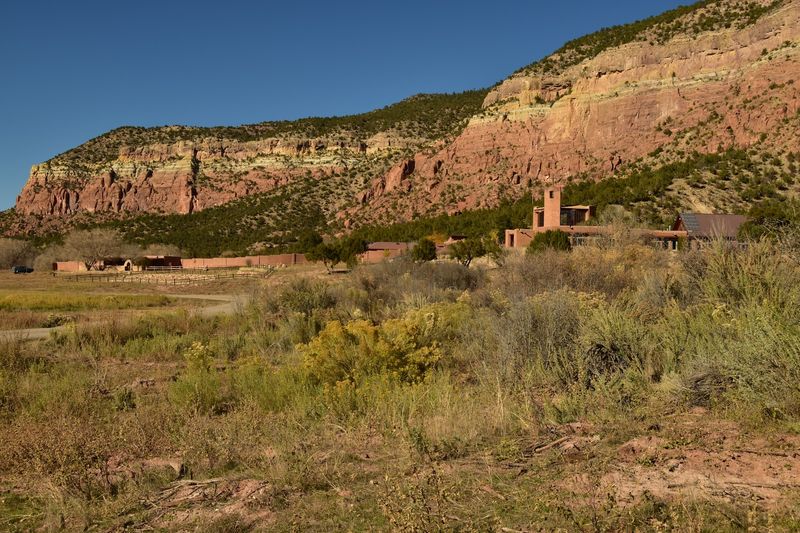
Founded in 1964 by Father Aelred Wall, the Monastery of Christ in the Desert was established with a clear and deliberate purpose: to create a community of monks far removed from the distractions of modern life. The founders chose this canyon specifically because of its remoteness.
The Benedictine order follows the Rule of Saint Benedict, a sixth-century guide to monastic living that structures each day around prayer, work, and study. At Christ in the Desert, that rule plays out in a remarkably consistent way, day after day, year after year.
The community has grown steadily over the decades and now operates as one of the most well-known Benedictine monasteries in the American West. The monks have developed a self-sustaining model that includes a brewery, a scriptorium, and agricultural work on the grounds.
The monastery’s commitment to its founding ideals has remained unchanged since that first group of monks arrived in the canyon nearly 60 years ago.
The Road That Tests Your Patience Before Rewarding It
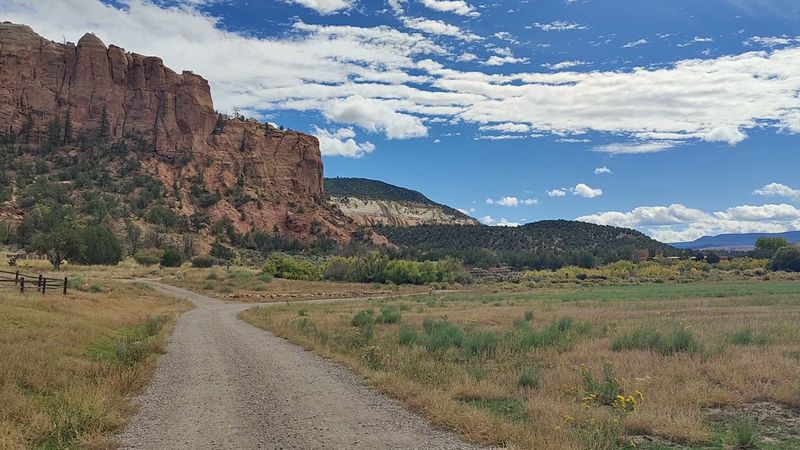
The road to the monastery is not a secret, but it does function as a kind of filter. Anyone not genuinely committed to making the trip tends to turn around before reaching the destination.
The 13-mile stretch from Highway 84 takes most drivers between 45 minutes and a full hour, depending on road conditions.
The surface alternates between loose gravel, hard-packed dirt, and washboard sections that rattle even well-maintained vehicles. In some places, the road narrows to a single lane, requiring drivers to pull into designated turnouts when meeting oncoming traffic.
On weekends, the road also sees use from kayakers and river enthusiasts heading to the Rio Chama, which adds to the traffic dynamic. After rainfall, the road can become impassable for several days, so checking conditions before making the trip is essential.
The monastery itself recommends waiting at least two days after significant rain before attempting the drive.
A Chapel With Canyon Walls as Its Backdrop
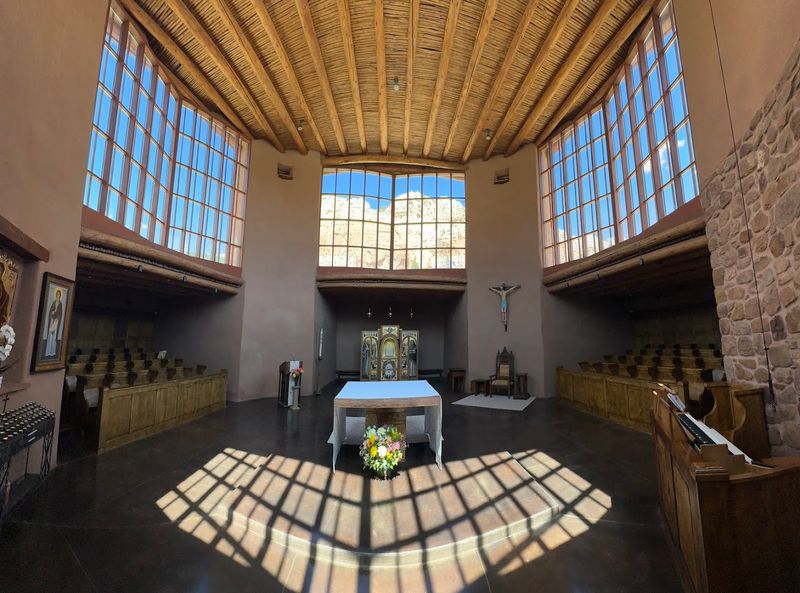
The chapel at the Monastery of Christ in the Desert is one of the most talked-about features of the entire property. Designed by architect George Nakashima, who was also known for his furniture work, the building reflects a careful balance between simplicity and intention.
The most striking element is the placement of clear windows directly behind the altar, framing the canyon walls as a living backdrop to every service held inside. The view shifts throughout the day as light moves across the red rock, making no two services look quite the same.
The chapel is open to the public during services, and visitors who check the schedule in advance may have the opportunity to attend a Mass or one of the daily prayer hours. Gregorian chanting fills the space during these gatherings, performed by the monks themselves.
The architecture and the natural setting work together in a way that few religious spaces in the country manage to replicate.
Gregorian Chanting and the Daily Prayer Schedule
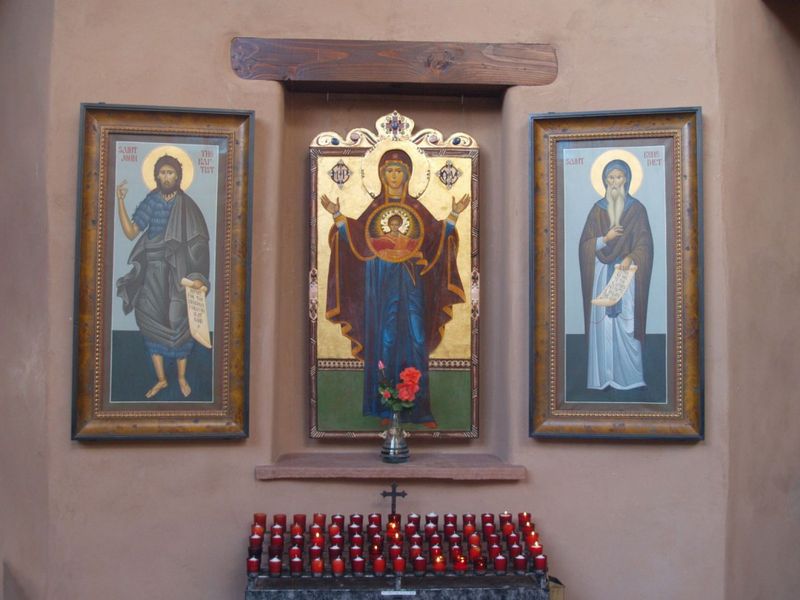
The monks at Christ in the Desert follow a prayer schedule rooted in the ancient Liturgy of the Hours, a tradition that divides the day into seven periods of communal worship. The day begins as early as 4 a.m. with Vigils, a pre-dawn prayer service held in near darkness.
Throughout the day, the community gathers six additional times for services that include Lauds, Mass, Terce, Sext, None, Vespers, and Compline. Each gathering features Gregorian chant performed entirely by the monks, a practice the community takes seriously as both prayer and musical tradition.
Visitors and retreat guests are welcome to attend any of these services and can sit quietly in the back of the chapel without participating. Many people who visit for the day make a point of attending at least one service simply to experience the chanting in that canyon setting.
The schedule is posted on the monastery’s website and is worth consulting before arrival.
Silent Retreats That Book Out Months in Advance
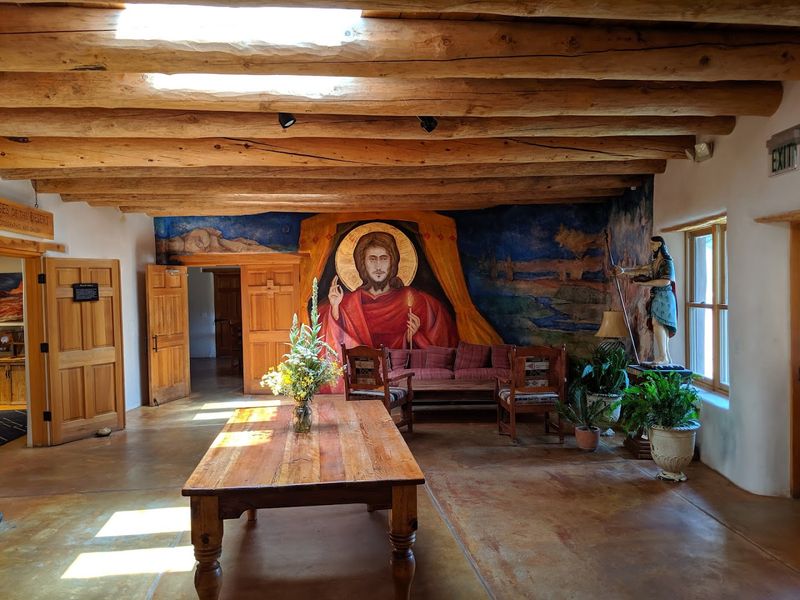
One of the most sought-after experiences at the Monastery of Christ in the Desert is an overnight silent retreat. The guesthouse accommodates a limited number of visitors at any given time, and the monastery recently reduced that number further to better serve both guests and the monastic community.
As a result, reservations fill up roughly four months in advance, sometimes longer during popular retreat seasons like Lent. Those hoping to stay are advised to contact the guest master directly by email rather than leaving a voicemail, as email tends to get a faster response.
Retreat guests follow the monastery’s schedule, attending prayer services, observing silence in shared spaces, and participating in the rhythm of daily monastic life as much or as little as they choose. Rooms are clean and simple, and meals are provided.
The experience draws people from a wide range of faith backgrounds, and the Benedictine tradition of hospitality means all are genuinely welcomed.
The Rio Chama and What the Canyon Offers Outdoors
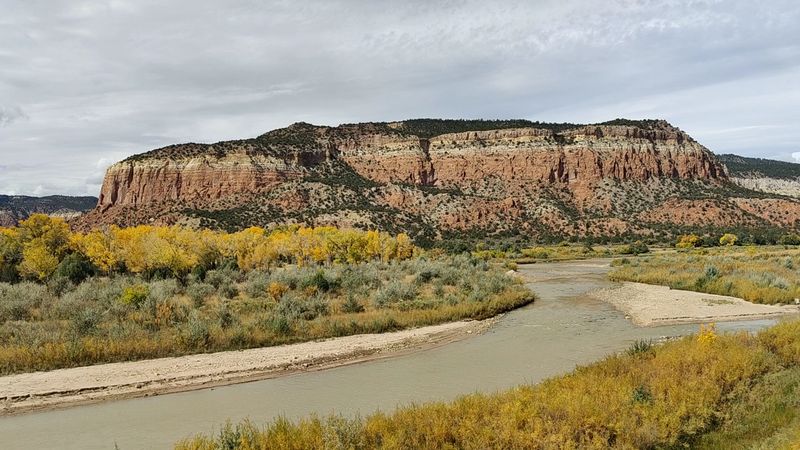
The Chama River Canyon Wilderness surrounding the monastery is not just a dramatic backdrop. It is a functioning natural landscape that offers real outdoor access for those who want to explore beyond the monastery grounds.
The Rio Chama runs near the property and is accessible to guests and day visitors alike.
Hiking across the river is possible when water levels allow for a ford, and trails on the far side lead into open canyon terrain. Kayakers regularly use the river corridor, which is why the road sometimes sees paddlers hauling boats on weekends.
The canyon walls themselves are worth studying up close. Layers of sedimentary rock display color shifts from rust to cream to deep red depending on the angle of light and the time of day.
Wildlife is present throughout the area, including birds of prey, mule deer, and various desert species. The outdoor experience here pairs naturally with the quieter, more contemplative atmosphere of the monastery itself.
The Gift Shop and What the Monks Make
The gift shop at the Monastery of Christ in the Desert is a modest but well-stocked stop that reflects the community’s commitment to self-sufficiency through craft and creativity. Open to day visitors and retreat guests alike, it carries a range of items produced by or in connection with the monastic community.
Handmade soaps, candles, and crafts sit alongside religious books, liturgical prayer texts, and monastery-branded items like t-shirts and bags. One of the more distinctive offerings is a perfume created by the abbot, a product that has developed a small following among repeat visitors.
The shop also carries practical items such as flashlights, which are genuinely useful given how dark the grounds become at night for guests making the walk from the guesthouse to the chapel at 3:30 a.m. Cookies from a local bakery are sometimes available as well.
Supporting the shop is one of the most direct ways visitors can contribute to the monastery’s continued operation.
The Monastery Brewery and Its Unlikely Role
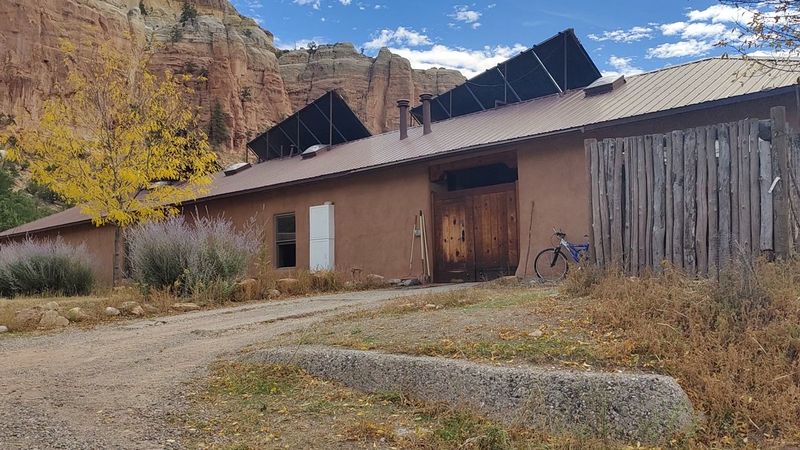
Among the more surprising facts about the Monastery of Christ in the Desert is that the monks operate a brewery on the property. The Abbey Beverage Company produces a line of craft beers that have been sold commercially, representing one of the community’s primary sources of outside income.
The brewery fits within the Benedictine tradition of monks supporting their communities through skilled labor and trade. Historically, European monasteries were known for producing everything from cheese to wine, and the Christ in the Desert community adapted that tradition to fit their American context.
The brewery operation is not a visitor attraction in the conventional sense, but its existence speaks to the practical ingenuity of the community. Running a remote monastery requires revenue, and the monks have found a way to generate it that draws on both craft and tradition.
The brewery’s products have been featured in regional publications and have helped raise the monastery’s profile beyond the immediate area of Abiquiu and northern New Mexico.
Who Visits and Why the Mix Surprises People
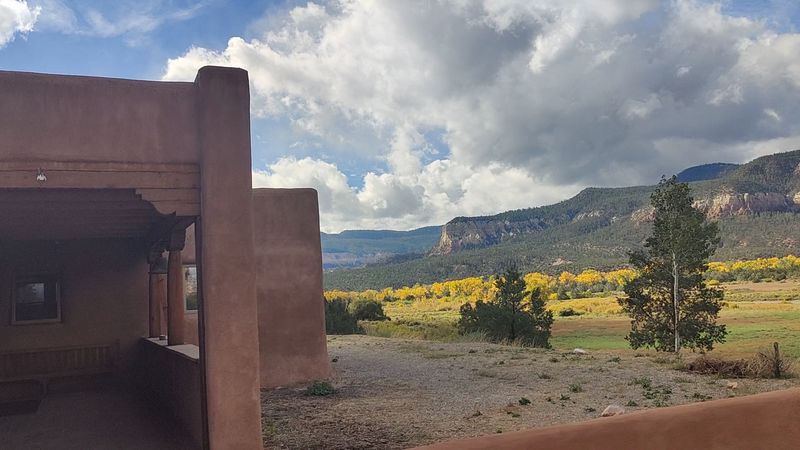
The Monastery of Christ in the Desert draws a genuinely eclectic mix of people. On any given day, the grounds might host committed Catholics attending daily Mass, Protestant Christians curious about contemplative practice, and people with no religious affiliation at all who simply want a few days of quiet.
The Benedictine tradition of welcoming all guests without distinction creates an atmosphere that does not pressure visitors to conform to any particular belief system. People report feeling at ease regardless of their background, and the monks are described as approachable, warm, and willing to answer questions while also giving guests plenty of space.
The monastery is not trying to convert anyone. What it offers is structure, quiet, and a rare opportunity to step outside the pace of ordinary life for a defined period.
That combination attracts people who might never otherwise find themselves on a 13-mile dirt road in the middle of a New Mexico canyon, and most of them leave glad they made the trip.
Animals, Gardens, and the Work of Monastic Life
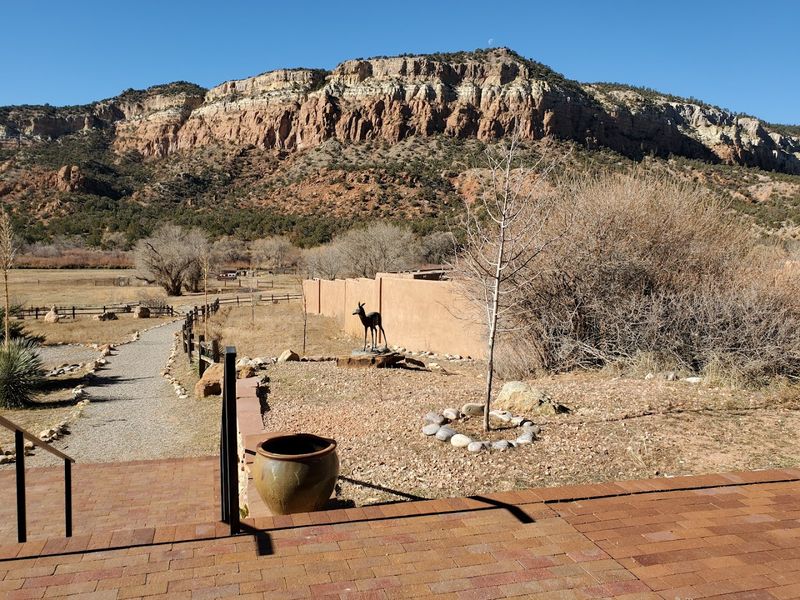
The daily work of the monks at Christ in the Desert extends well beyond prayer and brewing. The community maintains a greenhouse and garden operation where produce is grown for the monastery’s kitchen and guests.
Brother David is particularly associated with the greenhouse work, and some retreat guests have had the chance to join him there during their stay.
The property also keeps a small flock of sheep, a detail that fits naturally into the agricultural tradition of Benedictine monasticism. A donkey named Maddie has become something of a local character on the grounds, known for being vocal at unexpected hours.
These animals and gardens are not decorative. They are working parts of a community that tries to remain as self-sufficient as possible given its remote location.
The labor side of monastic life is taken just as seriously as the prayer side, and the balance between the two is something the monks describe as central to the Benedictine way of living.
Practical Tips Before You Make the Drive
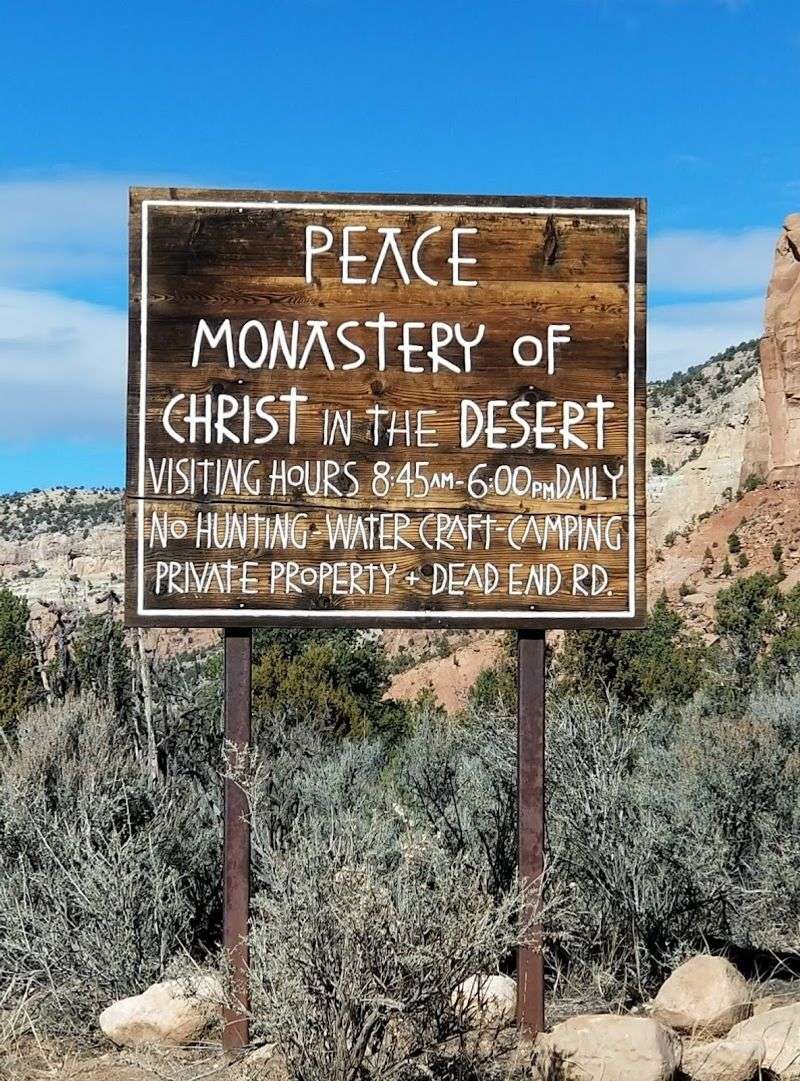
A few practical details can make the difference between a smooth visit and a frustrating one. The road from Highway 84 to the monastery is approximately 13 miles long and takes 45 minutes to an hour in good conditions.
After rain, the road can remain impassable for two or more days, so checking weather forecasts and road conditions before leaving is strongly recommended.
Day visitors are welcome and can explore the grounds, visit the gift shop, and attend open services without any advance reservation. Overnight retreat guests, however, should plan well ahead, as the guesthouse books up months in advance.
Email is the preferred method for reaching the guest master.
Public restrooms are available on the grounds, and free Wi-Fi is accessible, which is a notable convenience given the remote setting. The monastery’s website at christdesert.org lists the current prayer schedule, retreat availability, and other practical information.
Arriving with a full tank of fuel is wise, as there are no services along the road.
Where Exactly This Hidden Monastery Sits
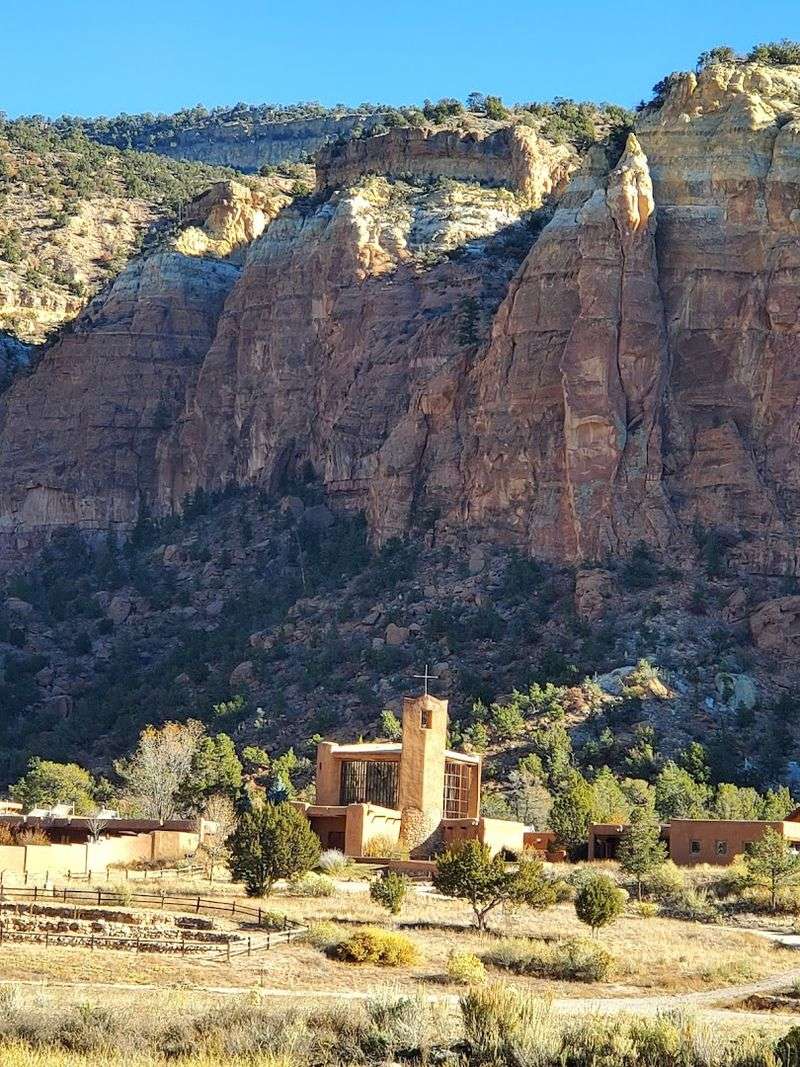
The Monastery of Christ in the Desert is located at 1310 Forest Road 151, Abiquiu, NM 87510, positioned deep within the Chama River Canyon Wilderness in northern New Mexico. Getting there requires leaving Highway 84 near the small community of Abiquiu and following a 13-mile unpaved forest road that hugs the Rio Chama.
The road itself is one lane in many stretches, dotted with turnouts where drivers yield to oncoming traffic. It takes roughly 45 minutes to an hour to cover those 13 miles, and for good reason: the terrain is rocky, sometimes washboard-rough, and completely unpredictable after heavy rain.
Stock vehicles can handle the road in dry conditions, but wet weather turns it into a genuine challenge. The monastery sits at the canyon floor, surrounded on multiple sides by steep red and ochre cliffs that frame the sky into a narrow strip of blue above.
Share this story