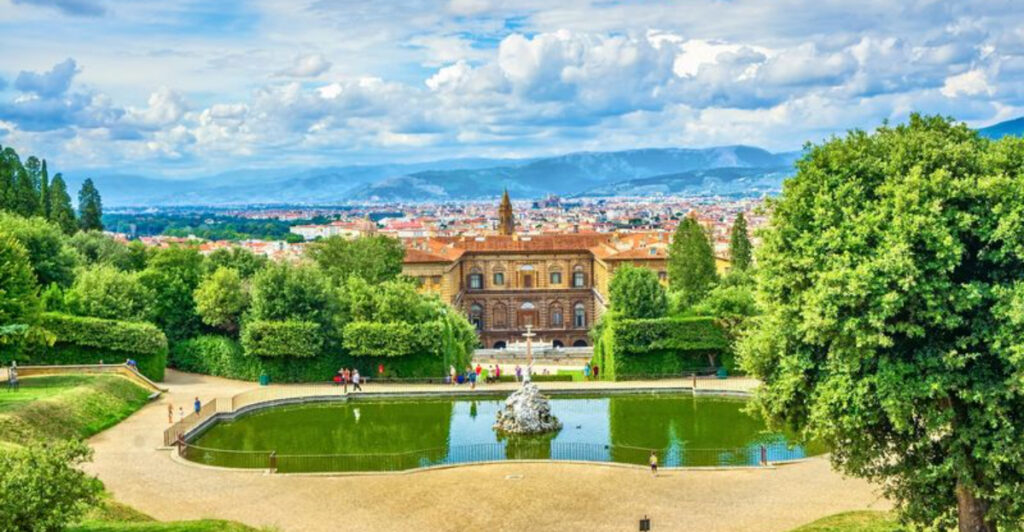
Florence is one of those cities that stops you in your tracks the moment you arrive. Every corner hides a masterpiece, every piazza tells a story, and every cobblestone street feels like it was designed to make you forget your travel itinerary.
Whether you are visiting for the first time or returning for more, Florence rewards curious travelers who know where to look. Here are 15 attractions that seasoned visitors consistently say belong on every Florence trip.
Uffizi Gallery
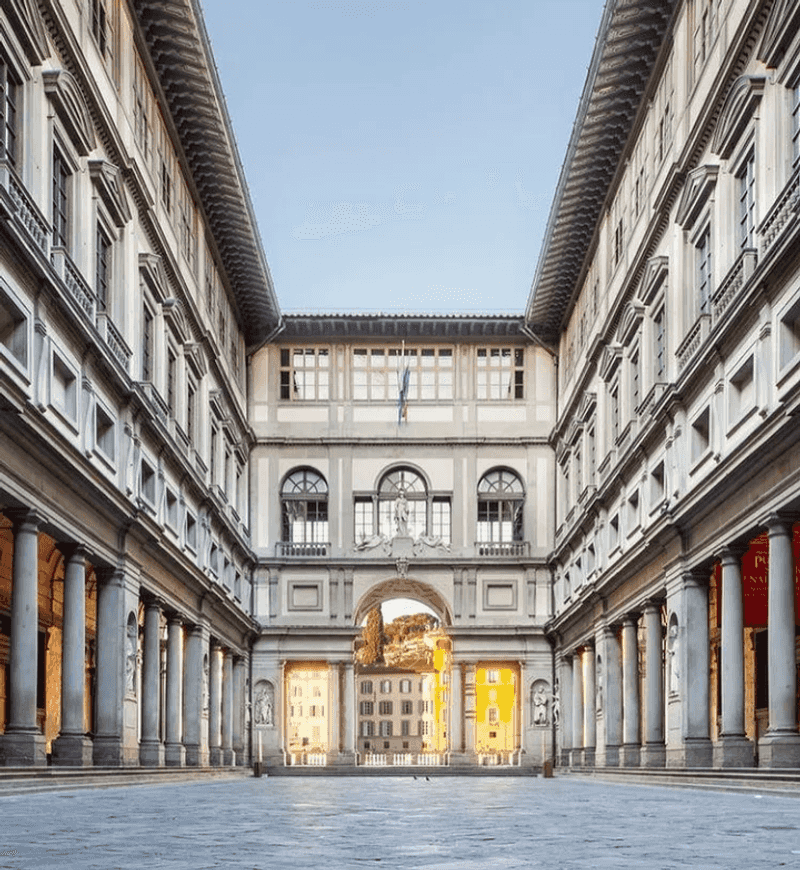
Planning a trip to Florence around one museum sounds extreme until you realize that museum is the Uffizi. It holds Botticelli’s Birth of Venus, Leonardo da Vinci works, Michelangelo, Raphael, Caravaggio, and Giotto all under one very impressive roof.
I spent three hours there on my first visit and still felt like I had only scratched the surface.
The official Uffizi page lists opening hours as Tuesday through Sunday, 8:15 a.m. to 6:30 p.m., with closures on Mondays, January 1, and December 25. Book your tickets in advance because walk-up lines can be brutal.
Go early or later in the afternoon to avoid the midday rush.
Travelers who sprint through in an hour almost always regret it. Slow down, especially in the Botticelli rooms.
The long corridors lined with ancient sculptures are worth your time too, and the views over the Arno from the windows are a nice bonus.
Brunelleschi’s Dome and the Duomo Complex
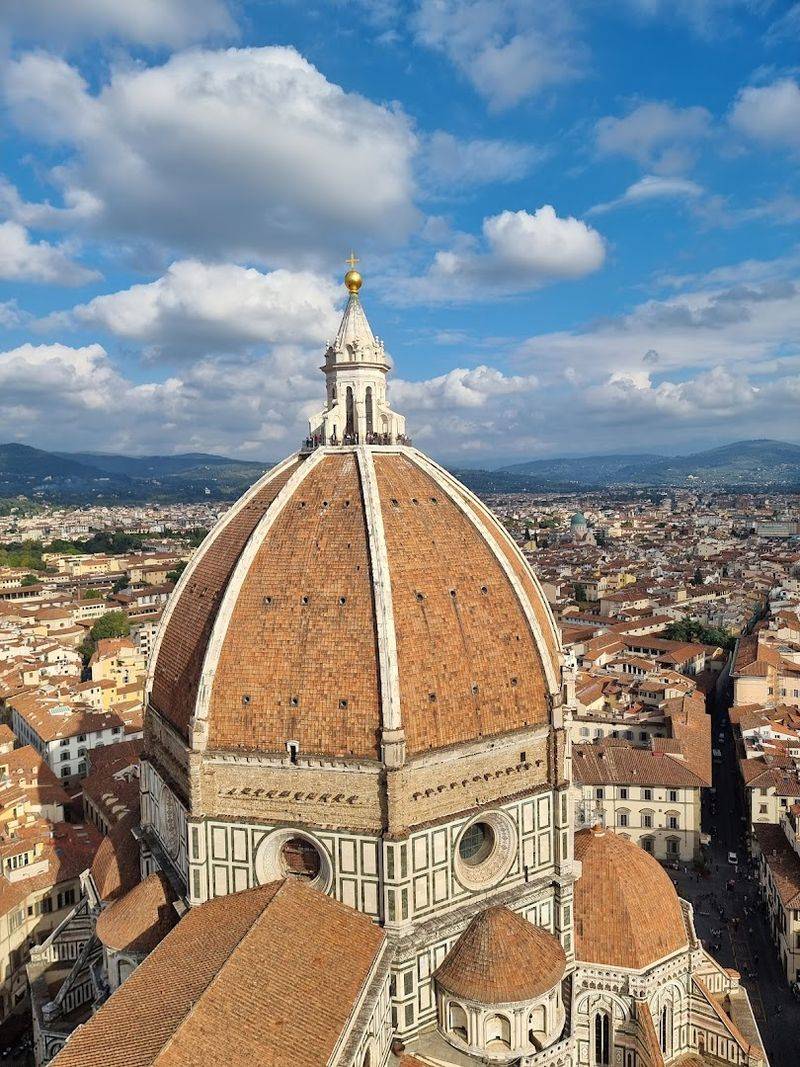
No building in Florence gets more second glances than the Duomo. You spot it from streets, hotel windows, and hilltop terraces, yet standing directly under that green, pink, and white marble facade still delivers a proper jaw-drop moment.
Entry to the cathedral is free, while the wider complex uses timed passes for the Dome, Giotto’s Bell Tower, the Baptistery, and the Opera del Duomo Museum.
The Dome climb is the headline experience. It is narrow, steep, and not great for anyone who dislikes tight stairways, but the view from the top over Florence’s rooftops is one you will not forget.
The official ticketing page notes that Dome access requires respecting your selected date and time slot, so plan accordingly.
Even if you skip the climb, the Baptistery doors alone justify a stop here. The museum’s original sculptures, Giotto’s Campanile, and the sheer scale of the piazza make this a full half-day itinerary stop worth every minute.
Galleria dell’Accademia
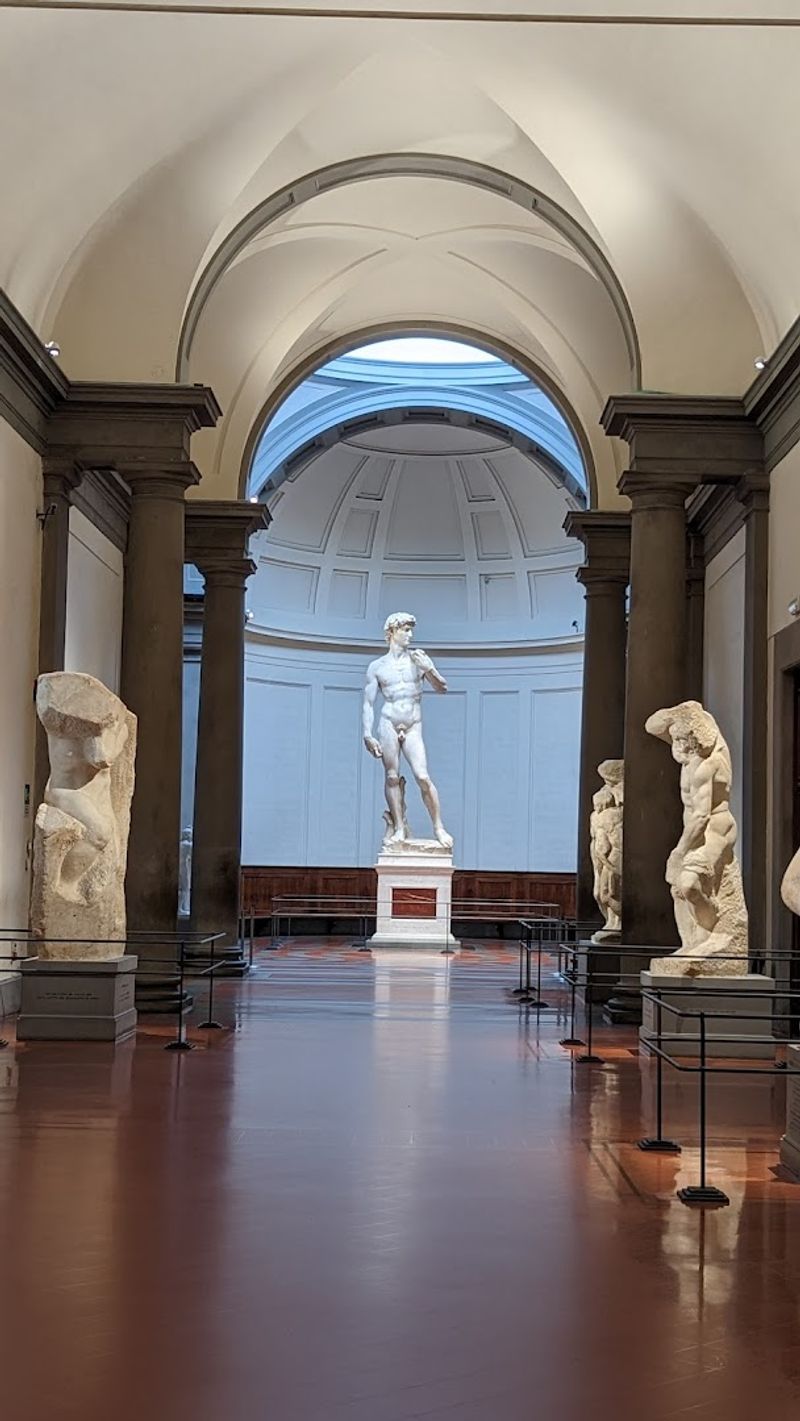
Every photo of Michelangelo’s David undersells it. The scale, the calm authority in that marble face, the impossible detail in the hands and veins, none of it translates on a screen.
Seeing it in person at the Accademia is genuinely one of those rare moments where a famous artwork actually exceeds its own hype.
The official Accademia site notes the gallery holds the largest number of Michelangelo sculptures in the world. Regular hours run from 8:15 a.m. to 6:50 p.m., with last admission at 6:20 p.m.
Book ahead because this place fills up fast, especially in summer.
Here is what most people get wrong: they see David and leave. Do not do that.
The unfinished Prisoners, also called the Slaves, are just as compelling. Figures appear to be fighting their way out of raw marble, which says everything about Michelangelo’s process.
The museum is smaller than the Uffizi, making it a focused and very satisfying visit.
Ponte Vecchio
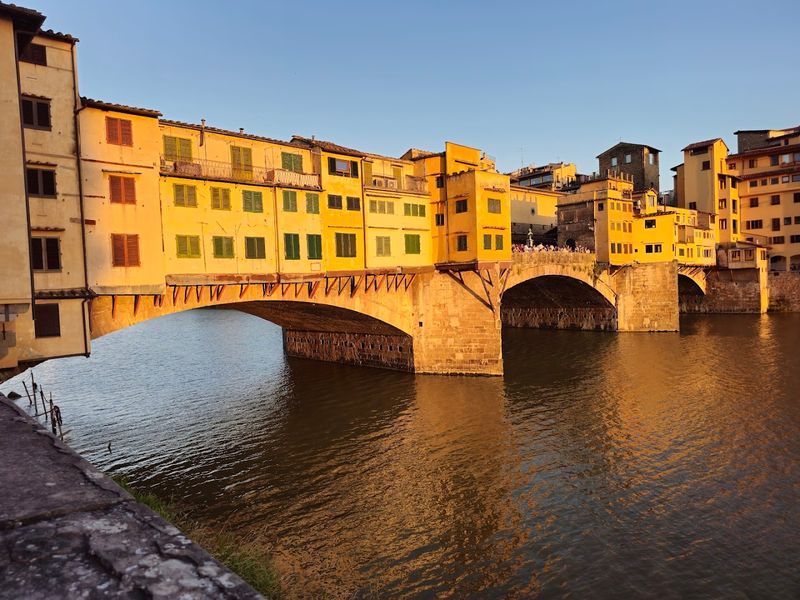
Ponte Vecchio has appeared on more postcards, phone wallpapers, and travel blogs than almost any other bridge in the world, and yet seeing it in real life still feels like a reward. Built in its current form in 1345, it is the oldest crossing over the Arno and one of Tuscany’s most recognized symbols.
The fact that it survived World War II while other Florence bridges were destroyed makes it feel even more significant.
Walk across it during the day to browse the goldsmiths and jewelers who have replaced the original butchers and tanners. The smell has improved considerably since medieval times.
Then head to the Santa Trinita Bridge near sunset for the best angle on the whole structure.
That second view is often the one travelers talk about most. The little shops, the arches, and the golden light catching the river feel exactly like the Florence people picture before they arrive.
It earns every bit of its fame.
Vasari Corridor
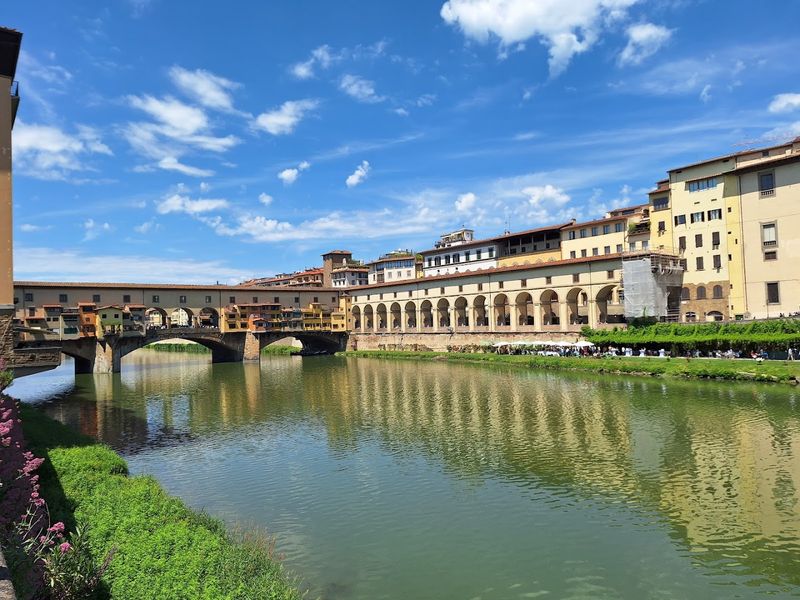
For years, the Vasari Corridor was the Florence attraction people mentioned in the same breath as the words “almost impossible to visit.” That has changed, and it is now one of the most exciting additions to Florence travel planning. Built in 1565 by Giorgio Vasari, it gave the Medici family a private, elevated route between Palazzo Vecchio and Pitti Palace so they could move through the city without mixing with ordinary crowds.
Relatable, honestly.
The official Uffizi page confirms the corridor, closed since 2016 for safety upgrades, has been restored and is accessible again with a special ticket. Visitors enter through the Uffizi, cross over Ponte Vecchio, and exit through the Boboli Gardens.
Reservations are required, so this is not a spontaneous stop.
It adds a rare behind-the-scenes layer to Florence that most tourists never experience. If you can secure a timed slot, this is the kind of visit that makes other travelers genuinely jealous at dinner.
Palazzo Vecchio
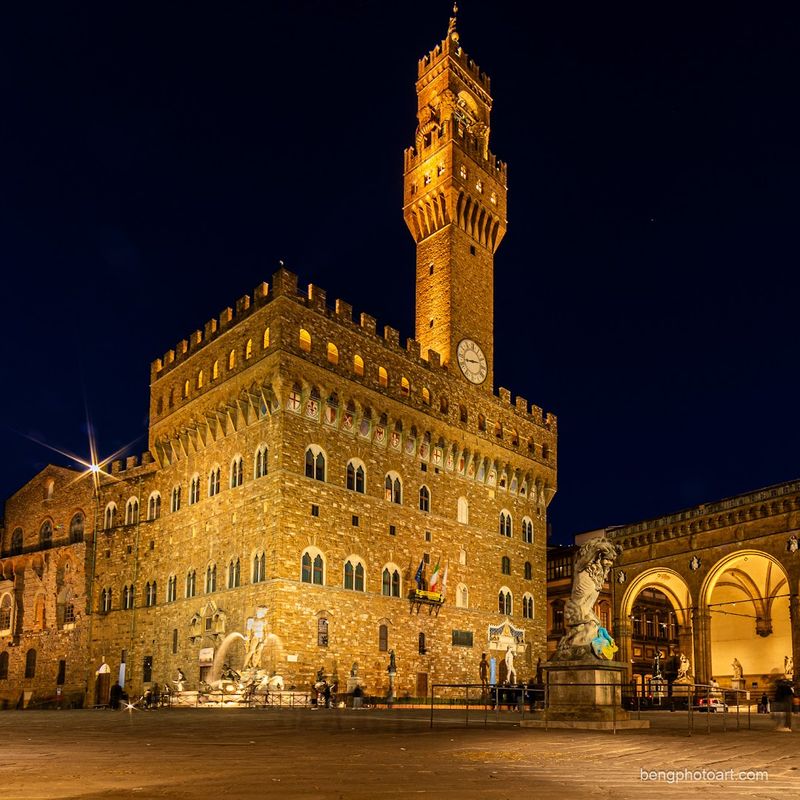
Palazzo Vecchio is the building that gives Florence its civic backbone. The fortress-like town hall overlooking Piazza della Signoria has been the center of Florentine political life for over seven centuries, and it still carries that serious, don’t-mess-with-us energy from across the square.
The official MUS.E page lists regular hours from 9 a.m. to 7 p.m. most days, with Thursday closing at 2 p.m.
Inside, you get ornate halls, frescoed ceilings loaded with political symbolism, and depending on your ticket, access to the tower and battlements. The views from the top are excellent and give a different perspective on the city compared to Piazzale Michelangelo.
Even if you skip the interior, Piazza della Signoria functions like a free open-air museum. The Loggia dei Lanzi is packed with sculptures, and the square itself has hosted some of Florence’s most dramatic historical moments.
Lingering here over a coffee is a perfectly valid travel strategy.
Pitti Palace
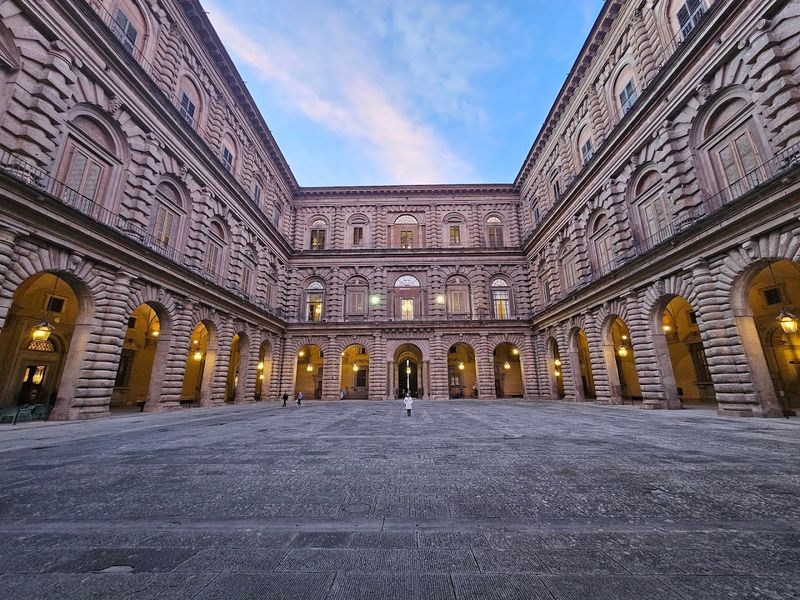
Pitti Palace sits across the Arno in the Oltrarno neighborhood, and it has a very different energy from the museums on the north side of the river. Grand, slightly overwhelming, and unmistakably Medici-powered, the palace became the grand ducal residence after Cosimo I purchased it in 1550.
Today it houses several museums, including the Palatine Gallery, Royal Apartments, Gallery of Modern Art, and the Museum of Costume and Fashion.
The palace is open Tuesday through Sunday from 8:15 a.m. to 6:30 p.m. Worth noting: the official page currently flags a temporary closure of the Treasury of the Grand Dukes and a Saturn Room closure in the Palatine Gallery.
The palace is still very much open, but check the notices if one specific collection matters to your plans.
Most travelers pair it with the Boboli Gardens behind it, which makes for a genuinely full day on the Oltrarno side of Florence. Bring comfortable shoes and a good appetite for ornate ceilings.
Boboli Gardens
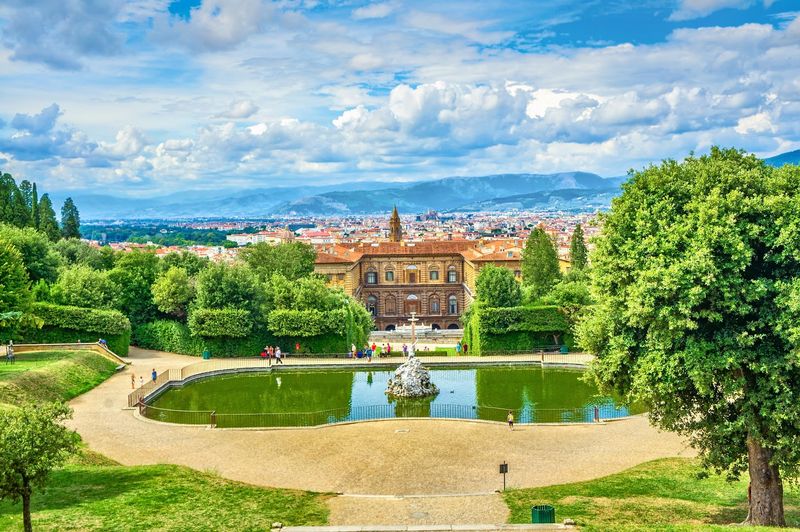
After three or four museums in a row, Boboli Gardens feel like a deep exhale. Directly behind Pitti Palace, these vast outdoor grounds were shaped by the Medici into what the official Uffizi Galleries page calls a vast outdoor museum, filled with ancient and Renaissance statues, grottos, fountains, and terraced views over Florence and the surrounding Tuscan hills.
They are open most days with seasonal closing times. The official page notes closure on the first and last Monday of each month and on December 25.
One heads-up: the Porcelain Museum inside the garden area is currently closed for refurbishment, but the gardens themselves remain a fully worthwhile stop.
Go in the late morning when the light is good and the crowds are still manageable. The amphitheater, the Neptune fountain, and the upper terraces with their views over the city are the highlights.
It is also one of the more photogenic spots in Florence, which never hurts.
Basilica of Santa Croce
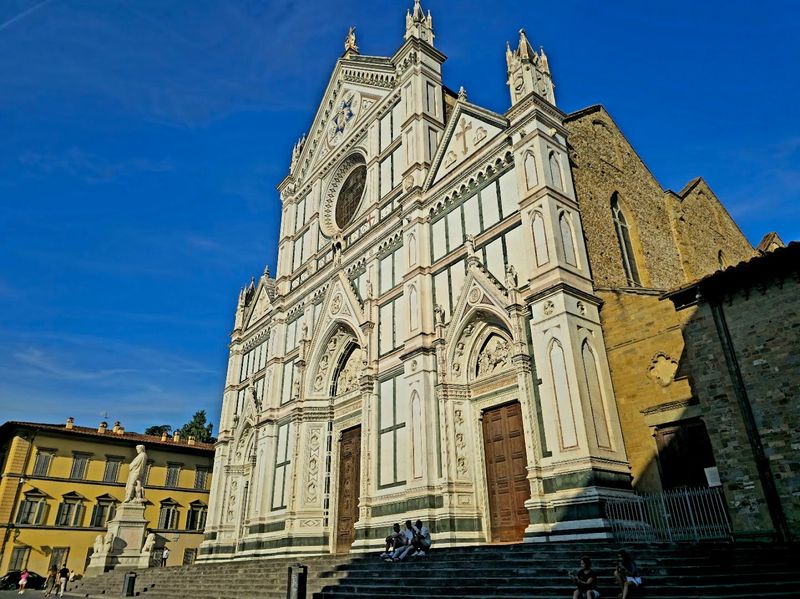
Santa Croce is where Florence gets personal. The monumental basilica complex holds the tombs of Michelangelo, Galileo, Machiavelli, and other figures whose work shaped the modern world.
Walking past their graves while Giotto’s frescoes glow on the chapel walls nearby creates an atmosphere that is equal parts art museum and quiet reflection. It is a lot to process in the best possible way.
The official Santa Croce visitor page lists Monday to Saturday opening from 9:30 a.m. to 5:30 p.m., Sunday and religious holiday opening from 2 p.m. to 5:30 p.m., and closure on Christmas Day. Entry is ticketed, and the complex includes the basilica, chapels, cloisters, and museum spaces.
Do not rush the Pazzi Chapel or the cloister areas. They are quieter than the main nave and genuinely beautiful.
Santa Croce rewards slow, curious visitors far more than those who check it off a list and move on to the next stop.
Bargello Museum
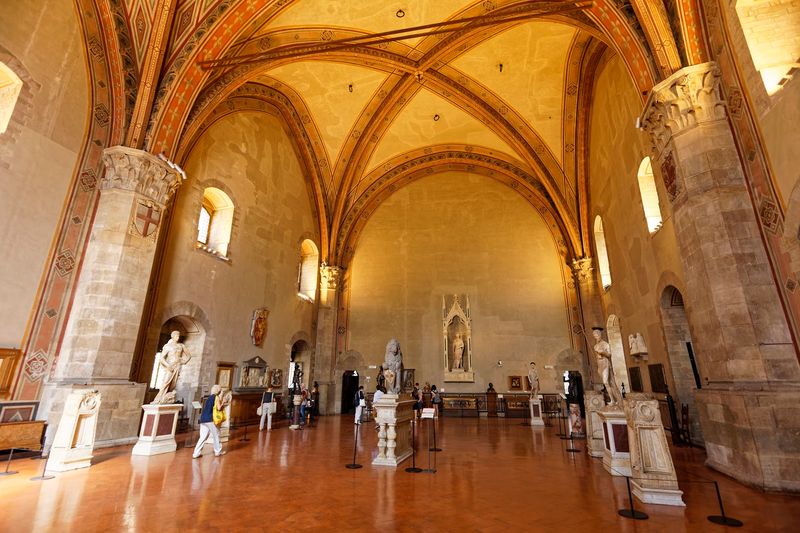
The Bargello is the art lover’s secret weapon in Florence. It sits in the oldest public building in the city, and its collection of Italian Renaissance sculpture rivals anything in Europe.
Donatello’s David, Michelangelo’s early works, pieces by Verrocchio, Giambologna, Cellini, and the Della Robbia family are all here, yet the crowds are a fraction of what you find at the Uffizi or Accademia.
The official Bargello Museums page confirms the museum houses one of the most important Renaissance sculpture collections in the world. If you have already seen Michelangelo’s marble David at the Accademia, coming to the Bargello to see Donatello’s earlier bronze David is a fascinating comparison.
The two works say very different things about the same subject.
The medieval courtyard alone is worth the entrance fee. It has a raw, atmospheric quality that makes the sculptures feel less like museum pieces and more like objects with serious histories attached to them.
A strong pick for day two in Florence.
Medici Chapels
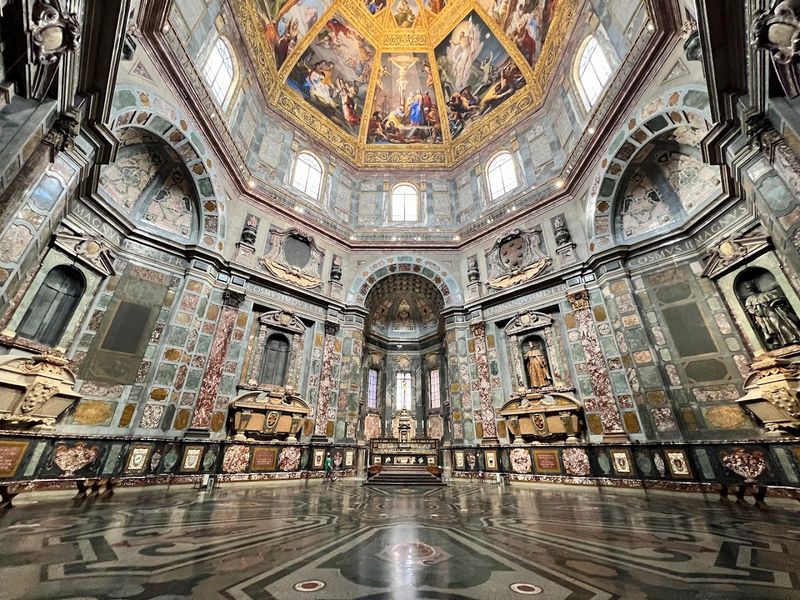
The Medici Chapels answer one very specific question: how does the most powerful family in Renaissance Florence handle death? Turns out, with a lot of marble, Michelangelo, and architectural ambition.
The official Bargello Museums page describes the complex as the burial place of the Medici family, including the New Sacristy by Michelangelo, the Chapel of the Princes, and the crypts below.
Michelangelo’s New Sacristy is the highlight. He designed both the architecture and the sculptures, turning what could have been a gloomy mausoleum into something genuinely charged with meaning.
The allegorical figures of Dawn, Dusk, Night, and Day on the tomb monuments are among his most emotionally complex works.
The chapels pair naturally with nearby San Lorenzo and Mercato Centrale, making it easy to build a logical walking route around this corner of Florence. Budget at least an hour here, and go on a weekday morning if you want some breathing room around the sculptures.
Piazzale Michelangelo
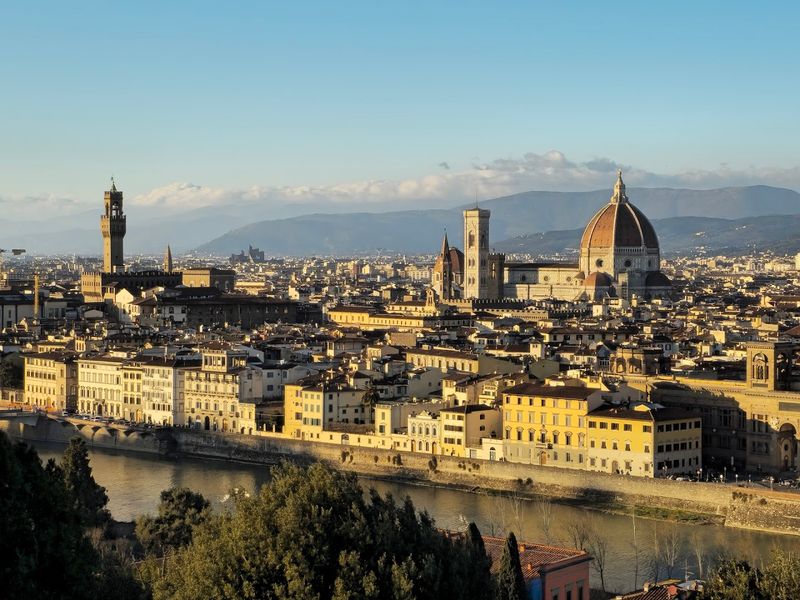
There is a reason every Florence travel guide, blog, and Instagram account eventually lands on a photo taken from Piazzale Michelangelo. The panoramic terrace delivers the full Florence skyline in one sweep: the Duomo, Palazzo Vecchio, Santa Croce, Ponte Vecchio, the Arno, and the rolling Tuscan hills behind it all.
Tuscany’s official tourism site calls it the most famous viewing point in the city, and the title is well earned.
Sunset is the most popular time to visit, which means it is also the most crowded. Go early in the morning for a calmer, equally beautiful version of the same view.
The light is softer and the piazza belongs to you rather than a hundred other photographers.
Better yet, continue a short walk uphill to San Miniato al Monte after your visit here. The two spots work perfectly together and give you an afternoon that costs nothing and delivers some of the best views Florence has to offer.
Basilica of San Miniato al Monte
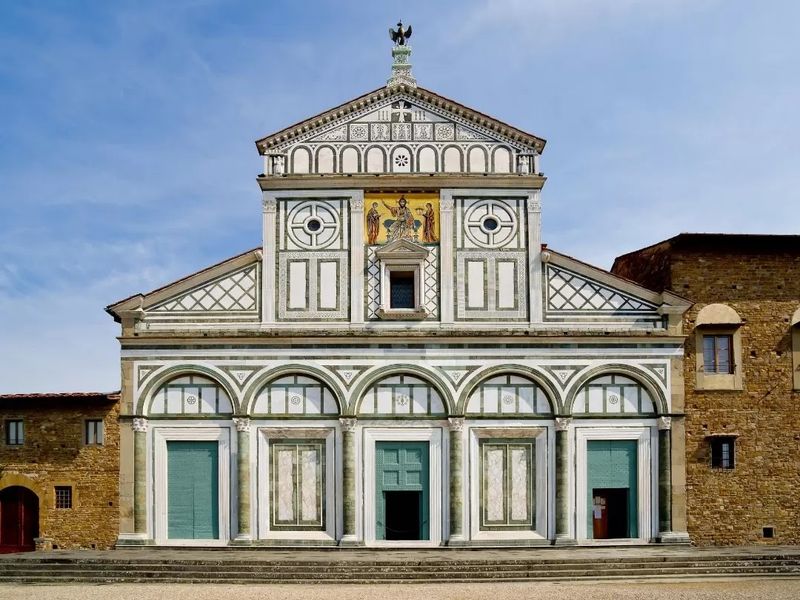
San Miniato al Monte gets treated like a footnote to Piazzale Michelangelo, which is a genuine shame. The abbey’s official site describes it as one of the finest examples of Florentine Romanesque architecture, and its green and white marble facade with the golden mosaic above the entrance is quietly stunning in a way that does not demand attention but absolutely deserves it.
The interior has a crypt, an inlaid marble floor, painted wooden ceiling panels, and a calm that feels hard to find in the busier central churches. Monks still live here, and if your timing is right, you might catch them singing Gregorian chant in the late afternoon.
That is a genuinely memorable Florence moment.
The view from the church terrace looking back over the city is also excellent, arguably more intimate than the one from Piazzale Michelangelo just below. This is the kind of stop that slow travelers discover and fast tourists miss entirely.
Mercato Centrale
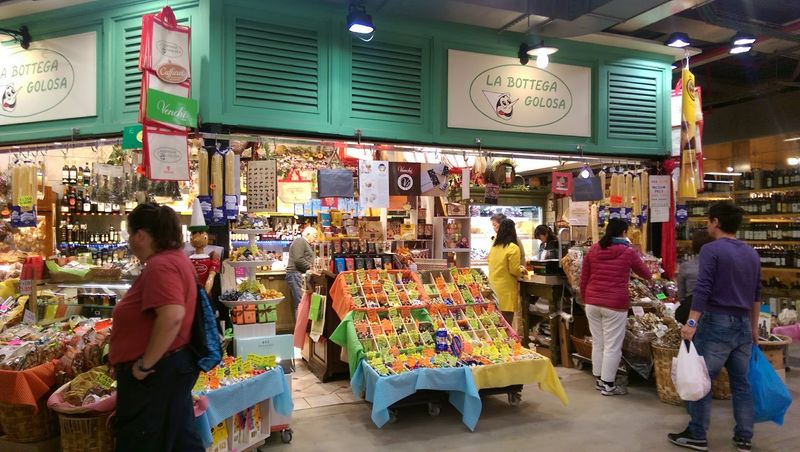
After enough marble and museum tickets, your stomach deserves a vote in the itinerary. Mercato Centrale is the answer.
The official Mercato Centrale Florence page says it is open every day from 9 a.m. to 11 p.m. and sits on the first floor of the San Lorenzo market building, just minutes from the Cathedral, Piazza San Marco, and Fortezza da Basso. Convenient is an understatement.
Yes, it is touristy. No, that does not make it less useful.
The food hall upstairs covers pasta, pizza, Tuscan dishes, wine, cheese, and enough options to satisfy a group where everyone wants something different. I went there for a quick lunch and stayed for an extra hour because the atmosphere was just too good to rush.
It works brilliantly as a break between the Medici Chapels, San Lorenzo, and the Duomo area. Think of it as your mid-Florence refueling stop before tackling the second half of your day with renewed enthusiasm and a full stomach.
Museo Galileo
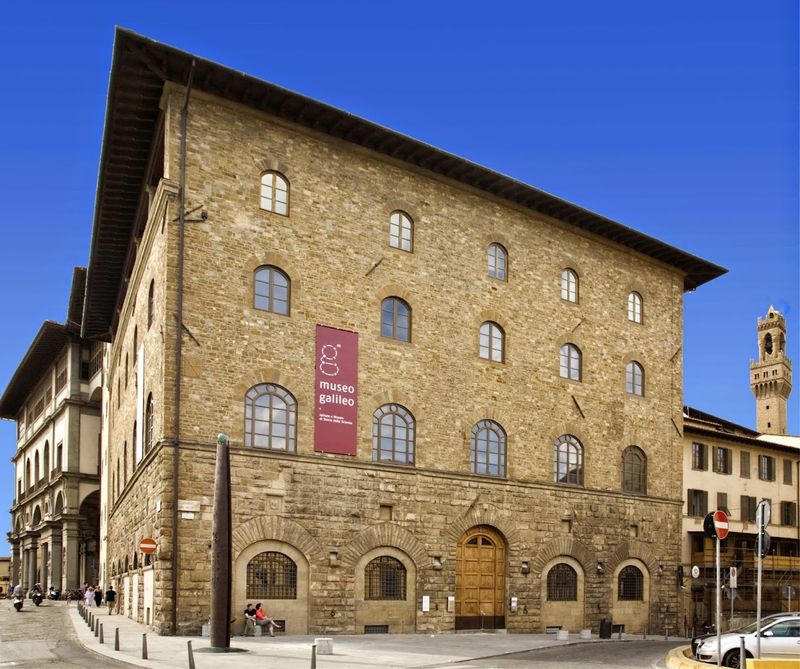
Not every Florence attraction needs a fresco or a marble figure. Museo Galileo makes a compelling case for the city’s scientific genius, which often gets overshadowed by all the Renaissance painting.
The official museum site says its instrument collections are among the most important in the world, preserving evidence of scientific research promoted by the Medici and Lorraine dynasties. Turns out the Medici funded both art and astronomy.
Overachievers, the lot of them.
The collection includes historic telescopes, astrolabes, celestial globes, navigation tools, and one of Galileo’s original telescopes. For travelers interested in the intellectual side of Renaissance Florence, this museum fills a gap that the painting-heavy stops leave wide open.
It sits near the Uffizi and the riverfront, so combining it with a walk along the Arno or a visit to Ponte Vecchio makes logical sense. The museum is compact, well-organized, and rarely as crowded as the big galleries nearby, which is its own quiet form of excellence.
Share this story