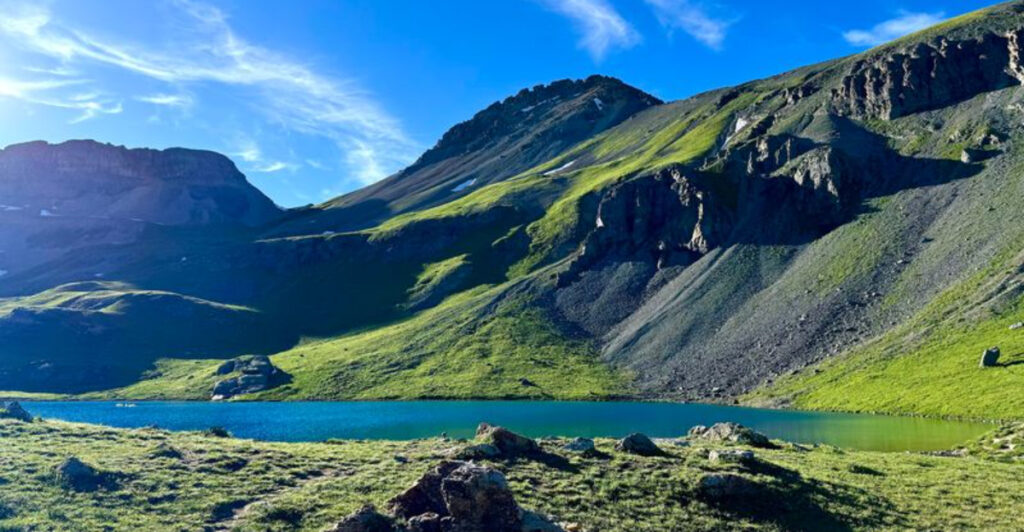
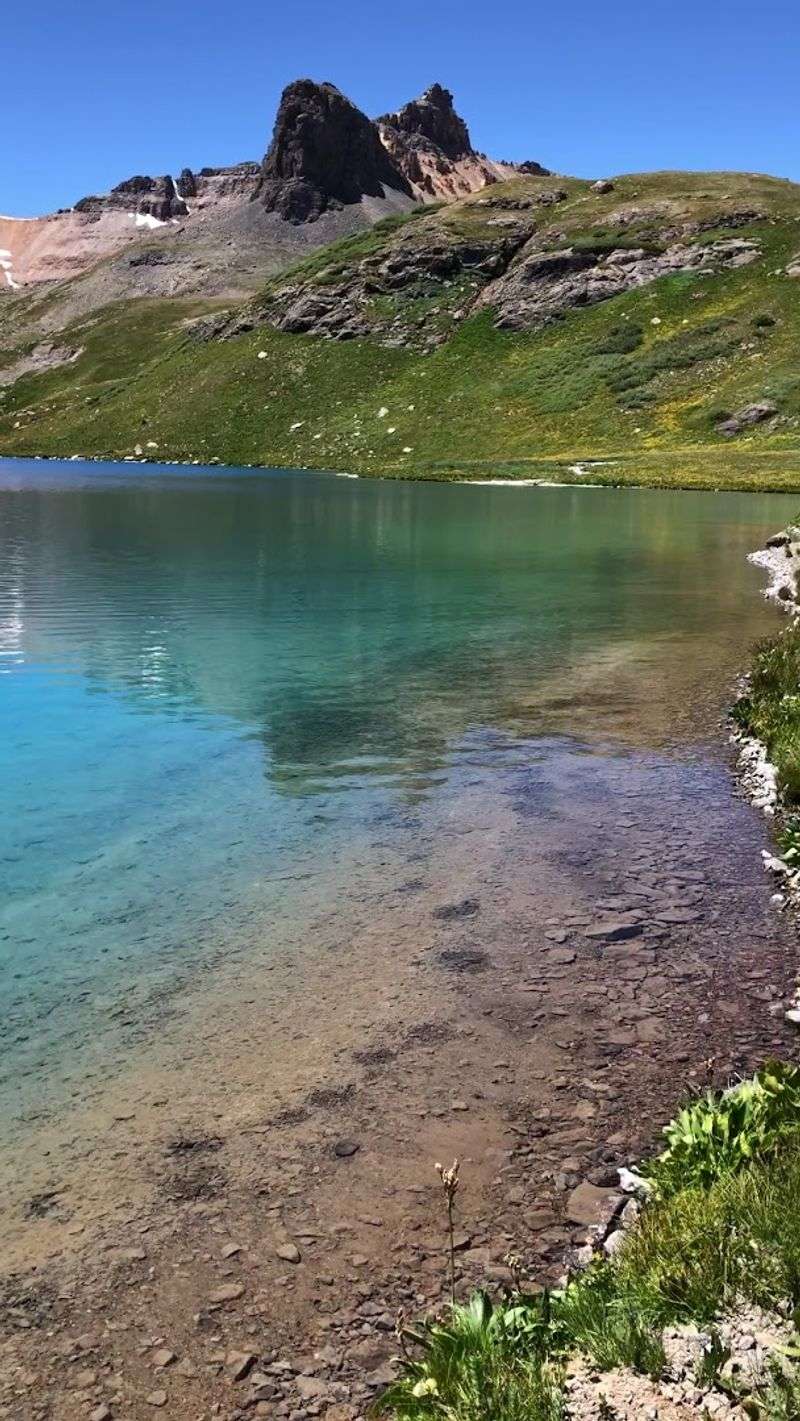
There is a lake tucked inside the San Juan Mountains of Colorado that looks like it was painted by someone who had never seen a real lake before. The water is a shocking shade of turquoise blue that seems almost too vivid to be natural.
Getting there requires a serious hike, real effort, and a bit of grit, but the reward waiting at the end of that trail is unlike anything most hikers have ever seen. This is the kind of place that stays with you long after you have driven back down the mountain, and once you read about everything it has to offer, you will understand exactly why people keep coming back.
Where Exactly Is This Turquoise Wonder
Not every incredible place has a famous name or a highway billboard pointing the way. Ice Lake sits near Silverton, Colorado 81301, deep in the heart of the San Juan Mountains, at an elevation of roughly 12,257 feet above sea level.
The trailhead is accessible from South Mineral Campground, located off Forest Road 585, just a short drive from Silverton. That small mountain town of Silverton serves as the perfect base camp before the hike, and if you want a solid breakfast before hitting the trail, a local cafe in town is worth the stop.
The drive to the trailhead itself winds through gorgeous canyon scenery, giving you a preview of the visual feast ahead. Getting there early in the morning is strongly recommended, both for parking and for beating afternoon thunderstorms that roll in fast at high altitude.
The Color of the Water Defies Explanation
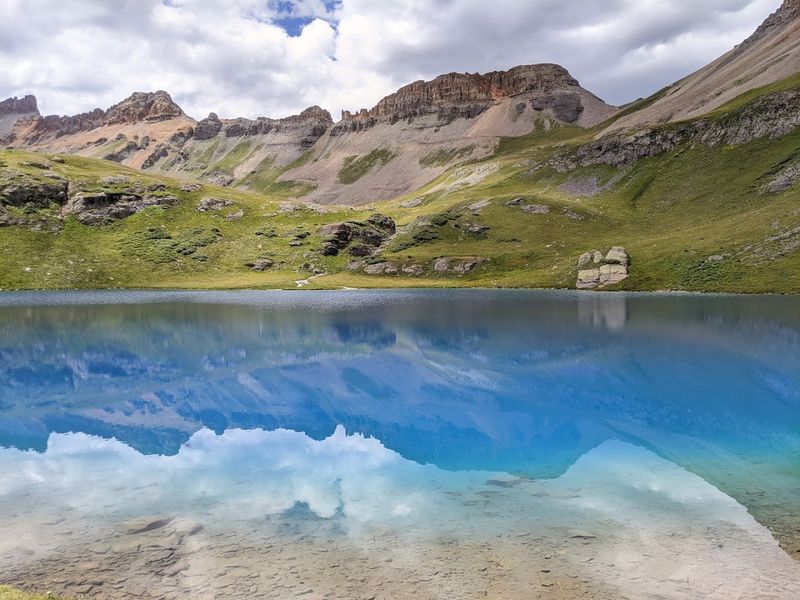
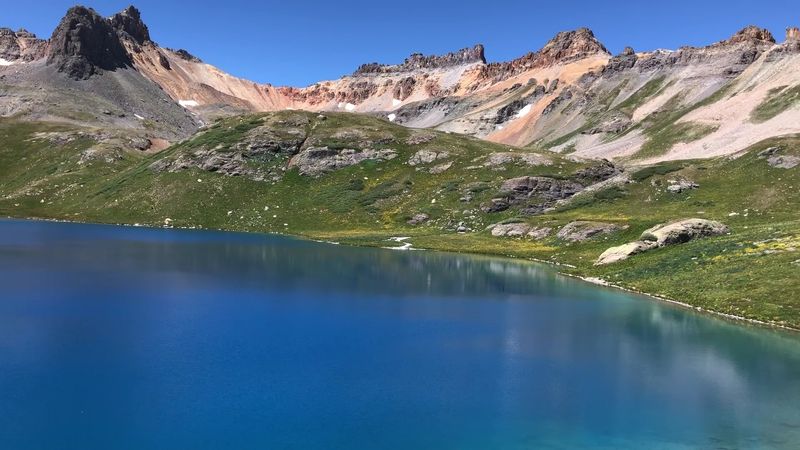
The first time you see Ice Lake from above, your brain does a double-take. The water is a piercing, electric turquoise blue that looks more like a tropical lagoon than a mountain lake sitting above 12,000 feet in Colorado.
The color comes from glacial rock flour, which are fine mineral particles ground down by ancient glaciers and suspended in the water. These particles scatter sunlight in a way that produces that vivid blue-green tone that photographs almost look edited, even when they are not.
On sunny days, the hue intensifies dramatically, and the surrounding rocky peaks create a mirror-like reflection on the calm surface. Even on overcast days, the lake holds an impressive deep blue that still manages to stop hikers in their tracks.
The color alone makes the entire climb feel completely justified the moment you crest that final ridge.
How Hard Is the Hike, Really
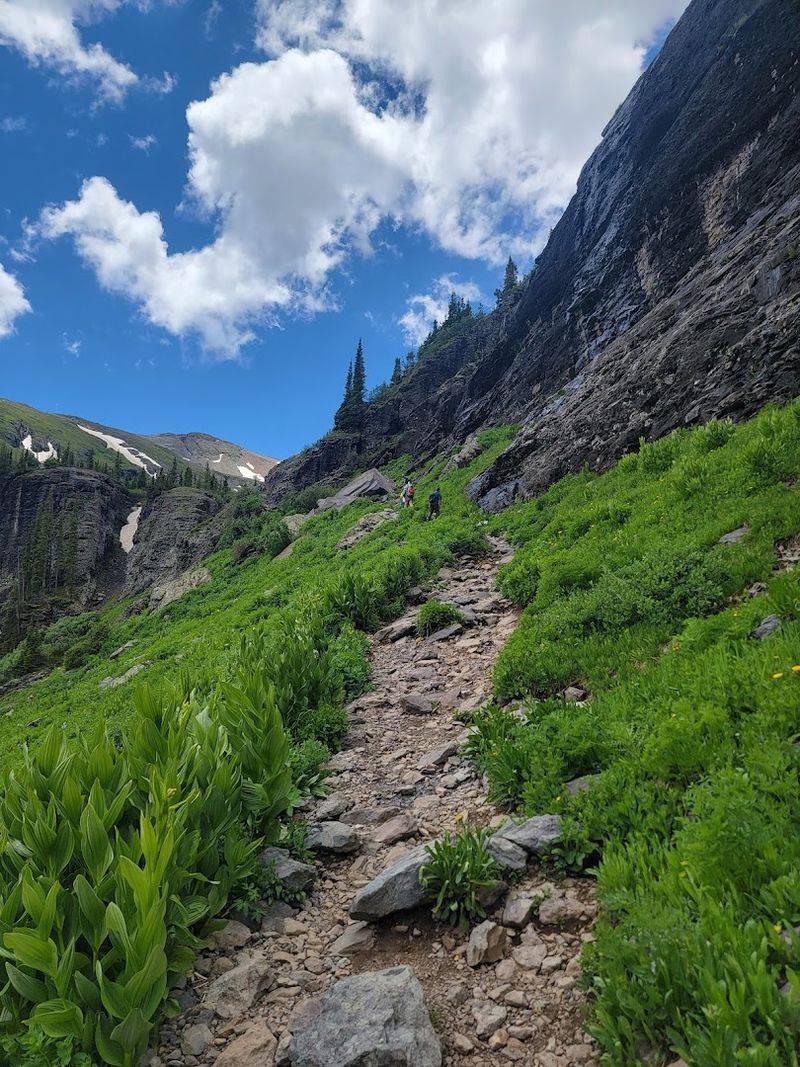
Honest answer: it is challenging, but very much doable for hikers who come prepared. The trail is approximately 7 miles round trip with around 2,400 to 2,500 feet of elevation gain, and most hikers complete it in five to eight hours depending on pace and rest stops.
The first stretch passes through a burned forest section, which has a haunting but visually striking quality. As you climb higher, the terrain opens up into sweeping meadows and rocky switchbacks before the final push to the lake basin.
That last quarter of the trail is where things get noticeably steeper and more demanding, especially at high altitude where each breath feels shorter. Some sections require using hands for balance on loose rock.
The effort is real, but thousands of hikers complete this trail every summer, and the sense of accomplishment at the top is something you genuinely earn.
Wildflowers That Carpet the Whole Mountain
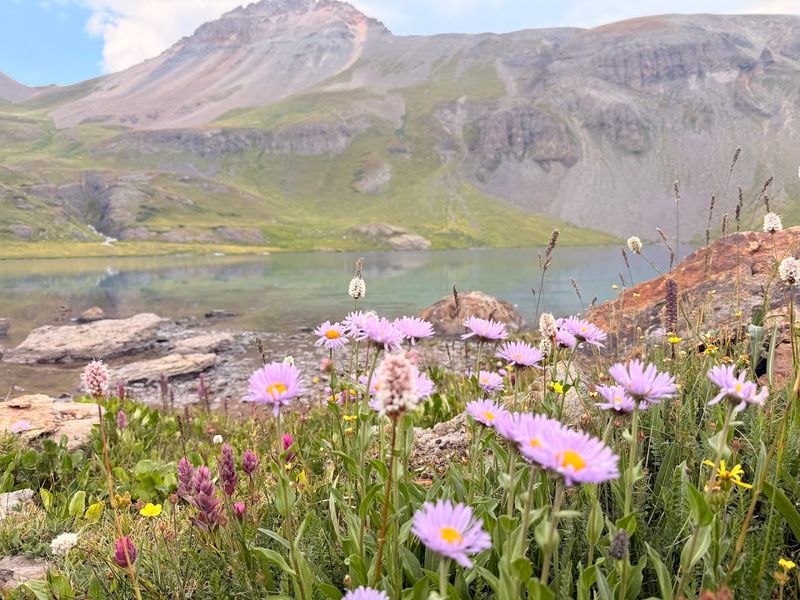
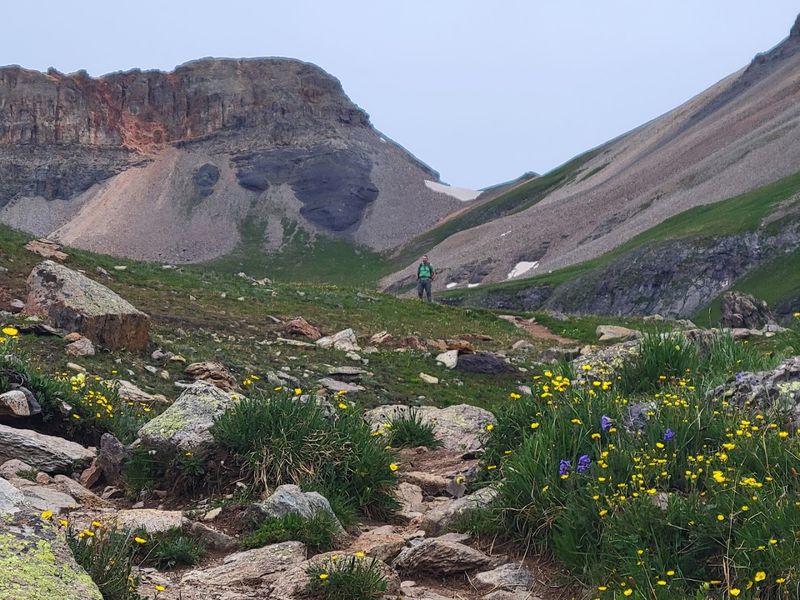
Few hikes in Colorado offer a wildflower display quite like this one. During July and early August, the meadows along the Ice Lake trail explode with color, covering the slopes in dense patches of purple columbine, yellow sunflowers, red Indian paintbrush, and white bistort.
The wildflower season here is short but spectacular. The blooms thrive in the cool, moist alpine environment, and the combination of rugged mountain backdrops with soft, colorful carpets of flowers creates a contrast that feels almost theatrical.
Photographers make special trips to this trail just for the wildflower shots, and it is easy to understand why once you are standing in the middle of a meadow surrounded by blooms in every direction. If wildflowers are a priority for your visit, aim for the window between mid-July and early August for the most intense and widespread color along the trail.
Waterfalls Along the Way Keep Things Interesting
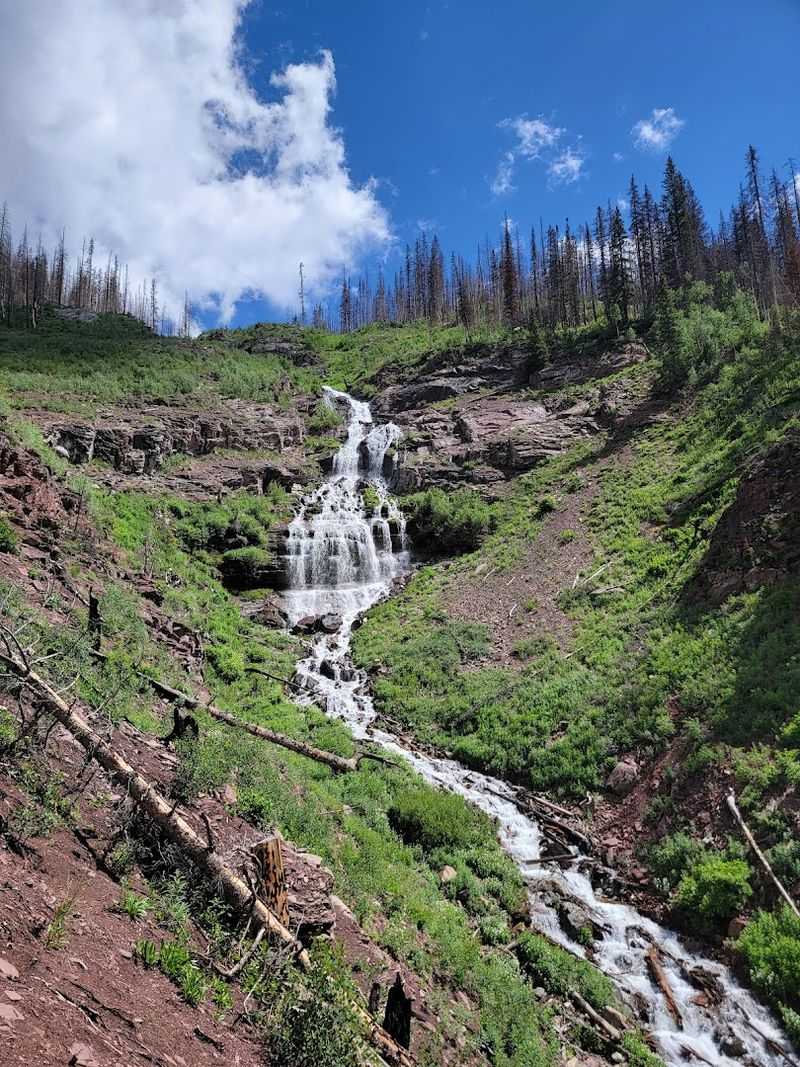
The destination gets all the attention, but the journey to Ice Lake is full of its own rewards. Multiple waterfalls line the trail as you ascend, some roaring and wide, others narrow ribbons threading down mossy cliff faces.
In early summer when snowmelt is at its peak, these falls run fast and loud, filling the canyon with a constant backdrop of rushing water. The water crossings on the trail can also be surprisingly deep and swift during this season, which is why waterproof footwear is genuinely useful rather than optional.
Each waterfall offers a natural rest stop and a great excuse to pull out a camera. The falls are especially dramatic after periods of heavy snowmelt in June and July.
By late summer, the flow calms down, but the waterfalls remain active and photogenic well into September, adding energy to every section of the trail.
The Loop Option With Island Lake
Many hikers who make the trip to Ice Lake choose to extend their adventure by adding Island Lake to the route, creating a loop that takes in two stunning alpine lakes in a single outing. Island Lake sits just above Ice Lake and offers its own dramatic scenery, including a rocky island that gives the lake its name.
The recommended approach for most hikers is to visit Island Lake first on the way up, then descend to Ice Lake on the return. The terrain between the two lakes involves loose rock and some steep scrambling, so taking it slowly and watching footing carefully is important.
From Island Lake, there is also a trail extension that leads up to a nearby peak for those who want even more elevation and panoramic views. The full loop, including both lakes, typically adds up to around 8.5 to 9 miles and rewards every extra step with more breathtaking scenery.
Best Time of Year to Make the Trip
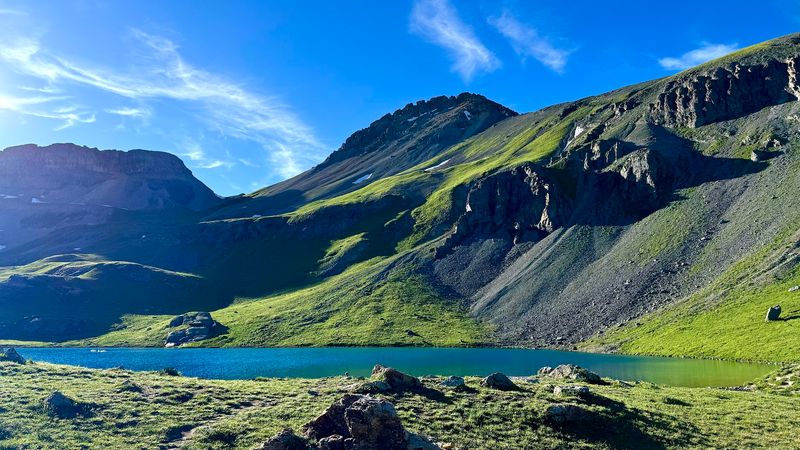
Timing matters a lot when planning a visit to Ice Lake. The trail is typically accessible from late June through early October, depending on snowpack levels in any given year.
July and August are the sweet spot for most visitors, offering the best combination of clear trails, peak wildflowers, and reliable weather.
Coming in late June or early July means more dramatic snowmelt and fuller waterfalls, but also deeper water crossings and some lingering snow near the upper basin. By September, the crowds thin out noticeably, temperatures drop, and the landscape shifts into early fall colors that offer a completely different kind of beauty.
Visiting in November is possible but requires crampons and cold-weather gear, as icy sections and deep snow near the lake make conditions significantly more demanding. Whatever month you choose, starting the hike early in the morning is one of the most important decisions you can make.
Altitude Awareness Is Not Optional
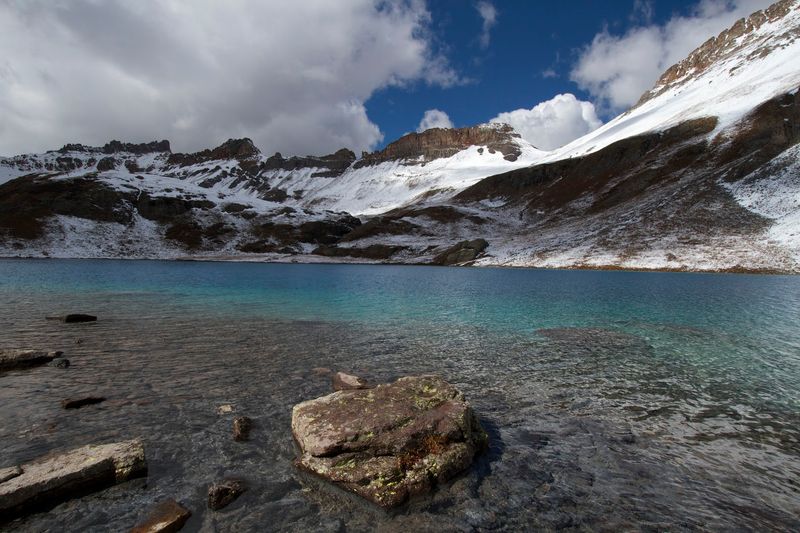
At over 12,000 feet, Ice Lake sits in territory where the air is noticeably thinner and the body has to work harder for every step. Altitude sickness is a real concern for visitors who live at or near sea level and have not had time to acclimatize before attempting the hike.
Symptoms like headaches, dizziness, nausea, and unusual fatigue can appear without much warning, especially on the steeper upper sections of the trail. Spending a night in Silverton before hiking, which sits at around 9,318 feet, helps the body begin adjusting before the real climbing starts.
Staying well hydrated is essential, and packing at least two liters of water per person is the standard recommendation. Some hikers bring small portable oxygen canisters as a backup, and while not everyone needs them, they can make a noticeable difference when fatigue sets in at high elevation during the final push to the lake.
What to Pack for a Successful Hike
Preparation is half the battle on a trail like this one, and a few smart packing choices can make the difference between a miserable slog and an unforgettable adventure. Waterproof boots or trail shoes are at the top of the list, given the multiple creek crossings that can be ankle-deep or deeper in summer.
Layers are essential because mountain weather shifts fast, and temperatures near the lake can drop sharply even on warm summer days. A lightweight but warm jacket and a waterproof shell should always be in the pack.
Sunscreen and sunglasses matter more at high altitude, where UV exposure is significantly stronger than at lower elevations.
Snacks with good calorie density, like nuts, energy bars, and dried fruit, help maintain energy over a long day on the trail. Trekking poles are optional but genuinely helpful on the steep, loose rock sections near the top, especially on the descent when knees start to feel the miles.
The Burned Forest Section and What It Teaches You
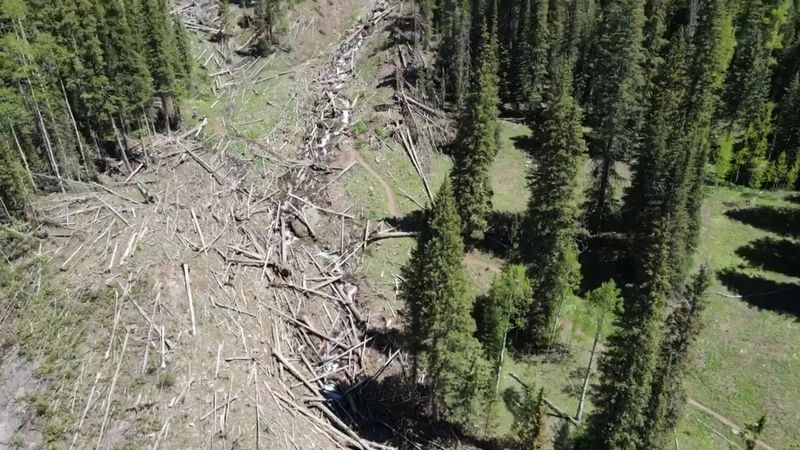
The opening stretch of the Ice Lake trail passes through a section of burned forest, and it catches many first-time visitors off guard. The charred trunks stand tall and bare against the sky, creating an eerie but visually striking landscape that feels unlike anything else on the route.
Forest fires have reshaped large portions of the San Juan Mountains over the years, and what looks like destruction from a distance is actually a story of renewal up close. New growth pushes up through the ash-enriched soil, and wildflowers often thrive in burned areas where sunlight now reaches the ground unobstructed.
The burned section does not last long before the trail transitions into lush green forest and open meadows, but it leaves an impression. Far from being a downside to the hike, it adds a layer of texture and context to the landscape that makes the eventual arrival at that vivid turquoise lake feel even more rewarding.
Silverton, Colorado: The Town That Sets the Stage
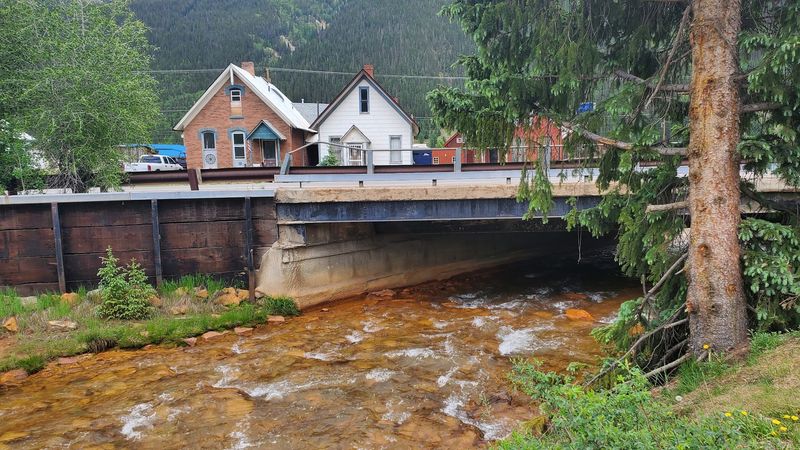
Every great hike deserves an equally great base camp, and Silverton fills that role perfectly. This small historic mining town sits at around 9,318 feet in elevation and is surrounded on all sides by dramatic San Juan peaks that make it feel like the rest of the world simply does not exist.
The town has a handful of local cafes and diners that serve hearty breakfasts, which is exactly what a hiker needs before a full day on the trail. A breakfast sandwich from one of the local spots hits differently when you know you are about to climb 2,400 feet in the thin mountain air.
Silverton also has a rich mining history, charming Victorian-era architecture, and a relaxed pace that encourages visitors to slow down and soak it all in. After the hike, walking the main street with sore legs and a full heart feels like the perfect way to close out a mountain day.
Share this story