There is a place in the mountains of northeast Georgia where a canyon drops nearly 1,000 feet into the earth, waterfalls rush through ancient rock walls, and a suspension bridge sways above it all. This is one of those rare destinations that stops people in their tracks the first time they see it.
The gorge is one of the most spectacular natural features in the entire Southeast, drawing hikers, campers, and curious travelers from across the country. This article covers everything worth knowing before a visit, from the trails and overlooks to the camping setup, the history of the area, and the practical details that make the difference between a good trip and a great one.
A Gorge That Has Been Turning Heads for Centuries
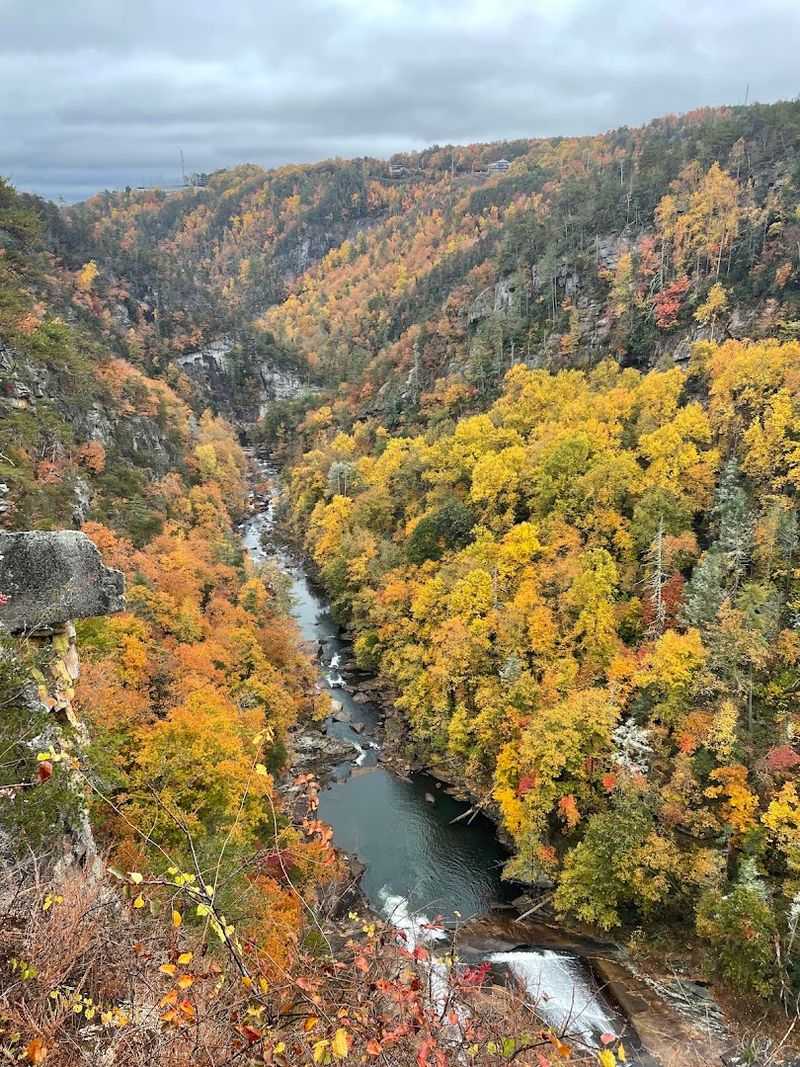
Long before it became a state park, Tallulah Gorge was already famous. In the 1800s, the area around Tallulah Falls was a popular resort destination, drawing wealthy visitors from across the South who came to see the dramatic canyon and the powerful waterfalls that carved through it.
The gorge stretches about two miles in length and plunges close to 1,000 feet deep in places, making it one of the deepest gorges in the eastern United States. The Tallulah River runs through the bottom, feeding several named waterfalls along its course.
A dam built in the early 1900s reduced the water flow significantly for decades, but the park now schedules seasonal water releases that bring the falls back to impressive levels. The geological history of this canyon spans millions of years, and the rock formations visible along the trails tell a story that no museum exhibit could fully replicate.
The Trail System and What Hikers Can Expect
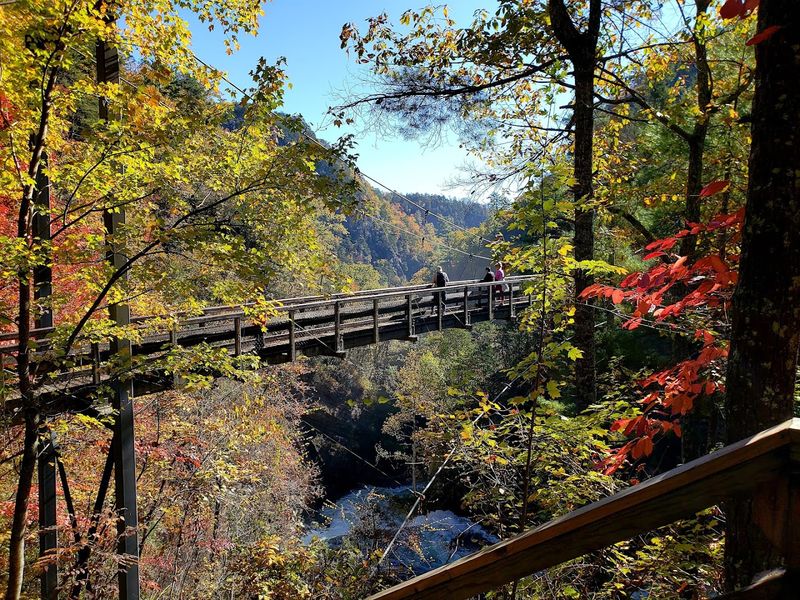
The park offers trails along both the north and south rims of the gorge, giving hikers multiple angles from which to take in the views. Both rim trails are relatively accessible and well-maintained, making them suitable for a wide range of fitness levels.
The north rim trail leads to several overlooks, including Overlook 1, which delivers one of the most photographed views in the park. The south rim trail mirrors the experience on the opposite side, and together the two trails form a loop that most hikers complete in two to three hours.
Trail conditions are generally good, with clear signage and rest areas along the more strenuous sections. The paths are kept in solid shape year-round, though some sections can get slick after rain.
Wearing sturdy footwear makes a noticeable difference, especially on the steeper segments near the stairs leading down into the gorge.
The Staircase Into the Gorge: Worth Every Step
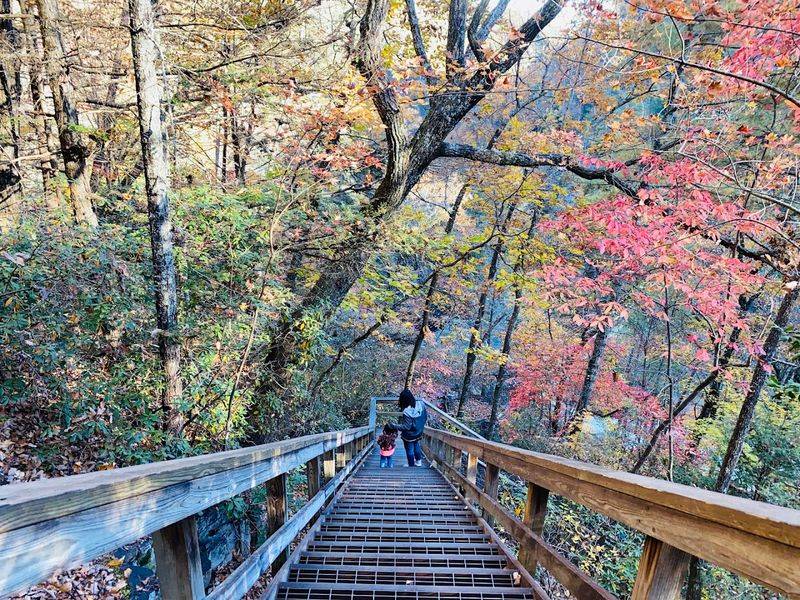
Getting down to the floor of Tallulah Gorge requires a permit and a willingness to tackle a serious staircase. The descent involves well over 1,000 steps in total, and the climb back up is where most people really feel the effort.
Park staff issue permits at the visitor center, and the number of daily gorge-floor permits is limited to protect the environment and manage trail congestion.
Before heading down, rangers provide a short orientation and a map. Following that map closely matters, because the boulder field at the bottom requires careful navigation.
The trail through the gorge leads past Hurricane Falls and eventually to a natural watering hole at the far end, which is a popular stopping point during warmer months.
The staircase is not recommended for people with knee problems or limited mobility, and dogs are not permitted below the suspension bridge. For everyone else, the descent is challenging but completely manageable with the right preparation.
Hurricane Falls: The Star of the Show
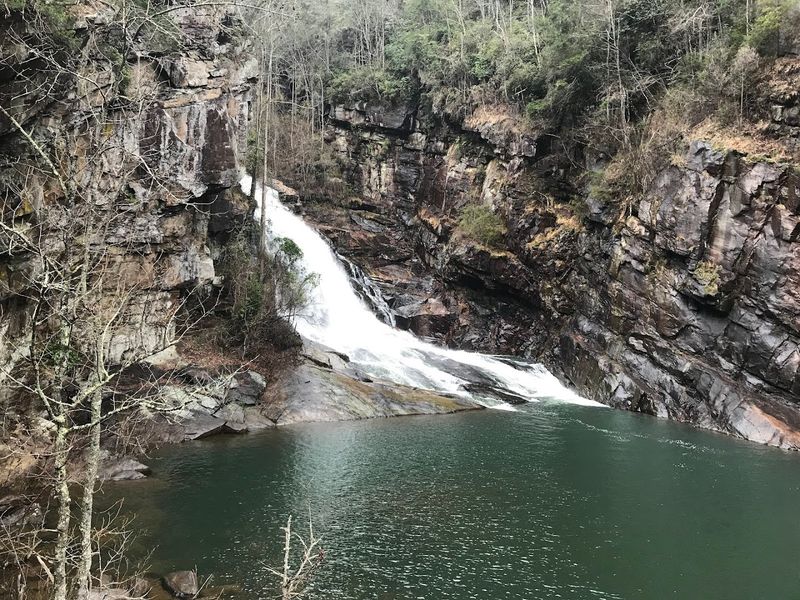
Hurricane Falls is the largest and most dramatic of the waterfalls inside Tallulah Gorge, and it sits at the bottom of the staircase descent. The falls drop directly into the gorge floor, and the view from the base is completely different from anything visible on the rim trails above.
During scheduled water release weekends, the volume of water flowing over Hurricane Falls increases dramatically, drawing larger crowds and creating a much more powerful visual. These release events are announced in advance on the park website, and planning a visit around one of them is worth the extra effort.
Even on non-release days, the falls are worth the hike down. The rock walls surrounding the base of the falls are some of the most visually striking geological features in the entire park.
Standing at the bottom and looking up at the canyon walls gives a completely different perspective on just how deep and dramatic this gorge really is.
The Suspension Bridge That Everyone Talks About
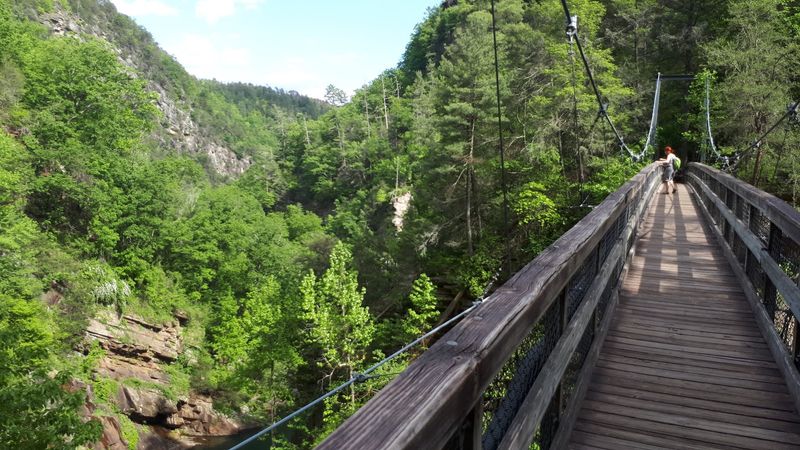
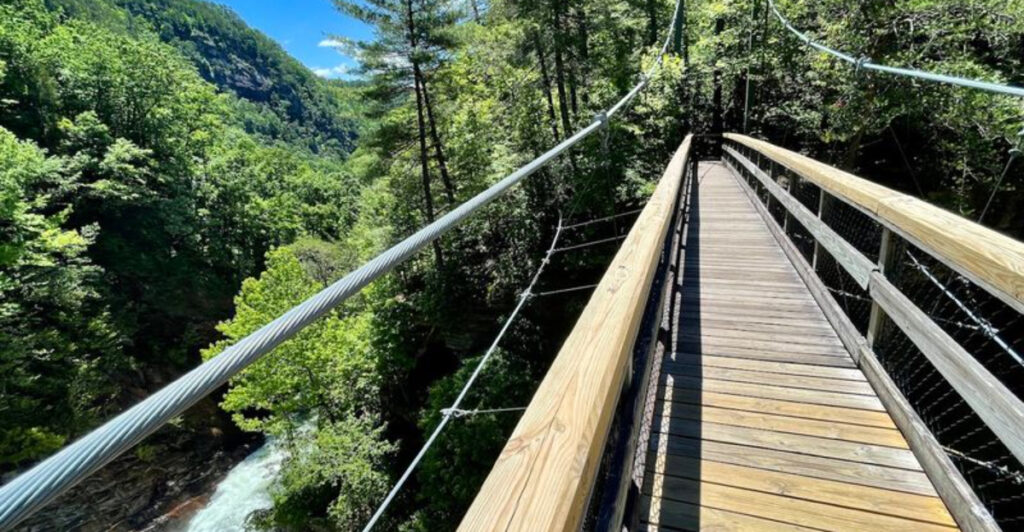
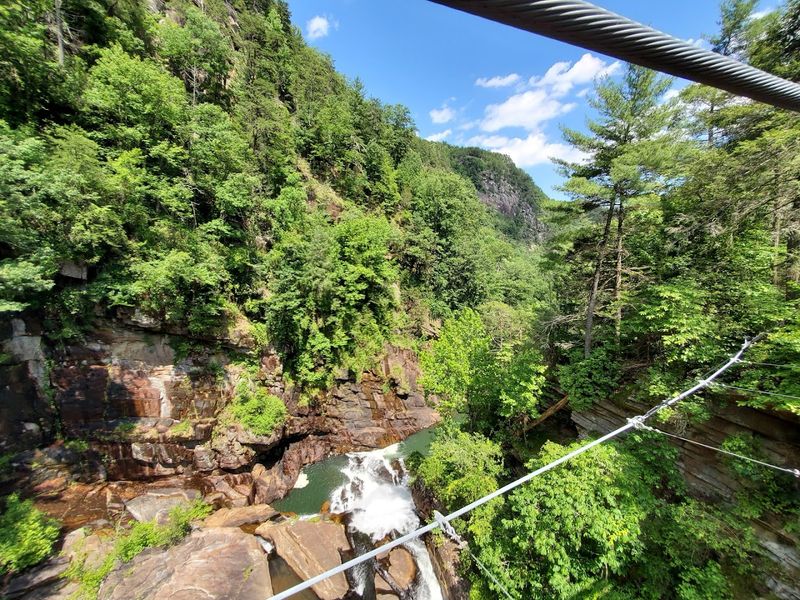
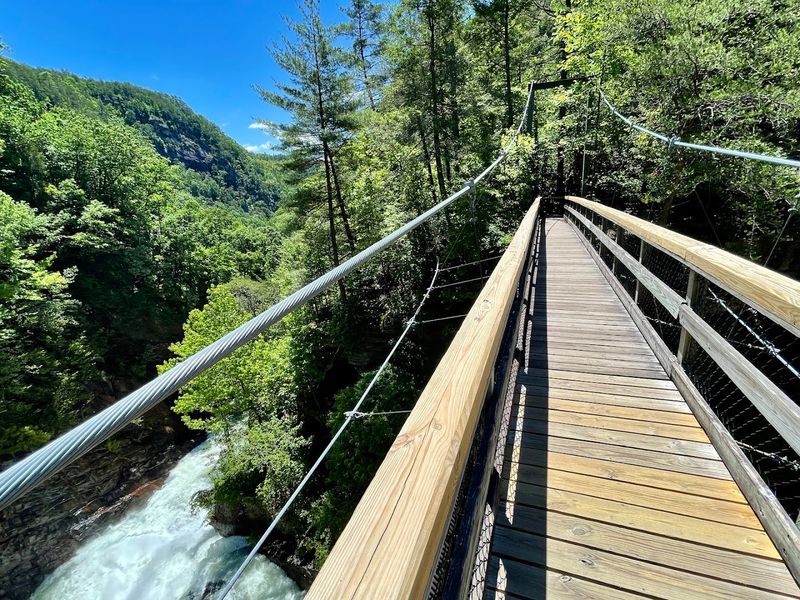
One of the most iconic features of Tallulah Gorge State Park is the suspension bridge that stretches across the gorge between the two rim trails. The bridge sways gently as people cross, and the views from the center looking down into the canyon and toward the falls are genuinely hard to beat.
Reaching the bridge requires descending a significant number of stairs from either the north or south rim, but it does not require a gorge-floor permit. This makes the bridge a popular middle-ground option for visitors who want more than the rim overlooks but are not up for the full bottom-of-the-gorge experience.
Photography from the suspension bridge is outstanding, particularly during fall foliage season or on water release days when the falls are running high. The bridge itself is sturdy and well-maintained, though its natural movement can catch first-time visitors off guard.
Crossing it is a highlight of any visit to the park, regardless of what else is on the itinerary.
Overlooks Along the Rim and What They Offer
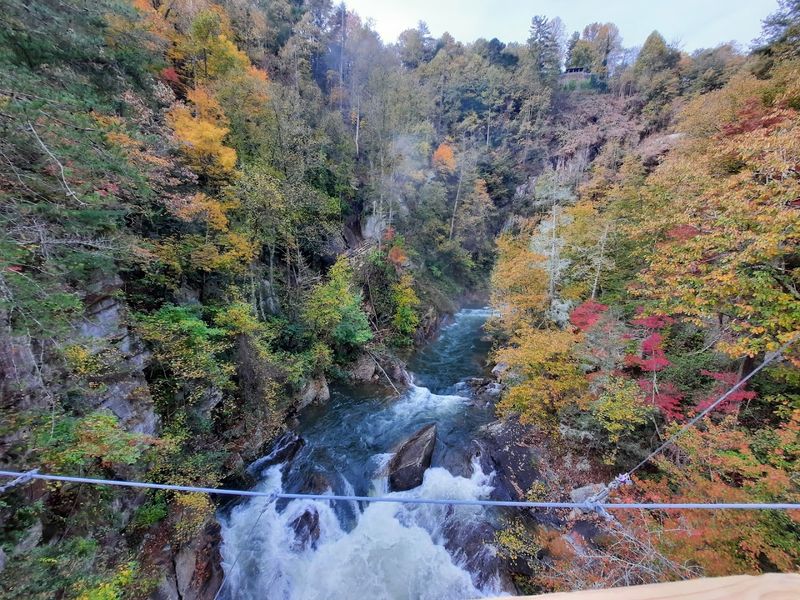
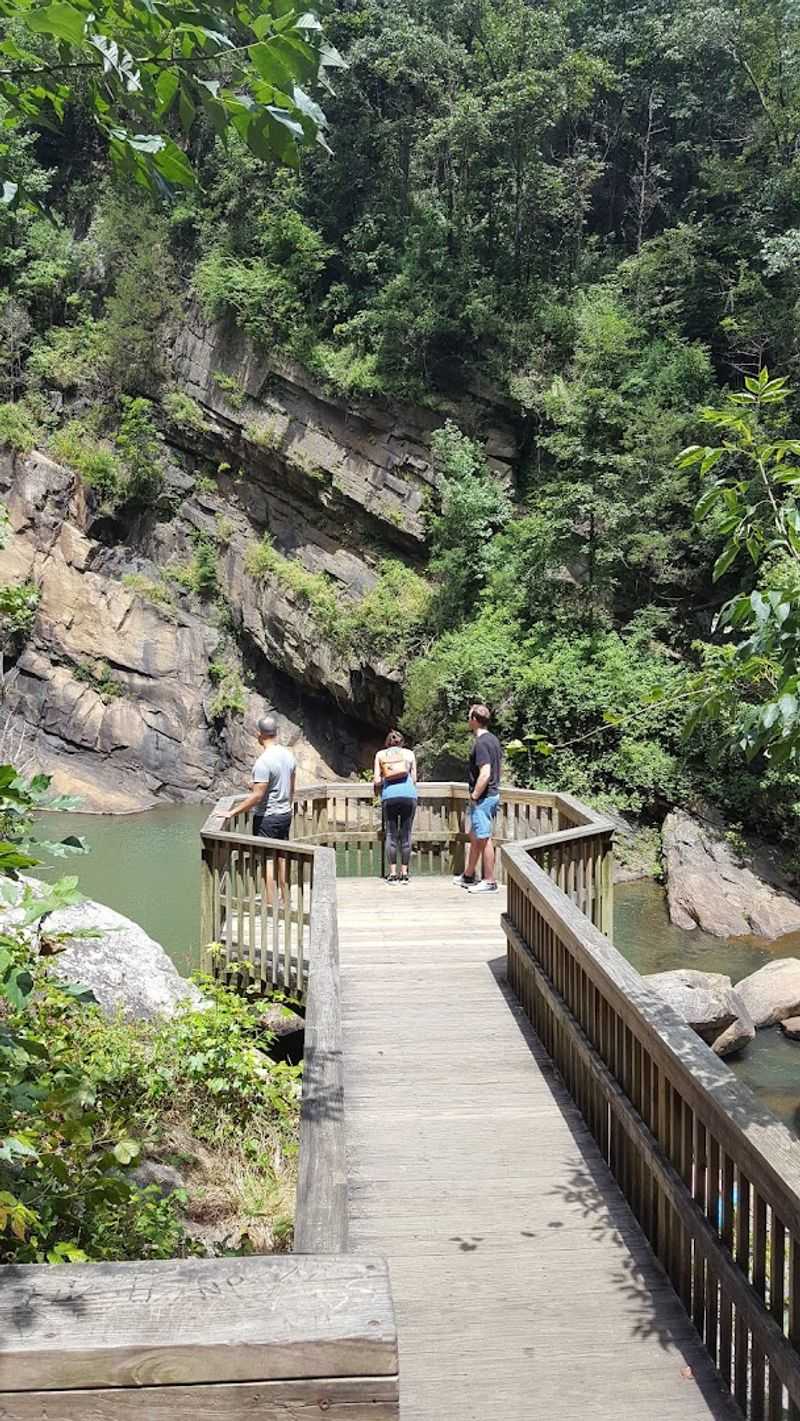
The rim trails at Tallulah Gorge are dotted with numbered overlooks, each offering a slightly different perspective on the gorge below. Overlook 1 on the north rim is widely considered the best single viewpoint in the park, delivering a wide-angle look at the gorge, the waterfalls, and the canyon walls all at once.
Inspiration Point is another named overlook further along the trail, though the view there is comparable to Overlook 1 rather than significantly better. For hikers short on time, stopping at Overlook 1 and the suspension bridge covers the two most rewarding spots without requiring a full loop of both rim trails.
The overlooks are well-marked and equipped with railings and viewing platforms that make them safe and accessible. Morning light tends to work best for photography at most of the overlooks, and arriving early also means fewer people in the frame.
Each viewpoint rewards a moment of stillness before moving on to the next section of trail.
Camping at Tallulah Gorge: A Night Among the Trees
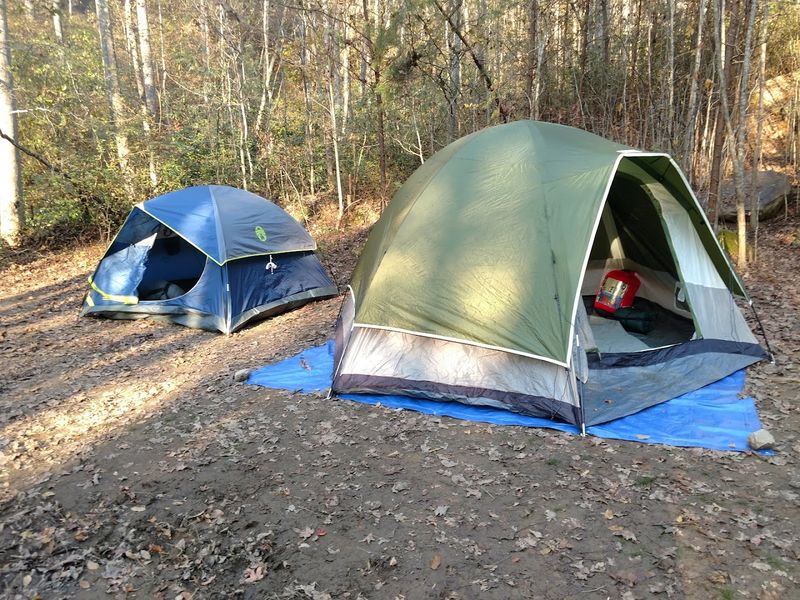
The campground at Tallulah Gorge State Park is a solid base for anyone planning to spend more than a day exploring the area. Sites are spread through a wooded area with good tree cover, and the campground has a calm, settled atmosphere that makes it easy to unwind after a long day on the trails.
Amenities include fire pits, water hookups at many sites, and bathhouse facilities with hot showers. A new bathhouse was under construction during recent visits, and the older facility has been kept reasonably clean in the meantime.
Site 46 and others near the original bathhouse have been popular choices for campers with smaller rigs.
The campground fills up during fall weekends, so booking well in advance is the smart move for October visits. Acorns dropping on camper roofs during autumn nights are a quirky but common experience that longtime campers at this park mention with a laugh.
Reservations can be made through the Georgia State Parks website.
Fall Foliage Season: The Park at Its Most Dramatic
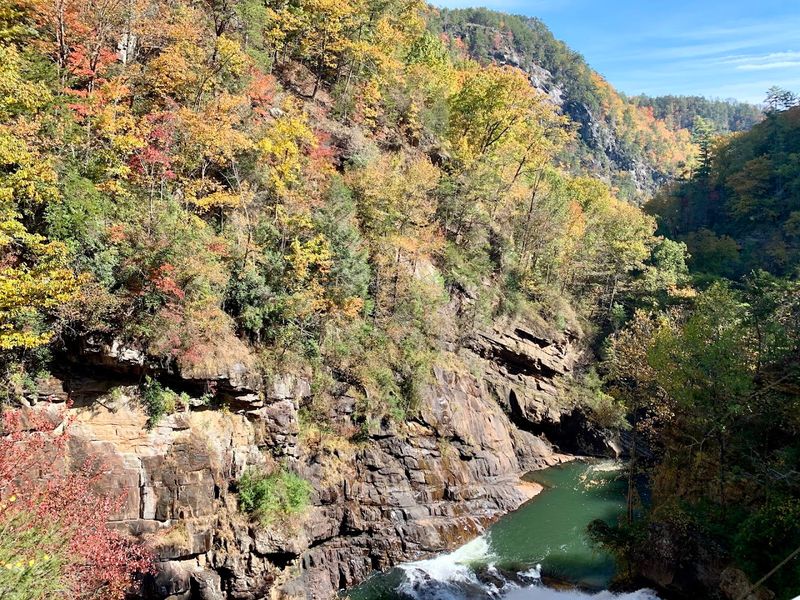
Autumn transforms Tallulah Gorge into one of the most colorful destinations in the entire Southeast. The canyon walls and surrounding ridges turn shades of orange, red, and gold from mid-October into early November, and the combination of fall color and dramatic gorge views is hard to find anywhere else in Georgia.
Mid-October tends to be the peak window for foliage color, though the exact timing shifts year to year depending on temperatures. Visiting during peak color on a weekend means arriving early, as the park reaches capacity quickly and a line can form at the entrance gate.
Weekday visits during fall offer a noticeably quieter experience with the same stunning scenery. The campground during this season has an especially appealing atmosphere, with colorful leaves covering the ground and cool temperatures making evening campfires feel well-earned.
Fall is also when the park schedules some of its water release events, adding extra drama to an already spectacular season.
The Visitor Center, Gift Shop, and Interactive Exhibits
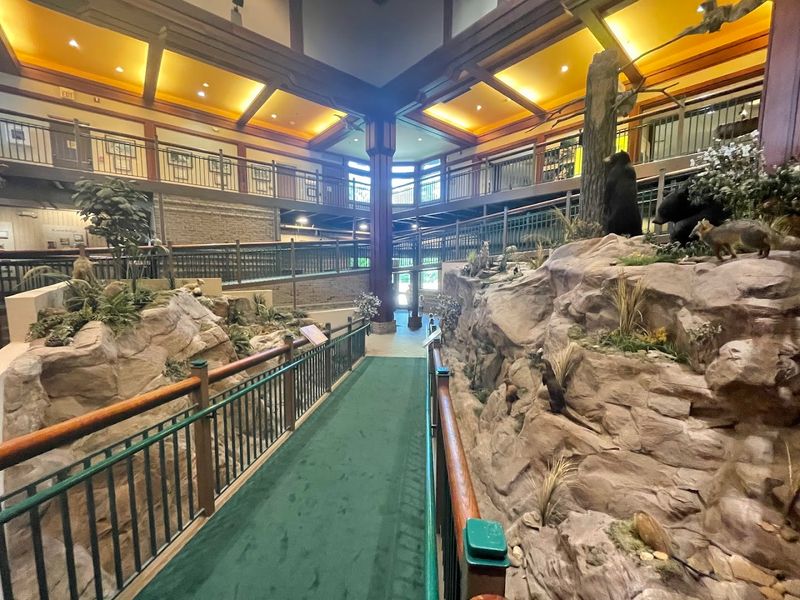
The visitor center at Tallulah Gorge State Park is the first stop for anyone serious about getting the most out of a visit. Staff there issue gorge-floor permits, hand out trail maps, and answer questions about current conditions.
The center also houses an interactive exhibit area that covers the geology, ecology, and history of the gorge in an engaging format that works well for both kids and adults.
The gift shop next to the visitor center carries a solid selection of park-themed merchandise, trail guides, and local items. The staff working in the gift shop are consistently helpful and friendly, making the stop feel worthwhile beyond just the practical permit process.
For visitors who want to understand what they are looking at before heading out on the trails, spending 15 to 20 minutes in the visitor center pays off. The maps provided there are more detailed than anything available online and include notes about specific trail conditions and permit zones.
Practical Tips for First-Time Visitors
A few straightforward preparations make a visit to Tallulah Gorge significantly smoother. Cash is needed at the entrance gate, which charges a small parking fee.
The gate does not process cards, so arriving without cash means a detour to the gift shop line before the trail even begins.
Water and snacks are worth packing, especially for anyone planning to go down into the gorge. The staircase and boulder field at the bottom require more energy than the rim trails, and there are no food vendors inside the park.
Hiking shoes with solid grip are a practical necessity rather than just a recommendation.
Dogs are welcome on the rim trails but cannot go below the suspension bridge. The park recommends arriving well before opening time on busy weekends, as the parking area gate stays locked until the visitor center opens and a line can build up outside.
Checking the park website for water release schedules before booking a visit is also a worthwhile step.
Why This Park Keeps Drawing People Back
Tallulah Gorge State Park holds a rare combination of natural drama, accessible trails, and genuine geological history that few parks in the Southeast can match. The gorge itself is the main draw, but the full experience adds up to more than any single feature: the suspension bridge, the staircase descent, the overlooks, the campground, and the well-run visitor center all contribute to a destination that rewards repeat visits.
People who come once tend to come back, often in a different season or with a different group, curious to see how the park changes with the light and the time of year. The water release weekends bring a completely different energy to the falls, and fall foliage season reframes the entire landscape in warm color.
For a state park, the level of upkeep and the range of experiences on offer are genuinely impressive, and the relatively modest entry fee makes it one of the better outdoor values in Georgia by a wide margin.
Where Exactly This Place Is and How to Get There
Tallulah Gorge State Park sits at 338 Jane Hurt Yarn Rd, Tallulah Falls, GA 30573, tucked into the northeast corner of Georgia near the Blue Ridge Mountains. The town of Tallulah Falls itself is a small community in Rabun County, about two hours northeast of Atlanta and roughly 20 minutes from the North Carolina border.
The park entrance is easy to find off US-441, a major highway that connects the Georgia mountains to the rest of the region. Once through the gate, the visitor center is the first stop for maps, permits, and general information about the trails.
Parking requires a small fee, and the entrance gate only accepts cash, so carrying a few dollars ahead of time saves a wait in line at the gift shop. The park opens daily, and arriving early on weekends is strongly recommended since the lot fills up fast during peak seasons.
Share this story