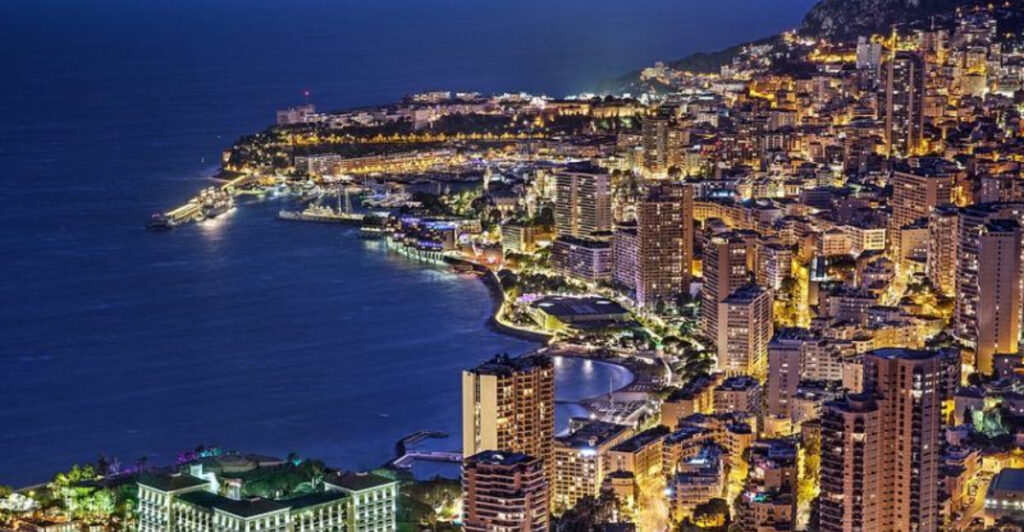
Some countries are so small that a single major world city can have far more people than the entire nation. These tiny states often rely on tourism, finance, or unique geography to thrive despite populations that would barely fill a large urban neighborhood elsewhere.
It is fascinating to think that places like Vatican City or Tuvalu function as fully independent nations while housing fewer residents than a single apartment complex in Tokyo or New York. Get ready to meet ten remarkable countries that prove size truly has nothing to do with significance.
Vatican City
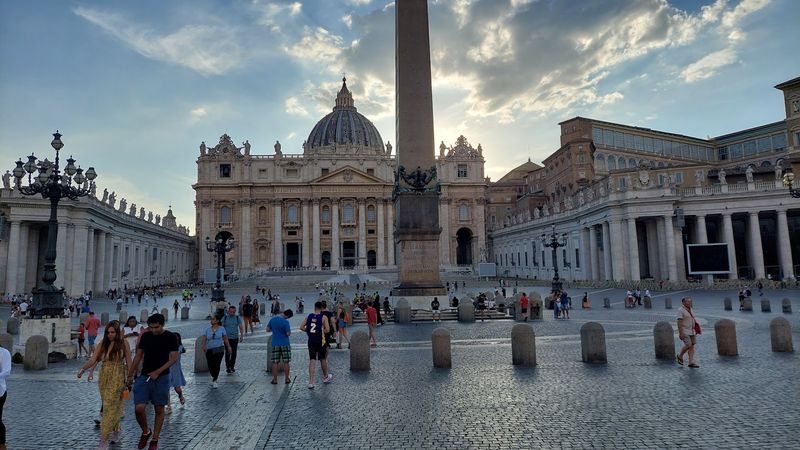
Fewer than 1,000 people call Vatican City home, making it the smallest sovereign nation on Earth by population. To put that in perspective, a single floor of a New York City skyscraper might house more permanent residents than this entire country.
It covers just 44 hectares, roughly the size of a city golf course.
Vatican City functions as the headquarters of the Roman Catholic Church and the official home of the Pope. Despite its microscopic population, its global influence stretches across more than a billion followers worldwide.
Decisions made within these ancient walls shape religious life on every continent.
Tourists flood St. Peter’s Square daily, often outnumbering actual residents by thousands. The Vatican Museums attract millions of visitors each year who come to see Michelangelo’s breathtaking Sistine Chapel ceiling.
This tiny state punches well above its weight in art, history, and spiritual authority.
Tuvalu
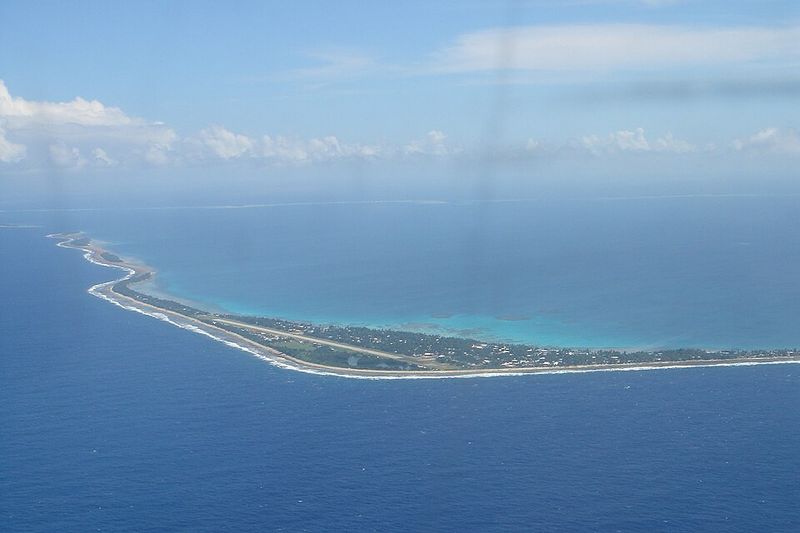
Tuvalu sits so low in the Pacific Ocean that some of its land barely rises above sea level, making every storm a genuine threat to the entire nation. With roughly 11,000 residents, this island group has fewer people than many suburban high schools across the United States.
Nine tiny atolls and reef islands make up the country’s total land area.
Rising sea levels caused by climate change represent Tuvalu’s most urgent challenge. Government officials have already begun negotiating agreements with neighboring countries in case parts of the island become uninhabitable in coming decades.
The world is watching to see if Tuvalu becomes the first nation displaced by climate change.
Despite these pressures, Tuvaluans maintain a rich cultural identity rooted in traditional dance, fishing, and tight-knit community bonds. The country even earns a surprising amount of revenue by leasing its internet domain suffix, .tv, to television companies worldwide.
Sometimes a small nation finds big opportunities in unexpected places.
Nauru
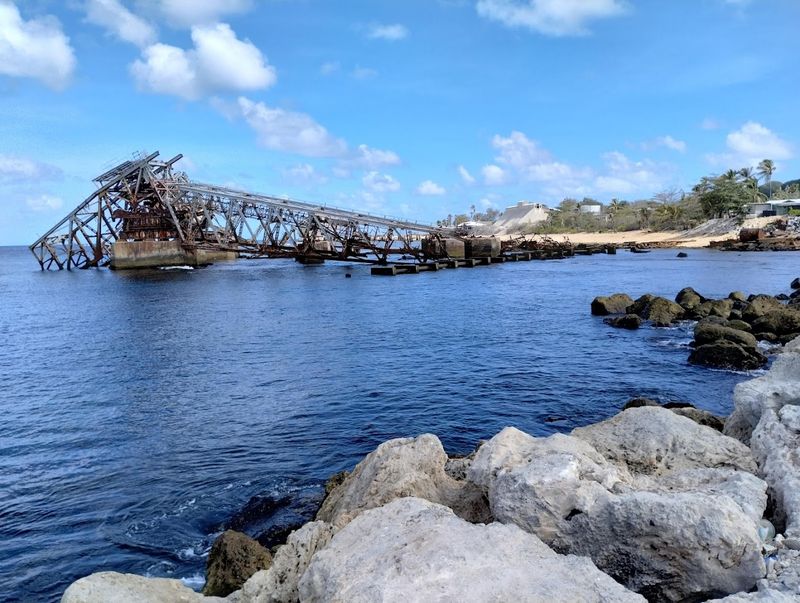
Nauru holds the title of the world’s smallest island nation, covering just 21 square kilometers in the central Pacific Ocean. Around 12,000 people live there, which is fewer than the crowd at many minor league baseball games across North America.
What makes Nauru’s story so compelling is its dramatic economic rise and fall.
Phosphate mining once made Nauru one of the wealthiest nations per capita on the planet during the 1970s and 1980s. Citizens enjoyed free healthcare, education, and housing without paying a single dollar in income tax.
Then the phosphate ran out, and the economy collapsed almost overnight.
Today, Nauru faces high rates of obesity, unemployment, and limited economic options. The country has turned to hosting an Australian immigration detention center as one of its main sources of national income.
Nauru’s story serves as a cautionary tale about relying too heavily on a single natural resource without planning for the future. Recovery is slow, but the community’s resilience is undeniable.
Palau
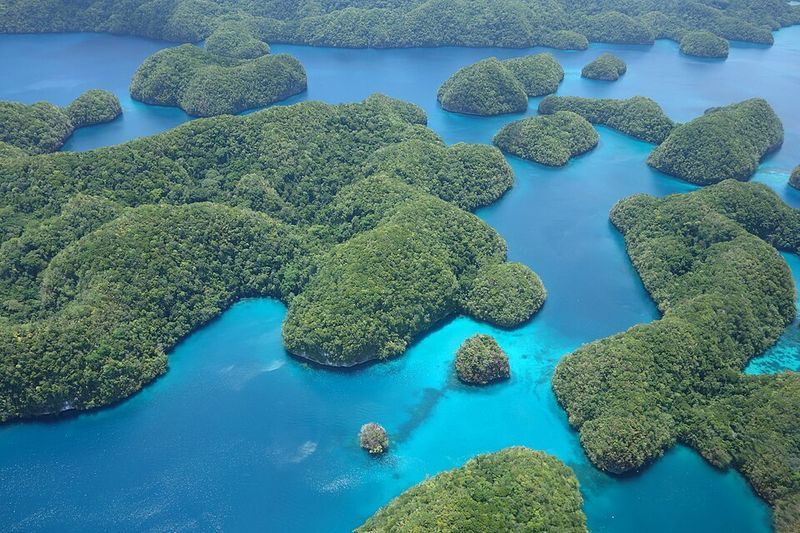
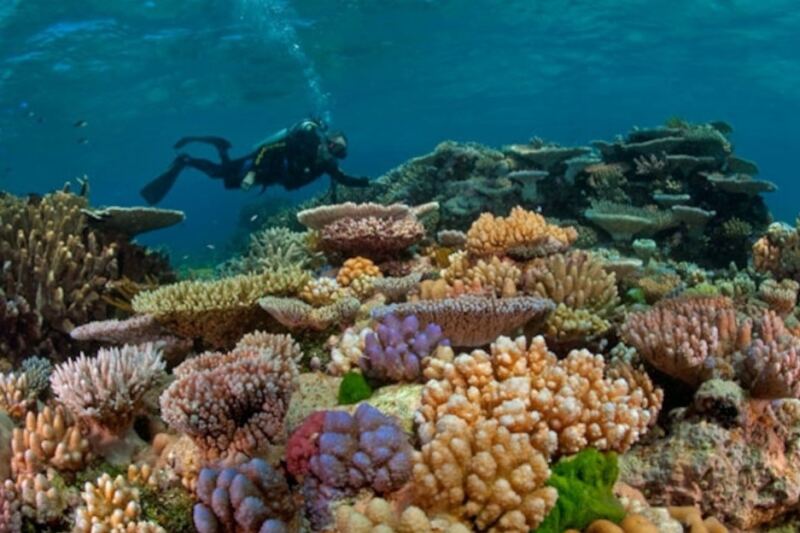
Picture hundreds of emerald mushroom-shaped islands floating in crystal-clear water, and you have Palau in a nutshell. Fewer than 20,000 people live across this western Pacific archipelago, yet the country draws scuba divers and marine biologists from every corner of the globe.
Its waters contain some of the highest marine biodiversity on the planet.
Palau has taken ocean conservation seriously in ways that larger nations rarely do. The government declared a massive marine sanctuary in 2015, banning commercial fishing across a huge portion of its exclusive economic zone.
Palau was also the first country in the world to change its immigration entry stamp to an environmental pledge that visitors must sign.
Jellyfish Lake, where millions of harmless golden jellyfish migrate daily, is one of Palau’s most iconic attractions. Tourism brings in significant revenue, but strict regulations keep visitor numbers from overwhelming fragile ecosystems.
Small population, big environmental ambition is the best way to describe this remarkable Pacific nation.
San Marino
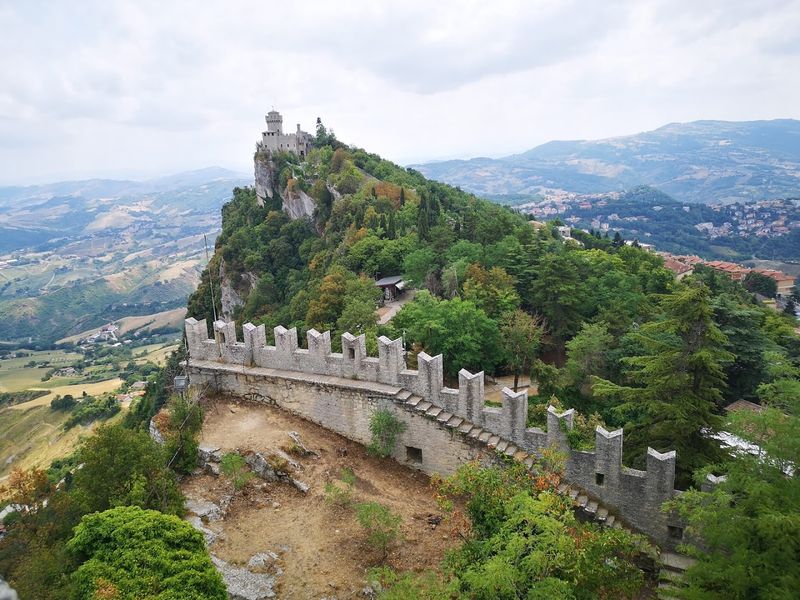
Completely surrounded by Italy and perched dramatically on the slopes of Mount Titano, San Marino claims to be the world’s oldest surviving republic, founded way back in 301 AD. About 34,000 people live here, which is fewer than the population of many single zip codes in major American cities.
History is literally built into every cobblestone street.
San Marino’s economy leans heavily on tourism, banking, and the sale of collectible postage stamps and coins that are popular with collectors worldwide. The country uses the euro despite not being a member of the European Union, and it manages its finances with impressive independence.
Medieval towers and fortress walls draw visitors who want a taste of old Europe without the massive crowds of Rome or Florence.
One of the most charming quirks of San Marino is that it has more cars registered than it has citizens. The country also boasts one of the lowest unemployment rates in Europe.
Small as it is, San Marino has quietly figured out how to thrive in a modern world without losing its ancient character.
Monaco
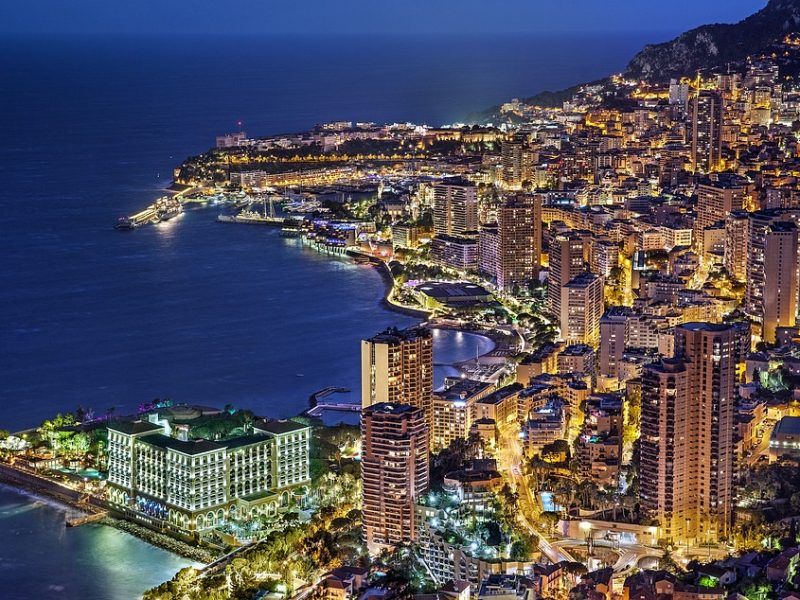
Monaco is the kind of place where the average parking lot car costs more than most people’s houses. With only about 38,000 residents packed into just two square kilometers, it is both the world’s most densely populated country and one of its wealthiest.
A single city block in neighboring Nice, France, might contain a similar number of people spread across far more space.
The Monaco Grand Prix turns the country’s winding streets into one of the most glamorous racing circuits on Earth each year. Casinos, luxury yachts, and designer boutiques line every available corner of this Mediterranean microstate.
The country collects no income tax, which explains why so many billionaires choose to plant their flags here.
What surprises many visitors is how genuinely safe and well-organized Monaco actually is. It has one of the highest police-to-resident ratios anywhere in the world, meaning the streets are extremely well monitored.
Despite its reputation for extreme wealth, Monaco also has a vibrant arts scene, a respected oceanographic museum founded by Prince Albert I, and a strong sense of local pride among its citizens.
Liechtenstein
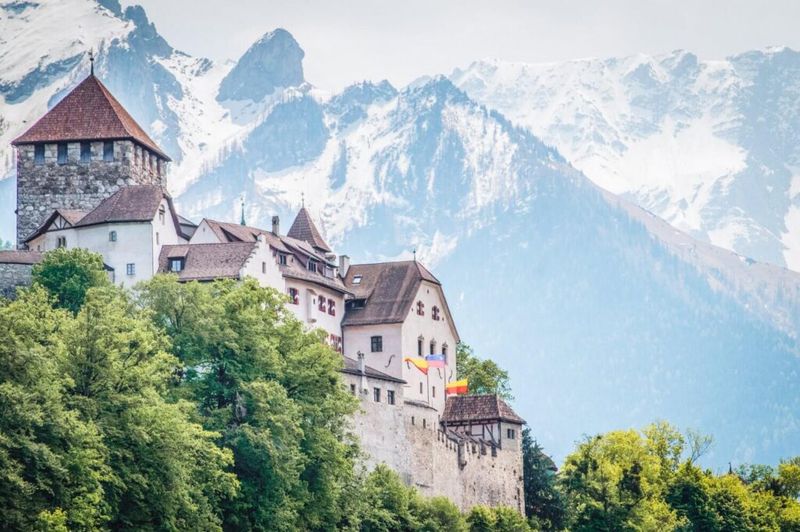
Liechtenstein is one of only two countries in the world that is doubly landlocked, meaning it is surrounded entirely by other landlocked countries, specifically Switzerland and Austria. Around 40,000 people call this alpine nation home, yet the country runs one of the most successful economies in Europe relative to its size.
Banking and precision manufacturing are the twin engines powering this mountain microstate.
Liechtenstein actually abolished its army in 1868 after a war in which none of its soldiers were killed. The country decided it simply did not need one and has lived peacefully ever since.
That kind of confident pragmatism runs through the national character in surprisingly charming ways.
The capital city of Vaduz sits directly beneath a medieval castle still occupied by the ruling royal family. Tourists can walk the entire length of the capital in about 20 minutes.
Despite its tiny footprint, Liechtenstein has the highest GDP per capita in the world by some measurements, proving that a small population and smart economic policy can produce extraordinary results. Hiking trails through the Rhine Valley make it a quiet favorite among outdoor travelers.
Saint Kitts and Nevis
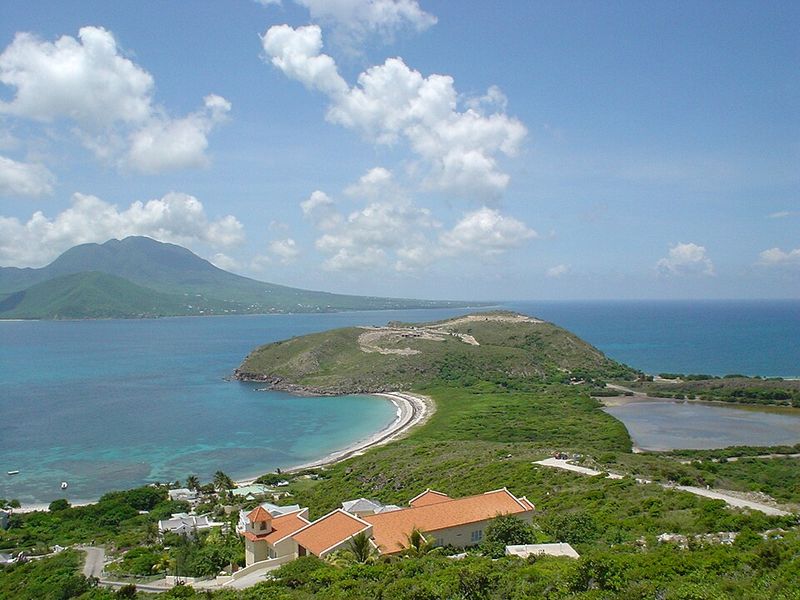
Saint Kitts and Nevis holds the record as the smallest sovereign nation in the Western Hemisphere by both land area and population, with fewer than 50,000 residents across its two islands. Sugar production once dominated the economy for nearly four centuries before the last sugar mill finally closed in 2005.
The country has been reinventing itself ever since.
Tourism and offshore financial services now drive most of the national income. The Citizenship by Investment program, which allows wealthy foreigners to obtain citizenship through qualifying investments, has brought in significant revenue and attracted international attention.
It remains one of the Caribbean’s more controversial but financially effective policies.
Brimstone Hill Fortress, a UNESCO World Heritage Site, stands as a reminder of the islands’ colonial past and the enslaved people who built it under brutal conditions. The fortress offers sweeping views of neighboring islands on clear days.
Saint Kitts also hosts the St. Kitts Music Festival each year, drawing performers and visitors from across the Caribbean and beyond. For such a small nation, its cultural calendar punches well above its weight class.
Iceland
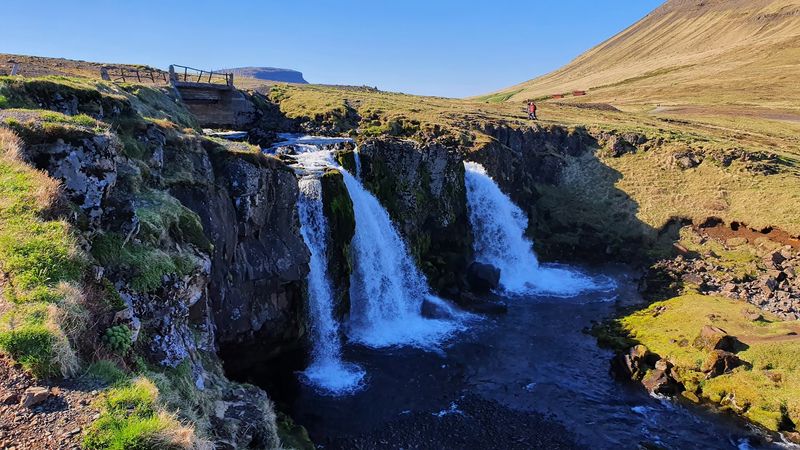
Iceland has roughly 400,000 residents, which sounds like a lot until you realize that number is smaller than the population of several individual neighborhoods in cities like Istanbul or Los Angeles. What Iceland lacks in people, it more than makes up for in sheer geological drama.
Volcanoes, geysers, glaciers, and the Northern Lights all share the same extraordinary island.
The country sits directly on the Mid-Atlantic Ridge, meaning two tectonic plates are literally pulling apart beneath it. Volcanic eruptions are not rare events here but regular features of life that Icelanders have learned to manage with remarkable calm.
The 2010 eruption of Eyjafjallajokull disrupted air travel across Europe for weeks and taught the world a geography lesson nobody expected.
Iceland ranks among the happiest and most gender-equal countries on Earth according to multiple global indexes. Its literacy rate is essentially 100 percent, and the country has produced a disproportionate number of world-class musicians, writers, and athletes.
Geothermal energy heats nearly every home on the island, making Iceland a global leader in renewable energy use. For a country with fewer people than a midsized American suburb, the achievements are genuinely staggering.
Luxembourg
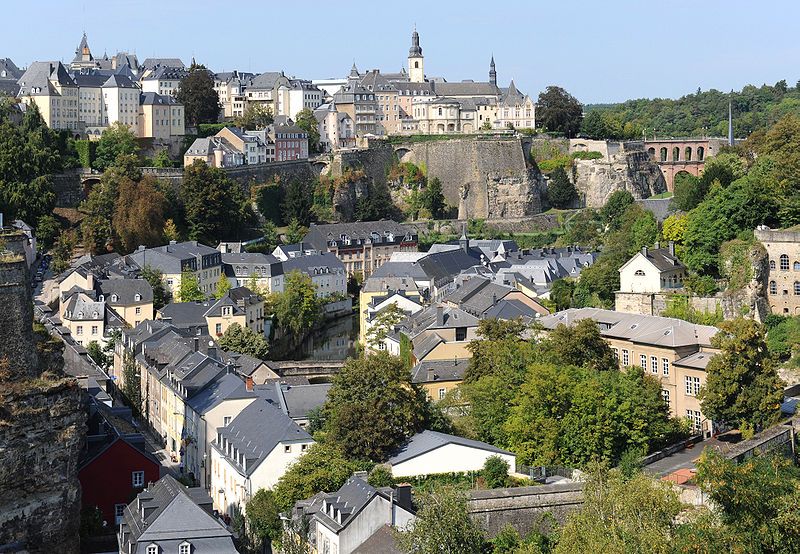
Luxembourg has under 700,000 residents, which puts it well below the population of major metro areas like Mumbai, Mexico City, or even Columbus, Ohio. Yet this tiny country consistently ranks as one of the highest earners in the world by GDP per capita.
Being home to major European Union institutions and a powerhouse banking sector does not hurt.
About half of Luxembourg’s workforce actually commutes in from neighboring France, Belgium, and Germany every single day. That daily migration of roughly 200,000 cross-border workers is one of the most remarkable labor market quirks in the world.
The country essentially borrows a workforce each morning and sends it home each evening.
Luxembourg City’s old town, a UNESCO World Heritage Site, is built dramatically into deep river gorges with medieval fortifications still largely intact. The country offers free public transportation nationwide, a policy introduced in 2020 that made it the first country in the world to do so.
Luxembourg may be small in population, but its ambition, wealth, and policy innovation make it one of Europe’s most quietly influential players. Tiny by headcount, mighty by just about every other measure.
Share this story