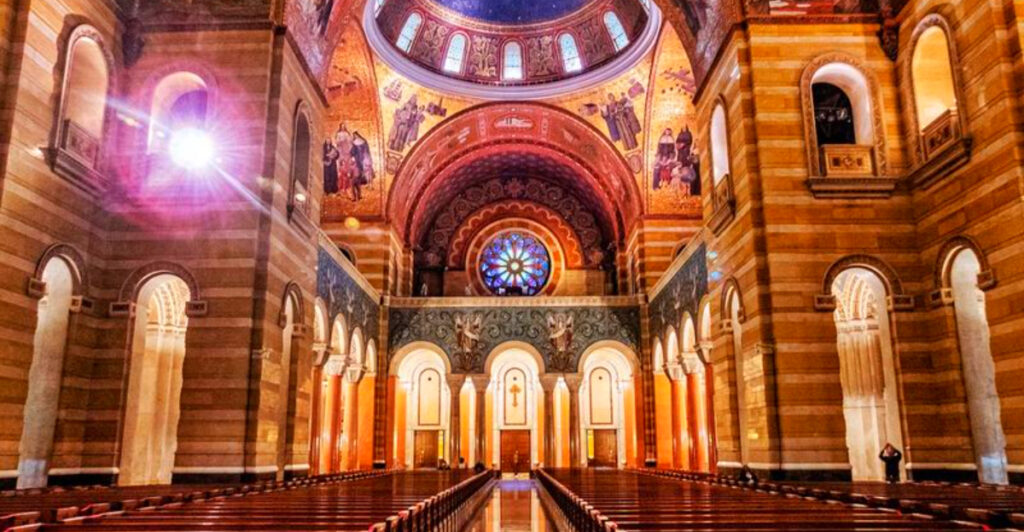
A cathedral in St. Louis holds one of the largest mosaic collections in the world, and stepping inside it feels completely different from visiting a typical church or historic landmark. The ceilings, domes, and walls are covered with millions of glass mosaic pieces arranged in vivid golds, deep blues, and rich reds that transform nearly every inch of the interior into artwork.
What makes the building so striking is the contrast between its massive Romanesque exterior and the Byzantine-inspired interior waiting inside. Visitors often arrive expecting an impressive cathedral and leave talking about the scale of the mosaics, the quiet atmosphere, and the level of craftsmanship packed into every surface overhead.
Beyond the main sanctuary, the site also includes an underground museum that adds historical context to a place already considered one of the Midwest’s most remarkable architectural landmarks.
Where to Find This Extraordinary Place
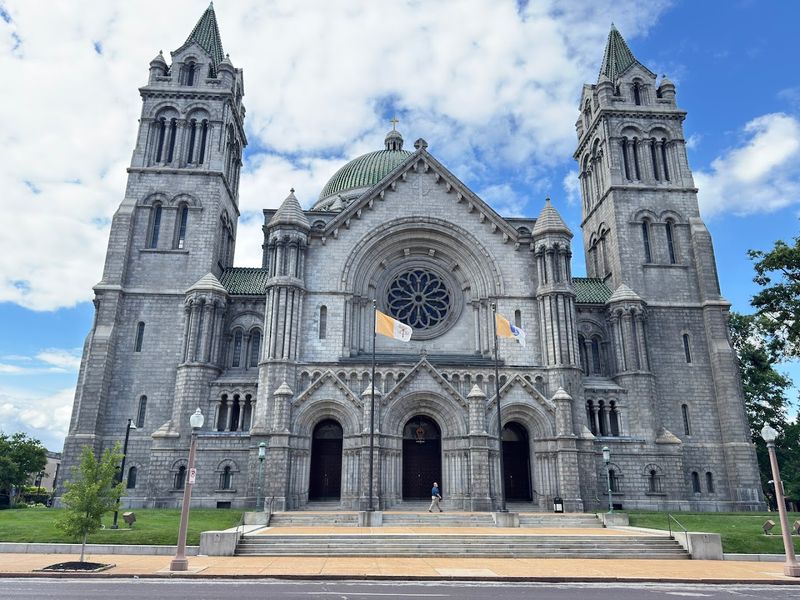
The Cathedral Basilica of St. Louis sits at 4431 Lindell Blvd, St. Louis, MO 63108, right in the heart of the Central West End neighborhood, one of the city’s most walkable and lively areas.
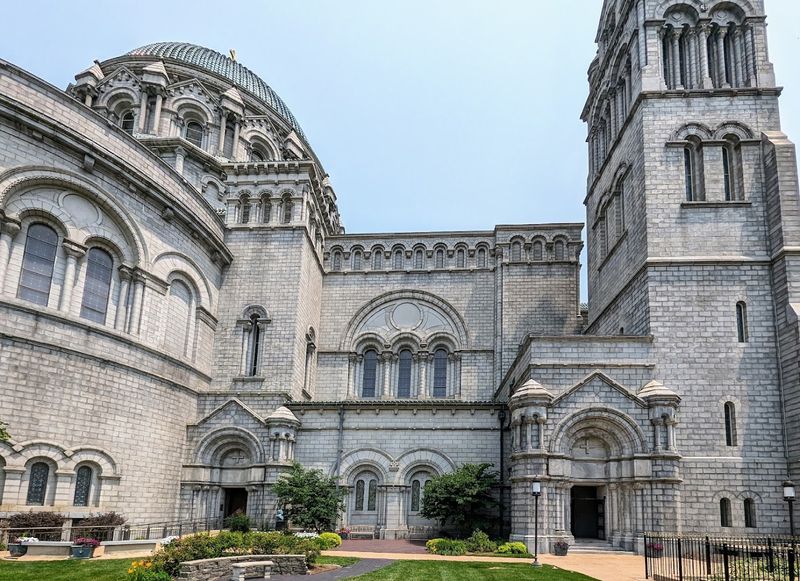
The building is easy to spot from a distance because of its distinctive green-tiled dome and twin bell towers that rise confidently above the surrounding streetscape. From the outside, the stone facade gives off a serious, almost fortress-like presence, which makes the interior all the more surprising when you finally walk through the front doors.
The cathedral is open Monday through Sunday from 7 AM to 5 PM, and parking is available behind the building, though it fills up quickly during services and special events. Arriving early is always a smart move, especially on weekends.
The phone number is (314) 373-8200, and more details can be found at cathedralstl.org. This neighborhood location also puts you close to great coffee shops and restaurants, making a full morning out of your visit very easy.
A Record That Took 76 Years to Set
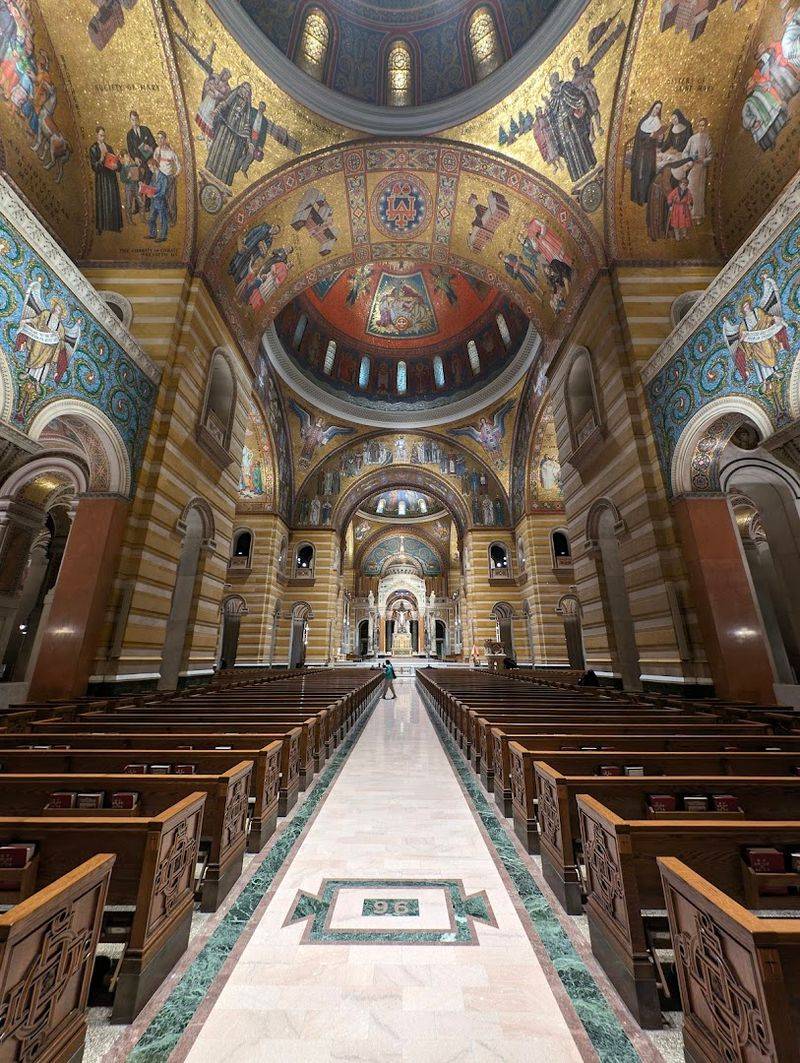
Most construction projects wrap up in a few years. The mosaic program inside this cathedral took 76 years to complete, starting in 1912 and finally finishing in 1988, outlasting entire generations of the artists who began it.
The finished result covers 83,000 square feet of interior surface, making it the largest mosaic collection in the Western Hemisphere and one of the largest in the entire world. More than 41 million individual pieces of glass tesserae were used, each one placed by hand with careful precision.
What makes this record even more remarkable is that the work was carried out by multiple teams of artists across different decades, yet the overall visual effect feels unified and intentional rather than patchy or disjointed. The dedication required to sustain that level of craftsmanship across three-quarters of a century is genuinely hard to wrap your head around.
And the color palette those artists worked with adds yet another layer of complexity worth exploring in the next section.
More Than 7,000 Shades of Color Overhead
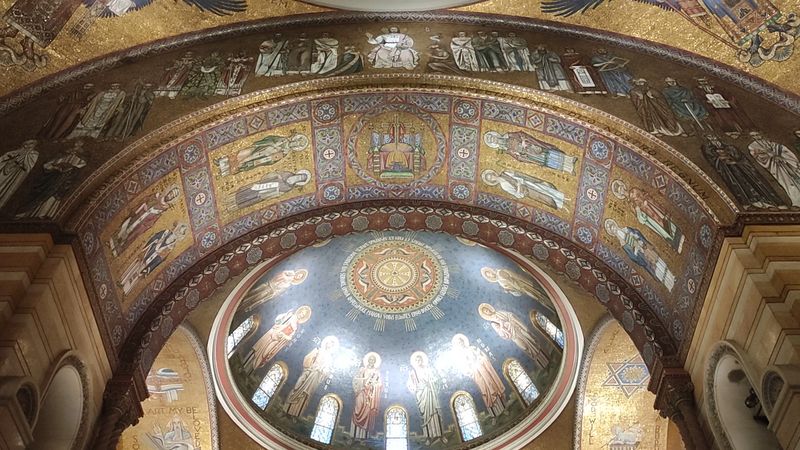
Numbers can feel abstract until you see them in person. The mosaics inside this cathedral use more than 7,000 distinct color shades, including 38 different shades of gold mosaic alone, with some accounts citing up to 200 variations of 24-karat gold glass.
That range of gold tones is what gives the interior its almost living quality. Depending on where you stand and how the light shifts throughout the day, the ceiling can look warm amber in one moment and bright metallic the next.
The artists understood that flat, uniform gold would look lifeless at this scale, so they layered different tones to create depth and movement.
The blues, reds, and earth tones woven throughout the figurative scenes add contrast that keeps the eye moving from panel to panel without ever feeling overwhelmed. Visitors who spend time slowly walking the perimeter of the nave tend to notice details they completely missed on their first pass through the center aisle.
The craftsmanship rewards patience in a way that photographs simply cannot replicate.
The Artists Who Made It All Possible
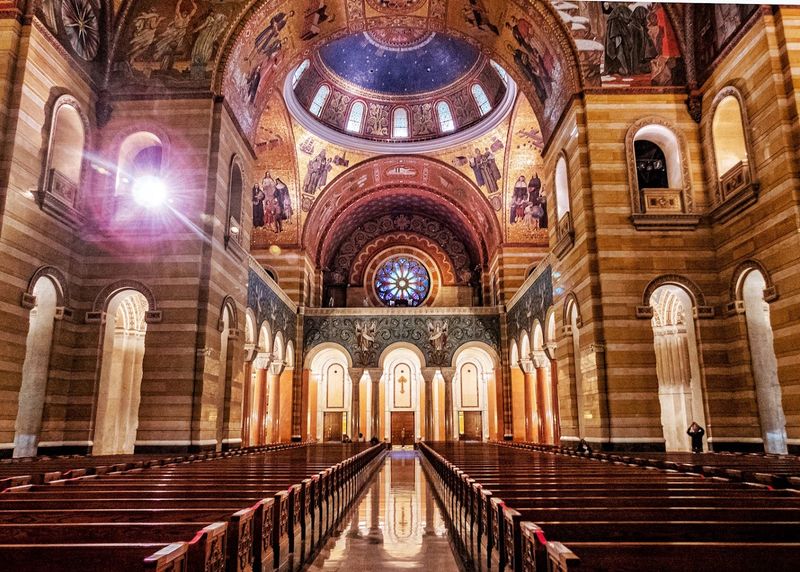
Behind every tile is a person who placed it there, and the roster of talent involved in this cathedral reads like a who’s who of early twentieth-century decorative arts. The Ravenna Mosaic Company, led by the father-and-son team of Paul and Arno Heuduck, handled significant portions of the work over many decades.
Tiffany Studios contributed mosaics to the side chapels and sanctuary walls, bringing their signature jewel-toned glass sensibility to the project. August Oetken and Professor Otto Oetken worked on the main cathedral areas, while Hildreth Meiere, one of the most accomplished decorative artists of her era, designed commissions in the main sanctuary between 1945 and 1961.
The central dome, arguably the most visually commanding space in the entire building, was the work of Jan Henryk de Rosen, a Polish-born artist whose figurative style brought a deeply expressive quality to the largest single canvas in the building. Each artist left a recognizable mark, and learning to spot the differences between their styles turns a casual visit into something closer to an art history lesson.
That Dome Rising 217 Feet Into the Air
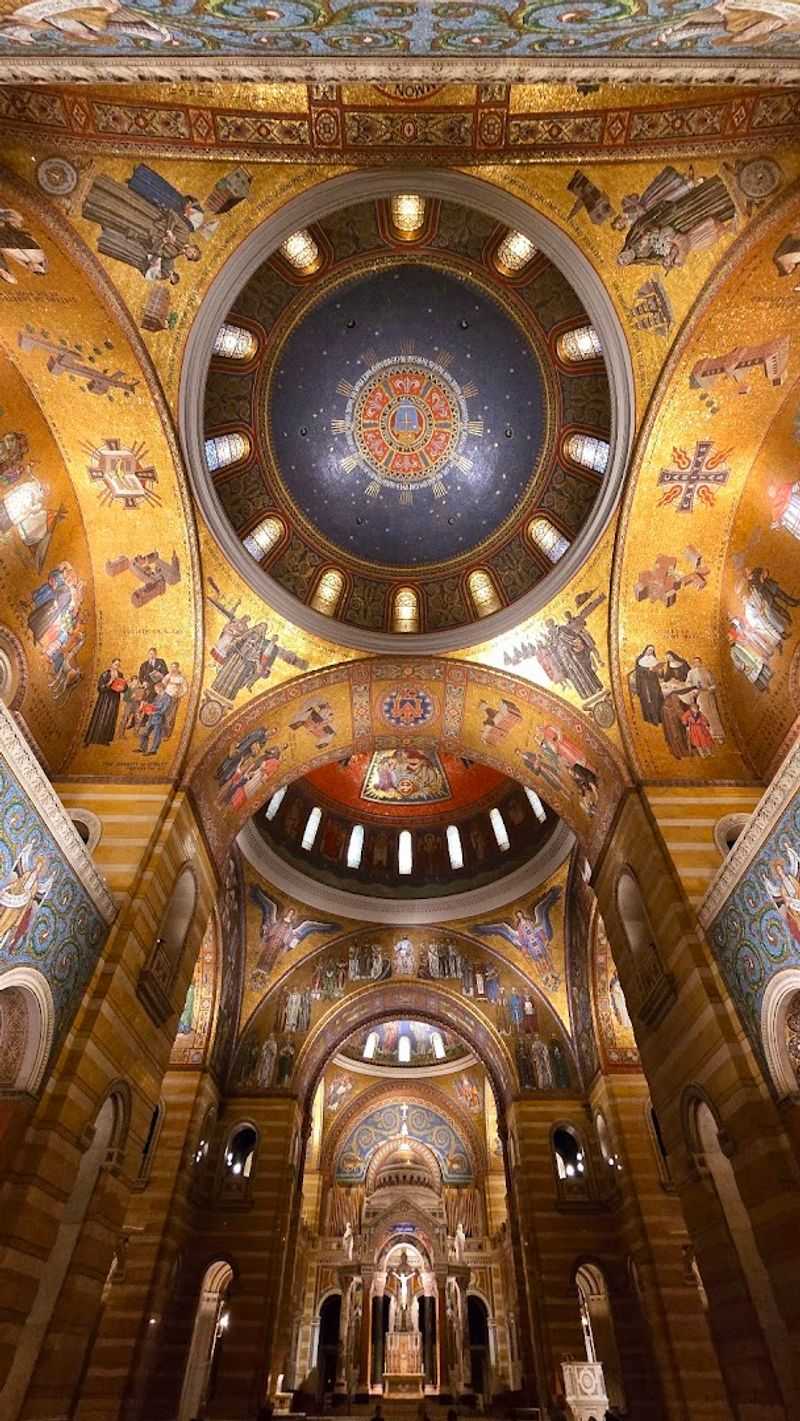
The central dome of this cathedral does not just sit above you. At 217 feet from the floor to its highest interior point, it commands your full attention the moment you pass through the narthex and into the main nave.
Jan Henryk de Rosen’s mosaic work covers the dome with large-scale figures rendered in a Byzantine style that feels both ancient and immediate. The faces in the dome are expressive in a way that flat painting rarely achieves at that height, partly because the reflective quality of the glass tiles gives the figures a subtle luminosity that shifts as your angle of view changes.
Many visitors report that they instinctively crane their necks upward and stay frozen in place for several minutes before they can bring themselves to move further into the building. The proportions of the dome in relation to the rest of the nave are carefully calibrated, so the space never feels crushing despite its enormous scale.
The effect is more like being invited upward than pressed down.
Romanesque Outside, Byzantine Inside
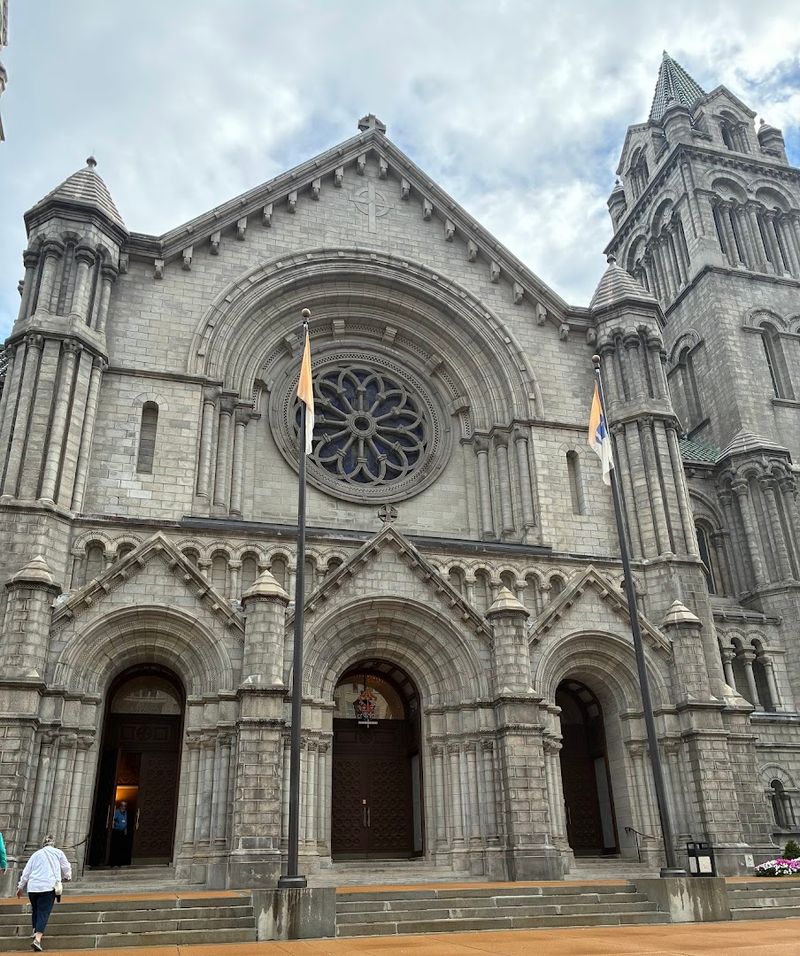
The architectural combination at work here is genuinely unusual. The exterior follows a Romanesque Revival style, with thick stone walls, rounded arches over the entrance portals, and a solidity that suggests permanence and weight.
Cross the threshold and the mood shifts completely. The interior opens into a Byzantine world of glittering surfaces, soaring arches, and layered domes that feel more connected to the great churches of Istanbul or Ravenna than to anything typically found in the American Midwest.
The contrast between the two styles is not accidental. The architects intended for the outside to anchor the building in its American context while the inside transported visitors into something older and more otherworldly.
This dual identity is part of what makes the Cathedral Basilica so hard to categorize and so easy to remember. Most churches pick one architectural language and commit to it.
This one speaks two fluently, and the transition from one to the other as you cross the entrance is one of the more quietly dramatic moments in American religious architecture. The marble floors and columns reinforce the Byzantine interior perfectly.
When Pope John Paul II Came to Visit
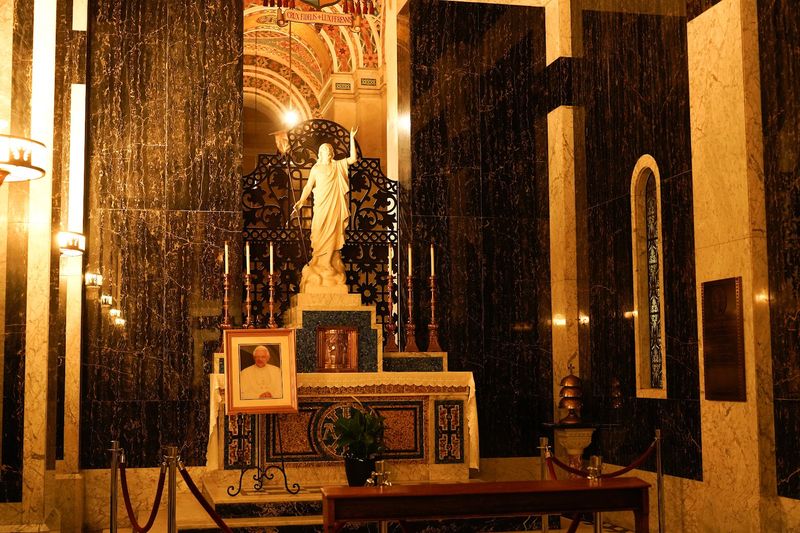
In 1997, Pope John Paul II officially designated the Cathedral of St. Louis as a Basilica, a formal recognition from the Vatican that acknowledges a church’s historical, architectural, and spiritual significance. Two years later, in 1999, he visited in person.
That papal visit cemented the building’s status not just locally but on a global stage. The designation as a Basilica is not handed out casually, and receiving it placed this St. Louis church in the same category as some of the most revered Catholic sites in the world.
The nickname “the Rome of the West” had been floating around for years before the official designation, but the Pope’s visit gave it a weight that no marketing campaign ever could.
Budget Travel later named it one of the 12 Most Beautiful Churches in America, adding a secular stamp of approval to the religious one. For a city sometimes underestimated on the national tourism circuit, this recognition matters.
The basilica draws visitors from across the country and around the world, many of whom arrive with modest expectations and leave completely astonished.
The Underground Mosaic Museum Worth Seeking Out
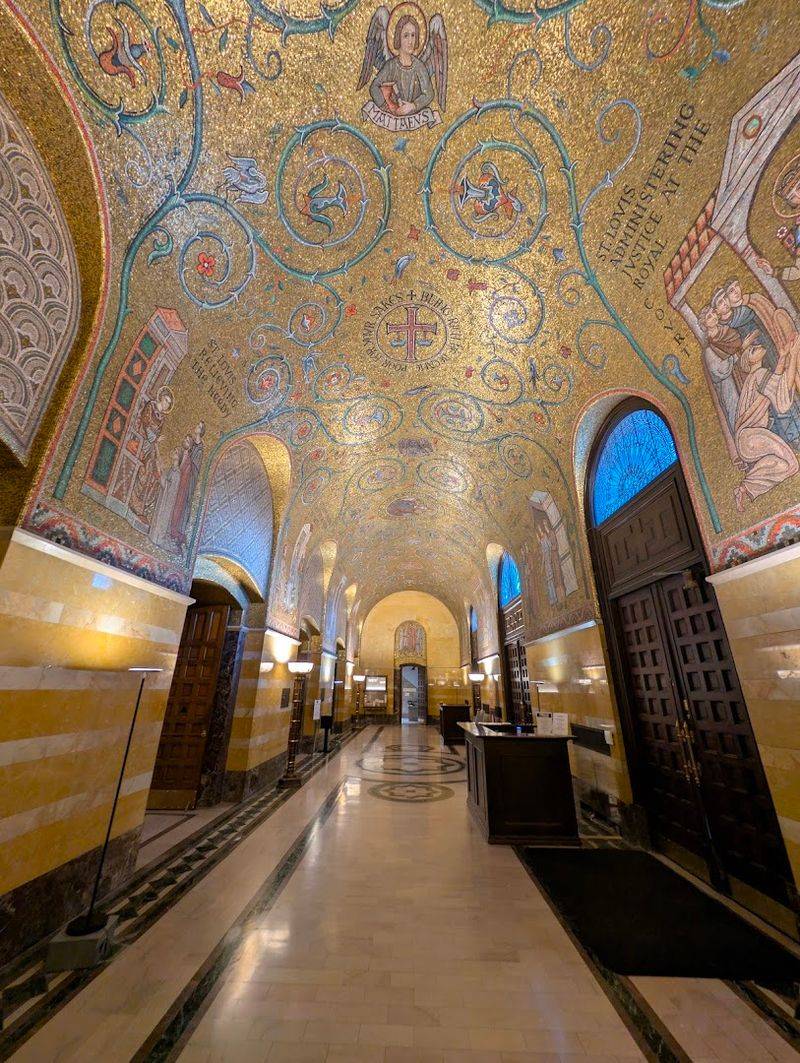
Most visitors focus entirely on the main floor of the cathedral, which is understandable given how much there is to absorb up there. But heading downstairs to the Mosaic Museum in the lower level adds a completely different dimension to the experience.
The museum walks you through the design and application process behind the mosaics, explaining how artists transferred small-scale drawings into full-scale cartoons, selected specific glass colors from thousands of options, and then cut and placed each tessera into the mortar by hand. Seeing the tools and sample panels up close makes the scale of the project feel even more staggering than it does from the pews above.
The museum is not always open during every visiting hour, so checking the cathedral’s website or calling ahead is a practical step worth taking. Those who do make it inside consistently describe it as one of the more memorable parts of the whole visit, a behind-the-scenes look at a process most people never think about but find immediately fascinating once it is explained clearly.
Guided Tours That Reveal Hidden Stories
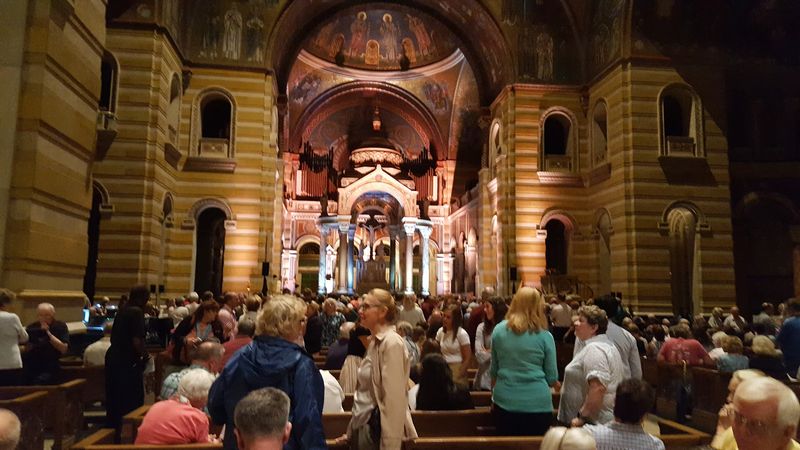
Wandering through the cathedral on your own is rewarding, but joining a guided tour changes the experience considerably. The tours run approximately 50 minutes and cover details that most independent visitors walk right past without noticing.
Guides point out the symbolic meaning embedded in specific mosaic panels, explain which artist created which section and why their styles differ, and share the history of how the building evolved from a construction site into the world-record holder it is today. One particularly compelling part of the tour involves the side chapels, where the Tiffany Studios mosaics have a noticeably different character from the main nave work, with softer color transitions and a more painterly quality.
Tours are welcoming to late arrivals, and the guides tend to be genuinely enthusiastic rather than mechanical in their delivery. Even people who are not particularly interested in religious art tend to find the architectural and historical angles compelling enough to keep them engaged for the full duration.
The stories behind individual panels are often surprising, personal, and rooted in real St. Louis history.
The Pipe Organ and Choir That Fill the Space
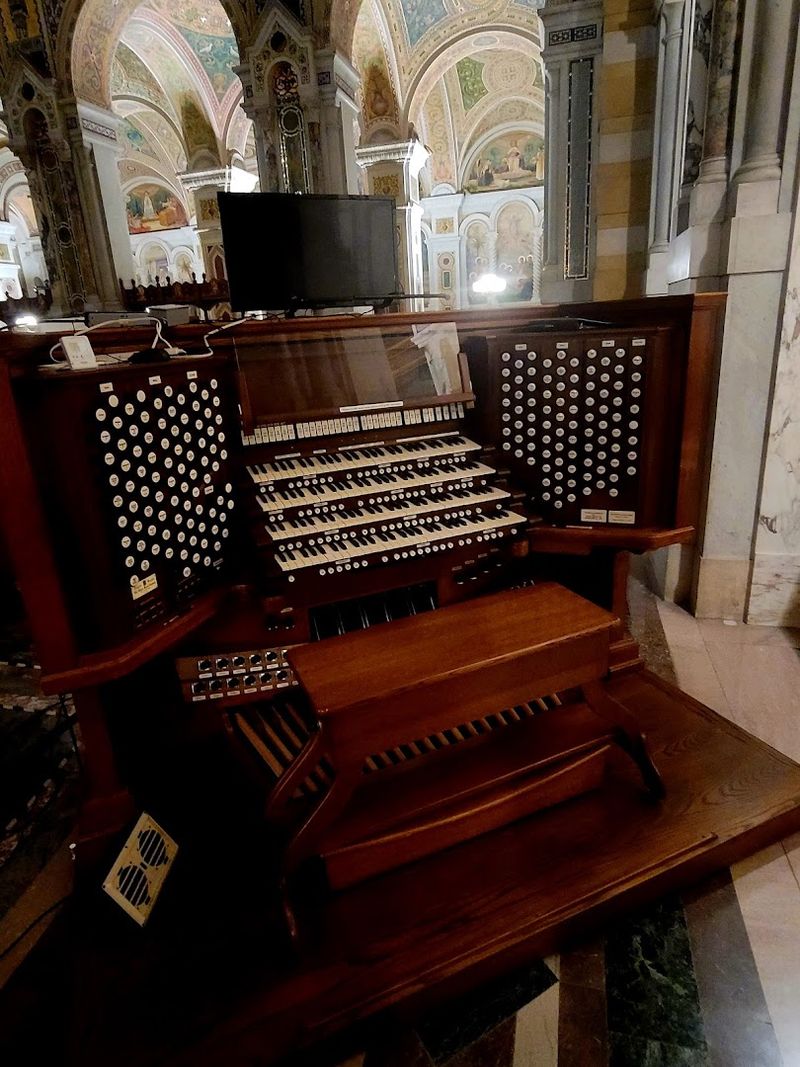
A building this large creates an acoustic environment that is unlike almost anything else in the city. The pipe organ at the Cathedral Basilica is a serious instrument, and when it plays during Mass, the sound does not come from one direction but seems to arrive from everywhere simultaneously.
The choir that performs here regularly draws visitors who come specifically for the music rather than the architecture, though most end up spending far longer staring at the walls than they originally planned. During Christmas Eve services, the combination of a youth choir, the pipe organ, and the candlelit mosaic interior creates an atmosphere that people describe as genuinely moving regardless of their personal beliefs.
The acoustics vary depending on where you sit in the nave, and some sections near the side aisles can create slight echoing that competes with the sound system during spoken portions of the liturgy. Sitting closer to the center of the nave on either the Mary or Joseph side of the church generally provides the clearest audio experience for both music and spoken word.
Practical Tips for Planning Your Visit
A few practical details can make the difference between a smooth visit and a frustrating one. The cathedral opens at 7 AM every day of the week and closes at 5 PM, which means an early morning arrival gives you the best chance of exploring quietly before the midday crowds arrive.
Parking behind the building is available but limited, particularly on Sundays and during holiday services. Street parking on Lindell Boulevard and the surrounding side streets fills quickly, so building in extra time before a scheduled Mass or tour is a genuinely useful habit.
Dress code expectations lean toward smart casual, especially if you plan to attend a service rather than just touring.
The cathedral is free to visit, though donations are welcomed and go toward the ongoing maintenance of the mosaics and building. Photography is generally permitted in the main nave, making it a favorite stop for anyone who enjoys architectural photography.
The gardens surrounding the exterior are peaceful and worth a slow walk before or after you explore the interior, rounding out a visit that is easy to stretch into a full half-day experience.
Share this story