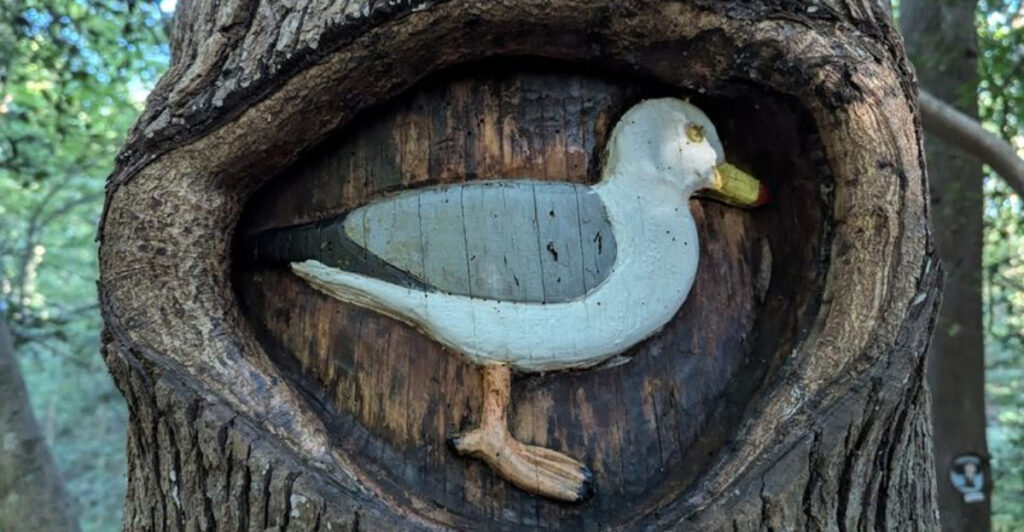
Somewhere in a quiet corner of Virginia, a forest has been quietly transformed into something that stops people in their tracks. Dozens of hand-carved sculptures peek out from tree trunks, hiding behind branches and tucked along winding paths through the woods.
It is the kind of place that makes kids drag their parents deeper into the trees and makes adults forget they were ever in a hurry. This is the Tom Rhodes Tree Carving Trail in Warsaw, Virginia, and once you know it exists, you will wonder how you went this long without visiting it.
The Enchanted Forest of Warsaw, Virginia
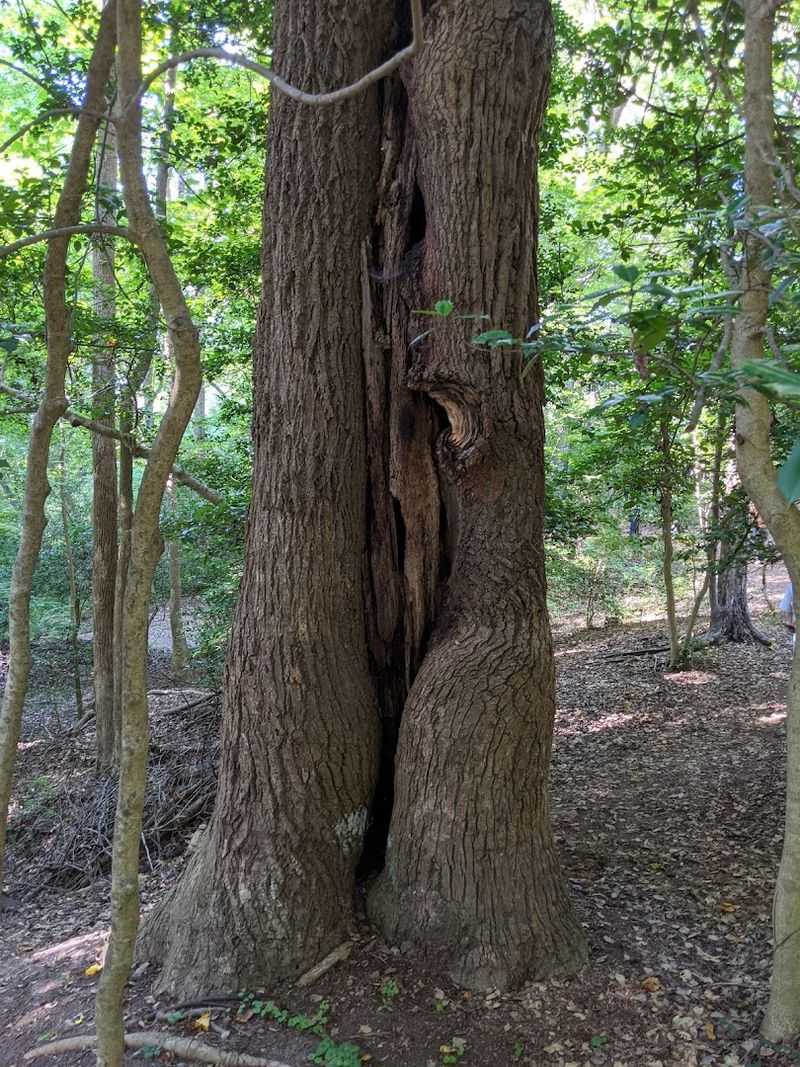
Right off Wallace Street in Warsaw, Virginia, at 211 Wallace St, Warsaw, a small forest holds one of the most surprising free attractions in the entire state. There are no big signs from the road, no ticket booth, and no crowds jostling for selfies.
What you find instead is a quiet, 12-acre patch of woods that feels like it belongs in a storybook.
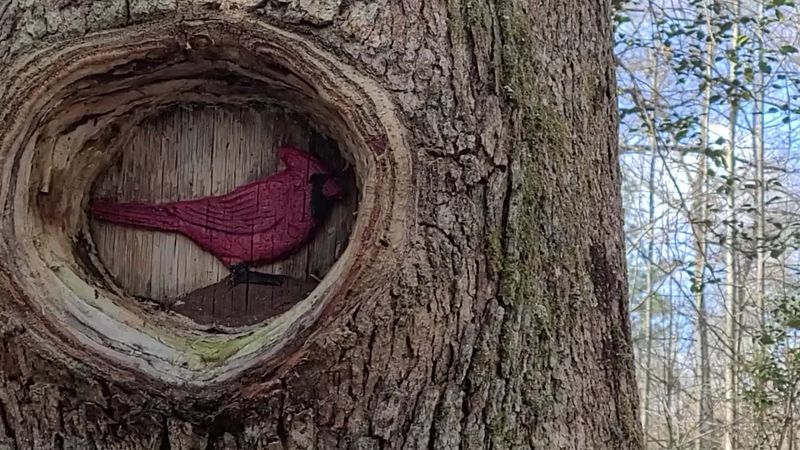
The trail system meanders through old-growth trees, and at first glance, it looks like any other woodland walk. Then you spot the first carving, painted and detailed, emerging right from the bark of a living tree.
From that moment forward, the whole forest changes. Your eyes start scanning every trunk, every root, every shadow between the branches.
The trail is open 24 hours a day, every day of the week, which means you can visit at sunrise, sunset, or any time the mood strikes.
The Man Behind the Carvings: Tom Rhodes
The trail did not appear overnight, and it did not come from a committee or a government grant. It came from one man with a chainsaw, a vision, and what people who have met him describe as an infectious love of bringing smiles to strangers.
Tom Rhodes has been carving into trees on his own property for close to two decades, slowly building up a collection that now exceeds 107 individual painted relief carvings. He has been known to show up while visitors are exploring, map in hand, ready to point out anything they might have missed.
Visitors who have crossed paths with him describe a genuinely warm, funny, and talented person who seems to get as much joy from watching others discover his work as he did from creating it. The trail is a direct reflection of his character, generous, playful, and full of surprises around every corner.
Over 107 Carvings and Still Growing
One of the most jaw-dropping facts about this trail is the sheer number of carvings waiting to be found. At last count, the collection had surpassed 107 individual works, and Tom Rhodes has not stopped adding to it.
The carvings are not clustered together in one easy-to-find row. They are scattered high and low, in front and behind, tucked into roots, perched near the canopy, and hidden in spots that reward the most curious eyes.
Some are large and immediately obvious. Others are small enough that you could walk right past them without noticing.
That variety is part of what makes the experience so addictive. Families have reported finding 71 carvings in a single visit and still coming back to track down the rest.
Every return trip has the potential to reveal something new, because the artist keeps adding fresh work to the collection on a regular basis.
The Scavenger Hunt That Hooks Every Age Group
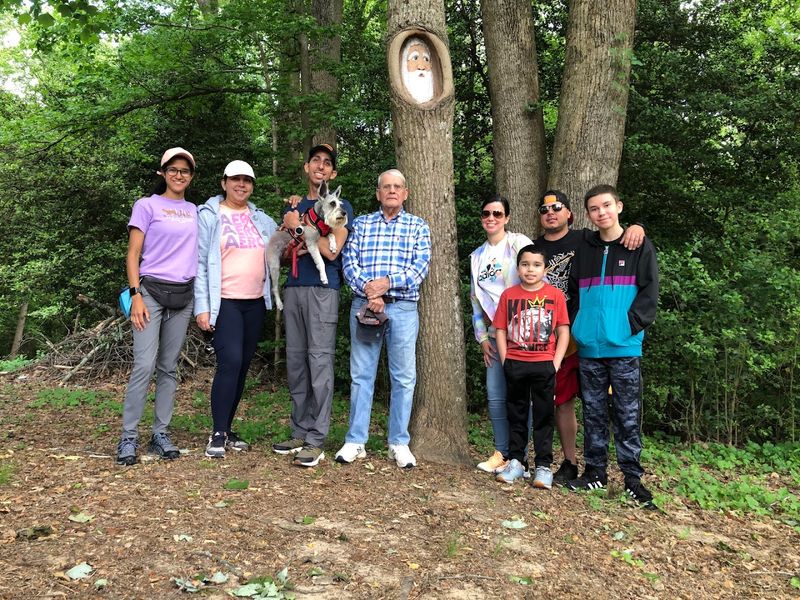
Most hiking trails offer scenery. This one offers a mission.
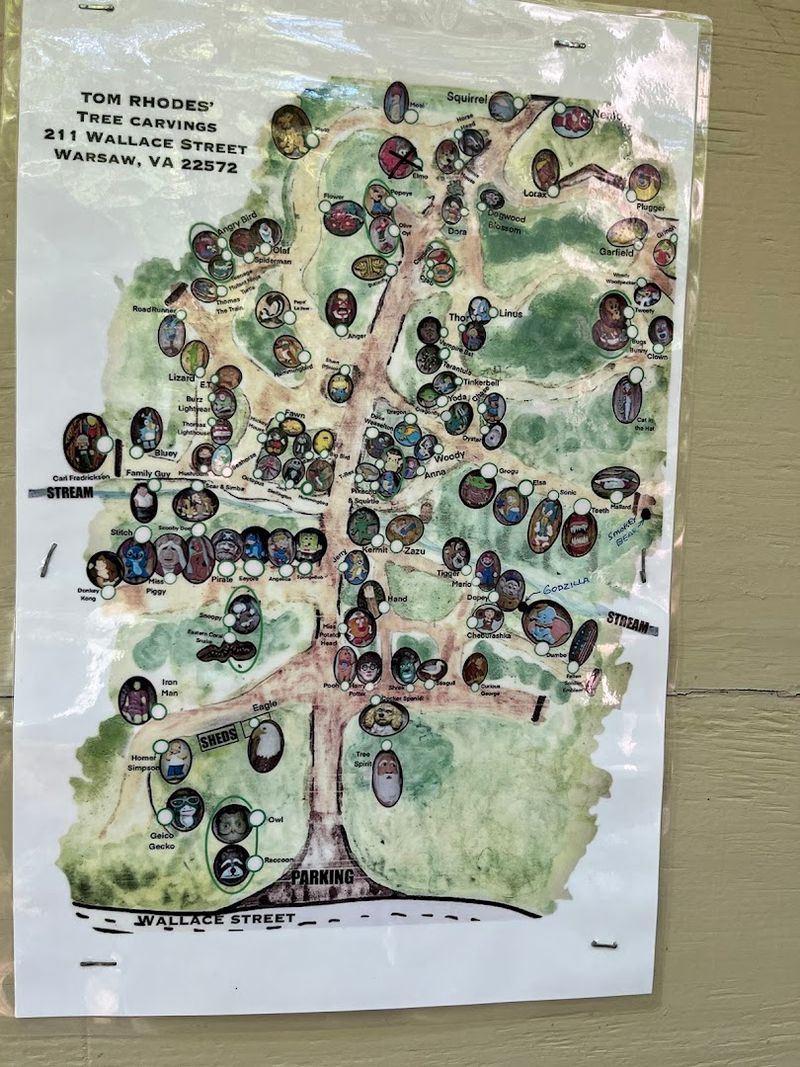
A laminated map and a printed checklist of all the carvings are available in a small box near the trailhead, and that simple detail completely changes the way visitors experience the woods.
Suddenly, a walk through the trees becomes a scavenger hunt. Kids race ahead, scanning bark and branches with total focus.
Adults slow down and start noticing details they would normally walk right past. Even teenagers, who are not always easy to impress, tend to get pulled into the hunt.
The checklist format means there is a satisfying sense of completion when you find each carving and tick it off. Families have reported spending anywhere from 45 minutes to well over an hour on the trail, depending on how determined they are to find every last one.
The hunt creates a shared goal that brings people together in a genuinely fun way.
What the Carvings Actually Look Like
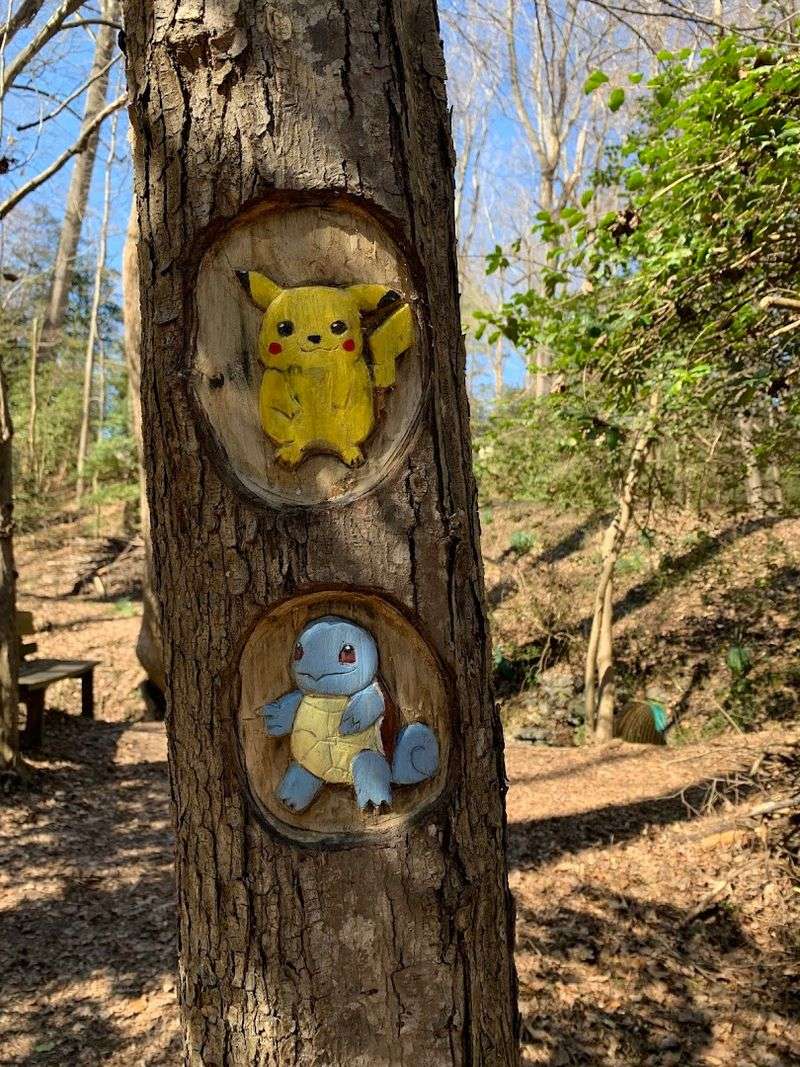
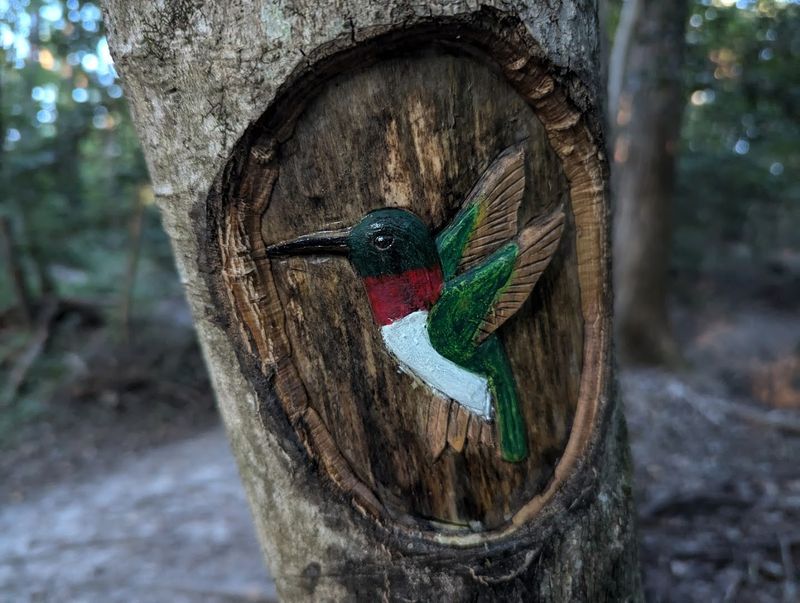
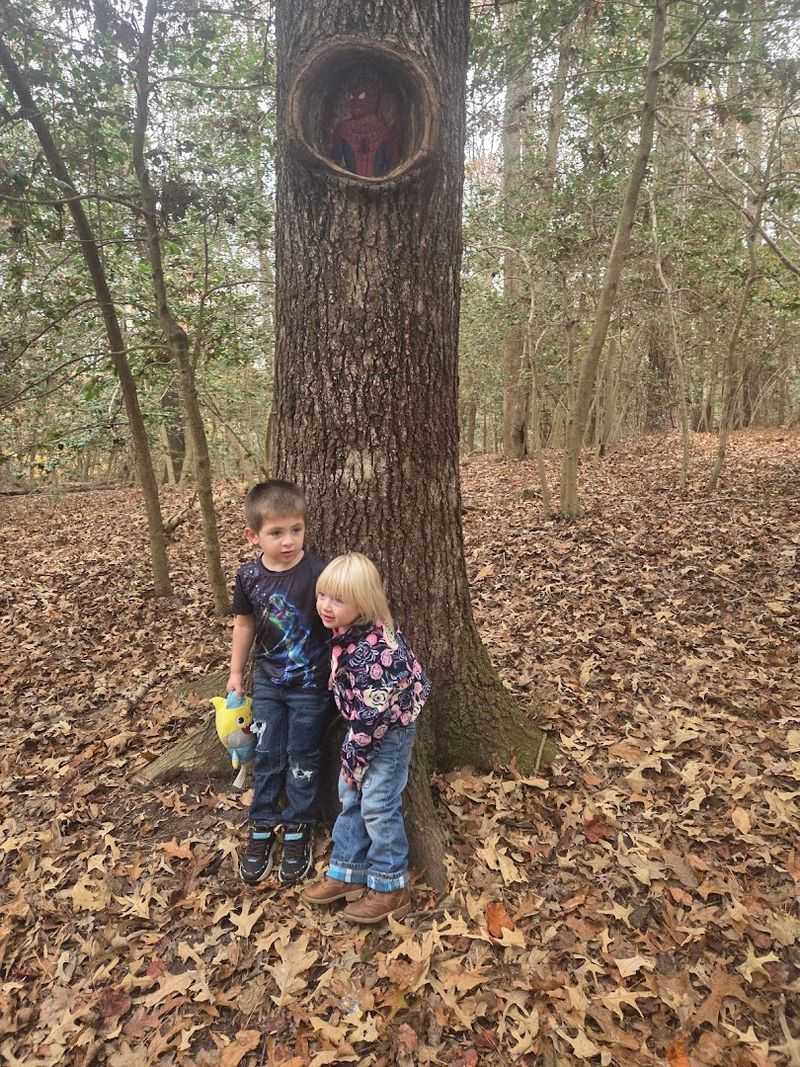
These are not rough scratches in bark. The carvings at Tom Rhodes Tree Carving Trail are detailed, painted relief works that emerge from the surface of the trees with real artistic skill.
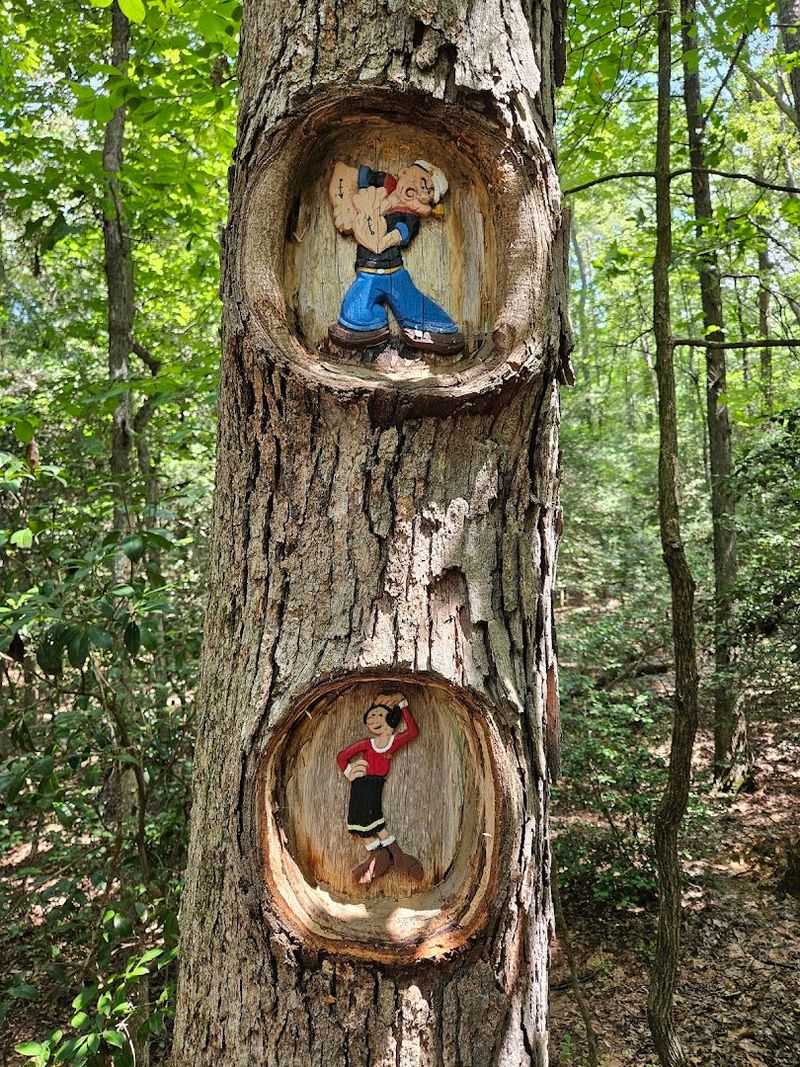
Animals, fantasy creatures, beloved fictional characters, and familiar cultural icons all appear throughout the forest.
The paint adds a brightness that makes the carvings pop against the natural wood tones, which is part of why they are so photogenic. Children tend to recognize many of the figures immediately and light up when they spot a familiar face on a tree trunk.
The variety of subjects means there is something for every taste. Nature lovers find wildlife carvings.
Kids spot characters from stories and cartoons. Adults recognize cultural references that bring back memories.
The overall effect is less like a gallery and more like a conversation between the artist and every person who walks through his forest.
The Trail System Itself: Easy and Family-Friendly
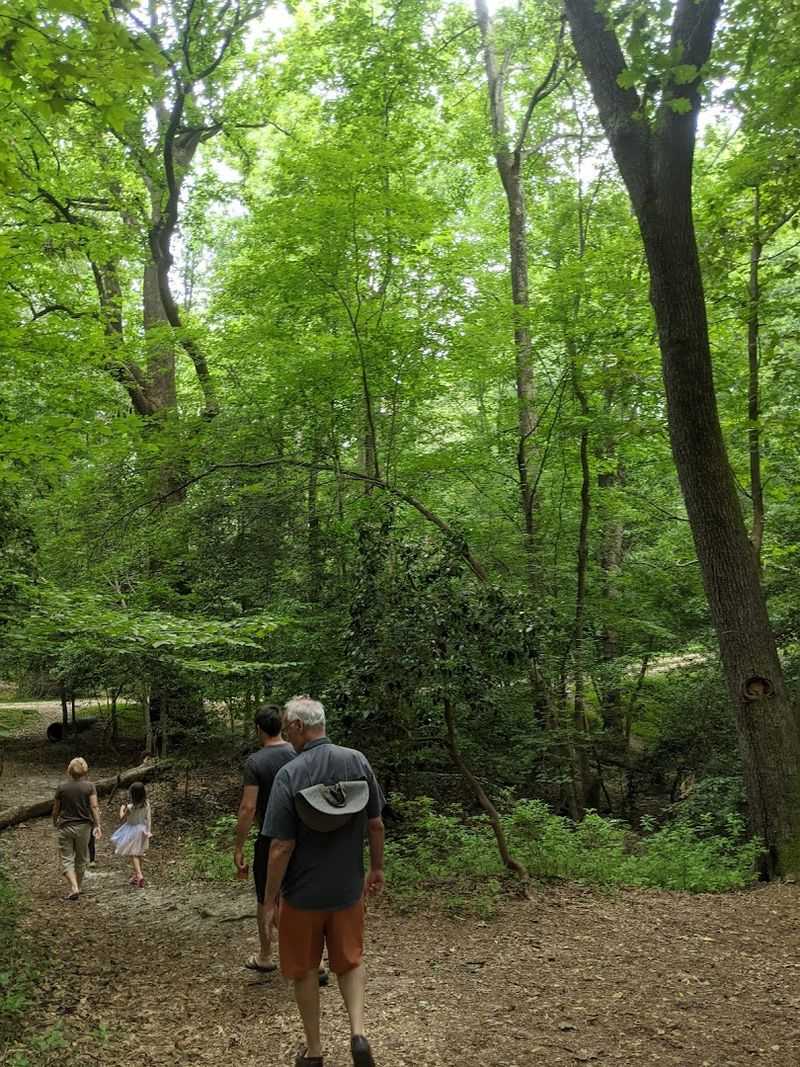
Not every great destination is accessible to every kind of visitor, but this one comes remarkably close. The trail system at Tom Rhodes Tree Carving Trail is described consistently as easy walking, with a looping network of paths that meander through the 12-acre property without any serious elevation or rough terrain.
Young children handle it without trouble. Grandparents keep up comfortably.
The paths are clearly marked with trail markers so visitors know when they have reached the end of a section, and the overall layout is intuitive enough that getting genuinely lost is not a real concern.
One practical tip worth remembering: the map and information board are located near the entrance, so take a photo of the map before heading in. A few visitors have mentioned finding the information area on the way out rather than the way in, which means they navigated mostly from instinct, and still found nearly everything.
Finding the Trailhead: What to Look For
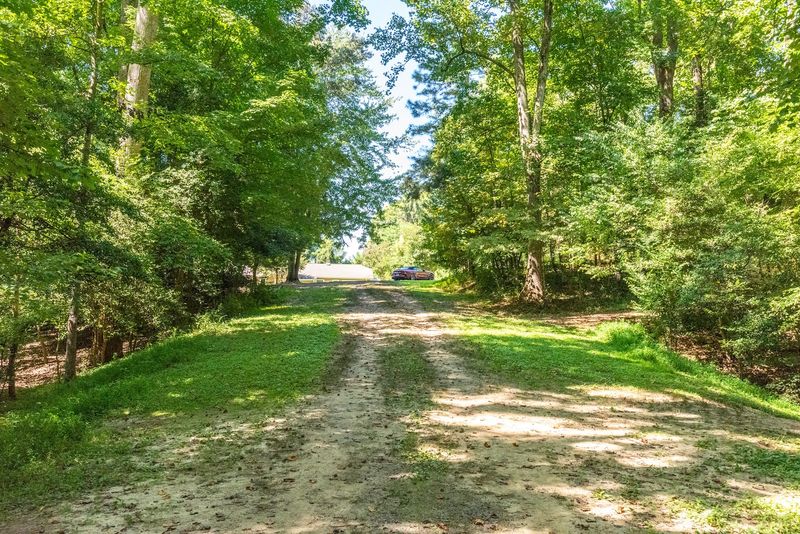
First-time visitors should know that Tom Rhodes Tree Carving Trail does not announce itself loudly from the street. The forest sits just before the first house on the left side of Wallace Street, and there are no large roadside signs marking the entrance from the road.
The key is to look for the sign that leads to the map board. Once you spot that, you are in the right place.
The map board shows the layout of the trail system, and a small box nearby holds the printed checklist of carvings to search for during your visit.
Taking a photo of the map before heading into the trees is a genuinely useful move, since the board is easy to miss on the way back out when excitement takes over. The trailhead area is simple and unpretentious, which fits the spirit of the whole experience perfectly.
A Free Attraction With Real Value
Free attractions sometimes come with a catch, a limited experience, a tiny space, or something that feels like it barely justifies the drive. Tom Rhodes Tree Carving Trail is not that kind of place.
There is no admission fee, no parking charge, and no donation box pressuring you at the exit.
What you get is a full 12 acres of forest, over 107 works of art, a self-guided scavenger hunt with a printed checklist, and the genuine possibility of meeting the artist himself. That combination would be impressive at any price point, and it is remarkable when you consider it costs nothing at all.
For families looking to fill an afternoon without spending a lot, this trail is hard to beat. For anyone who appreciates handmade art in unexpected places, it is the kind of discovery that makes you want to tell everyone you know about it right away.
The Old-Growth Forest Setting
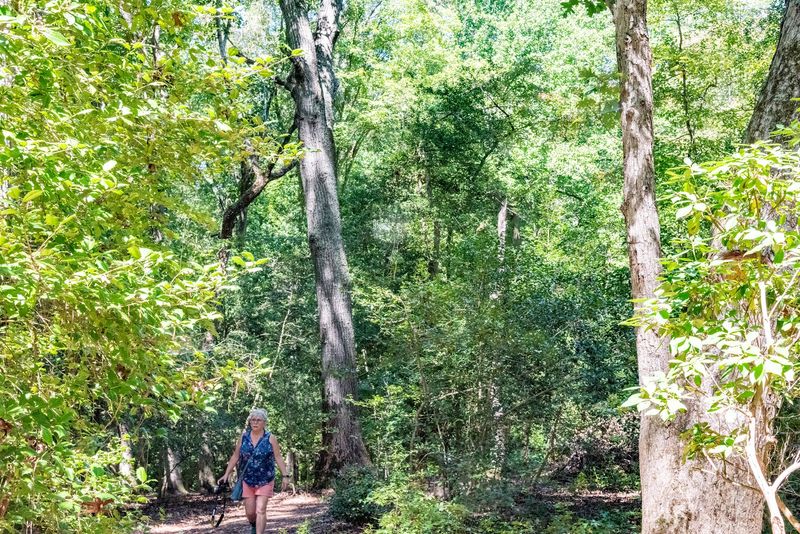
Beyond the carvings themselves, the forest has its own quiet appeal. The 12-acre property includes old-growth trees with thick trunks and a dense canopy that creates a cool, shaded environment even on warm days.
The sounds of the surrounding town fade quickly once you step onto the trail.
Nature enthusiasts have noted that the forest itself is worth the visit independent of the art. Birdsong, rustling leaves, and the soft crunch of the trail underfoot create a sensory experience that pairs beautifully with the surprise of discovering carved figures tucked into the bark.
For parents who enjoy turning outings into learning moments, the old-growth setting offers a natural conversation starter about trees, ecosystems, and forest ecology. The combination of art and nature in a single walk makes this trail unusually rich for what appears, from the street, to be a modest patch of woodland in a small Virginia town.
Visiting in Different Seasons
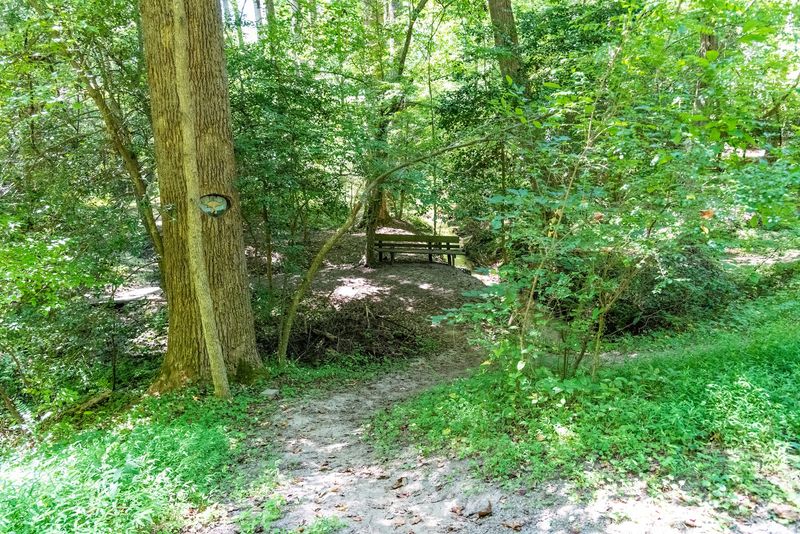
The trail is open around the clock, every single day of the year, which means there is genuinely no wrong time to visit. That said, the experience does shift depending on when you go, and each season brings something different to the forest.
Spring and summer visits come with full green canopy cover, which creates that enclosed, enchanted-forest feeling that families love. Autumn turns the whole setting into a warm wash of oranges and golds, making the painted carvings stand out even more vividly against the changing leaves.
Winter visits are quieter and more solitary, with bare branches revealing parts of the forest that stay hidden in warmer months. Cold weather also means fewer visitors, so the trail feels almost private.
One visitor made the trip on a cold day and still found all the carvings, proof that the experience holds up regardless of the temperature outside.
Warsaw, Virginia: Worth Exploring Beyond the Trail
The trail sits inside the town of Warsaw, Virginia, the county seat of Richmond County, and the town itself has more to offer than most first-time visitors expect. Warsaw has a small-town character that feels unhurried and genuine, with local shops and a farmers market that has drawn favorable attention from visitors passing through the area.
One reviewer mentioned stopping at the farmers market on the return drive toward Colonial Beach, calling both Warsaw and the market fabulous. That kind of spontaneous discovery is exactly what makes pairing the trail with a broader Warsaw visit such a satisfying idea.
The town is a manageable day trip from much of the Northern Neck region and from areas further north and west. Combining the tree carving trail with a walk through downtown Warsaw turns what could be a quick stop into a full and genuinely enjoyable outing for the whole group.
Tips for Getting the Most Out of Your Visit

A few small preparations can make the difference between a good visit and a great one. The most consistently useful tip is to photograph the map at the entrance before heading in.
The map shows the full layout of the looping trail system and helps orient visitors so they cover the whole area without backtracking unnecessarily.
Wear comfortable walking shoes, since the trails are easy but unpaved. Bring water if you plan to spend more than 45 minutes, especially in warm weather.
A phone with a charged battery is helpful for photos, and there will be many opportunities worth capturing.
Go with a spirit of patience and curiosity rather than speed. The carvings are placed at varying heights and angles, so rushing through means missing the ones tucked low near the roots or hidden in shadows.
The visitors who find all 107 tend to be the ones who slow down and really look.
Why This Trail Deserves a Spot on Your Virginia Bucket List
There are plenty of outdoor attractions in Virginia, but very few combine handmade folk art, a treasure hunt format, old-growth forest, and a completely free admission price all in one place. Tom Rhodes Tree Carving Trail does exactly that, and it does it with a warmth and personality that feels rare.
The trail earns its reputation not through marketing or viral social media moments but through the simple, genuine delight it creates in the people who walk it. Kids who arrive skeptical leave wanting to come back.
Adults who expected a quick stop end up lingering far longer than planned.
Whether you are driving through the Northern Neck, planning a family day trip, or just looking for something off the usual tourist path, this forest in Warsaw, Virginia, delivers an experience that is hard to find anywhere else and even harder to forget once you have been there.
Share this story