Nevada hides some of the most jaw-dropping ghost towns in the entire American West, and trust me, wandering through them feels like stepping straight into a time machine. Old saloons, crumbling stone walls, and rusted mining equipment tell stories that history books often skip right over.
I once drove three hours into the Nevada desert just to find a single abandoned building, and it was absolutely worth every mile. These ten ghost towns are the real deal, each one a dusty, sun-bleached snapshot of a wilder, rougher era.
Rhyolite
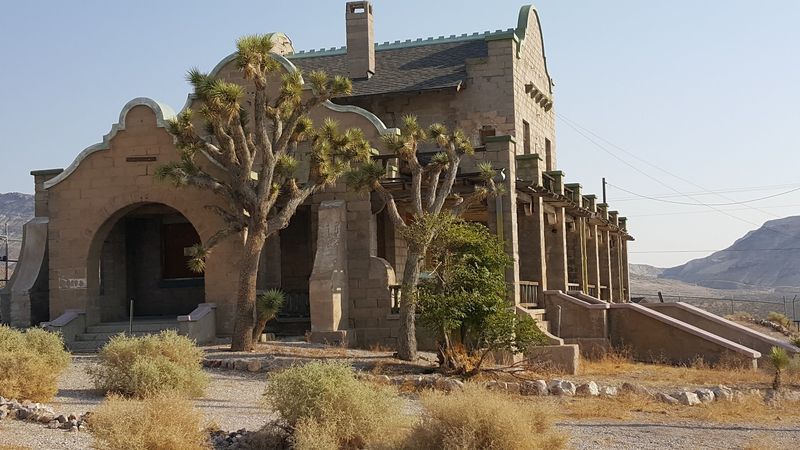
The concrete skeleton of Rhyolite’s old bank building stands like a stubborn old man who simply refused to leave. Founded in 1904 after a gold strike in the Bullfrog Hills, this town exploded to nearly 10,000 residents within just three years.
It had electric lights, running water, and even a stock exchange. Fancy stuff for the middle of the Mojave.
Then the gold ran out, and Rhyolite collapsed just as fast as it rose. By 1920, almost everyone had packed up and gone.
What remains today is genuinely spectacular: the three-story bank ruin, a train depot, and the famous Bottle House, built from 50,000 beer and medicine bottles.
Rhyolite sits near Death Valley National Park, making it an easy and rewarding detour. The open-air sculpture park nearby adds a surreal modern twist to the ancient ruins.
Bring water, wear sunscreen, and give yourself at least two hours to soak it all in properly.
Belmont
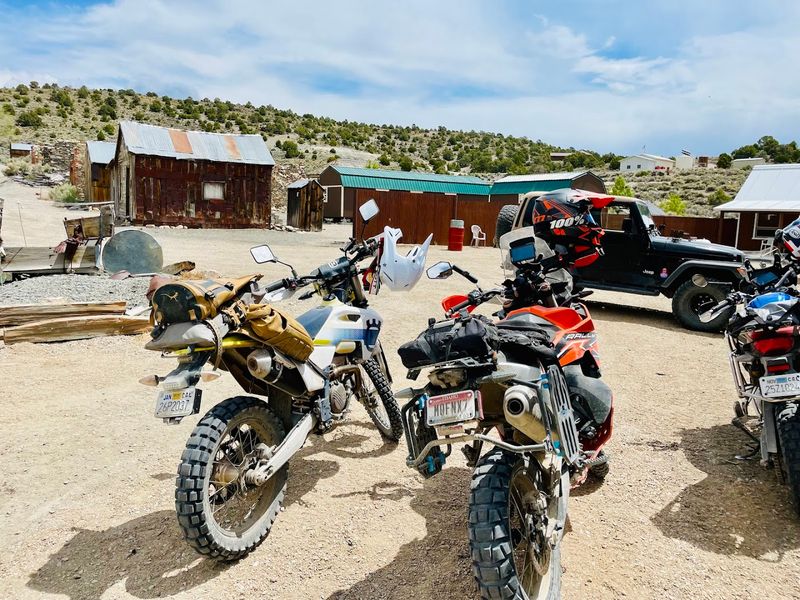
Belmont once served as the Nye County seat, which sounds pretty impressive until you realize the county seat later moved and left the whole town behind like a forgotten lunch box. Silver was discovered here in 1865, and the boom was real, fast, and loud.
At its peak, Belmont boasted a population of around 2,000 and featured a two-story brick courthouse that still partially stands today.
That courthouse is honestly the crown jewel of the site. Walking around its crumbling walls, you can still see the arched windows and carved stonework that once signaled civic pride.
There is something quietly moving about a building that tried so hard to be permanent.
Belmont is located about 45 miles north of Tonopah on a well-maintained dirt road. A few structures beyond the courthouse survive, including an old mill and several stone cabins.
Ghost town enthusiasts consistently rank Belmont among Nevada’s best-preserved and most atmospheric historic sites. Pack a picnic and linger a while.
Gold Point
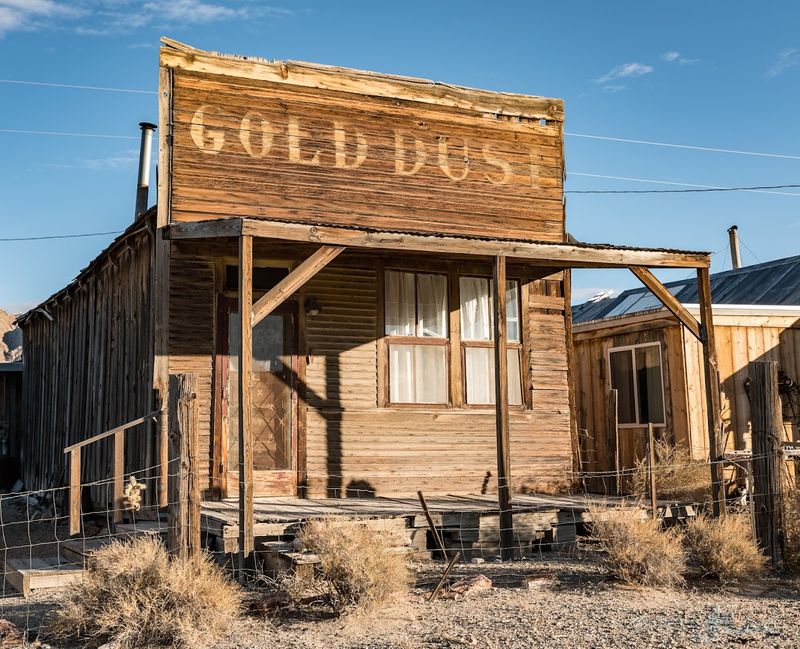
Gold Point might be the most lovably stubborn ghost town in all of Nevada. Unlike most abandoned mining camps, this one actually has a handful of full-time residents who maintain the buildings, collect vintage junk, and occasionally host overnight guests in restored cabins.
Yes, you can literally sleep in a ghost town here, which is either your dream vacation or your worst nightmare depending on your feelings about creaky floorboards.
The town originally boomed in the 1860s under the name Hornsilver before being renamed Gold Point in 1932. Mining sputtered on and off for decades, but the real gold these days is the atmosphere.
Rusted trucks, weathered storefronts, and hand-painted signs give the place an almost theatrical Wild West charm.
Located in Esmeralda County near the California border, Gold Point is off the beaten path but absolutely worth seeking out. The caretakers are friendly, knowledgeable, and genuinely passionate about preserving what remains.
Call ahead if you want to book a cabin stay.
Berlin
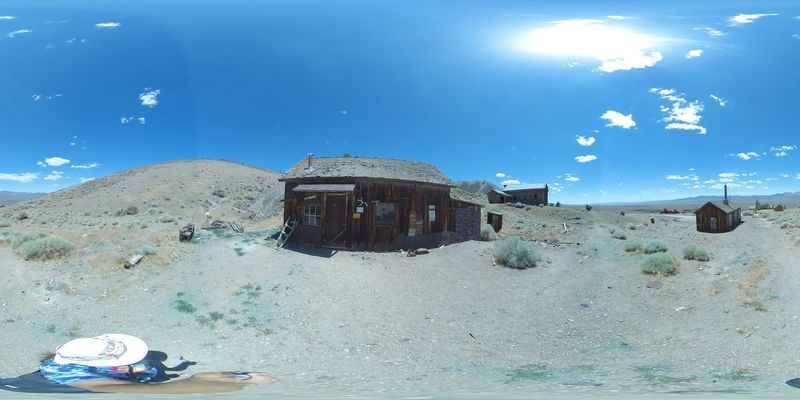
Sharing a name with Germany’s capital city is a bold move for a tiny Nevada mining camp, but Berlin pulls it off with surprising grace. Established in 1897, this silver and gold mining settlement is now preserved inside Berlin-Ichthyosaur State Park, which adds a wonderfully weird bonus attraction: fossilized ichthyosaur bones discovered right in the same park.
So yes, you can tour a ghost town AND see ancient marine reptile fossils in a single afternoon. Nevada really does commit to the whole overachiever thing sometimes.
The preserved structures at Berlin include the original mill, mine shaft buildings, and several wooden cabins that have been carefully stabilized by the Nevada Division of State Parks. Rangers lead guided tours during peak season, offering rich historical context that makes the visit far more rewarding than simply wandering alone.
The surrounding canyon scenery is stunning, especially in the golden light of late afternoon. Admission is affordable, and the campground nearby makes an excellent base for exploration.
Cherry Creek
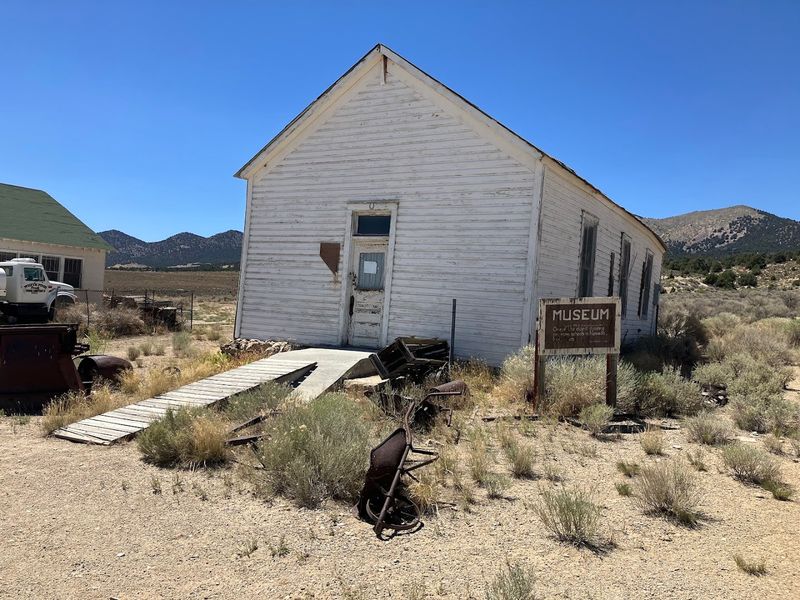
Cherry Creek sits quietly in White Pine County, far enough off the main highways that only the genuinely curious tend to find it. Silver and lead were mined here starting in the 1870s, and the town eventually grew to include hotels, saloons, and a school.
The usual frontier package deal, basically.
What makes Cherry Creek interesting today is its mix of standing structures. Some buildings are adobe, some are stone, and a few wooden frames still cling together with what feels like pure stubbornness.
The local cemetery, as is the case with most Nevada ghost towns, tells its own quiet and sobering story through hand-carved headstones and iron grave markers.
Getting to Cherry Creek requires driving through some genuinely remote Nevada backcountry, which honestly adds to the adventure. A high-clearance vehicle is recommended, especially after rain.
The town itself is unguarded and open to visitors year-round, though summer heat can be brutal. Early morning visits in spring are absolutely magical, with cool air and soft light hitting the ruins just right.
Bullfrog
Bullfrog and Rhyolite are basically the ghost town version of a buddy movie. Bullfrog came first, sparked by a gold discovery in August 1904 when a prospector named Shorty Harris found a greenish ore he described as looking like a bullfrog.
The name stuck, the rush began, and within months the nearby town of Rhyolite had completely overshadowed its scrappy little neighbor.
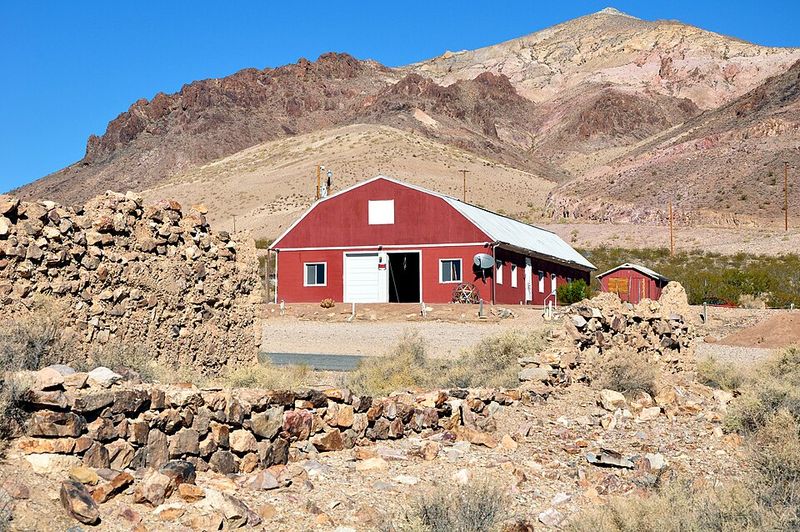
Today, Bullfrog is far less visible than Rhyolite, with only scattered foundations and debris fields marking where buildings once stood. But for serious history buffs, that raw, unpolished quality is exactly the appeal.
There is something fascinating about standing on bare ground knowing thousands of people once crowded these same dusty streets.
Bullfrog sits within the boundaries of the Amargosa Valley region, very close to the Nevada-California border. Visiting both Bullfrog and Rhyolite together on the same day is easy and highly recommended.
The contrast between Rhyolite’s dramatic standing ruins and Bullfrog’s ghostly foundations makes for a rich and thought-provoking historical experience overall.
Metropolis
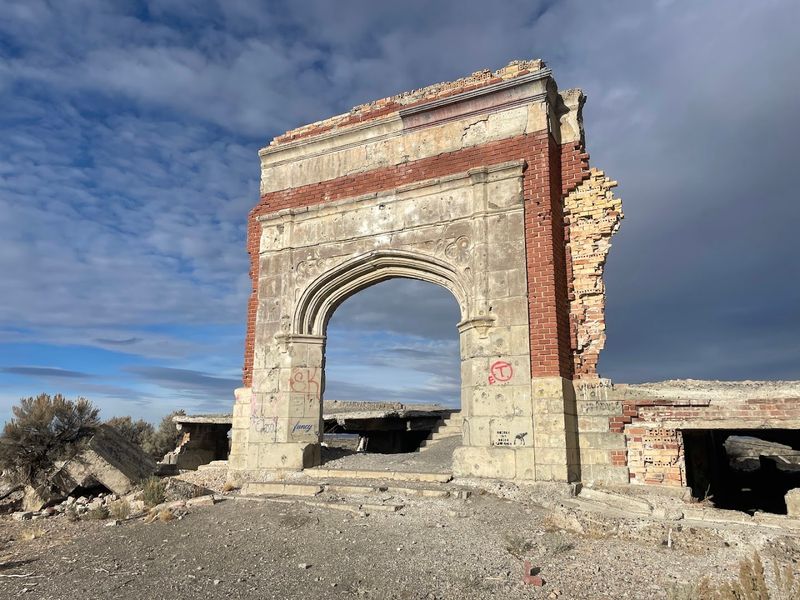
The name Metropolis is doing a LOT of heavy lifting here. Founded in 1910 by a land development company with enormous ambitions, this town was supposed to become a thriving agricultural hub powered by irrigation from the Bishop Creek reservoir.
Brochures were printed, land was sold, settlers arrived, and for a moment, the dream felt real.
Then the water rights got tied up in legal battles, a plague of jackrabbits destroyed crops, and an earthquake damaged the irrigation system. The settlers left, the crops died, and Metropolis became one of Nevada’s most ironic place names.
I find this kind of spectacular failure oddly compelling.
What survives today includes the shell of the Lincoln School and the crumbling walls of the Pacific Reclamation Company hotel, both listed on the National Register of Historic Places. The site is located near Wells in Elko County and is freely accessible.
The flat, open landscape surrounding the ruins gives the whole place a haunting, end-of-the-world atmosphere that photographers absolutely love.
Unionville
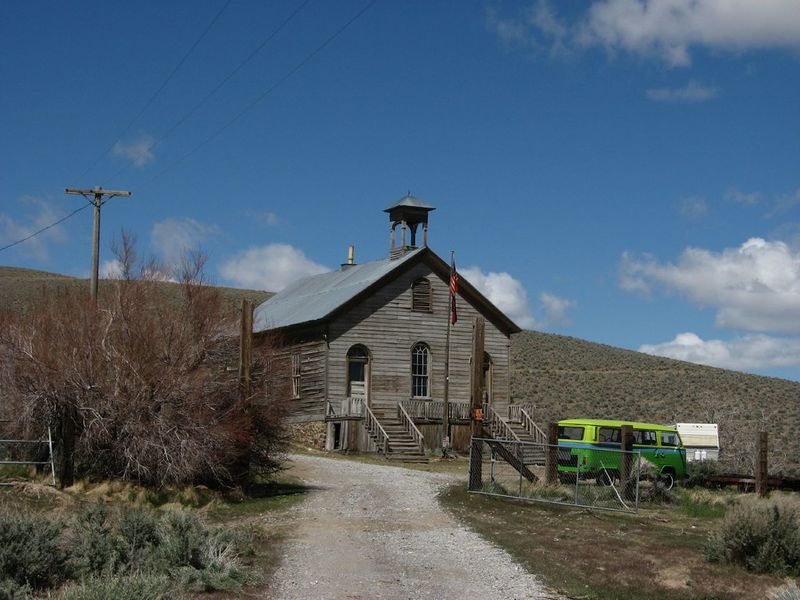
Mark Twain once visited Unionville and wrote about it in his classic memoir Roughing It, which means this ghost town has genuine literary credentials most others can only dream about. Silver was discovered in Buena Vista Canyon in 1861, and the resulting rush brought hundreds of hopeful miners scrambling into the narrow valley.
Twain arrived in 1862, tried his hand at mining, failed spectacularly, and then became a writer instead. Not a bad consolation prize.
The canyon setting is genuinely beautiful, with a seasonal creek running through it and cottonwood trees providing shade that feels almost miraculous in the Nevada desert. Several stone ruins remain visible along the canyon walls, and a few private residences still occupy the valley, meaning Unionville is technically not fully abandoned.
Located in Pershing County, Unionville is accessible via a graded dirt road from Lovelock. The drive through the canyon is scenic and relaxing.
Historians, literature fans, and outdoor enthusiasts all find something to love here, which makes it one of the most well-rounded ghost town visits in the entire state.
Aurora, Nevada/California border
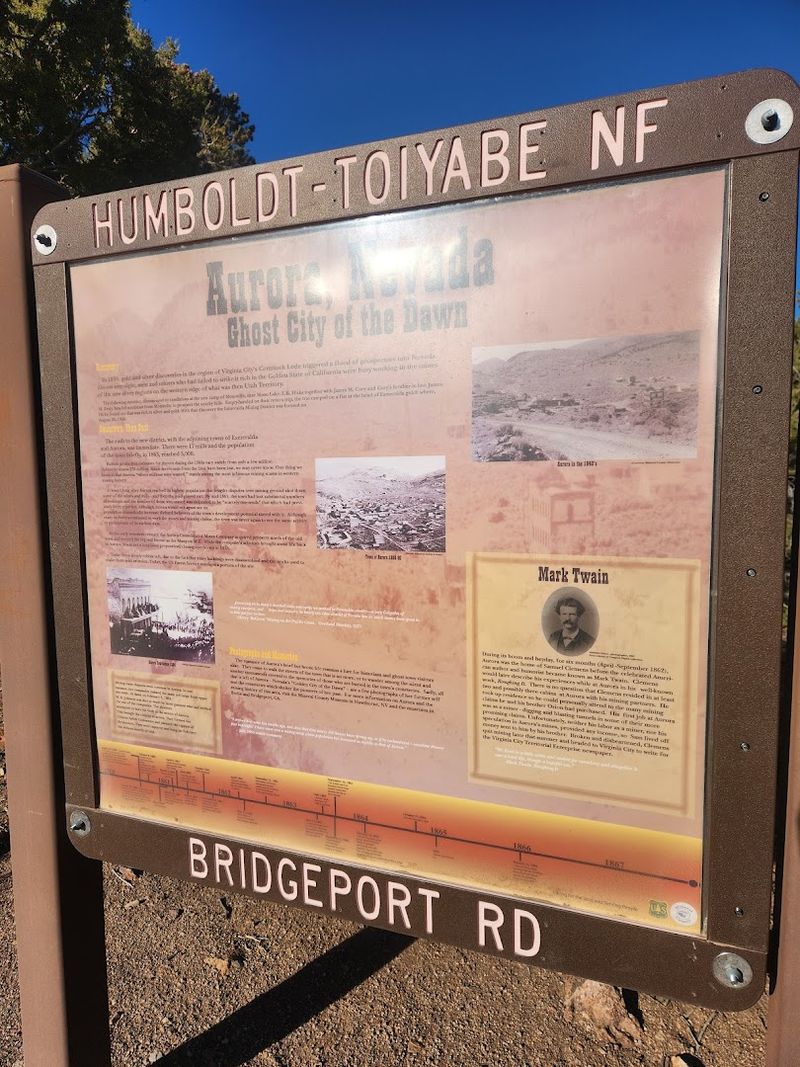
Aurora has the distinction of being so geographically confused that both Nevada and California once claimed it as their own county seat simultaneously. When the official survey finally settled the border question in 1863, Aurora landed firmly in Nevada, leaving California to sulk quietly.
The town had a rough, rowdy reputation even by Wild West standards, with Mark Twain reportedly considering a visit but wisely choosing to stay away.
Gold and silver mining drove Aurora to a peak population of around 10,000 in the early 1860s. It declined sharply by 1869 as the ore played out, and most of the brick buildings were later dismantled and hauled away for use in Hawthorne.
What remains today is mostly scattered foundations, rubble, and a few resilient walls poking up through the sagebrush.
Aurora sits at about 7,400 feet elevation in Mineral County, which means summer visits are pleasantly cool compared to the scorching desert towns further south. A four-wheel-drive vehicle is strongly recommended for the access road.
The remote setting rewards patient, adventurous visitors with real solitude and genuine historical atmosphere.
Candelaria
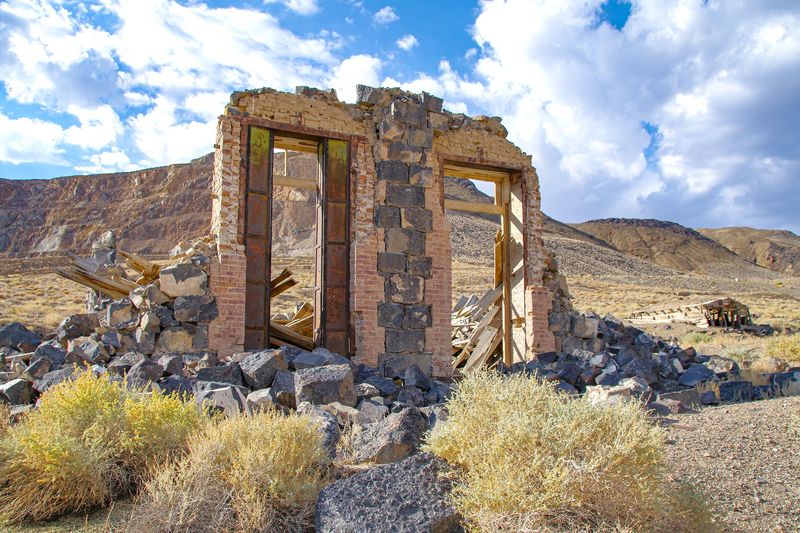
Candelaria sounds romantic, like something out of a telenovela, but the reality was considerably grittier. This silver mining camp in Mineral County boomed in the 1870s and 1880s, producing millions of dollars worth of ore and supporting a surprisingly lively community complete with saloons, a newspaper, and even a narrow-gauge railroad.
The Northern Belle mine alone generated enormous wealth before the veins ran thin.
Water was always a brutal problem at Candelaria. Supplies had to be hauled in at enormous expense, and the constant scarcity made daily life genuinely tough.
When the silver finally gave out in the 1890s, residents wasted no time leaving for greener, wetter pastures.
Today, Candelaria is one of Nevada’s more remote and undervisited ghost towns, which makes it feel like a genuine discovery for those who make the effort. Adobe ruins, stone walls, and old mine workings are scattered across a dry hillside with sweeping desert views in every direction.
A high-clearance vehicle is essential, and bringing your own water is not optional. It is absolutely worth the trip.
Share this story