Across the globe, humans have built enormous statues that rise above cities, mountains, and rivers, leaving visitors speechless. These incredible structures are more than just art – they represent faith, history, national pride, and human creativity at its finest.
From a towering iron leader in India to a massive bronze Buddha in China, each statue tells a powerful story. Get ready to explore 15 of the most awe-inspiring giant statues on Earth.
1. Statue of Unity – Gujarat, India
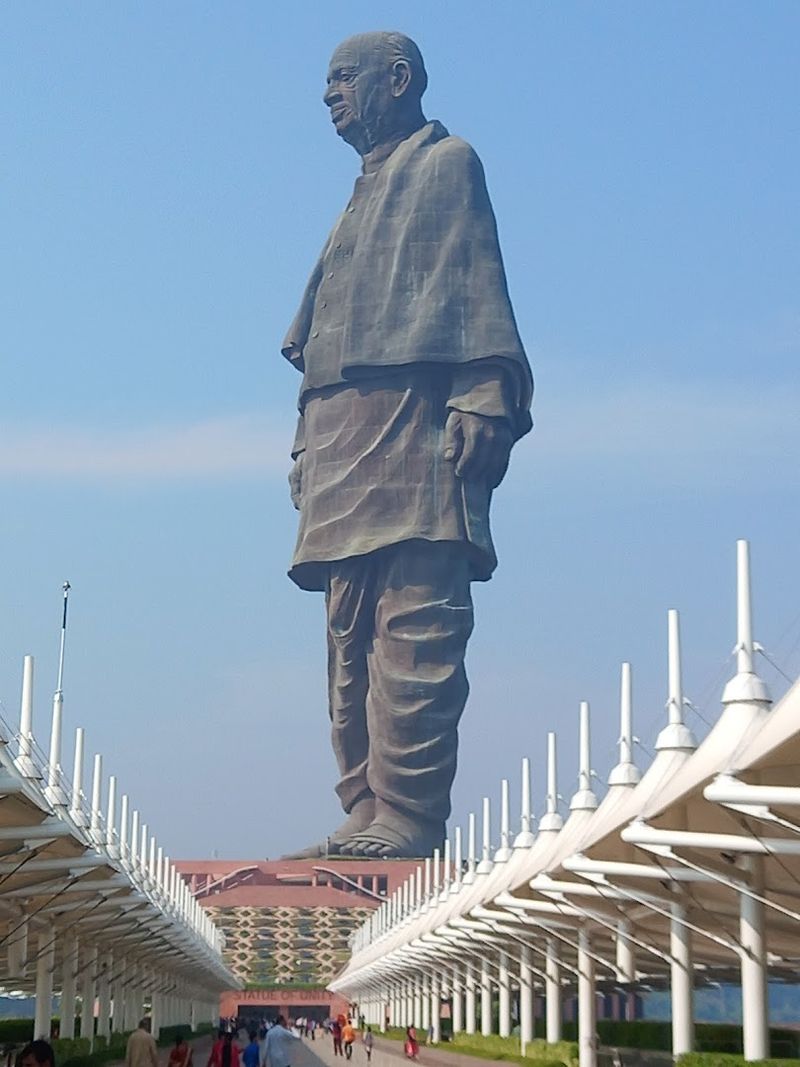
Standing at a jaw-dropping 182 meters, the Statue of Unity in Gujarat, India, holds the title of the tallest statue in the world. Completed in 2018, it honors Sardar Vallabhbhai Patel, the leader who helped unite India after independence.
The sheer scale of this monument is almost impossible to grasp until you stand at its base and look up.
Engineers used about 210,000 cubic meters of cement and 18,500 tonnes of reinforced steel to build it. A viewing gallery inside the statue’s chest area, located at 153 meters, offers visitors a breathtaking panoramic view of the surrounding valley and reservoir.
The project took roughly 42 months to complete, with over 3,000 workers contributing daily. Tourists from around the world travel to Gujarat just to witness this engineering marvel firsthand.
It truly represents the ambition and spirit of modern India.
2. Spring Temple Buddha – Henan, China
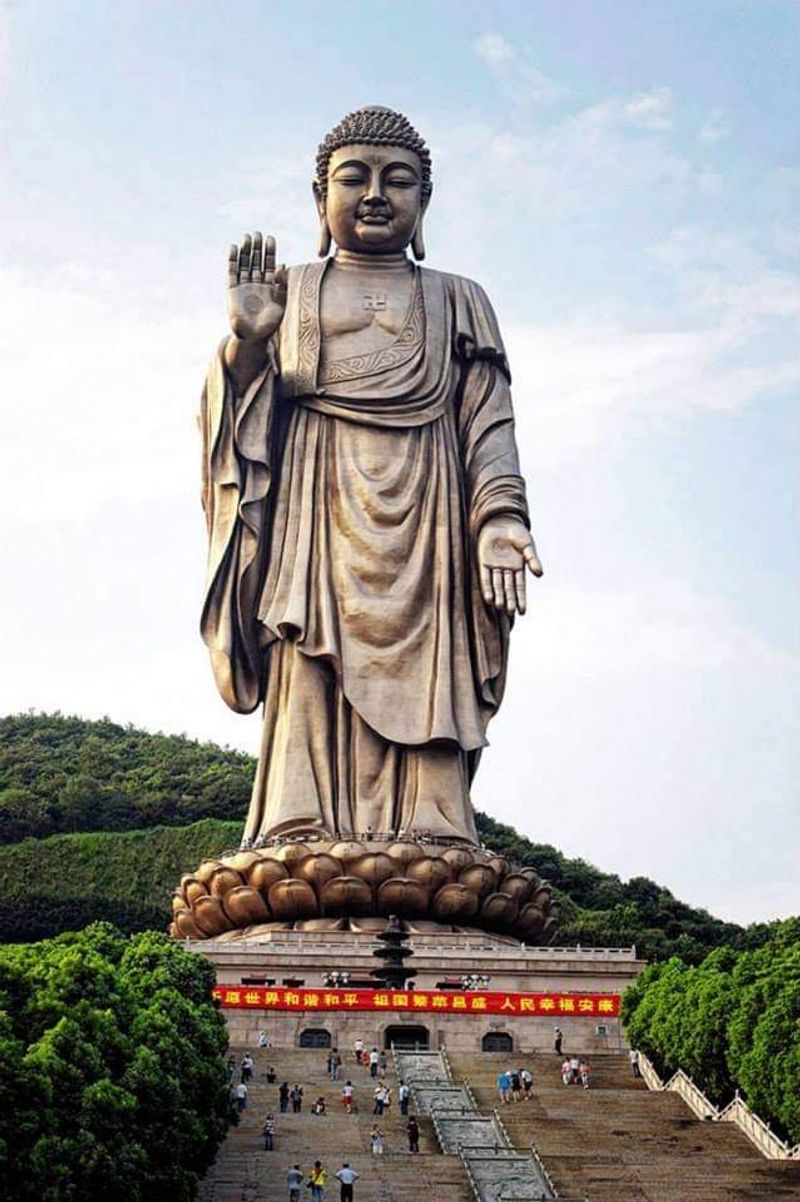
Before the Statue of Unity was completed, the Spring Temple Buddha in Henan, China, held the record as the world’s tallest statue. Rising 128 meters tall, this golden bronze figure of Vairocana Buddha is an extraordinary sight that blends spiritual devotion with monumental artistry.
Visitors often describe the experience of seeing it for the first time as genuinely overwhelming.
Built between 1997 and 2008, the statue sits on a 20-meter lotus throne, which itself rests on a 25-meter Buddhist temple. The total height of the entire structure, including the base, reaches around 208 meters.
Workers spent over a decade crafting this masterpiece using copper sheets welded together with precision.
The surrounding area features gardens, prayer halls, and scenic walkways that make the visit feel like a peaceful journey. China’s dedication to preserving Buddhist culture shines clearly through this remarkable landmark.
3. Laykyun Sekkya Buddha – Myanmar
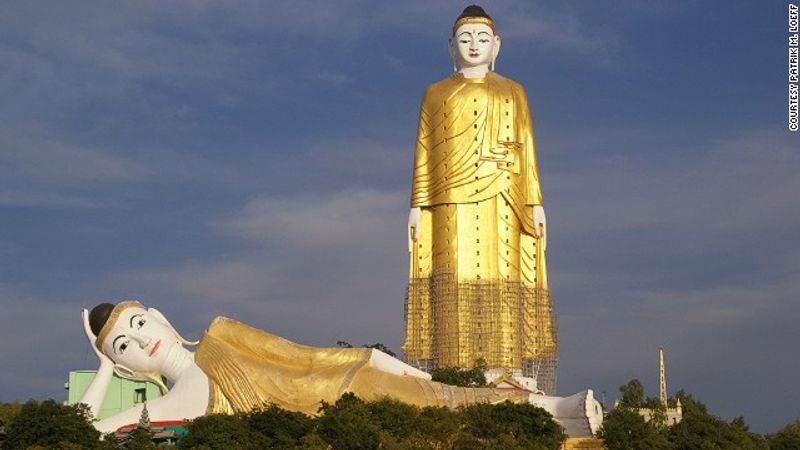
Myanmar is home to some of the most spiritually rich landscapes in Southeast Asia, and the Laykyun Sekkya Buddha stands as one of its most powerful symbols. At 116 meters tall, this standing Buddha figure is the third tallest statue in the world and a deeply sacred site for the country’s Buddhist community.
Construction began in 1996 and was completed in 2008 after years of devoted effort.
The statue stands on Khatakan Taung hill, giving it an even more commanding presence across the flat surrounding plains. At its base sits a massive reclining Buddha figure, which was actually completed before the standing statue and stretches an impressive 95 meters in length.
Together, the two statues form one of Myanmar’s most visited pilgrimage destinations. The site also includes meditation halls and smaller pagodas, creating a calm and reflective atmosphere that draws both worshippers and curious travelers alike.
4. Ushiku Daibutsu – Ibaraki, Japan
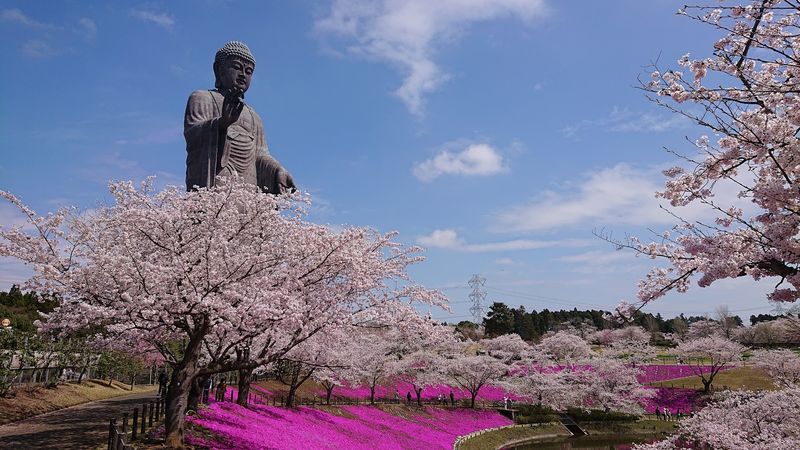
There is something quietly magical about the Ushiku Daibutsu in Ibaraki, Japan. Standing 120 meters tall, including its 10-meter lotus base and 10-meter base platform, this bronze Amida Buddha was once recognized as the world’s tallest bronze statue.
The figure radiates a sense of calm that feels almost impossible given its enormous size.
Completed in 1993, the statue was built to commemorate the 700th anniversary of the birth of Shinran Shonin, the founder of Jodo Shinshu Buddhism. Visitors can actually enter the statue through doors at its base and ride an elevator up to an observation deck located inside the chest area, offering views of the surrounding flower park.
The grounds around the statue feature a beautiful garden filled with thousands of blooming flowers in spring. Few places in Japan combine spiritual reverence and natural beauty quite as gracefully as this serene and towering landmark.
5. The Motherland Calls – Volgograd, Russia
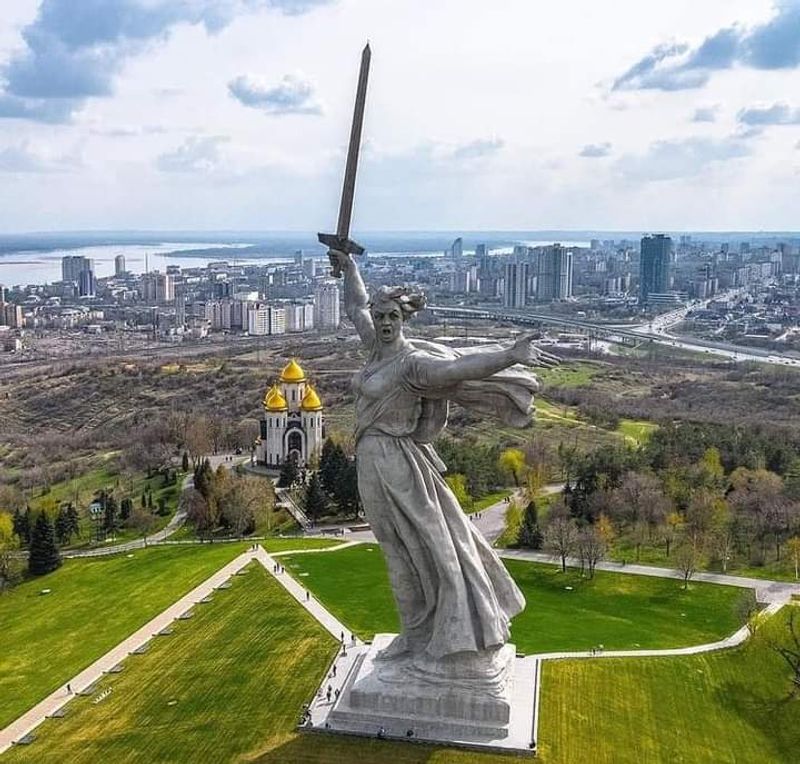
Few statues carry as much emotional weight as The Motherland Calls in Volgograd, Russia. Standing 85 meters tall and raising a massive sword toward the sky, this fierce female figure was built to honor the Soviet soldiers who died during the Battle of Stalingrad in World War II.
When it was completed in 1967, it was the tallest statue in the world.
Sculptor Yevgeny Vuchetich designed the figure to appear as if she is calling her children to defend the motherland. The statue stands on top of Mamayev Kurgan, a hill where some of the bloodiest fighting of the war took place.
Beneath the hill, thousands of soldiers remain buried.
Visiting this site is a deeply moving experience. The combination of the dramatic pose, the haunting history, and the sweeping views of the Volga River make this one of Russia’s most emotionally powerful and unforgettable monuments.
6. Christ the Redeemer – Rio de Janeiro, Brazil
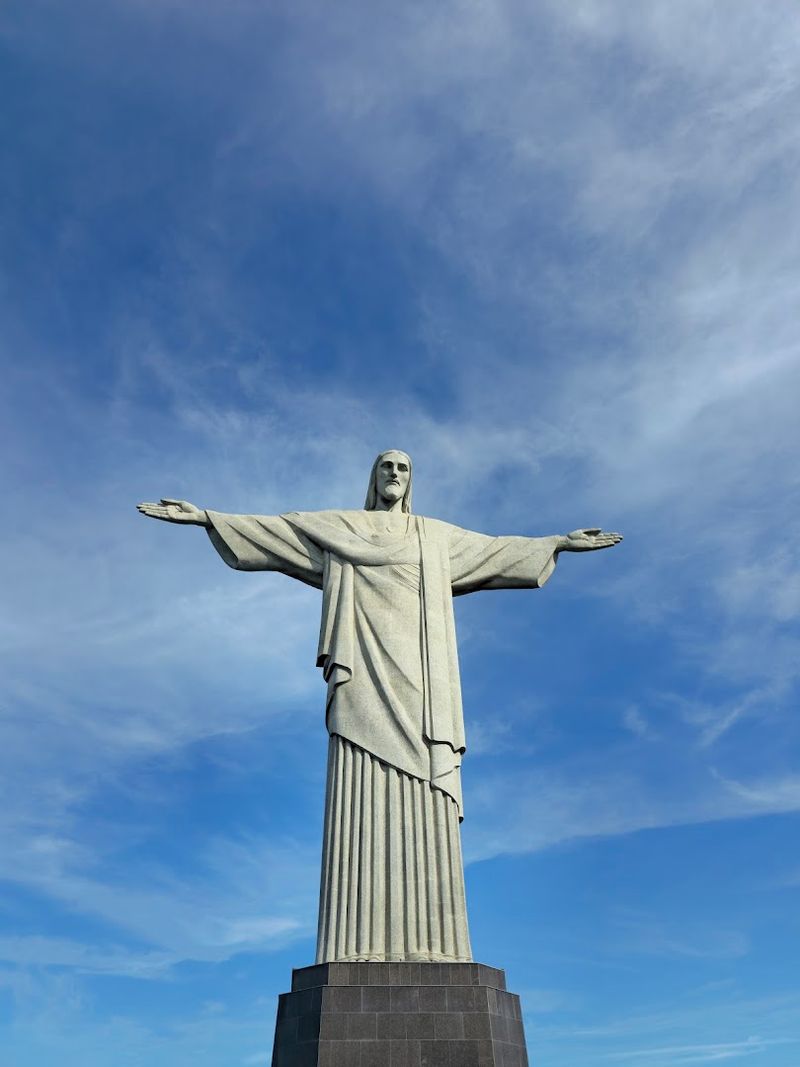
Perhaps no statue in the world is more instantly recognizable than Christ the Redeemer perched atop Corcovado Mountain in Rio de Janeiro. Standing 30 meters tall with arms stretched wide as if embracing the entire city below, this iconic figure has become the face of Brazil itself.
Completed in 1931, it remains one of the most visited tourist sites on the planet.
The statue is made from reinforced concrete and covered with thousands of small triangular tiles of soapstone. Brazilian engineer Heitor da Silva Costa designed the structure, while French sculptor Paul Landowski created the head and hands.
It was named one of the New Seven Wonders of the World in 2007.
Getting to the statue involves a scenic train ride through the Tijuca Forest, which adds to the sense of adventure. On clear days, the views from the summit stretch across the entire city and coastline in a stunning display.
7. Great Buddha of Thailand – Ang Thong, Thailand
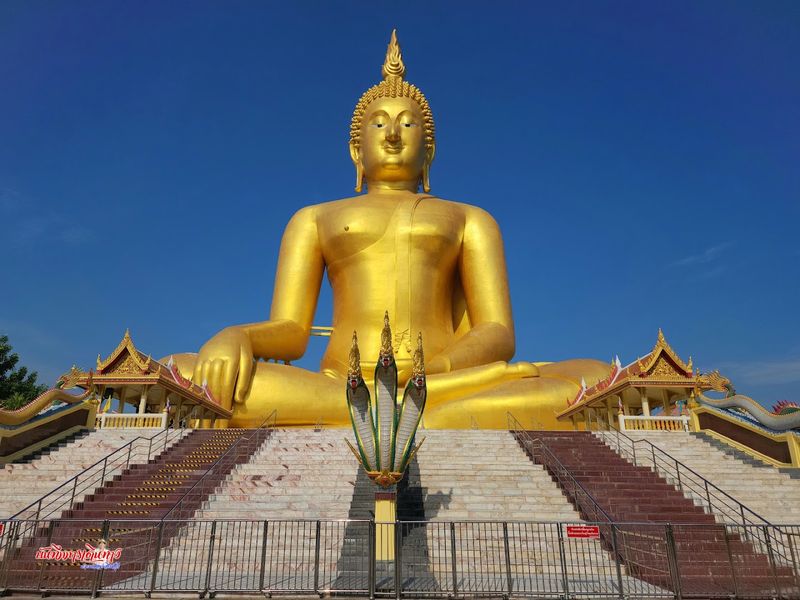
Gleaming white against the tropical Thai sky, the Great Buddha of Thailand in Ang Thong is one of Southeast Asia’s most striking landmarks. This seated Buddha figure, known locally as Luangpho Yai, stands 92 meters tall and is covered in white paint with golden accents that catch the sunlight beautifully.
Construction began in 1990 and continued for many years, funded by donations from Thai citizens.
The statue sits within the Wat Muang temple complex, one of the most important Buddhist temples in the Ang Thong province. Visitors can climb stairs inside the statue to reach a viewing area, though the real reward is simply standing at the base and absorbing the sheer grandeur of the structure above.
The surrounding temple grounds are filled with colorful murals, smaller Buddha figures, and peaceful garden areas. For travelers exploring central Thailand, this statue offers a deeply spiritual and visually unforgettable experience that goes far beyond ordinary sightseeing.
8. Sendai Daikannon – Sendai, Japan
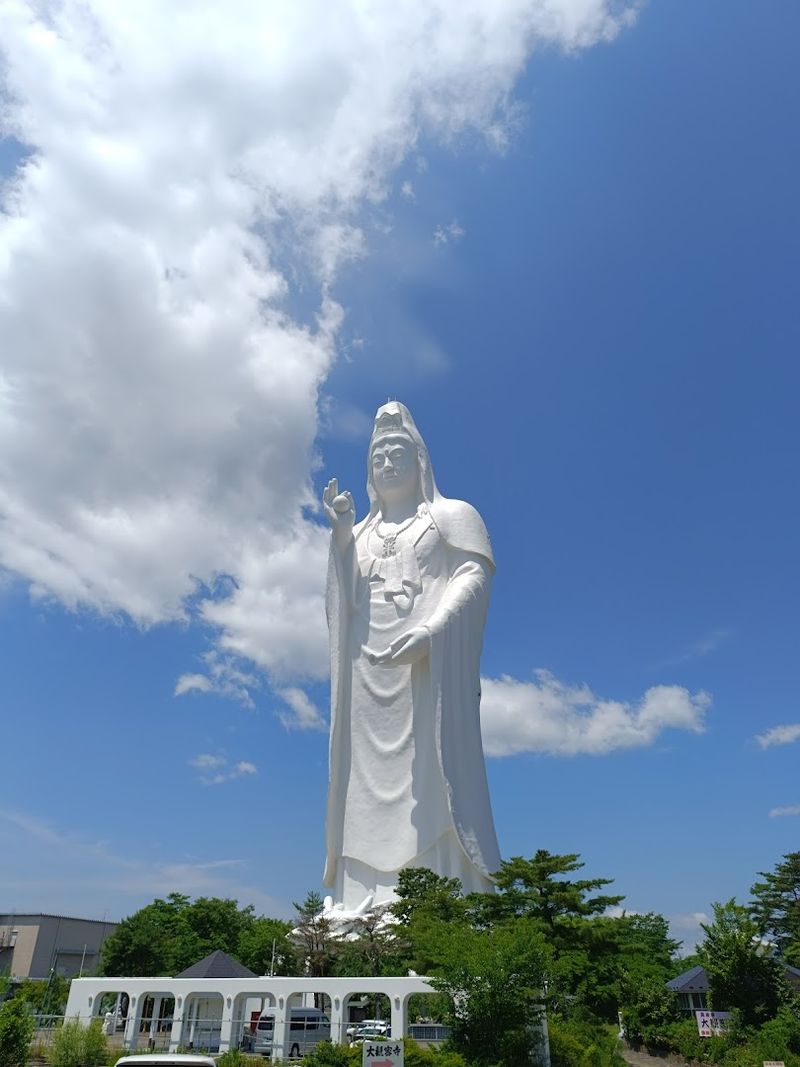
Rising 100 meters above the city of Sendai in northern Japan, the Sendai Daikannon is a towering white figure of Kannon, the Buddhist goddess of mercy. Completed in 1991, this statue holds a small Buddha figurine in one hand and is built with an elevator inside that carries visitors to viewing platforms at various levels within the structure.
What makes this statue particularly fascinating is how it blends into daily city life. Unlike many giant statues set in remote or sacred landscapes, the Daikannon stands in a suburban area, which makes spotting it unexpectedly through city streets feel almost surreal.
From the upper floors, visitors get a bird’s-eye view of Sendai’s cityscape and the distant mountains.
The statue is not as widely publicized as some of Japan’s other landmarks, which gives it a quieter, more local atmosphere. Travelers who discover it often describe it as one of Japan’s most underrated hidden gems.
9. Guanyin of Nanshan – Hainan, China
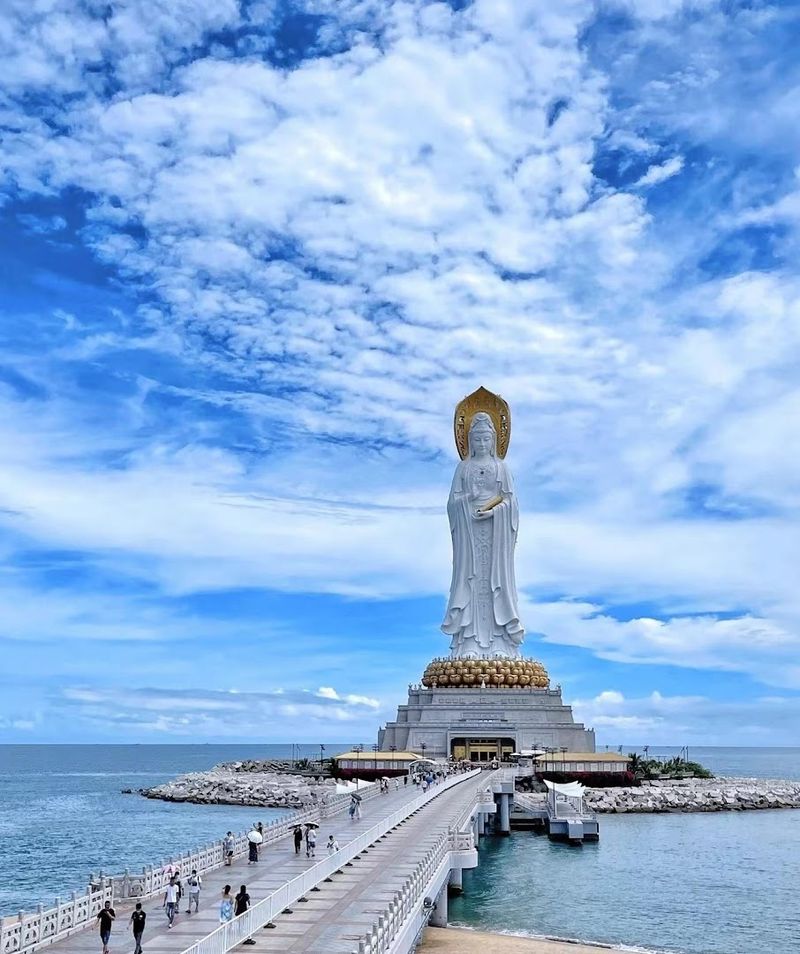
Standing on a lotus platform in the South China Sea just off the coast of Hainan Island, the Guanyin of Nanshan is one of the most dramatically positioned statues in the world. At 108 meters tall, this three-faced white figure of Guanyin, the Chinese goddess of compassion, appears to rise directly from the ocean waves.
The number 108 holds deep spiritual significance in Buddhism, representing the 108 virtues of the goddess.
Completed in 2005, the statue is part of the Nanshan Cultural Tourism Zone, a large Buddhist complex that attracts millions of pilgrims and tourists every year. Each of the three faces looks in a different direction, symbolizing blessings for all of humanity, the sea, and the sky.
Visitors reach the statue by crossing a long scenic bridge over the water. The combination of ocean breezes, Buddhist chanting, and the towering white figure creates an atmosphere that feels unlike anywhere else on Earth.
10. Statue of Liberty – New York, United States
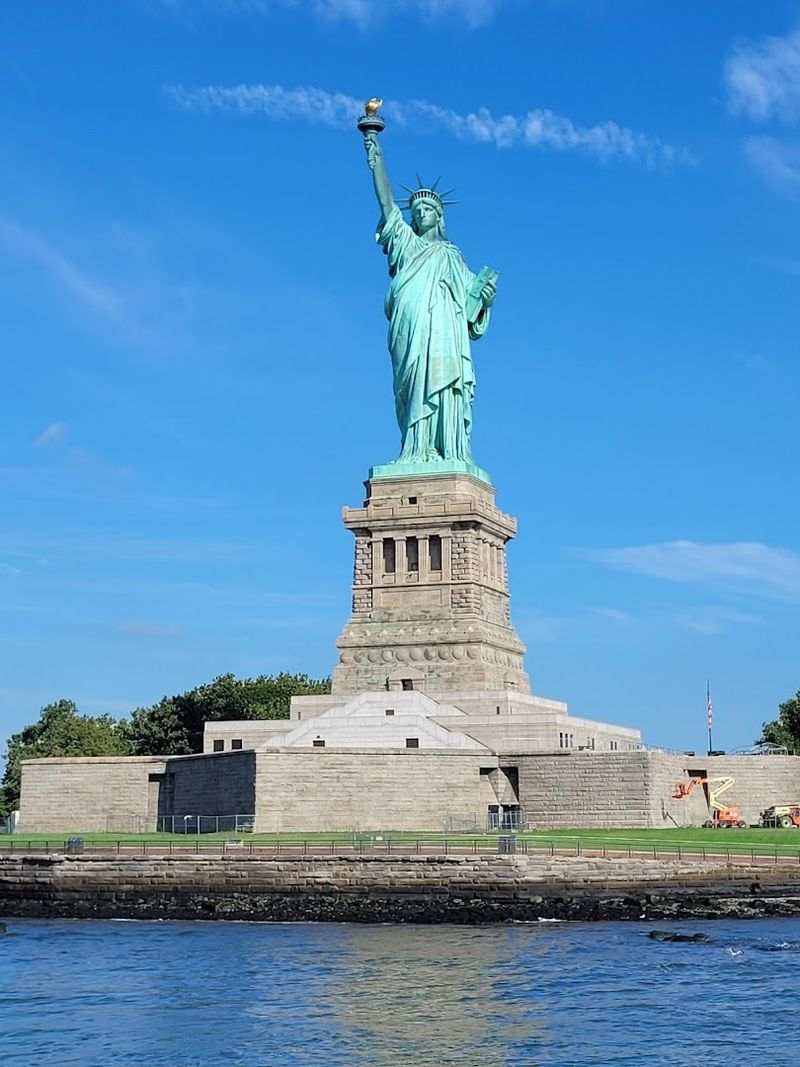
Gifted by France and unveiled in 1886, the Statue of Liberty has stood for over a century as one of the world’s most powerful symbols of freedom and democracy. Lady Liberty rises 93 meters from the ground to the tip of her torch and was the tallest iron structure in the world when she was first built.
Millions of immigrants arriving by ship saw her as their first glimpse of hope in a new land.
The statue was designed by French sculptor Frederic Auguste Bartholdi, while engineer Gustave Eiffel, the same man behind the Eiffel Tower, built her internal iron framework. Her copper exterior has oxidized over time, turning from a warm brown to the iconic blue-green color seen today.
Visitors can tour the pedestal and, with advance reservations, even climb to the crown for a spectacular harbor view. Few monuments in history have carried such enduring emotional meaning for so many people around the world.
11. African Renaissance Monument – Dakar, Senegal
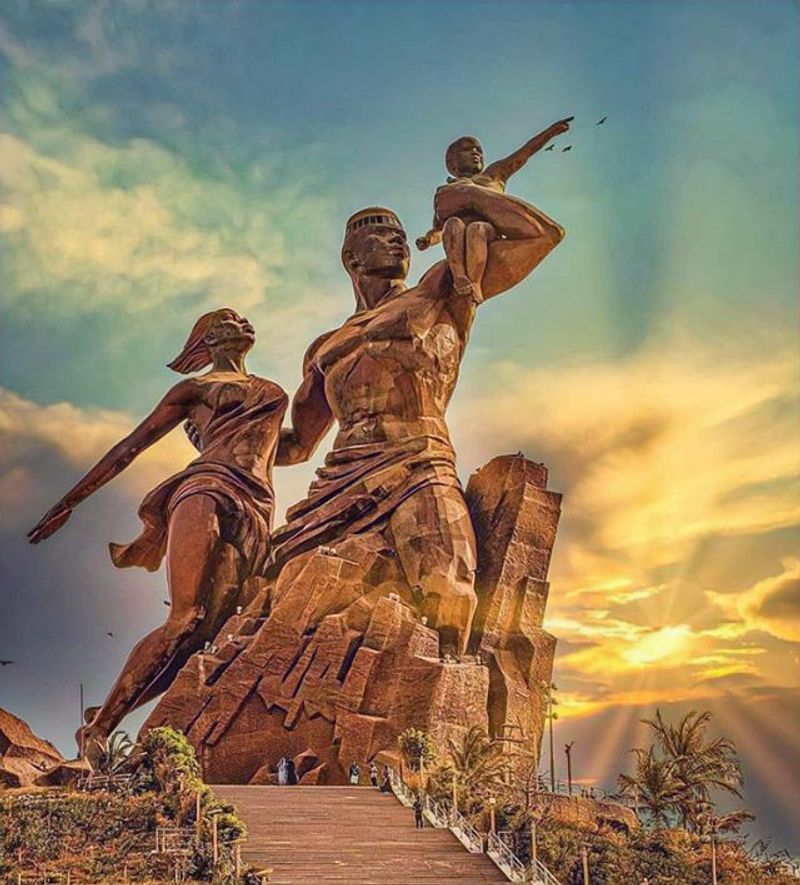
Bold, powerful, and deeply political, the African Renaissance Monument in Dakar, Senegal, is unlike any other statue on this list. Standing 49 meters tall on top of a volcanic hill overlooking the Atlantic Ocean, this bronze figure shows a man holding a child triumphantly above his head, with a woman clinging to his side.
The statue was unveiled in 2010 to mark the 50th anniversary of Senegal’s independence from France.
Designed by Senegalese architect Pierre Goudiaby, the monument was built by a North Korean construction company, which sparked considerable debate. President Abdoulaye Wade, who championed the project, described it as a symbol of Africa’s emergence from centuries of slavery, colonialism, and ignorance.
The statue is visible from much of Dakar and has become one of the city’s most discussed landmarks. Whether visitors admire it or question it, the African Renaissance Monument demands attention and conversation in equal measure.
12. Mother Motherland Monument – Kyiv, Ukraine
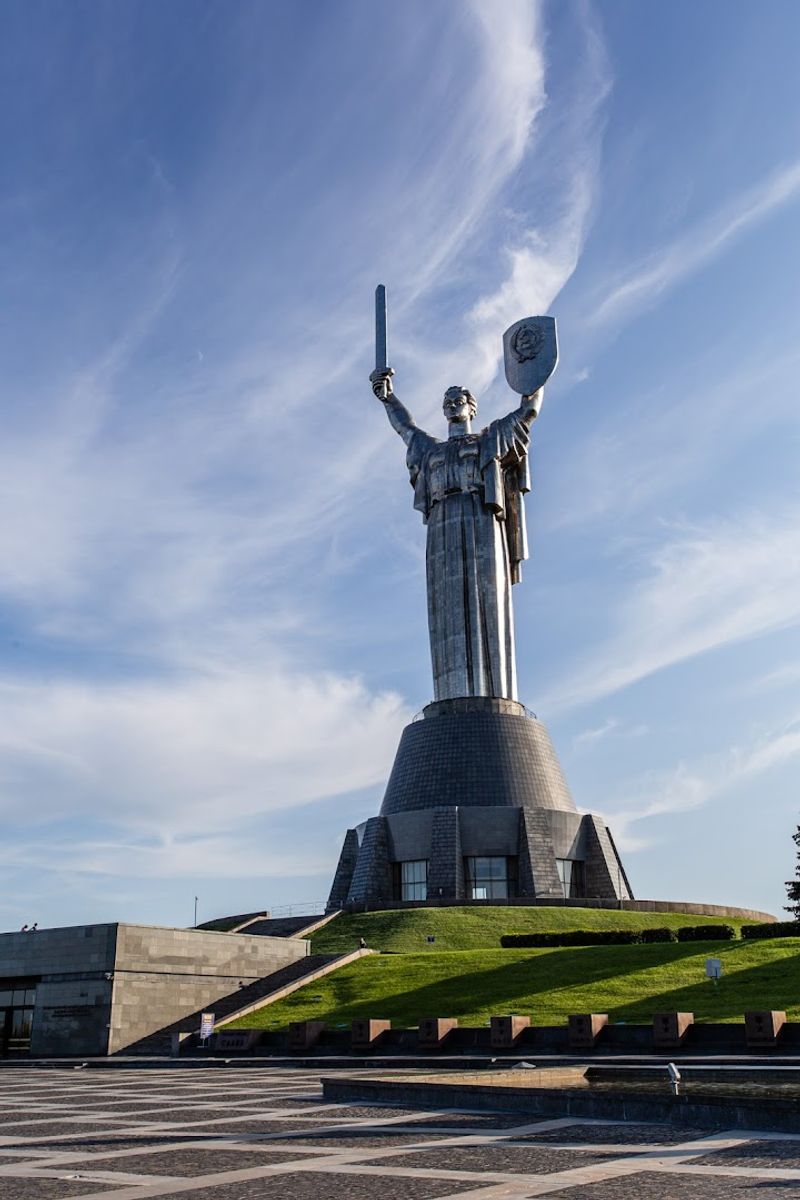
Towering above the Dnieper River on a bluff in Kyiv, the Mother Motherland Monument is one of Ukraine’s most recognizable and debated landmarks. Standing 62 meters tall and made entirely of stainless steel, this warrior woman holds a sword in one hand and a shield bearing the Soviet coat of arms in the other.
She was built in 1981 during the Soviet era to honor Ukrainian soldiers who fought in World War II.
The statue sits atop the National Museum of the History of Ukraine in the Second World War and is part of a sprawling memorial complex. An elevator takes visitors up through the structure to a viewing platform inside the shield, offering sweeping views of Kyiv and the river below.
In recent years, the Soviet emblem on the shield has been replaced with Ukraine’s national trident symbol, reflecting the country’s ongoing efforts to reclaim its identity. The monument remains a complex and fascinating piece of living history.
13. Tian Tan Buddha – Hong Kong, China
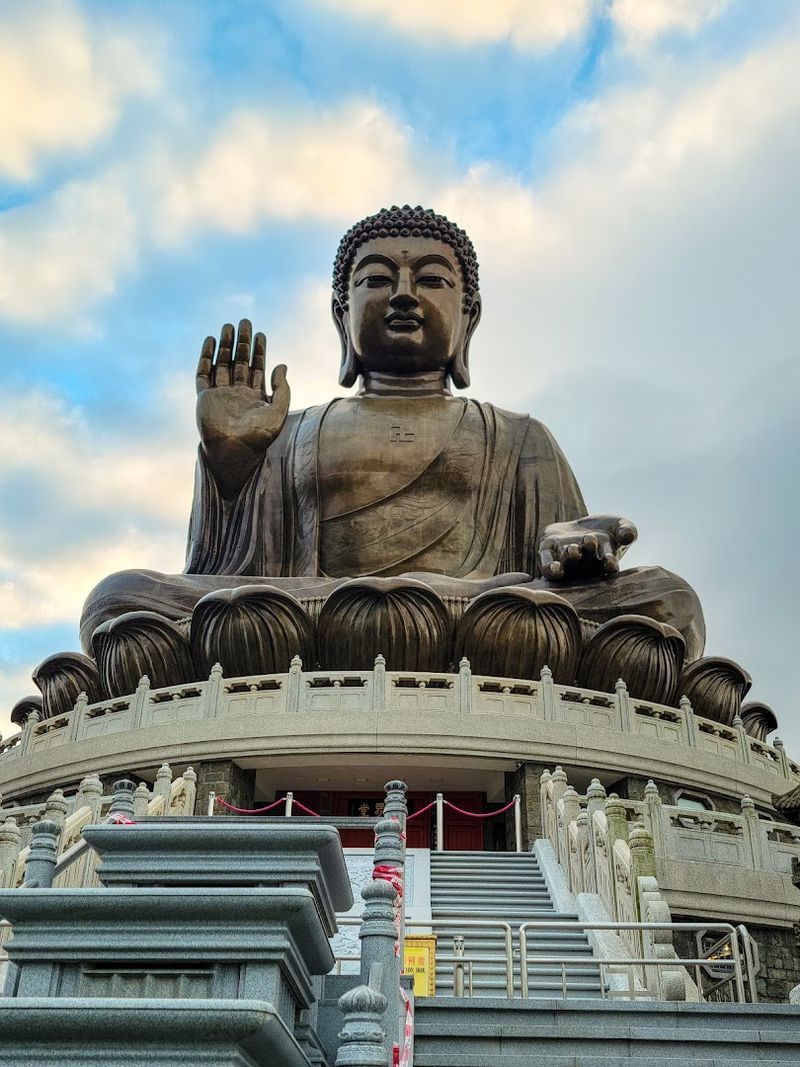
Perched on a hilltop on Lantau Island and reached by climbing 268 steps, the Tian Tan Buddha, also known as the Big Buddha, is one of Hong Kong’s most beloved landmarks. Completed in 1993, this 34-meter tall bronze seated Buddha weighs an impressive 250 metric tonnes and faces north toward China, symbolizing the connection between Hong Kong and the mainland.
On a clear day, the views from the top are simply stunning.
The statue is located near the Po Lin Monastery, one of the most important Buddhist sites in Hong Kong. Visitors can also arrive by cable car, gliding over mountains and forests for a scenic approach that many describe as one of the best rides in Asia.
Six smaller bronze statues surround the base of the Big Buddha, each offering a different symbolic offering. The peaceful atmosphere, mountain air, and spiritual energy of the site make it a truly memorable destination for visitors of all backgrounds.
14. Pegasus and Dragon – Hallandale Beach, Florida, United States
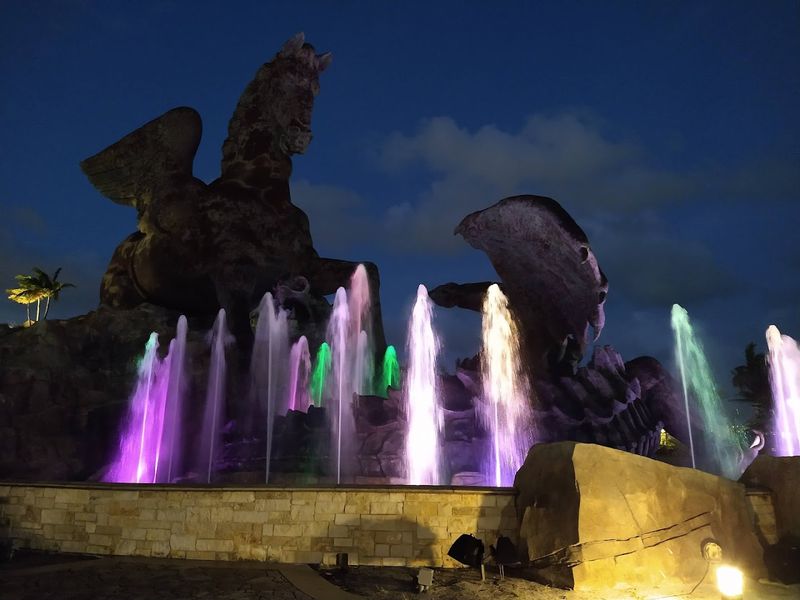
Not every giant statue is rooted in ancient history or religious tradition, and the Pegasus and Dragon at Gulfstream Park in Hallandale Beach, Florida, proves that point with flair. This dramatic sculpture features a winged horse rearing triumphantly above a fierce, coiled dragon, creating one of the most visually exciting public artworks in the United States.
The statue has become the defining symbol of the Gulfstream Park racing and entertainment complex.
Created by sculptor Douwe Blumberg, the piece stretches impressively in height and is crafted with remarkable detail, from the muscles of the horse to the scales of the dragon beneath it. The symbolism reflects themes of victory, power, and the spirit of competition that defines horse racing culture.
Located in a lively outdoor shopping and entertainment district, the statue draws visitors who may not even be there for the races. It stands as proof that modern public art can be just as bold and memorable as the ancient giants of the world.
15. Genghis Khan Equestrian Statue – Tsonjin Boldog, Mongolia
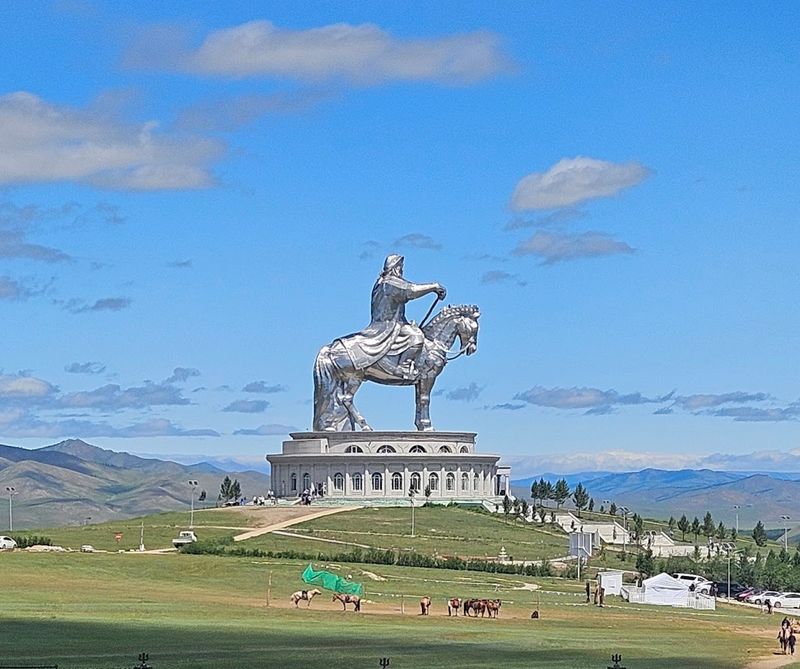
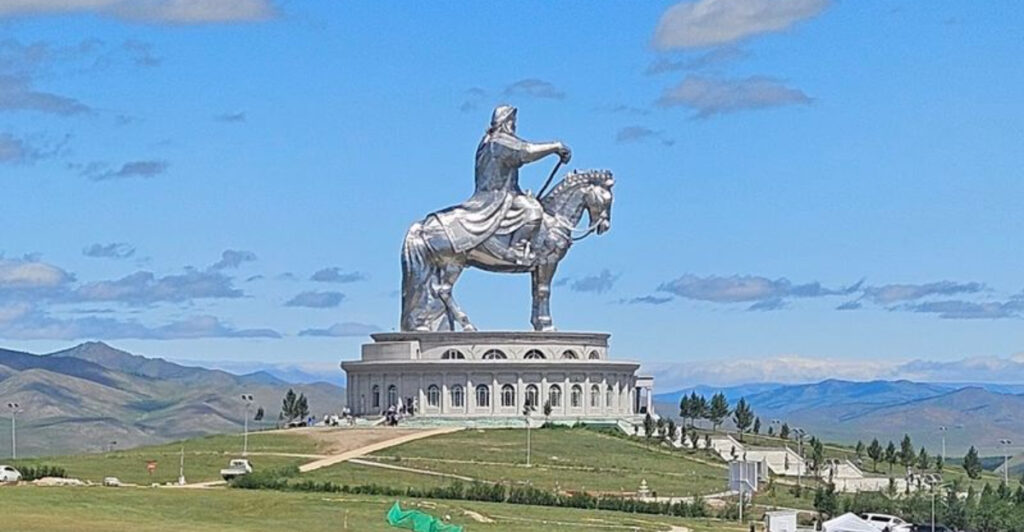
Riding tall across the vast Mongolian steppe, the Genghis Khan Equestrian Statue near Tsonjin Boldog is one of the most unexpectedly spectacular sights in Central Asia. At 40 meters tall and covered entirely in gleaming stainless steel, this enormous figure of Mongolia’s most famous historical leader sits atop a horse with a commanding presence that can be seen for miles across the open grasslands.
Unveiled in 2008 to mark the 800th anniversary of the Mongol Empire, the statue is built over a visitor center and museum that explores Mongolian history and culture. Guests can ride an elevator up through the horse’s neck to reach a viewing deck on the horse’s head, offering panoramic views of the surrounding countryside.
The site also features a restaurant, gift shops, and a collection of traditional Mongolian gers nearby. For anyone with an interest in history or simply a love of jaw-dropping landmarks, this statue is absolutely worth the journey.
Share this story