Germany is filled with storybook villages, misty forests, medieval castles, and hidden towns that seem untouched by time. Beyond Berlin and Munich, travelers can still discover quiet destinations where cobblestone streets, timber-framed houses, and dramatic landscapes feel straight out of a Brothers Grimm tale.
Whether you love history, nature, or simply wandering through places that feel magical, Germany has surprises waiting around every corner. Pack your bags and get ready to explore some of the most enchanting hidden spots this country has to offer.
Quedlinburg, Saxony-Anhalt
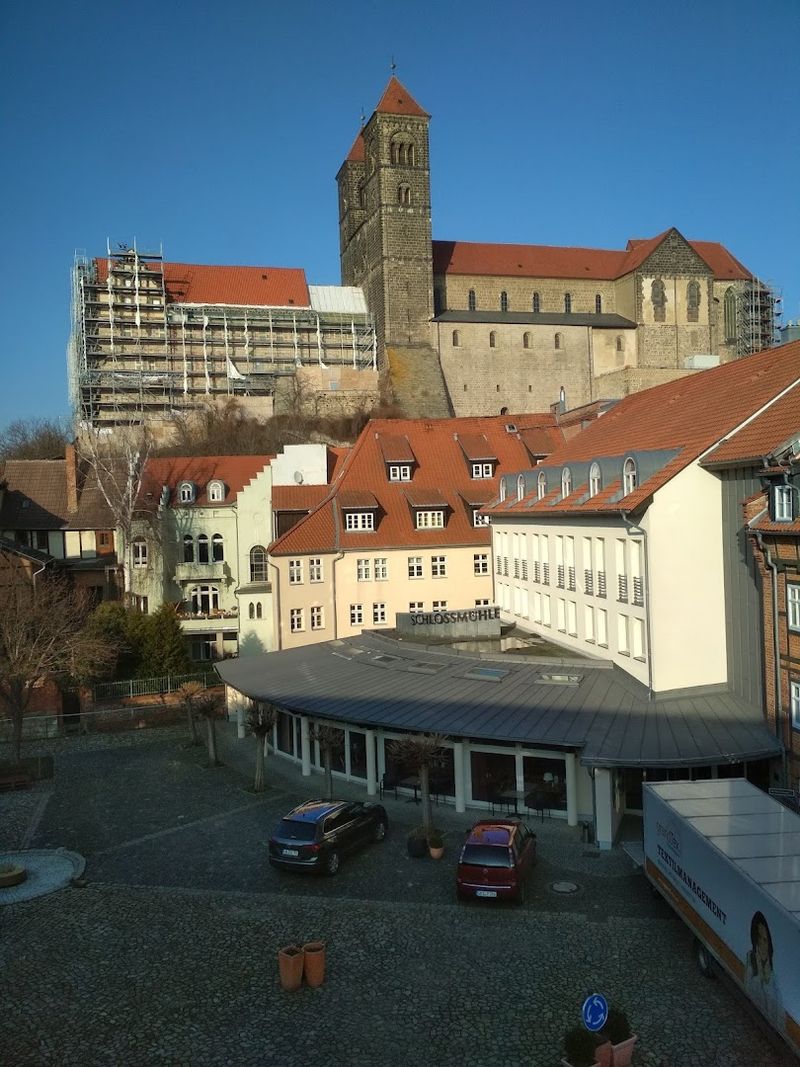
Over 1,300 half-timbered houses crowd the winding cobblestone streets of Quedlinburg, making it one of the most jaw-dropping medieval towns in all of Germany. The entire historic center earned UNESCO World Heritage status, which tells you just how special this place really is.
Walking through it feels less like tourism and more like stepping into a living museum.
Perched on a rocky hill above the town, the Romanesque collegiate church and castle add a dramatic silhouette to the skyline that photographers absolutely love. Early morning visits are especially rewarding when soft mist drifts between the ancient buildings.
The quiet streets feel almost sacred before the day crowds arrive.
Quedlinburg also played an important role in early German history as a royal residence during the medieval Ottonian dynasty. Local markets, small bakeries, and traditional German restaurants make the experience feel warm and welcoming rather than purely historical.
Autumn is particularly stunning here when golden leaves frame the timber-framed facades beautifully. Budget travelers will also appreciate that many of the best views and streets are completely free to explore.
Monschau, North Rhine-Westphalia
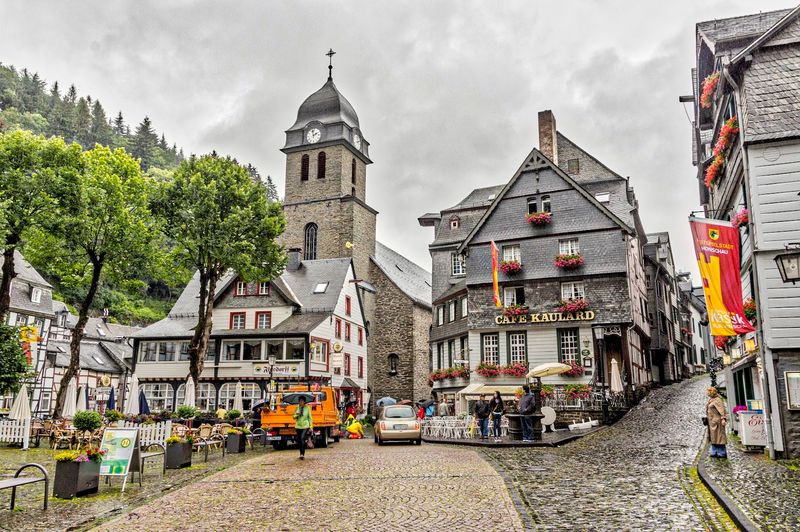
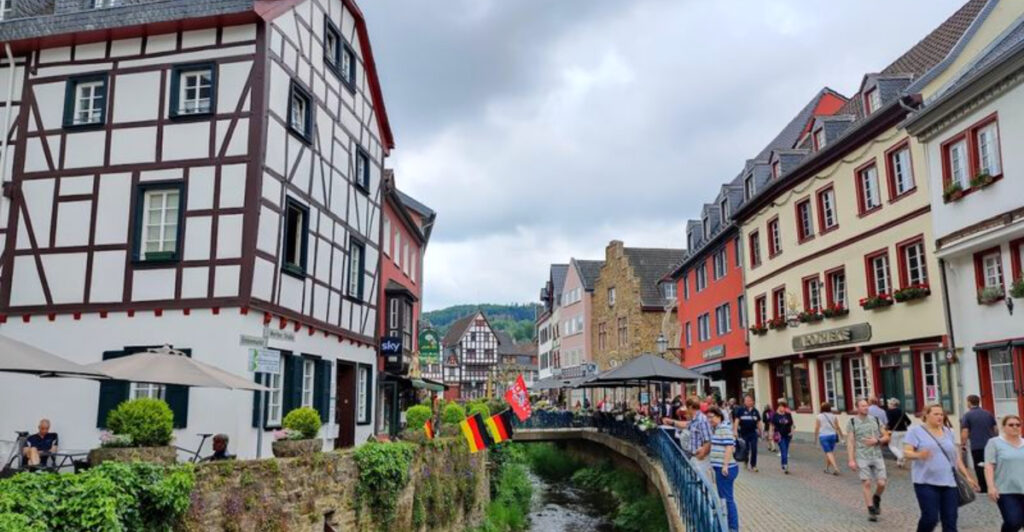
Tucked quietly into the rolling Eifel hills near the Belgian border, Monschau is the kind of village that makes you stop mid-stride and just stare. The narrow lanes wind beside a gentle river, and the timber-framed houses seem to lean toward each other like old friends sharing secrets.
Fog rolling in from the surrounding forest gives the whole scene an almost theatrical quality.
Winter mornings here are something else entirely. Snow settles on the steep rooftops while warm light glows from bakery windows, and the smell of fresh bread drifts through the cold air.
The Christmas market held here each year is considered one of the most atmospheric in Germany, drawing visitors who return season after season.
Monschau has managed to stay relatively under the radar compared to more famous German destinations, which means the crowds stay manageable. Local mustard shops, artisan stores, and riverside cafes give the village a charming personality all its own.
The surrounding Eifel National Park offers excellent hiking trails through dense forests and open moorlands. Spending a full weekend here, exploring both the village and the countryside, is genuinely one of Germany’s most rewarding quiet travel experiences.
Wernigerode, Saxony-Anhalt
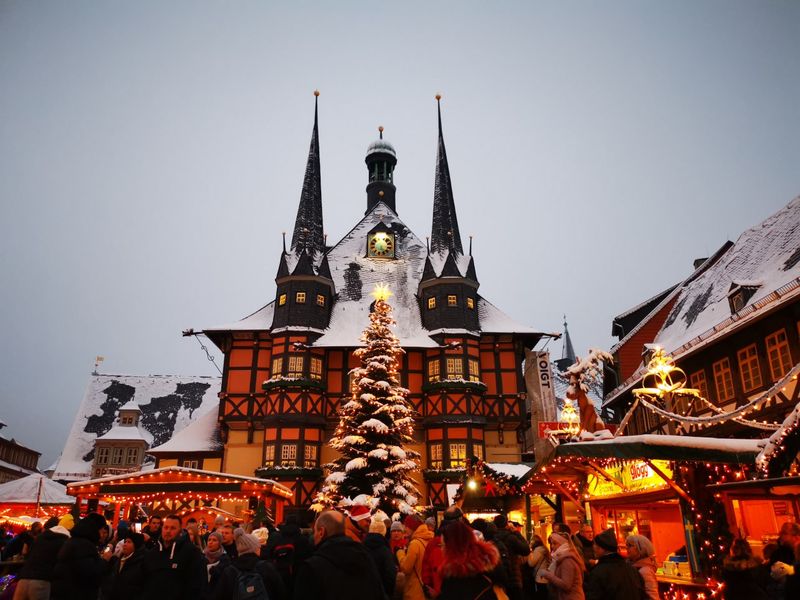
Wernigerode wears its colors proudly, with bright reds, yellows, and greens painted across medieval timber-framed houses that line the town center like a cheerful parade. The hilltop castle looming above everything adds a dramatic backdrop that looks almost too perfect to be real.
Locals call it the Colorful City of the Harz, and once you see it, you completely understand why.
One of the most fun ways to arrive is aboard the historic Harz narrow-gauge steam railway, which puffs through the mountains and pulls into town like something from another century. Kids and adults alike tend to go a bit wide-eyed when the old steam engine rolls in.
The railway connects several Harz towns and makes for an unforgettable scenic journey.
Beyond the postcard views, Wernigerode has a lively town square filled with cafes, artisan shops, and traditional German restaurants serving hearty Harz regional food. The castle museum offers fascinating exhibits on medieval life and regional history.
Hiking trails from town lead directly into the Harz National Park, where ancient forests and the famous Brocken mountain await. Spring and summer bring wildflowers to the surrounding hillsides, adding even more color to an already vivid destination.
Cochem, Rhineland-Palatinate
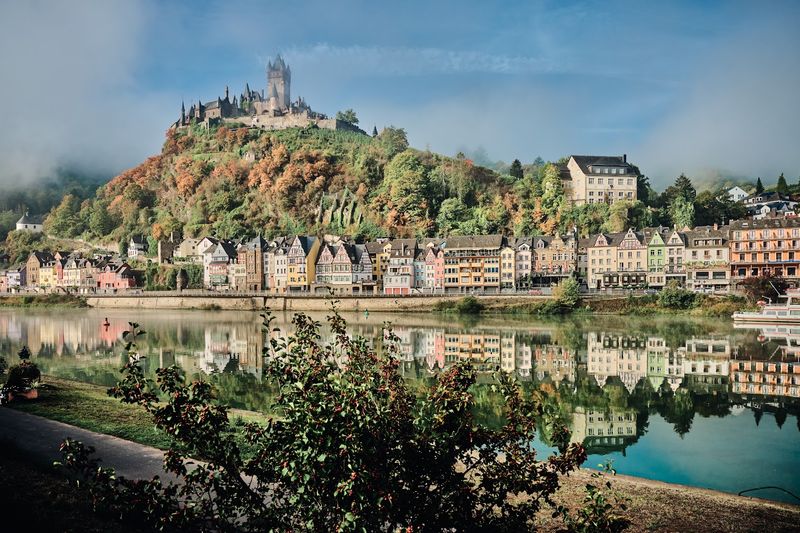
Cochem sits beside the Moselle River with a posture of total confidence, knowing full well that its hilltop Reichsburg Castle is one of the most photogenic sights in all of Germany. The castle rises steeply above terracotta rooftops and vineyard-draped hillsides, creating a view that has been stopping travelers in their tracks for centuries.
Autumn turns the whole valley into a patchwork of gold and red that borders on overwhelming beauty.
The town itself is small enough to explore on foot in a single afternoon, but rich enough to keep you busy for a full weekend. Wine tasting is practically a civic duty here, with local Moselle Rieslings earning devoted fans from across Europe.
Several family-run wine taverns tucked into the old town serve glasses alongside local cheese and bread in settings that feel genuinely timeless.
Evening castle illuminations transform Cochem into something that looks pulled straight from a fantasy novel. Boat cruises along the Moselle River offer spectacular views of the castle and surrounding vineyards from the water.
The weekly market on the town square sells local produce, honey, and handmade goods that make excellent souvenirs. Visiting during the annual wine festival in autumn adds live music, lantern-lit streets, and a festive energy that is hard to match anywhere else in Germany.
Schiltach, Baden-Württemberg
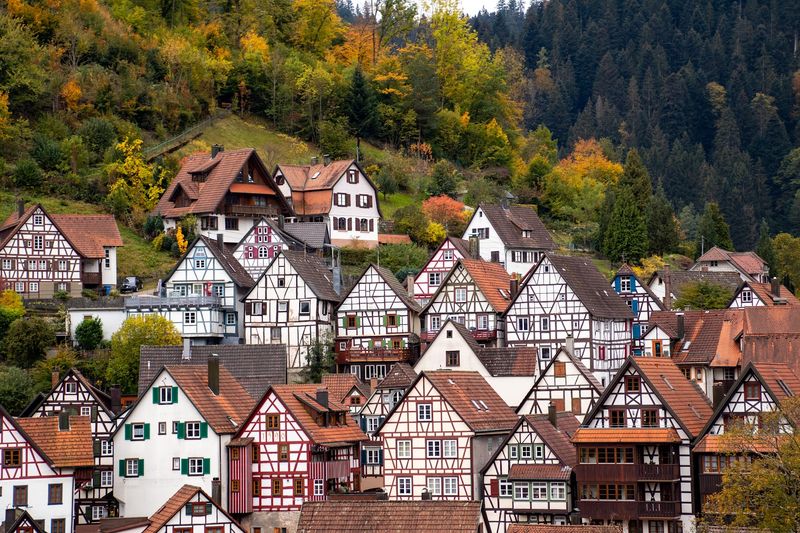
Finding Schiltach feels a bit like discovering a secret that the rest of the world somehow forgot to share. Hidden deep in the Black Forest where the Kinzig and Schiltach rivers meet, this village of crooked timber-framed houses looks like it was drawn by hand for a storybook illustration.
The buildings lean at odd angles on steep hillside lanes, giving the whole place a slightly whimsical, almost wobbly charm.
The historic market square is one of the most perfectly preserved in the entire Black Forest region. Old guild signs hang above doorways, and the cobblestones have been worn smooth by centuries of footsteps.
Unlike more famous Black Forest towns, Schiltach rarely feels overcrowded, which makes wandering here feel genuinely peaceful.
Old mills and traditional workshops still operate along the riverbanks, giving visitors a rare look at crafts and trades that have survived for generations. The local museum tells the story of the town’s raft-building history, which was once an important industry for transporting Black Forest timber downstream.
Nearby hiking trails wind through some of the densest and most atmospheric woodland in Germany. Visiting on a misty morning, when low clouds drift between the forested hills, turns the entire valley into something that feels genuinely enchanted and completely unforgettable.
Dinkelsbühl, Bavaria
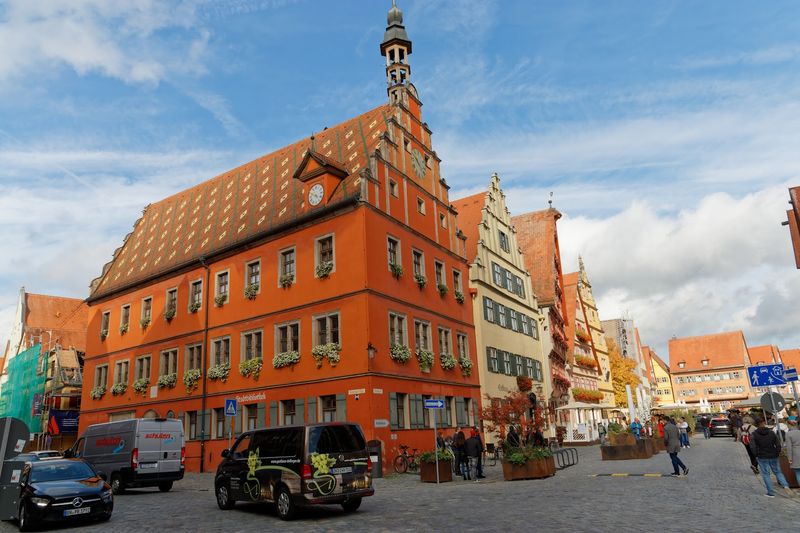
Rothenburg ob der Tauber gets all the attention, but seasoned Germany travelers know that Dinkelsbühl quietly does everything better with far fewer selfie sticks in the way. The medieval town walls still stand completely intact, encircling a compact historic center filled with colorful half-timbered houses decorated with flower-filled window boxes.
Strolling the perimeter walls at sunset is one of those simple travel moments that sticks with you for years.
The main street is lined with pastel-painted buildings housing bakeries, wine shops, and small restaurants that serve traditional Franconian dishes. Candlelit evening dining beside ancient stone walls creates an atmosphere that feels genuinely romantic without trying too hard.
The town is small enough that getting lost is almost impossible, but charming enough that you might want to try anyway.
Dinkelsbühl hosts the Kinderzeche festival every July, a week-long historical celebration dating back to the Thirty Years War when, according to legend, local children saved the town from destruction. The festival fills the streets with costumes, music, and theatrical performances that bring medieval history to vivid life.
Horse-drawn carriages, ancient towers, and quiet courtyards complete the picture. Visiting outside peak summer season means having those cobblestone streets nearly to yourself, which honestly makes the whole experience even better.
Triberg, Baden-Württemberg
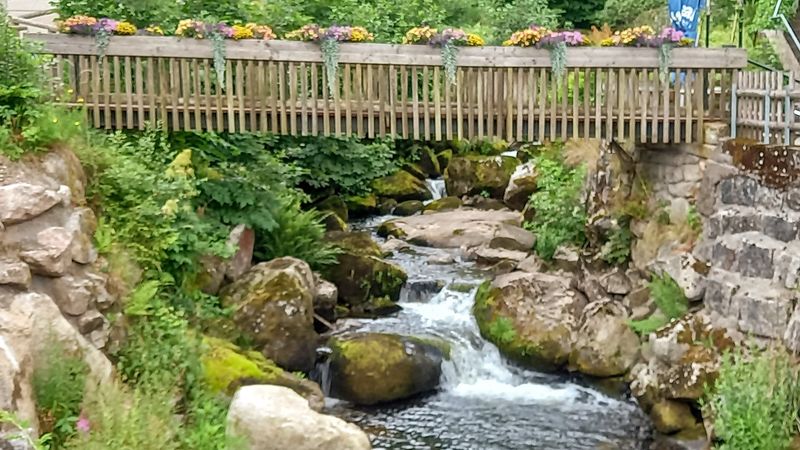
Germany’s highest waterfalls thunder through the trees just outside Triberg, sending mist drifting across forest paths and ferns in a way that genuinely feels like stepping into a fairytale. The town itself sits at the heart of the Black Forest, surrounded by thick woodland and dramatic mountain scenery that inspired countless old German legends.
You can almost understand why people once believed these forests were full of witches and spirits.
Cuckoo clock culture is alive and enthusiastically well in Triberg, where entire shops are devoted to the carved wooden timepieces that have become the region’s most famous export. The world’s largest cuckoo clock, a local attraction, draws curious visitors who arrive half expecting it to be a joke and leave genuinely impressed.
Picking up a handmade clock here feels like taking a piece of Black Forest tradition home with you.
The waterfall trail is open year-round, but winter visits offer a spectacular bonus when the falls partially freeze into dramatic ice formations along the rocky cliffs. Local restaurants serve Schwarzwälder Kirschtorte, the original Black Forest cake, which tastes considerably better here than anywhere else on Earth.
Hiking trails from town lead deeper into the forest, where the trees grow so thick that midday light barely reaches the ground. Triberg rewards slow exploration and genuine curiosity in equal measure.
Bacharach, Rhineland-Palatinate
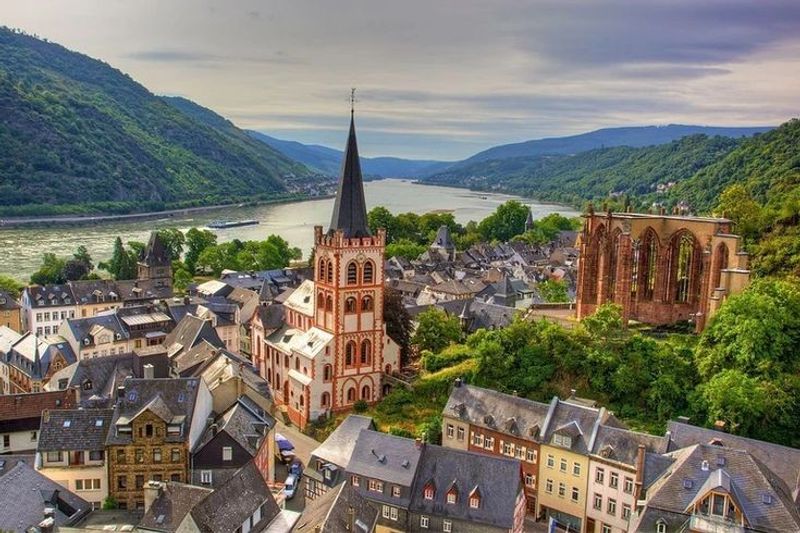
Bacharach stretches along a curve of the Rhine River like a medieval painting that someone forgot to finish, with castle ruins, vineyard slopes, and timber-framed houses all competing for your attention at once. The town is small, quiet, and genuinely beautiful in the way that only places untouched by heavy tourism can be.
Even on busy Rhine Valley travel days, Bacharach manages to feel like a local secret.
The old town walls are still largely intact, and walking their length gives a bird’s-eye view over rooftops, the river, and the surrounding vine-covered hills. Werner Chapel, a striking Gothic ruin rising from the center of town, adds an eerie and romantic quality to the skyline.
Photographers tend to arrive at golden hour and stay well past sunset, working through memory cards at an alarming rate.
Wine tasting is a serious pleasure here, with Rhine Rieslings poured in centuries-old cellars that feel carved directly into the hillside. The town’s youth hostel famously occupies a medieval castle above town, offering budget travelers some of the most dramatic accommodation views in Germany.
Local festivals celebrate the grape harvest with music and lantern-lit streets each autumn. Arriving by boat along the Rhine rather than by car turns the approach into an experience almost as memorable as the destination itself.
Meersburg, Baden-Württemberg
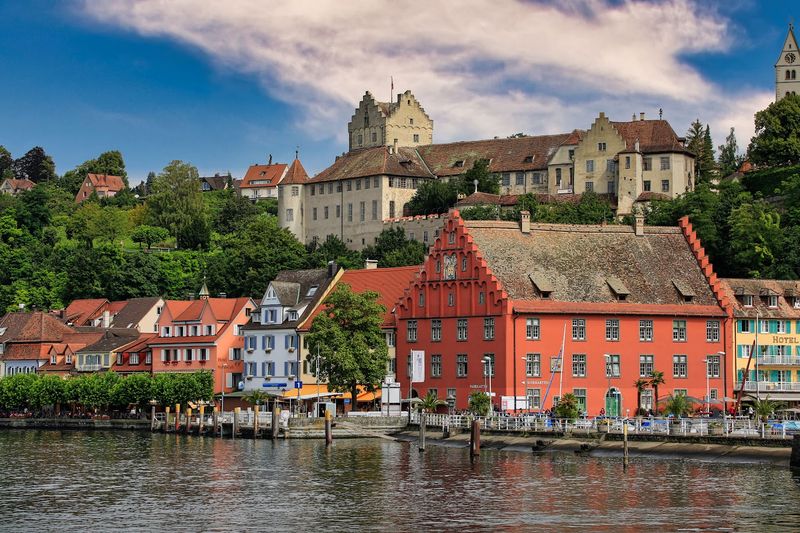
Meersburg has the kind of setting that makes first-time visitors genuinely question whether they are still in reality. Pastel-colored buildings tumble down a steep hillside toward the shimmering waters of Lake Constance, with snow-capped Alpine peaks visible across the water on clear days.
The medieval castle at the top of town is considered the oldest inhabited castle in all of Germany, which is a title that carries considerable weight.
The steep main street, known locally as the Steigstrasse, is lined with wine shops, cafes, and artisan boutiques housed in buildings that date back several centuries. Local Meersburg wines made from grapes grown on the surrounding terraced slopes are excellent and rarely found outside the region.
Sampling them at a lakeside terrace while watching ferries cross to Switzerland feels like a small but perfect kind of luxury.
Lake Constance itself opens up an entirely new dimension of exploration, with boat trips connecting Meersburg to the flower island of Mainau and the historic island town of Konstanz. Cycling paths along the lakeshore pass through orchards, vineyards, and small fishing villages.
Sunset from the castle ramparts, when the lake turns orange and the Alps glow pink, is the kind of view that makes you immediately start planning your return trip. Meersburg rewards every single hour you give it.
Oberammergau, Bavaria
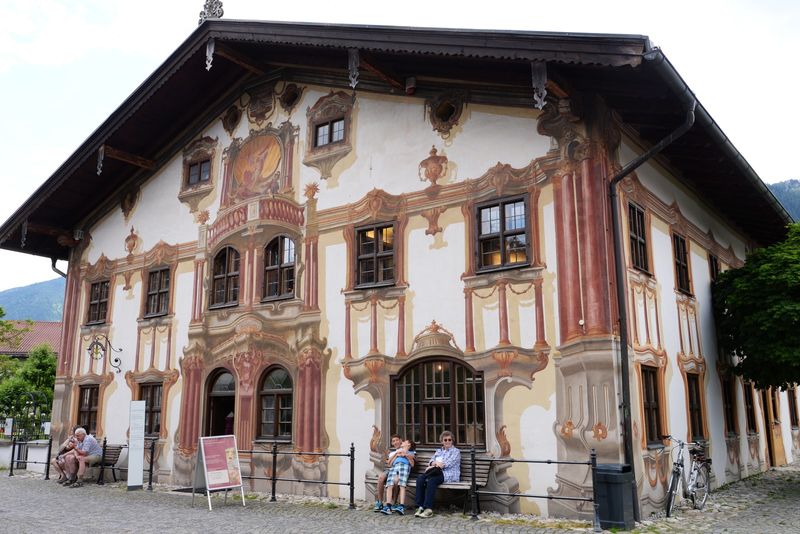
Practically every house in Oberammergau is a canvas, covered in vivid painted frescoes called Lueftlmalerei that depict fairytales, religious scenes, and floral patterns in extraordinary detail. Walking through the village feels like browsing an open-air art gallery where the paintings have been soaking into the plaster walls for generations.
The tradition dates back to the 18th century and remains very much alive today.
The village sits in a wide Alpine valley surrounded by the Bavarian Alps, with green meadows rolling toward forested peaks on every side. Winter transforms the scene into something almost aggressively beautiful, with snow covering the painted rooftops and horse-drawn sleighs occasionally passing through the streets.
Even the most jaded traveler tends to put the camera down at some point and just absorb the view.
Oberammergau is globally famous for its Passion Play, a theatrical production performed every ten years by the village’s own residents depicting the story of Christ’s crucifixion. The tradition began in 1634 as a vow of gratitude after the village survived a plague, and it has continued with remarkable dedication ever since.
Wood carving workshops throughout the village produce handmade Nativity figures, ornaments, and decorative pieces that make genuinely meaningful souvenirs. The combination of living art, mountain scenery, and deep cultural tradition makes Oberammergau completely unlike anywhere else in Germany.
Trier, Rhineland-Palatinate
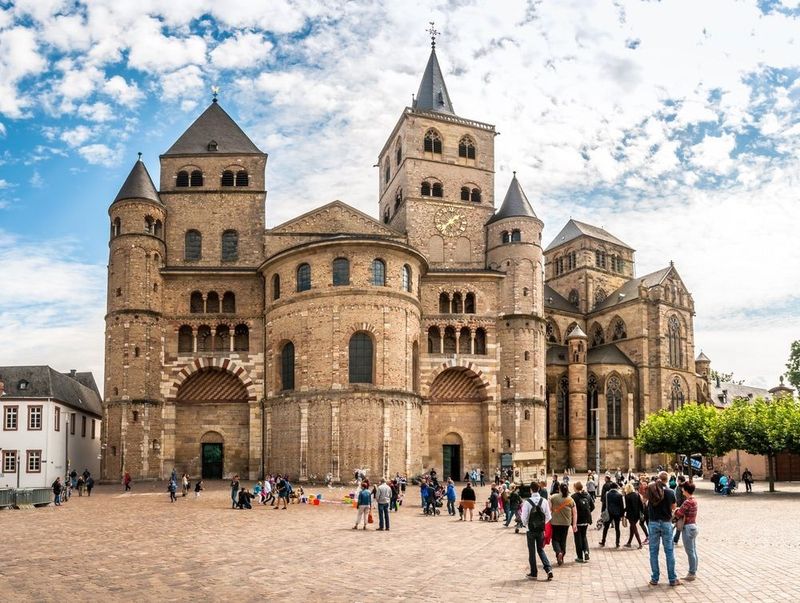
Trier holds a record that most German cities can only dream about: it is the oldest city in the country, with a history stretching back over 2,000 years to the Roman Empire. The Porta Nigra, a massive blackened Roman gate still standing at the city’s entrance, sets the tone immediately.
Walking through it feels like crossing a threshold between the present and ancient history.
Roman ruins, medieval churches, and vineyard-covered hillsides all coexist here in a way that feels genuinely organic rather than museum-curated. The Aula Palatina, a vast Roman throne room built in the 4th century, still stands almost completely intact and is breathtaking in its scale.
Hidden courtyards, underground Roman foundations, and winding alleys connect the different historical layers of the city in fascinating ways.
Trier also sits at the heart of the Moselle wine region, meaning excellent Riesling is never far away. The main market square hosts one of Germany’s most beloved Christmas markets, drawing visitors from across Europe each December with mulled wine, handmade crafts, and twinkling lights set against the backdrop of a Gothic cathedral.
Karl Marx was born here in 1818, and his birthplace is now a popular museum. Trier rewards curious visitors who enjoy peeling back layers of history one fascinating discovery at a time.
Bad Münstereifel, North Rhine-Westphalia
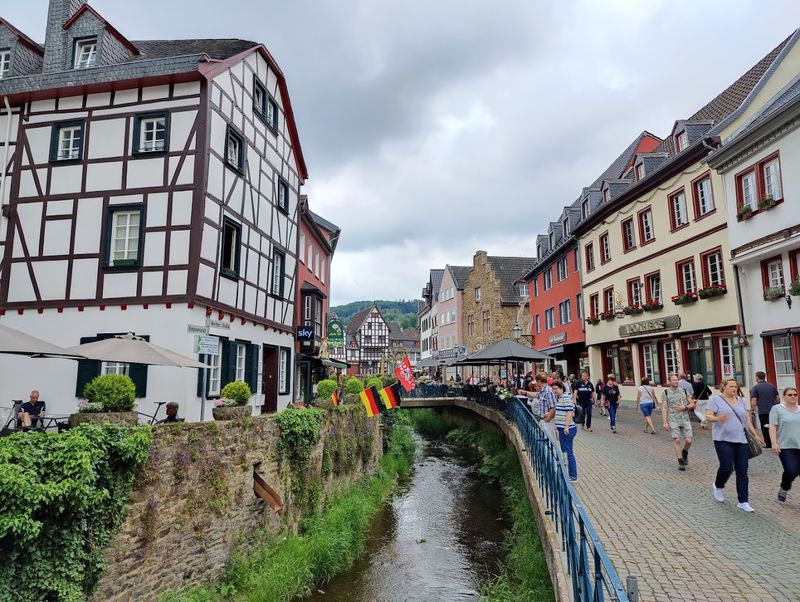
Bad Münstereifel is the kind of place that feels like a well-kept secret shared only among people who really know Germany. The entire medieval town wall stands completely intact, encircling a remarkably preserved historic center where timber-framed buildings lean over narrow streets and a small river winds quietly through the middle of it all.
The effect is charming in a way that feels entirely effortless.
For years, the town was actually better known for its outlet shopping than its medieval heritage, which is both hilarious and slightly tragic. But recent years have seen a renewed focus on the town’s extraordinary architecture and history, drawing visitors who arrive expecting bargains and leave completely enchanted by the cobblestones.
The Romanesque collegiate church at the heart of the old town is a genuine architectural treasure that deserves far more attention than it typically receives.
The surrounding Eifel countryside adds to the appeal with rolling hills, volcanic lakes, and dense forests all within easy cycling or driving distance. Local restaurants serve hearty regional dishes in dining rooms that have barely changed in decades.
Evening walks along the town walls, when the streets grow quiet and the old buildings glow under warm streetlights, are particularly atmospheric. Bad Münstereifel rewards visitors who slow down and simply let the place wash over them without rushing anywhere at all.
Görlitz, Saxony
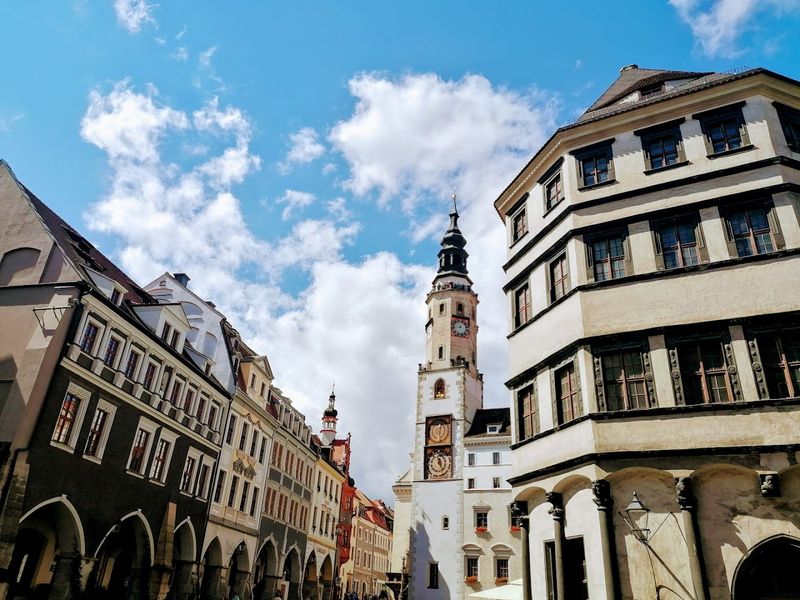
Hollywood has filmed here multiple times, and honestly, once you see Görlitz for yourself, the choice makes complete sense. The city survived World War II almost entirely undamaged, leaving behind one of Europe’s most intact collections of Gothic, Renaissance, Baroque, and Art Nouveau architecture all packed into a single historic center.
Movies like The Grand Budapest Hotel and parts of The Reader used Görlitz as their backdrop precisely because no set designer could improve on the real thing.
The city sits directly on the Polish border, with the Neisse River dividing Görlitz from its sister city Zgorzelec on the other side. Crossing the bridge between the two countries takes about thirty seconds and somehow never loses its novelty.
The blending of German and Polish culture gives the area a distinctive character found nowhere else in Germany.
Gothic towers rise above Renaissance merchant houses, and elegant department stores from the early 20th century still operate with their original ornate interiors largely preserved. The covered shopping arcade known as the Jugendstil-Kaufhaus is a genuine architectural gem that stops visitors mid-step.
Evening light on the historic facades turns the entire city center into something almost impossibly cinematic. Görlitz remains relatively unknown among international tourists, which means you can explore its extraordinary streets without fighting through crowds, a rarity for a place this remarkable.
Schwangau, Bavaria
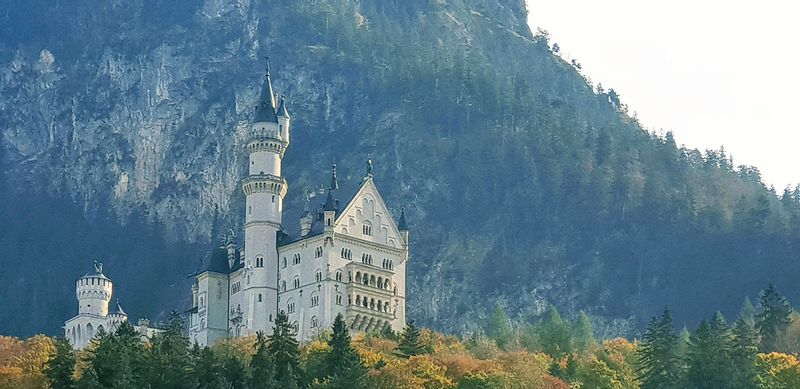
Neuschwanstein Castle gets the fame, the postcards, and the enormous tour buses, but the village of Schwangau sitting quietly below it is where the real magic tends to happen. Surrounded by alpine lakes, dense forests, and dramatic mountain peaks, the area around the castle is as beautiful as the building itself, and considerably less crowded once you step off the main tourist path.
Misty mornings here are genuinely otherworldly.
The Alpsee and Schwansee lakes reflect the mountains and castle turrets in their still waters, creating mirror images that seem almost too symmetrical to be natural. Rowing boats can be rented on the Alpsee during summer, allowing visitors to drift quietly across the water with castle views in every direction.
Winter brings snow that transforms the entire valley into something that looks exactly like the inspiration for a Disney film, which is not entirely a coincidence given Neuschwanstein’s influence on Sleeping Beauty Castle.
Hohenschwangau Castle, slightly less famous than its neighbor but no less impressive, sits on its own forested hill nearby and was actually the childhood home of King Ludwig II who commissioned Neuschwanstein. The surrounding walking trails wind through meadows and forest with views that reveal new angles of the castles at every turn.
Staying overnight in Schwangau means experiencing the castle scenery after day-trippers have left, when the mountains grow quiet and the whole landscape settles into peaceful, storybook stillness.
Rüdesheim am Rhein, Hesse
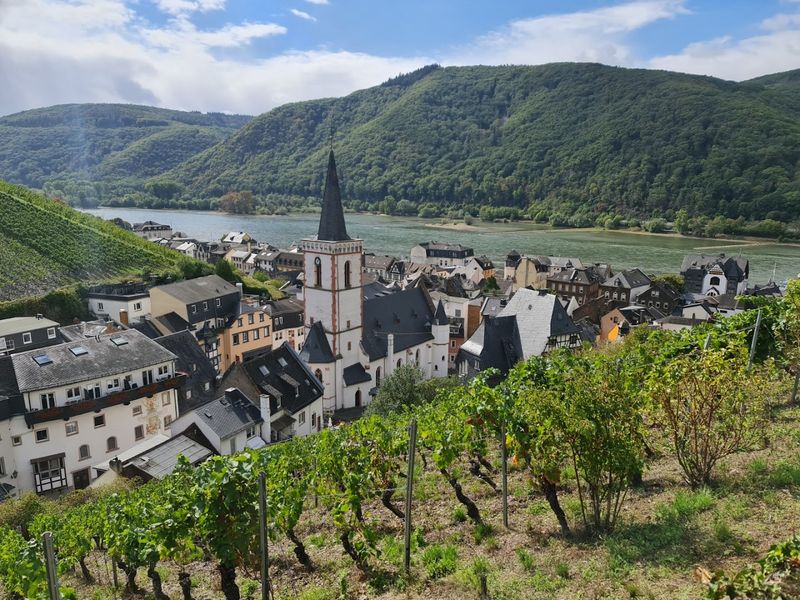
The Drosselgasse alley in Rüdesheim is probably the most festive 144 meters in all of Germany, crammed with wine taverns, folk music, and the kind of cheerful noise that makes it almost impossible to walk through without smiling. The narrow cobblestone lane has been pouring Rhine Riesling and hosting celebrations for centuries, and it shows absolutely no signs of slowing down.
Arriving here on a warm evening feels like walking into a party that started sometime in the Middle Ages.
Beyond the famous alley, Rüdesheim opens up into a surprisingly layered destination with cable car rides over the vineyards, Rhine River boat cruises, and the towering Niederwald Monument watching over everything from a forested hilltop above town. The monument, a massive statue commemorating German unification in 1871, offers panoramic views over the Rhine Valley that stretch for miles in both directions.
Surrounding the town, terraced vineyards climb steeply from the riverbank and produce some of the Rhine’s most celebrated white wines. The harvest season in September and October transforms the whole area into a celebration, with grape-picking festivals, outdoor concerts, and wine tastings happening across the region simultaneously.
Medieval castles visible from the river add a dramatic backdrop to boat journeys along this stretch of the Rhine. Rüdesheim balances genuine festivity with authentic history in a combination that is surprisingly hard to find anywhere else.
Share this story