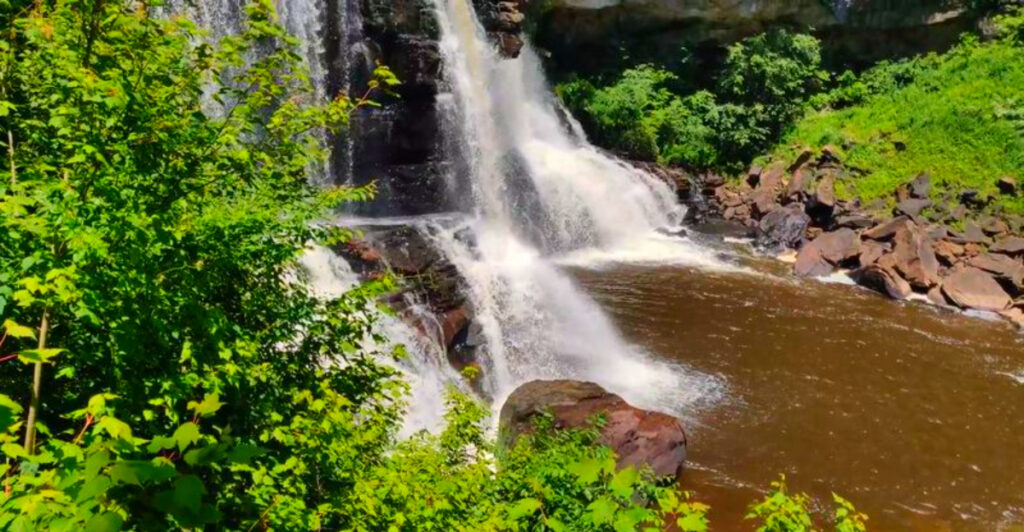
A West Virginia waterfall known for its dark amber water looks almost unreal the first time you see it. The unusual color comes naturally from tannins released by hemlock and spruce forests upstream, giving the river a tea-colored appearance as it pours through a steep sandstone canyon.
But the falls are only part of the experience. The surrounding state park features more than 20 miles of hiking trails, an eight-mile canyon, year-round lodging, and the longest sled run on the East Coast during winter.
Whether visitors arrive for fall foliage, summer hiking, or snowy mountain views, this park offers far more than a quick scenic stop.
Where the Park Begins: Address, Location, and First Impressions
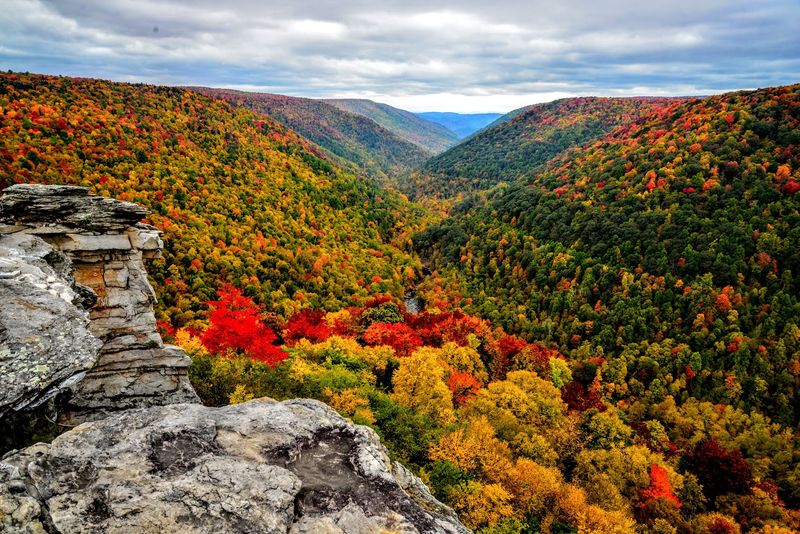
The address is 1584 Blackwater Lodge Rd, Davis, WV 26260, and the drive there already sets the mood. Tucker County sits high in the Allegheny Mountains, and the roads into Davis wind through dense forest with ridgelines rising on both sides.
Blackwater Falls State Park was established in 1937 and covers a landscape dominated by hardwood trees, red spruce, and eastern hemlock. The park is open daily from 6 AM to 10 PM, and you can reach the visitor center by phone at 304-259-5216.
The town of Davis itself is small and charming, and the park entrance feels almost immediate once you leave the main road. There is a well-maintained road network inside the park, clearly marked for trails, overlooks, the lodge, and campgrounds.
First-time visitors often say the scale of the place surprises them. The canyon alone stretches eight miles long, half a mile wide, and drops roughly 500 feet deep, which is not something you fully grasp until you are standing at the edge of it.
The Science Behind That Unforgettable Dark Water
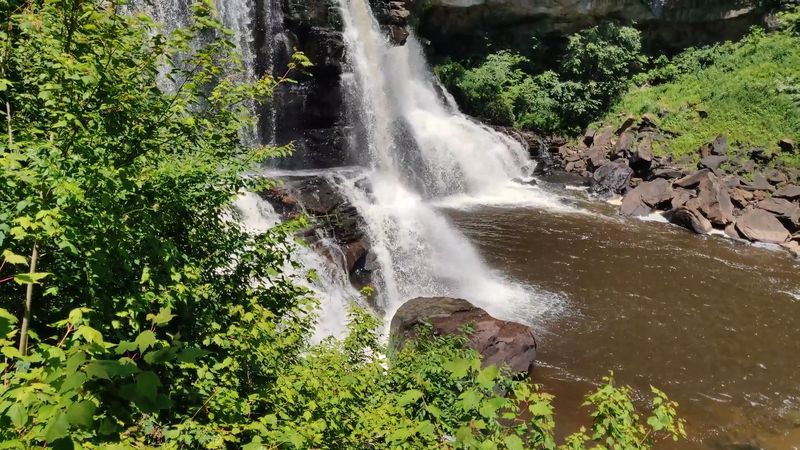
Most waterfalls look like waterfalls. This one looks like someone brewed a very large pot of tea and sent it over a cliff.
The color is entirely natural, and the explanation is genuinely fascinating once you hear it.
As the Blackwater River moves slowly through upstream wetlands and bogs, it passes through layers of fallen hemlock and red spruce needles. Those needles release tannic acid into the water, which stains it a rich amber or dark brown color depending on the light conditions.
On bright sunny days, the water at the base of the falls glows golden-brown, almost warm-looking. On overcast days, it deepens into something closer to dark ink.
Neither version looks quite real, which is probably why Blackwater Falls is consistently ranked as the most photographed waterfall in all of West Virginia.
The tannins cause no harm to the ecosystem or to visitors. They are the same compounds found in tea and many tree barks, just in much higher concentration here than in most rivers you would encounter.
Standing at the Falls: What the Experience Actually Feels Like
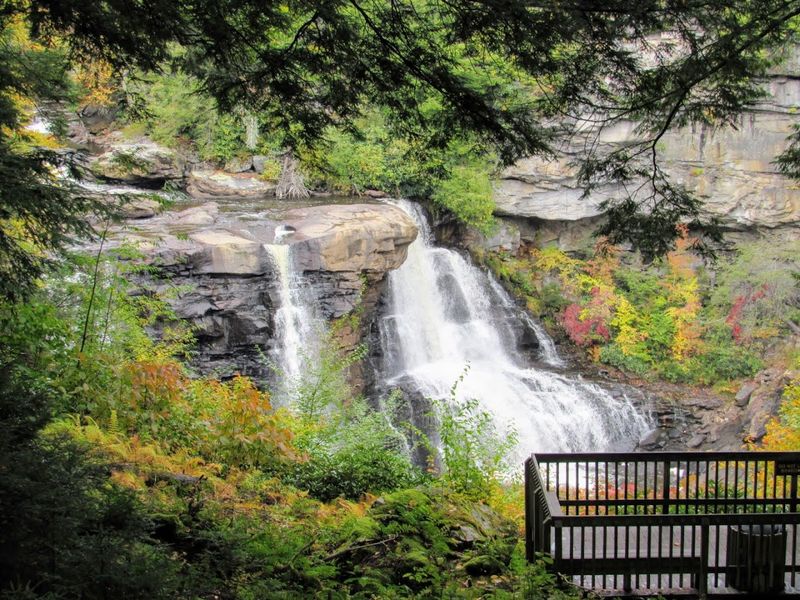
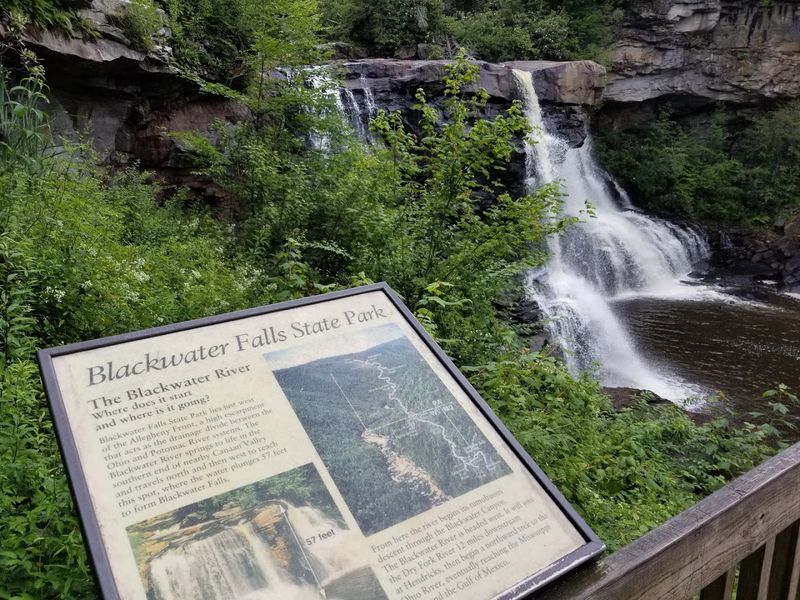
The main falls drop somewhere between 57 and 62 feet depending on water levels, and the sound reaches you before the view does. There is a low, steady roar that grows louder as you descend the steps toward the overlook platform.
Two access routes exist from the western side. One involves a custom-built causeway with just over 200 steps, and the other has roughly one-third fewer steps, which is worth knowing if stairs are a concern.
From the eastern approach, a handicap-accessible paved trail leads to a viewpoint above the falls, making this one of the more inclusive waterfall experiences in the region.
Standing at the overlook, the falls frame themselves between canyon walls draped in ferns and mosses. The mist is light but constant, and the contrast between the dark water and the pale sandstone ledges is striking in a way that photographs honestly struggle to capture.
Most people linger longer than they planned, and honestly, that is the correct response. The falls reward patience, especially as the light shifts throughout the day.
Elakala Falls: The Hidden Waterfall Worth the Extra Steps
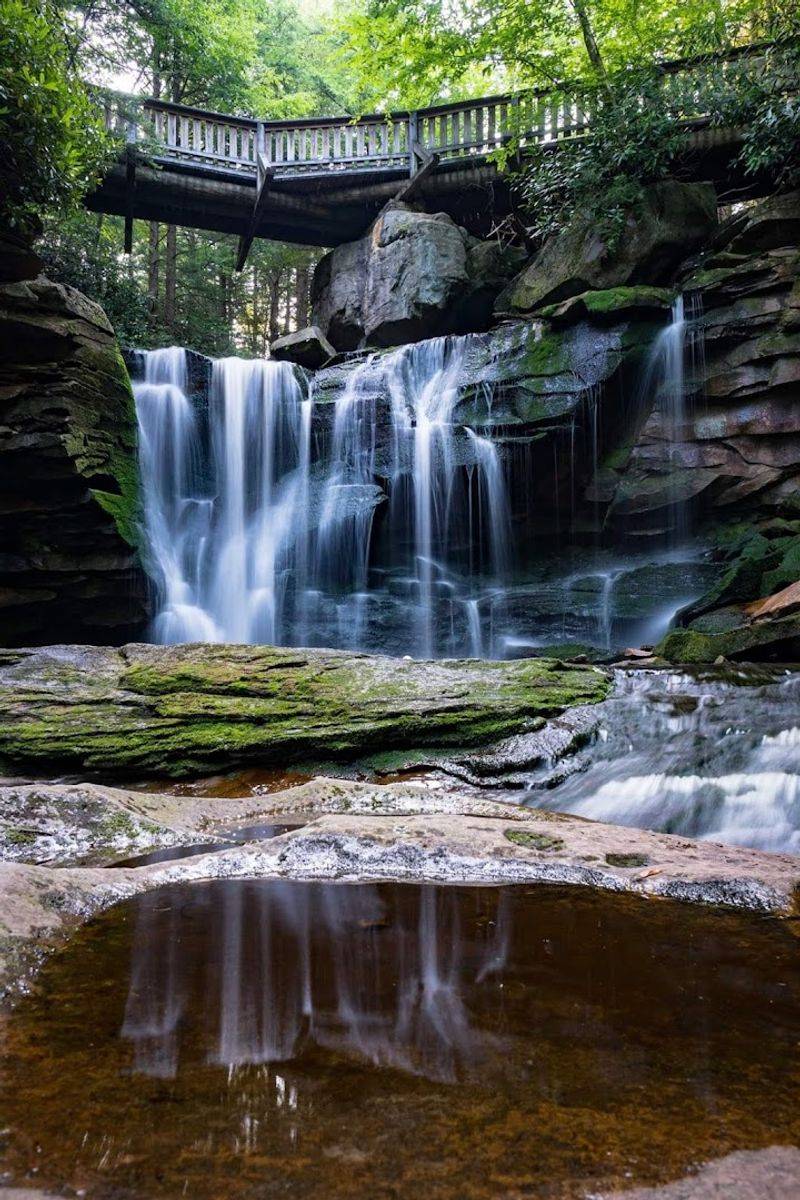
Just a short walk from the lodge, Elakala Falls tends to catch people off guard. You follow a trail that begins almost casually, and then the ground opens up into a narrow gorge where the water drops through a series of cascades over moss-covered rocks.
There are actually four distinct drops that make up the Elakala sequence, though most visitors see the first and most dramatic one. The gorge is narrow enough that you feel genuinely enclosed by the forest, which gives this waterfall a different atmosphere from the main falls entirely.
The light filters through the canopy in a way that makes the moss almost glow, and the water here carries the same amber tint as the Blackwater River. Photographers tend to love this spot for its intimate scale and the way the rocks and ferns frame the cascade.
Early morning visits are especially rewarding because the trail is quiet and the mist from the falls catches the low light beautifully. If you only have time for one extra stop beyond the main falls, Elakala is the one to choose.
Lindy Point and Pendleton Point: The Canyon Views That Change Everything
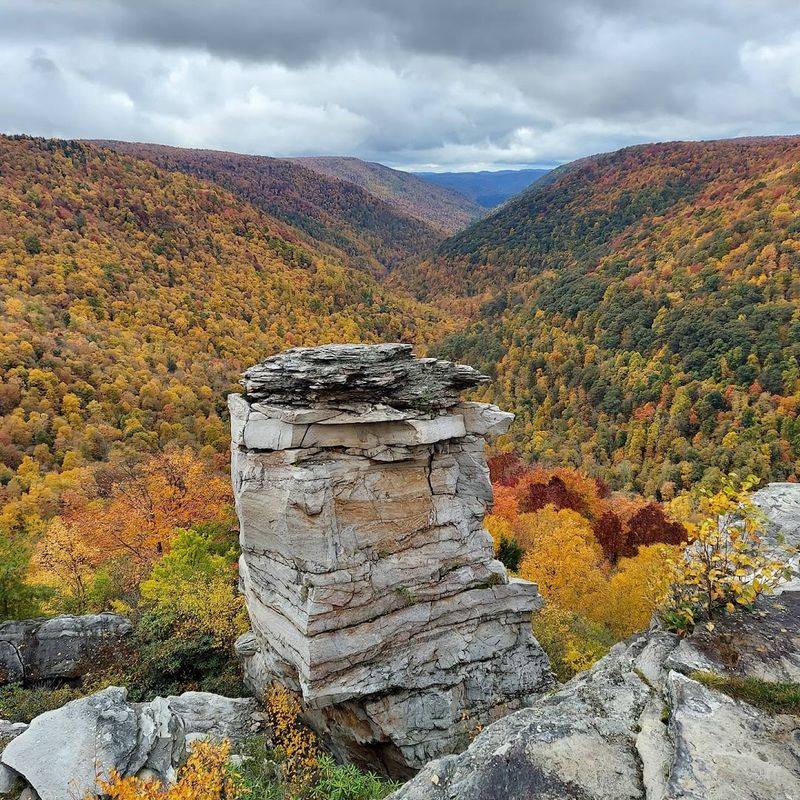
Some views make you want to sit down and just absorb them for a while. Lindy Point Overlook is one of those views.
A relatively short trail leads out to a rocky promontory where the entire Blackwater Canyon spreads out below you in every direction.
The canyon walls are covered in dense red spruce and hardwood forest, and the depth of the gorge creates a sense of scale that genuinely takes a moment to process. Sunsets from Lindy Point are particularly striking, with the light turning the canyon walls from green to copper to deep shadow in the span of about 20 minutes.
Pendleton Point Overlook offers a different angle on the same canyon, slightly more open and with a longer sightline down the river corridor. Both overlooks are reachable without extreme hiking effort, which makes them accessible to a wide range of visitors.
During fall foliage season, these overlooks become some of the most spectacular viewpoints in all of West Virginia, with the canyon filling up with every possible shade of red, orange, and gold. Plan to arrive early if you visit in October.
More Than 20 Miles of Trails: Finding Your Own Path Through the Forest
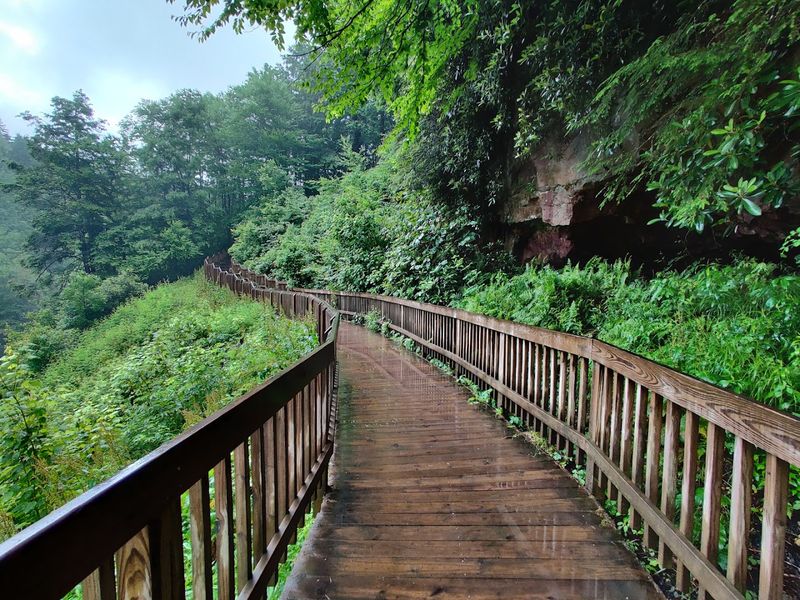
The trail system here covers more than 20 miles, and the variety is genuinely impressive. Some paths are paved and gentle, designed for visitors who want the scenery without the strenuous effort.
Others, like the Dobbin House Loop, stretch to around five miles with enough elevation change to make your legs remember the trip the next morning.
The River Road Trail is one worth highlighting specifically. It connects the town of Davis directly to Blackwater Falls, running alongside the river with a steady stream of scenic stops along the way.
Many regular visitors have walked this trail for years without realizing it existed, which tells you something about how much the park rewards exploration.
Trail markers are clear and consistently maintained, which makes navigation straightforward even for first-time visitors. Dogs are welcome on the trails, and the paths are wide enough that passing other hikers never feels awkward.
The forest itself changes noticeably as you move between sections of the park, shifting from open hardwood canopy to dense spruce stands that block out nearly all direct sunlight. That variety keeps longer hikes feeling fresh.
The Lodge, Cabins, and Campgrounds: Sleeping Inside the Park
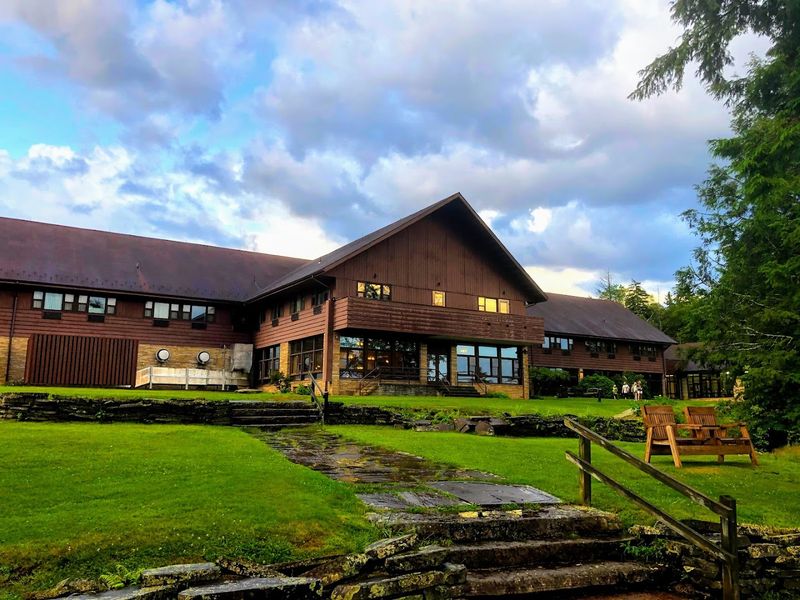
Staying inside the park is a genuinely different experience from driving in for a day trip. The renovated lodge sits close to the Elakala Falls trailhead and offers rooms with views that make the morning feel like a reward in itself.
The lodge includes a restaurant where breakfast is served buffet-style, and while the food is straightforward and hearty rather than gourmet, it fuels a full day of hiking without any complaints. The views from the dining area help, too.
Cabins are available for visitors who want a bit more privacy and a self-contained experience. They tend to book up quickly during fall foliage season and around the winter holidays, so reservations well in advance are genuinely important rather than just a polite suggestion.
The campground accommodates both tent campers and RVs, with a clearly marked one-way road through the camping area. Deer are a common sight around the campground in the evenings, often wandering through with complete calm, as if they know they have the run of the place after dark.
Winter at the Park: The Longest Sled Run on the East Coast
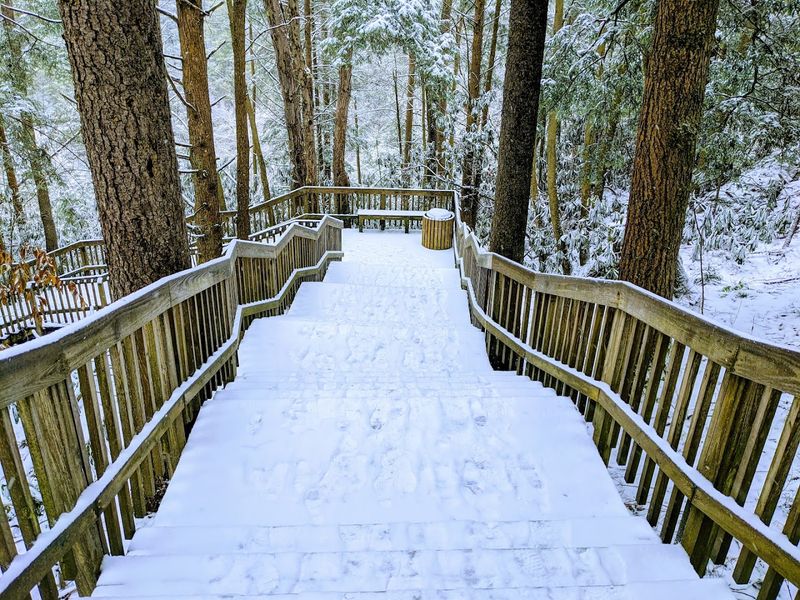
Most state parks quiet down considerably in winter. Blackwater Falls does the opposite.
The park holds the title of longest sled run on the East Coast, and it draws serious crowds during the holiday season.
Sessions run for two hours at a time, with start times at 10 AM, 1 PM, and 4 PM. A Wonder Carpet conveyor belt carries sleds back up the hill, which is a detail that sounds small but makes an enormous difference after your tenth run down the slope.
Tickets sell out fast, particularly during the week of Christmas. Buying in advance is essential rather than optional if you plan to visit during that window.
Even misty or drizzly winter days turn out to be fun once you are actually on the hill.
Beyond sledding, the park offers cross-country skiing and snowshoeing through the forest trails. The snow-covered canyon views from Lindy Point in winter carry a completely different atmosphere from the summer version, quieter and more dramatic, with the bare trees revealing canyon structure that the foliage hides the rest of the year.
Fishing and Boating on Pendleton Lake and the Blackwater River
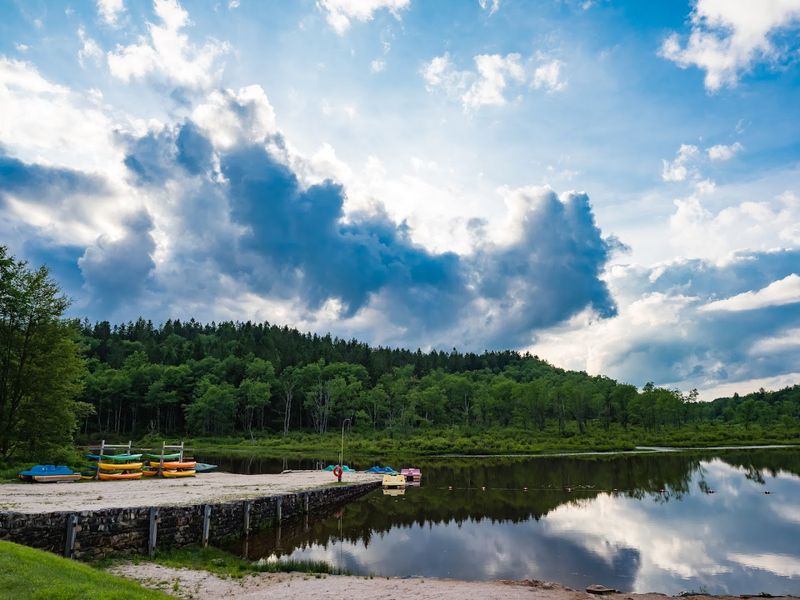
Pendleton Lake sits within the park and offers a calm, accessible spot for fishing and boating that works well for families and solo visitors alike. The lake is regularly stocked, which means the fishing tends to be more reliable here than on many natural waterways.
Rowboats and paddleboats are available for rent during the warmer months, and the lake is small enough that even first-time paddlers feel comfortable on the water. The surrounding forest reflects off the surface on calm mornings, making the whole scene look almost deliberately composed.
The Blackwater River itself is also open to fishing, with stocking occurring regularly to maintain healthy fish populations. The dark amber water of the river is distinctive even when you are standing at the bank with a fishing rod rather than at the falls overlook.
Fishing here requires a valid West Virginia fishing license, which is worth confirming before your trip. Early mornings tend to be the most productive time on both the lake and the river, and the park is quiet enough at that hour that the experience feels almost solitary even during busy seasons.
Fall Foliage Season: When the Park Reaches Peak Color
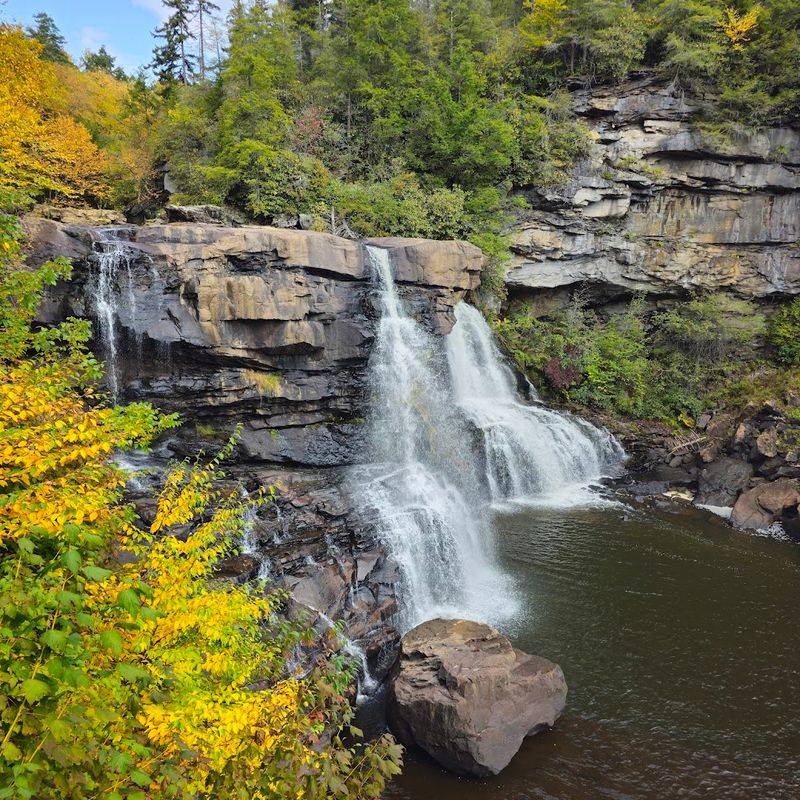
The park is genuinely beautiful in every season, but fall foliage season operates on a different level entirely. The canyon fills with color from late September through mid-October, and the combination of red maple, yellow birch, and orange oak against the dark water of the falls is the kind of scene that stops people mid-step.
The town of Davis hosts an annual Leaf Peepers Festival during peak foliage, which adds a local cultural dimension to a visit that is already rich with natural beauty. The festival draws visitors from across the region, so the park can get crowded on weekends during this period.
Arriving early in the morning on weekdays gives you the best combination of good light and manageable crowds. The overlooks at Lindy Point and Pendleton Point are especially rewarding during fall, with the canyon floor below turning into a patchwork of warm colors that contrasts sharply with the dark evergreen spruce stands.
Photographers who make the trip specifically for fall foliage often say the park exceeds their expectations, which given how high those expectations tend to be, says something significant about what the park delivers.
Practical Tips for Getting the Most Out of Your Visit
A few things make a real difference in how a visit to this park goes. The visitor center staff are notably helpful and can point you toward trail access points, current conditions, and lesser-known spots that do not always make it onto the main maps.
Cell service is limited in parts of the park, so downloading trail maps before arrival is a practical step worth taking. The website at wvstateparks.com has current information on lodging availability, sled run schedules, and seasonal programming that changes throughout the year.
Comfortable footwear matters more here than at some parks because even the moderate trails involve uneven terrain and some elevation change. The 200-plus steps to the main falls overlook are manageable for most visitors but worth knowing about in advance.
The accessible Gentle Trail on the eastern side is a genuine and well-designed alternative that does not feel like a consolation option.
Share this story