Greece has over 6,000 islands, but most travelers end up on the same two or three. The good news is that beyond the selfie crowds of Santorini and the party scene of Mykonos, there are dozens of quieter islands waiting to be explored.
From clifftop villages to hidden coves, these lesser-known gems offer everything you love about Greece without the chaos. Pack light, slow down, and get ready to discover the real Greek island experience.
Tinos
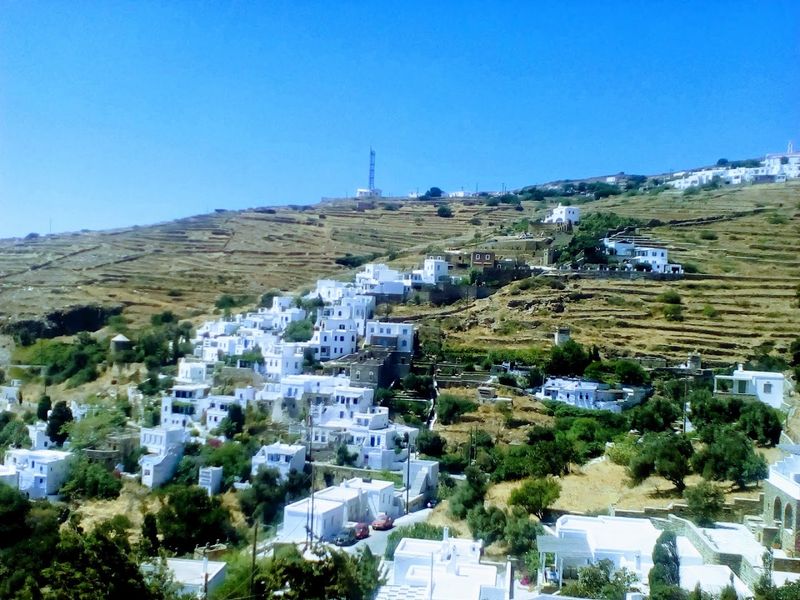
Forget everything you think you know about Cycladic islands, because Tinos quietly breaks all the rules. Sitting just a short boat ride from Mykonos, it somehow manages to stay refreshingly calm and crowd-free.
The contrast between the two neighbors is almost comical.
Tinos is famous for its marble craftsmanship, and the villages of Pyrgos and Volax showcase this tradition beautifully. Skilled local artisans still carve marble by hand, which feels like stepping into a living museum.
You can watch them work right in their studios.
The island also holds deep religious significance for Greek Orthodox pilgrims who visit the Church of Panagia Evangelistria. This adds a layer of cultural richness that most tourist-heavy islands simply lack.
Outside of August, the streets remain wonderfully peaceful.
Hikers will love the network of old stone paths connecting villages across the hills. Beaches like Kolymbithra offer wide sandy shores without the crowds or the overpriced sun loungers.
Tinos proves that the best Greek island experiences often come without a reservation.
Amorgos
Clinging to a vertical cliff face like something out of a fantasy novel, the Hozoviotissa Monastery on Amorgos is genuinely one of the most jaw-dropping sights in all of Greece. Built in the 11th century, it seems to defy both gravity and logic.
First-time visitors often stop walking just to stare at it.
Amorgos became internationally known after Luc Besson filmed The Big Blue here in 1988. Surprisingly, that fame never translated into mass tourism.
The island absorbed the attention and went right back to being wonderfully quiet.
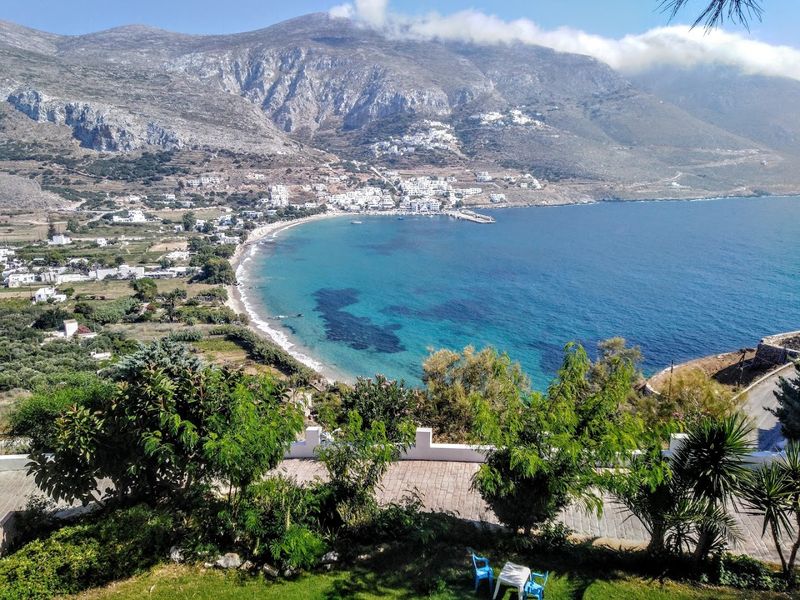
The western side of the island features dramatic landscapes with steep cliffs dropping into some of the clearest water in the Mediterranean. Snorkelers and free divers consider this area a dream destination.
The visibility underwater can stretch beyond 40 meters on calm days.
Village life centers around Chora, a classic whitewashed settlement perched high above the sea. Small tavernas serve fresh fish and local wine without tourist-menu pricing.
Amorgos rewards travelers who appreciate raw scenery over polished resort comforts.
Kimolos
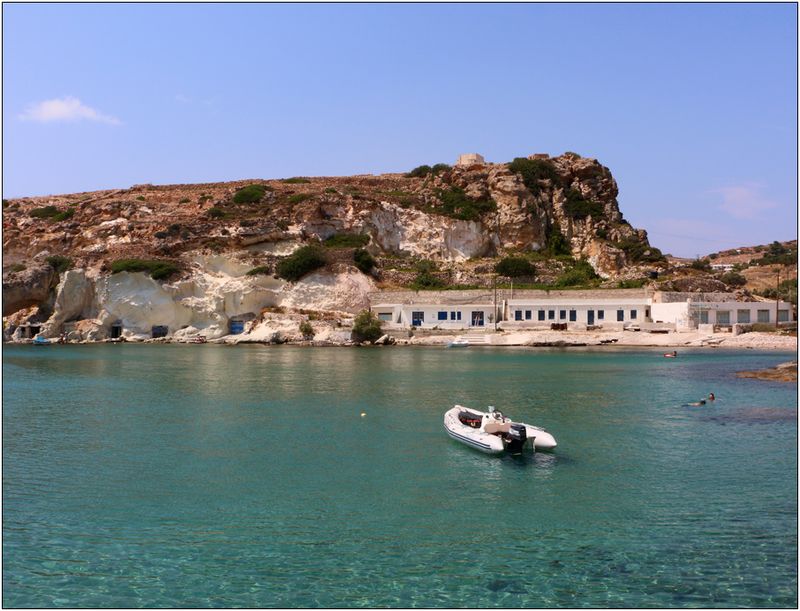
Kimolos is the kind of island that makes you wonder why you ever bothered going anywhere else. Tucked right next to the more famous Milos, it rarely appears on mainstream travel lists, which is honestly a gift for anyone who finds it.
The island has a population of just over 800 people, and it shows in the most charming way possible.
The main village, Chorio, is a perfectly preserved Cycladic settlement with narrow whitewashed alleys and cats lounging on every corner. There are no chain hotels and no souvenir shops selling mass-produced fridge magnets.
What you get instead is genuine, unhurried island life.
Beaches on Kimolos tend to be uncrowded even in July and August, which feels almost unbelievable by Greek island standards. Prassa beach, with its shallow turquoise water, is particularly popular with local families.
You can usually find a spot without any trouble at all.
The island is also known for its soft, chalky rock called kimolia, which gave Kimolos its name and was historically used like chalk. Small geological details like this make exploring the island feel surprisingly educational.
History hides in the most unexpected places here.
Lipsi
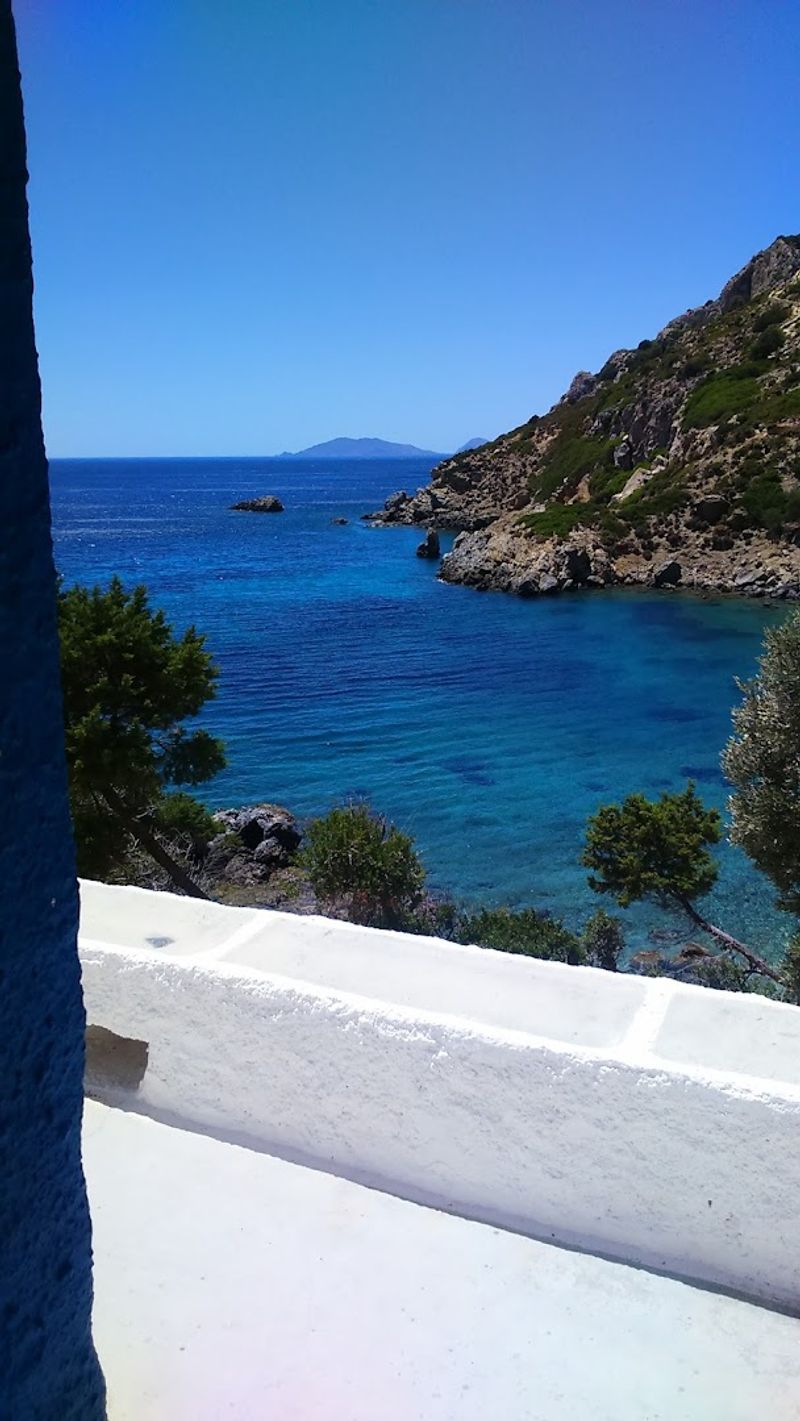
Some islands feel like they exist outside of time, and Lipsi is one of them. This tiny Dodecanese gem sits between Patmos and Leros and receives so few visitors that locals will genuinely remember your face by day two.
That kind of personal welcome is almost impossible to find in modern travel.
Getting to Lipsi requires a ferry, and the limited connections actually work in the island’s favor. Fewer transport links mean fewer day-trippers and a much quieter overall atmosphere.
Travelers who make the effort are almost always rewarded.
The island has around a dozen beaches, most of which are accessible by short walking paths or local boat taxis. Katsadia beach is a favorite for its calm, shallow water and shady tamarisk trees.
Bringing a picnic and spending the entire day there is completely acceptable behavior.
Lipsi town itself is genuinely sweet, with a small harbor lined with tavernas and a charming central square. Local wine is produced on the island, and you can often try it straight from the barrel at small family-run spots.
Lipsi is small, but it leaves a surprisingly big impression.
Kythnos
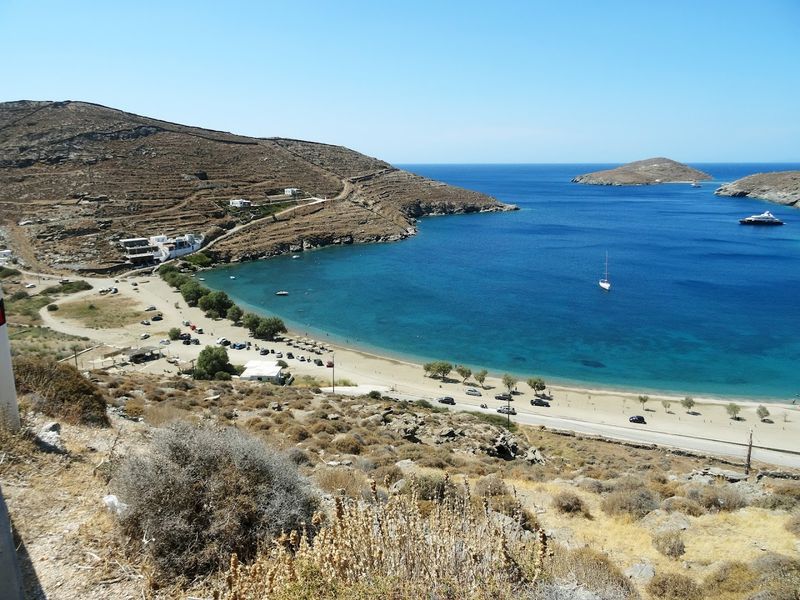
Hot springs, hidden beaches, and a ferry ride of just two hours from Athens make Kythnos sound almost too convenient to be underrated. Yet somehow, the island remains well under the tourist radar.
Greeks from Athens have quietly known about it for years, which is usually a very reliable sign of quality.
The thermal baths at Loutra are one of the island’s most distinctive features, with naturally warm seawater that has been used for therapeutic purposes since ancient times. Soaking in a natural hot spring while looking out at the Aegean is a hard experience to top.
It also costs almost nothing.
Kythnos has two main settlements, Chora and Driopis, both preserving traditional Cycladic architecture without any tourist infrastructure layered on top. Wandering through narrow alleys lined with flower pots and hand-painted doorways feels genuinely authentic.
Nobody is performing for a camera here.
The beach at Kolona is often cited as one of the best in the entire Cyclades, featuring a narrow sandbar connecting two bays. On one side the water is calm and shallow, and on the other it gets a bit more active.
Kythnos earns its reputation as Athens’ best-kept island secret.
Halki
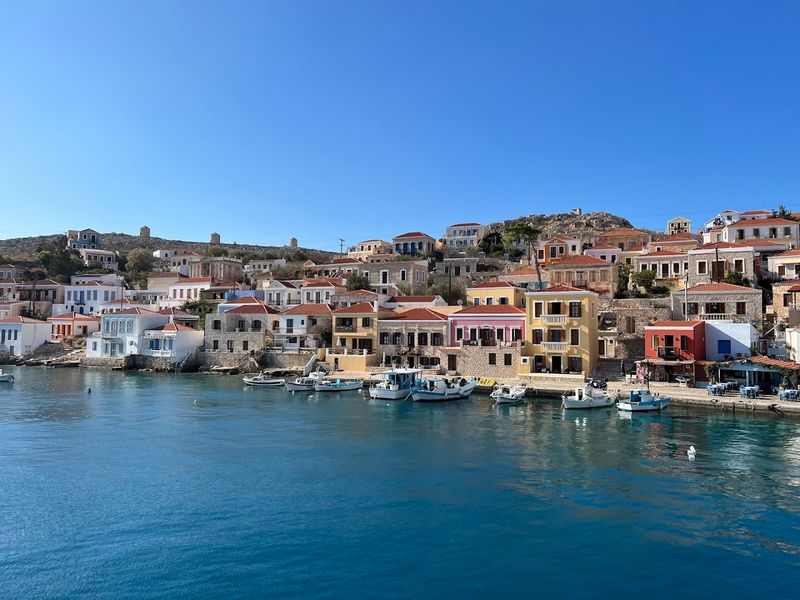
With fewer than 300 permanent residents, Halki holds the rare distinction of being one of Greece’s most peaceful inhabited islands. Cars are practically non-existent, the main village wraps around a pretty harbor, and the pace of daily life runs at approximately the speed of a slow afternoon nap.
That is not a complaint.
Nimporio, the island’s only settlement, is a gorgeous collection of neoclassical buildings painted in soft yellows, pinks, and oranges. The architecture reflects the island’s prosperous sponge-diving history from the 19th century.
Walking along the waterfront in the early morning, before any boats arrive, feels like having the whole place to yourself.
Halki has several beaches reachable on foot or by small boat, with Ftenagia being a local favorite for its calm, clear water. There are no beach clubs, no DJs, and no inflatable flamingos for rent.
Just sea, sun, and the sound of waves.
Evenings on Halki are wonderfully low-key, with a handful of tavernas serving fresh seafood and local dishes. The lack of nightlife is not a bug, it is absolutely the feature.
Halki is for travelers who measure a great trip by how deeply they managed to relax.
Folegandros
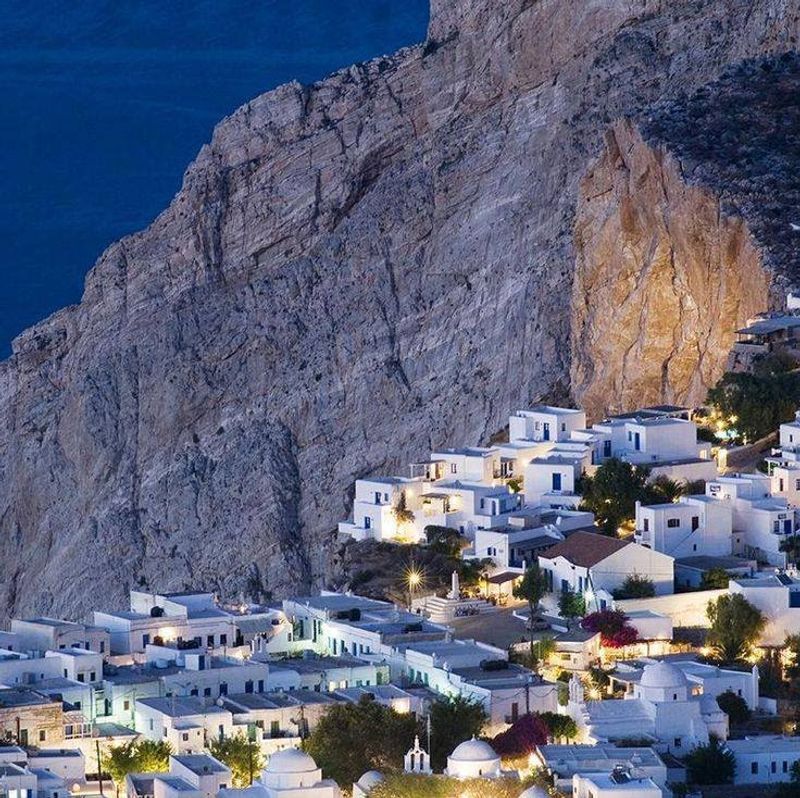
Perched on top of a cliff so dramatically that it looks photoshopped, the Chora of Folegandros is one of the most visually striking village settings anywhere in the Greek islands. What makes it even better is that the crowds found on nearby Santorini have never quite figured out how to get here in the same numbers.
Long may that continue.
Folegandros is small, roughly 32 square kilometers, which means you can genuinely explore most of it in a few days. The island rewards walkers with a network of hiking trails connecting clifftop chapels, remote beaches, and terraced farmland.
The trail to Agios Nikolaos beach is particularly memorable for its sweeping views.
The main square in Chora is one of those rare spots where you can sit for two hours with a coffee and feel completely justified. Bougainvillea drapes over whitewashed walls, cats weave between chair legs, and the only noise is conversation.
It is the kind of place that makes you extend your trip by three days.
Folegandros has no major airport, which keeps day-tripper numbers low. The ferry journey itself, passing rocky headlands and open sea, sets the tone perfectly.
Arriving here already feels like an achievement worth celebrating.
Ikaria
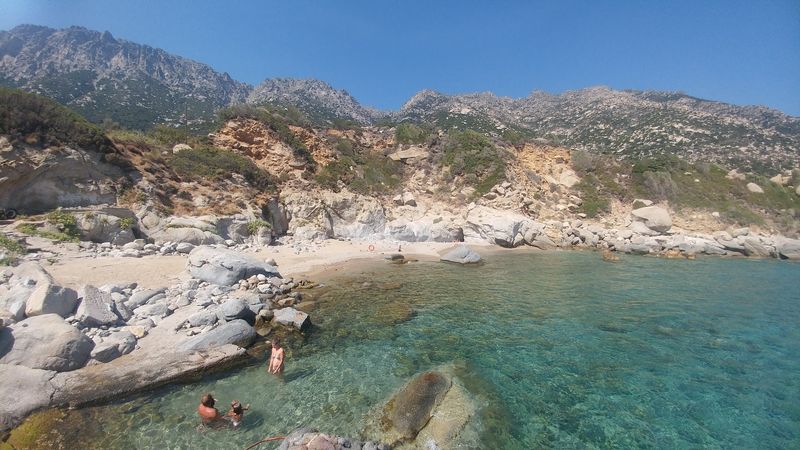
Ikaria made international headlines when researchers discovered that its residents live significantly longer than the global average, placing it among the world’s so-called Blue Zones. Scientists and journalists arrived to investigate.
Most of the locals just shrugged and went back to their afternoon nap, which might actually be the entire answer.
The island operates on its own relaxed schedule, and that is not a figure of speech. Shops open late, festivals run until sunrise, and nobody seems particularly stressed about anything.
Adapting to Ikarian time takes about 48 hours, and after that, leaving feels genuinely difficult.
Ikaria’s landscape is dramatically different from the typical dry, rocky Cycladic look. The island is green and mountainous, with forests, rivers, and waterfalls that feel more like northern Europe than the Aegean.
The contrast surprises first-time visitors in the best possible way.
Beaches like Seychelles and Mesakti are wild and beautiful, drawing surfers and free spirits rather than resort tourists. Local wine, called Pramnian in ancient texts and mentioned by Homer, is still made on the island and served cheaply in communal gatherings.
Ikaria does not follow the standard Greek island script, and that is precisely the point.
Syros
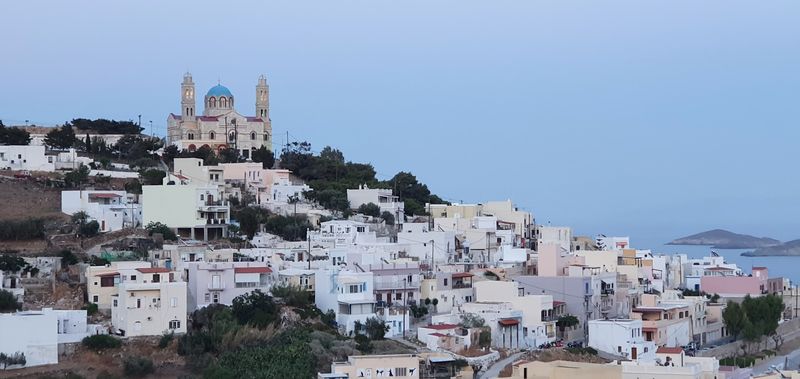
Most travelers pass through Syros on a ferry without stopping, which is one of the great navigational errors in Greek island travel. The capital, Ermoupoli, is the administrative capital of all the Cyclades, and it carries an architectural confidence that sets it apart from every other island in the group.
This place has genuine urban energy without losing its island soul.
The city’s neoclassical buildings date from a period of serious commercial prosperity in the 19th century, when Syros was the most important port in the entire eastern Mediterranean. That golden era left behind a remarkable collection of mansions, theaters, and public squares.
The Apollo Theater, modeled after La Scala in Milan, still hosts performances today.
Unlike most Cycladic islands, Syros functions as a real, working community throughout the entire year. Markets, bakeries, and local shops stay open in January just as they do in August.
Visiting off-season gives travelers an unusually honest look at actual Greek island life.
Beaches on the quieter northern part of the island offer calm water and very few visitors. Kini and Galissas are both relaxed spots with good local tavernas nearby.
Syros rewards travelers who look past the ferry schedule and actually get off the boat.
Astypalea
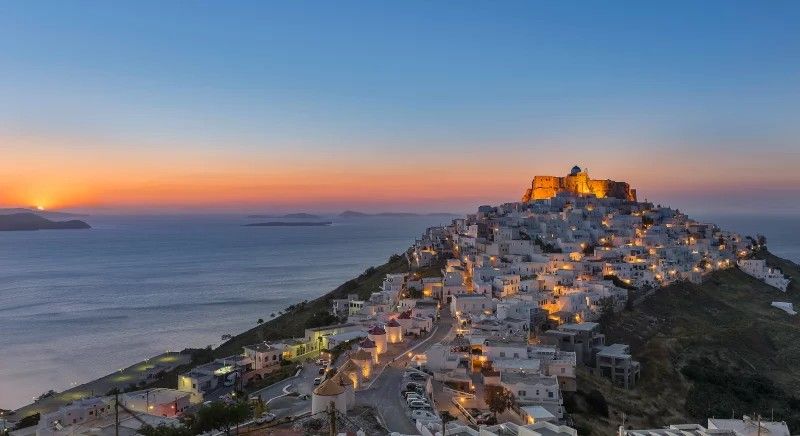
Shaped like a butterfly when seen from above, Astypalea is the kind of geographical quirk that makes you want to book a flight immediately. The island sits at the western edge of the Dodecanese, far enough from the main ferry routes that reaching it requires genuine commitment.
That commitment pays off every single time.
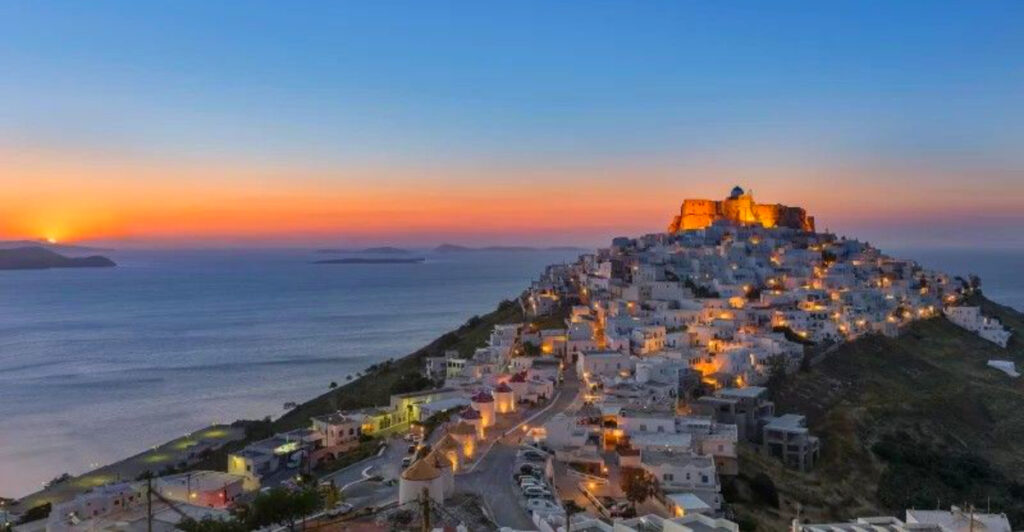
The Chora village, crowned by a medieval Venetian castle, tumbles down a hillside in a cascade of whitewashed houses and blue-domed chapels. A row of restored windmills along the castle ridge adds a storybook quality to the skyline.
At sunset, the whole scene turns golden and slightly unreal.
Astypalea’s beaches range from easily accessible sandy coves near the main town to completely remote stretches reachable only by boat. Vatses and Kaminakia are two favorites that consistently deliver clear water and very few fellow visitors.
Bringing your own snacks is recommended, as amenities are minimal and that is a feature, not a flaw.
The local food scene leans heavily on fresh seafood and traditional recipes passed down through generations. Small family tavernas dominate, and menus change based on what was caught that morning.
Astypalea is genuinely one of Greece’s finest arguments for going off the beaten path.
Share this story