Walking through a military museum is unlike any other experience you can have. These places hold real stories of bravery, loss, and determination told through actual artifacts, restored equipment, and the voices of those who lived through history.
From World War II battlefields recreated indoors to aircraft carriers you can actually walk on, these museums connect you to moments that shaped the entire world. Whether you are a history buff or just curious, these 15 U.S. military museums will genuinely move you.
The National WWII Museum — New Orleans, Louisiana
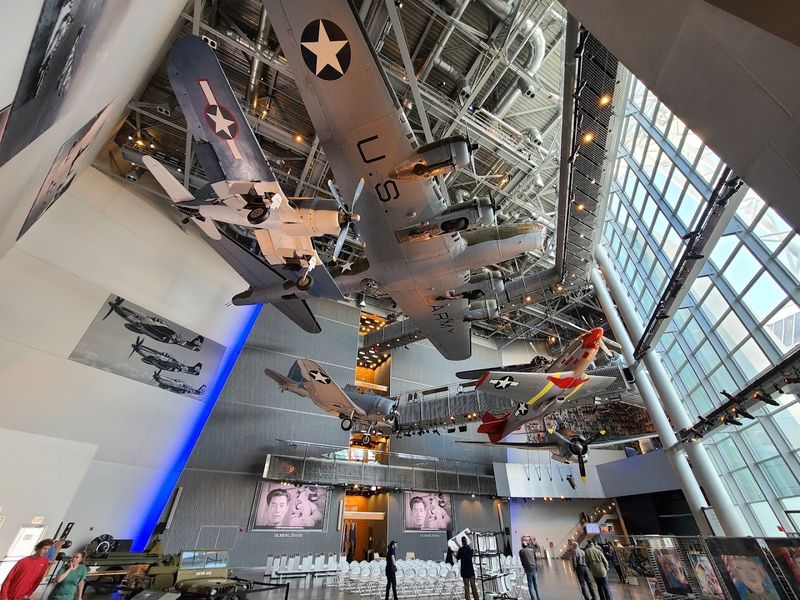
Few places on earth hit you the way this museum does the moment you walk through the door. The National WWII Museum in New Orleans is regularly ranked among the best museums in the entire world, and it earns that title every single day.
Restored tanks, landing craft, and wartime vehicles fill enormous gallery spaces that feel more like stepping into history than reading about it.
What makes this museum truly unforgettable is its commitment to personal stories. Oral history recordings from actual veterans let you hear the war in the voices of people who lived it.
The 4D cinematic experience narrated by Tom Hanks gives the global scale of the conflict a deeply human face.
Exhibits cover the European and Pacific theaters in remarkable detail, tracing every major campaign with original artifacts and photographs. Plan for a full day because there is simply too much to absorb in a quick visit.
The museum also hosts traveling exhibits, special events, and educational programs throughout the year. Visiting New Orleans and skipping this museum would honestly be a mistake you would regret.
National Museum of the United States Air Force — Dayton, Ohio
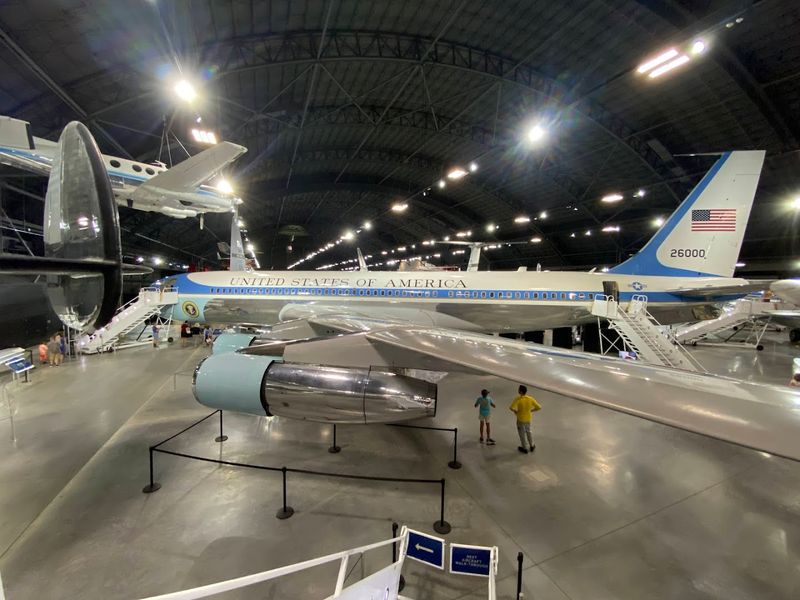
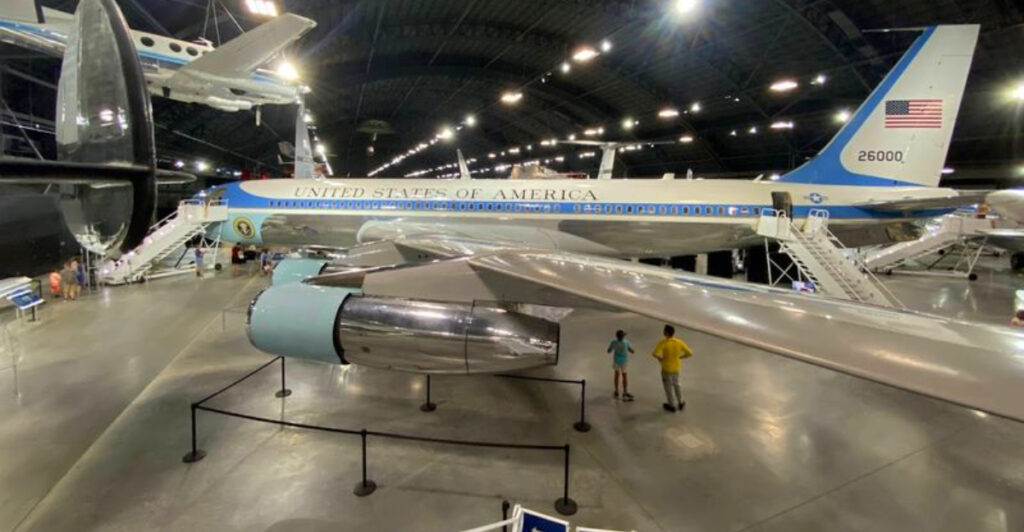
More than 350 aircraft packed under one roof sounds impossible until you actually stand inside this place. The National Museum of the United States Air Force at Wright-Patterson Air Force Base in Dayton, Ohio is the largest military aviation museum on the planet.
Four enormous hangars hold everything from fragile biplanes used in World War I to cutting-edge stealth aircraft that look like something from science fiction.
One of the coolest sections covers presidential aircraft, where you can see the actual planes that carried U.S. commanders in chief across decades of history. The Cold War gallery is genuinely chilling, displaying missiles, spy planes, and nuclear weapons delivery systems that defined one of history’s most tense eras.
Admission is completely free, which makes this museum one of the best deals in American travel. Restoration projects happen right on site, and visitors can sometimes watch skilled technicians working on historic aircraft up close.
Space exploration exhibits add another layer of awe to an already overwhelming collection. Aviation fans could spend two full days here and still feel like they missed something worth seeing.
National Infantry Museum — Columbus, Georgia
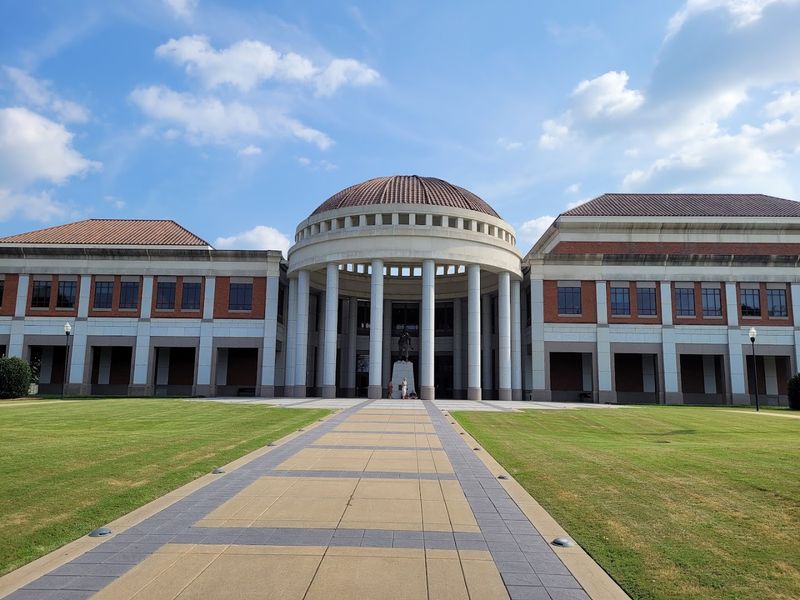
Soldiers carry the weight of every war on their backs, and this museum makes sure you never forget that fact. The National Infantry Museum near Fort Moore in Columbus, Georgia traces the story of American infantry from the first shots fired in the Revolutionary War all the way through modern combat deployments overseas.
It is a deeply honest museum that does not shy away from the difficulty of ground combat.
Walk-through battlefield environments recreate the chaos and exhaustion of real combat situations with remarkable authenticity. Visitors pass through scenes representing different eras of American warfare, feeling the emotional shift from one conflict to the next with each step forward.
The 1775 Soldiers Experience is particularly moving for anyone who wants to understand what it actually felt like to serve.
A giant IMAX-style theater shows films about infantry history, and rotating exhibits bring fresh perspectives throughout the year. The outdoor memorial park includes preserved military vehicles and monuments honoring fallen soldiers.
Children and adults both find something meaningful here, though the emotional weight of certain exhibits stays with you long after the drive home. Entry is free, which reflects the museum’s genuine commitment to honoring service.
National Museum of the Marine Corps — Triangle, Virginia
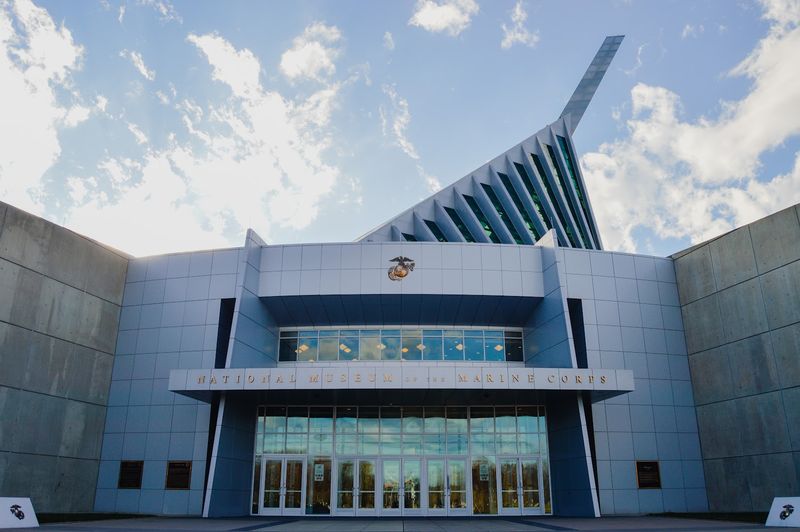
That dramatic spike shooting into the Virginia sky is not accidental architecture. The National Museum of the Marine Corps in Triangle, Virginia was deliberately designed to mirror the angle of the rifles held by soldiers raising the flag at Iwo Jima.
The building itself is a statement before you even step inside, and the interior delivers on that bold promise with full force.
Combat simulations let visitors feel the disorienting intensity of actual Marine firefights. The sounds, lighting, and physical environments are crafted to create genuine emotional reactions, not just intellectual understanding.
Each gallery moves chronologically through Marine history, from the earliest days of the Corps through present-day special operations missions.
Aircraft suspended from the ceiling, personal letters from Marines to their families, and recovered battlefield equipment all share the same space in a way that feels carefully curated rather than crowded. The museum never lets you forget that real human beings are behind every artifact on display.
It sits just outside Marine Corps Base Quantico, and admission is free. Families, veterans, and students all leave with a much deeper respect for what the Marine Corps has represented across more than two centuries of American history.
USS Midway Museum — San Diego, California
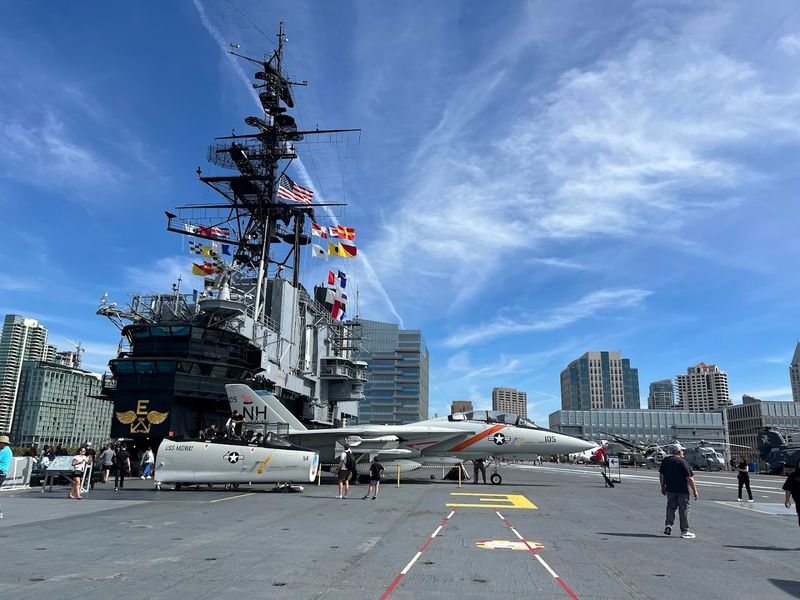
Stepping onto the flight deck of the USS Midway feels like the ground just became a runway. This legendary aircraft carrier served the U.S.
Navy for 47 years, longer than any other carrier in the twentieth century, and today it sits permanently docked in San Diego Bay as one of the most visited naval museums in the country. Over 30 restored aircraft crowd the flight deck and hangar bay, ranging from World War II fighters to Cold War jets.
Volunteer docents are often veterans who actually served aboard the Midway, and their stories transform a walk through the ship into something genuinely personal and unforgettable. You can explore the engine rooms, the captain’s bridge, the crew sleeping quarters, and the combat information center, getting a real sense of how thousands of sailors lived and worked in tight quarters at sea.
Audio tours are available in multiple languages, making the experience accessible to a wide range of visitors. The flight simulator is popular with younger visitors who want to feel what carrier aviation actually involves.
San Diego’s waterfront setting adds a beautiful backdrop to the whole experience. Plan for at least three hours, because the Midway is far larger than it looks from the dock.
National WWI Museum and Memorial — Kansas City, Missouri
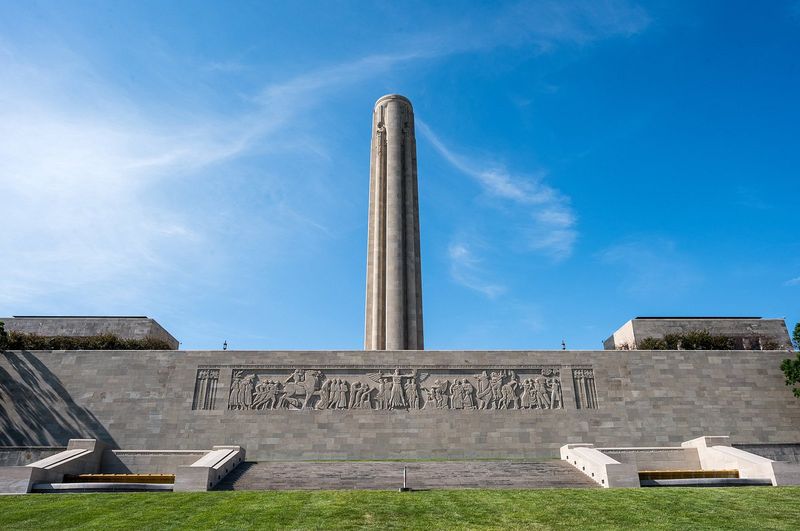
Standing on a glass floor above 9,000 red poppies is one of the strangest and most haunting museum moments you will ever experience. The National WWI Museum and Memorial in Kansas City uses that unforgettable image to represent every 1,000 soldiers who died in World War I, and the effect is immediate and sobering.
This is America’s official WWI museum, and it takes that responsibility seriously.
Artifacts from the trenches sit alongside diplomatic documents and propaganda posters, showing how a single assassination in Sarajevo eventually pulled the entire world into catastrophic conflict. The museum does an excellent job explaining a war that many Americans feel less connected to than World War II, making the human cost feel immediate and relevant rather than distant.
The Liberty Memorial tower offers panoramic views of Kansas City from the top, blending history with a genuinely beautiful vantage point. Rotating exhibits keep the content fresh for repeat visitors, and the museum regularly hosts lectures and educational events.
The architecture itself, completed in the 1920s, adds a layer of historical atmosphere that newer buildings simply cannot replicate. For understanding the modern world, World War I may actually matter more than any other conflict, and this museum argues that case powerfully.
Intrepid Sea, Air & Space Museum — New York City, New York
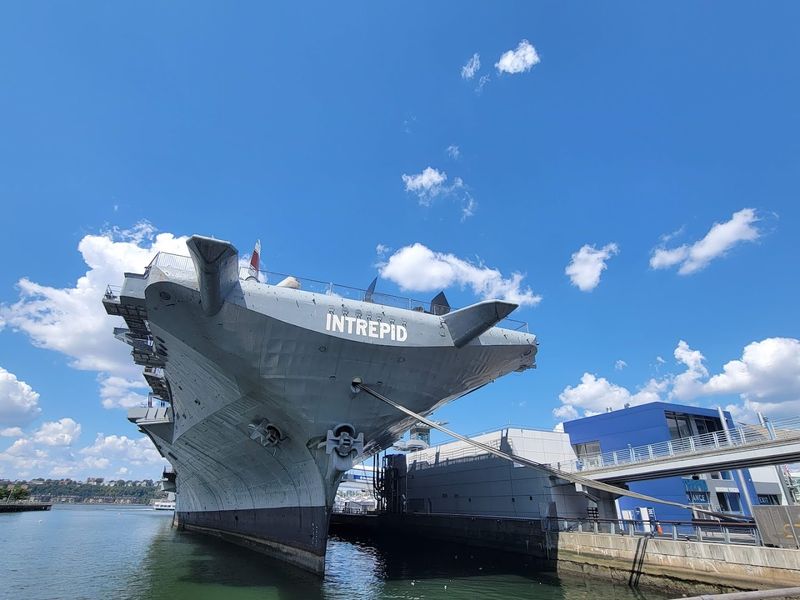
Parking a space shuttle next to an aircraft carrier in the middle of Manhattan is exactly the kind of move that makes the Intrepid Sea, Air and Space Museum impossible to ignore. Built around the historic USS Intrepid, a World War II aircraft carrier that survived multiple kamikaze attacks, this museum on the Hudson River packs an extraordinary range of military and aerospace history into a single location.
The sheer variety here is staggering.
The Space Shuttle Enterprise, the original prototype orbiter used for atmospheric test flights, is housed in a dedicated pavilion right on the pier. Visitors can also explore the USS Growler, a Cold War-era guided missile submarine, walking through its narrow corridors to understand life beneath the ocean surface.
Military aircraft spanning several decades are displayed across the flight deck and hangar bay.
The museum sits on Pier 86 on the west side of Manhattan, making it a surprisingly easy addition to any New York City trip. Interactive exhibits and flight simulators appeal to younger visitors while the deep historical content satisfies serious history enthusiasts.
Tickets are required and can sell out on busy days, so booking ahead is smart. The views of the Hudson River from the flight deck alone are worth the price of admission.
National Museum of the United States Army — Fort Belvoir, Virginia

Opened in 2020 after years of anticipation, the National Museum of the United States Army at Fort Belvoir, Virginia immediately became one of the most impressive military museums in the country. Covering more than 245 years of Army history, the museum uses state-of-the-art multimedia technology to put visitors directly inside the experiences of American soldiers across every major conflict.
Nothing here feels outdated or dusty.
The galleries are organized around key themes rather than strict chronology, which makes the storytelling feel fresh and layered. You might move from a Revolutionary War campfire scene to a modern combat outpost in Afghanistan within a short walk, and both environments feel equally compelling.
Personal accounts from soldiers of all ranks and backgrounds give the exhibits emotional depth that raw facts alone could never provide.
The building itself is architecturally stunning, with a design that honors both tradition and forward momentum. The museum includes a theater, a library, and research facilities for those who want to explore Army history beyond the public galleries.
Admission is free, and the museum is accessible from the Washington D.C. metro area. For anyone who wants to understand what the United States Army has meant to this country across nearly two and a half centuries, this museum delivers a genuinely comprehensive answer.
National Naval Aviation Museum — Pensacola, Florida
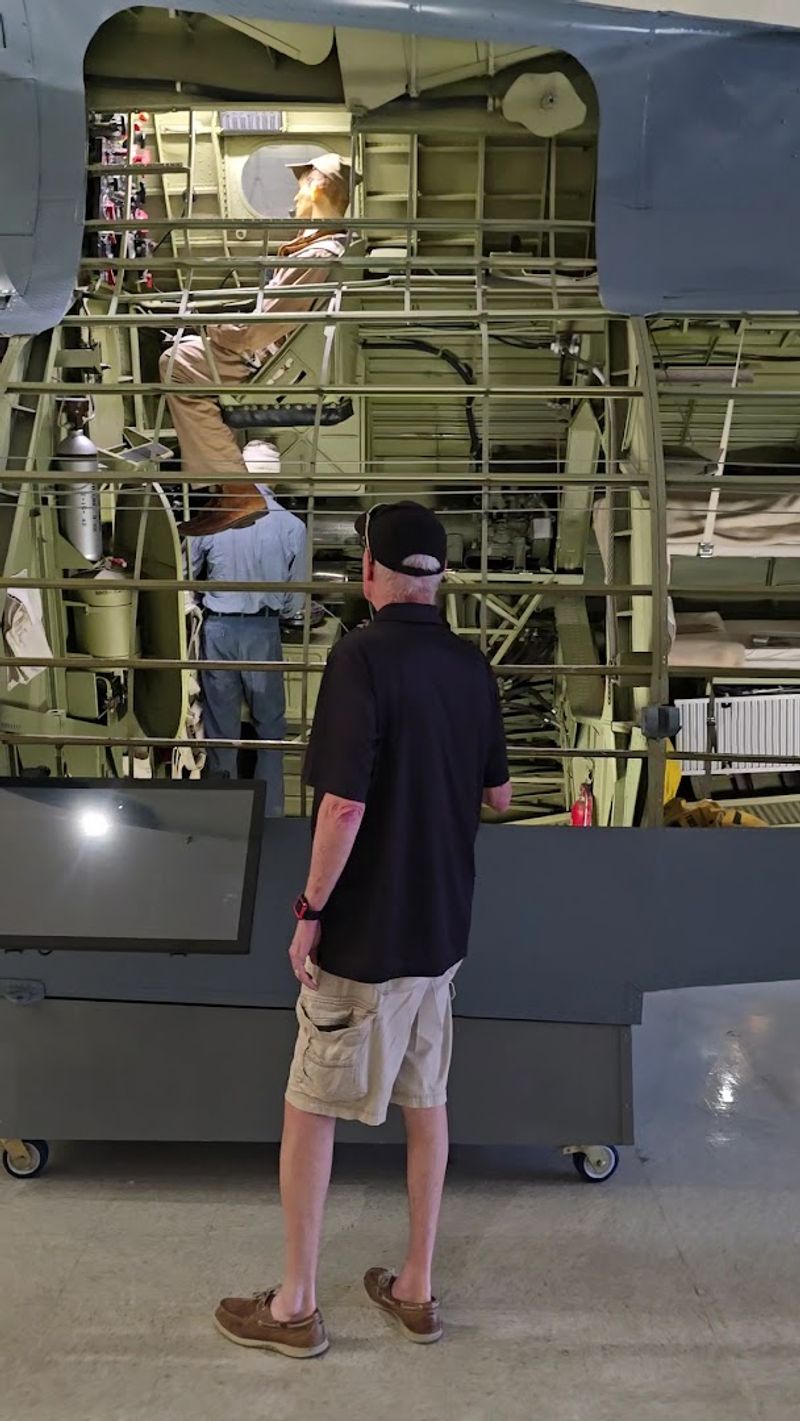
Four Blue Angels jets frozen mid-maneuver and hanging from the ceiling is the kind of sight that stops you completely in your tracks. The National Naval Aviation Museum in Pensacola, Florida houses one of the finest collections of naval aircraft anywhere in the world, with more than 150 restored aircraft spanning over a century of aviation history.
Best of all, admission is entirely free.
The museum sits on Naval Air Station Pensacola, which is itself the birthplace of U.S. naval aviation, adding a layer of historical authenticity that purpose-built tourist attractions simply cannot manufacture. The IMAX theater shows aviation films that make full use of the massive screen, and flight simulators give visitors a taste of what carrier pilots actually train to do.
Restoration workshops are visible to the public, and watching skilled craftspeople bring a deteriorating historic aircraft back to flying condition is genuinely fascinating. The outdoor park features additional aircraft and monuments in a setting that feels both peaceful and powerful.
Pensacola’s warm weather makes visiting comfortable year-round, and the nearby beaches offer a pleasant way to extend the trip. Families consistently rate this museum as one of the highlights of any Florida Panhandle visit, and the sheer scale of the collection justifies every bit of that enthusiasm.
Gettysburg National Military Park Museum — Gettysburg, Pennsylvania
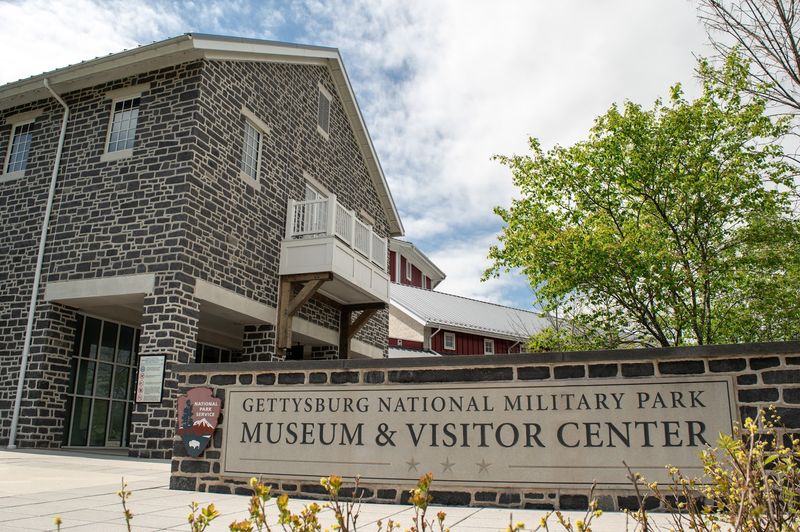
Three days of fighting in July 1863 changed the course of American history, and Gettysburg still holds the weight of those days in its soil and its silence. The museum and visitor center at Gettysburg National Military Park serves as the gateway to understanding what happened here and why it mattered so profoundly.
The collection includes thousands of original Civil War artifacts recovered from the battlefield itself.
The Cyclorama, a massive 360-degree oil painting depicting Pickett’s Charge, is one of the most visually stunning historical artworks in the United States. Standing at its center while the painting surrounds you completely creates an almost dizzying sense of being pulled back into the battle.
Multimedia presentations help visitors understand the military strategy and human stakes involved before heading out to walk the actual battlefield.
Ranger-led tours of the grounds bring the landscape to life with vivid storytelling and precise historical detail. The rolling Pennsylvania farmland looks deceptively peaceful today, which makes the stories of combat even more striking when you stand exactly where soldiers fell.
The museum pairs perfectly with a self-guided driving tour of the battlefield monuments and memorials. Gettysburg is a place that demands thoughtfulness, and the museum prepares every visitor to give it exactly that.
National Museum of the Pacific War — Fredericksburg, Texas
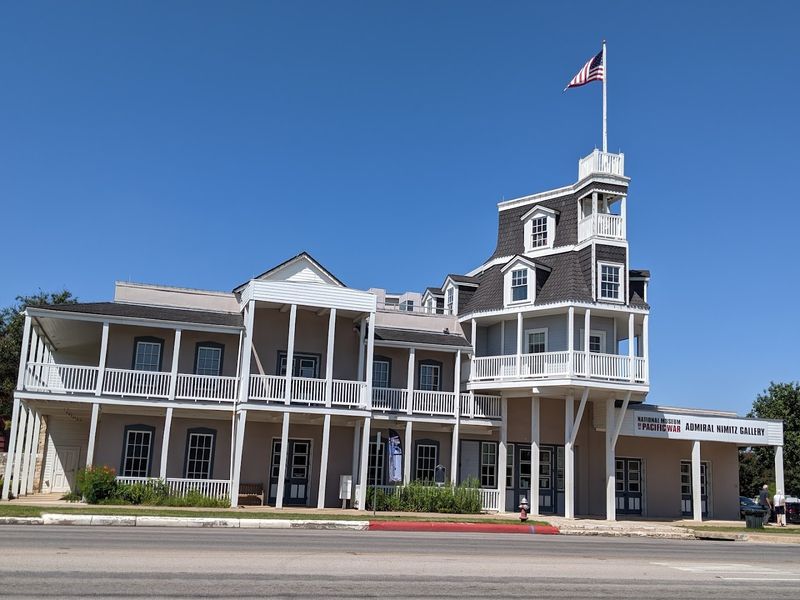
Fredericksburg, Texas might seem like an unlikely home for the country’s premier museum dedicated to the Pacific Theater of World War II, but the connection is deeply personal. Fleet Admiral Chester Nimitz, supreme commander of Allied Pacific naval forces, was born right here in Fredericksburg, and his hometown has honored that legacy by building one of the most comprehensive WWII Pacific museums anywhere in the world.
The result is extraordinary.
Recent major renovations expanded the museum significantly, adding hundreds of new artifacts and immersive gallery environments that trace every major Pacific campaign from Pearl Harbor to the Japanese surrender. Restored aircraft, naval guns, and combat vehicles fill an outdoor exhibit area that visitors can explore at their own pace.
The storytelling inside balances American, Japanese, and Allied perspectives with genuine historical care.
The Japanese Garden of Peace, donated by the Japanese government, adds a quietly moving counterpoint to the combat exhibits nearby. Personal accounts from veterans on both sides of the conflict remind visitors that war affects real human beings regardless of which flag they served under.
Fredericksburg itself is a charming Texas Hill Country town with German heritage and excellent food, making the museum an easy anchor for a full weekend trip that combines history, culture, and good eating.
Pearl Harbor Aviation Museum — Honolulu, Hawaii
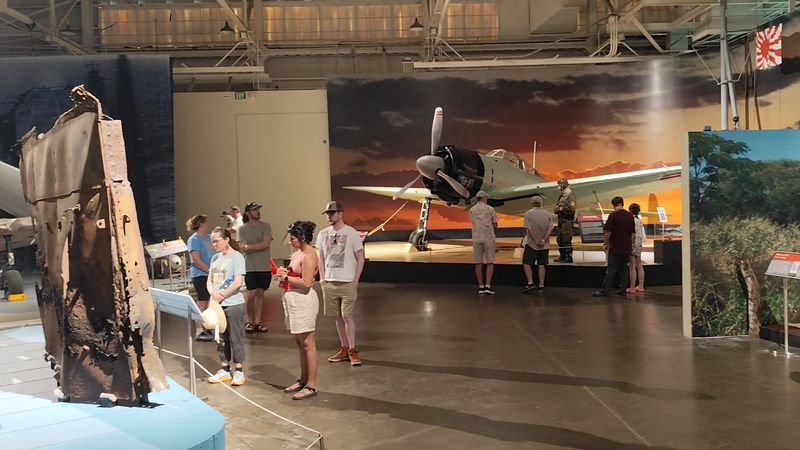
The bullet holes in the hangar walls are original. That detail alone tells you everything about what makes the Pearl Harbor Aviation Museum unlike any other aviation museum in the country.
Located on Ford Island in the middle of Pearl Harbor, this museum occupies the actual hangars that were bombed during the December 7, 1941 attack that brought the United States into World War II. The setting is irreplaceable.
Inside, restored aircraft from the WWII Pacific era are displayed alongside exhibits explaining the tactical and diplomatic events leading up to and following the attack. Seeing a Japanese Zero fighter and an American P-40 Warhawk in the same space creates a powerful visual reminder of the conflict that unfolded in the skies above this very harbor.
Artifacts recovered from sunken ships and downed aircraft add layers of physical authenticity.
The museum is part of the broader Pearl Harbor National Memorial experience, which also includes the USS Arizona Memorial and Battleship Missouri. Visitors typically spend a full day exploring all the sites together.
Getting to Ford Island requires a shuttle bus from the main visitor center, which adds a small sense of arrival ritual that feels appropriate given the gravity of the location. Few places in America carry this much historical and emotional significance per square foot.
Flying Heritage & Combat Armor Museum — Everett, Washington
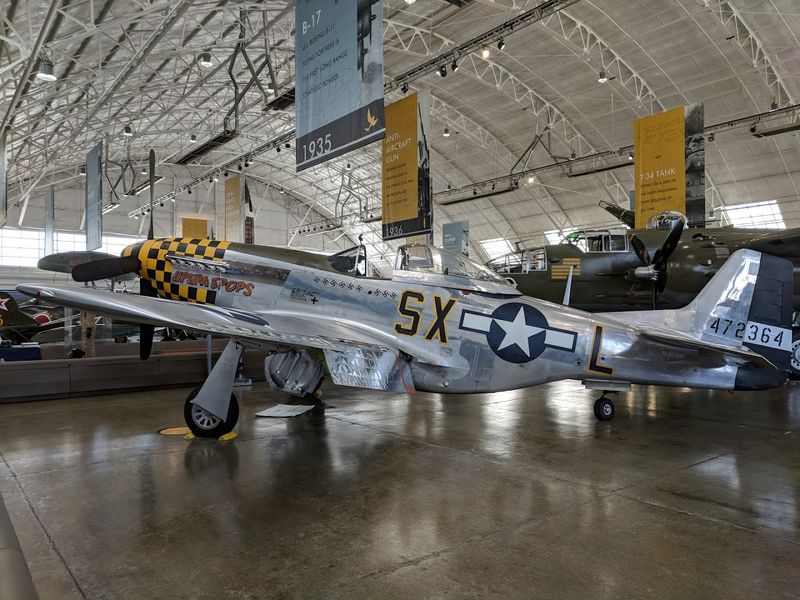
Most military museums show you aircraft behind ropes. This one actually flies them.
The Flying Heritage and Combat Armor Museum in Everett, Washington, founded by Microsoft co-founder Paul Allen, built its reputation on acquiring and restoring rare military aircraft and combat vehicles to fully operational condition. That commitment to authenticity makes it genuinely unlike any other collection in the country.
The museum focuses on aircraft and armor from multiple nations involved in World War II, including German, Soviet, British, Japanese, and American machines. Seeing a Focke-Wulf 190 and a Soviet Polikarpov I-16 in the same hangar as a P-51 Mustang gives you a vivid sense of the global technological competition that defined the air war.
Working tanks from multiple nations add a ground combat dimension that most aviation-focused museums skip entirely.
Live flight demonstration days are scheduled throughout the year, when select aircraft actually take to the skies above Paine Field in what amounts to a living history lesson with a roaring engine soundtrack. The museum is smaller and more focused than some of the massive national collections, which actually works in its favor.
Every aircraft here has a complete story attached, and the staff clearly cares deeply about telling each one accurately and passionately.
National Museum of American History — Washington, D.C.
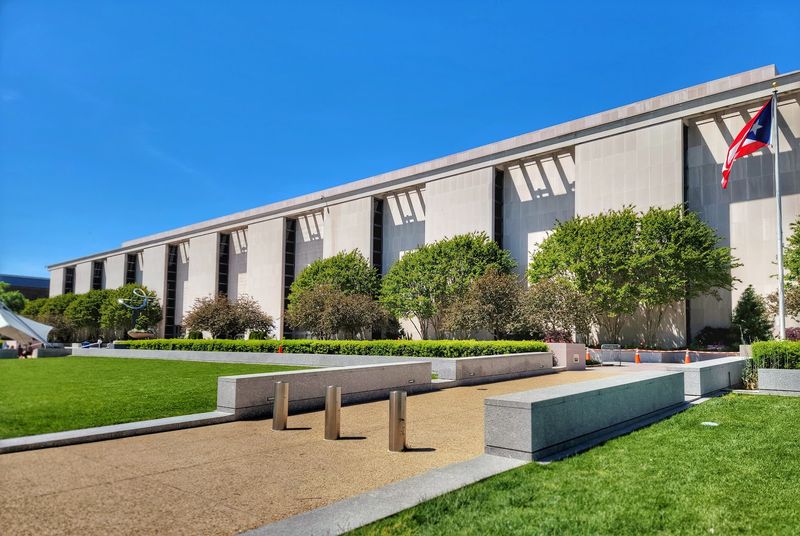
The original Star-Spangled Banner, the actual flag that inspired the national anthem, lives in this building, and that alone would make it worth visiting. The Smithsonian’s National Museum of American History on the National Mall in Washington D.C. covers the full sweep of American life, but its military collections are among the most significant in the country.
Uniforms, weapons, medals, and personal items from every major American conflict fill multiple galleries.
What sets this museum apart from dedicated military museums is the broader context it provides. You see military history alongside the social, cultural, and political history of the same eras, which helps you understand why wars happened and what they changed about everyday American life.
The Price of Freedom gallery specifically addresses American military history from the colonial era through recent conflicts with impressive depth.
Admission is completely free, as with all Smithsonian museums, making it accessible to every visitor regardless of budget. The museum is enormous, so prioritizing the galleries you most want to see before arriving is genuinely helpful advice.
The location on the National Mall means it pairs naturally with visits to the Lincoln Memorial, the Vietnam Veterans Memorial, and other nearby historical sites. For military history within a rich national story, this museum offers remarkable breadth and quality.
Navy SEAL Museum — Fort Pierce, Florida
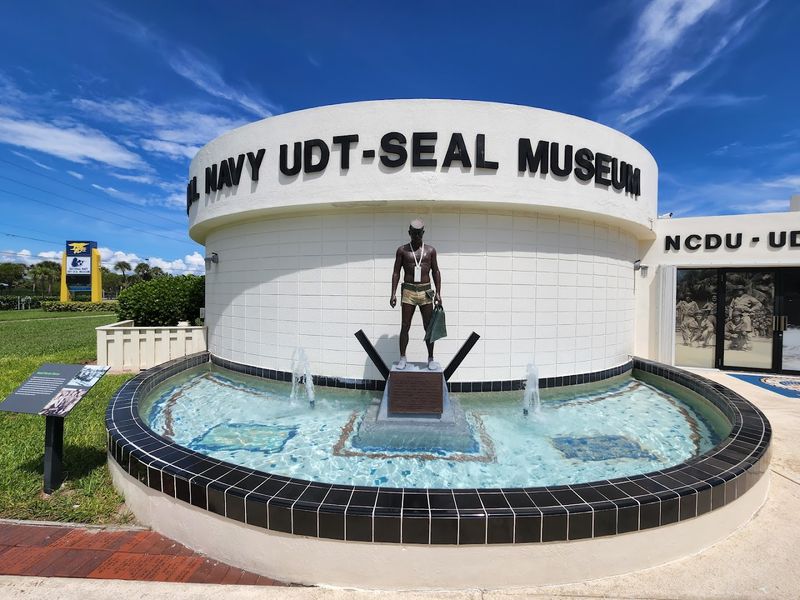
The training beaches of Fort Pierce, Florida are where the Navy SEALs were born, and the museum that stands there today honors that legacy with genuine intensity. The Navy SEAL Museum traces the history of Naval Special Warfare from the World War II Underwater Demolition Teams, known as frogmen, all the way through modern SEAL operations that most of us will never read about in detail.
It is a tight, focused, and powerful collection.
Real equipment used in actual missions is displayed throughout the museum, from early diving gear worn by frogmen clearing beach obstacles before D-Day to weapons and communications technology used in recent special operations deployments. A full-scale helicopter used in special operations training sits outside alongside inflatable combat boats and military vehicles.
The combination of authentic equipment and honest storytelling keeps every exhibit feeling grounded.
The museum is smaller than many on this list, which means visitors can experience everything meaningfully in a few focused hours rather than feeling overwhelmed. The outdoor training obstacle course gives a humbling physical reminder of what SEAL candidates endure during selection.
Fort Pierce itself is a relaxed Florida coastal town, and combining a museum visit with some time on the water feels entirely appropriate given the SEALs’ deep connection to the ocean. Admission is affordable and the experience is absolutely worth every cent.
Share this story