Austria is one of those countries that makes you stop and stare. Whether you’re standing beside a glassy alpine lake, wandering through a medieval wine village, or looking up at a Gothic church spire framed by snowcapped peaks, the scenery never gets old.
From the Tyrolean Alps to the Danube Valley, Austria’s small villages pack centuries of history, jaw-dropping landscapes, and traditional charm into some of Europe’s most unforgettable destinations. Our experts traveled the country and picked the 15 most beautiful villages worth adding to your bucket list.
Hallstatt, Upper Austria
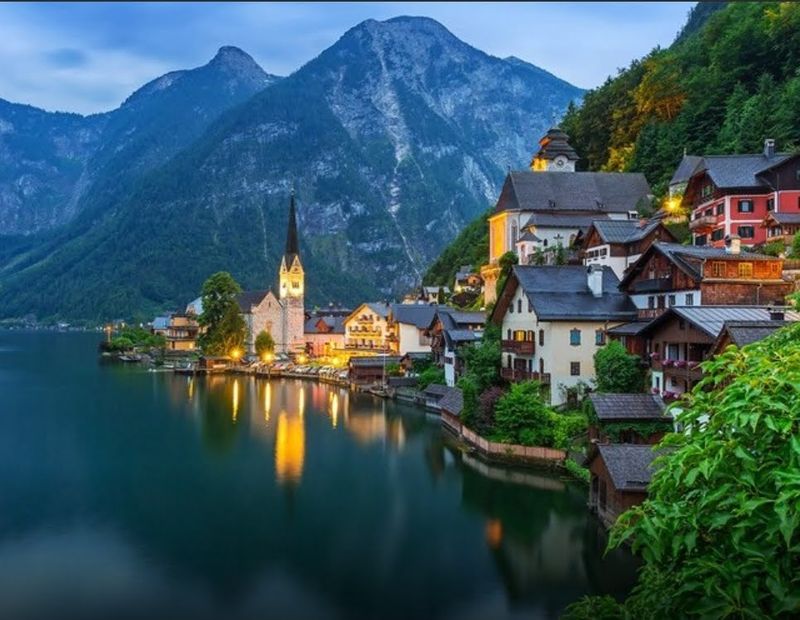
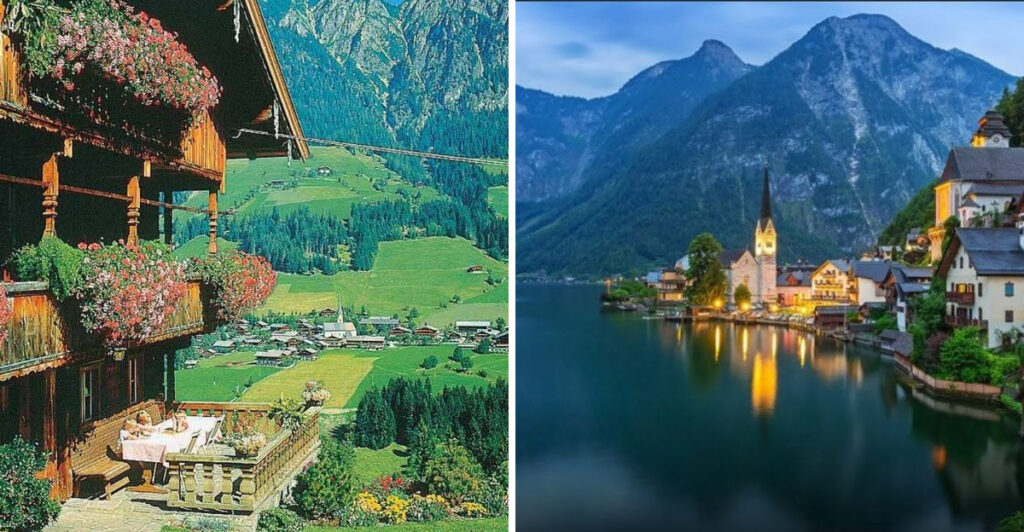
Arguably the most photographed village in Europe, Hallstatt has a way of making visitors forget they are standing in a real place. The pastel-colored houses stacked along a narrow lakeside strip look almost too perfect to be genuine.
Steep limestone cliffs rise dramatically behind the village, creating a backdrop that no filter can improve.
Hallstatt earned UNESCO World Heritage status partly because of its ancient salt-mining history, which dates back over 7,000 years. You can actually tour the world’s oldest known salt mine right above the village.
The Hallstatt Museum does a brilliant job of explaining how salt shaped this entire region for millennia.
Ferries connect the village to the train station across the lake, making arrivals feel cinematic. The narrow cobblestone lanes fill up quickly during peak summer months, so visiting early in the morning rewards you with quieter streets and golden light on the water.
Pack comfortable shoes because the hillside paths above town offer views that absolutely steal the show.
Alpbach, Tyrol
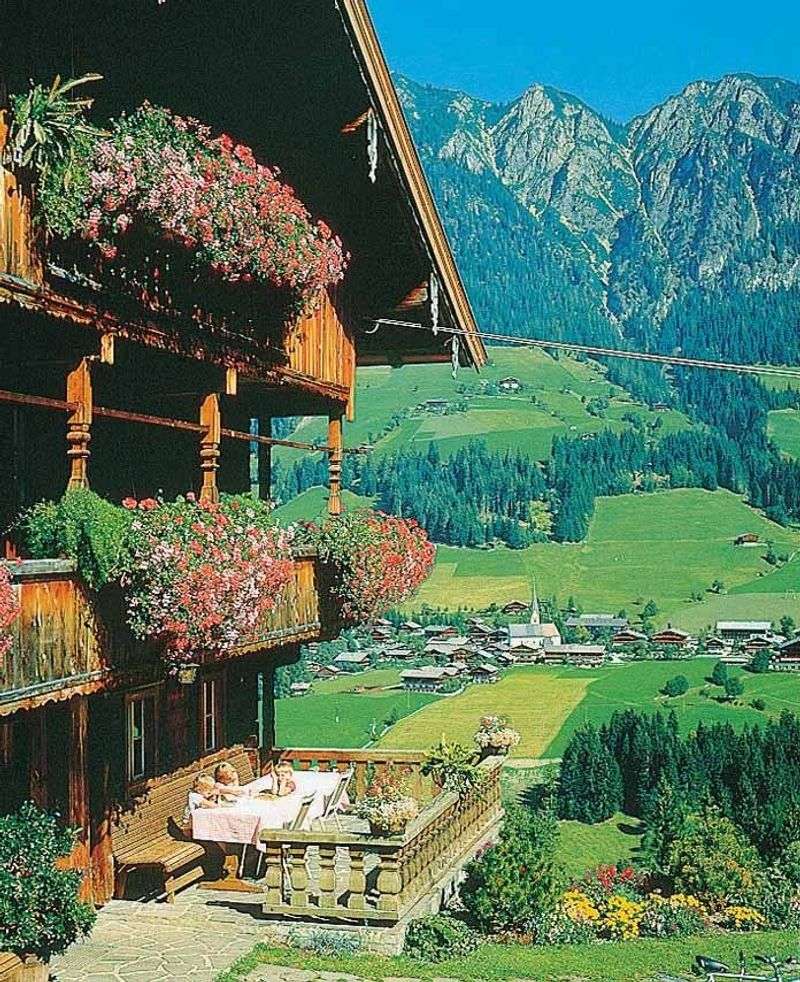
Every balcony in Alpbach bursts with color. Red and pink geraniums spill over carved wooden railings while the surrounding mountain meadows roll out in every shade of green imaginable.
Strict local building codes have kept this village looking almost identical for generations, and the result is one of the most visually consistent alpine villages anywhere in Europe.
Alpbach regularly tops Austria’s most beautiful village rankings, and it earns that reputation honestly. The wooden chalets here are not decorative replicas built for tourists.
They are working family homes that have been maintained according to traditional Tyrolean craftsmanship for centuries. Walking through the village center feels like stepping into a living museum, except nobody is performing for you.
Summer hiking trails wind through wildflower meadows above the village, and winter transforms the valley into a quieter, snow-draped escape popular with skiers who prefer atmosphere over crowds. The village also hosts an annual European Forum Alpbach, a prestigious academic conference that somehow fits perfectly into this cozy mountain setting.
Alpbach is proof that beauty and brains can absolutely share the same postcode.
Dürnstein, Lower Austria
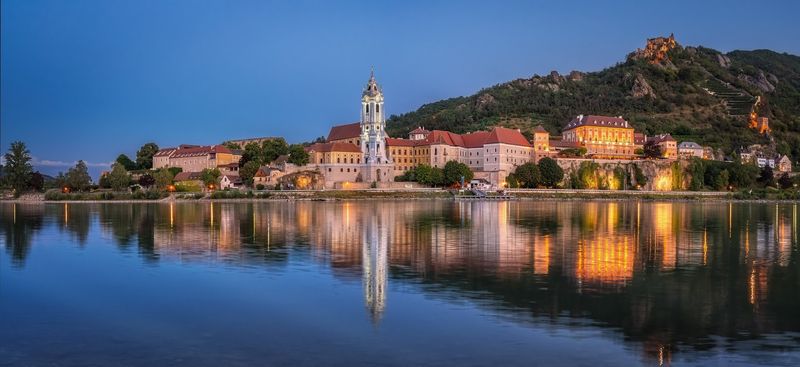
That distinctive blue church tower rising above the Danube is one of Austria’s most recognizable landmarks, and it belongs entirely to Dürnstein. Sitting inside the Wachau Valley, a UNESCO World Heritage wine region, this small village packs medieval drama and vineyard beauty into just a few quiet streets.
It is the kind of place where a short afternoon stroll feels like a history lesson you actually enjoy.
Legend has it that Richard the Lionheart of England was imprisoned in the castle ruins looming above the village after the Third Crusade. Whether or not you believe every detail of that story, climbing up to those ruins rewards you with sweeping views over the Danube and surrounding vineyards that are worth every step.
The hike takes about 20 minutes and the path is well marked.
Dürnstein produces excellent Grüner Veltliner and Riesling wines from the steep terraced vineyards that surround the village. Several small wine taverns called Heurigen open seasonally, offering local wines paired with simple Austrian food.
Arriving by boat along the Danube is genuinely one of the most romantic ways to experience this village for the first time.
St. Gilgen, Salzburg
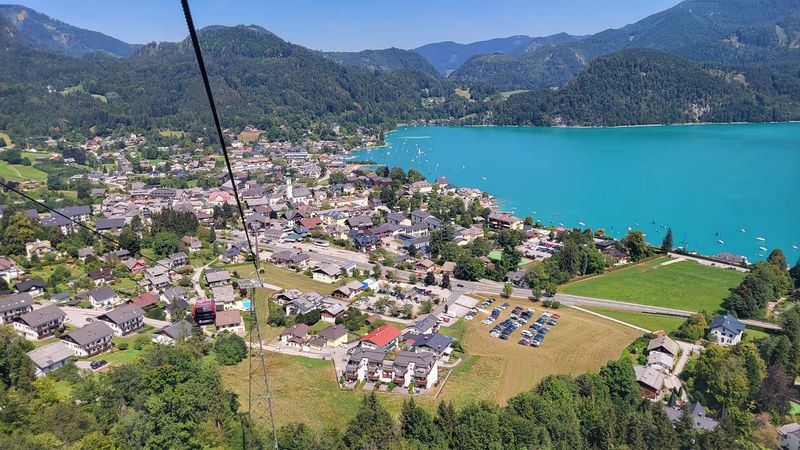
Mozart’s mother was born here, and honestly, with scenery this inspiring, it is no surprise the family had musical talent. St. Gilgen sits gracefully along the western shore of Wolfgangsee, one of the most beautiful lakes in the Salzkammergut region.
The village combines elegant lakeside architecture with mountain views that genuinely stop you mid-sentence.
The town square features a charming fountain and a Mozart memorial that draws music lovers alongside the usual crowd of lake admirers. A cable car whisks visitors up to Zwölferhorn mountain for panoramic views stretching across multiple lakes and mountain ranges.
On clear days, you can spot the distant outline of Salzburg’s landscape from the summit.
Wolfgangsee is warm enough for swimming in summer, and the village beach area gets lively on hot afternoons. Boat rentals and ferry services connect St. Gilgen to neighboring lakeside villages including St. Wolfgang, making it easy to explore the entire lake in a single day.
The village stays relatively quieter than nearby Hallstatt, which makes it a genuinely relaxing base for exploring the wider Salzkammergut. Come for Mozart, stay for the mountains.
Zell am See, Salzburg
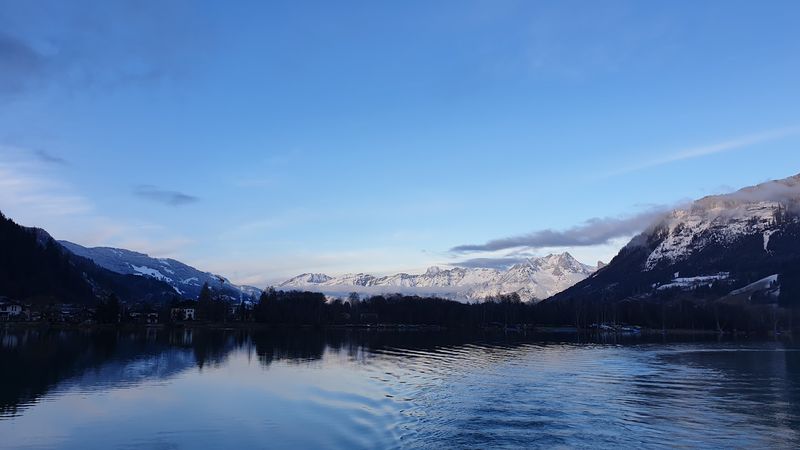
Few Austrian villages manage to look equally stunning in every single season, but Zell am See pulls it off effortlessly. The Kitzsteinhorn glacier looms behind the village year-round, its snowcapped summit reflecting in the crystal-clear waters of Zeller See.
Whether you arrive in July with a swimsuit or December with ski boots, the scenery delivers every single time.
The town center is compact and walkable, with a mix of traditional Austrian architecture and modern amenities that somehow coexist without clashing. The historic round tower of the Romanesque church is one of the oldest structures in the Salzburg region and dates back to the 10th century.
It stands beside the lake as a quiet reminder that this village has been beautiful for a very long time.
Zell am See connects directly to the Kaprun ski area, creating a combined resort known as the Europa-Sport-Region. Summer visitors enjoy swimming, cycling around the lake, and taking boat trips across the water.
The pedestrian promenade along the lakefront is perfect for an early evening stroll when the mountains glow orange and pink in the fading light. This village genuinely earns its popularity.
Gmunden, Upper Austria
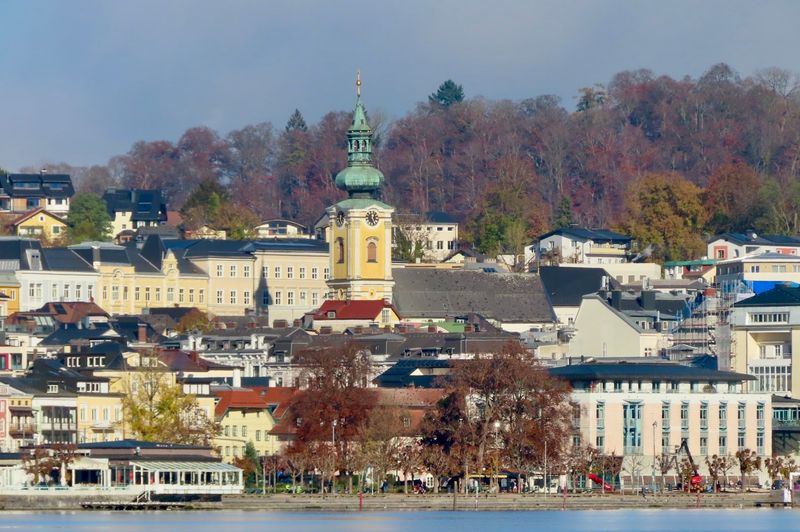
Schloss Ort is one of those places that seems to belong inside a fairy tale rather than an actual Austrian town. The medieval castle sits on a tiny island in Lake Traunsee, connected to the shore by a long wooden bridge.
Gmunden wraps around the southern end of this stunning lake with elegant promenades, historic buildings, and mountain scenery that feels almost theatrical in its perfection.
The town has been famous for its ceramics since the 14th century, and Gmunden pottery, recognized by its distinctive green and white glaze, remains a beloved Austrian craft tradition. The local ceramic workshops and shops are worth browsing even if you are not normally a pottery person.
The craftsmanship on display is genuinely impressive and makes for a very Austrian souvenir.
Lake Traunsee is one of the deepest and cleanest lakes in Austria, popular for sailing, swimming, and kayaking. The surrounding mountains rise steeply from the water’s edge, creating dramatic vertical scenery that is especially striking in autumn when the forests turn golden.
A historic tram line still runs through the town center, adding a nostalgic charm to an already picturesque destination. Gmunden rewards slow, unhurried exploration.
Rust, Burgenland
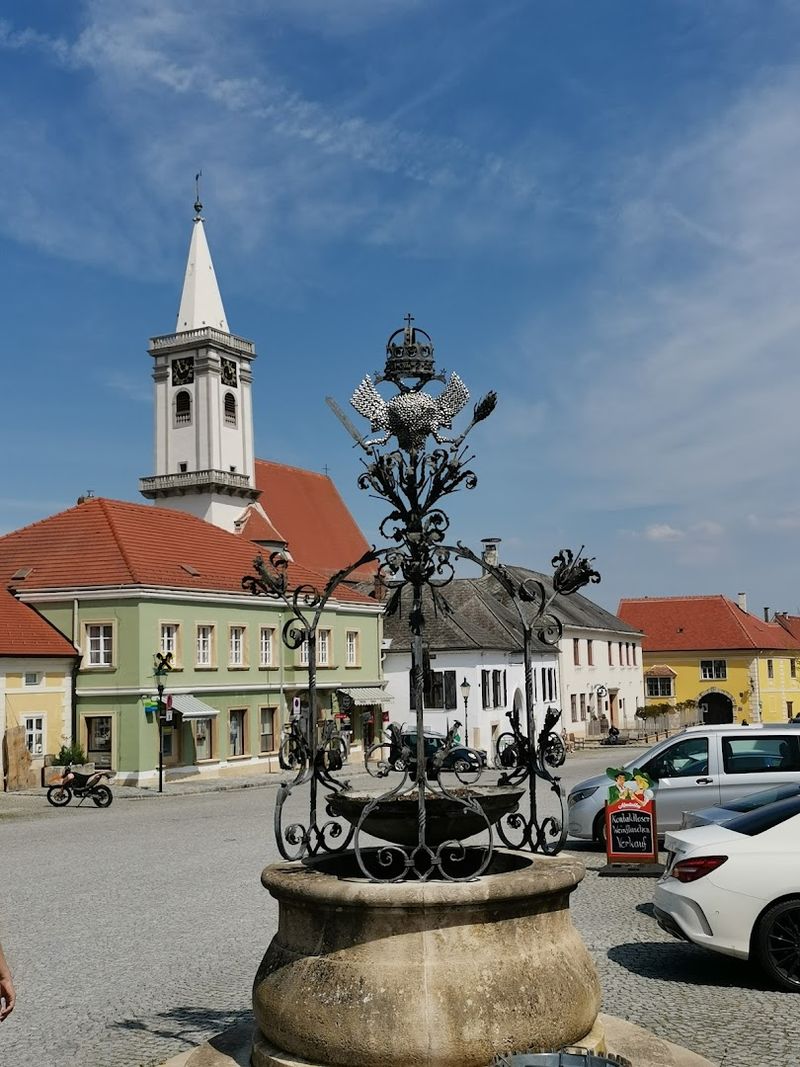
Rust has an unusual claim to fame: it is one of the only towns in Austria with the legal right to call itself a Royal Free Town, a title it purchased from Emperor Leopold I in 1681 partly by paying in barrels of wine. That is exactly the kind of quirky historical detail that makes Rust so enjoyable to visit.
The village takes its wine seriously, and so should you.
White storks nest on the rooftops of Rust’s colorful baroque buildings every spring, and the village has become one of Central Europe’s most important stork habitats. Watching these enormous birds come and go from their rooftop nests while you sip a glass of local Blaufränkisch is one of Austria’s more unexpected pleasures.
The combination of wine culture and wildlife makes Rust genuinely one-of-a-kind.
Lake Neusiedl, a vast shallow steppe lake shared with Hungary, sits just minutes from the village center. The lake is part of a UNESCO World Heritage Site and attracts birdwatchers, cyclists, and windsurfers in enormous numbers each summer.
Rust’s Christmas market is also one of Burgenland’s most charming seasonal events, transforming the cobblestone lanes into a festive, lantern-lit scene worth planning a trip around.
Heiligenblut, Carinthia
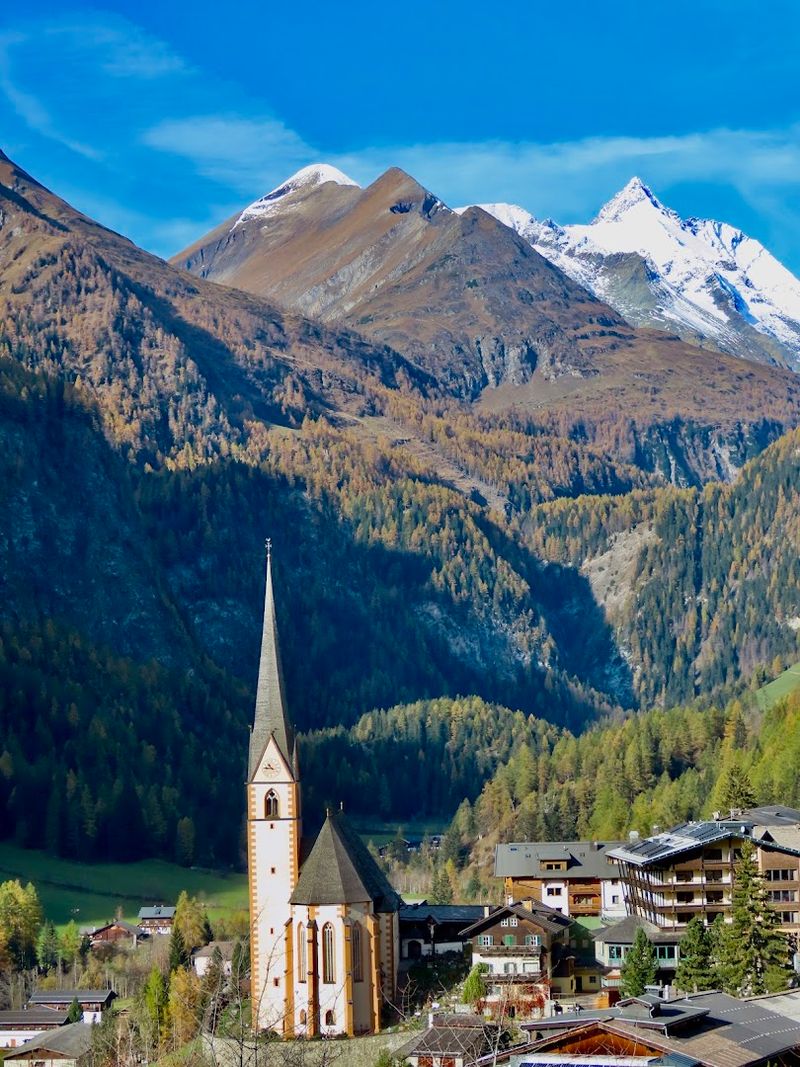
Standing in Heiligenblut and looking up at the Grossglockner feels like the mountain is personally introducing itself. At 3,798 meters, it is Austria’s highest peak, and the village below it is arranged as if specifically designed to make the mountain look even more impressive.
The slender spire of the Gothic pilgrimage church of St. Vincent pierces the sky in the foreground, creating one of Austria’s most iconic mountain compositions.
The church itself dates from the 15th century and contains a remarkable Gothic winged altar. According to local legend, a phial of Christ’s blood, which gives the village its name meaning Holy Blood, is preserved inside.
Whether you are religious or not, the interior craftsmanship is genuinely worth stepping inside to appreciate.
Heiligenblut serves as the southern gateway to the famous Grossglockner High Alpine Road, one of Europe’s most spectacular mountain drives. The road climbs through hairpin bends, glaciers, and high alpine meadows before descending into Salzburg province.
In winter, the village operates a small ski area suited to families and intermediate skiers. The relative lack of mass tourism here gives Heiligenblut an authenticity that bigger alpine resorts have long since traded away.
Maria Alm, Salzburg
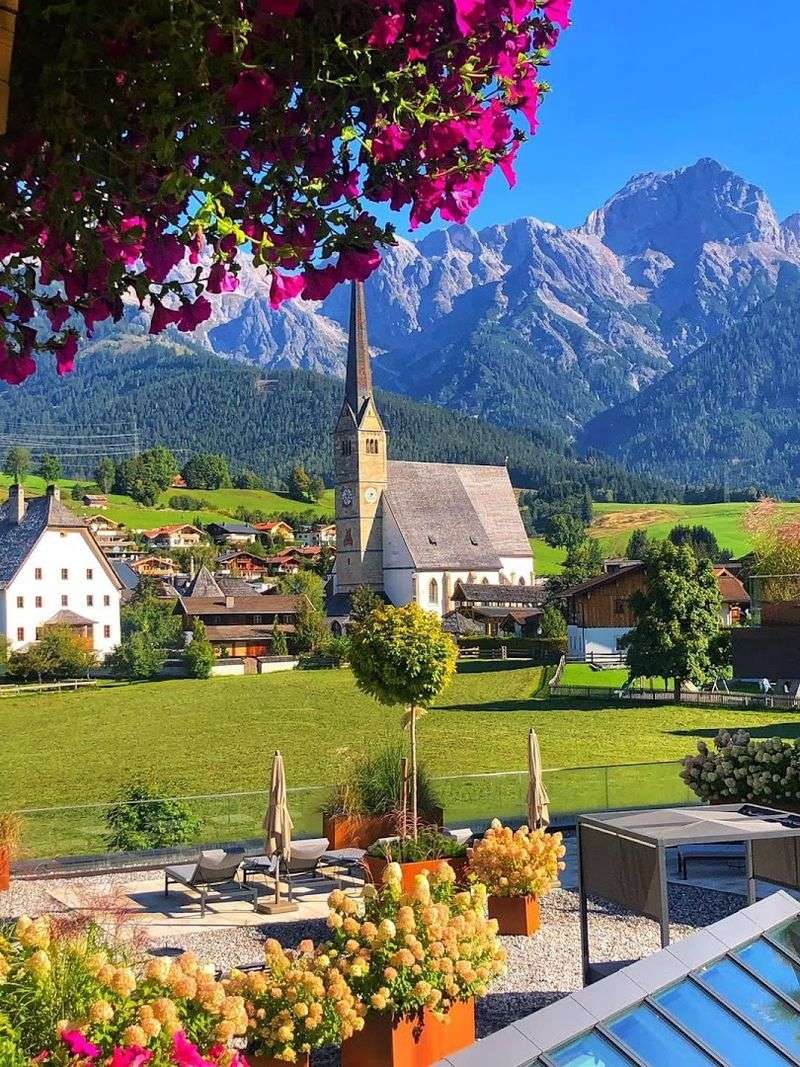
The church spire in Maria Alm is the tallest Gothic spire in the Salzburg region, and it shoots skyward with an almost comical confidence given the village’s modest size. Surrounded by the dramatic Hochkönig massif, this small Salzburg village manages to feel both deeply peaceful and visually spectacular at the same time.
It is the kind of place that locals love precisely because visitors tend to overlook it in favor of more famous neighbors.
Traditional farmhouses with wide overhanging roofs line the village roads, and the surrounding meadows are carpeted with wildflowers from late spring through summer. Hiking trails radiate outward from the village in every direction, ranging from gentle valley walks to demanding ridge routes with views across multiple mountain ranges.
The Hochkönig circuit is one of the most celebrated multi-day hikes in the entire Salzburg Alps.
Winter transforms Maria Alm into a quieter alternative to the busy Salzburg ski resorts. The Skicircus Saalbach Hinterglemm Leogang Fieberbrunn ski area is reachable from here, offering access to a massive lift network.
The village Christmas market is small, local, and genuinely authentic. Maria Alm rewards travelers who prefer discovering things themselves rather than following the crowds.
Admont, Styria
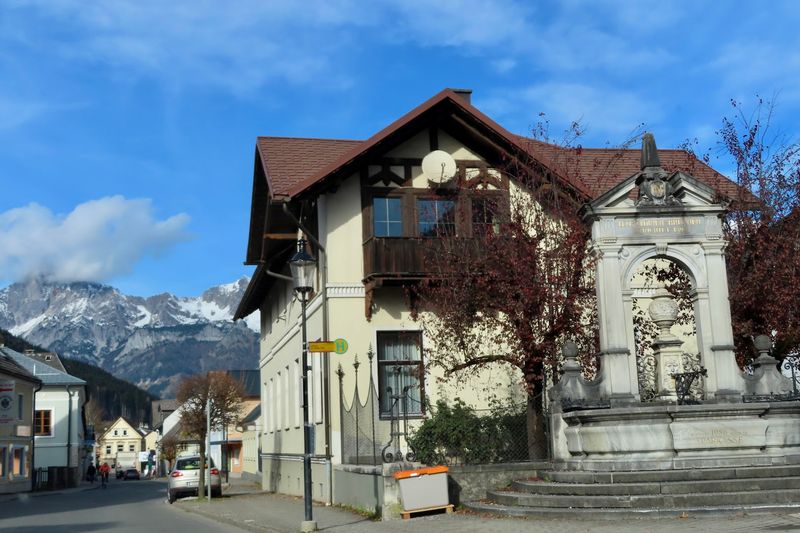
The library inside Admont Abbey has been called the most beautiful monastic library in the world, and standing inside it makes that claim feel completely reasonable. Ceiling frescoes, gilded bookcases, and over 70,000 volumes fill a hall that stretches 70 meters long.
It is the kind of room that makes you wish you had chosen a different career just so you could work inside it every day.
The Benedictine monastery at Admont was founded in 1074 and has survived fires, wars, and centuries of political upheaval to remain an active religious community today. Beyond the famous library, the monastery complex also houses a natural history museum and a contemporary art collection, which creates a surprisingly eclectic cultural experience in a small Styrian village.
Admont sits at the entrance to Gesäuse National Park, one of Austria’s wildest and most dramatic protected landscapes. The Enns River carves through towering limestone gorges just outside the village, and the hiking and climbing opportunities inside the national park are exceptional.
The combination of world-class cultural heritage and raw mountain wilderness in one compact location makes Admont genuinely unlike anywhere else in Austria. Plan at least a full day here.
Seefeld, Tyrol
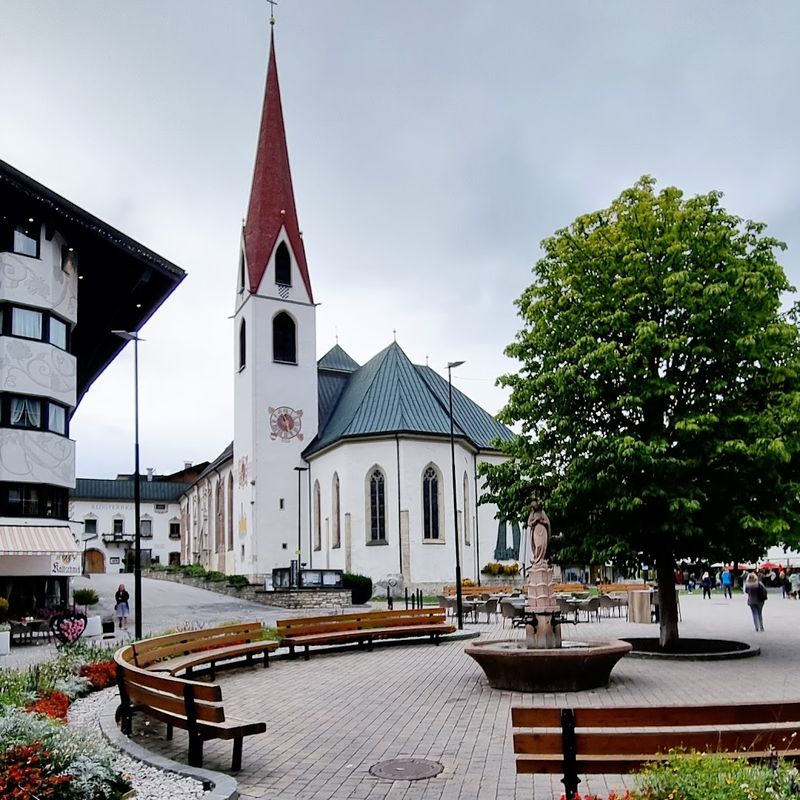
Seefeld sits on a sunny plateau above Innsbruck at 1,200 meters, which means the village enjoys more sunshine than most of the Inn Valley below. That natural advantage, combined with a car-free pedestrian center lined with elegant chalets and boutique shops, has made Seefeld one of Tyrol’s most refined mountain destinations.
The place has genuine style without trying too hard, which is a rare quality in any alpine resort.
The village hosted the Nordic skiing events of the 1964 and 1976 Winter Olympics, giving it a sporting pedigree that locals are quietly proud of. A network of cross-country ski trails still winds through the surrounding forests and meadows in winter, while summer converts those same trails into hiking and cycling routes with outstanding mountain panoramas.
The Seefelder Spitze cable car opens up higher terrain for those who want bigger views.
Seefeld’s town center earns its reputation as one of Tyrol’s prettiest village squares. The 15th-century parish church of St. Oswald dominates the center and contains a famous Gothic portal.
Cafés spill onto the pedestrian streets, and the general atmosphere is relaxed and unhurried. This is the kind of village where an afternoon coffee break somehow turns into a three-hour conversation.
Ehrenhausen, Styria
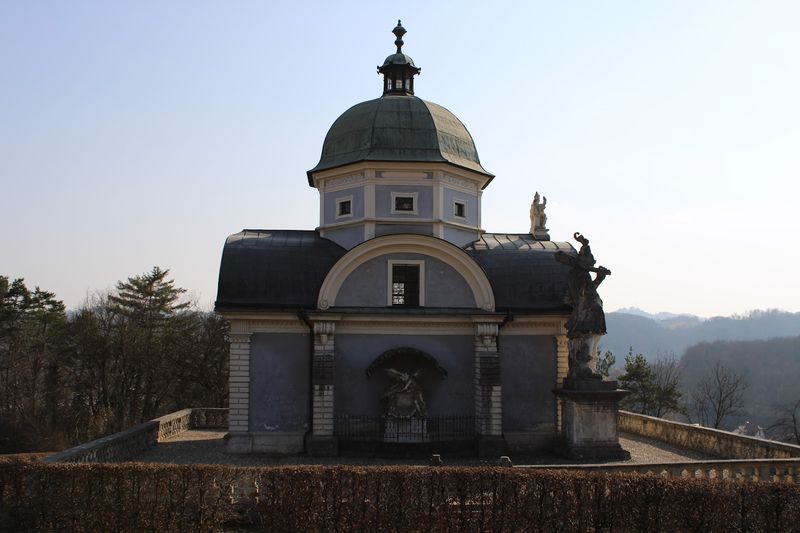
Southern Styria’s wine roads are among Austria’s best-kept secrets, and Ehrenhausen sits right at the heart of them. Rolling vineyard hills, dense forests, and a warm microclimate create conditions that produce some of Austria’s most celebrated white wines.
The village itself is compact and unhurried, the kind of place where the pace of life is measured in how long it takes to finish a glass of Sauvignon Blanc.
Perched on a forested hilltop above the village stands the Renaissance mausoleum of Ruprecht von Eggenberg, a 17th-century military commander. The structure is surprisingly grand for such a small town and offers sweeping views over the vineyard landscape stretching toward Slovenia.
It takes about 15 minutes to walk up, and the panorama at the top is worth every step.
The village lies along the Südsteirische Weinstraße, or South Styrian Wine Road, a scenic route connecting dozens of wine estates and farm restaurants called Buschenschanken. These simple rustic taverns serve local wines alongside cold platters of cured meats, cheeses, and bread.
No reservations, no fuss, just excellent wine and honest food in beautiful surroundings. Ehrenhausen is Austria’s answer to Tuscany, quieter, less crowded, and arguably more authentic.
Bad Ischl, Upper Austria
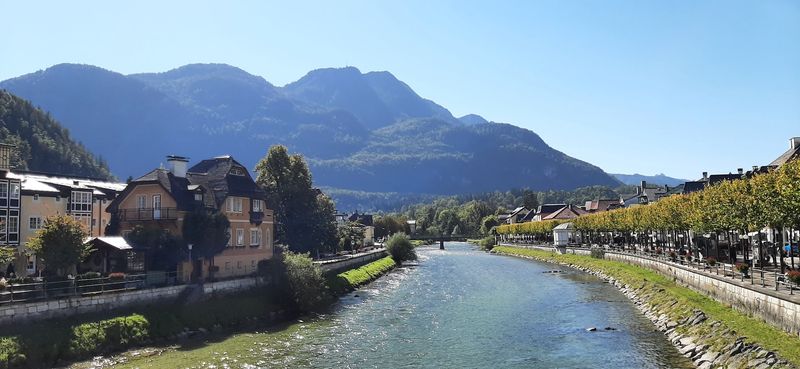
For 60 summers in a row, Emperor Franz Joseph packed his bags and headed to Bad Ischl, and honestly, the man had excellent taste. The imperial summer residence, known as the Kaiservilla, still sits inside a beautifully maintained park and remains one of Austria’s most fascinating royal landmarks.
Touring the villa gives you an intimate glimpse into the surprisingly personal life of one of Europe’s longest-reigning monarchs.
Bad Ischl was also where Franz Joseph signed the declaration of war in 1914 that triggered World War One, which adds a sobering historical dimension to what is otherwise a charming spa town. The operetta composer Franz Lehár also lived here, and his villa is open to visitors.
The town has a cultural depth that exceeds what you might expect from its modest size.
The Traun River runs through the center of Bad Ischl, and the riverside promenade is one of the most pleasant places for an evening stroll in the entire Salzkammergut region. Traditional konditorei pastry shops line the main street, and the local Zaunerstuberl café has been serving imperial-era pastries since 1832.
Bad Ischl’s spa facilities, historic charm, and mountain surroundings make it an ideal base for exploring the wider lake district.
Inneralpbach, Tyrol
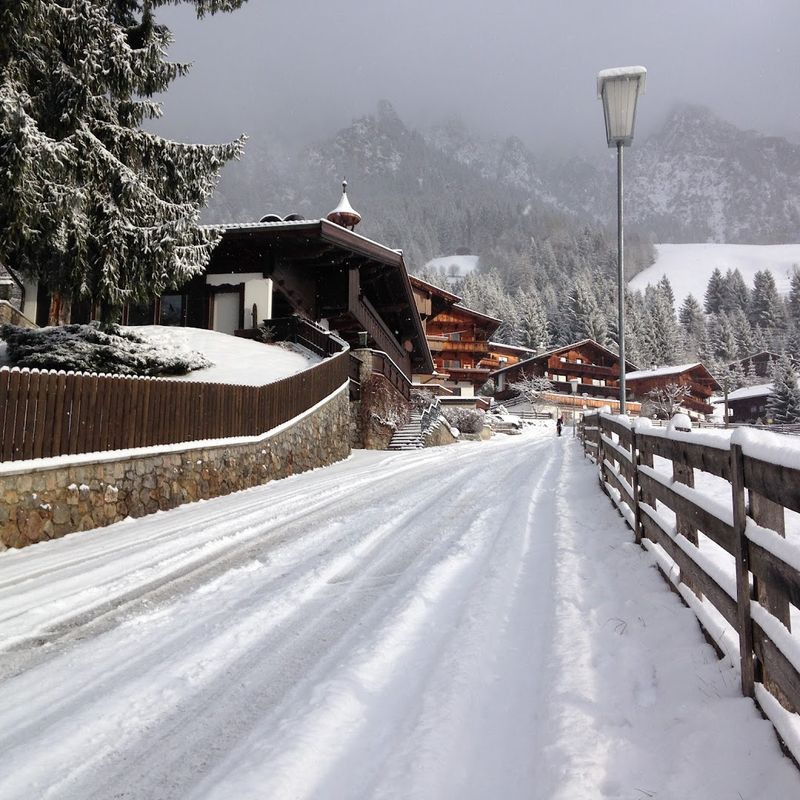
Tucked deeper into the Alpbachtal Valley than its more famous neighbor, Inneralpbach feels like a place that has deliberately avoided the spotlight. The dark-wood farmhouses here are older and less polished than those in the main village, giving the hamlet a raw, working authenticity that is increasingly rare in the Austrian Alps.
Goats wander near fences, woodpiles stack up outside barns, and the silence is genuinely remarkable.
The surrounding peaks rise steeply on all sides, creating a natural amphitheater that blocks out much of the outside world. In summer, the meadows between the farmhouses turn into a sea of alpine wildflowers, and the hiking trails that climb toward the ridgelines reward effort with views that stretch far into the Tyrolean interior.
The Wiedersbergerhorn summit above the valley is a particularly satisfying half-day hike.
Inneralpbach has very few tourist facilities, which is exactly the point. A handful of guesthouses offer simple, comfortable accommodation with home-cooked meals that rely heavily on local dairy and seasonal produce.
The village suits travelers who find the idea of an internet-free evening with a book and a glass of local schnapps genuinely appealing rather than mildly terrifying. Authenticity at this level is increasingly difficult to find.
St. Wolfgang, Salzburg
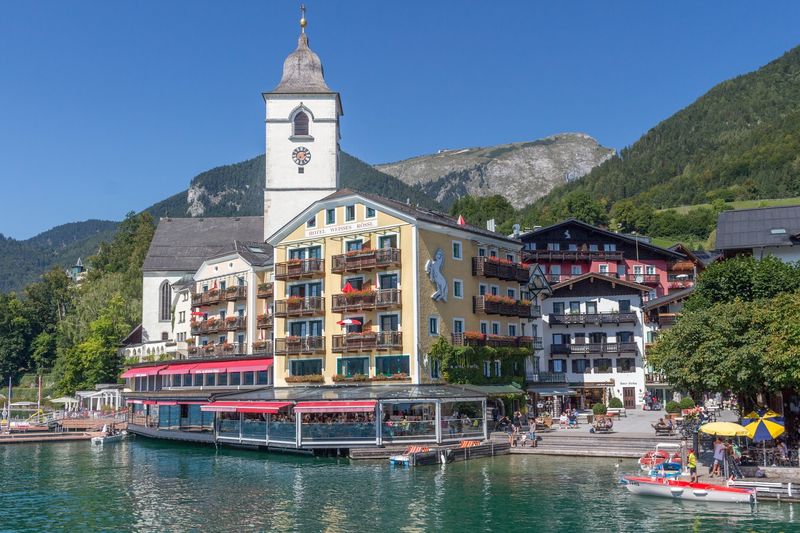
The White Horse Inn in St. Wolfgang became so famous that a composer wrote an operetta about it in 1930, and the village has been riding that cultural wave with considerable charm ever since. Sitting directly on the southern shore of Wolfgangsee, St. Wolfgang combines lakeside beauty with traditional architecture in a way that feels genuinely romantic rather than manufactured.
The painted facades, window boxes, and cobblestone waterfront create a scene that looks curated but is entirely real.
The parish church of St. Wolfgang contains the famous Pacher Altarpiece, a late Gothic masterpiece carved between 1471 and 1481 that art historians consider one of the most significant works of medieval Central European art. The church draws visitors who might not otherwise seek out a small lakeside village, and the altarpiece genuinely justifies the detour.
Give yourself time to look at it properly.
The Schafberg mountain railway, a historic steam-operated cog railway, departs from St. Wolfgang and climbs to 1,783 meters for panoramic views over the Salzkammergut lakes. The train itself appeared in the original Sound of Music film, adding a cinematic bonus for fans of that particular classic.
Boat trips across Wolfgangsee connect St. Wolfgang to St. Gilgen, making it easy to experience both villages in a single memorable day.
Share this story