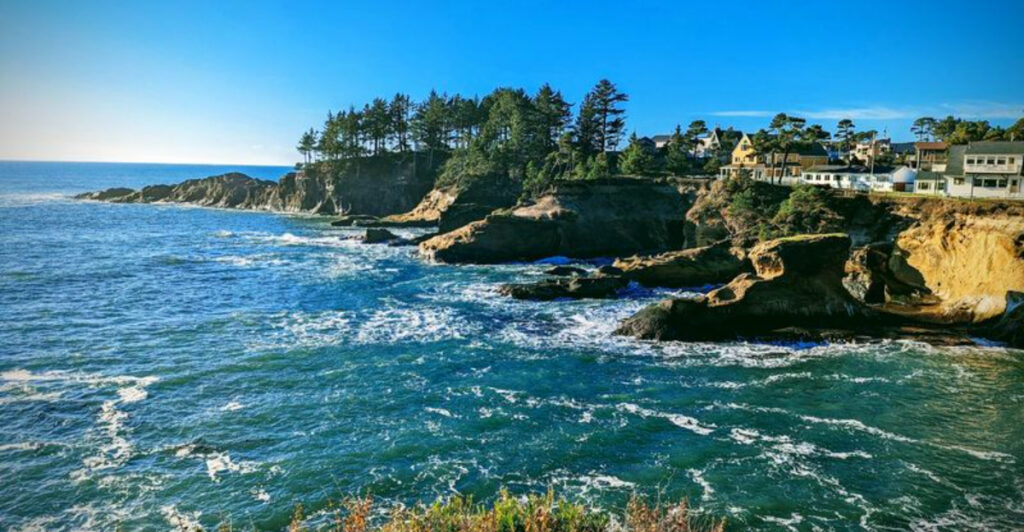
There is a tiny coastal town on the Oregon coast where gray whales swim so close to the rocky shore that you can hear them breathe. Most drivers on Highway 101 pass right through without stopping, missing one of the most remarkable wildlife experiences on the entire West Coast.
The harbor here is so small it holds a world record, and the whales show up so reliably that locals treat them like neighbors who never quite leave. This place punches well above its weight, and once you know what is waiting there, you will want to pull over, stay a while, and wonder why you ever drove past it before.
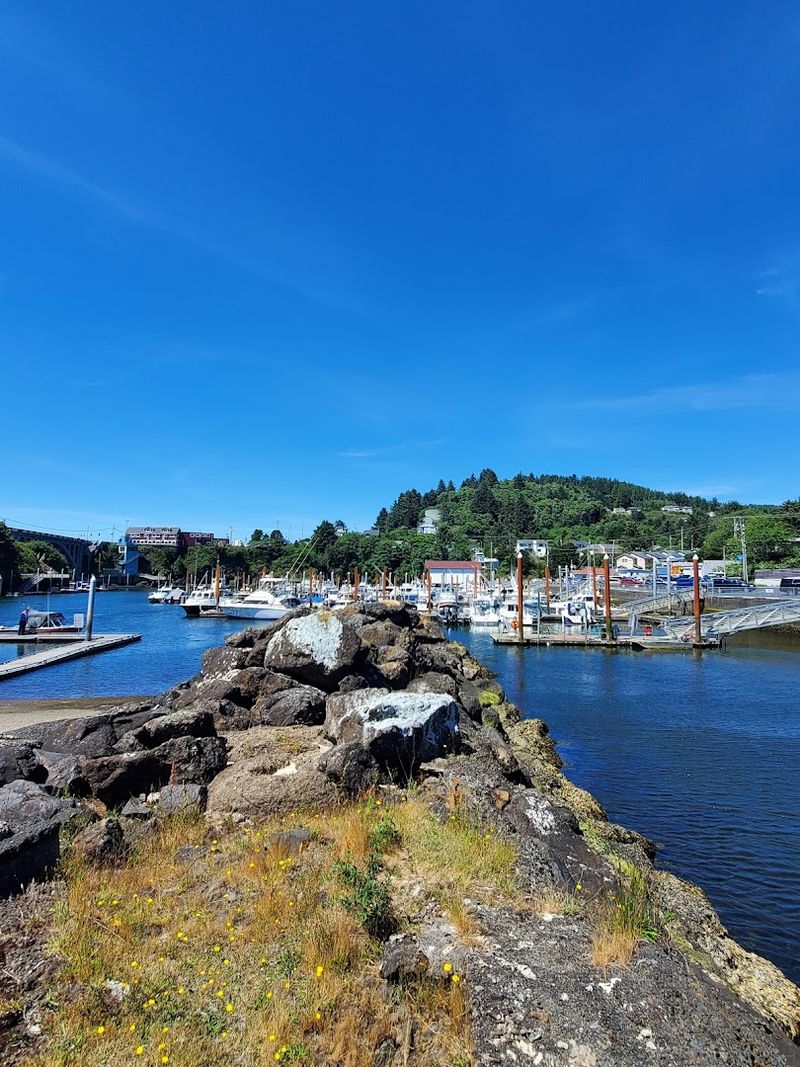
Welcome to Depoe Bay: The World’s Smallest Navigable Harbor
Right along U.S. Route 101 in Lincoln County, Oregon, sits a city that defies expectations at every turn.
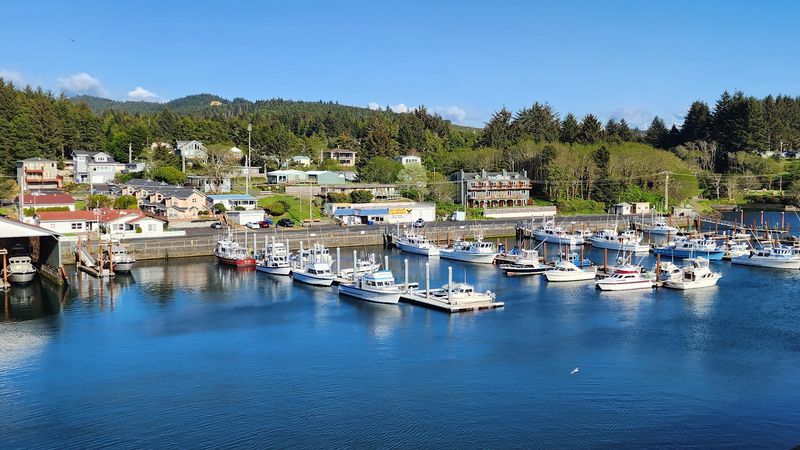
Depoe Bay, Oregon 97341, is home to what is officially recognized as the world’s smallest navigable harbor, a fact that earns it a spot in the record books and a permanent place on any serious Oregon coast road trip itinerary.
The harbor covers just six acres, which sounds impossibly small until you watch a fishing charter squeeze through the narrow channel entrance with surprising ease. That channel is barely 50 feet wide, and the boats that use it do so daily without much fanfare.
The town itself has a population of around 1,515 people, according to the 2020 census. What it lacks in size, it absolutely compensates for in character, coastal drama, and wildlife access that puts larger, more famous towns to shame.
The seawall walkway along Highway 101 lets you stand just feet above the Pacific, and on a stormy day, the spray will absolutely find your jacket.
Gray Whales So Close You Can Hear Them Breathe
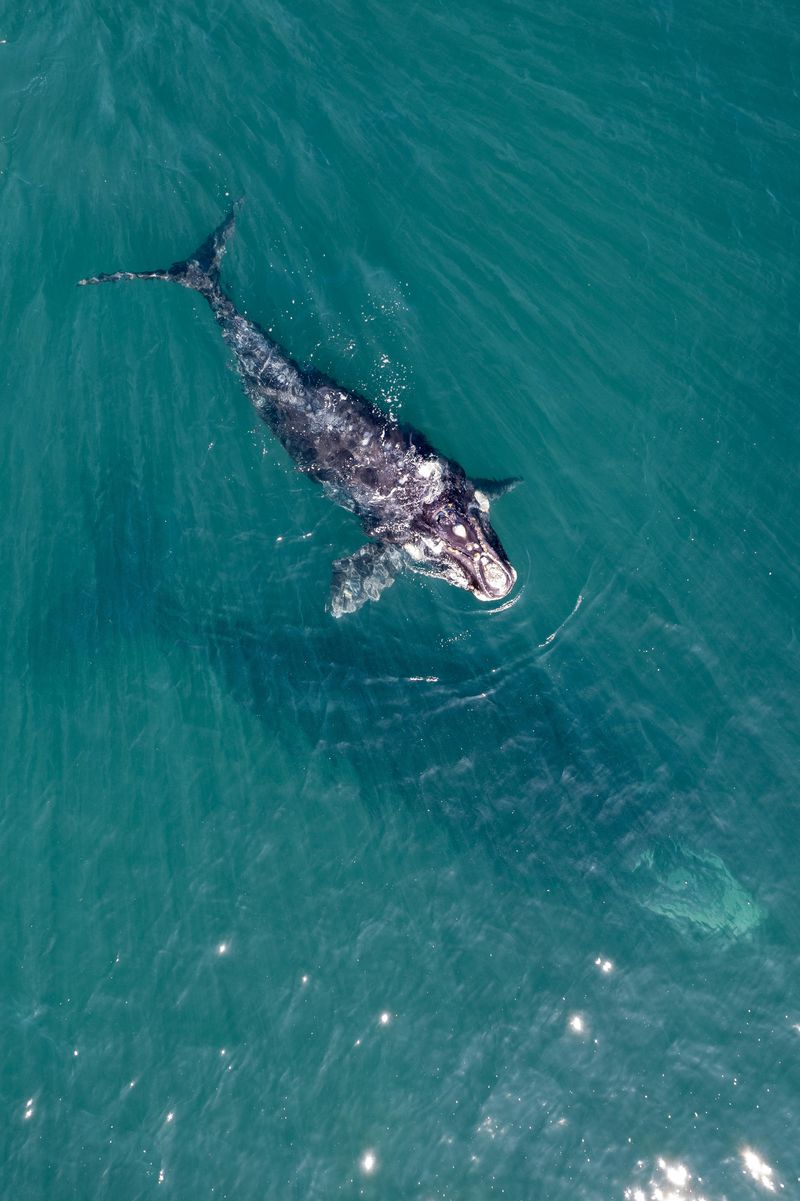
The gray whales here are not a distant smudge on the horizon. They feed in the nearshore kelp beds just outside the harbor entrance, sometimes so close to the rocky seawall that you can clearly make out the barnacles on their backs.
Depoe Bay sits along one of the most active gray whale migration corridors on the Pacific Coast. Thousands of whales pass through each year between December and June, traveling between their feeding grounds in Alaska and their breeding lagoons in Baja California.
A smaller group of about 200 whales, known as the Pacific Coast Feeding Group, actually stays near the Oregon coast all summer long.
Watching a whale surface 30 yards from shore while standing on a public sidewalk is a genuinely surreal experience. No boat ticket required, no binoculars necessary.
The Whale Watching Center on Highway 101 offers free viewing and trained volunteers who help visitors spot spouts and flukes during peak season. Few places on the entire West Coast offer this kind of effortless, up-close access to such large marine animals.
The Spouting Horn: Nature’s Own Water Feature
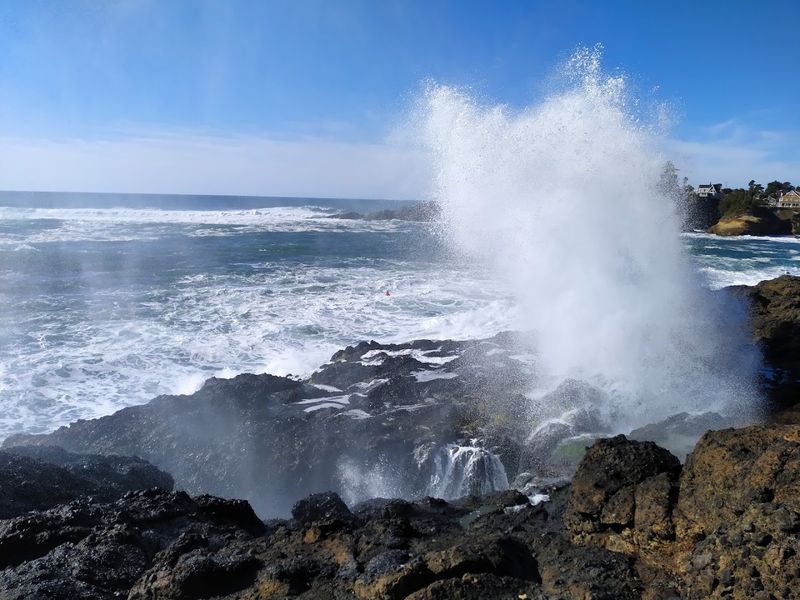
One of the most visually dramatic features in Depoe Bay costs absolutely nothing to watch and requires zero planning. The Spouting Horn is a natural crack in the basalt rock formation along the seawall where incoming waves compress and shoot seawater straight up into the air like a geyser.
On a calm day, the spout reaches a few feet high and produces a satisfying whoosh sound. On a stormy day, the water can blast 40 feet or more into the air, soaking anyone standing too close and drawing a crowd of thoroughly impressed onlookers.
The sound alone is worth stopping for.
The Spouting Horn sits right along the Highway 101 seawall, making it one of the most accessible natural spectacles on the entire Oregon coast. You park, you walk about 30 feet, and nature puts on a show.
Locals check the tide charts and wave forecasts before heading over, because the biggest displays happen during high surf and incoming tides. First-time visitors almost always end up wetter than they planned, and almost always say it was worth it.
Charter Fishing Through the World’s Narrowest Harbor Entrance
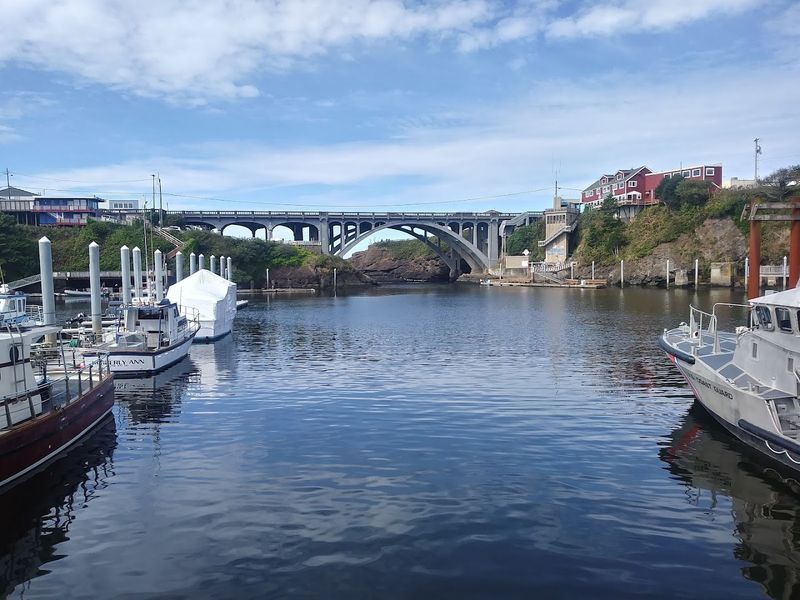
Watching a charter boat navigate the entrance to Depoe Bay harbor is one of those things that looks like it should not work but absolutely does. The channel is famously narrow, flanked by basalt walls on both sides, and the boats that use it daily do so with a calm confidence that comes from knowing every inch of the passage.
Several charter fishing companies operate out of the harbor, offering trips for salmon, halibut, tuna, and rockfish depending on the season. The boats head out into the open Pacific within minutes of leaving the dock, which makes Depoe Bay one of the most conveniently located deep-sea fishing ports on the Oregon coast.
Whale watching cruises also depart from the same harbor, giving passengers a completely different perspective on the gray whales that feed just offshore. Seeing the same coastline from the water reveals just how wild and rocky this stretch of Oregon truly is.
The charters run year-round, and the crews are the kind of locals who genuinely enjoy sharing their knowledge of the ocean with first-time visitors.
The Oregon Coast Aquarium Connection and Nearby Marine Science
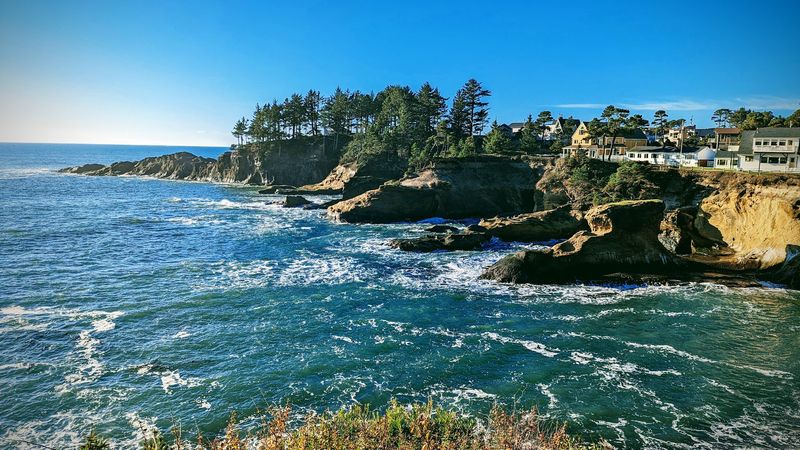
The stretch of coast around Depoe Bay is rich with marine life that extends well beyond the famous gray whales. The rocky intertidal zones just north and south of town host thriving tidal pools filled with sea stars, purple urchins, hermit crabs, and giant green anemones that wave their tentacles in the surge.
The Oregon Coast Aquarium in nearby Newport, about 13 miles south, provides excellent context for everything you see in these tidal pools. It houses rescued marine animals and rotating exhibits on Pacific Ocean ecosystems, making it a natural complement to a day spent whale watching and tide-pooling in Depoe Bay.
The Hatfield Marine Science Center, also in Newport and operated by Oregon State University, offers free public exhibits on coastal research that add even more depth to the experience. Together, these resources turn a simple beach trip into something genuinely educational without feeling like homework.
Depoe Bay sits at the center of one of the most scientifically active and ecologically rich stretches of coastline in the entire Pacific Northwest.
The Seawall Walkway: A Front-Row Seat to the Pacific
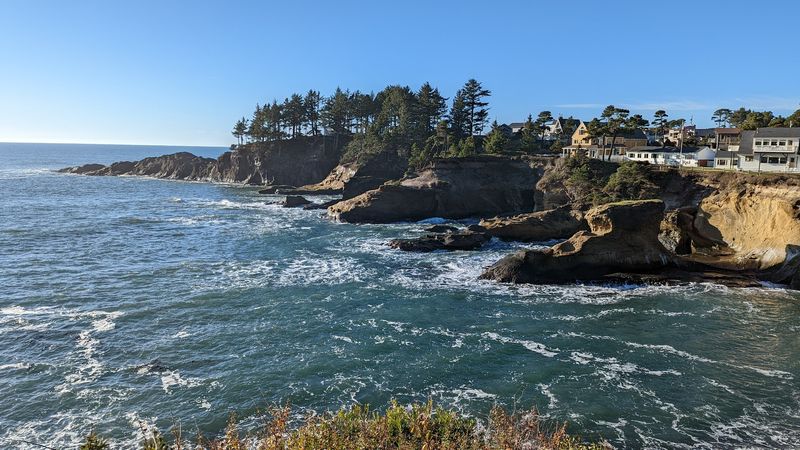
The seawall that runs through the heart of Depoe Bay is one of the most dramatically positioned public walkways on the Oregon coast. Built directly above the basalt shoreline, it puts visitors within arm’s reach of the Pacific without requiring a single step down to the beach.
The wall stretches along the main commercial strip of town, passing shops, restaurants, and the Oregon Department of Fish and Wildlife Whale Watching Center. On a clear day, the views extend far out to sea.
On a stormy day, the waves crash against the rocks below with a force that vibrates through the concrete under your feet.
This walkway is also one of the best spots in Oregon to watch for whale spouts without any equipment. The elevation and unobstructed sightlines make it easy to scan the water, and during peak migration season, you rarely have to wait long before a spout appears.
The whole experience feels surprisingly raw and immediate for a spot that is technically just a sidewalk next to a highway.
Whale Watching Season: When to Go and What to Expect
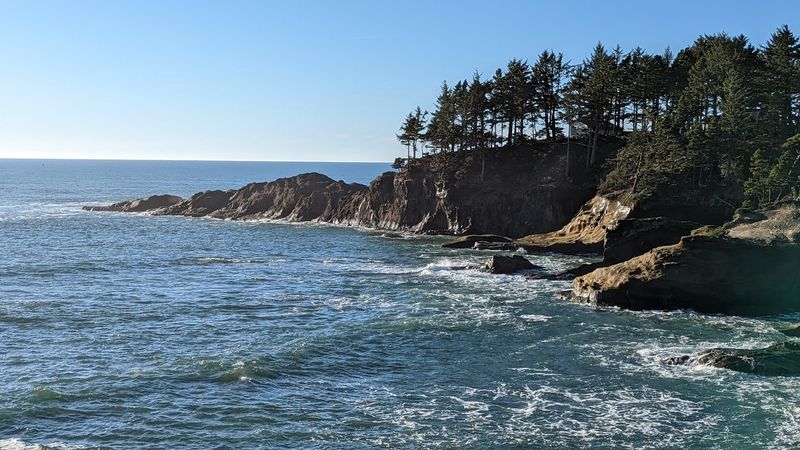
Timing a visit to Depoe Bay around whale activity is easier than most people expect, because the whales are present for a remarkably long stretch of the year. The southbound migration runs from December through January, and the northbound migration peaks between March and June, with gray whales passing close to shore in large numbers during both windows.
The resident Pacific Coast Feeding Group sticks around from July through October, giving summer visitors a reliable chance to spot whales even outside the main migration periods. The Oregon Department of Fish and Wildlife runs a Whale Watch Week program twice a year, in late December and late March, when trained volunteers staff observation points along the coast including the one right in Depoe Bay.
Early morning tends to offer calmer seas and better visibility for spotting spouts. A light pair of binoculars helps, though they are genuinely optional given how close the whales feed to shore here.
Visitors who have watched whales from places like Oklahoma landlocked parks often describe the Depoe Bay experience as completely transformative in comparison.
Local Dining With an Ocean View That Actually Earns It
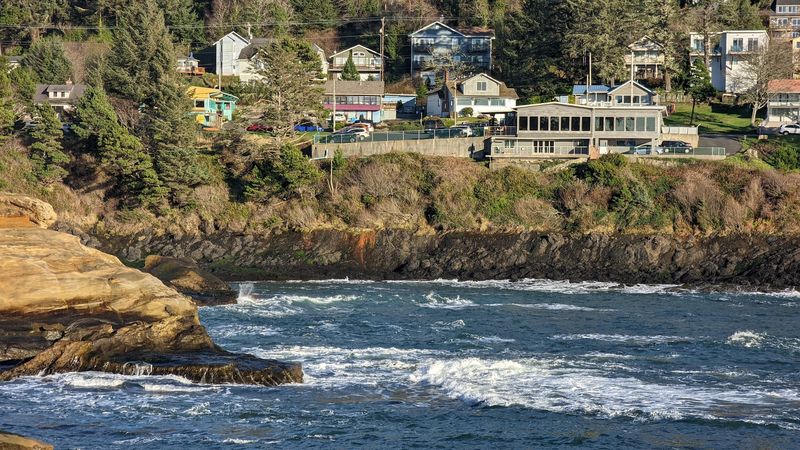
A small town does not need dozens of restaurants to feed people well, and Depoe Bay proves that point with a compact but satisfying dining scene that leans hard into the fresh seafood advantage of being steps from the harbor. The clam chowder served at several spots along the main strip is thick, creamy, and loaded with clams in a way that makes the canned version feel like a distant memory.
Several restaurants position their dining rooms to face the ocean directly, so you can watch for whale spouts between bites without leaving your table. The Dungeness crab when in season is especially worth seeking out, served simply with drawn butter in a way that lets the quality of the catch speak for itself.
The town is small enough that most places feel genuinely local rather than tourist-trap polished. The staff at these spots tend to know the whale activity patterns firsthand and will cheerfully tell you whether anyone spotted a spout that morning.
Eating a bowl of chowder while watching the Pacific crash against the seawall just outside the window is one of those simple pleasures that stays with you long after you leave Oregon.
The History Behind the Harbor’s Unusual Name
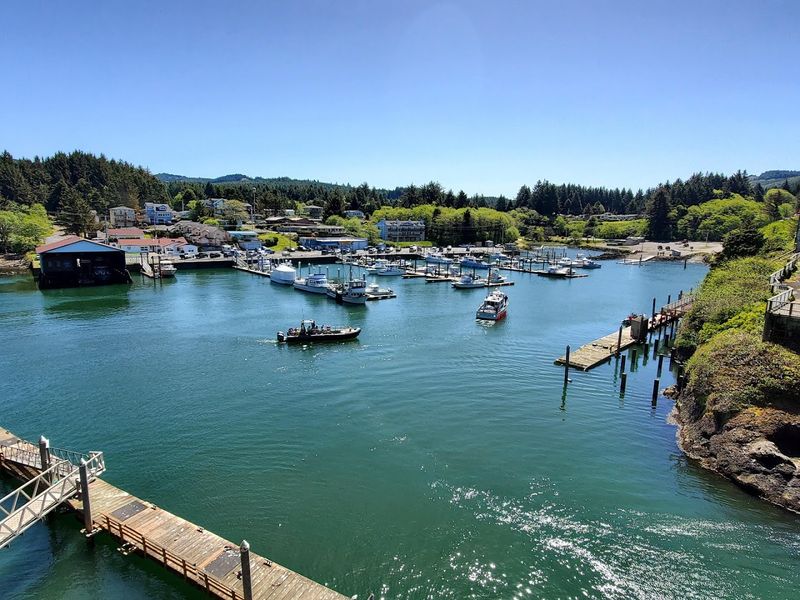
The name Depoe Bay has a genuinely interesting origin that most visitors never learn. The town takes its name from a man known as Charles Depot, a Siletz tribal member who settled near the harbor in the early 1900s and received an allotment of land there under federal homesteading provisions.
His nickname, Depot Charlie, eventually gave the bay and the town their name.
The harbor itself was developed in the 1920s and 1930s, with the channel carved out by the Army Corps of Engineers to allow small fishing boats reliable access to the open ocean. The seawall was constructed around the same time, transforming a rugged stretch of coast into a functional, if still very small, working port.
The town incorporated in 1973 and has maintained its compact character ever since, resisting the kind of overdevelopment that has changed the feel of other coastal towns. That restraint is part of what makes it so appealing today.
The combination of Indigenous heritage, maritime history, and ongoing fishing culture gives Depoe Bay a depth of story that a quick drive-by on Highway 101 completely fails to reveal.
Storm Watching: When Wild Weather Becomes the Attraction
Not every great coastal experience requires sunshine, and Depoe Bay might actually be at its most spectacular during a Pacific storm. The exposed basalt seawall takes the full force of incoming swells, and during a major storm event, the waves that hit the rocks below can be genuinely awe-inspiring in their scale and power.
Storm watching has become a recognized seasonal activity along the Oregon coast, with December through February offering the most dramatic conditions. Hotels and rental properties in the area actively market themselves to storm watchers, and Depoe Bay’s seawall puts viewers closer to the action than almost any other publicly accessible spot on the coast.
The Spouting Horn becomes especially theatrical during storm swells, and the sound of waves compressing through the rock fissures carries for blocks. Visitors from inland states like Oklahoma who have never stood near a stormy ocean often describe the sensory experience as something that no photograph fully captures.
Bring a waterproof jacket, expect to get misted, and consider the fact that a winter storm in Depoe Bay might be the most memorable weather you have ever stood in voluntarily.
Exploring the Surrounding Coast: Day Trips Within Easy Reach
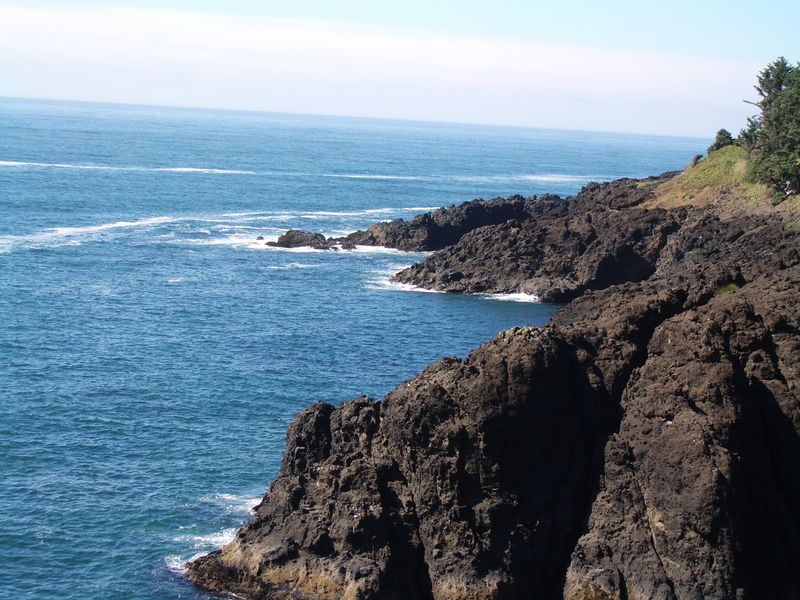
Depoe Bay sits near the geographic center of the Oregon coast, which makes it an ideal base for exploring a remarkable stretch of coastline in both directions. To the north, the Cascade Head Scenic Research Area offers hiking trails through rare coastal prairie and temperate rainforest, with views over the Salmon River estuary that are hard to match anywhere in the Pacific Northwest.
To the south, Newport provides access to the Oregon Coast Aquarium, the historic Bayfront district, and the Yaquina Head Outstanding Natural Area, where a lighthouse built in 1873 still stands above some of the most productive seabird nesting colonies on the coast. The drive between these points on Highway 101 passes through some of the most photogenic coastal scenery in the entire state.
The Lincoln City outlet shopping area sits about 12 miles north and serves as a practical stop for supplies or souvenirs. Visitors who use Depoe Bay as a home base rather than a quick stop often find that a two or three day stay barely scratches the surface of what this central Oregon coast corridor has to offer.
Why This Small Town Deserves a Longer Stop Than Most People Give It
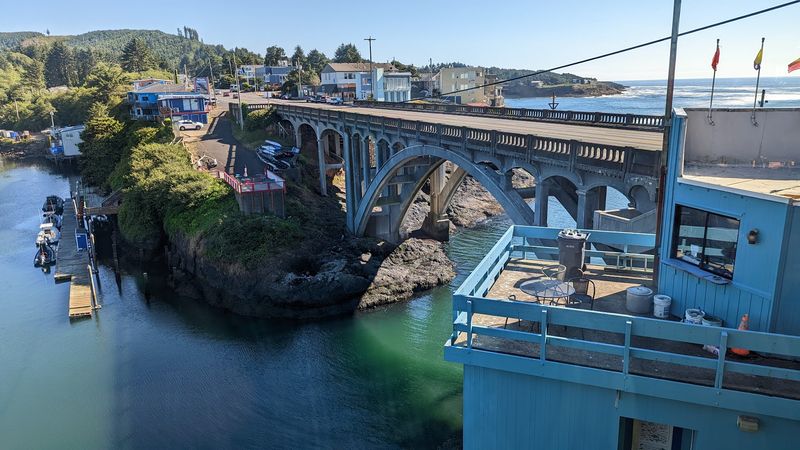
Most people who drive through Depoe Bay on Highway 101 spend maybe ten minutes there, long enough to glance at the harbor and keep moving toward Cannon Beach or Newport. That is a genuinely unfortunate pattern, because this town rewards the visitors who actually slow down with experiences that are hard to replicate anywhere else on the coast.
The combination of free whale watching from a public sidewalk, a record-setting harbor, a natural rock geyser, excellent fresh seafood, and some of the most dramatic storm surf access in Oregon adds up to something that punches far above its small-town weight class. Very few places in the country offer this density of genuinely interesting things in such a compact, walkable area.
Travelers who grew up in landlocked states like Oklahoma, far from any ocean, tend to feel the impact of Depoe Bay especially strongly. The rawness of the coast here, the whales feeding just offshore, the spray from the Spouting Horn, and the roar of Pacific swells against ancient basalt create a sensory experience that stays with you.
Stop the car, walk the seawall, and give this remarkable little town the time it has always deserved.
Share this story