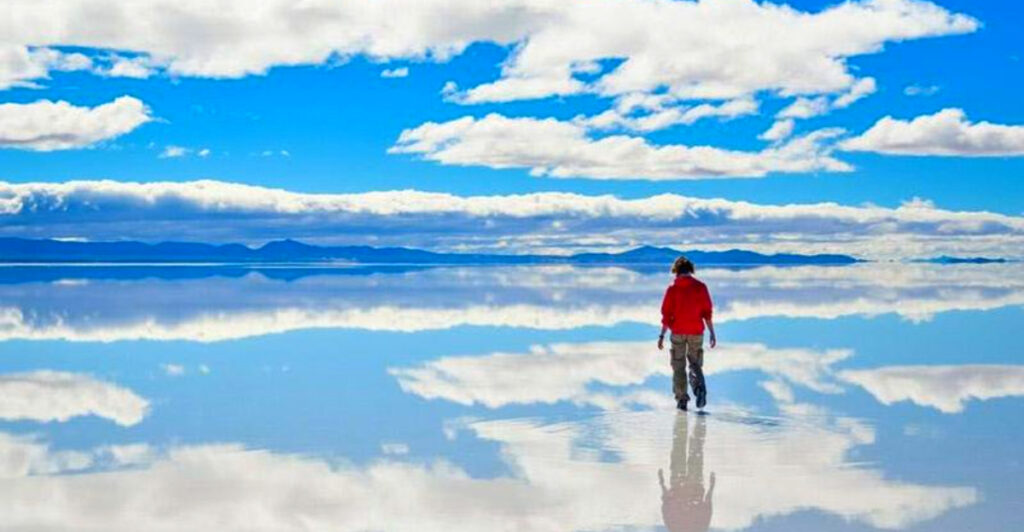
Salt flats are some of the most surreal landscapes on Earth. Formed over thousands of years as ancient lakes dried up and left behind thick mineral crusts, these massive white expanses can look like frozen oceans, giant mirrors, or even another planet entirely.
From South America’s endless reflective plains to brightly colored African salt lakes filled with flamingos, each destination offers a completely different experience. Some are famous for dramatic photography, others for extreme isolation or unusual wildlife, but all 14 places on this list prove that nature can create scenery far stranger and more beautiful than most people imagine.
1. Bonneville Salt Flats, Utah, United States
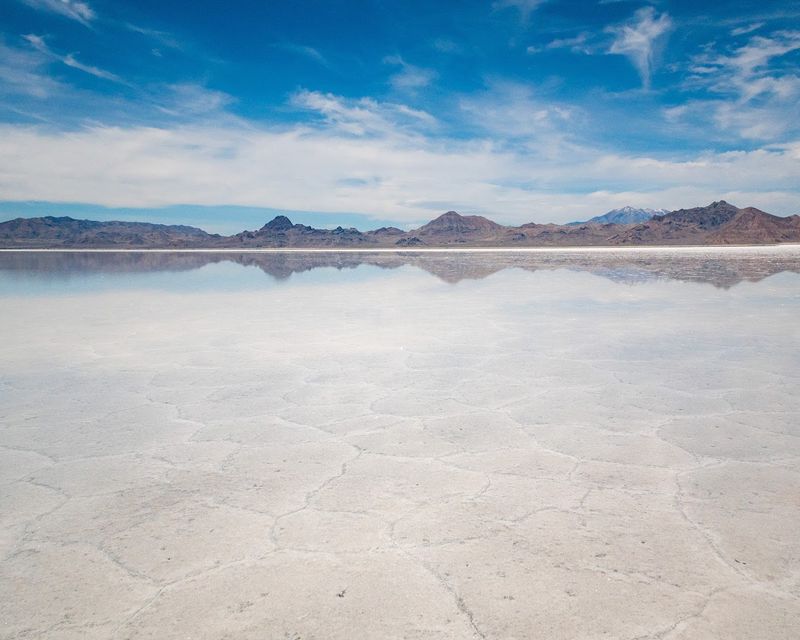
Speed records have been broken here more times than most people change their socks. The Bonneville Salt Flats in western Utah are globally famous as the go-to location for land speed record attempts, drawing daredevil drivers and motorcycle racers from around the world.
The flats cover about 104 square kilometers and sit just west of the Great Salt Lake, near the Utah-Nevada border. The thick salt crust makes it impossible for plants to grow, which is part of what gives the landscape its stark, almost alien quality.
Bonneville is a remnant of ancient Lake Bonneville, a massive prehistoric body of water that once covered much of Utah. Outside of race season, the flat is open to visitors who come simply to stand in the vast white silence and take in the scale of it.
2. Salar de Atacama, Antofagasta Region, Chile
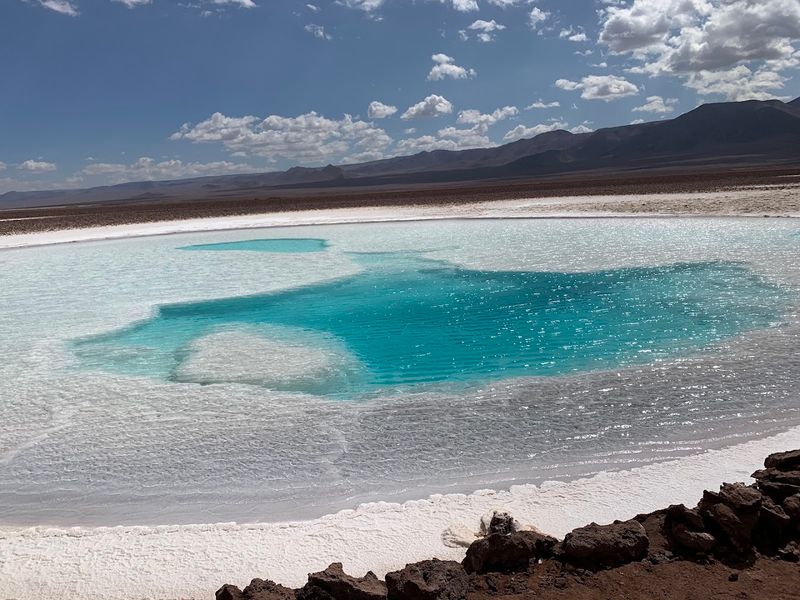
Chile’s Atacama Desert is already one of the driest places on the planet, and the Salar de Atacama sits right in the middle of it, covering approximately 3,000 square kilometers of cracked white terrain surrounded by a ring of volcanoes.
What makes this salt flat genuinely surprising is the wildlife. Laguna Chaxa, located within the flat, is a protected flamingo reserve home to three different flamingo species: Andean, Chilean, and James.
Watching bright pink birds wade through reflective mineral pools against a backdrop of snow-dusted peaks is a sight that feels completely out of place and completely perfect at the same time.
The Salar de Atacama is also a major global source of lithium, providing around 36 percent of the world’s lithium carbonate supply as recently as 2017. Science, nature, and stunning scenery rarely meet this neatly.
3. Makgadikgadi Salt Pans, Botswana
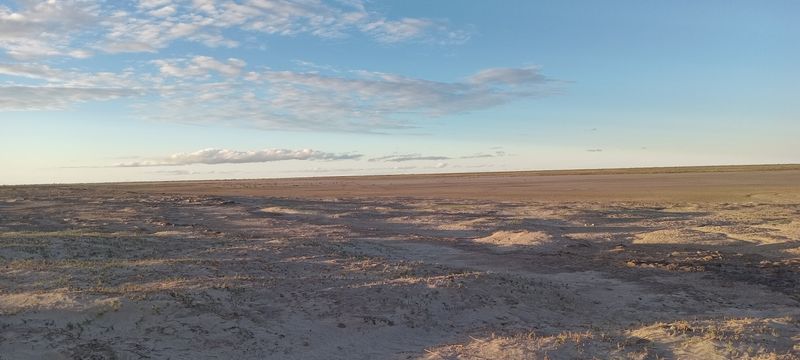
Africa’s largest salt pan complex has a prehistoric personality. The Makgadikgadi Pans in Botswana are the remnants of an ancient mega-lake that once covered a huge portion of southern Africa, and the landscape still carries that ancient, emptied-out quality today.
During the dry season, the pans stretch out in pale, cracked sheets as far as the eye can see. Massive baobab trees dot the edges of the flat, and herds of zebra and wildebeest cross the open ground during seasonal migrations.
When rains arrive, shallow water floods parts of the pans and flamingos descend in enormous numbers to breed. The contrast between the bone-dry months and the wet season transformation is dramatic enough to make the Makgadikgadi feel like two completely different places.
Both versions are worth the trip.
4. Salar de Arizaro, Salta Province, Argentina
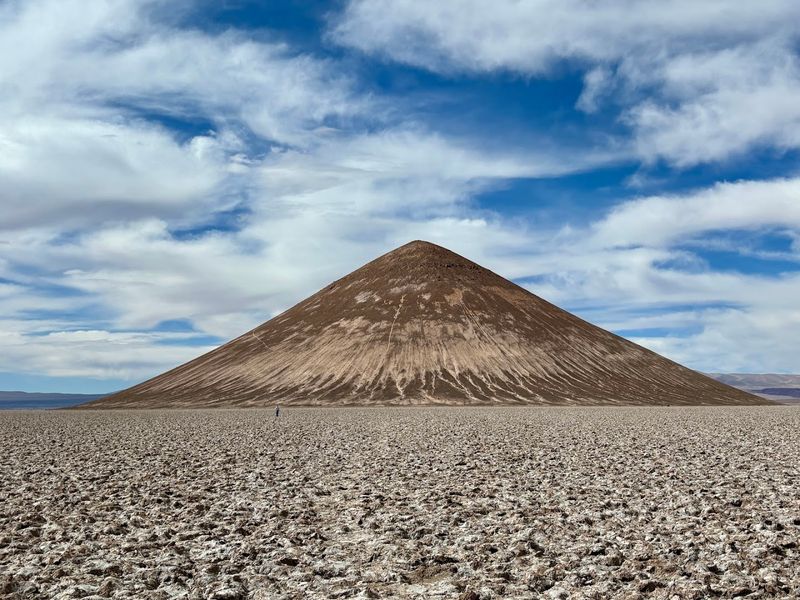
Tucked into the high Andes at an elevation that makes casual breathing feel like an achievement, Salar de Arizaro is one of Argentina’s largest and least-visited salt flats, and that remoteness is a big part of its appeal.
The flat sits in Salta Province, surrounded by volcanic mountains and desert formations that create a striking patchwork of color: deep reds, pale yellows, and the brilliant white of the salt crust itself. There are no crowds here, no gift shops, and no selfie queues.
The standout feature is the Cono de Arita, a near-perfect cone-shaped volcanic hill that rises from the center of the flat like something placed there deliberately. Nobody fully agrees on how it formed so precisely, which makes it one of those rare natural features that geologists and curious travelers both enjoy arguing about.
5. Chott el Djerid, Tozeur Governorate, Tunisia
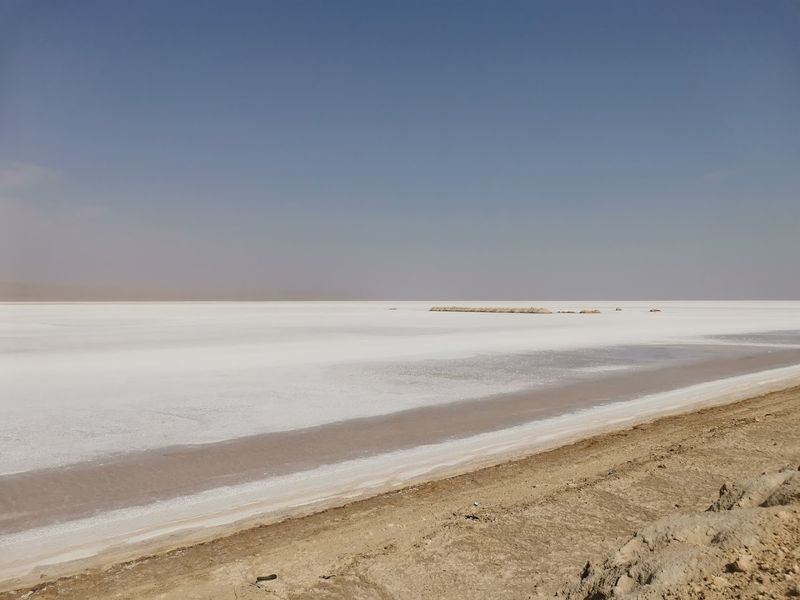
Star Wars fans might recognize this place without realizing it. Chott el Djerid, the largest salt pan in the Sahara Desert, served as the filming location for Luke Skywalker’s home planet Tatooine, and the landscape absolutely earns that science-fiction reputation.
Covering an estimated 6,000 to 7,000 square kilometers in central Tunisia, the lake’s name translates to “Lagoon of the Land of Palms.” During summer it dries almost completely, leaving behind cracked salt formations that shift in color from white to green to purple depending on mineral content and time of day.
Fata morgana mirages are common here, creating floating, distorted images above the flat horizon that confuse and fascinate travelers in equal measure. Driving across the causeway that cuts through the pan is one of those road trips that stays with you long after the journey ends.
6. Lake Eyre, South Australia, Australia
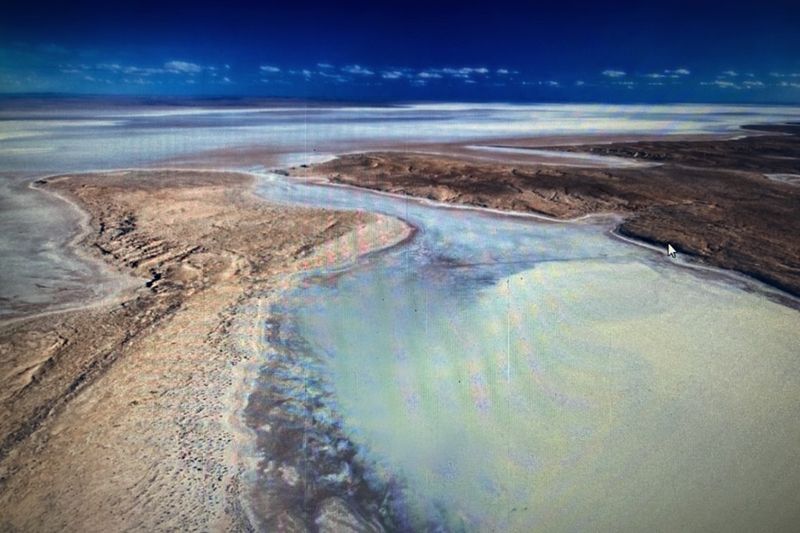
Australia’s largest lake is mostly empty, and that is exactly what makes it extraordinary. Kati Thanda-Lake Eyre, as it is officially known, sits in the outback of South Australia and spends the majority of its time as a dazzling white salt crust rather than an actual body of water.
When rare and heavy rains fill the lake, the transformation is dramatic. Floodwaters carry nutrients that trigger an explosion of birdlife, drawing pelicans, gulls, and waders from across the continent to breed in temporary wetlands that may not reappear for years.
The best way to appreciate Lake Eyre’s scale and strange beauty is from the air. Scenic flights over the lake reveal geometric salt patterns, shifting mineral colors, and a sense of scale that ground-level visits simply cannot match.
It floods rarely, so timing a visit right feels like a genuine event.
7. Salar de Uyuni, Potosí Department, Bolivia
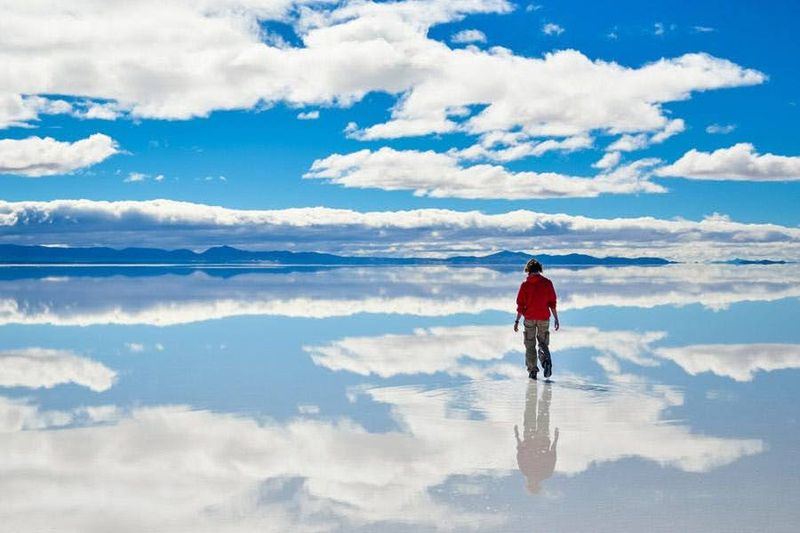
The world’s largest salt flat holds a record that is almost impossible to wrap your head around: roughly 10,582 square kilometers of solid white crust sitting high in the Bolivian Andes at over 3,600 meters above sea level.
During the rainy season between December and April, a thin layer of water covers the surface and turns the entire flat into a near-perfect mirror reflecting the sky above. Visitors standing on it feel like they are floating between two skies.
Salar de Uyuni was formed thousands of years ago when ancient Lake Minchin dried up. It now holds an estimated 43 to 90 percent of the world’s known lithium reserves.
Nearby attractions include Isla Incahuasi, a cactus-covered island rising from the salt, and a hotel built entirely from salt blocks.
8. Salar de Tara, Antofagasta Region, Chile
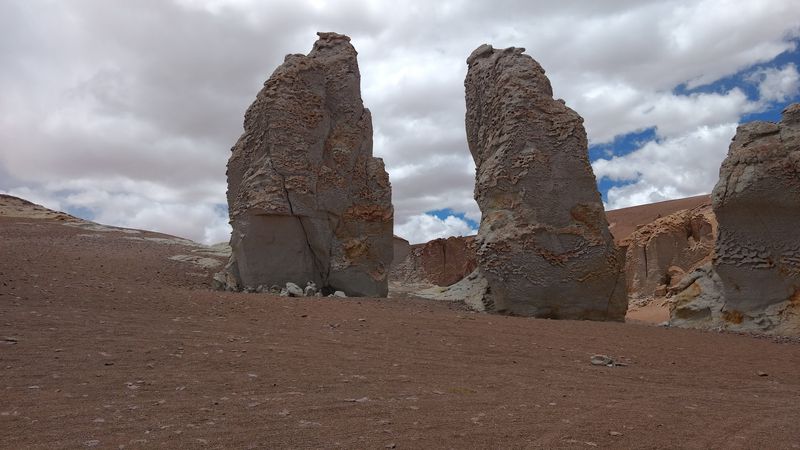
Getting to Salar de Tara requires a serious commitment to altitude and adventure, but the reward is a landscape that looks like it belongs on a different planet entirely. Set well above 3,000 meters in Chile’s Antofagasta region, this remote salt flat is surrounded by volcanic craters, mineral lagoons, and some of the most vivid geology in South America.
The Monjes de la Pacana, a group of towering stone pillars that rise from the flat, add a sculptural drama to the already striking scenery. Vicunas graze near the lagoon edges, and various high-altitude bird species are common sightings for patient observers.
Because Salar de Tara sits far from major tourist infrastructure, most visitors arrive on organized day trips from San Pedro de Atacama. The journey itself crosses remarkable high desert terrain, making the destination feel genuinely earned by the time it comes into view.
9. Dasht-e Kavir Salt Plains, Iran
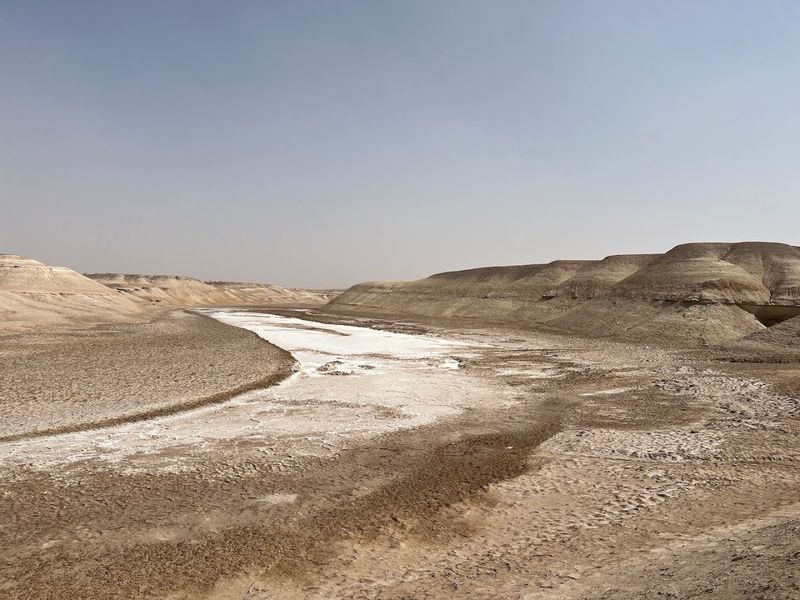
Iran’s Great Salt Desert covers an enormous stretch of the country’s central plateau and contains some of the most visually striking salt formations found anywhere on Earth. Dasht-e Kavir is not a single flat surface but a complex mix of salt marshes, cracked mineral plains, and geometric crystal patterns that look almost mathematically designed from above.
Certain sections of the desert floor form near-perfect polygonal shapes as underground water rises through the salt crust and evaporates, leaving behind structured crystalline outlines. These patterns can stretch across kilometers of otherwise featureless terrain.
The region is genuinely harsh and remote, with extreme temperature swings between day and night and very limited visitor infrastructure. Travelers who do make it out here describe the experience as humbling and quietly unforgettable, the kind of place that recalibrates your sense of scale in a way that is hard to explain afterward.
10. Etosha Pan, Oshikoto Region, Namibia
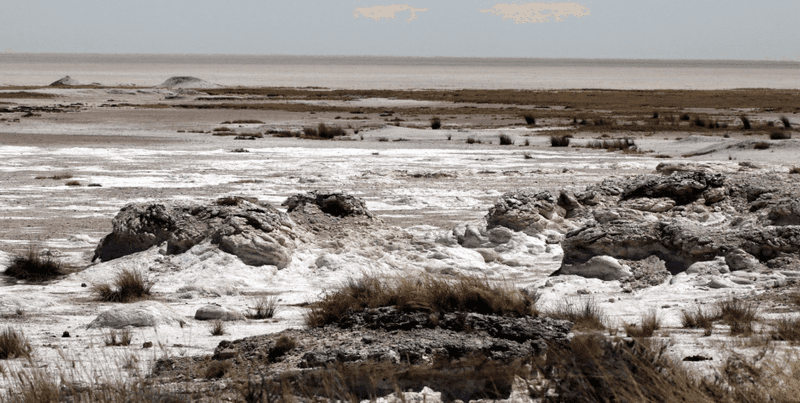
“Great white place” is what the name Etosha means in the local Ndonga language, and the pan lives up to it completely. Covering approximately 4,800 square kilometers, Etosha Pan forms the centerpiece of one of Africa’s most celebrated national parks and can actually be seen from space.
The pan was originally a deep lake fed by the Kunene River, but tectonic shifts caused the river to change course thousands of years ago, and the lake gradually dried into the salt flat it is today. During the dry season, elephants, giraffes, lions, and antelope gather in huge numbers at waterholes along the pan’s edges, using the mineral-rich surface as a natural salt lick.
In exceptional rainy seasons, the pan briefly floods and becomes a breeding ground for flamingos and great white pelicans. That seasonal transformation from barren flat to busy wetland is one of Namibia’s most spectacular natural events.
11. Salinas Grandes, Jujuy Province, Argentina
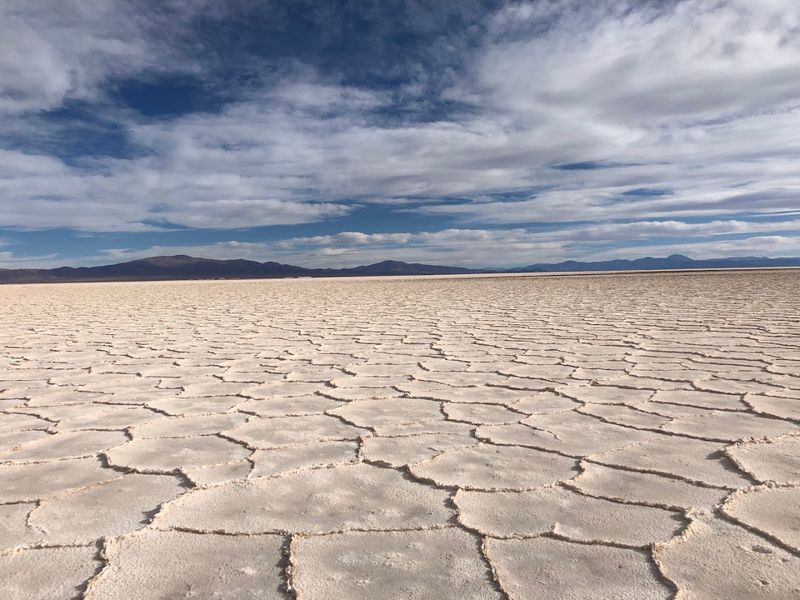
Argentina’s most photogenic salt flat sits at an altitude of around 3,400 meters in the northwestern province of Jujuy, framed on all sides by the vivid purples, reds, and greens of the surrounding Andean mountains. The contrast between the white salt and the colorful peaks is genuinely startling.
Salinas Grandes is considered the largest salt flat in Argentina and the second largest salt pan in the world after Salar de Uyuni. The hexagonal salt formations on the surface are a particularly popular subject for creative photography, with visitors using forced perspective tricks to produce images that play with the flat’s enormous scale.
Local artisans set up roadside stalls selling hand-carved salt sculptures and crafts, adding a cultural dimension to the visit. The access road from Purmamarca winds through the Andes on one of South America’s most scenic mountain passes, making the drive itself a highlight worth planning around.
12. Great Salt Lake Desert, Utah, United States
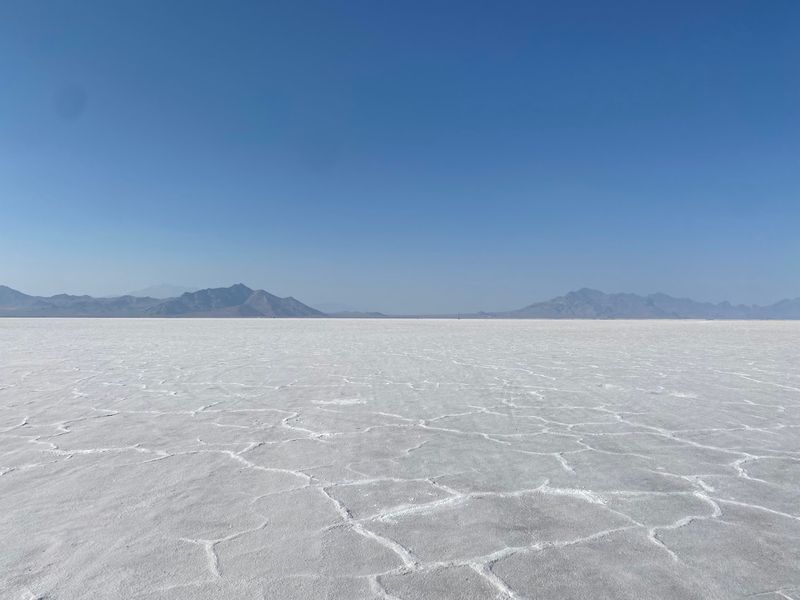
Beyond the famous racing strips of Bonneville, the broader Great Salt Lake Desert stretches across a much larger portion of northwestern Utah in near-total silence. This cold desert sits between the Great Salt Lake and the Nevada border, and its white evaporite surface reforms every year as sparse rainfall evaporates and leaves fresh salt deposits behind.
The annual precipitation here averages less than 200 millimeters, which keeps the landscape spare and open. Long, straight roads cut across the flats in a way that makes distances feel deceptive, and the reflective surface regularly produces mirage effects that turn the horizon into a shimmering, shifting line.
Road-trippers crossing Nevada into Utah often describe this stretch as one of the most memorable sections of the journey, not for what is there but for the sheer, uncomplicated emptiness of it. Sometimes nothing is exactly the right thing to look at.
13. Laguna Cejar Salt Flats, San Pedro de Atacama, Chile
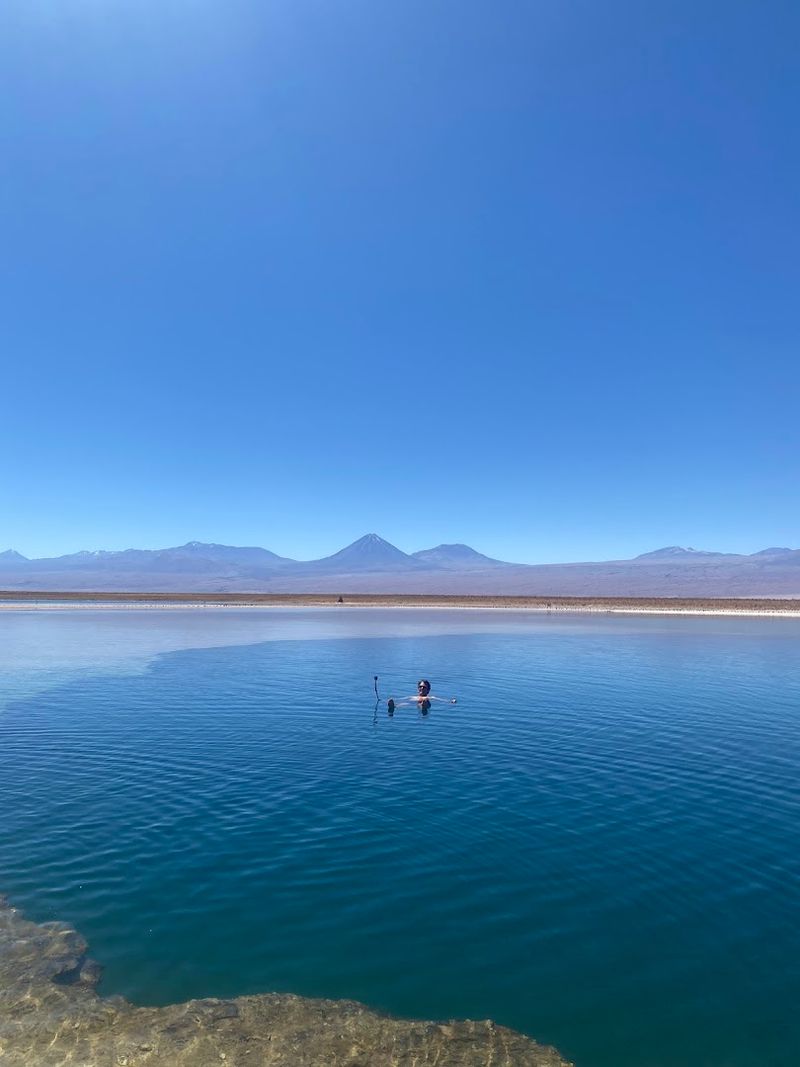
About 18 kilometers from the town of San Pedro de Atacama, a turquoise lagoon sits inside the Salar de Atacama and offers one of the more unusual swimming experiences available anywhere on Earth. Laguna Cejar is a sinkhole lake with a salt concentration ranging from 5 to 28 percent, high enough that visitors float on the surface without any effort at all.
The buoyancy effect is similar to the Dead Sea, and first-timers often spend the first few minutes laughing at how impossible it feels to sink. The surrounding salt crust and distant volcanic peaks frame the experience in scenery that is hard to believe is real.
Sunset visits are particularly popular, as the light shifts across the white salt and turquoise water in ways that produce remarkable photographs. Entry to the lagoon is managed and limited, so booking in advance through a local tour operator is strongly recommended.
14. Lake Natron Salt Flats, Arusha Region, Tanzania
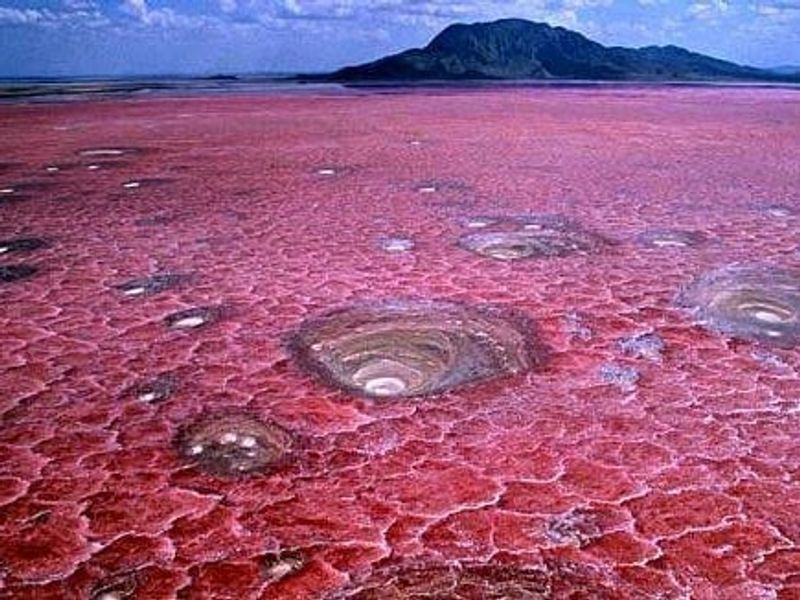
No other salt lake on Earth looks quite like Lake Natron. Located in Tanzania’s Arusha region near the Kenyan border, this shallow alkaline lake gets its extraordinary deep red and orange coloring from mineral-rich waters and the microorganisms that thrive in them.
The lake’s high sodium carbonate content makes it inhospitable to most wildlife, but it is the primary breeding site in Africa for lesser flamingos, with up to 2.5 million birds nesting here at peak times. The sight of that many flamingos gathered against the red water and volcanic rock is one of Africa’s most dramatic natural spectacles.
Ol Doinyo Lengai, an active volcano that the Maasai people call “Mountain of God,” looms nearby and adds a raw geological drama to the scene. Lake Natron is genuinely remote, which keeps visitor numbers low and the experience feeling refreshingly unfiltered.
Share this story