A little-known museum in Springfield, Missouri, holds one of the most impressive natural history collections in the Midwest, including what is considered the world’s largest Triceratops alongside mammoth remains and Ice Age fossils. From the outside, the building looks surprisingly ordinary, which makes what is inside even more unexpected.
What sets the museum apart is its connection to a nearby Ice Age cave system that continues producing important fossil discoveries. Visitors can see enormous prehistoric skeletons, learn about ancient North America, and talk with volunteers who are deeply passionate about the collection, all without paying an admission fee.
It is the kind of place that surprises both kids and serious science enthusiasts the moment they walk through the door.
Where Ancient History Lives on West Farm Road
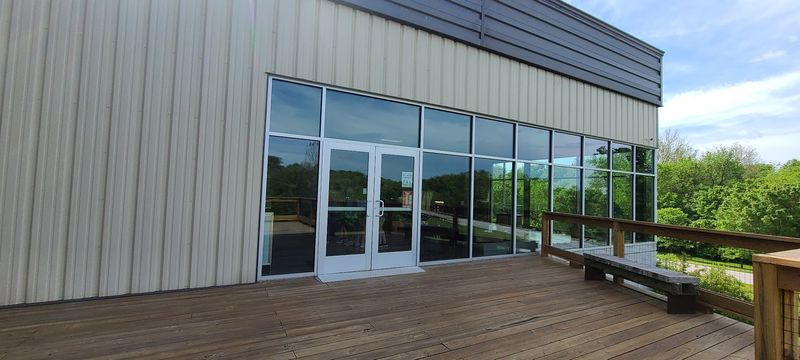
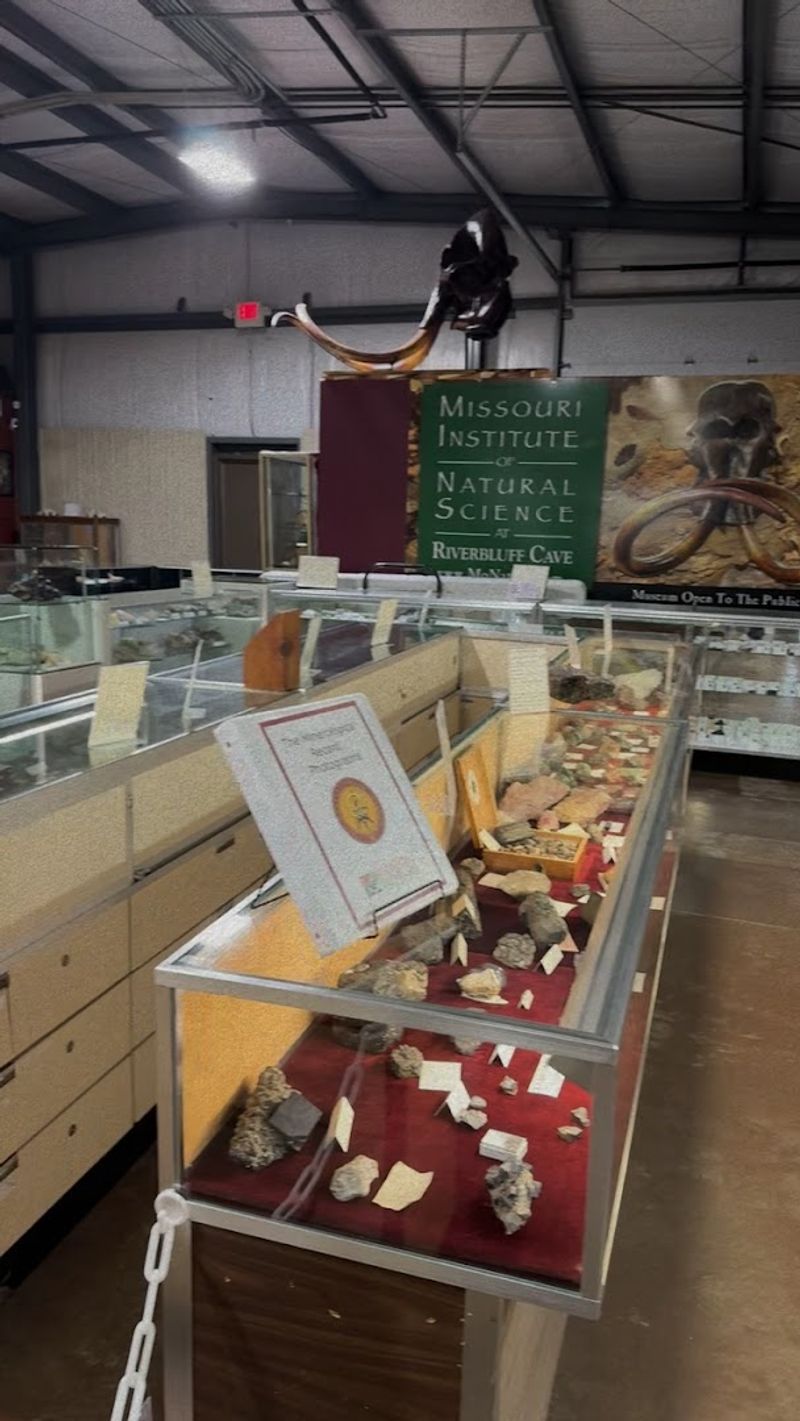
The Missouri Institute of Natural Science sits at 2327 W Farm Rd 190, Springfield, MO 65810, tucked into a setting that does not announce itself with fanfare. From the outside, the building reads more warehouse than wonder, but that underestimated exterior is part of its charm.
Founded in 1990 by Dr. Richard Dayvault and officially organized as a nonprofit in 2003, MINS holds the distinction of being the first and only natural history museum in the state of Missouri. That is not a small claim for a building most people drive past without a second glance.
The museum is open Tuesday through Friday from 9 AM to 4:30 PM and Saturday from 10 AM to 4 PM, with Sunday and Monday closed. Admission is free, though donations are warmly encouraged to keep this community-powered institution running.
A phone call to 417-883-0594 or a visit to monatsci.org can help you plan your trip before you arrive.
The Nonprofit Mission That Keeps It All Free
Most museums of this caliber charge a notable entry fee, so the fact that MINS runs entirely on donations and volunteer labor makes it genuinely unusual. The organization was built around a mission to advance scientific investigation of nature and promote the preservation and conservation of natural resources.
Volunteers here are not just greeters handing out brochures. They walk you through exhibits, answer detailed questions about specific fossil species, and guide children through scavenger hunts with real enthusiasm.
The knowledge level on display from the staff is the kind you would expect from a paid professional team.
That community-driven model has earned the museum a 4.8-star rating across hundreds of reviews, with visitors consistently praising the warmth and expertise of the people who keep it running. Every donation dropped into the box near the entrance goes directly toward keeping those fossils lit, labeled, and accessible to anyone who walks through the door, regardless of their budget.
Henry the Triceratops and Why He Stops Everyone Cold
There is a moment every visitor seems to share: you round a corner inside the museum and suddenly Henry is just there, enormous and undeniable. Henry is currently recognized as the world’s largest Triceratops, and the scale of the animal hits differently when you are standing a few feet away from the real thing.
Triceratops fossils are not rare in the world of paleontology, but a specimen of Henry’s size is genuinely exceptional. The museum displays the fossil with missing sections filled in using carefully produced 3D-printed models, a transparent approach that lets visitors understand exactly what is real bone and what is reconstruction.
Kids who thought they knew what a Triceratops looked like from books tend to go quiet when they see Henry in person. The sheer physical presence of an animal that roamed the earth tens of millions of years ago, rendered at full scale in a room you can walk around in, is the kind of experience that tends to stay with a person for a long time.
Mammoths, Sloths, and the Ice Age Collection
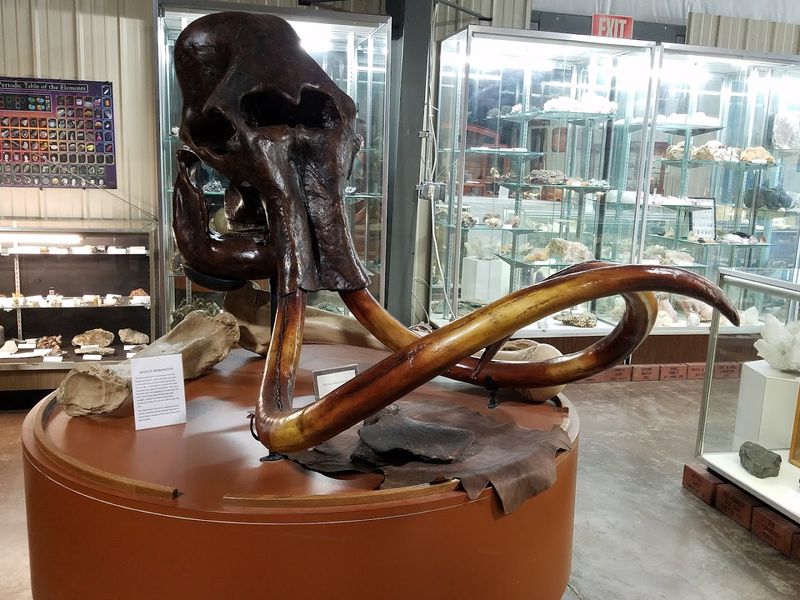
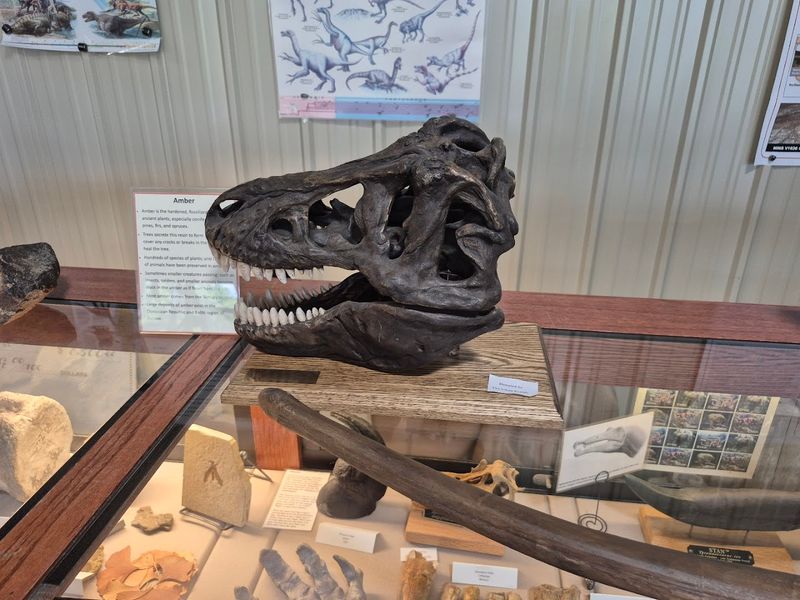
A mammoth tusk greets visitors near the back of the museum with the kind of quiet authority that only something ancient can project. Nearby, the complete skeleton of a large ground sloth stands assembled and labeled, giving a clear sense of just how big these creatures actually were during the Ice Age.
Missouri was not always the landlocked state it is today, and the fossil record here reflects a dramatically different world. The collection walks visitors through prehistoric mammals that roamed the region long before humans arrived, connecting local soil to a global story of climate change and extinction.
What makes this section especially valuable is that many of the specimens on display came from Missouri itself, not distant dig sites in Montana or Wyoming. Holding that geographic connection makes the ancient creatures feel less like textbook illustrations and more like neighbors from a very different era.
The ground sloth alone is worth the drive from anywhere in the Ozarks.
Riverbluff Cave and the Oldest Ice Age Fossil Site in North America
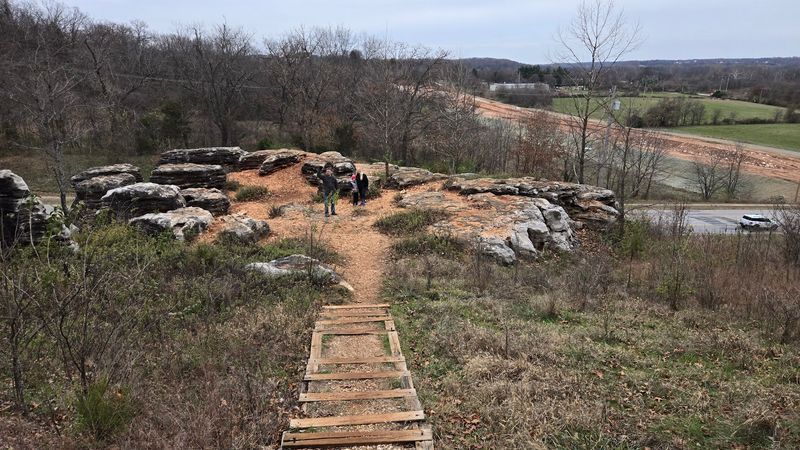
The museum sits on land directly connected to one of the most significant geological discoveries in recent American history. Riverbluff Cave was discovered on September 11, 2001, during road construction south of Springfield, and it turned out to be the oldest Ice Age fossil cave in North America.
The cave is not open to public tours, but the museum brings its story inside through exhibits, fossils, and detailed explanations of what researchers have found within its chambers. The list of species identified there reads like a roll call of prehistoric North America: mammoths, ancient wolves, cats, peccaries, and camels, yes, camels, which were once native to this continent.
Perhaps the most striking evidence found in the cave comes from Giant Short-Faced Bears, whose scratch marks on the cave walls reach up to 15 feet high. Volcanic ash from a Yellowstone eruption was also discovered inside, adding another layer to an already extraordinary site.
The cave keeps giving, and researchers are still working to understand everything it holds.
Missouri as the Cave State and What That Really Means
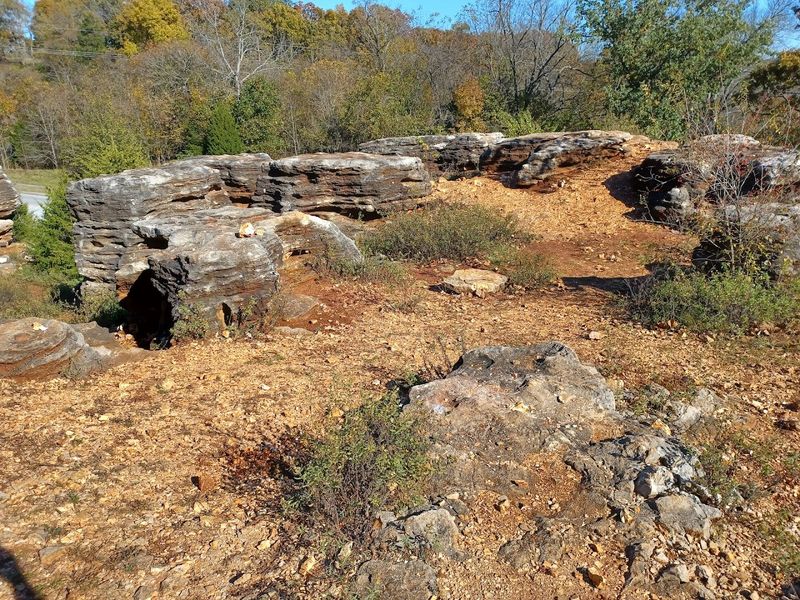
Missouri carries the nickname the Cave State for good reason: the state has approximately 7,500 recorded caves, more than nearly any other state in the country. That underground world is not just a curiosity for spelunkers; it is a living archive of geological and biological history stretching back millions of years.
The museum uses this broader context to help visitors understand why a cave discovered during a road project in Springfield turned out to be so scientifically important. When you have that many caves in one state, the odds of major discoveries hiding beneath everyday life become very real.
The exhibits connect Missouri’s cave culture to the broader story of how water, limestone, and time create the conditions for fossil preservation. Understanding that process changes the way you think about the ground under your feet, whether you are hiking the Ozarks or just driving down a Springfield highway.
The cave state identity runs deeper than most residents realize, and this museum makes that point clearly.
Ancient Sea Creatures and the Inland Ocean That Once Covered Missouri
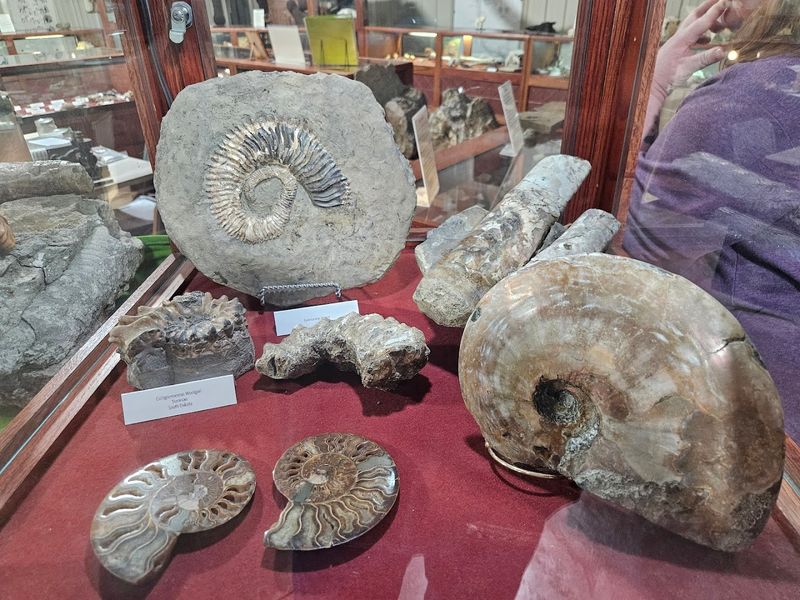
Long before Missouri had rolling hills and farmland, the entire region sat beneath a vast inland sea. The museum dedicates a meaningful portion of its collection to the creatures that lived in those waters, and the fossils on display make that ancient geography feel completely real.
Sea creatures that have not existed for hundreds of millions of years are preserved here in stone: shells, fish, and marine reptiles that once navigated a shallow ocean covering the heart of North America. The Ozarks region in particular has yielded a rich record of ancient marine life, and MINS actively researches those specimens.
One of the more surprising items available in the gift shop is a mosasaur tooth, sold at a price that makes owning a piece of prehistoric ocean life genuinely accessible. The institute’s research program has also contributed to the identification of new fossil species discovered right here in Missouri, meaning the scientific story of that ancient sea is still being written.
Rocks, Minerals, and a Crystal Collection That Earns Its Own Section
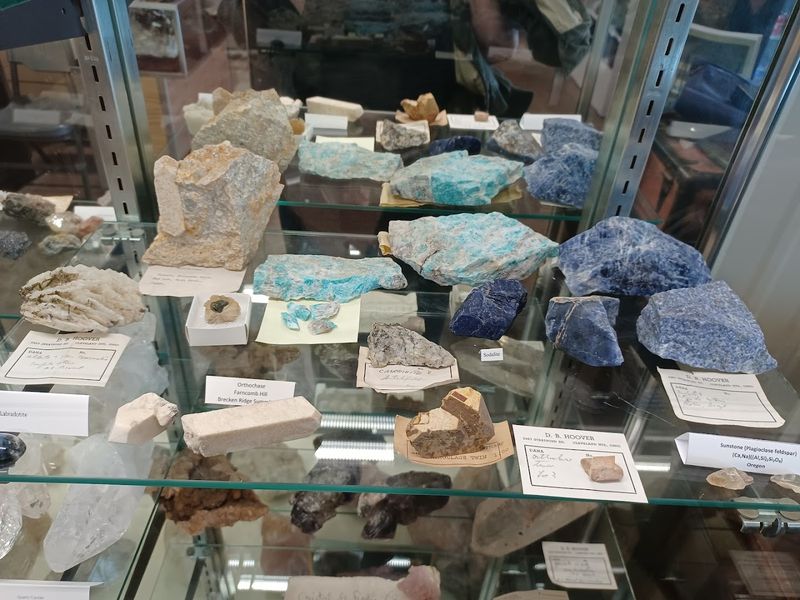
About half of the museum’s floor space belongs not to bones and fossils but to rocks, minerals, and crystals, and that section draws its own dedicated audience. The variety on display ranges from familiar specimens like quartz and amethyst to rarer pieces that even experienced collectors do not see every day.
The gift shop carries an impressive selection of hard-to-find crystals and minerals available for purchase at prices that feel fair rather than inflated. Visitors who arrive knowing nothing about geology often leave with a new hobby, and at least one rock tucked under their arm.
The crystal and mineral section also connects naturally to the museum’s broader educational mission, showing how the same geological forces that created Missouri’s caves also produced the mineral formations on display in the cases. Every specimen is labeled clearly, and the volunteers in this section are just as ready to explain the science as the ones standing next to the dinosaur bones.
The two halves of the museum genuinely complement each other.
Fossil Hunting on the Museum’s Own Property
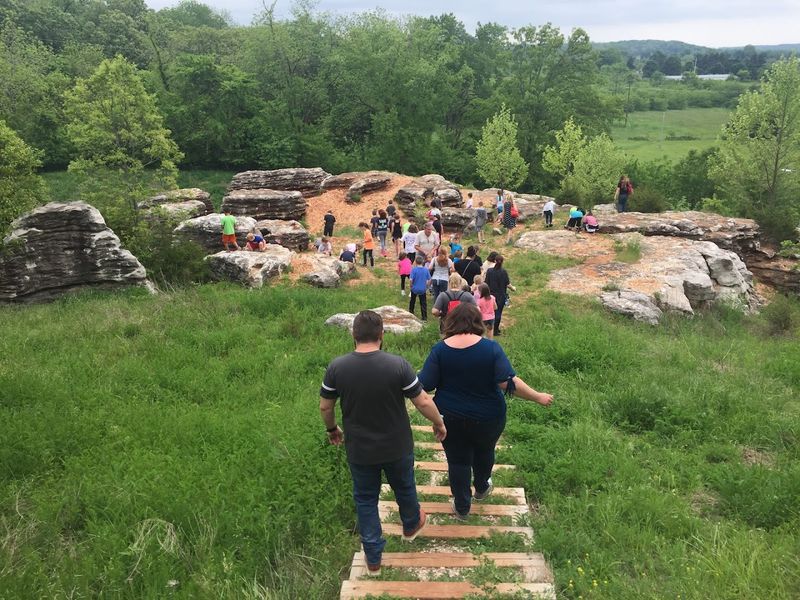
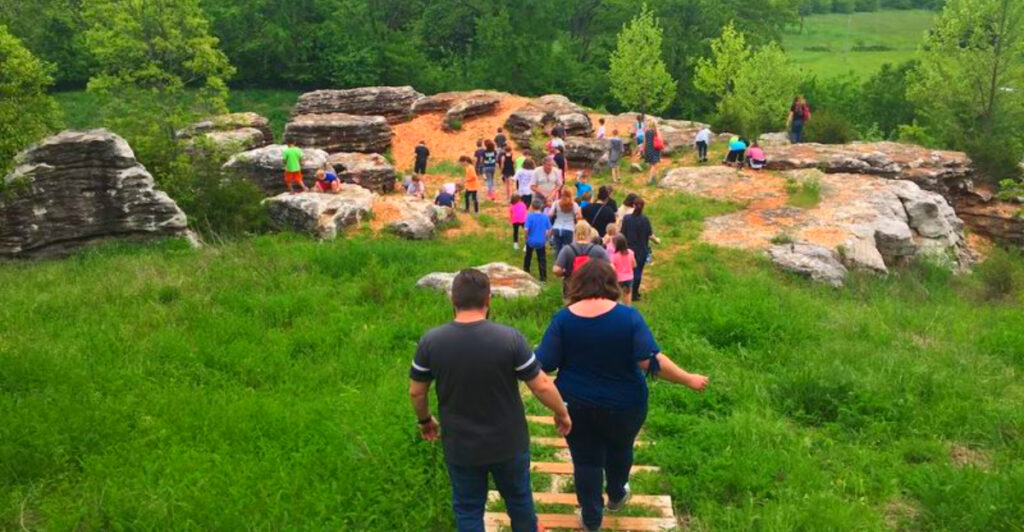
The experience does not end when you finish the indoor exhibits. For a small fee, visitors can head outside and hunt for real fossils on the museum’s own property, and the finds are genuinely worth the effort.
Raccoon rib bones, plant fossils, and other ancient fragments have been pulled from the ground by visitors of all ages. The site gives families a hands-on connection to the science that the indoor exhibits explain, and for kids especially, taking home something they personally dug out of Missouri soil makes the whole trip unforgettable.
The museum also runs a formal paleontological fieldwork program that includes annual expeditions, and members of the public can join those digs to participate in real scientific excavation. That level of access to genuine fieldwork is rare for a museum of any size, let alone one that charges nothing at the door.
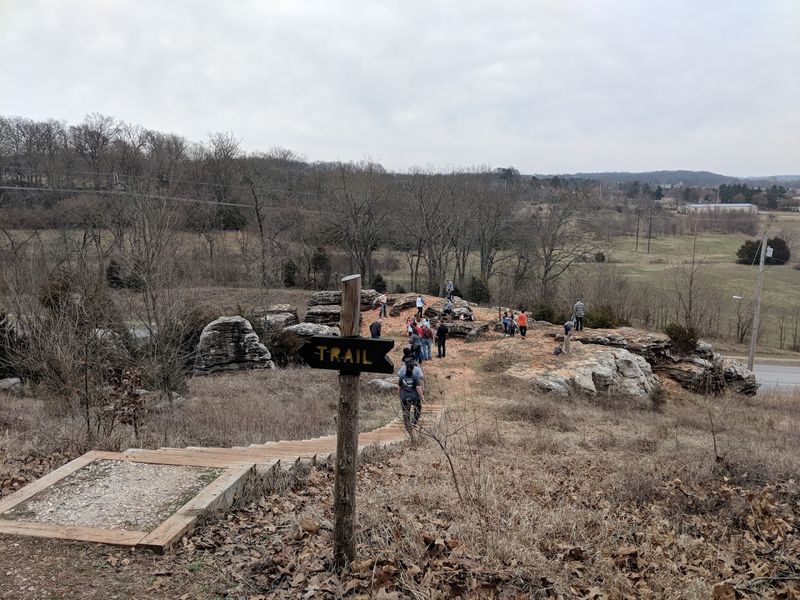
The trail leading to the dig site doubles as a pleasant walk through the natural greenway surrounding the property.
A Place Built for Every Age Group
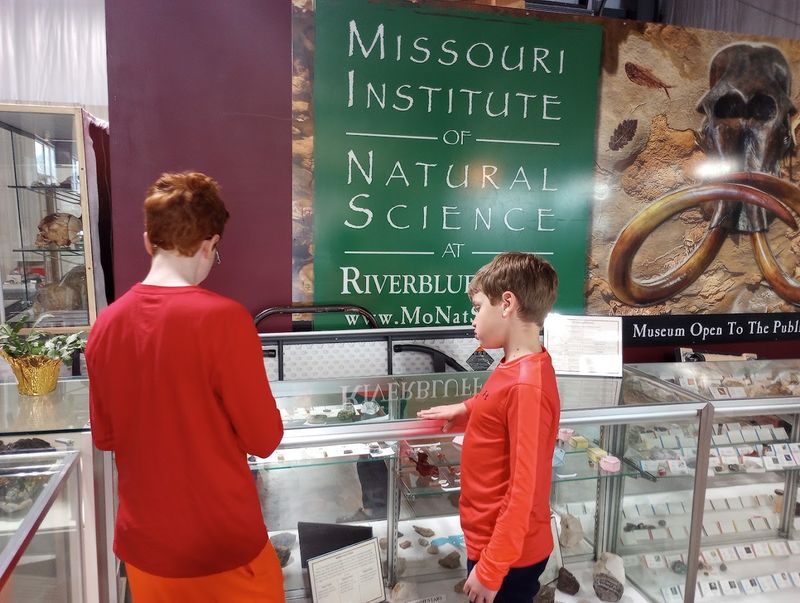
The museum handles a genuinely wide age range with thoughtful design. A dedicated corner for toddlers includes dinosaur toys, books, and a short video area where the youngest visitors can settle in without derailing the experience for older family members.
Older kids and teenagers engage naturally with the scavenger hunt, which sends them moving through the exhibits with purpose and a checklist. Adults, meanwhile, tend to get absorbed in the labeled specimens, the scientific posters from actual conference presentations, and conversations with volunteers who clearly love talking about this material.
The museum rates at 4.8 stars not just because the collection is impressive but because it works for a three-year-old and a retired geology enthusiast at the same time. Families with multiple children at very different developmental stages consistently report that every kid found something to connect with.
That kind of broad appeal is genuinely hard to engineer, and MINS seems to pull it off naturally visit after visit.
Planning Your Visit and What to Expect When You Arrive
The gravel parking lot is the first thing you notice, and it is worth knowing in advance if you are navigating with a stroller or wheelchair, since the surface can be a bit uneven. A new classroom building was under construction at the time of recent visits, so expansions are actively underway and future trips may look different from what earlier visitors experienced.
The museum is open Tuesday through Saturday, closed Sunday and Monday, and the Saturday hours run from 10 AM to 4 PM rather than the 9 AM start that applies on weekdays. Arriving with a little time to spare is worthwhile because the volunteers genuinely enjoy giving guided walkthroughs rather than leaving you to wander alone.
Bring a sketchbook if you enjoy drawing, because the specimens are detailed enough to reward close attention. The gift shop carries coins, geodes, fossils, and branded merchandise at accessible prices.
Every visit to this small but quietly extraordinary museum feels like finding something the rest of the world has not quite caught up to yet.
Share this story