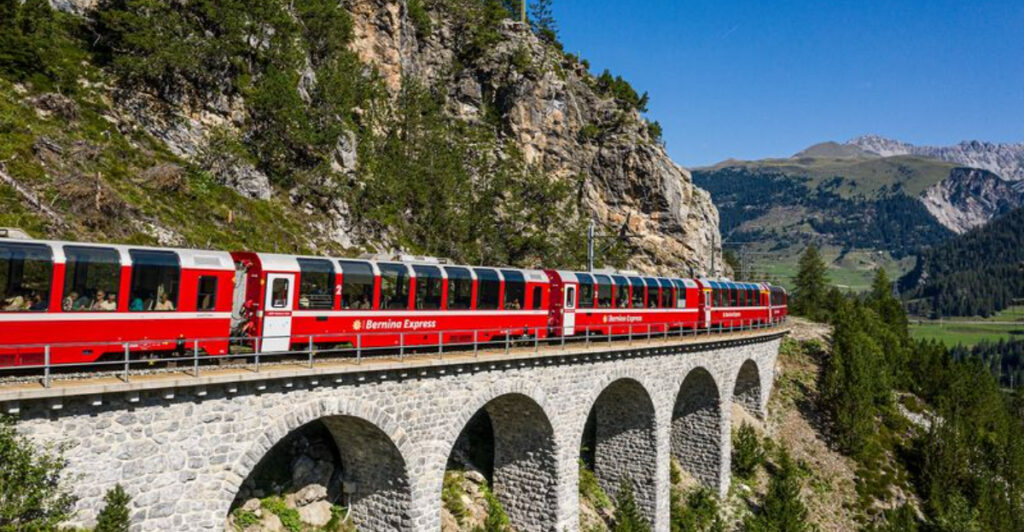
Some of the world’s greatest adventures don’t happen on a plane or a highway. They happen on the rails, where the journey itself is the destination.
From crossing frozen mountain passes to rolling through jungle-covered hills, these train routes deliver scenery and experiences that will leave you speechless. Whether you’re a seasoned traveler or planning your first big trip, these 15 rail journeys are guaranteed to fire up your sense of adventure.
The Ghan — Australia
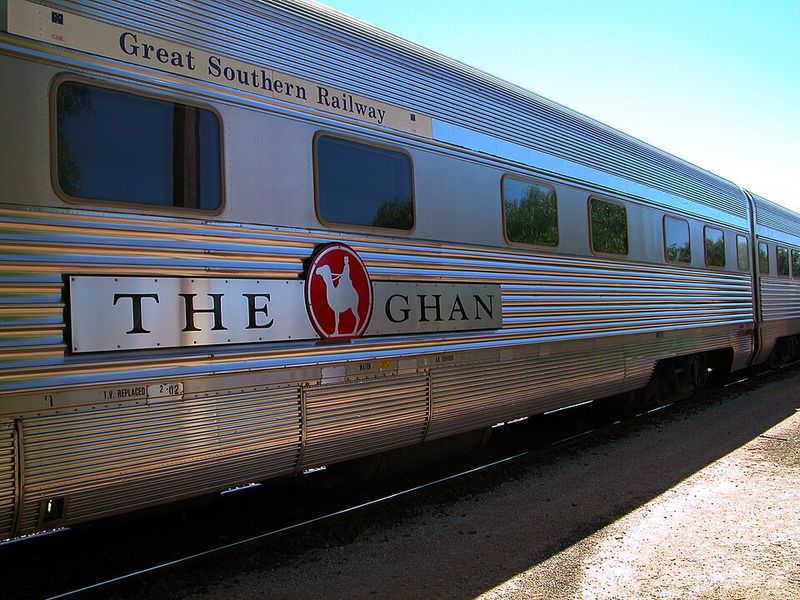
Crossing a continent by train sounds ambitious, but The Ghan makes it feel completely natural. This legendary Australian rail journey runs nearly 1,851 miles from Adelaide in the south all the way up to Darwin in the north.
You’ll pass through the famous Red Centre, the spiritual heart of Australia, where the landscape shifts from dry scrubland to ancient desert plains.
Named after the Afghan cameleers who once explored this remote territory, The Ghan has been running since 1929. The trip typically takes about 54 hours, giving travelers plenty of time to settle in and watch the world slowly change outside their window.
Optional off-train excursions let you explore Alice Springs and Katherine Gorge up close.
Onboard, the experience is surprisingly comfortable. Cabins are clean and cozy, meals are freshly prepared, and the observation car is the perfect spot to catch an Outback sunset.
Wildlife sightings along the route are common, including kangaroos and wild camels roaming freely near the tracks. For anyone who wants to truly understand Australia’s vast and rugged interior, The Ghan is absolutely the way to go.
Glacier Express — Switzerland
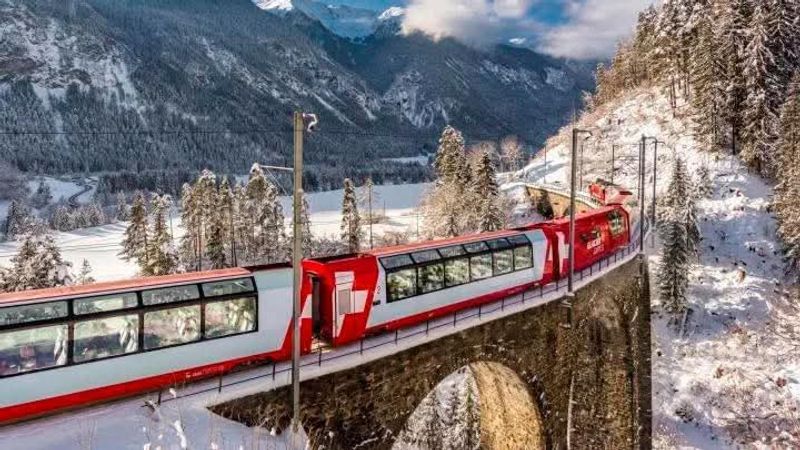
Picture yourself sitting in a wide panoramic window seat while snow-capped mountains glide past like a living postcard. That’s exactly what the Glacier Express delivers between Zermatt and St. Moritz in Switzerland.
Despite its name, this is actually one of the slowest express trains in the world, and travelers couldn’t be happier about that.
The journey covers about 181 miles over roughly eight hours, crossing 291 bridges and passing through 91 tunnels. The route winds through the dramatic Rhine Gorge, often called the Swiss Grand Canyon, and climbs over the Oberalp Pass at more than 6,700 feet above sea level.
Every single mile offers something worth staring at.
Dining on board is part of the charm. A proper restaurant car serves Swiss specialties, and the tilted wine glasses, designed to stay level on steep gradients, have become a fun talking point among passengers.
The train runs year-round, but winter trips offer an especially magical atmosphere when the valleys are blanketed in deep snow. First-time visitors to Switzerland often say the Glacier Express alone was worth the entire trip.
Rocky Mountaineer — Canada
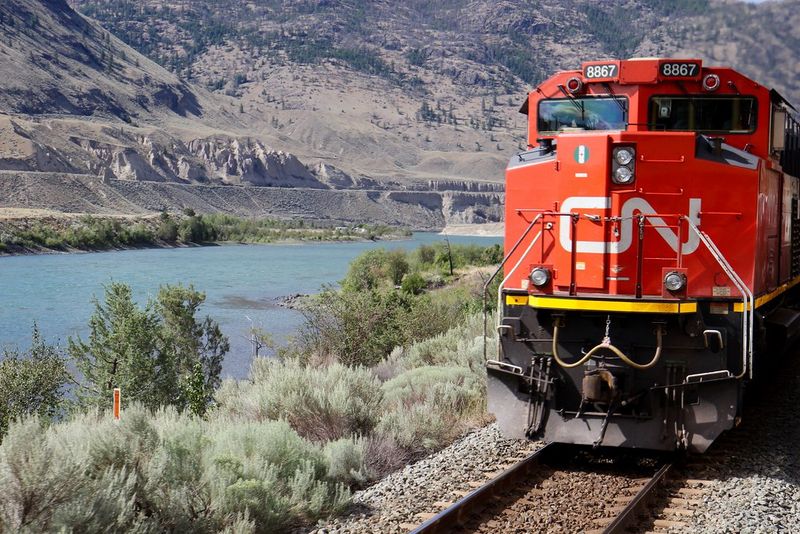
Glass-domed railcars and jaw-dropping mountain scenery make the Rocky Mountaineer one of the most talked-about train journeys in North America. Operating through British Columbia and Alberta in Canada, this premium rail experience puts the wilderness front and center with unobstructed views from floor-to-ceiling windows.
Every seat is designed to face the scenery.
Routes vary, but the most popular runs between Vancouver and Banff or Jasper, passing through the rugged Fraser Canyon, the peaks of the Rockies, and the turquoise waters of rivers fed by glacial melt. The Rocky Mountaineer only travels during daylight hours, so you won’t miss a single dramatic moment by drifting off to sleep in a tunnel.
Onboard service is genuinely impressive. Attendants deliver meals and snacks directly to your seat, and commentary about the landscape and local history plays throughout the journey.
Wildlife sightings are a regular highlight, with black bears, bald eagles, and mountain goats frequently spotted near the tracks. Photographers absolutely love this route because the light hits the mountains in spectacular ways throughout the day.
Canada’s Rocky Mountaineer isn’t just a train ride, it’s a moving front-row seat to one of Earth’s most dramatic landscapes.
Trans-Siberian Railway — Russia
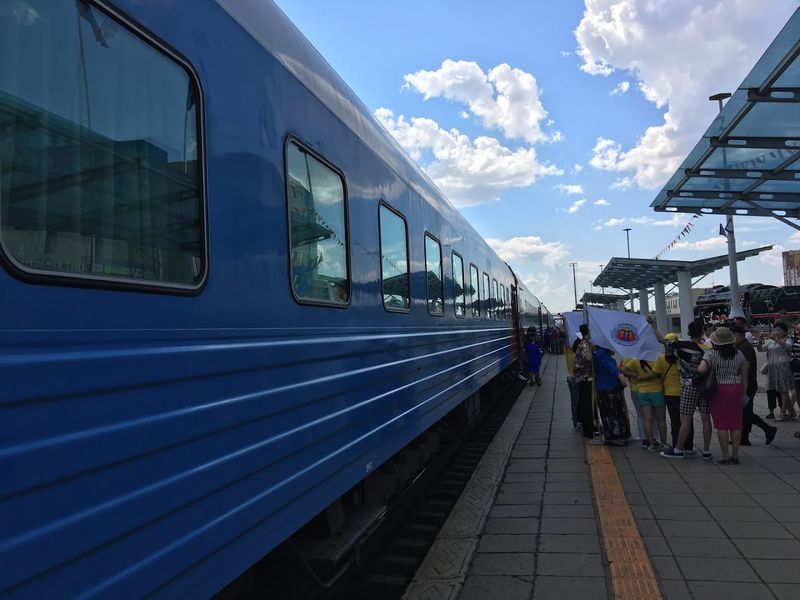
No list of epic rail journeys is complete without the Trans-Siberian Railway, the longest railway line on Earth. Stretching more than 5,700 miles from Moscow to Vladivostok, this legendary route takes roughly six to seven days to complete nonstop, though most travelers break it into stages to explore cities along the way.
It is, without question, a true commitment.
The journey passes through eight time zones, crosses the Ural Mountains, skirts the southern shores of Lake Baikal, and rolls through endless stretches of Siberian taiga forest. Those forests seem to go on forever, which is both humbling and strangely hypnotic.
Remote villages, Soviet-era towns, and occasional glimpses of nomadic life add a rich cultural dimension to the trip.
Traveling on the Trans-Siberian means sharing your compartment with strangers, trading snacks, and navigating a world far removed from typical tourist routes. That’s precisely what makes it so unforgettable.
Third-class sleeper cars offer a raw, authentic experience, while first-class compartments provide more privacy and comfort. Packing instant noodles, a good book, and an open mind is genuinely the best preparation.
Few journeys in the world change your perspective on distance, culture, and adventure quite like this one does.
West Highland Line — Scotland
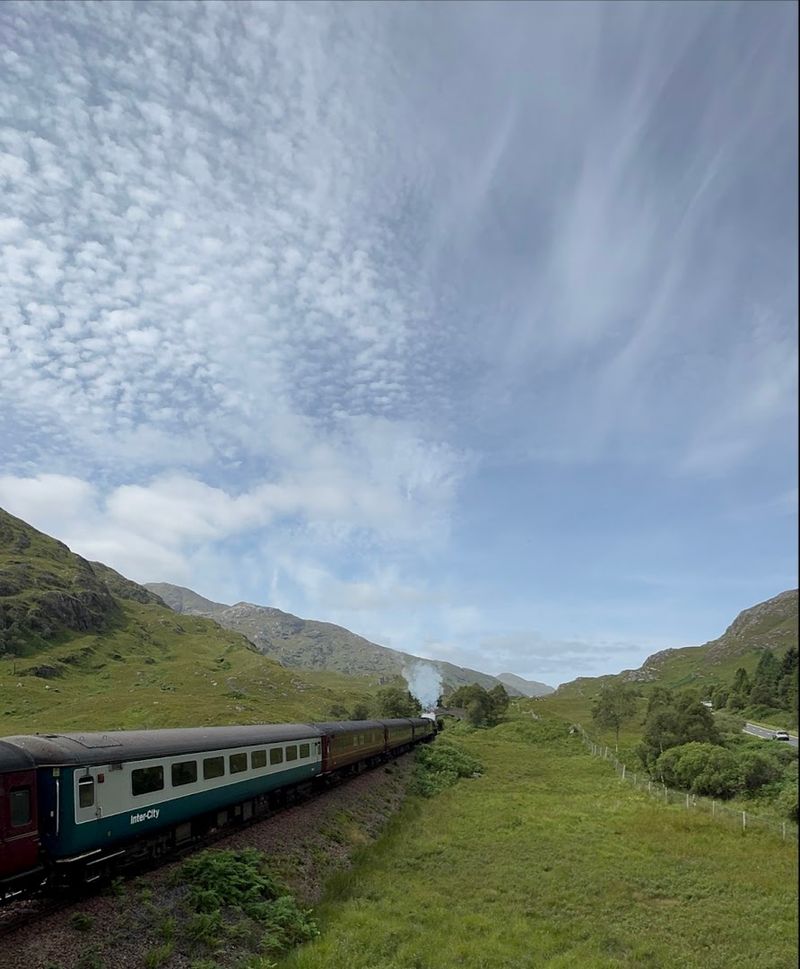
Misty moors, moody skies, and a viaduct that became world-famous thanks to a certain boy wizard make Scotland’s West Highland Line one of the most atmospheric train journeys on the planet. Running from Glasgow to Mallaig on the rugged west coast, this route passes through some of the most dramatic and untouched scenery in all of Britain.
The Glenfinnan Viaduct is the undeniable showstopper. Built in 1901 using mass concrete, this 21-arch structure curves gracefully across a highland valley and became iconic after appearing in multiple Harry Potter films.
Even travelers who aren’t big fans of the movies tend to gasp when the train rolls across it. The views of Loch Shiel below are genuinely spectacular.
Beyond Glenfinnan, the line hugs sea lochs, passes through ancient oak forests, and eventually arrives in Mallaig, a small fishing village where you can catch a ferry to the Isle of Skye. The Jacobite steam train, which operates on this route during summer months, adds an extra layer of old-world magic to the experience.
Autumn is arguably the best season to travel, when the hillsides turn golden red and low mist clings to the valleys in the early morning hours.
Bernina Express — Switzerland and Italy
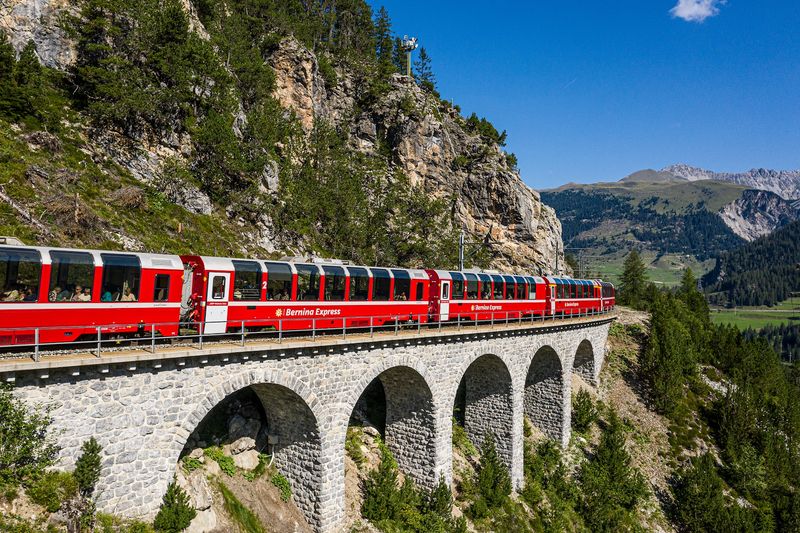
Very few train journeys have earned a UNESCO World Heritage designation, but the Bernina Express is one of them, and it earns that status with every mile. Running between Chur in Switzerland and Tirano in Italy, this spectacular alpine route crosses the Bernina Pass at nearly 7,400 feet, making it the highest railway crossing in the Alps.
The journey takes around four hours and packs in an extraordinary variety of scenery. Glaciers, mountain lakes, stone viaducts, and lush Italian valleys all appear in quick succession.
The famous circular Brusio Viaduct, a looping stone bridge that spirals around itself to manage a steep descent, is one of the most photographed railway structures in Europe. Seeing it in person never disappoints.
Traveling the Bernina Express in winter transforms the entire experience into something almost otherworldly. The glaciers sparkle, the high mountain passes are buried in snow, and the contrast between the icy Swiss alpine terrain and the warmer Italian landscape at the journey’s end is remarkable.
Panoramic windows on the modern railcars ensure you won’t miss anything. Booking the panoramic coach is highly recommended since the regular carriages, while comfortable, simply don’t match the views from the glass-roofed cars.
Rovos Rail — South Africa to Namibia
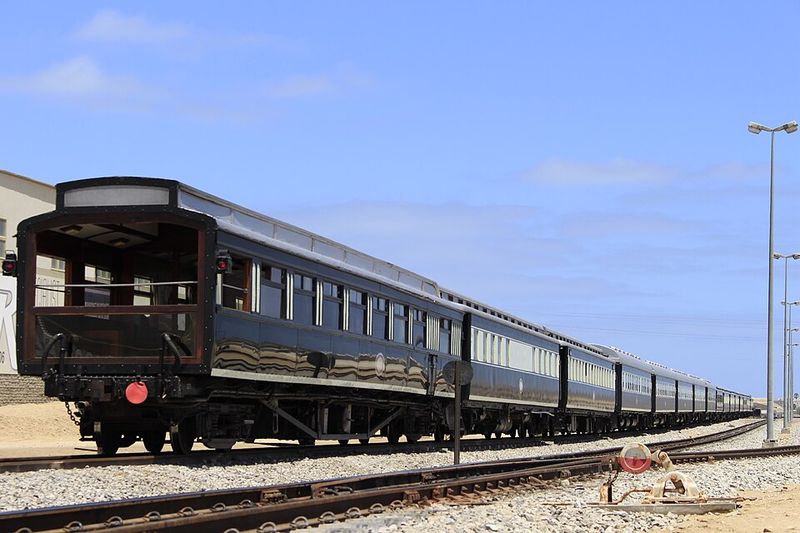
Rovos Rail has been described as the most luxurious train in the world, and spending even one night aboard makes it very difficult to argue with that claim. Operating various routes through southern Africa, including journeys from Pretoria to Cape Town and into Namibia, Rovos Rail combines old-world elegance with raw African wilderness in a way nothing else quite matches.
The train itself is a rolling piece of history. Restored vintage coaches from the early 20th century have been fitted with private en-suite bathrooms, wood-paneled interiors, and plush furnishings.
Meals are prepared fresh onboard using local ingredients, and the open-air observation car at the rear of the train is the perfect place to watch the African landscape scroll by in golden afternoon light.
Routes pass through the Kalahari Desert, the vineyards of the Cape Winelands, wildlife-rich game reserves, and the otherworldly dunes of Namibia. Off-train excursions are often included, giving travelers the chance to explore local communities, national parks, and historical sites.
The pace is deliberately slow, encouraging guests to actually absorb where they are rather than rush through it. For travelers who want adventure wrapped in genuine comfort, Rovos Rail is the answer.
Flåm Railway — Norway
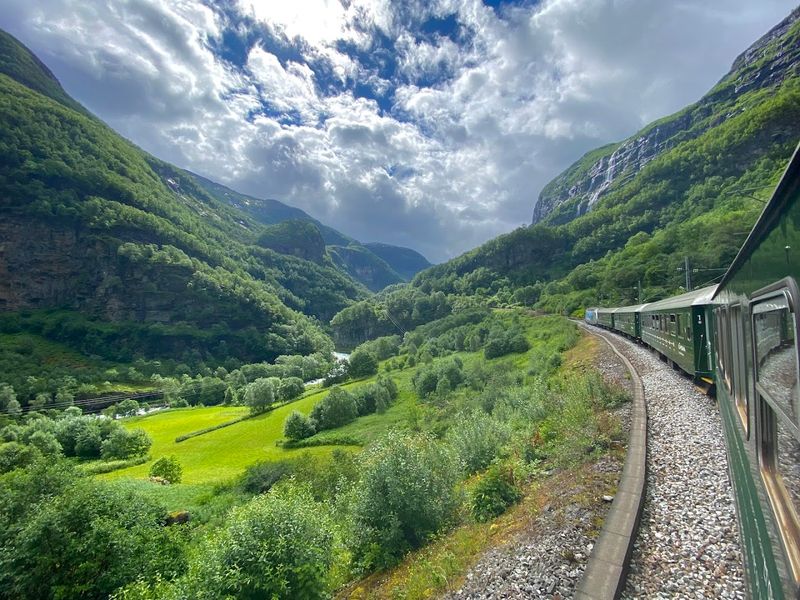
Packed into just 12 miles of track, the Flåm Railway manages to deliver more drama per kilometer than almost any other train journey on Earth. Running between the mountain village of Myrdal and the fjordside town of Flåm in western Norway, this short but sensational route descends nearly 2,800 feet through some of Scandinavia’s most jaw-dropping scenery.
The engineering behind this railway is extraordinary. Completed in 1940, it took 20 years to build and includes 20 tunnels, many of which were hand-carved through solid rock.
The train moves slowly enough for passengers to appreciate the cascading waterfalls, sheer cliff faces, and deep green valleys that appear at nearly every turn. The Kjosfossen waterfall stop, where the train pauses for photos, is a genuine highlight.
Most travelers combine the Flåm Railway with Norway’s famous Fjord Tour, which includes a ferry ride across the Nærøyfjord, one of the narrowest and most beautiful fjords in the world. The entire experience can be completed as a day trip from Bergen or Oslo, making it one of the most accessible rail adventures in Scandinavia.
Visiting in late spring, when wildflowers bloom and waterfalls run at full force, makes the journey even more memorable.
Tokaido Shinkansen — Japan
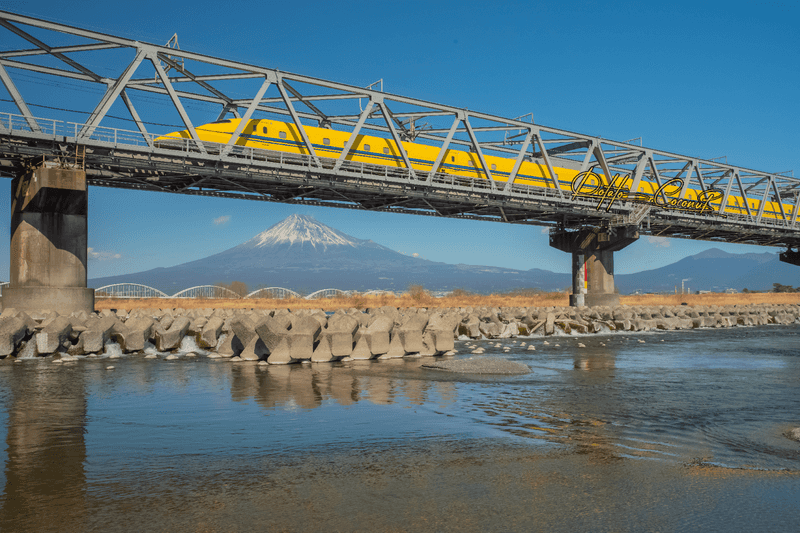
Few things in modern travel are as thrilling as watching the Japanese countryside blur past at 200 miles per hour while Mount Fuji sits perfectly framed in your window. The Tokaido Shinkansen, Japan’s original bullet train line, launched in 1964 and completely changed the way the world thought about rail travel.
More than 50 years later, it still feels impressively futuristic.
The route connects Tokyo with Osaka, passing through Yokohama, Nagoya, and Kyoto along the way. At its fastest, the journey from Tokyo to Osaka takes just two hours and fifteen minutes, covering roughly 320 miles.
The precision of the Japanese rail network is legendary: trains run on time to the second, and delays of more than one minute are considered noteworthy events worthy of public apologies.
Riding the Shinkansen is as much a cultural experience as it is a transportation choice. Passengers unwrap bento boxes called ekiben, purchased at station platforms, while the train glides silently through rice fields and urban sprawl.
The cleanliness, the quiet, and the sheer smoothness of the ride create a travel experience unlike anything else in the world. Catching a clear-day view of Mount Fuji from the right-side window heading from Tokyo is a moment travelers genuinely never forget.
Belgrade to Bar Railway — Serbia and Montenegro
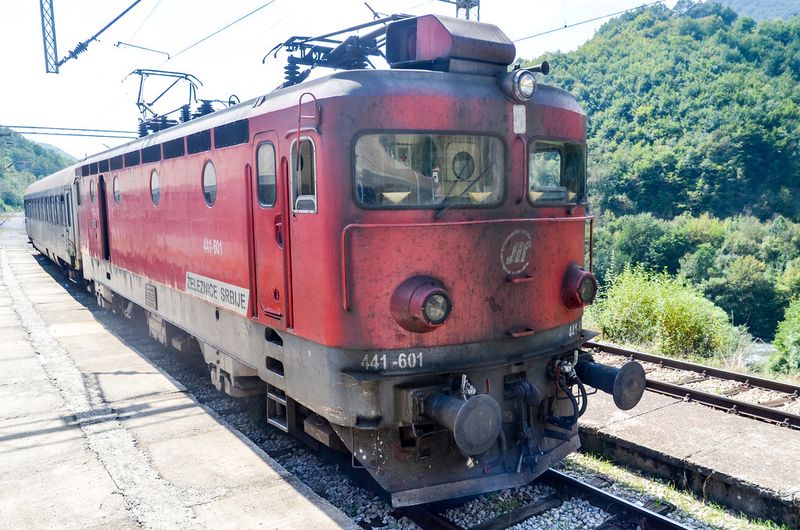
Hidden in plain sight between two fascinating Balkan countries, the Belgrade to Bar Railway is one of Europe’s most underrated and genuinely thrilling train journeys. Completed in 1976 after 25 years of construction, this remarkable line crosses more than 400 bridges and viaducts and passes through 254 tunnels on its way from the Serbian capital to the Montenegrin coast.
The most dramatic section of the route cuts through the mountains of Montenegro, where the train crosses the Mala Rijeka Viaduct, one of the highest railway bridges in the world at nearly 650 feet above the river below. The surrounding landscape of deep canyons, dense pine forests, and rocky peaks is breathtaking in every season.
Passengers often fall completely silent as the train crosses the most dramatic sections.
The full journey takes around ten hours, and the contrast between landscapes is remarkable. The route begins in the flat plains of Serbia, climbs steadily through forested hills, peaks in the wild Montenegrin mountains, and finally descends to the warm Adriatic coast at Bar.
Budget travelers love this route because tickets are surprisingly affordable. Locals share compartments with curious visitors, and the relaxed atmosphere makes conversation easy.
This is adventure rail travel at its most raw and rewarding.
Alaska Railroad — Alaska
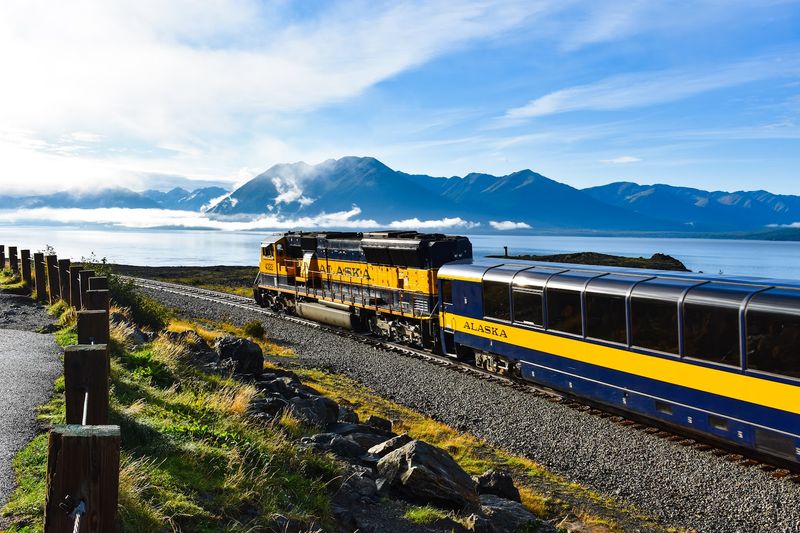
There are train rides, and then there is the Alaska Railroad, a journey through some of the most remote and untouched wilderness on the entire planet. Running between Seward on the Gulf of Alaska and Fairbanks in the interior, the railroad passes through landscapes that most people only ever see in nature documentaries.
Brown bears wading in rivers, moose standing in meadows, and bald eagles circling overhead are completely routine sightings.
The most popular segment runs between Anchorage and Denali National Park, where passengers get their first views of Denali, North America’s tallest mountain at over 20,000 feet. On clear days, the mountain’s presence is almost overwhelming.
The railroad offers a unique Wilderness Access Car on certain routes, allowing passengers to flag the train down anywhere along the track to be picked up or dropped off in the middle of the wilderness.
Summer is peak season, with long daylight hours giving travelers maximum time to absorb the scenery. The Coastal Classic route between Anchorage and Seward passes through Chugach National Forest and skirts the edge of Kenai Fjords National Park, where glaciers calve directly into the ocean.
For adventure-seekers who want genuine wild Alaska without hiking in, the railroad is the ultimate shortcut into the extraordinary.
Kandy to Ella Railway — Sri Lanka
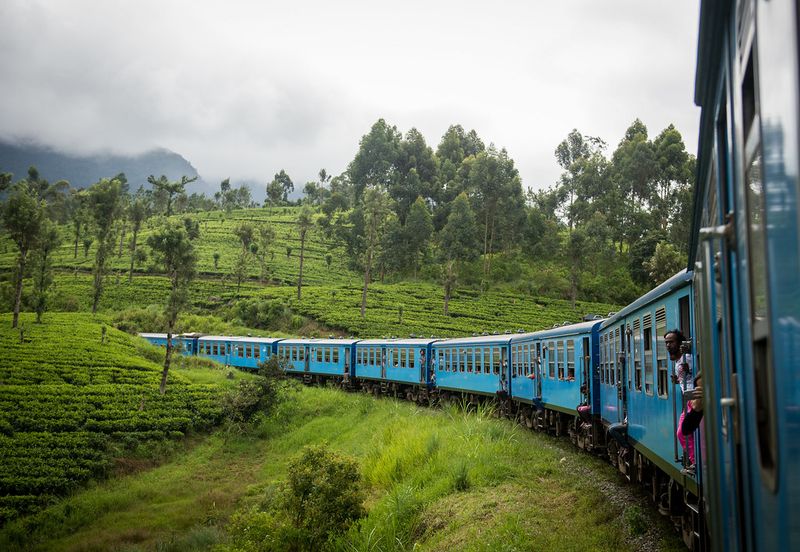
Hanging out of an open train door while lush tea plantations roll past in every direction sounds like a travel fantasy, but on Sri Lanka’s Kandy to Ella railway, it’s just a regular Tuesday. Widely regarded as one of the most beautiful train journeys in all of Asia, this slow mountain route winds through the heart of Sri Lanka’s Hill Country for about seven hours of pure scenic bliss.
The train climbs steadily from the ancient city of Kandy, passing through colonial-era tea estates, misty mountain tunnels, and small rural stations where vendors hop on to sell snacks and fresh fruit. The famous Nine Arches Bridge near Ella, a stunning colonial-era stone viaduct surrounded by jungle and tea fields, is one of the most photographed spots in the entire country.
Arriving at the bridge just as a train passes overhead is a photographer’s dream.
Tickets sell out fast, especially the coveted observation car seats, so booking well in advance is essential. Second-class seats near the open doors offer the best experience for those who don’t mind a breeze.
The route is especially magical during the early morning hours when mist hangs low over the hills and the light turns everything a soft golden green. Sri Lanka’s railway is slow travel done absolutely right.
Venice Simplon-Orient-Express — Europe
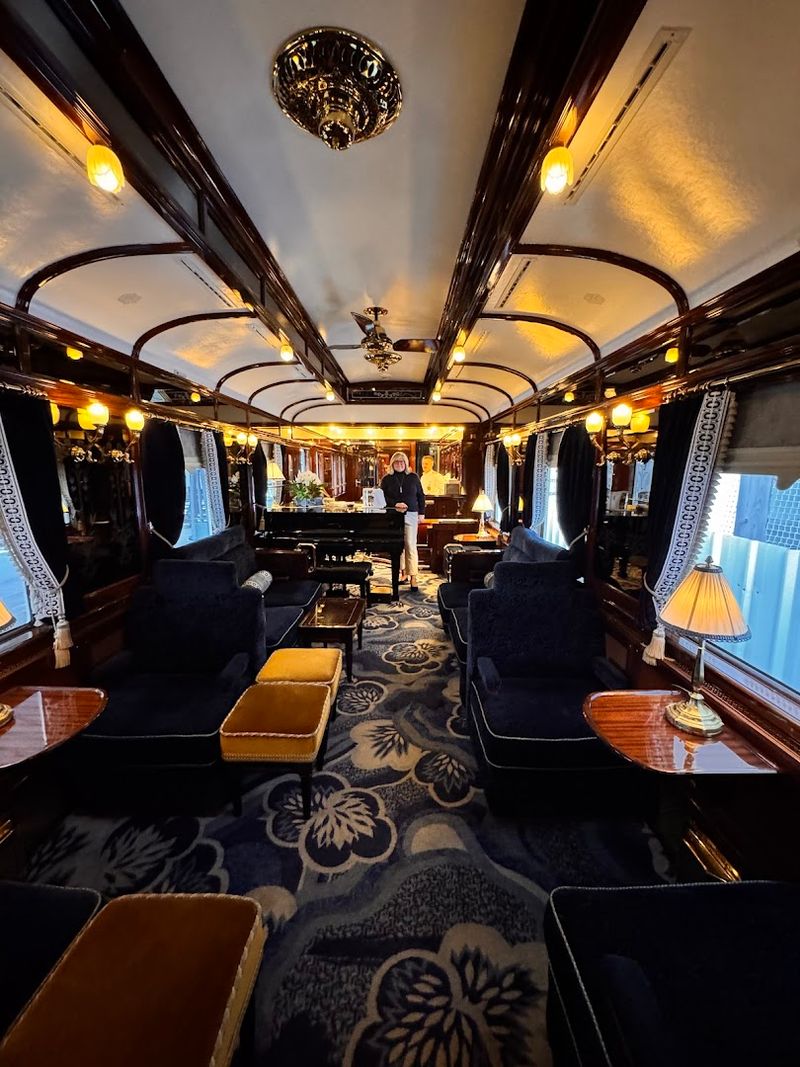
Agatha Christie immortalized it in fiction, and the Venice Simplon-Orient-Express has been living up to that legendary reputation ever since. Restored to its original 1920s and 1930s glory, this iconic train connects London, Paris, and Venice in a style that makes modern travel feel almost embarrassingly ordinary by comparison.
Everything about it is deliberately, gloriously theatrical.
Original Art Deco marquetry panels, crisp white linen tablecloths, and uniformed staff create an atmosphere that feels more like a floating five-star hotel than a train. Dinner in the restaurant car is a full production, with multi-course meals, fine wines, and the kind of conversation that only happens when strangers are thrown together in beautiful, intimate spaces.
Guests dress for dinner, and the ambiance genuinely rewards the effort.
Routes vary by season, with some journeys running from London through Paris and the Swiss Alps before arriving in Venice, while special seasonal routes explore Istanbul, Budapest, and other classic European destinations. Cabins convert from comfortable daytime seating into proper sleeping berths at night.
Waking up to a new country outside your window while a white-gloved attendant delivers breakfast is an experience money rarely buys so completely. The Venice Simplon-Orient-Express isn’t just a train ride.
It’s a full-blown time machine.
TranzAlpine — New Zealand
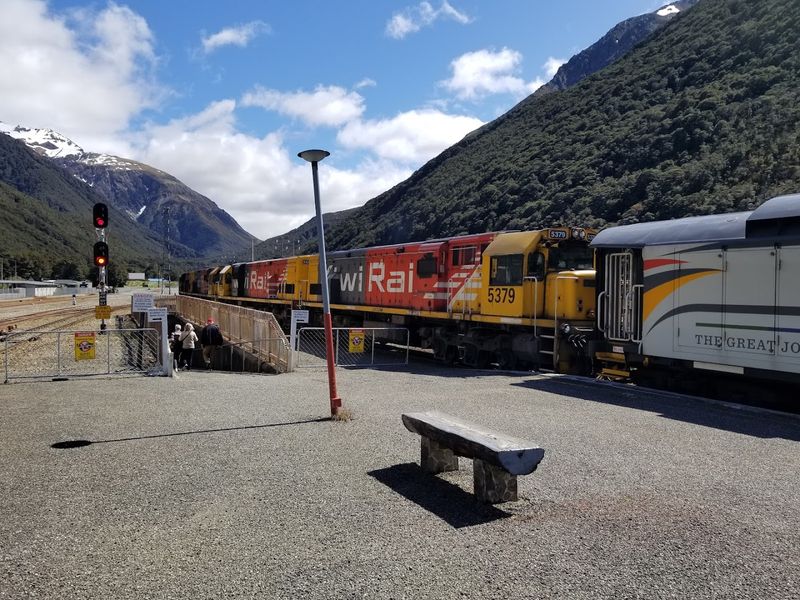
New Zealand’s South Island is already one of the most scenically diverse places on Earth, and the TranzAlpine manages to compress a spectacular cross-section of it into a single four-and-a-half-hour train journey. Running between Christchurch on the east coast and Greymouth on the wild West Coast, this route crosses the Southern Alps through the Arthur’s Pass National Park.
The landscape shifts dramatically as the train moves west. Flat Canterbury Plains give way to rocky river gorges, then dense native beech forests, then alpine meadows dusted with snow, and finally the lush rainforest of the West Coast.
Few train journeys in the world pack so many distinct ecosystems into such a compact distance. The open-air viewing carriage is the best spot on the train, especially when crossing the dramatic Waimakariri Gorge.
The TranzAlpine operates year-round, and each season brings a completely different character to the landscape. Winter coats the mountain passes in snow, spring fills the valleys with wildflowers, and autumn turns the beech forests a warm copper gold.
Greymouth itself is a laid-back small town worth exploring before catching the return journey. Many travelers make the round trip in a single day, but spending a night on the West Coast rewards those willing to linger a little longer.
Bergensbanen — Norway
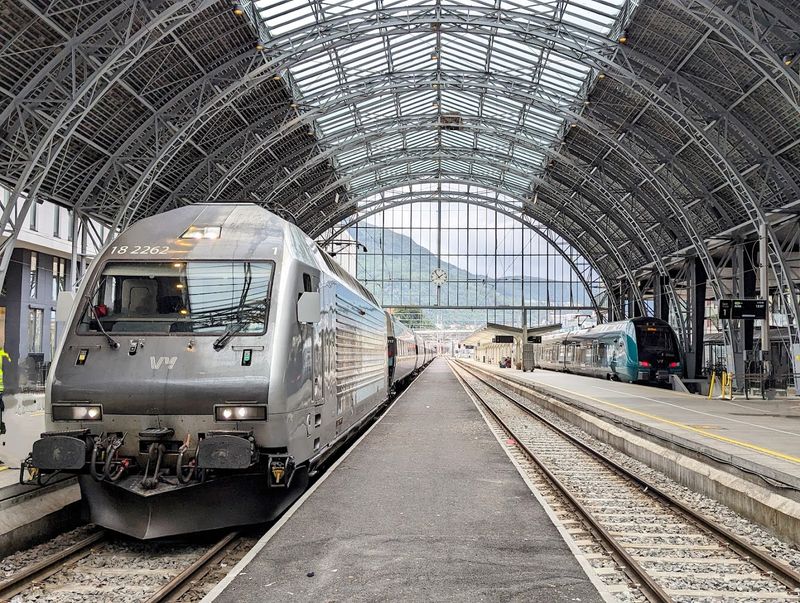
At nearly 4,100 feet above sea level, the Bergensbanen crosses the Hardangervidda, the largest mountain plateau in northern Europe, and in winter, it looks like something from another planet entirely. Connecting Oslo and Bergen across 305 miles of Norwegian wilderness, this railway opened in 1909 and remains one of the world’s great mountain rail adventures more than a century later.
The journey takes about six to seven hours, and the landscape transforms completely as the train climbs out of Oslo’s suburbs and pushes into the high mountain interior. Snow accumulations on the Hardangervidda can reach staggering depths in winter, sometimes burying station platforms and turning the surrounding terrain into a vast white wilderness that feels genuinely remote and raw.
The Finse station, the highest point on the route, sits in total isolation surrounded by glaciers.
Summer travel on the Bergensbanen reveals an entirely different mood, with wildflower meadows, glittering mountain lakes, and roaring meltwater streams replacing the winter snowfields. Bergen itself, a colorful UNESCO-listed city of wooden houses and fish markets, makes an excellent destination to explore after arriving.
The train also connects with ferry services into the famous Norwegian fjords. Whether traveled in summer green or winter white, the Bergensbanen consistently ranks among Europe’s most rewarding and memorable rail experiences.
Share this story