Rhode Island may be the smallest state in the country, but it holds some surprisingly well-kept natural secrets. Tucked inside the town of Lincoln, there is a forested preserve that most people drive right past without a second thought.
Spring turns this place into something worth stopping for, with wildflowers pushing through the leaf litter, birds calling from the treetops, and a quiet pond reflecting the new green of the season. This is the kind of place that rewards the curious and the unhurried, and once you find it, you will wonder how it stayed off your radar for so long.
A Forest With Deep Historical Roots
Long before this land became a protected preserve, it was shaped by human hands. Old stone walls wind through the forest, built by early settlers who once farmed this ground.
These walls have stood for generations, and walking alongside them gives the hike an unexpected sense of depth.
The preserve also sits on land that carries Indigenous history. A large rock near the trails features what appears to be a carved head shape, along with what some describe as a peace dove or Manitou bird.
Rock formations in the area include what look like altar niches and burial sites.
Much of this has worn down over time, but the presence of that history is still easy to feel. The land holds layers that go far beyond a casual afternoon walk.
Treating these formations with respect is something every visitor should keep in mind before heading out on the trails.
The Old Trolley Track That Still Tells a Story
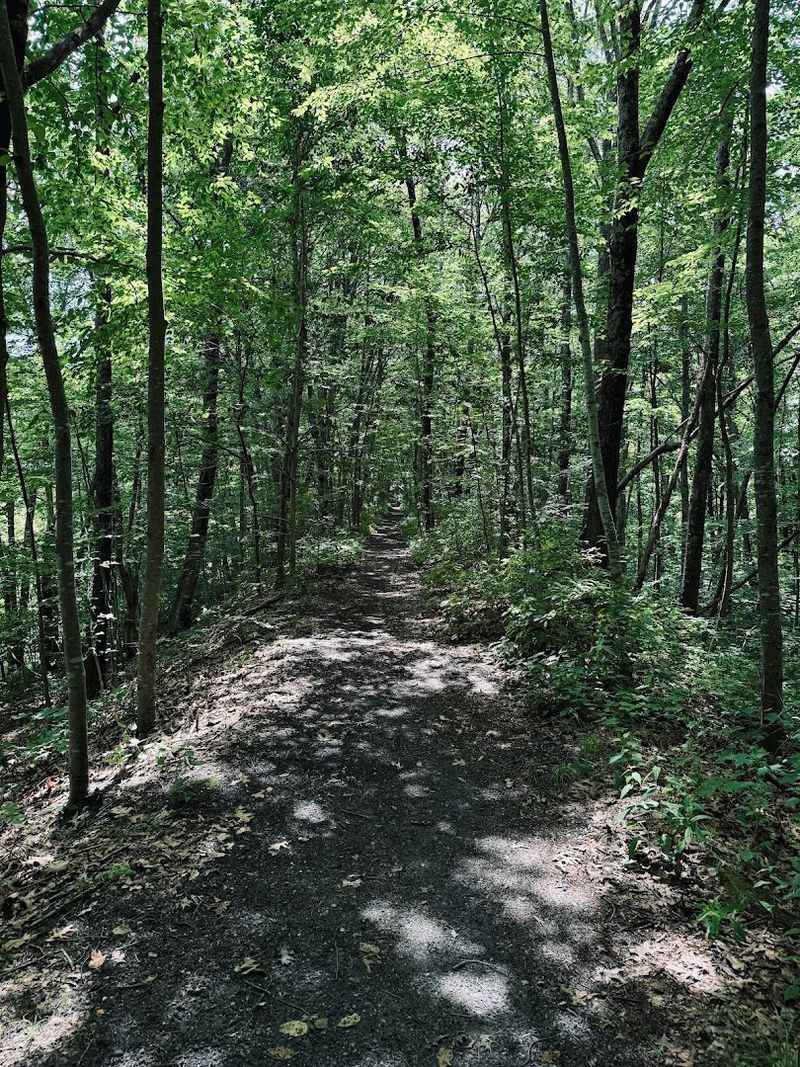
One of the more unexpected features of this preserve is the trail that follows an old trolley track. Southern New England once had an extensive network of trolleys connecting towns, and a section of that forgotten infrastructure runs right through this forest.
Walking along it today, you would not immediately recognize it as anything other than a pleasant dirt path. But knowing what it once was adds a layer of quiet fascination to the walk.
History has a way of hiding in plain sight here.
The trail is flat along this stretch, making it one of the more accessible sections of the preserve for walkers of all fitness levels. It also happens to be a good corridor for spotting birds in spring, when the canopy above is just beginning to fill in and the branches are still open enough to offer clear sightlines into the treetops.
Two Trail Loops Worth Knowing Before You Go
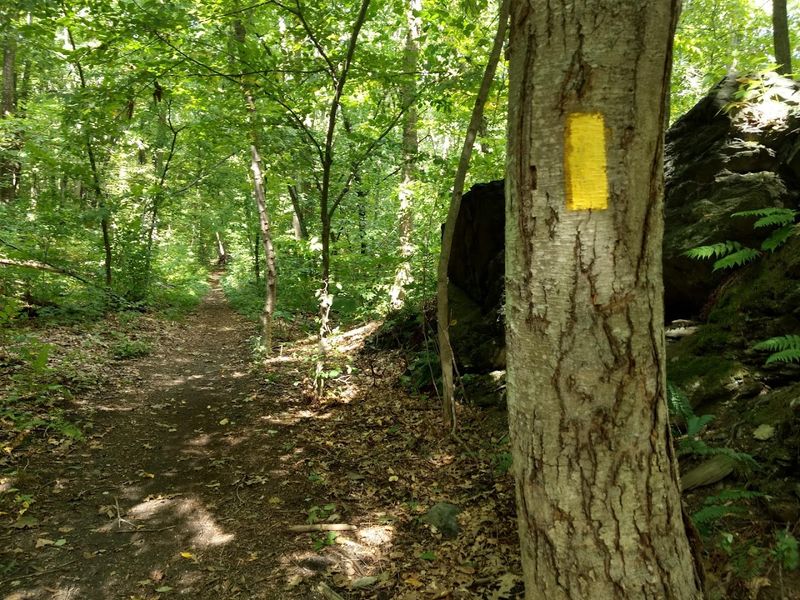
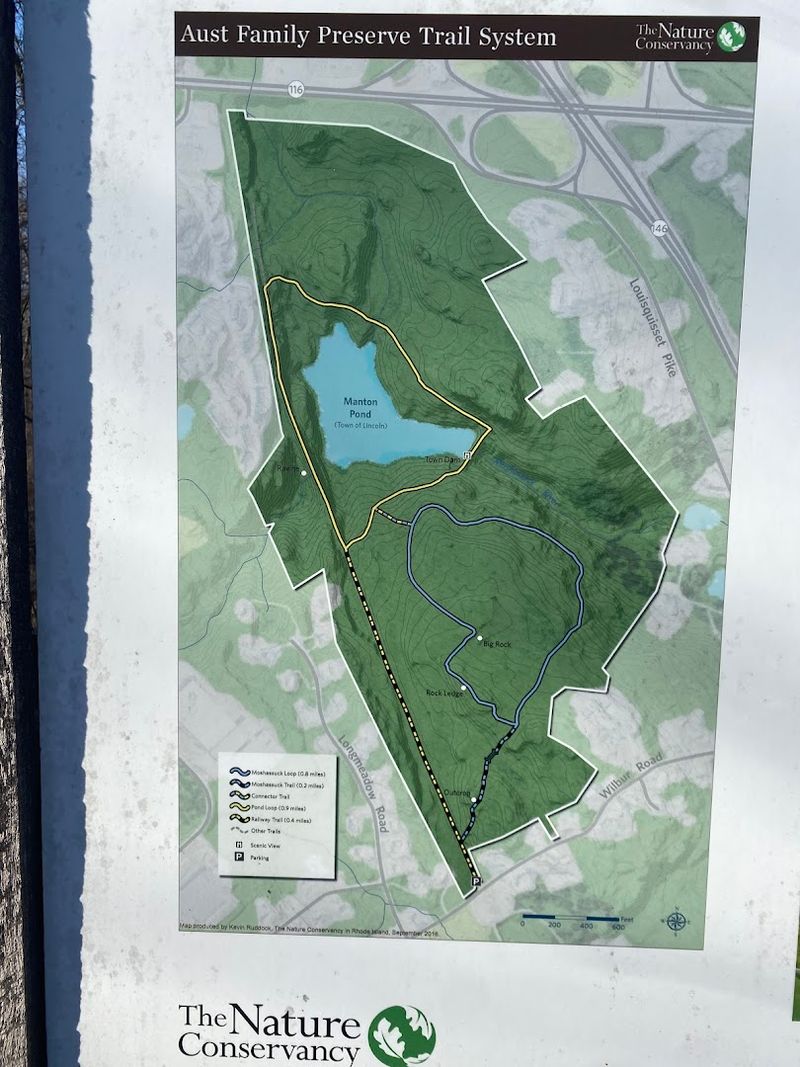
The trail system at the preserve is built around two main loops. The Moshassuck Loop, marked in blue, covers about 0.8 miles, while the Pond Loop, marked in yellow, runs approximately 0.9 miles.
Several connecting trails link the two, making it easy to combine them into a single outing of around 2.5 miles.
Blue and yellow paint blazes on the trees guide the way, and trail maps with location markers are posted at major intersections. The junction between the two loops can be a little tricky to find, but following the sound of water will generally lead you in the right direction toward the Town Dam.
For anyone who wants a longer walk, doing both loops back to back is a satisfying option that still keeps the total distance manageable. The terrain is mostly dirt path with some roots and rocks, so trail shoes are a smarter choice than casual sneakers.
What Spring Actually Looks Like Here
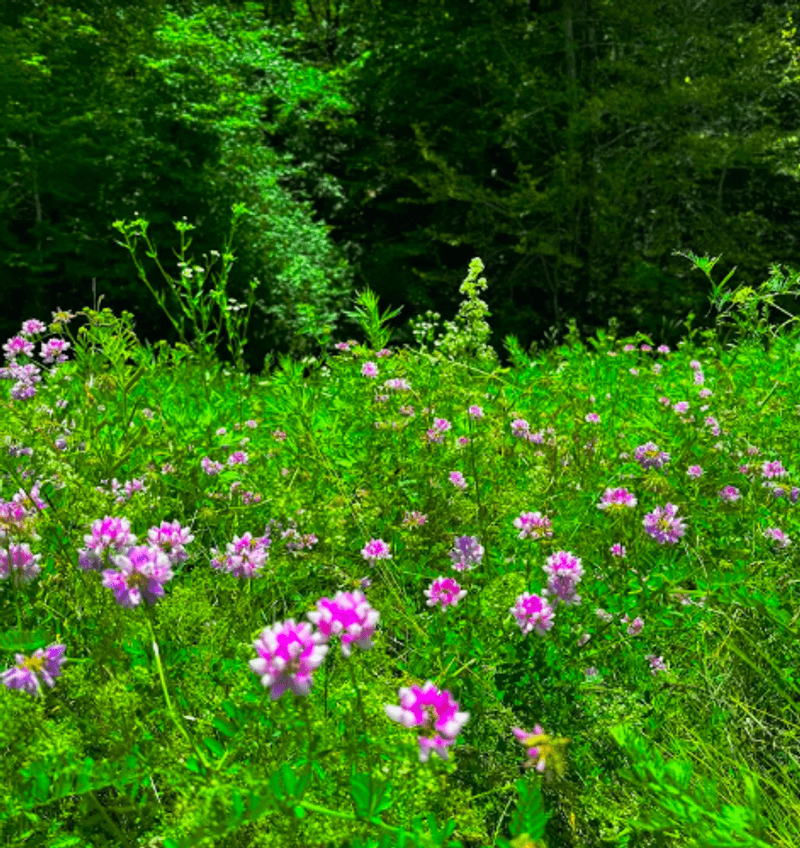
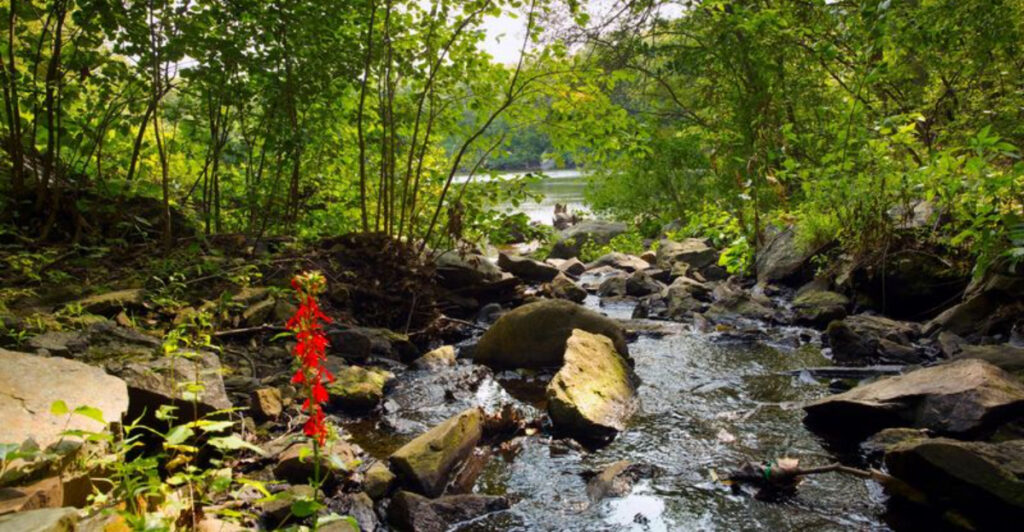
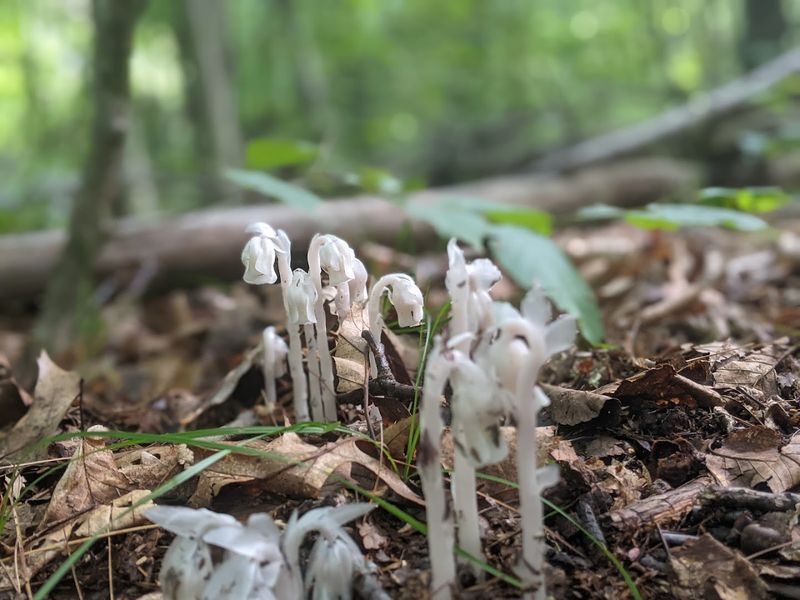
Spring at this preserve arrives in stages, and each one is worth catching. Early in the season, wildflowers begin appearing along the trail edges, small and easy to miss if you are moving too fast.
Slow down and they are everywhere, pushing up through the leaf litter in clusters of color.
Birds are particularly active during spring mornings, filling the canopy with calls that carry easily through the still-bare upper branches. The Pond Loop trail offers open views where birding is especially rewarding before the full leaf cover closes in.
The trails can be muddy during spring, especially after rain, so waterproof footwear makes a real difference. That mud is also a sign that the forest is healthy and hydrated.
Early summer extends the wildflower season and adds even more bird activity to the mix. Spring through early summer is genuinely the best stretch to visit if you want the preserve at its most alive.
Manton Pond and the Dam That Anchors It
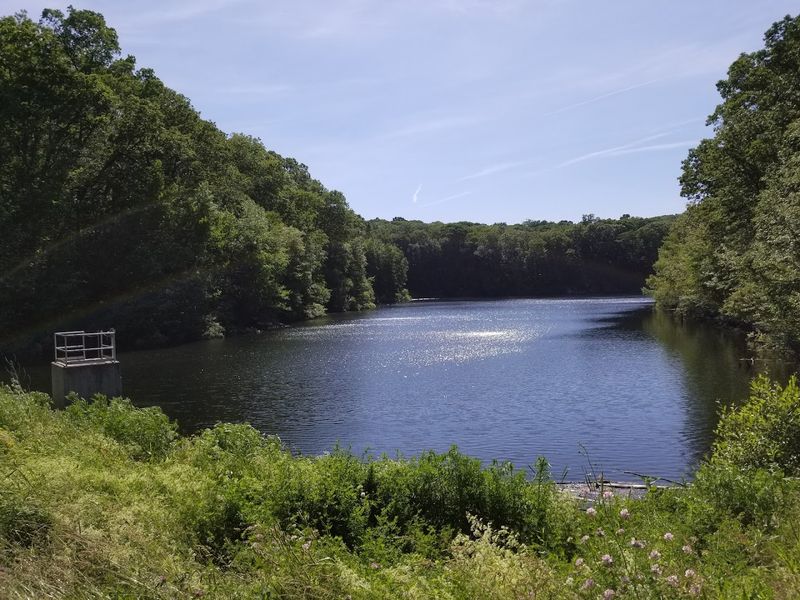
The pond is one of the undisputed highlights of the preserve. Manton Pond sits at the heart of the Pond Loop trail, and the walk around its edge offers some of the most open and calming views in the entire preserve.
The water reflects the surrounding tree line in a way that changes completely depending on the season and the light.
Near the pond, the old Town Dam is a structure worth pausing at. It is a simple but sturdy piece of local infrastructure, and it adds a functional historical element to what is otherwise a purely natural landscape.
The sound of water near the dam is also a useful landmark when navigating the connecting trails.
A row of homes runs along one edge of the forest near the pond, which breaks the fully wild atmosphere slightly. Even so, the pond area remains the most photogenic and peaceful part of the preserve, especially on a calm spring morning when the water is still.
Rock Ledges and Boulders That Change the Landscape
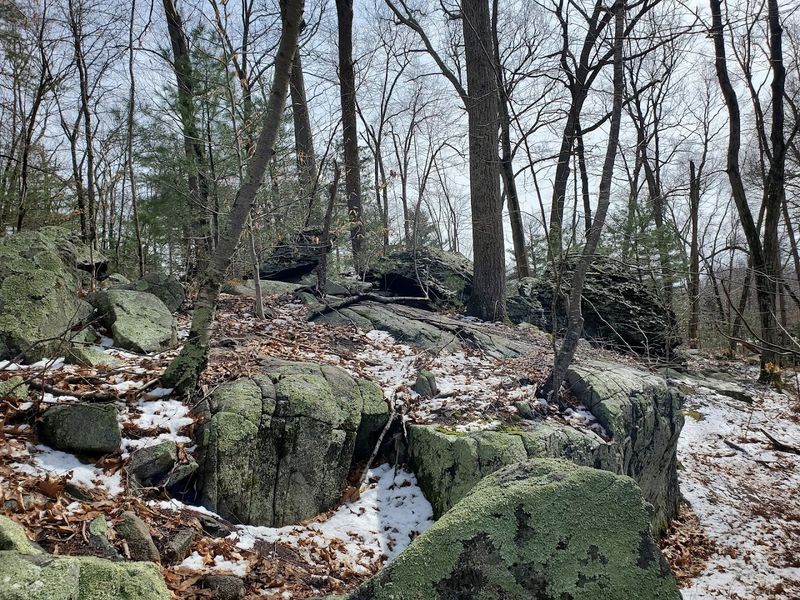
The terrain at the preserve is not all flat and easy. Parts of the trail climb past big rocks and through areas of exposed stone, giving the hike a bit more physical interest than a typical flat woodland walk.
These sections add variety to the route and offer natural resting points with good views back through the trees.
Marble outcroppings appear in certain sections of the trail, a remnant of a time when the geological features here were considered notable enough to be an advertised attraction. The ledges are not dramatic in scale, but they break up the forest floor in interesting ways and give the landscape a rougher, older character.
Chipmunks are practically a fixture on the rocky sections, darting between boulders with impressive speed. The combination of stone walls, rock ledges, and boulders gives the preserve a layered, textured quality that makes it feel more complex than its modest trail mileage might suggest.
Why Dogs and Families Both Feel at Home Here

The preserve has earned a genuine reputation as a welcoming spot for both families and dog owners. The trails are short enough to keep young kids engaged without wearing them out completely, and the varied terrain, with rocks, roots, a pond, and open stretches, gives children plenty to stay curious about.
Dogs are a common sight on the trails, and the low-key crowd means encounters tend to be friendly and relaxed. Off-leash hiking is something many regular visitors do here, though checking local rules before going off-leash is always a smart habit.
One practical note that every visitor with a dog or child should take seriously: ticks are present throughout the preserve, especially in warmer months. Checking thoroughly after every visit is not optional.
Horse flies are also active during summer, and they are persistent enough to bite through clothing. Bug spray before hitting the trail is a straightforward step that makes the whole experience more comfortable.
What to Expect in Terms of Difficulty
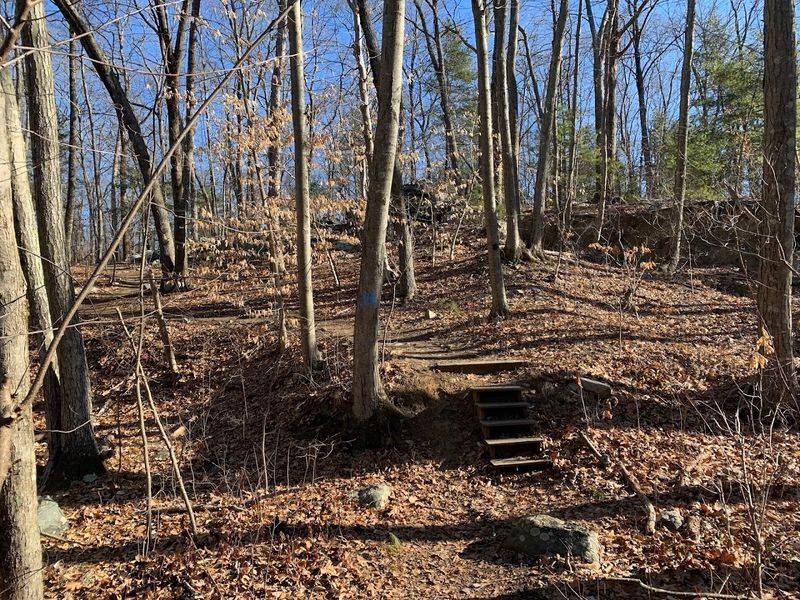
The preserve sits comfortably in the easy-to-moderate category for hiking difficulty. The total trail distance across both loops is around 2.5 miles, and most of the terrain is manageable without any specialized gear or fitness level.
That said, calling it a completely flat and effortless walk would not be accurate.
Some sections involve uphill stretches past larger rocks, and the trail surface includes exposed roots and uneven ground throughout. Weak ankles may find certain sections a bit challenging, particularly after rain when the path gets slick.
Trail shoes or sturdy walking boots are consistently the smartest footwear choice here. Casual sandals or flat-soled shoes will work on dry days but become a liability when the ground is wet.
The overall experience is well within reach for beginners and casual walkers, while still offering enough terrain variation to keep more experienced hikers from feeling like they are just taking a stroll through a park.
Fall Visits Are Just as Rewarding
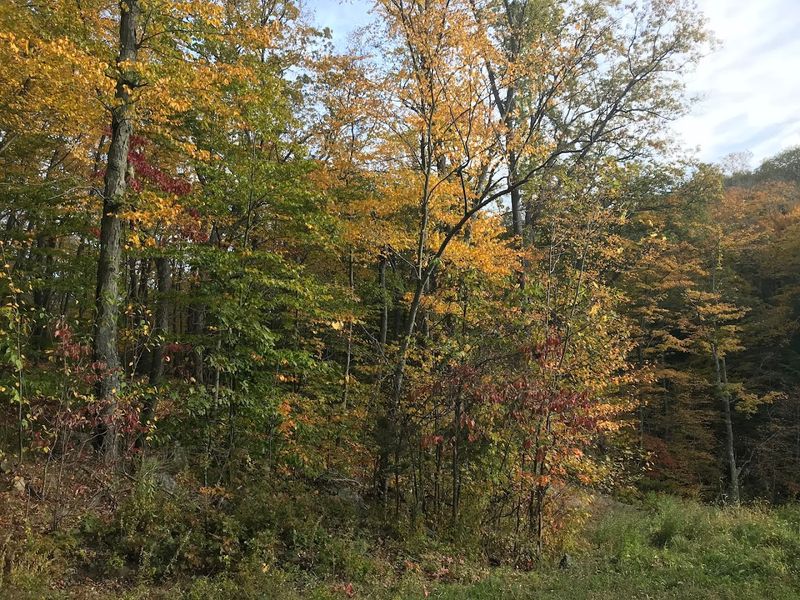
Spring gets most of the attention at this preserve, but fall makes a strong case for being its most visually striking season. October brings a full palette of color to the canopy, and the trails take on a completely different character when the leaves are turning and falling around the pond.
The bug population drops significantly in October, which makes the hiking experience noticeably more comfortable than summer visits. The air is cooler, the trails are typically drier, and the forest is quieter in a way that feels different from the quiet of early spring.
Leaf peeping along the Pond Loop is particularly rewarding in fall, with the water acting as a mirror for the color overhead. The preserve is not large, but during peak foliage it punches well above its size in terms of the views it delivers.
Fall is also when the stone walls and rock formations stand out more clearly, with less undergrowth to obscure them.
Practical Tips for a Smooth Visit
Parking at the trailhead is limited to about three cars, with some additional space along the road. On popular sunny days, spots fill up quickly, so arriving earlier in the day is a reliable way to avoid the frustration of circling for a place to park.
The trails are not heavily developed, and while blazes on the trees are generally clear, the junction between the blue and yellow trails can be easy to miss. Downloading a trail map before arriving, or taking a photo of the posted map at the trailhead, is a practical step that prevents unnecessary backtracking.
Bug spray is worth applying before you start, especially from late spring through summer. Ticks and horse flies are active throughout the warmer months.
Waterproof or trail shoes handle the muddy sections far better than regular sneakers. The preserve does not charge an entry fee, which makes it an easy choice for a spontaneous afternoon outing any day of the week.
A Place That Earns Its Quiet Reputation
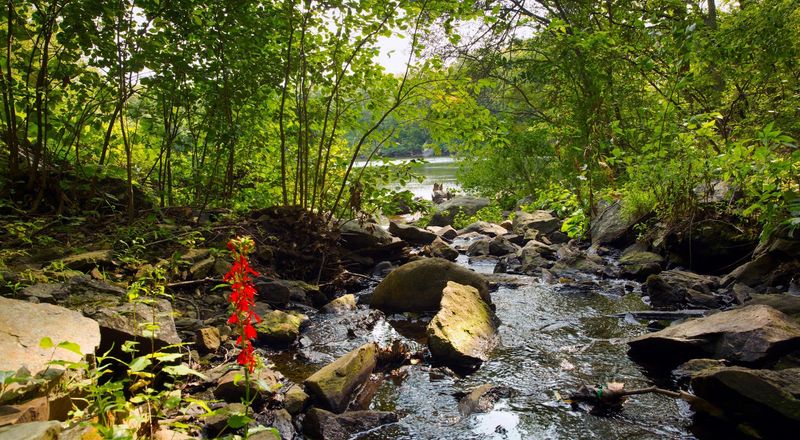
The Aust Family Preserve at Lime Rock does not advertise itself loudly, and that restraint is part of its appeal. There are no grand facilities, no paved paths, and no crowds jostling for the best views.
What it offers instead is a genuinely quiet stretch of forest that has been carefully protected in the middle of a developed area.
The Nature Conservancy manages the land with a focus on keeping it accessible and intact, and that balance shows in how the preserve feels. It is cared for without being over-managed, which lets the natural character of the place stay front and center.
For Rhode Island residents especially, having a spot like this within easy reach of Lincoln and the surrounding towns is something worth appreciating. Spring brings it to life in the most obvious way, but every season adds something new to the experience.
The forest keeps showing up, and it keeps being worth the trip.
Where Exactly This Preserve Sits
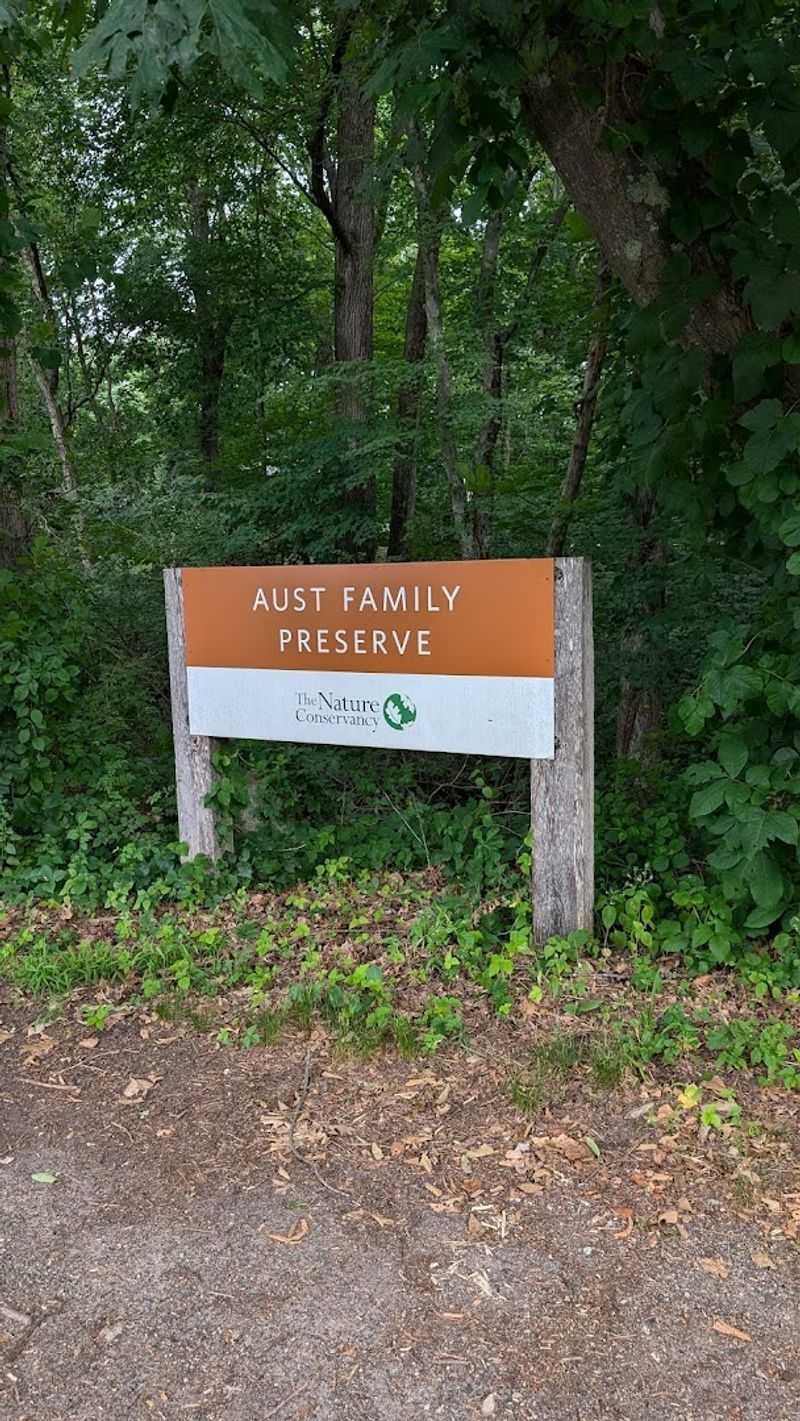
Right in the middle of Lincoln, Rhode Island, a nature preserve sits quietly between neighborhoods and roads, holding its ground against the surrounding development. The Aust Family Preserve at Lime Rock is located at 96 Wilbur Rd, Lincoln, RI 02865, and is managed by The Nature Conservancy.
What makes this location so appealing is the contrast. You are never far from a busy road, yet the moment you step onto the trails, the noise of the outside world drops away fast.
The preserve is open every day of the week from 10:20 AM to 8:50 PM, giving visitors a solid window of time to explore. Parking at the trailhead fits about three cars, with additional spots available along the road.
It is a modest setup, but it works well for a place that draws a steady, low-key crowd throughout the year.
Share this story