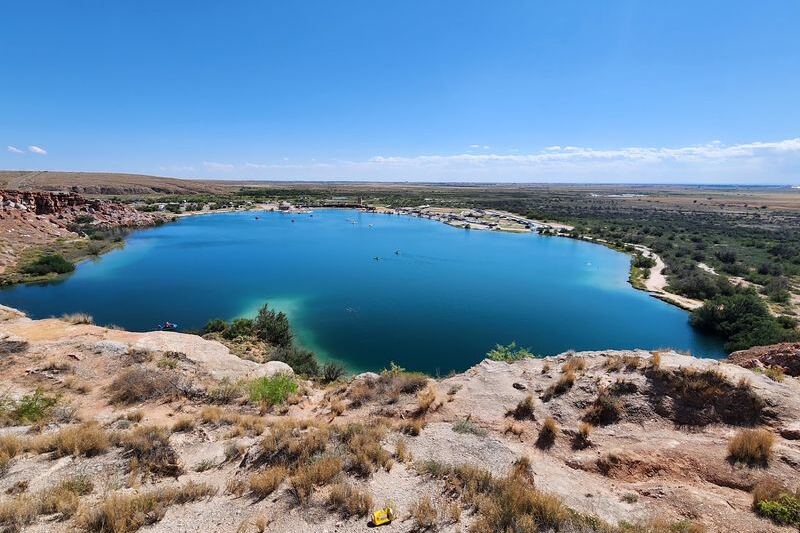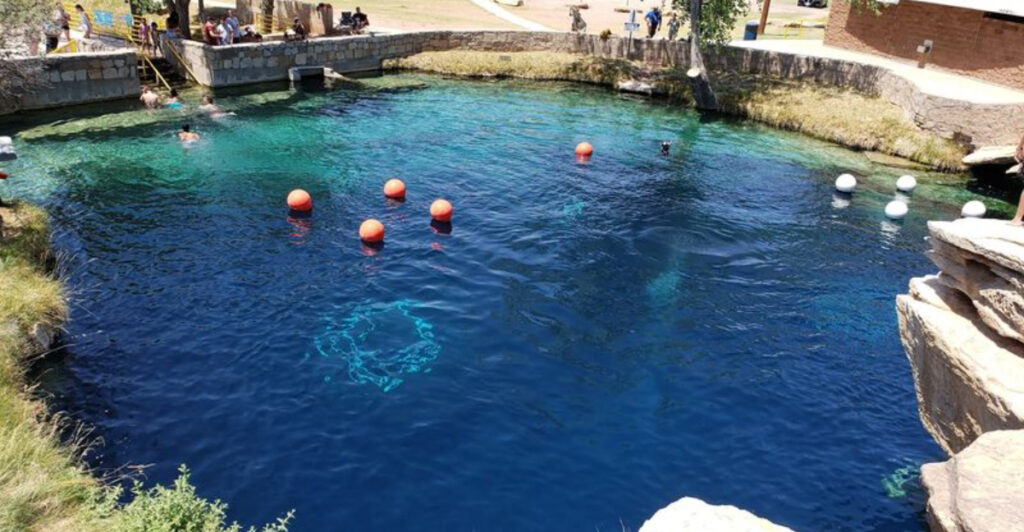
Tucked away in the high desert of eastern New Mexico, there is a natural pool so startlingly blue that first-time visitors often stop and stare before they even think about getting in. The water stays at a steady 62 degrees year-round, fed by an underground spring that has been flowing long before anyone thought to put a parking lot next to it.
Santa Rosa, New Mexico is not exactly a city that makes most travel bucket lists, but this one spot has a way of changing that opinion fast. Whether someone is passing through on a road trip or making a dedicated detour, this place has a reputation for turning a quick stop into a full afternoon.
This article covers everything worth knowing before making the trip, from the geology and the scuba scene to practical tips that will make the visit go smoothly.
The Underground Spring That Keeps It All Going
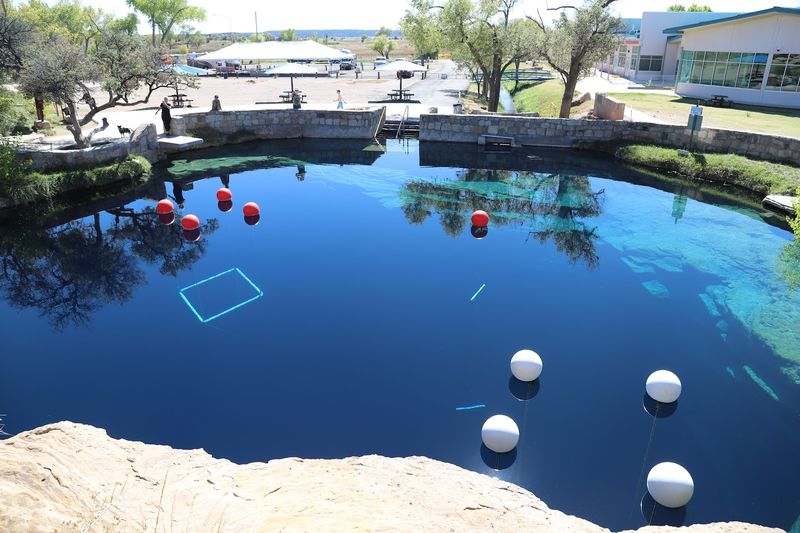
The Blue Hole is not a lake, a reservoir, or a man-made pool. It is fed entirely by an artesian spring that pushes cold, clear water up from deep underground.
That spring is the reason the water stays at a constant 62 degrees Fahrenheit every single day of the year, no matter how hot or cold it gets on the surface.
The spring pumps roughly 3,000 gallons of water per minute, which keeps the pool continuously refreshed and contributes to its remarkable clarity. Because the water is always moving and always being replaced, it stays exceptionally clean without the chemical treatments typical of public pools.
The pool is roughly 80 feet deep, which is part of what makes it so appealing to scuba divers who want deep, clear water without heading to the coast. That consistent underground source is what gives the Blue Hole its signature color and its year-round usability, turning a patch of desert into something genuinely surprising.
That Color Is Not a Filter
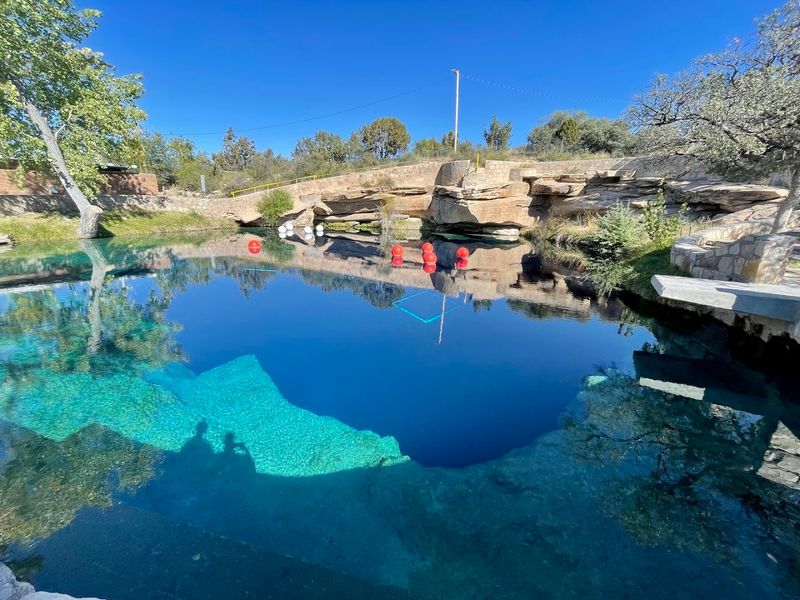
The first thing most people notice about the Blue Hole is the color. The water is a deep, vivid blue that looks almost too saturated to be real, like someone turned up the contrast on a photograph.
That color is entirely natural and comes from the combination of depth, water clarity, and the way light interacts with the spring water.
Because the water is so clear and the pool is so deep, sunlight penetrates far down and reflects back in a way that produces that distinctive sapphire tone. There are no dyes, no treatments, and no tricks involved.
The color shifts slightly depending on the time of day and the angle of sunlight, but it is always striking.
Photographs of the Blue Hole have circulated widely online, and many travelers admit they assumed the images were heavily edited before seeing it in person. The reality turns out to be just as compelling as the pictures, which is not something that can be said about every photogenic travel destination.
Swimming Here Is a Full-Body Wake-Up Call
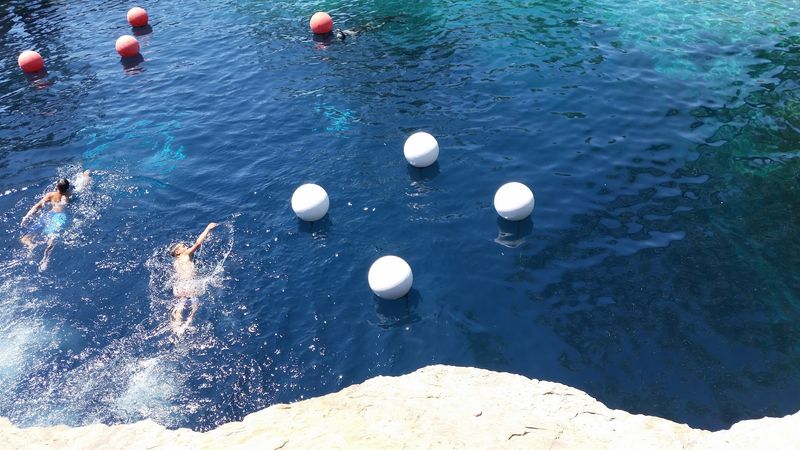
At 62 degrees Fahrenheit, the water at the Blue Hole is cold enough to take the breath away on the first jump. That said, regular swimmers report that the body adjusts after a minute or two, and the cold becomes refreshing rather than uncomfortable, especially on a hot summer afternoon when temperatures in the desert can push well above 90 degrees.
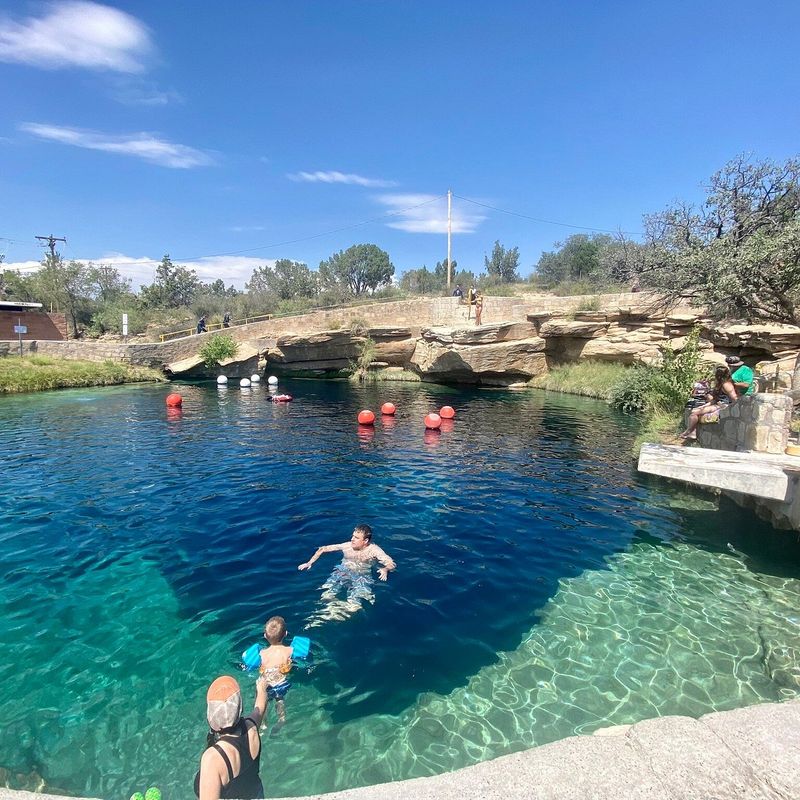
Swimming is allowed and popular, with a platform and natural rock edges providing access points for entry. There is also a spot where visitors can jump from about three feet up, and a higher point closer to 20 feet for those looking for more of a rush.
Lifeguards are on duty during regular operating hours, which adds a layer of safety for families.
The pool is not enormous in terms of surface area, but its depth and clarity make it feel far more dramatic than its footprint suggests. Families, solo travelers, and groups all share the space, and the overall atmosphere tends to be relaxed and cheerful.
A Scuba Diver’s Desert Oasis
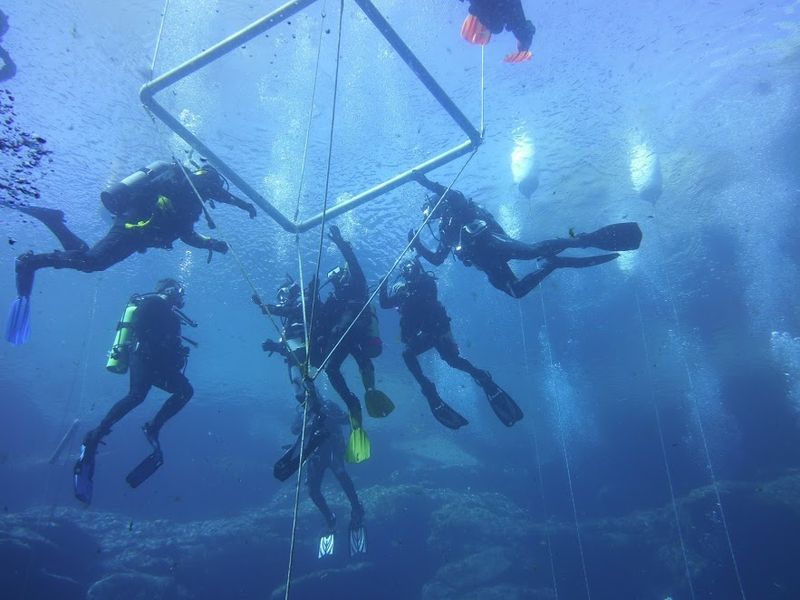
The scuba diving community has known about the Blue Hole for decades. With 80 feet of depth, extraordinary water clarity, and a stable year-round temperature, it offers conditions that are genuinely hard to find in a landlocked state.
Divers from New Mexico, Colorado, Texas, and beyond make regular trips specifically to train or certify here.
The site is frequently used for open-water scuba certification courses, giving students the chance to complete their checkout dives in a controlled but genuinely deep environment. A full 7mm wetsuit is strongly recommended because 62-degree water gets cold fast at depth, even for experienced divers.
There are no equipment rentals available on-site, so divers need to bring their own gear or arrange rentals in advance through local dive shops. Off-season diving may require scheduling ahead with staff who manage access to the site.
It is worth noting that an underwater chamber at the very bottom has been closed off for safety reasons, and that restriction is strictly enforced.
What the Facilities Actually Look Like
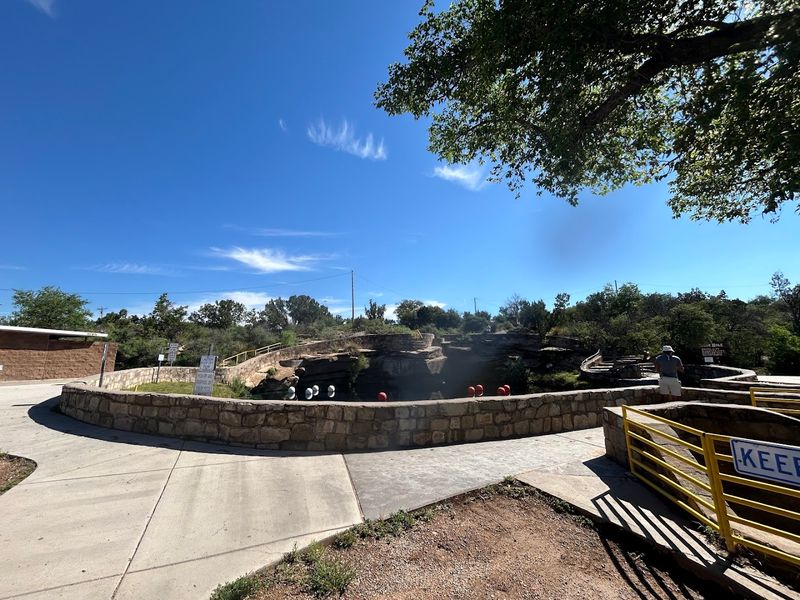
The Blue Hole is a managed public site with a reasonable set of amenities for a destination in a small desert town. There is a gravel parking lot right next to the water, and parking typically costs around ten dollars for a day pass.
That fee also covers access to a separate swimming area located a short distance up the road.
On-site, visitors will find picnic tables, functional restrooms, and a small gift shop where souvenirs can be picked up. There is also a small museum nearby that provides some background on the history and geology of the area.
The dive shop adjacent to the main entrance handles scuba-related logistics and serves as the place to pay entry fees.
The grounds are well maintained and kept clean, which is a consistent point of appreciation among those who visit regularly. The overall setup is simple and practical rather than elaborate, but it covers the basics well enough to make a half-day visit comfortable for families and solo travelers alike.
The Jump That Everyone Talks About
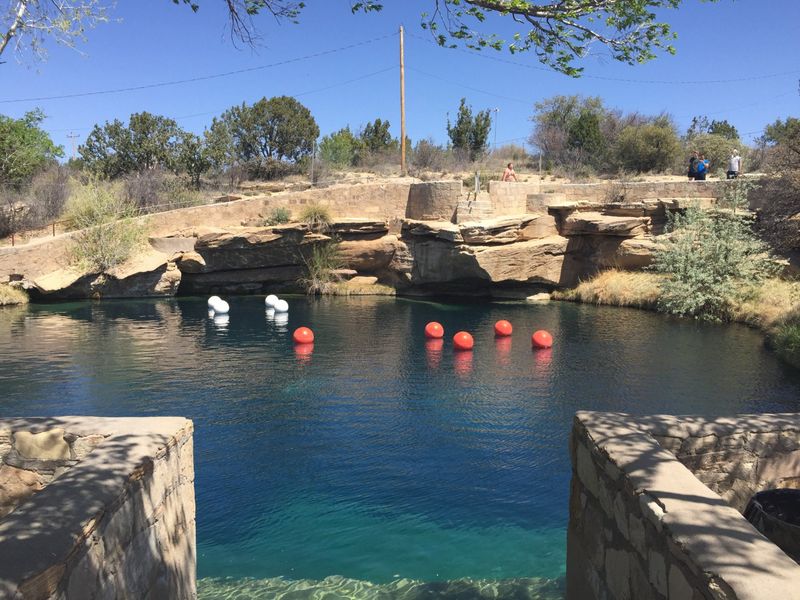
Ask anyone who has been to the Blue Hole about the highlight of their visit, and jumping into the water is almost always part of the answer. The natural rock formation around the pool creates a ledge from which visitors can launch themselves into the deep blue water below.
The higher jump point reaches roughly 20 feet, which is enough to get the heart going without requiring any special skill or equipment.
There is also a lower three-foot platform for those who want the experience without committing to the full drop. Both options draw steady lines on busy summer days, and the general atmosphere around the jump spots tends to be encouraging, with people cheering each other on.
One practical note worth keeping in mind: the cold water means the body tires more quickly than it would in a warmer pool. Taking breaks between jumps is genuinely important, not just a suggestion.
The water does not forgive overconfidence, and the swim back to the edge after a jump requires more energy than it might seem from the top.
The Depth That Keeps Things Interesting
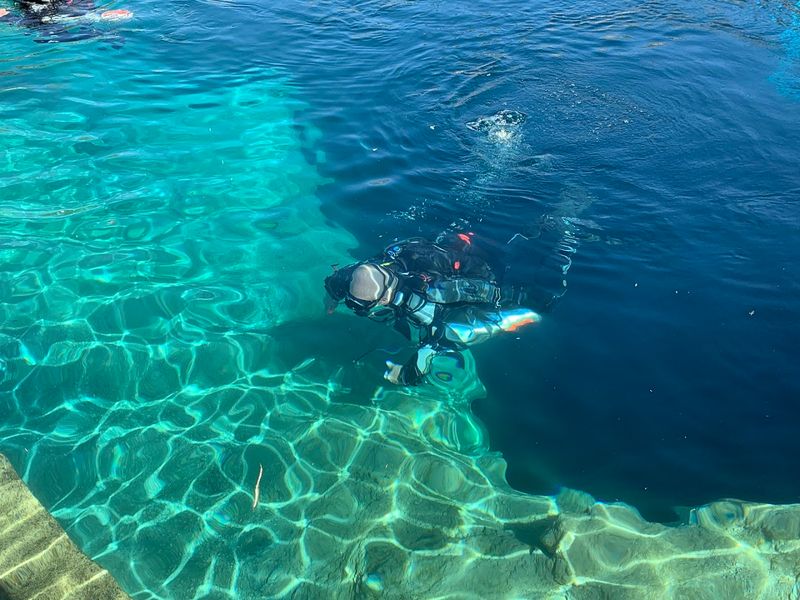
Eighty feet is the commonly cited depth of the Blue Hole, and that number is significant for a pool that looks relatively modest from the surface. The depth is part of what gives the water its color, and it is also what makes the site such a useful training ground for scuba divers who need real depth experience before heading to open ocean.
At the very bottom, there was historically an underwater cave system that extended even further, reportedly reaching depths of up to 194 feet. That deeper section has been permanently closed off following a fatal incident, and the restriction is maintained by the site management.
The closure does not affect the main swimming and diving experience, which uses the upper portion of the pool.
For non-divers, the depth adds a layer of visual drama. The water transitions from bright turquoise near the surface to a deep, dark blue further down, and on a clear day that gradient is visible from the pool edge without getting in at all.
Getting Scuba Certified Without Leaving the Desert
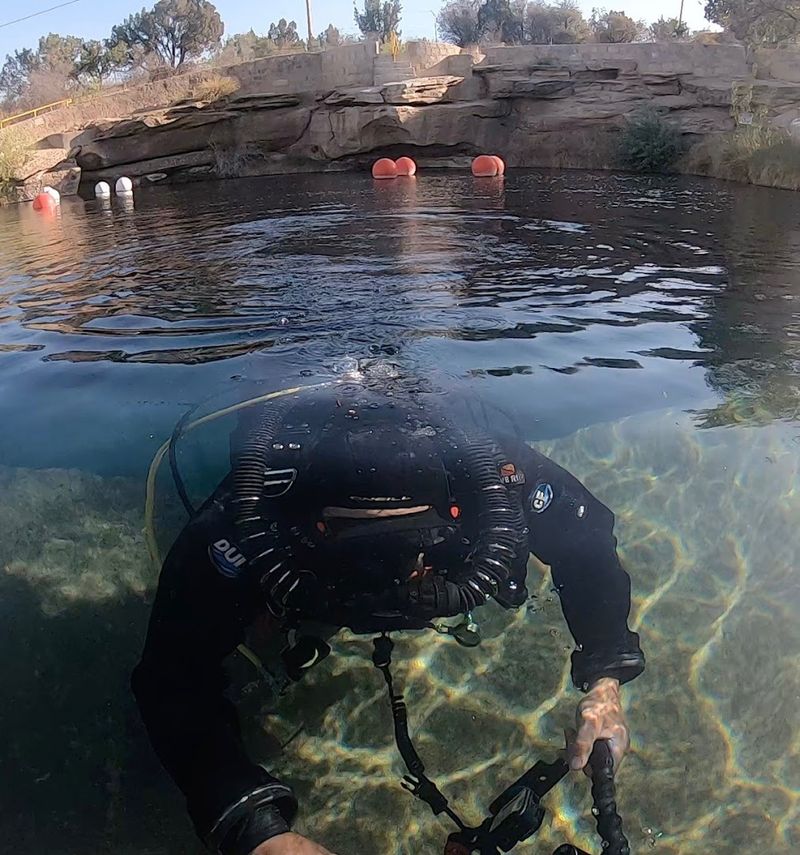
For residents of landlocked states like New Mexico, Colorado, or Texas, getting open-water scuba certified usually means either traveling to the coast or settling for a murky quarry. The Blue Hole offers a third option that is considerably more appealing.
The water clarity and consistent depth make it one of the better inland certification sites in the American Southwest.
Certification courses are run through the dive operation connected to the site, though arrangements typically need to be made in advance rather than showing up and expecting to join a class. During peak season, it is common to see groups of students working through their checkout dives while recreational swimmers use the same pool nearby.
The 62-degree water is cold enough that a thick wetsuit is not optional for anyone spending significant time underwater. A full 7mm suit is the standard recommendation.
For divers who are serious about the sport, the Blue Hole represents a genuinely accessible and high-quality training environment that does not require a flight or a long coastal drive.
Santa Rosa and the City of Natural Lakes
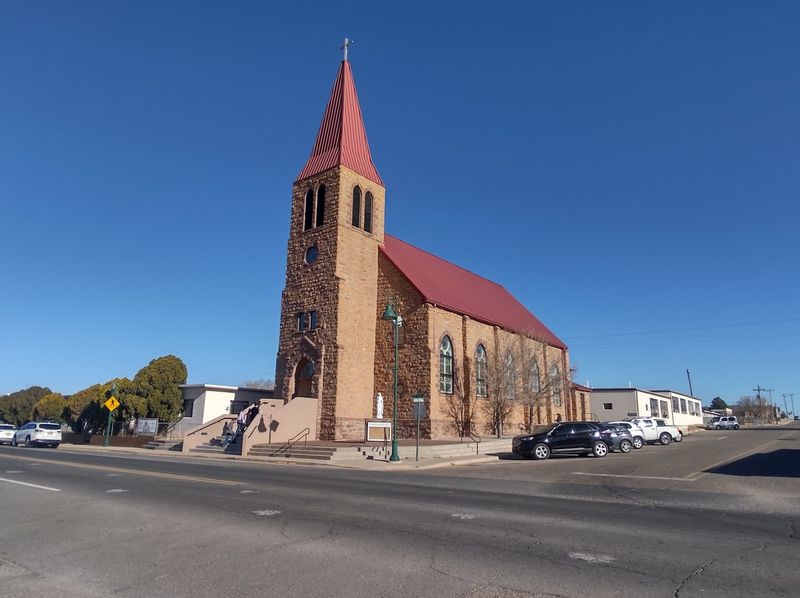
Santa Rosa carries the nickname “City of Natural Lakes” for good reason. The Blue Hole is the most famous of its natural water features, but the area also includes Park Lake, Power House Lake, and several other spring-fed bodies of water that make the region genuinely unusual for a high desert location.
The city sits along historic Route 66, which gives it a particular character that road trip enthusiasts tend to appreciate. There are vintage motels, classic diners, and roadside attractions that reflect the highway’s mid-century heyday.
Combining a stop at the Blue Hole with a short exploration of the town itself makes for a satisfying half-day detour.
Santa Rosa is not a large city, but it has enough to keep a traveler occupied for an afternoon. The combination of natural swimming spots, Route 66 history, and the surrounding Pecos River Valley landscape gives the area more depth than a quick interstate exit might suggest.
It rewards the traveler who slows down long enough to look around.
How the Blue Hole Fits Into a Road Trip
The Blue Hole sits right off Interstate 40, roughly midway between Albuquerque and Amarillo. That position makes it a natural road trip stop for anyone crossing the southern United States, whether the destination is the Grand Canyon, the Texas Hill Country, or somewhere further east or west.
The stop can be as short as 30 minutes for a quick look and a photograph, or as long as half a day for swimming, picnicking, and exploring the surrounding area. Most travelers who plan a brief look end up staying longer than expected once they see the water in person.
Having a change of clothes and a towel in the car is the most practical preparation for an unplanned swim. The parking lot is convenient, the entry process is straightforward, and the site does not require advance reservations for casual visitors.
For a road trip that could use a memorable midpoint, the Blue Hole delivers something genuinely different from the usual gas station and fast food routine.
The Geology Behind the Blue
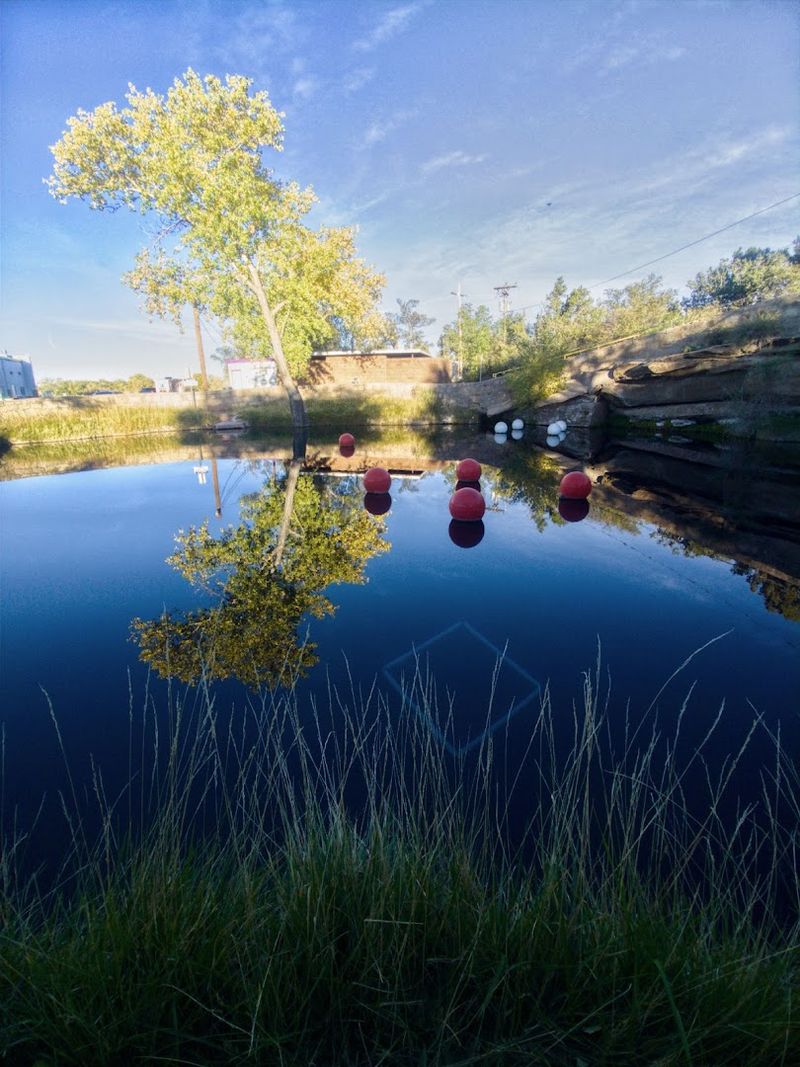
The Blue Hole exists because of a combination of geological factors that are specific to this part of New Mexico. The area sits above a limestone formation that allows groundwater to collect and move through underground channels.
Over time, that water carved out cavities in the rock, and in some locations those cavities breach the surface as springs.
The artesian pressure that pushes water up through the Blue Hole is strong enough to produce that continuous flow of 3,000 gallons per minute. That pressure is what keeps the pool full and the water clear despite the volume of people who use it during peak season.
The rock walls visible around the pool edge are part of the same limestone formation, and they give the site its distinctive look. The rugged stone contrasts sharply with the smooth, vivid water, and that visual contrast is a big part of what makes the Blue Hole so photogenic.
Understanding the geology makes the whole experience feel a little more grounded in something real and ancient.
Why This Spot Keeps Drawing People Back
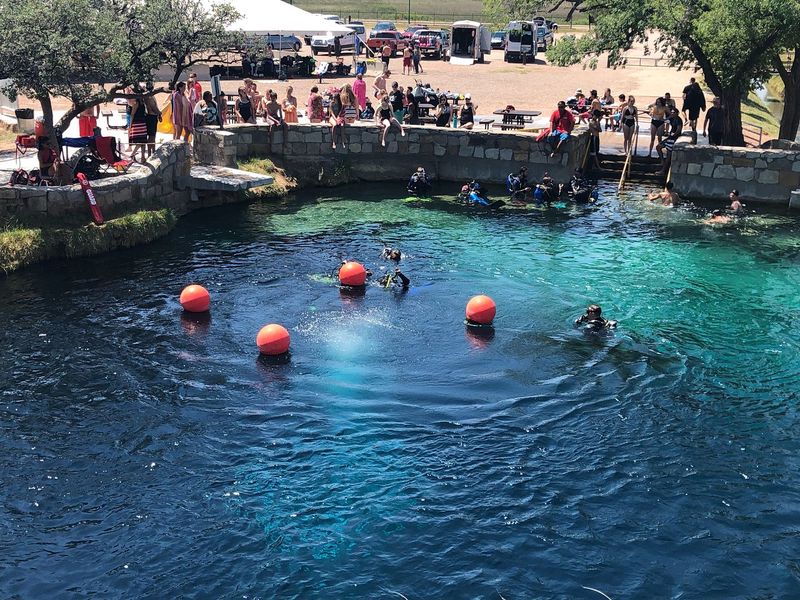
Some places earn a reputation for being worth a single visit and nothing more. The Blue Hole is not one of them.
There are families who stop every time they pass through Santa Rosa on a road trip, treating it as a fixed point in their travel routine rather than a one-time novelty. That kind of repeat loyalty says something about what the place actually delivers.
Part of the appeal is consistency. The water is always the same temperature, always the same color, and always clear.
There are no bad days at the Blue Hole in terms of water quality, which means every visit offers the same core experience that made the first one memorable.
The other part is that the Blue Hole is genuinely rare. A natural spring-fed pool of this clarity and depth, sitting in the middle of the New Mexico desert, freely accessible to the public with basic facilities and no complicated reservation system, is not something that exists in many places.
That combination of accessibility and natural quality is exactly what keeps it on the map.
Where Exactly This Sapphire Pool Lives
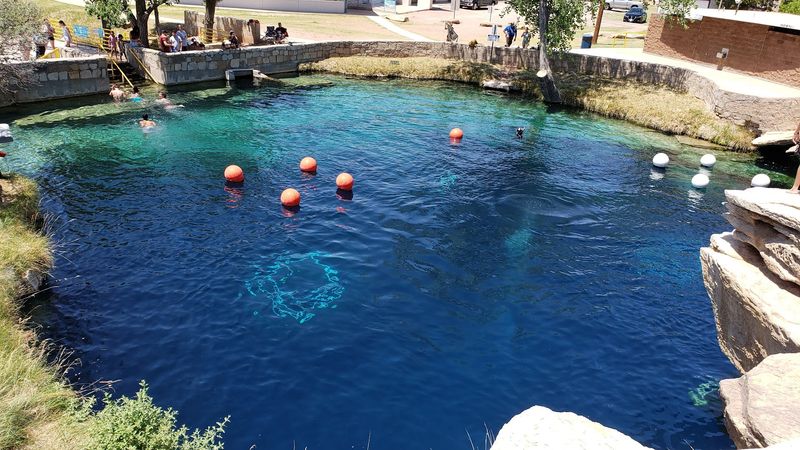
The Blue Hole sits at 1085 Blue Hole Road, Santa Rosa, NM 88435, right in the heart of Guadalupe County in eastern New Mexico. Santa Rosa is a small city along historic Route 66, and the Blue Hole is one of its most recognizable landmarks.
The site is easy to reach from Interstate 40, making it a natural stop for travelers crossing the state.
The pool itself is tucked slightly behind a dive shop, so first-time visitors sometimes get confused by the two smaller ponds near the entrance. A quick check of the map on arrival will point anyone in the right direction.
Parking is available in a gravel lot right next to the hole, and the walk from the car to the water is short.
The surrounding area is open desert landscape, which makes the vivid blue water feel even more unexpected. Santa Rosa is also known as the City of Natural Lakes, and the Blue Hole is the crown of that collection.
Share this story