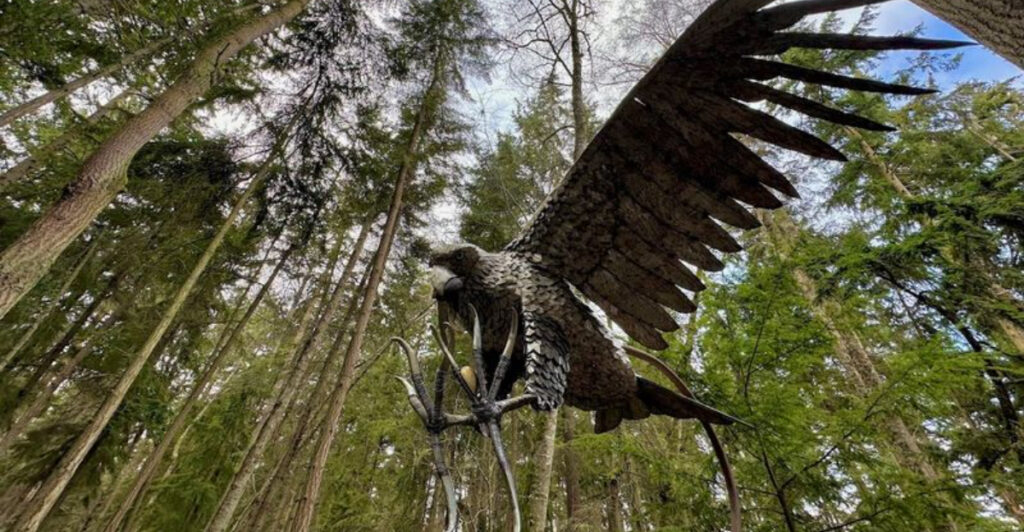
There is a forest on Whidbey Island where the trees have company. Tucked along a quiet stretch of road in Coupeville, Washington, a trail winds through the woods and reveals something unexpected around nearly every bend: sculpture after sculpture, each one placed with purpose among the pines and ferns.
Some pieces are bold and impossible to miss, while others are woven so naturally into the branches that finding them feels like a small victory. The trail is free to walk, open every day, and short enough for all ages to enjoy without breaking a sweat.
Whether you are an art lover, a nature walker, or just someone looking for something a little different on a weekend drive through the island, this place has a way of surprising even the most seasoned Whidbey regulars. Here is everything worth knowing before you go.
A Free Outdoor Art Gallery Unlike Any Other
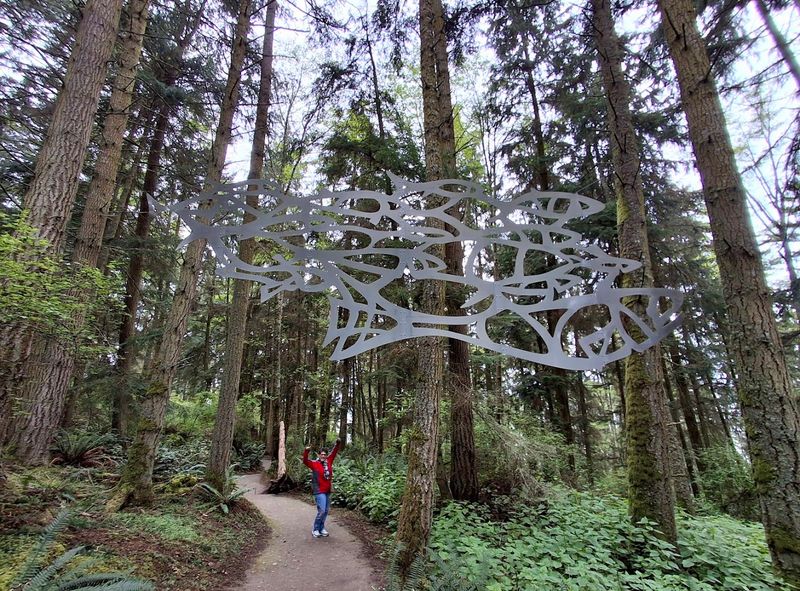
There are no admission fees at Price Sculpture Forest, which makes it one of the more generous cultural offerings on Whidbey Island. A donation box near the end of the trail gives those who want to support the space a chance to do so, but nothing is required to walk in and experience everything the park has to offer.
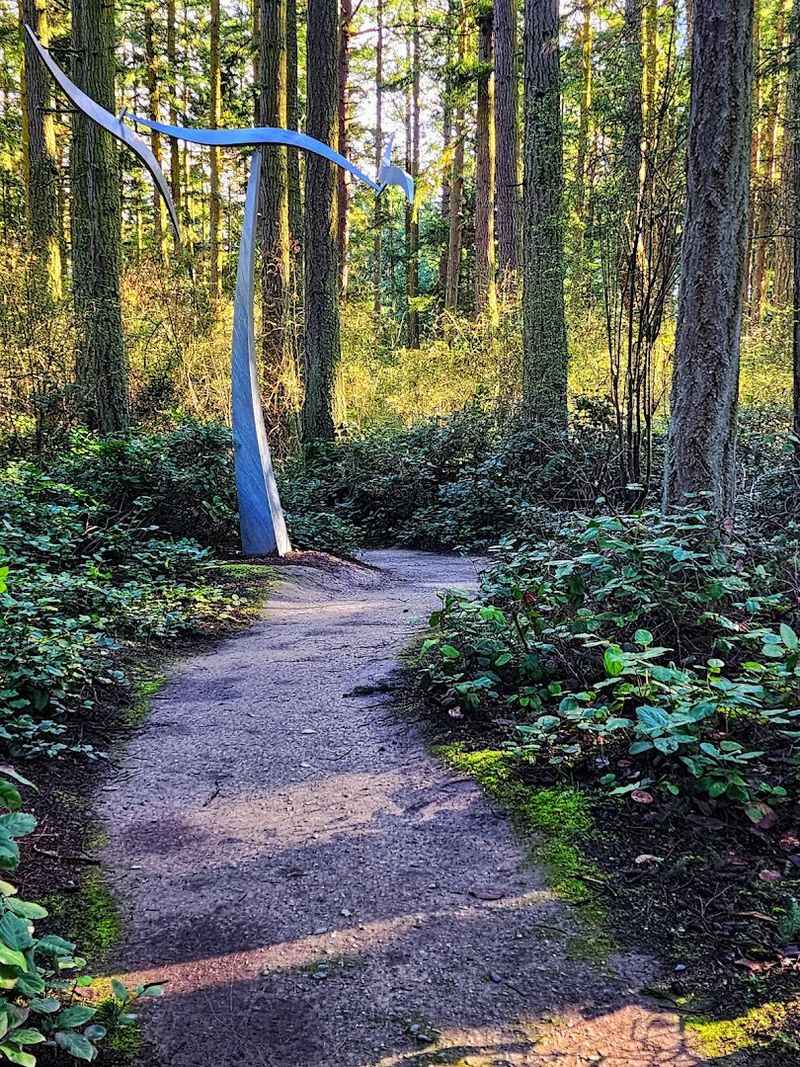
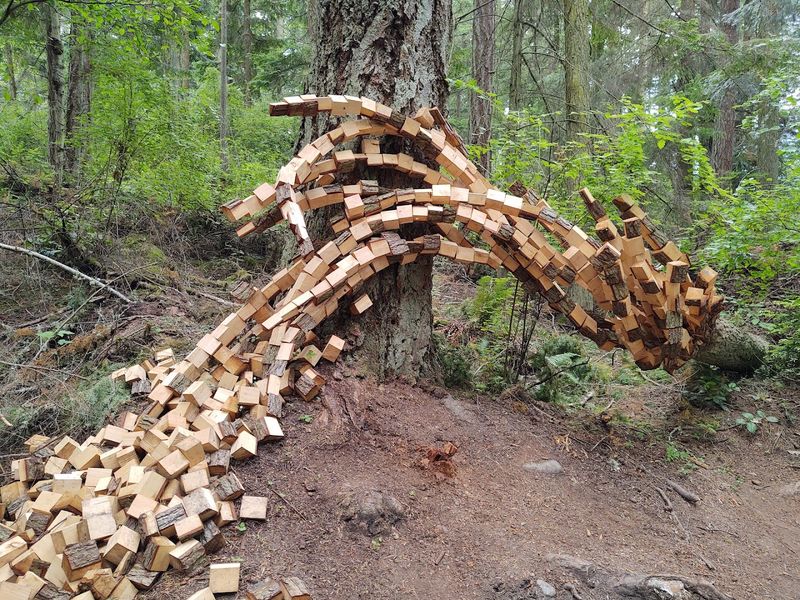
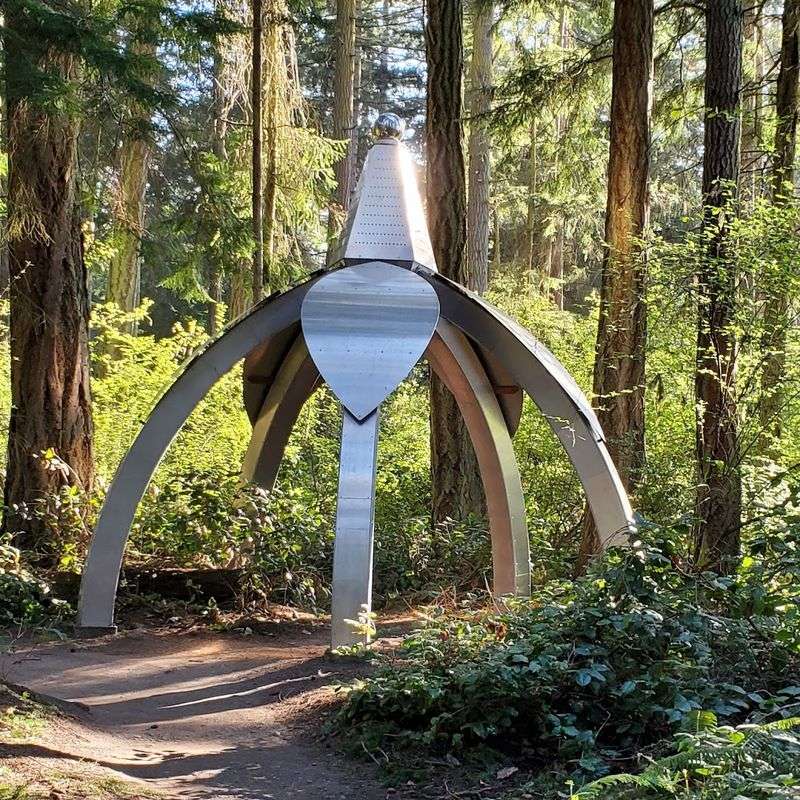
The collection spans a wide range of styles, materials, and artistic approaches. Metal figures, wire constructions, stone forms, and mixed-media works are distributed along roughly a mile of well-maintained trail.
Each piece has a small sign beside it, and a QR code links to detailed information about the work and the artist who created it.
That combination of free access, quality curation, and educational content makes the place stand out well beyond what you might expect from a roadside stop on a rural island. It functions as a proper gallery, just without walls or a gift shop at the end.
The Two Loops and What Sets Them Apart
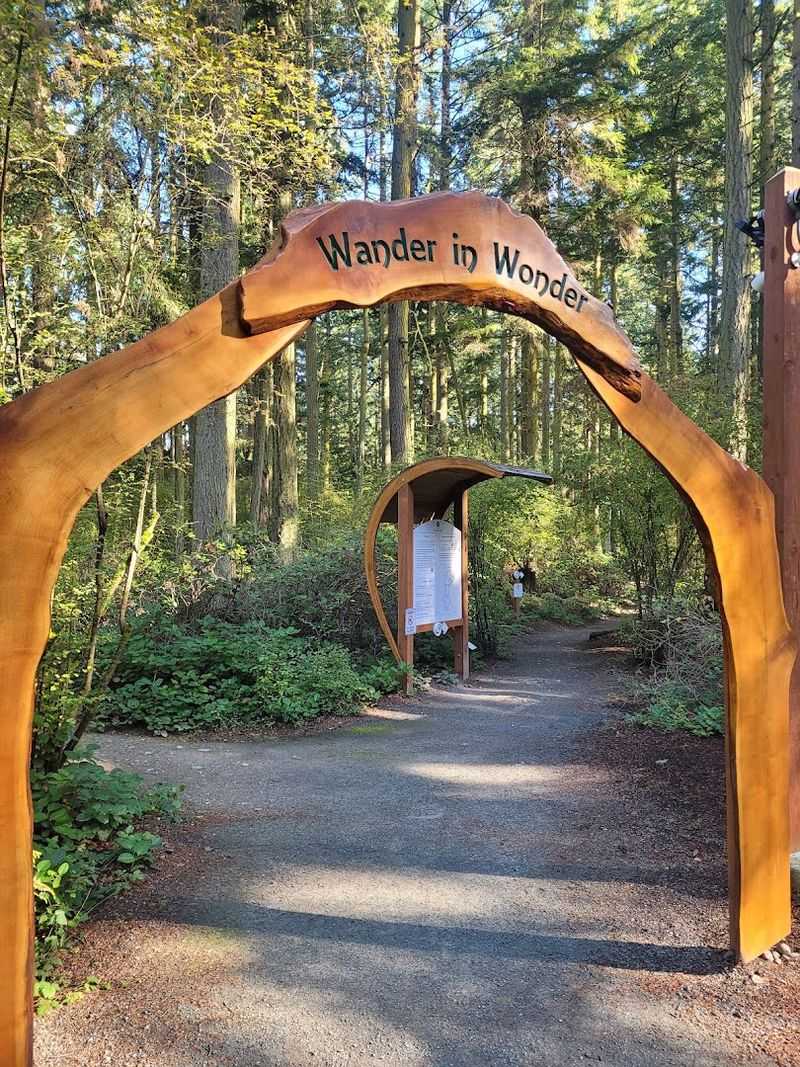
Two separate loop trails make up the main walking experience at Price Sculpture Forest. Both are clearly marked from the entrance map, and neither requires any special footwear or fitness level to complete.
The combined distance runs close to a mile, making it manageable for families with young children and adults who prefer a relaxed pace.
One of the loops, known as the Nature Nurtured trail, has been designed with accessibility in mind. The surface has been smoothed out to accommodate wheelchairs and mobility devices, and the path has been used successfully by people in power wheelchairs.
That level of inclusive design is not always found at outdoor art spaces, and it makes the park genuinely welcoming to a broader group of visitors.
The second loop takes walkers deeper into the forest and introduces more of the sculptural collection. Together, the two paths create a complete circuit that can be done in about an hour, though many people take longer once they start hunting for the harder-to-spot pieces.
Sculptures That Blend Right Into the Trees
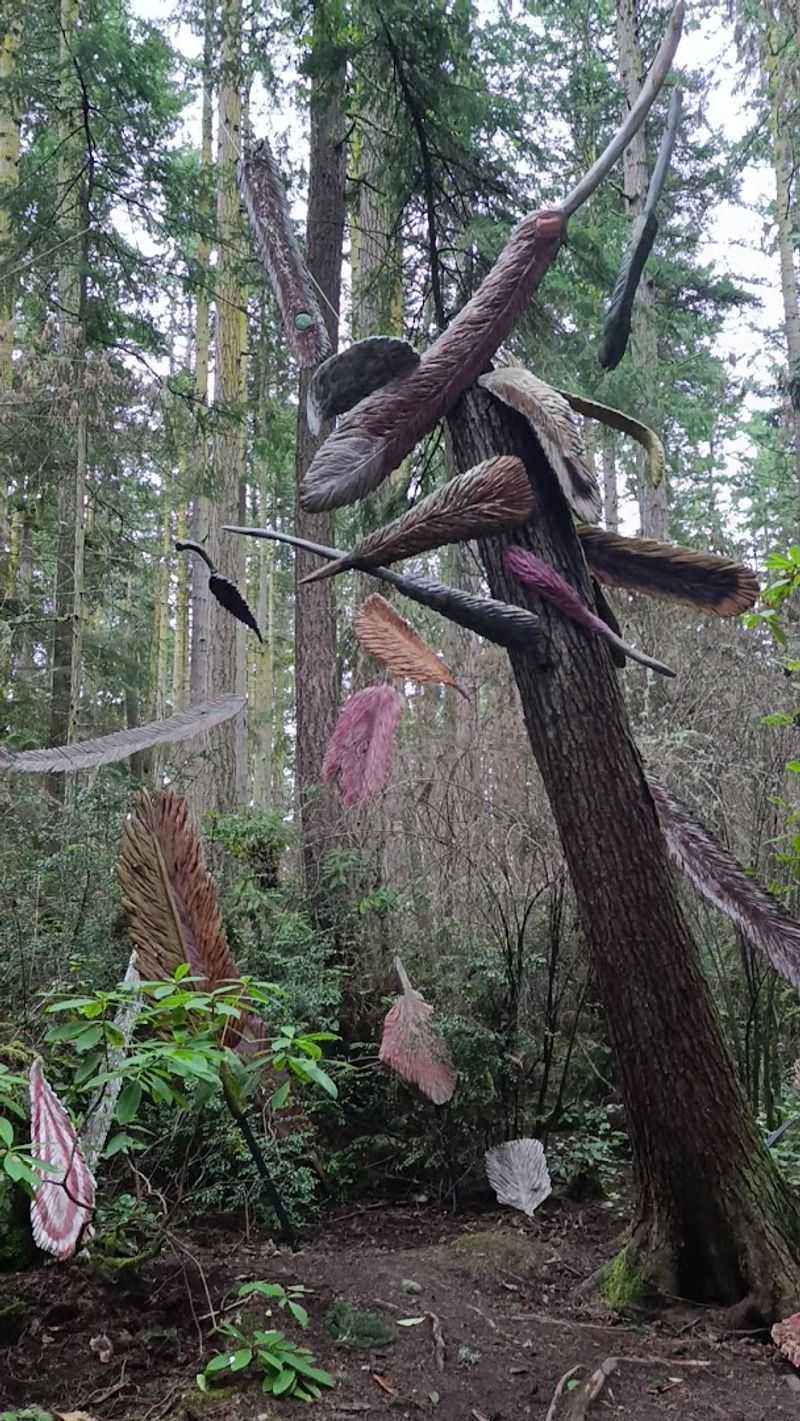
Not every piece at Price Sculpture Forest announces itself. Some of the most interesting works in the collection are made from wire mesh and constructed to partially disappear into the surrounding branches.
A nationally recognized wire artist created several of these aerial pieces, and they are positioned at various heights throughout the canopy.
Finding them takes a little patience and a willingness to look up. The slight rust that develops on the wire over time helps the pieces merge with the bark and dried leaves around them, which is entirely by design.
The discovery moment, when the shape suddenly resolves out of the background, is one of the more satisfying things the trail offers.
Among the harder-to-spot works is a three-quarter-size horse with a seventeen-foot wingspan set up in the trees, known as Pegasus. Even that large piece gets missed by some walkers who are not looking at the right angle.
The forest has a way of keeping its secrets until you earn them.
The Augmented Reality Exhibit Near the Parking Lot
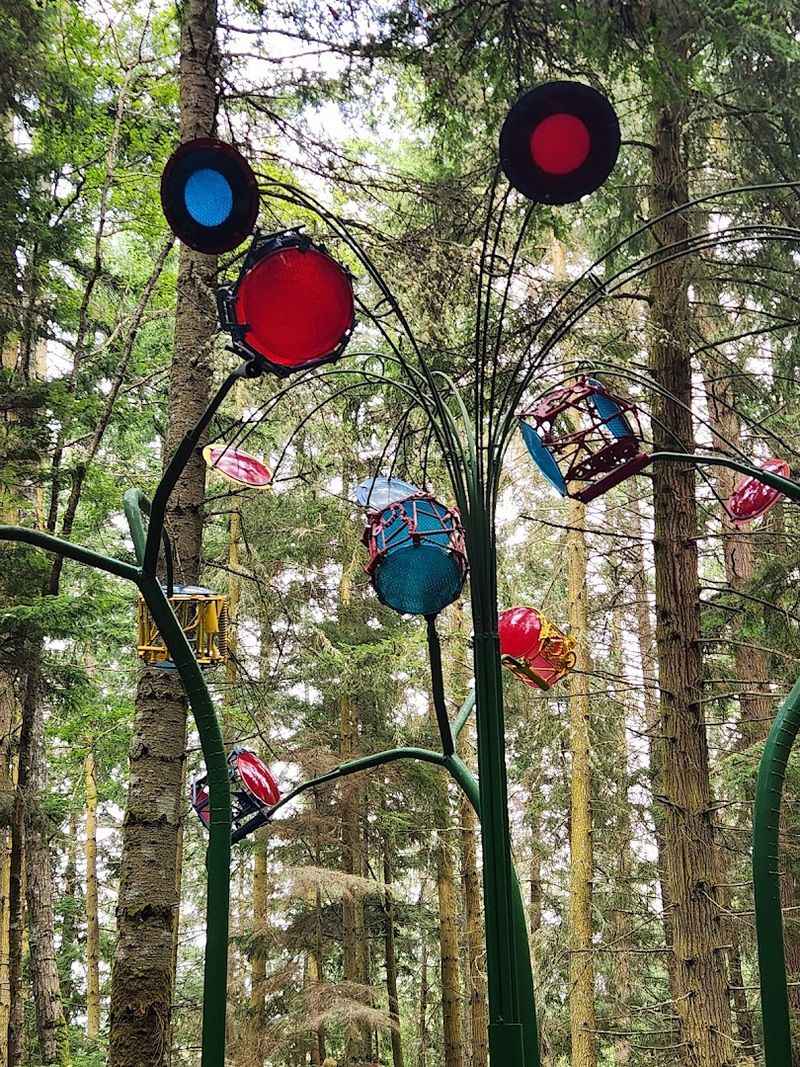
Right near the parking lot, a concrete platform with four posts holds QR codes that unlock something genuinely unexpected. Pointing a smartphone at the platform activates an augmented reality exhibit, layering digital artwork over the physical space in a way that turns a plain concrete slab into a full visual experience.
The AR feature works on modern Apple and Android devices, and the instructions are clearly provided on-site. For anyone unfamiliar with augmented reality, it is worth taking a few minutes to get it working before heading down the trail, because the exhibit near the entrance sets a tone for the rest of the visit.
This technology-forward element sits comfortably alongside the more traditional sculptures without feeling out of place. It reflects a broader philosophy at Price Sculpture Forest: art does not have to stay in one medium or era to be meaningful.
The mix of handmade sculpture and digital experience gives the park a range that keeps it fresh for repeat visits.
The Self-Guided Tour and How It Works
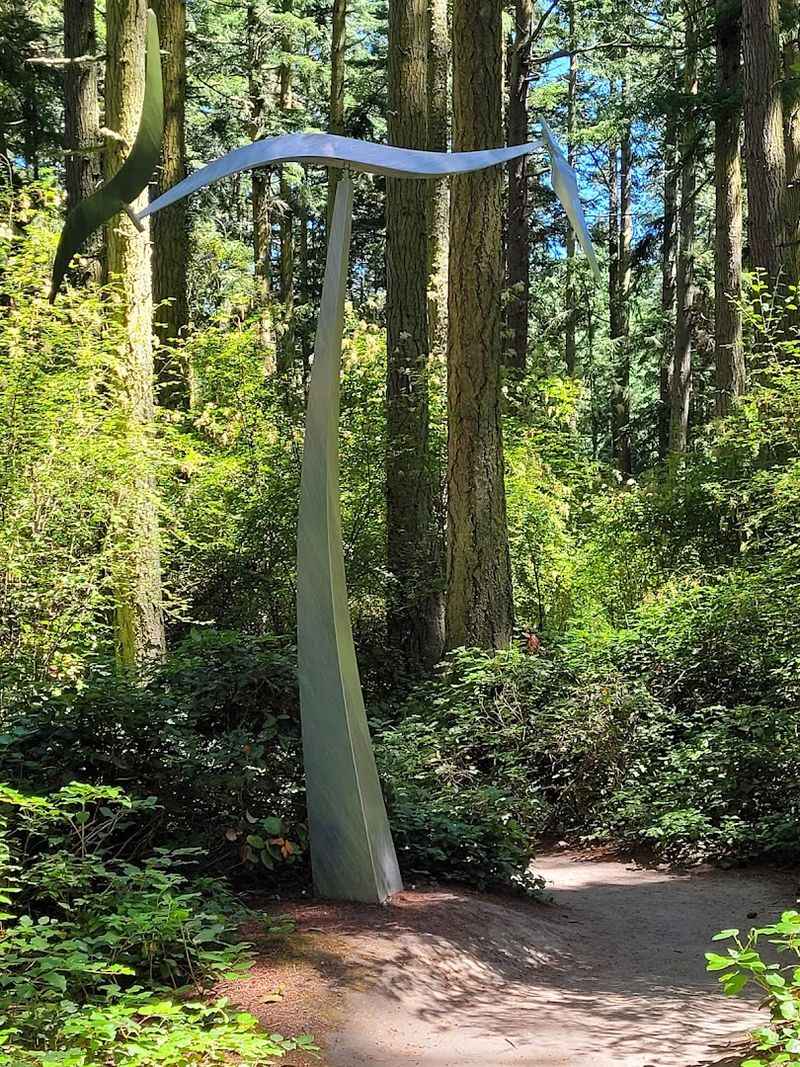
Each sculpture along the trail has a small sign with a QR code that connects to the park website. Scanning the code pulls up a dedicated page for that specific work, with background on the piece, the artist’s process, and the reasoning behind its placement in the forest.
The information goes well beyond what any printed placard could hold.
Cell service in the Coupeville area can be unreliable depending on your carrier, and T-Mobile users in particular have reported weak coverage in this stretch of Whidbey Island. The free Wi-Fi available near the parking lot helps bridge that gap, especially for downloading content before heading in.
For those who prefer to walk without a phone in hand, the trail still works perfectly well as a straightforward nature walk. The sculptures are engaging on their own terms, and the QR codes are there for anyone who wants the deeper layer of context.
Both approaches lead to a worthwhile afternoon in the woods.
What the Collection Actually Looks Like
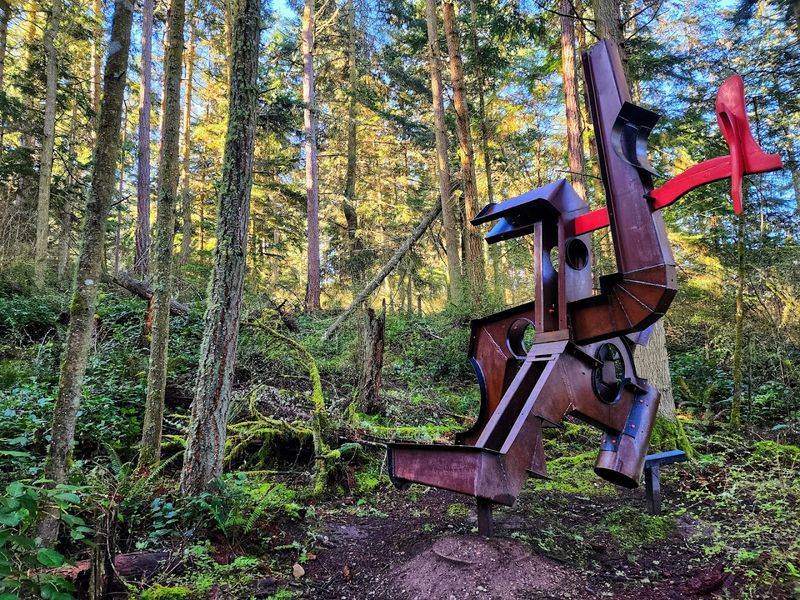
The range of work at Price Sculpture Forest is one of its most talked-about qualities. Metal birds, figurative forms, abstract constructions, and large-scale statement pieces are spread across the trail in a way that keeps each turn feeling different from the last.
No two adjacent sculptures share the same material or mood.
Some pieces are playful, others are contemplative, and a few are the kind that make you stop and look twice before you fully understand what you are seeing. A dinosaur appears along the path.
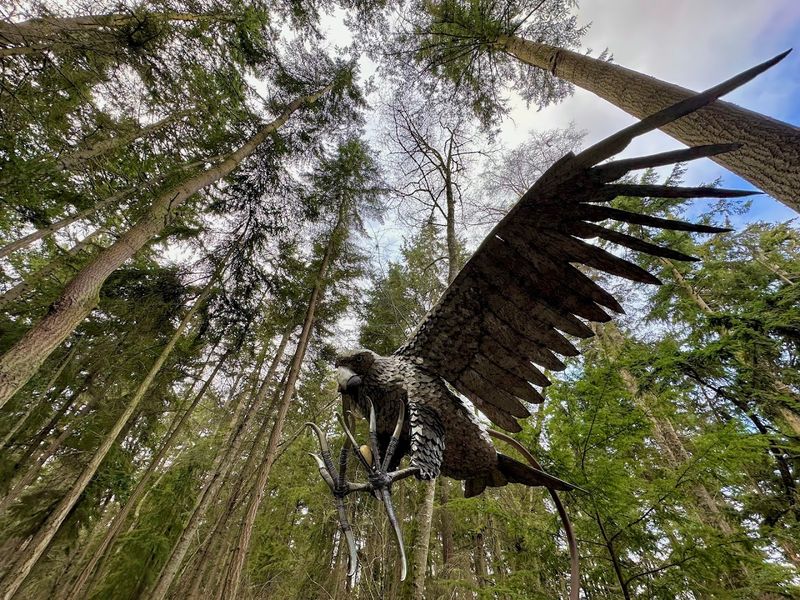
A ballerina holds her pose among the ferns. A giant metal bird stands with the kind of presence that makes the surrounding trees feel like a backdrop rather than a setting.
The curation is deliberate, with works sourced from a diverse group of artists. The variety reflects a commitment to showing what sculpture can be when it is not confined to a white-walled room.
Out here, the forest itself becomes part of every composition.
A Trail That Works for All Ages
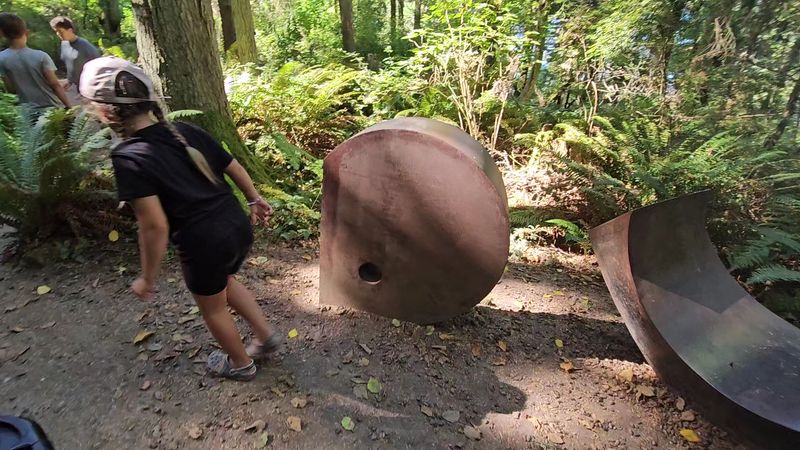
Groups with a wide age range have made Price Sculpture Forest part of their Whidbey Island itinerary for good reason. The trail is flat enough for young children to walk without being carried, and the distance is short enough that energy levels stay manageable from start to finish.
Groups spanning ages eight through seventy have completed the loop comfortably together.
The sculptures themselves hold attention across generations in different ways. Children tend to gravitate toward the more figurative and recognizable pieces, while adults often spend more time with the abstract works and the artist information on the QR pages.
That split engagement means no one ends up waiting around for the others to finish.
Benches are placed at intervals along the path, which gives anyone who wants a rest a reason to pause and take in the surroundings rather than push through. The park moves at whatever pace you bring to it, which is a quality that not every trail can honestly claim.
Wildlife and Nature Along the Path
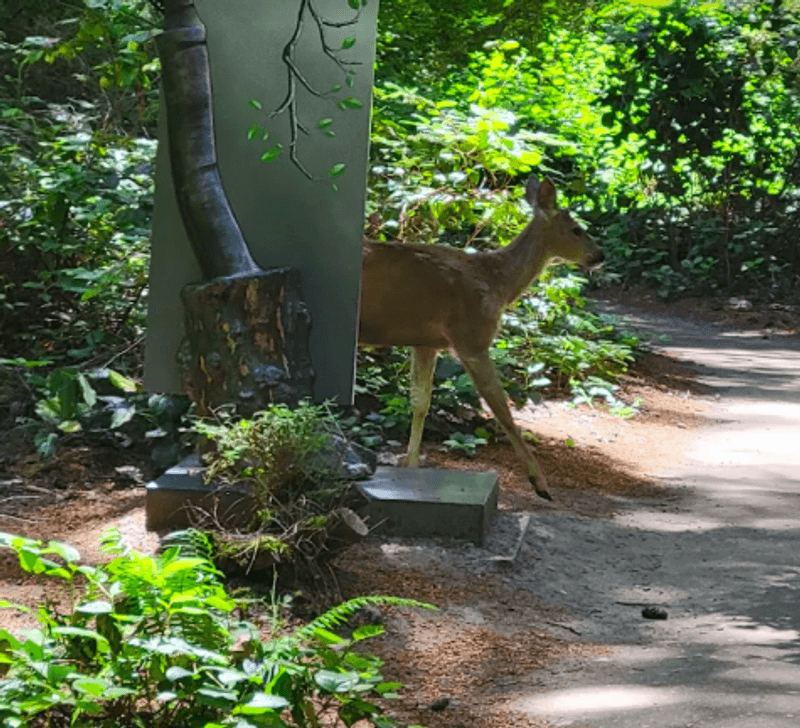
The forest at Price Sculpture Forest is not just a backdrop for the art. It is a functioning nature preserve, and the wildlife that lives there moves through the space on its own schedule.
Deer have been spotted wandering close to the trail, sometimes near enough to the path that walkers come to a full stop and wait for them to pass.
The tree canopy provides a consistent layer of shade across most of the trail, which makes afternoon visits comfortable even during warmer months on the island. Birdsong carries through the woods throughout the day, and the general quiet of the preserve amplifies it in a way that feels removed from the busier parts of Whidbey.
That combination of art and intact natural habitat is central to what Price Sculpture Forest is. The park is not a cleared field with sculptures dropped into it.
The works are placed within the living forest, which means the environment around each piece is as much a part of the experience as the piece itself.
No Dogs Allowed and the Reason Behind It
Price Sculpture Forest has a strict no-dogs policy, and the reasoning behind it goes beyond a simple preference. The park operates as both an art installation and a nature preserve, and the combination of fragile artwork, narrow trails, and wildlife habitat creates conditions where dogs present real risks to the space and to other visitors.
Issues have ranged from chain leashes damaging sculpture surfaces to noise disrupting the quiet of the preserve. The policy is firm, and it is enforced.
For visitors traveling with pets, Whidbey Island has several dog-friendly parks and open spaces nearby that offer a better fit.
Most people who visit appreciate the calm that the no-dog rule helps maintain. The trail stays quiet enough that the natural sounds of the forest carry through without competition.
That stillness is part of what makes the experience work, and keeping it intact requires consistent boundaries. The park is clear about this expectation from the moment you arrive.
The Best Time of Year to Visit
Price Sculpture Forest is open year-round, and each season brings a different quality to the experience. Fall tends to be a favorite among those who have visited multiple times.
The reduced foot traffic means the trail is often quiet, and having the entire loop to yourself in the late afternoon is not unusual once summer ends.
Spring brings fresh growth to the forest floor, which fills in the spaces around the sculptures and changes the visual relationship between the works and their surroundings. Some pieces that are easy to spot in winter become more integrated into the landscape once the ferns come back in full.
Summer is the busiest period, which aligns with peak tourism on Whidbey Island. The trail handles the volume reasonably well, but arriving early in the morning helps avoid congestion at the small parking lot.
Winter visits are quieter still, and the bare branches actually make it easier to spot some of the aerial wire sculptures that blend in during leafier months.
How It Fits Into a Whidbey Island Day Trip
Whidbey Island is accessible via the Mukilteo-Clinton ferry or by driving across Deception Pass from the north. Coupeville sits roughly in the middle of the island, making Price Sculpture Forest a natural midpoint stop for anyone doing a full loop of Whidbey in a single day.
The park is a short drive from the Keystone-Port Townsend ferry landing, which makes it a logical first or last stop for visitors crossing from the Olympic Peninsula. Its central location means it pairs easily with the historic downtown area of Coupeville, Fort Casey State Park, and the views along West Beach Road.
The trail takes about an hour to complete at a relaxed pace, which fits neatly into most day-trip itineraries without demanding a major time commitment. Given that there is no cost to enter, it functions well as an add-on to a longer outing rather than requiring a dedicated trip of its own, though it absolutely holds up as a destination on its own merits.
A Closing Walk Through the Trees
Price Sculpture Forest has a way of staying with you after you leave. The combination of quiet woodland, unexpected artwork, and the small challenge of finding pieces that are intentionally hidden creates an experience that is harder to categorize than it is to enjoy.
It is not quite a hike, not quite a museum visit, and not quite a nature walk, but it borrows the best parts of all three.
The fact that it is free, accessible, family-friendly, and open every day makes it one of the more genuinely democratic cultural spaces on the island. There is no barrier between you and the art except the walk itself.
For anyone spending time on Whidbey Island and looking for something that earns a place on the must-see list, the trail at 678 Parker Road delivers on that promise without overselling itself. The forest does most of the talking, and the sculptures make sure you are paying attention while it does.
Where the Trail Begins and How to Find It
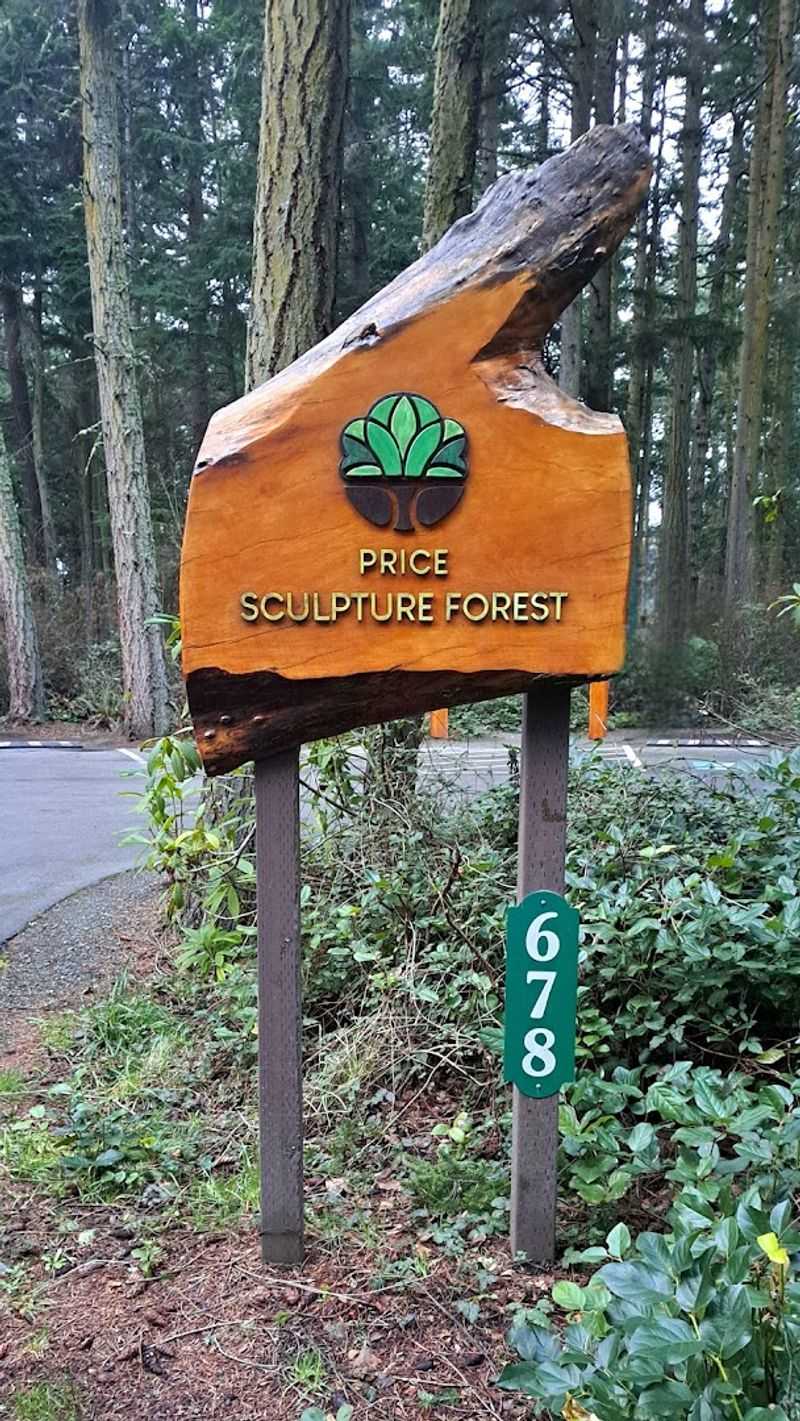
The sign is easy to miss if you are moving at highway speed, so slow down as you approach 678 Parker Rd, Coupeville, WA 98239. Price Sculpture Forest sits along Parker Road on Whidbey Island, nestled into the trees in a way that feels intentional rather than accidental.
The park is part of a nature preserve, which explains why the entrance is understated and the surroundings feel undisturbed.
A small parking lot greets you at the start, and it fills up quickly during busy weekends. Overflow parking is available along the roadside nearby.
The park is open every day from 8 AM to 7 PM, giving you a solid window to visit at your own pace.
At the entrance, a posted map shows two loop trails, so getting oriented before heading in takes only a minute. Cell signal can be spotty in this rural area, but free Wi-Fi is available near the parking lot for loading the digital tour materials.
Share this story