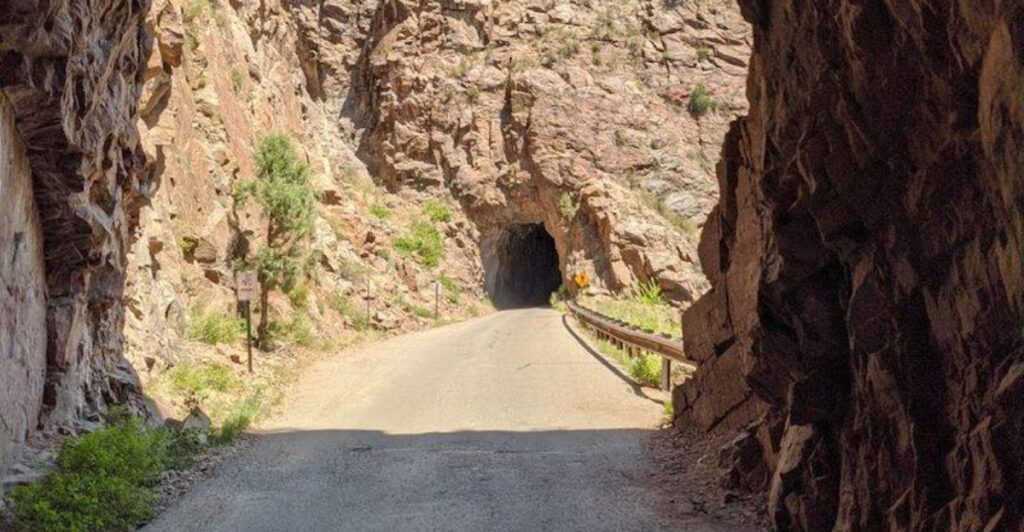
There is a road in New Mexico that cuts through solid rock, follows a river through a narrow canyon, and ends at a place that feels completely removed from the modern world. This road is not widely advertised, but word has spread steadily among road trippers, history buffs, and anyone who appreciates a drive that rewards curiosity.
Two tunnels, blasted through ancient Precambrian granite in the 1920s, now serve as a free, open-air monument to the logging era that once shaped this region. The surrounding canyon walls, the Rio Guadalupe running below, and the sheer scale of the rock formations make this one of the most quietly dramatic detours in the entire state.
This article covers everything worth knowing before making the trip.
The History Carved Into the Rock
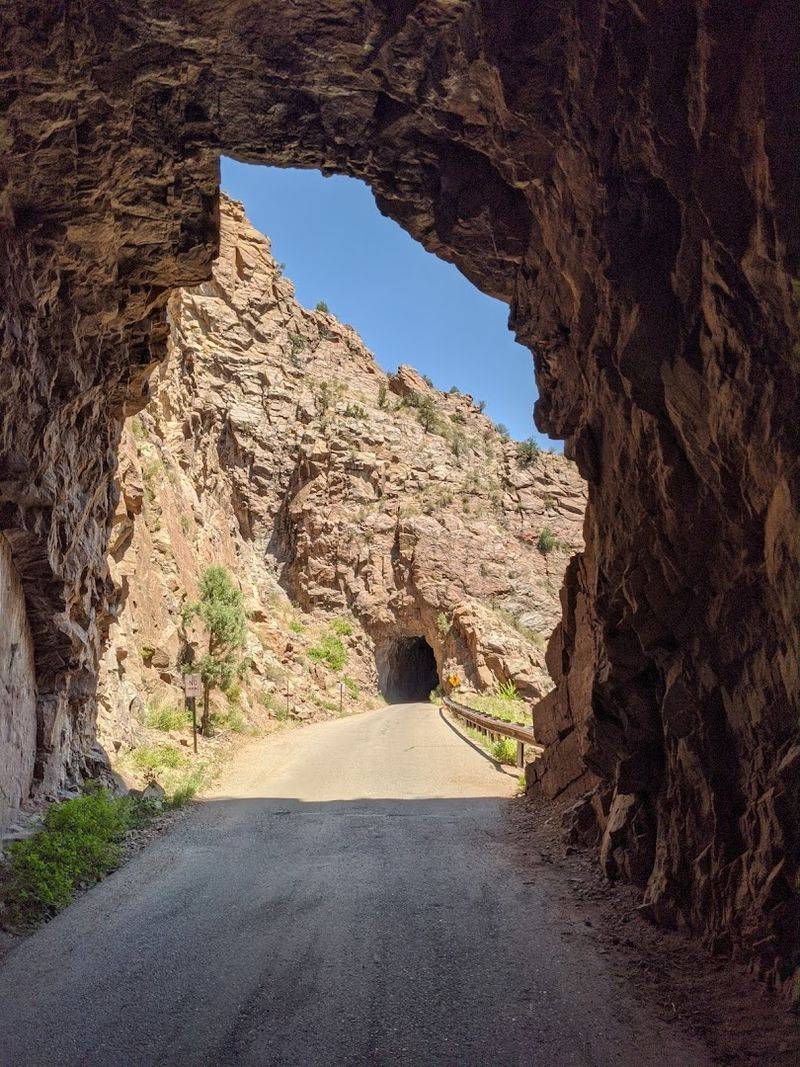
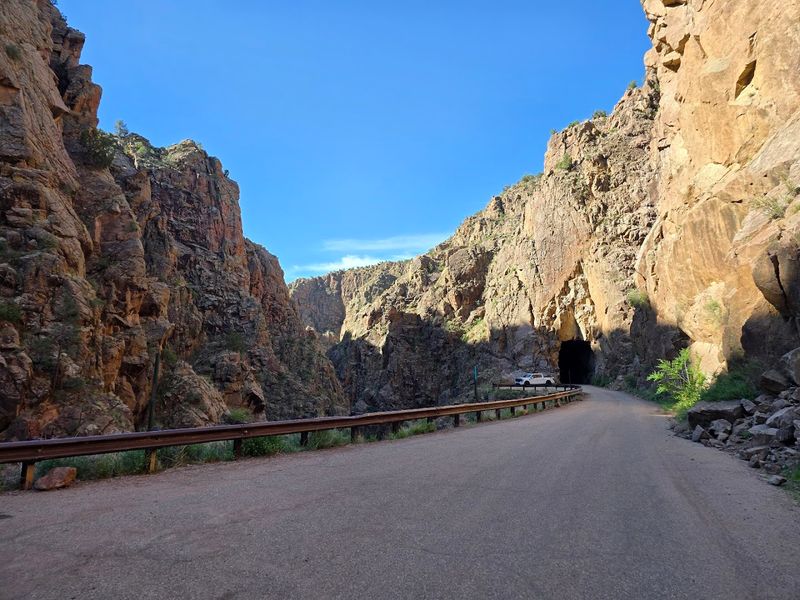
The story of the Gilman Tunnels begins in the 1920s, when logging operations in the western Jemez Mountains needed a route through the Guadalupe Box canyon. Two narrow, unusually tall tunnels were blasted through Precambrian granite to allow narrow-gauge logging trains to pass through this otherwise impassable section.
The logs harvested from the mountains were transported by rail to a sawmill in Bernalillo. A water tower in Bernalillo reportedly served the trains as they moved through the valley.
The tunnels were later widened in the 1930s to accommodate logging trucks as transportation shifted away from rail.
A logging camp called Gilman was established in 1937 about two miles south of the tunnels. The railroad was shut down in 1941 after severe flooding along the Jemez and Guadalupe Rivers damaged the line beyond practical repair.
The highway that runs through the tunnels today follows that original railroad bed almost exactly.
What Makes the Tunnels Themselves So Unusual
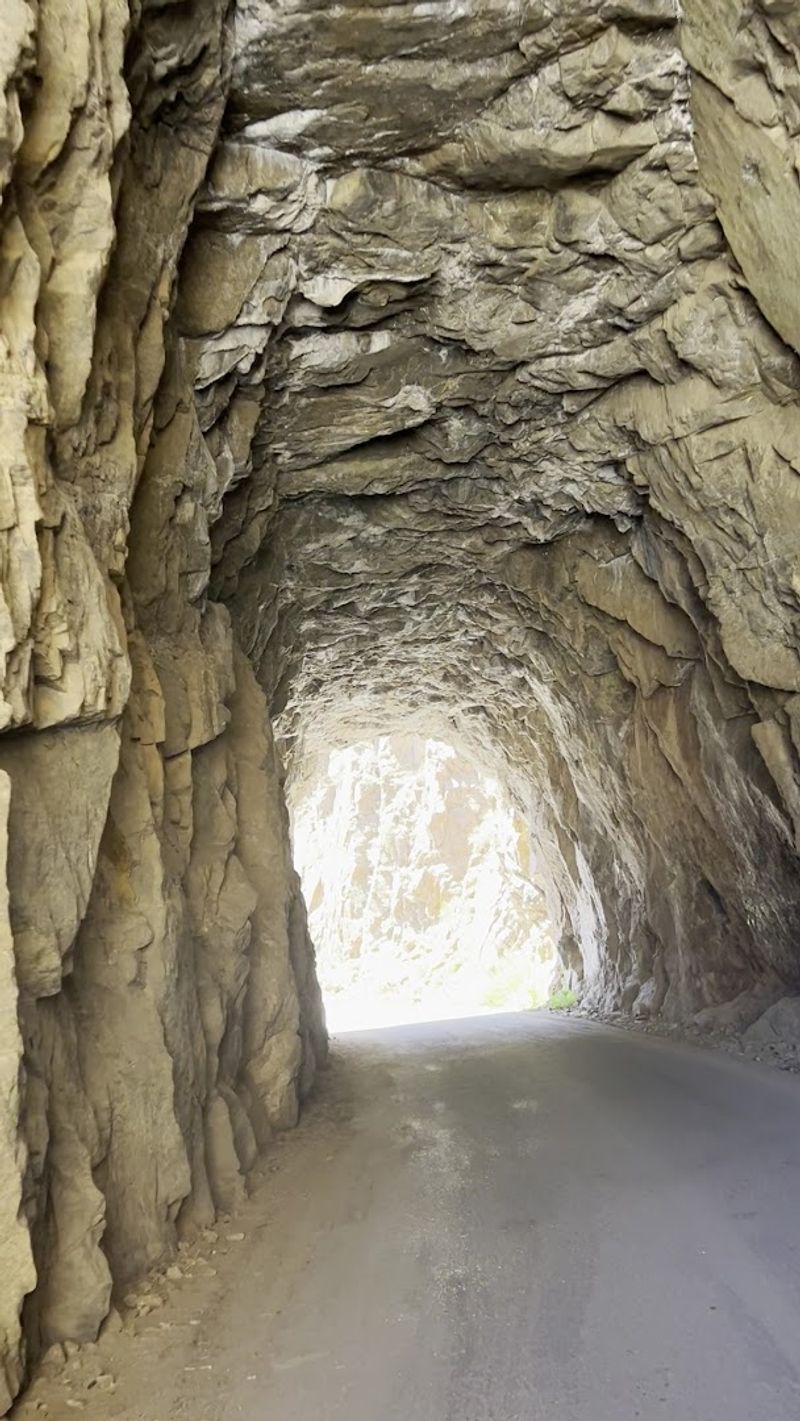
Most road tunnels are wide, low, and built to move traffic efficiently. The Gilman Tunnels are the opposite.
They are narrow and unusually tall, shaped by the natural fractures in the granite rather than by any standard engineering template. That height gives them a cathedral-like proportion that catches most first-time visitors off guard.
Both tunnels sit close together, and drivers pass through one after the other in quick succession. The road narrows to a single vehicle width at the tunnel entrances, which means traffic has to take turns and stay alert.
There are no traffic lights or formal controls, just the expectation that drivers will be courteous and patient.
After the second tunnel, a small parking area fits roughly five vehicles and offers a direct view of the river below. That spot is worth stopping at, especially on a weekday morning when the area tends to be quieter and less crowded.
The Rio Guadalupe Running Below
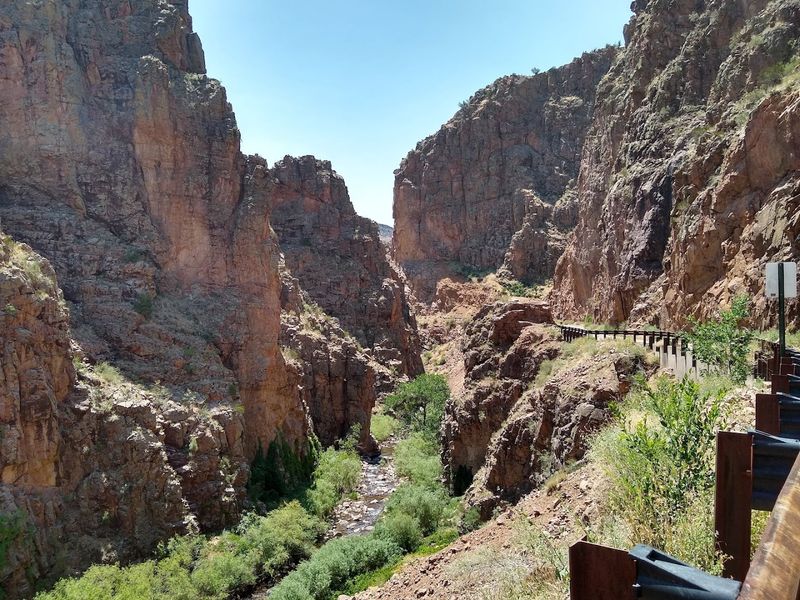
One of the most compelling features of the Gilman Tunnels area is not the tunnels themselves but the river that runs alongside the road through the canyon. The Rio Guadalupe flows along the bottom of the Guadalupe Box, and from several pullout points along NM 485, the river is clearly visible below.
Small waterfalls appear at various points where the water drops over rock ledges, and the river moves at a steady pace through the narrow canyon. The canyon walls rise steeply on both sides, creating a tight corridor that gives the whole area a remote and enclosed character.
There are spots where it is possible to climb down toward the river, though the descent is steep and good footwear is essential. The area also offers fishing opportunities for those who come prepared.
The combination of moving water, vertical rock, and canyon depth makes the Rio Guadalupe corridor one of the more photogenic stretches in the entire Jemez range.
Hollywood Found This Place First
Long before most road trippers discovered the Gilman Tunnels, Hollywood film crews had already figured out that this canyon was something special. The tunnels and surrounding landscape have served as filming locations for at least three major productions.
The 2007 western film 3:10 to Yuma used the area for its rugged, frontier-era atmosphere. The Lone Ranger, released in 2013, also filmed sequences here, taking advantage of the dramatic rock formations and narrow canyon setting.
The Scorch Trials, part of the Maze Runner series released in 2015, brought a science fiction storyline through the same stone corridors.
That range of genres, from classic western to dystopian thriller, says something about how versatile and striking the landscape really is. The tunnels have a raw, timeless quality that translates well on screen.
For film enthusiasts visiting the site, recognizing those locations adds an extra layer of interest to what is already a memorable stop.
The Drive In Is Half the Experience
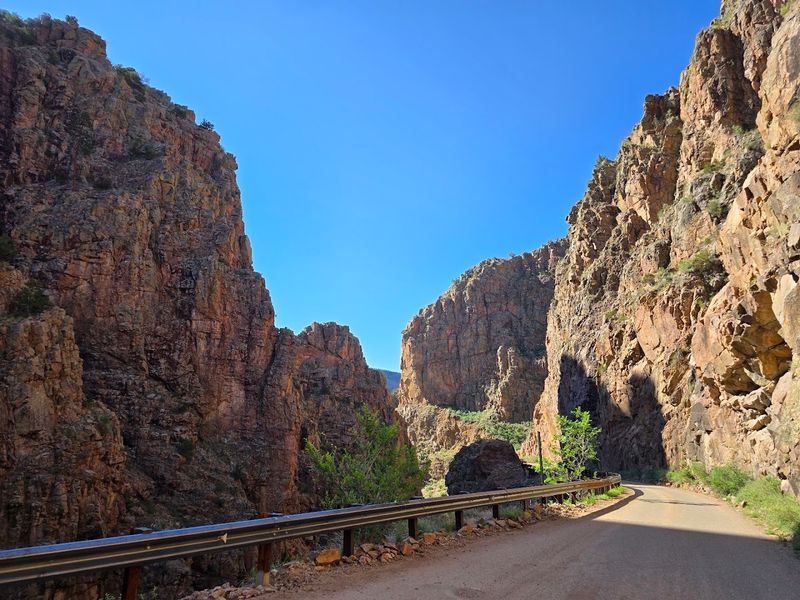
The road leading to the Gilman Tunnels is not just a means to an end. NM 485 winds through canyon terrain that shifts in character as it moves deeper into the Jemez Mountains.
The canyon walls grow taller, the road grows narrower, and the surrounding rock takes on deeper shades of orange and red as the route progresses.
Forest coverage appears in patches along the hillsides, and the Rio Guadalupe keeps pace alongside the road for much of the drive. The pavement has been largely repaved in recent years, making the approach smoother than it once was, though some rough patches remain between and after the tunnels themselves.
The gradual tightening of the road as the tunnels approach builds a natural sense of anticipation. By the time the first tunnel comes into view, the surrounding landscape has already made a strong impression.
The drive in and the drive back out offer different perspectives of the same canyon, and both are worth taking slowly.
What Waits Beyond the Second Tunnel
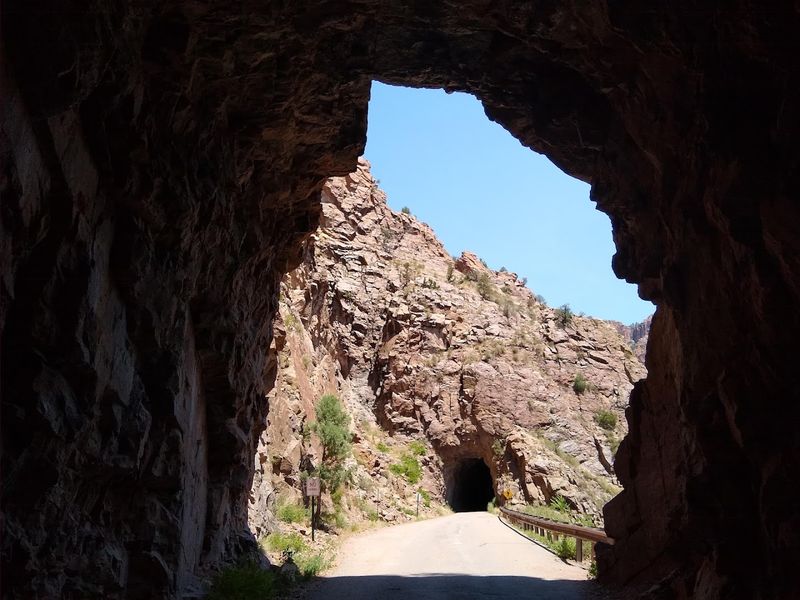
Most people turn around after the second tunnel, but continuing straight for another ten to fifteen minutes reveals a completely different kind of reward. The paved road eventually gives way to forest road 376, a dirt road heading north that connects with road 126 deeper into the Santa Fe National Forest.
Just before the pavement ends, the terrain opens into a broader valley with running creeks and open pasture land. The area supports primitive camping, which means no hookups or facilities, but the setting more than compensates.
The creeks in this stretch are shallow and accessible, making the area popular with people who bring dogs or children.
Spending a full day or even a couple of nights in this zone is entirely feasible for those who come prepared with supplies. The combination of the tunnels, the canyon drive, and the camping area beyond makes the entire NM 485 corridor one of the more complete outdoor destinations in Sandoval County.
Visiting Smart: Timing and Crowds
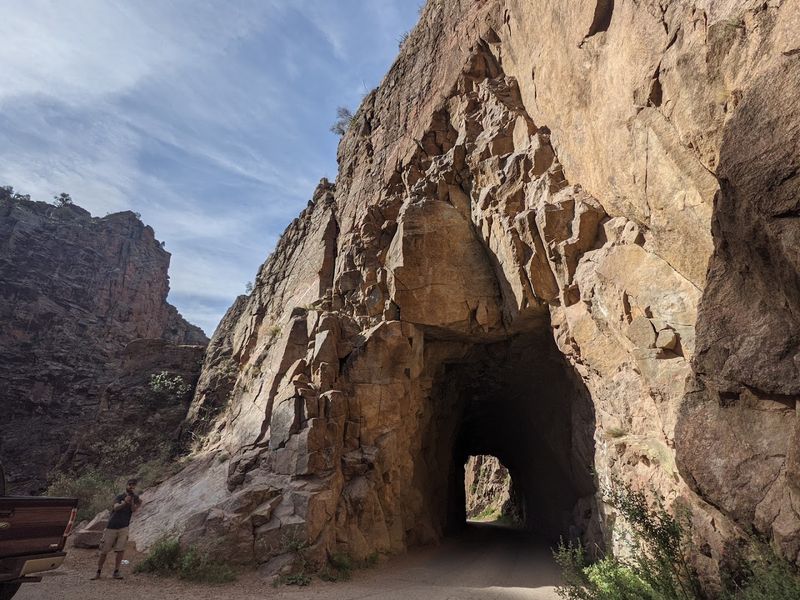
The Gilman Tunnels are free and open to the public, which means crowd management falls entirely on the individual visitor. On busy weekend afternoons, the single-lane section near the tunnels can create backups as vehicles wait to take turns passing through.
Going on a weekday morning is the most reliable way to experience the site with fewer people around. Arriving early gives the best chance of having both tunnels and the small parking area essentially to oneself, at least for a short window.
By late morning on weekends, the area can get tight quickly, especially during summer and fall.
The tunnels have been temporarily closed in the past due to road conditions, so checking local sources or the Jemez Springs tourism website before making a long drive is a reasonable precaution. The site reopened fully in the summer of 2025 after a period of closure, and current conditions have been reported as accessible and in good shape.
Rock Climbing, Hiking, and Other Ways to Explore
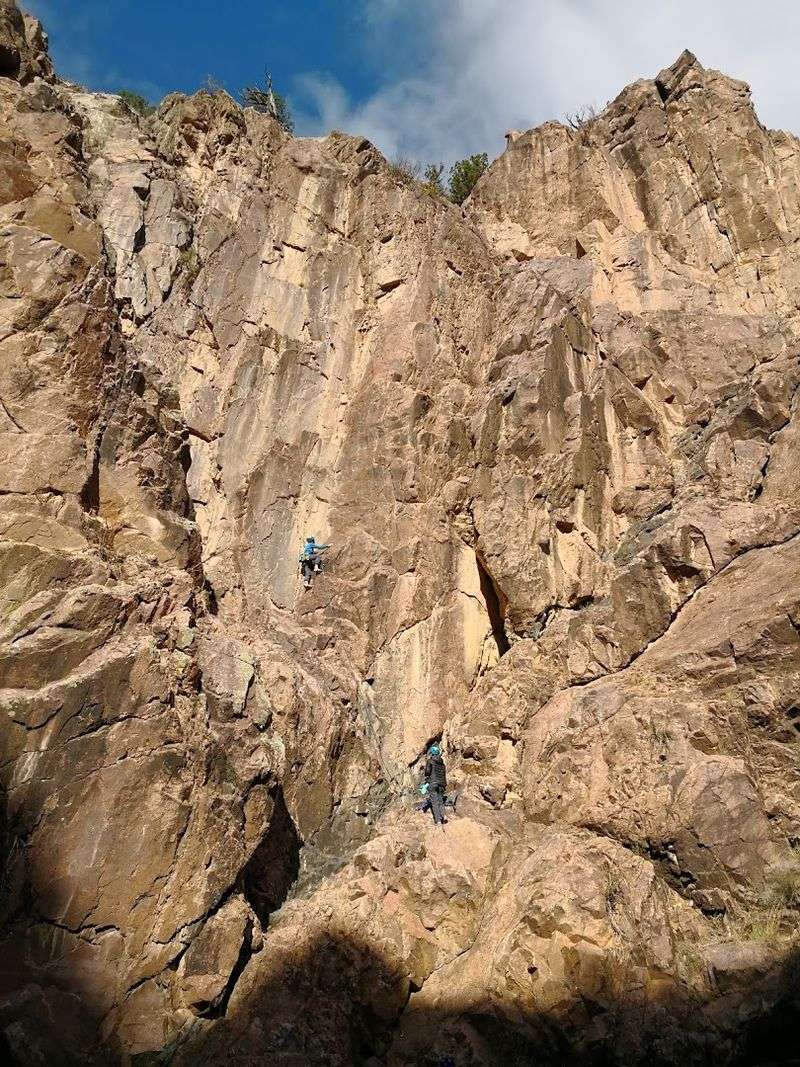
The Gilman Tunnels area offers more than a drive-through experience for those willing to get out of the vehicle. The canyon walls and surrounding terrain attract rock climbers who come specifically for the granite faces in the Guadalupe Box.
Hiking options exist along the canyon floor, though trails are not heavily marked and the terrain is rugged. The descent toward the river is steep in places, and wearing proper footwear makes a real difference.
Fishing in the Rio Guadalupe is another activity that draws people to this stretch, particularly in the cooler months when the water runs clear.
Photography is one of the most common activities at the site, and the combination of granite walls, river, tunnels, and canyon depth gives photographers a wide range of subjects to work with. Families with young children have visited successfully, though keeping a close watch near the canyon edges is essential.
The area rewards those who take their time rather than rushing through.
Combining the Tunnels With a Larger Jemez Mountains Trip
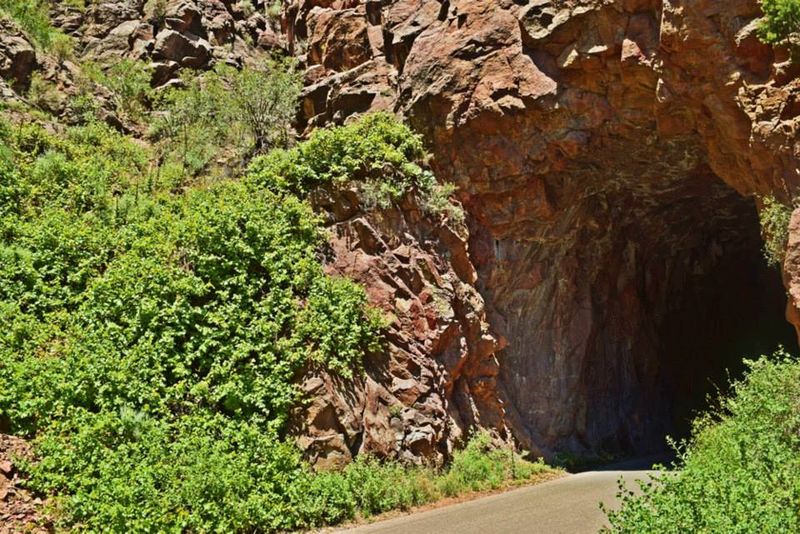
The Gilman Tunnels work exceptionally well as part of a broader Jemez Mountains road trip rather than a standalone destination. The site sits naturally along the route between Albuquerque and Jemez Springs, making it an easy addition to a day that also includes the town itself or a visit to Valles Caldera National Preserve.
Valles Caldera is a massive volcanic crater turned national preserve located further along NM 4, and its open meadows and elk populations offer a completely different character from the tight canyon of the Guadalupe Box. Combining the two in one day creates a trip that covers ancient geology, logging history, canyon terrain, and open highland in a single loop.
The total time needed for the tunnels themselves, including the drive in and a stop at the parking area, is roughly one hour. That compact footprint makes it easy to fit into a larger itinerary without sacrificing depth at any single stop along the way.
Why This Road Stays With You Long After the Drive
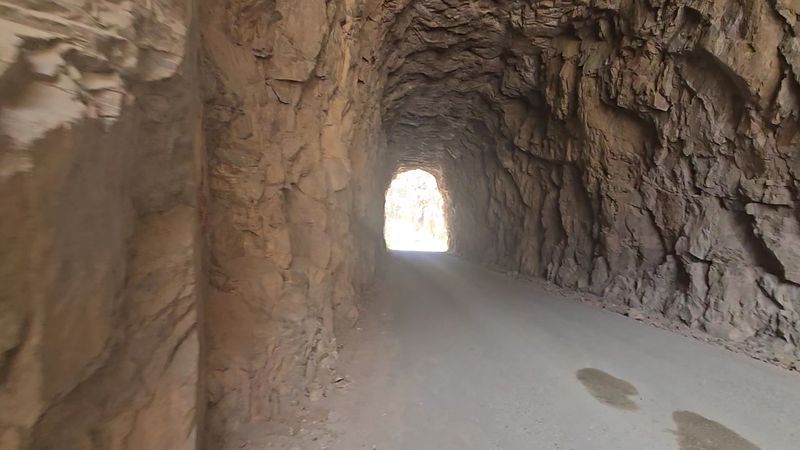
There are plenty of scenic drives in New Mexico, but the Gilman Tunnels corridor has a specific quality that sets it apart from most. The tunnels themselves are a genuine historical artifact, not a reconstruction or a replica, but the actual passage that logging trains used a century ago.
That continuity between past and present is something that registers even on a quick visit.
The canyon walls of the Guadalupe Box rise dramatically on both sides of the road, and the scale of the rock becomes more apparent the closer the road gets to the tunnels. The river below, the tight clearances, and the abrupt transition from open canyon to enclosed tunnel all contribute to a route that feels genuinely unlike anything else in the region.
Free entry, no required permits, and a location that rewards both the casual driver and the dedicated explorer make the Gilman Tunnels one of those rare places that consistently delivers more than expected. The stone does not forget, and neither do the people who pass through it.
Where Exactly This Road Takes You
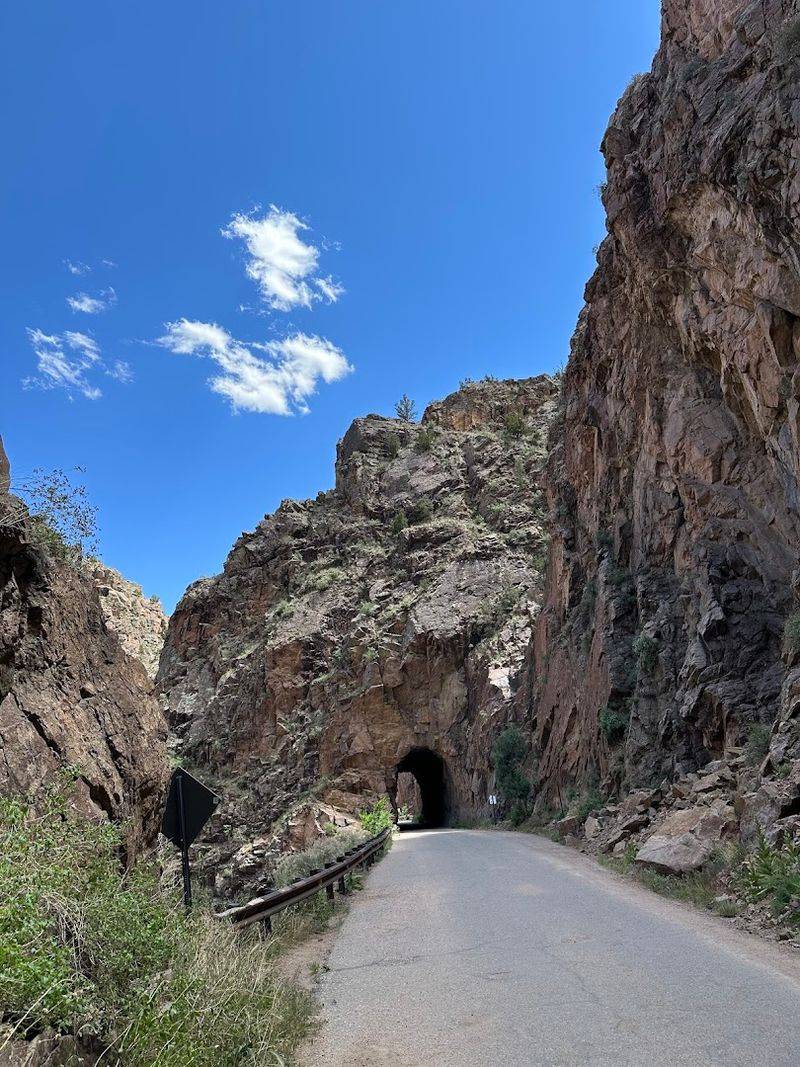
The Gilman Tunnels are located on NM 485 along the Rio Guadalupe in the southwestern Jemez Mountains, in Sandoval County, NM 87124. The site sits approximately five miles northwest of the intersection of NM 4 and NM 485, just past Jemez High School heading north toward the Guadalupe Box canyon.
Getting there requires a drive through winding canyon roads that gradually narrow as the tunnels approach. The road follows what was once a narrow-gauge railroad bed, and that history is visible in the tight clearances and the way the route hugs the canyon wall.
There are no gas stations nearby, so filling up before leaving Jemez Springs or Bernalillo is strongly advised. The tunnels are part of the Jemez National Recreation Area on the Santa Fe National Forest, and entry is free to all.
No permit, no fee, and no gate blocking the way.
Share this story